

What if your pre-purchase inspection report isn’t a pass/fail grade, but your most powerful tool for saving thousands of dollars? Most Kiwi car buyers feel a wave of anxiety the moment that PDF hits their inbox. You’re likely staring at technical terms about CV joints or brake rotor thickness, wondering if you’ve found a lemon or just a car that needs a little love. It’s completely normal to feel stuck wondering what happens after a pre purchase inspection nz, especially when you’re caught between a pushy seller and a report full of jargon.
We understand that buying a used vehicle in New Zealand can feel like a gamble, particularly in private sales where the Consumer Guarantees Act doesn’t protect you. You deserve to move forward with total confidence, knowing exactly when to negotiate and when to walk away. This guide simplifies the process by showing you how to decode mechanical findings, use them to secure a better price, and handle the final steps like a pro. We will walk you through interpreting the results, talking to sellers without the stress, and completing the free NZTA online change of ownership process to get you on the road safely.
Key Takeaways
- Use the traffic light system to quickly distinguish between minor cosmetic wear and urgent safety repairs.
- Master what happens after a pre purchase inspection nz by identifying expensive “deal breakers” like engine sludge or structural rust.
- Turn technical findings into financial leverage by using professional repair quotes to negotiate a fair final price.
- Streamline the paperwork by verifying the WoF and completing the NZTA change of ownership for free online.
- Transform your inspection report into a proactive maintenance schedule to protect your investment from day one.
Decoding Your Pre-Purchase Inspection Report
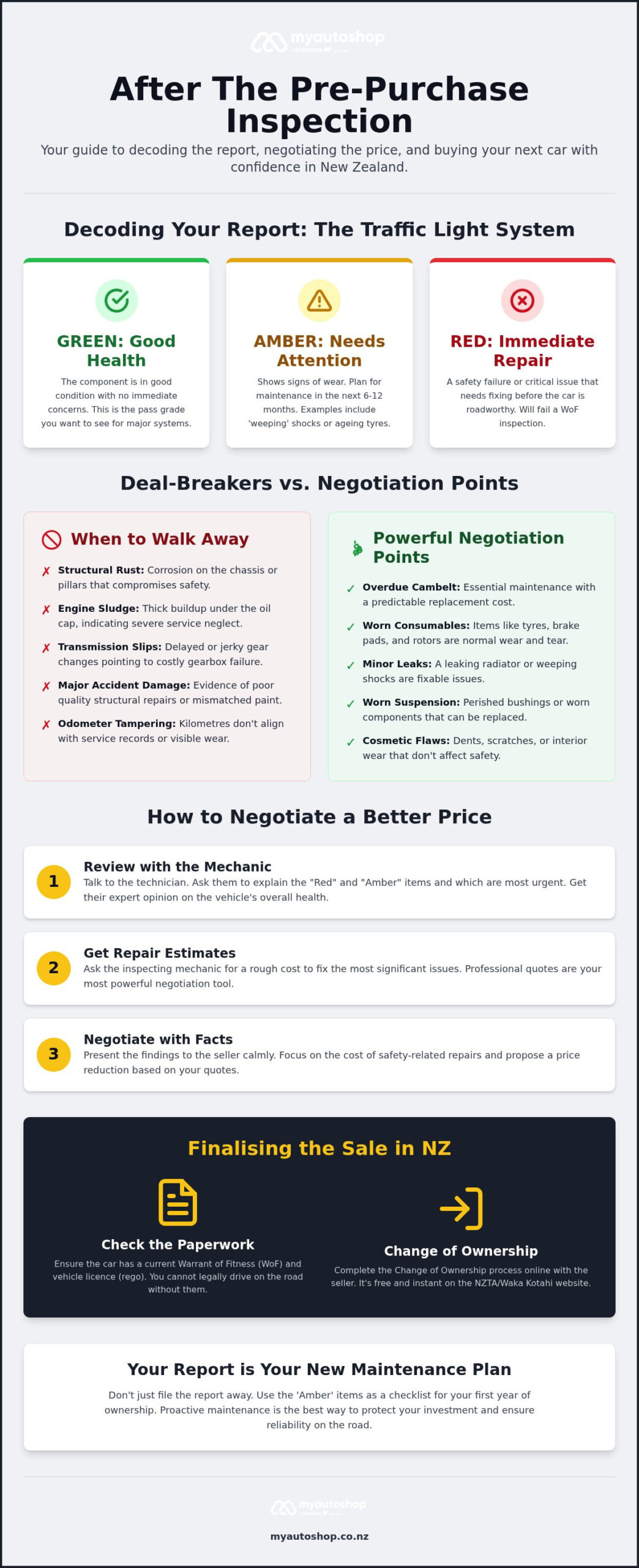
Your pre-purchase inspection report has arrived. It’s easy to feel overwhelmed by the lists of components, but most reports use a simple traffic light system to help you prioritise. Green means the part is in good health. Amber suggests a component is showing wear and will need attention in the next 6 to 12 months. Red indicates a safety failure or a mechanical issue that requires immediate repair before the car is roadworthy.
Understanding the next steps after a pre-purchase inspection in NZ involves looking past the “Red” items to see the bigger picture. A standard vehicle inspection covers both safety and reliability, but you must distinguish between a mechanical failure and a cosmetic blemish. A dent in the door or a scratched bumper won’t leave you stranded on the side of the road, but a leaking radiator will.
Don’t expect a “clean” report to mean the car is in showroom condition. Every used vehicle has wear and tear. Your goal is to identify immediate maintenance requirements versus things you can defer. If the report lists “Amber” items, these are future costs you should factor into your first year of ownership. This transparency is a key benefit of a professional pre-purchase inspection in NZ, helping you understand the true value and potential future expenses.
Reading Between the Lines of Technical Jargon
Mechanics often use specific terms that sound scarier than they are. “Weeping shocks” means the shock absorbers are starting to leak fluid; they still work now, but they’ll fail a future WoF. “Perished bushings” refers to the rubber suspension mounts that have cracked with age, which can lead to knocking sounds or poor handling. In New Zealand’s coastal climate, “surface rust” is frequently noted on the underbody. While usually harmless, you should confirm it hasn’t become structural. The mechanical condition of a vehicle serves as the non-negotiable baseline for its actual market value.
The Role of the Mechanic Summary
The PDF report is only half the story. A verbal debrief with the technician often provides the context you need to make a decision. Ask them directly: “If this were your money, would you buy it?” or “What is the single most urgent repair needed?”. If there are “Red” items, ask for a rough estimate for the repairs. Having these figures allows you to approach the seller with facts rather than guesswork, ensuring you don’t overpay for hidden issues.
Identifying ‘Deal Breakers’ vs. Simple Maintenance
Most Kiwi buyers feel a bit of shock when they see a list of mechanical faults. Remember, a pre-purchase inspection is designed to find every possible flaw, but not every fault is a reason to cancel the deal. Knowing what happens after a pre purchase inspection nz helps you filter the noise from the actual danger signs. Some issues are simply part of a car’s life, while others suggest a future of expensive headaches.
Major red flags are issues that compromise the vehicle’s core safety or longevity. These include:
- Engine Sludge: A thick, black buildup under the oil cap that signals a history of neglected servicing.
- Transmission Slips: Delayed gear shifts or high revving without acceleration, which often points to a failing gearbox.
- Structural Rust: Corrosion on the chassis or pillars that compromises safety and will lead to an immediate WoF failure.
Modern cars are also packed with complex electronics. If the report shows multiple active fault codes or dashboard warning lights, proceed with caution. These electrical “gremlins” can be notoriously difficult and costly to diagnose. Conversely, items like worn tyres or squealing brakes are standard maintenance. If you’re concerned about the cost of stopping power, check out our Experts Guide To Brake Pads to see why these are routine fixes rather than reasons to walk away.
The ‘Walk Away’ List
Some problems are terminal because the repair cost often exceeds the car’s market value. Walk away if the inspector finds evidence of major past accident damage, such as mismatched paint on the internal frame or poor quality “shadetree” repairs. Odometer tampering is another non-negotiable deal-breaker. If the kilometres don’t align with the vehicle’s wear or official service records, you’re looking at a car with unknown mechanical fatigue and zero resale value.
The ‘Negotiable’ List
Understanding what happens after a pre purchase inspection nz is about separating the “must-fix” from the “nice-to-fix.” Many serious-looking items are actually great negotiation points. An overdue cambelt is a ticking time bomb, but it has a fixed replacement cost. A leaking radiator or worn suspension bushings are similar; they are essential repairs with predictable prices. You can negotiate based on the inspection results by asking the seller to drop the price by the amount of the repair quote. If you’ve found the right car but it needs some work, you can request a quote through our marketplace to use as a baseline for your offer.
How to Negotiate the Price Based on Inspection Results
Once you have the report in hand, the dynamic of the sale changes. You are no longer just a “keen buyer”; you are an informed investigator. Understanding what happens after a pre purchase inspection nz is about using those technical findings to ensure you pay a fair price. Don’t view the faults as a reason to be aggressive. Instead, use the report as an objective third party to guide the conversation and keep the focus on the facts.
Start by getting a formal quote for any “Red” or urgent items. Guessing at repair costs is a quick way to lose credibility with a seller. When you present a professional estimate from a mechanic, the discussion moves from “I think it’s too expensive” to “This car needs NZ$800 of work to be roadworthy.” This clarity removes the guesswork and makes it harder for the seller to ignore the mechanical reality of the vehicle. It’s often better to ask for a price reduction rather than asking the seller to fix the issues themselves, as you can then control the quality of the repair using your own trusted technician.
Preparing Your Counter-Offer
Follow these three steps to build a solid case for a lower price:
- Step 1: Total up the “Immediate Repair” costs. These are the items that would fail a WoF or cause a breakdown if left unaddressed.
- Step 2: Research the market value for a “mint” version of the same model. If the asking price is already at the top of the range, any repairs should be deducted from that figure.
- Step 3: Share the report with the seller. Being transparent shows you aren’t just trying to lowball them; you’re simply adjusting for the vehicle’s actual condition.
Dealing with Private Sellers vs. Dealers
The rules of engagement change depending on who is selling the car. When you buy from a registered motor vehicle dealer, you are protected by the Consumer Guarantees Act (CGA). This means the car must be of acceptable quality and fit for purpose. If an inspection finds faults, a dealer is often more willing to repair them before the sale to meet their legal obligations. You have significantly more leverage here because the dealer wants to avoid future CGA claims.
Private sales are a different story. In New Zealand, private sales are generally “as is, where is,” meaning you have almost no legal recourse if something breaks next week. This is why aggressive negotiation is essential. If a private seller refuses to budge on price despite clear faults, be prepared to walk away. There are plenty of other cars on the market, and overpaying for someone else’s neglected maintenance is a mistake you don’t want to make. If you need a reliable baseline for repair costs to support your offer, you can check fair pricing through our platform to keep your negotiation grounded in reality.
Finalising the Sale and NZ Administrative Tasks
Once you have successfully negotiated the price, the focus shifts to the administrative handover. This is a vital part of what happens after a pre purchase inspection nz, as it ensures the vehicle is legally yours and free of complications. Start by verifying the current registration (rego) and Warrant of Fitness (WoF) status. As of July 2026, the 12-month licence fee for a standard petrol passenger vehicle is NZ$181.45, so factor in any remaining time on the current rego when calculating your first-year costs.
The Legal Handover
Both you and the seller are legally required to notify NZTA Waka Kotahi of the sale at the time of purchase. The seller completes a ‘Notice of Disposal’ (form MR13A), while you complete a ‘Notice of Acquisition’ (form MR13B). It is free to notify NZTA of a change in ownership when you complete the process online, saving you a trip to a physical agency. Before transferring any money, verify the seller’s photo ID to ensure they are the registered owner. A PPSR check is the only way to ensure there is no hidden debt or security interest registered against the vehicle.
Warrant of Fitness (WoF) Realities
Do not mistake a fresh WoF for a clean bill of health. A WoF is a basic safety requirement, not a comprehensive mechanical assessment. If your inspection found issues that should have triggered a WoF failure, such as dangerously worn tyres or suspension play, use this as leverage for a final price drop. Understanding the difference between these checks is essential for any buyer. You can learn more about the specific requirements in our guide to the Warrant of Fitness (WOF) in NZ.
Never drive your new car away without active insurance coverage. Most New Zealand providers allow you to arrange cover instantly online or over the phone. Being insured from the moment you take the keys protects you against accidents during the drive home. If your inspection report identified minor items that need attention, book a comprehensive service through our marketplace to start your ownership with a fresh baseline.
Turning Your Inspection into a Maintenance Plan
The keys are in your pocket and the paperwork is sorted. Now, you need to decide what happens after a pre purchase inspection nz to keep your new ride running smoothly. Think of your inspection report as the baseline for your vehicle’s health. Instead of guessing when the last oil change was or if the filters are clogged, you can use the findings to build a proactive maintenance plan. This strategy prevents small, ignored issues from becoming expensive breakdowns that ruin your weekend. To complement your mechanical upkeep, you can discover Nanak Car Wash for professional detailing and cleaning services that help preserve your car’s aesthetic condition.
Your first move should be booking a Basic Service. Even if the seller claimed the car was recently serviced, starting your ownership with fresh oil and a new filter gives you total peace of mind. This simple step clears out old fluids and allows a mechanic to double-check the “Amber” items mentioned in your report. My Auto Shop makes this transition seamless by providing transparent pricing and a network of professionals. You can view quotes online and choose a mechanic who understands the specific needs of your make and model.
The First 30 Days of Ownership
Don’t let the “Amber” items on your report gather dust. These are the components that are still functional but show signs of wear. Schedule these repairs for roughly six months down the line or align them with your next scheduled service interval. New Zealand’s varied driving conditions, from stop-start city traffic to salt-laden coastal roads, mean your car needs regular attention to stay reliable. For a full breakdown of what to expect throughout the year, read our Car Service NZ: The Ultimate 2026 Guide. Regular servicing protects your investment by maintaining the vehicle’s resale value and ensuring it remains safe for your family.
Drive Away with Total Confidence
Buying a used car shouldn’t feel like a gamble. You now have a clear roadmap for what happens after a pre purchase inspection nz, from using mechanical facts to negotiate a better price to completing the free NZTA online ownership transfer. By treating your inspection report as a maintenance baseline, you’re protecting your investment from day one. This proactive approach ensures your new vehicle stays safe and reliable on Kiwi roads.
Success starts with an independent assessment you can trust. Our network of MTA-assured mechanics provides the expert clarity you need to move forward or walk away. We offer transparent, fixed-price quotes and professional insights that strip away the jargon, giving you total peace of mind before you hand over your hard-earned money.
Book your NZ Pre-Purchase Inspection with My Auto Shop today and take the next step toward your new car with certainty. Happy driving.
Frequently Asked Questions
Is a pre-purchase inspection worth it if the car has a brand new WoF?
Yes, a pre-purchase inspection is absolutely worth it because a Warrant of Fitness (WoF) only confirms the vehicle meets minimum safety standards on the day of testing. It doesn’t check for engine health, transmission wear, or upcoming maintenance like a cambelt replacement. A WoF might pass a car with a noisy gearbox or a failing radiator, but these issues will be caught during a comprehensive My Auto Shop inspection.
Can I use a pre-purchase inspection to get a refund after I’ve bought the car?
No, a pre-purchase inspection is a tool for due diligence before you commit to the purchase. In New Zealand, private sales are generally “as is, where is,” meaning the buyer has almost no legal recourse once the money has changed hands. This is exactly what happens after a pre purchase inspection nz; you use the findings to decide whether to buy or walk away, rather than trying to fix a bad deal later.
What should I do if the seller refuses to let me get an inspection?
You should walk away from the deal immediately. A seller who blocks an independent assessment is likely hiding a major mechanical fault or structural issue. Transparency is standard in the New Zealand used car market, and any honest seller will allow a professional mechanic to look over the vehicle. Don’t risk your safety or your savings on a car that can’t pass a basic professional check.
Does a pre-purchase inspection cover the hybrid battery life?
A standard pre-purchase inspection includes a visual check and a road test, but a deep diagnostic of hybrid battery health often requires specialised equipment. If you are looking at a used hybrid, you should specifically request Hybrid Battery Testing through the My Auto Shop marketplace. This provides a detailed report on cell balance and remaining capacity, which is vital since replacing these batteries can be a significant expense.
How much should I expect to knock off the price if the car needs new brakes?
You should negotiate a price reduction based on the actual cost of the repair. Instead of guessing, get a transparent quote for brake pad replacement or rotor replacement through our platform. Present this professional estimate to the seller as an objective reason for a lower offer. Most sellers will agree to deduct the repair cost from the asking price if the fault was previously unknown to them.
What happens if the mechanic misses something during the inspection?
A pre-purchase inspection is a non-invasive, visual assessment of the vehicle’s condition at a specific point in time. Mechanics cannot disassemble the engine or gearbox to find internal wear. While our network of professional mechanics is highly thorough, some intermittent electronic faults or internal leaks may not be visible during a standard check. This is why the report serves as a risk-mitigation tool rather than a 100 percent guarantee of future reliability.
Should I get a mobile mechanic or go to a workshop for the inspection?
Both options have benefits. A mobile mechanic offers maximum convenience for the seller, which can help get the inspection done faster. However, a workshop inspection allows the car to be put on a hoist for a better view of the underbody and suspension. My Auto Shop connects you with both options across New Zealand, allowing you to choose the best fit for the specific vehicle and the seller’s location.
Can I attend the pre-purchase inspection in person?
You can usually attend if the seller and the mechanic agree, but it isn’t strictly necessary. Most motorists find it more useful to let the professional work uninterrupted and then have a verbal debrief afterward. This conversation is a key part of what happens after a pre purchase inspection nz, as the mechanic can explain the severity of any findings and answer your specific questions about the car’s long-term reliability.
Disclaimer
This article provides general information only and should not be relied on as professional mechanical, safety or legal advice. Vehicle requirements and circumstances vary. If you are unsure about your vehicle, have it inspected by a qualified automotive professional.