
You’re pulling away from a green light when a sharp, metallic screech echoes through the cabin. It’s a sound that turns heads for all the wrong reasons and immediately sends a knot of anxiety to your stomach. You’re likely wondering if your car is still safe to drive or if that grinding noise when changing gears means your gearbox is moments away from a total meltdown. We know that feeling of dread. It’s the fear of being stranded on the side of the road and the worry that a small sound today will turn into a massive repair bill tomorrow.
This guide helps you decode exactly what your transmission is trying to tell you. While many drivers assume a valid Warrant of Fitness means their car is in top mechanical shape, it’s important to remember that a WOF doesn’t actually inspect the condition of your clutch or internal gearbox. We’ll show you how to distinguish between a simple clutch issue and more serious synchro failure. You’ll learn about the common causes, what you might expect to pay for repairs, and how to get a clear, professional diagnosis without the guesswork.
Key Takeaways
- Identify the physical cause of that clashing metal sound and what it means for your car’s long-term health.
- Learn why a grinding noise when changing gears is often a warning sign of clutch failure rather than a broken gearbox.
- Understand why your car can pass a Warrant of Fitness (WOF) while still hiding serious transmission issues.
- Discover the professional diagnostic steps used to isolate the problem and prevent a major repair bill.
- Find out how to tell if your car is safe to drive or if you need a mobile mechanic to step in immediately.
Understanding the Grind: What Your Gearbox is Trying to Tell You
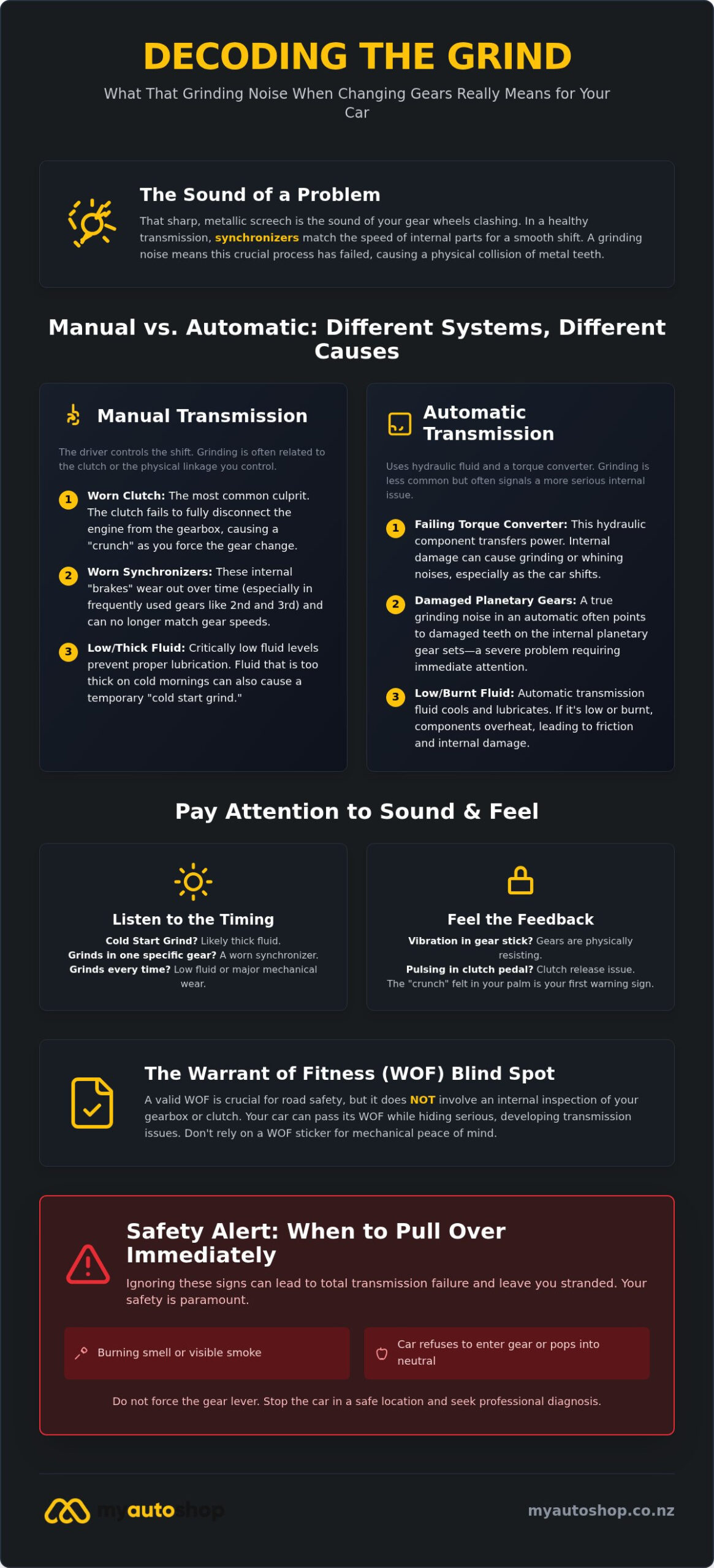
Gear grinding isn’t just an annoying sound; it’s a physical collision happening right under your feet. When you hear that sharp screech, you’re listening to the metal teeth of your gear wheels clashing because they aren’t spinning at the same speed. In a healthy manual transmission, components called synchronizers act like tiny brakes. They match the speeds of the internal shafts before the gears lock together. If you experience a grinding noise when changing gears, it usually means this synchronization process has been interrupted.
The timing of the noise tells a story. You might notice a “cold start grind” that only happens on chilly mornings. This occurs because the transmission fluid is too thick to lubricate the synchronizers effectively until it warms up. If the noise is persistent and happens during every shift, it’s a sign of mechanical wear or critically low fluid levels. It’s common to hear the grind only in specific gears, like second or third. These gears work the hardest in stop-start traffic, so they usually show signs of fatigue first. While the sound is jarring, it doesn’t always mean you need a brand-new gearbox. Often, the fix is much simpler than you fear.
The Sound vs. The Feel
You’ll often feel the “crunch” in your palm before the sound even reaches your ears. A distinct vibration through the gear lever suggests the gears are physically resisting the shift. If you feel a pulsing or vibration in the clutch pedal instead, the problem might lie with the clutch release mechanism rather than the gearbox internals. By the time you can clearly hear the grind over the radio, the metal-on-metal contact is already significant. Paying attention to these tactile cues helps a mechanic pinpoint the fault faster.
Immediate Actions: When to Pull Over
Your safety comes first. If the grinding noise when changing gears is accompanied by a burning smell or visible smoke, pull over to a safe spot immediately. Don’t try to “power through” the resistance. Forcing the gear lever can snap shift linkages or send metal shards into the transmission fluid. This debris acts like sandpaper, damaging every other gear in the housing. If the car refuses to enter a specific gear entirely, or if it pops back into neutral while you’re driving, stop and seek professional help. It’s better to call a mobile mechanic now than to risk a total transmission seizure on the motorway.
Manual vs. Automatic: Why the Cause Depends on Your Pedals
The way your car shifts determines how it fails. In a manual car, you are the conductor of a mechanical orchestra. You use a clutch pedal to physically disconnect the engine from the wheels so you can slide into a new gear. Automatics replace this with a torque converter, which uses hydraulic fluid to transfer power. This distinction is vital because a grinding noise when changing gears points to different mechanical culprits depending on your transmission type. While manuals are more prone to wear from shifting habits, a grind in an automatic often signals an internal hydraulic or gear set crisis that needs immediate attention.
HowStuffWorks explains how transmissions work by showing how the “dog teeth” on a gear must align perfectly for a smooth shift. When this alignment fails, you get the metallic screech that every driver dreads. Understanding whether your issue is a simple hydraulic fix or an internal gear problem starts with knowing which system is under your floorboards.
Common Manual Transmission Culprits
Manual transmissions rely on the driver’s timing and the health of the clutch. If the clutch doesn’t fully disengage, the engine’s power continues to spin the transmission’s input shaft while you try to force a gear change. This results in a loud, painful “crunch.” You’ll often feel this resistance through the gear stick before the sound even becomes audible. Another common issue involves synchronizers, or “synchros.” These small brass rings act as internal brakes to match gear speeds. When they wear down, they lose their ability to sync the shafts, leading to a grinding noise when changing gears every time you shift into a specific gear. Sometimes, the problem is as simple as a stretched shifter cable or a worn linkage that prevents the gears from lining up correctly.
Automatic Transmission Warning Signs
True grinding in an automatic is less common but usually more expensive to ignore. These transmissions use complex planetary gear sets and clutches bathed in specialized fluid. Heat is the primary enemy here. When fluid breaks down or leaks, internal components lose their protective film, leading to metal-on-metal friction. A failing torque converter can also create a sound that mimics grinding, especially when the internal bearings begin to disintegrate. Because automatics are governed by a computer, a grind might be preceded by “hunting” for gears or a noticeable delay when you put the car in Drive. If things feel off, getting a professional diagnostic road test is the smartest way to avoid a total rebuild.
The 4 Most Common Causes of Gear Grinding
To solve a grinding noise when changing gears, we must look at the four primary culprits. Most drivers assume the worst, but the solution is often found in the parts surrounding the gearbox rather than the gears themselves. Identifying which component is failing early can save you thousands in labor costs later.
Clutch Issues: It Might Not Be the Gears
A clutch that doesn’t fully separate the engine from the transmission causes a phenomenon known as “clutch drag.” This means the internal gears are still spinning while you try to force a shift. If you find your gear stick resists movement even with the pedal pinned to the floor, your hydraulics might be to blame. A leaking slave cylinder often prevents the system from reaching the pressure needed to lift the clutch plate. If the “bite point” has moved significantly or the pedal feels spongy, a Clutch Replacement is likely the necessary fix to restore quiet, effortless shifting.
Synchronizers: The Gearbox Peacekeepers
Synchronizers are the brass rings that match gear speeds before they lock together. When these wear out, the gears clash instead of meshing smoothly. Frequent “speed-shifting” or rushing the lever through its gates kills these rings prematurely. You can find a detailed Synchro Failure Diagnosis to see if your specific symptoms match this common manual gearbox ailment. Usually, if only one gear grinds, it’s a single bad synchro. If every gear screams, the problem is likely the clutch or fluid.
Transmission Fluid: The Silent Protector
Transmission fluid is the silent protector that keeps everything cool and slick. Manual gear oil is thick and heavy, while Automatic Transmission Fluid (ATF) is thinner and usually red. Over time, heat breaks this fluid down and reduces its ability to lubricate. Even worse, tiny metal shavings from normal wear can accumulate in the pan. These shavings act like liquid sandpaper, grinding away at your gear teeth and bearings. A simple fluid flush is often the cheapest diagnostic step. It allows a mechanic to inspect the old oil for “glitter,” which indicates the level of internal damage.
Internal bearings can also fail over time. These usually start as a low whirring or humming sound that changes with your road speed. If left ignored, the bearing play allows internal shafts to wobble, eventually causing a full-blown grinding noise when changing gears. Catching this early prevents the need for a total transmission rebuild, keeping your car on the road and your repair bills manageable.
Driving Safety and New Zealand WOF Requirements
Safety on New Zealand roads starts with a predictable vehicle. If your car suddenly pops out of gear while you’re merging onto a busy motorway, you lose the ability to accelerate away from danger. This isn’t just a nuisance; it’s a critical safety hazard that puts you and other drivers at risk. In extreme cases of internal mechanical failure, metal debris can jam the gear set, potentially leading to a sudden wheel lock-up at high speeds. Ignoring a grinding noise when changing gears allows small metal “shrapnel” to circulate through your transmission fluid, eventually ruining every bearing and gear in the housing. What starts as a small vibration can quickly turn into a total mechanical seizure.
Will My Car Pass a WOF with a Grinding Gear?
Many drivers mistakenly believe that a valid Warrant of Fitness means their car is in perfect mechanical health. In reality, a WOF is a safety inspection that doesn’t specifically cover the internal condition of your gearbox. However, an inspector will fail your vehicle if there is “difficulty engaging gear” or if the transmission pops out of gear during their mandatory road test. These issues fall under drivetrain integrity. Furthermore, inspectors check for significant transmission fluid leaks. Because these leaks often accompany grinding noises, a dry or leaking gearbox is a fast track to a $200 fine and a failed inspection. If your car is struggling to shift smoothly, it’s best to book a Mobile Mechanic to assess the drivetrain before your next WOF appointment.
The Long-Term Cost of Delay
The financial math is simple: early intervention saves thousands. A standard transmission fluid flush or a minor hydraulic adjustment is a relatively low-cost preventative measure. If you wait until the gears are physically damaged, you’re looking at a full gearbox rebuild or a complete replacement. Beyond the gearbox itself, a malfunctioning transmission puts extra stress on your driveshaft and CV joints. Every time the car jerks or “thumps” into gear, these components take the hit, leading to a chain reaction of failures. Finally, consider your resale value. Most buyers will walk away the moment they hear a crunch during a test drive. This forces you to drop your asking price significantly just to move the vehicle. Taking action now protects both your safety and your wallet.
Diagnosis and Repair: How My Auto Shop Gets You Back on the Road
Moving from the anxiety of a strange sound to a concrete solution requires a clear plan. We don’t believe in guesswork or “wait and see” approaches. When you report a grinding noise when changing gears, the goal is to isolate the fault quickly to prevent collateral damage to your drivetrain. A professional diagnosis starts with a road test. This allows a technician to hear the specific pitch of the grind and identify exactly which gear or bearing is struggling. By replicating the issue under real driving conditions, we can distinguish between a simple linkage adjustment and an internal gearbox fault.
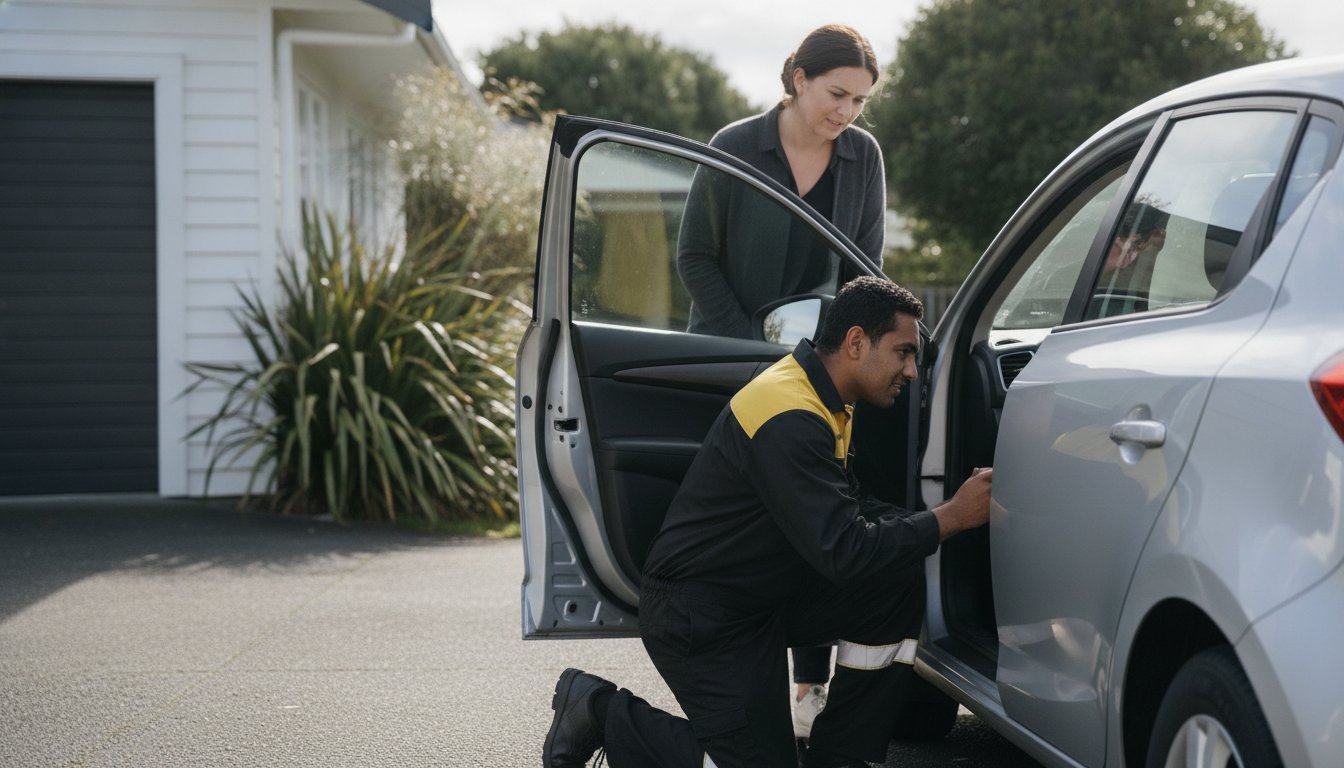
If you’re stuck at home or have a busy schedule, booking a Mobile Mechanic is the most convenient first step. They can come to your driveway to perform an initial assessment. One of the most effective diagnostic tools is the “drain and inspect” method. By draining a small amount of transmission fluid, a mechanic can look for metallic “glitter” or debris. This provides immediate, visual evidence of the health of your internal gears without needing to pull the entire transmission apart.
The Diagnostic Process
Step 1: Perform a visual inspection of the external shift linkages and check fluid levels. Often, a loose bolt or a small leak is the hidden culprit behind a major noise.
Step 2: Conduct a pressure test for automatic transmissions or a clutch travel check for manuals. This helps determine if the grinding noise when changing gears is caused by a hydraulic failure in the clutch system or a problem with the internal planetary gear sets.
Step 3: Move to an internal inspection only after external causes are ruled out. This ensures you never pay for a complex gearbox teardown when a simple fluid top-up would have solved the problem.
Choosing the Right Repair Option
Sometimes, the fix is remarkably simple. A quick adjustment of the shift cables can realign the gears and eliminate the grind instantly. In other cases, you might face a choice between reconditioning your existing gearbox or sourcing a quality second-hand unit. Reconditioning involves replacing the worn synchros and bearings, essentially giving your transmission a second life. We provide clear, transparent options so you can make the best decision for your car’s age and your budget.
My Auto Shop is built on the promise of financial clarity. The days of “mechanic shock” from hidden costs are over. Our platform provides fixed-price quotes for major repairs, ensuring you know exactly what the bill will be before the work begins. We act as your transparent partner, guiding you from the first crunching sound to a smooth, quiet drive. Don’t wait for the gears to lock and leave you stranded. Book a diagnostic check with My Auto Shop today and get your car back to its best.
Restore Your Smooth Ride Today
Dealing with a grinding noise when changing gears is stressful, but it doesn’t have to be a mystery. You now know that the sound is often a cry for help from your synchronizers or a simple sign that your transmission fluid has reached its limit. Catching these issues early keeps your car safe on the road and protects your bank account from the high cost of a total gearbox failure. Remember that a valid WOF isn’t a guarantee of mechanical health, so listening to your car is your best defense against unexpected breakdowns.
Our NZ-wide network of certified mechanics is here to take the guesswork out of your car maintenance. We offer convenient mobile mechanic options that bring the expertise directly to your door, saving you time and hassle. We focus on transparent, upfront pricing with no hidden fees, ensuring you feel empowered rather than intimidated by the repair process. Get a transparent quote for your car repair at My Auto Shop and get back to enjoying a quiet, reliable drive. Your car will thank you for it.
Frequently Asked Questions
Is it okay to drive with a grinding noise when shifting?
No, you should avoid driving if you hear a grinding noise when changing gears. This sound indicates that metal components are physically clashing inside your transmission. Continued use can lead to the car popping out of gear at high speeds or even a total mechanical seizure. Address the noise immediately to prevent a dangerous situation on the road and avoid turning a minor fix into a total gearbox replacement.
How much does it cost to fix a grinding gear in New Zealand?
Repair costs vary significantly based on the root cause of the noise. A simple fluid flush or shift linkage adjustment is relatively affordable and can often solve the problem if caught early. However, a full gearbox reconditioning or a clutch replacement involves significant labor and parts. Getting a professional diagnostic check is the only way to receive an accurate, fixed-price quote for your specific vehicle and avoid the stress of hidden costs.
Why does my car only grind when shifting into second gear?
Grinding in a specific gear usually points to a worn synchronizer ring for that gear. Second gear is particularly prone to wear because it handles the most stress during stop-start city driving. If the noise only happens when moving into second, it confirms the issue is likely isolated to that specific internal component. This is often caused by years of quick shifts that have finally worn down the brass synchronizer teeth.
Can low transmission fluid cause a grinding noise?
Yes, low or contaminated transmission fluid is a leading cause of gear noise. Without enough lubrication, internal components generate excessive friction and heat, leading to a grinding noise when changing gears. Over time, the fluid breaks down and loses its ability to protect the metal surfaces. Checking your fluid levels and looking for metallic debris is the first and simplest diagnostic step any mechanic will take to assess your gearbox health.
Does a grinding noise always mean I need a new clutch?
Not necessarily, though clutch issues are a very common culprit. If the clutch doesn’t fully disengage, the gears will clash regardless of their internal health. However, if the grinding only happens in one specific gear, the problem is more likely a worn synchronizer or an internal gearbox issue. A mechanic will check your clutch pedal travel and hydraulic cylinders first to rule out these external causes before suggesting a full transmission tear-down.
What is the difference between a gear “clunk” and a “grind”?
A “grind” is a high-pitched metallic screech caused by clashing gear teeth. A “clunk” is typically a dull, heavy thud that suggests play in the driveline, worn engine mounts, or failing CV joints. Grinding is almost always an internal transmission or clutch engagement problem. Clunking usually points to external suspension or mounting components that have developed too much movement over time, though both require a professional inspection.
Can a mobile mechanic fix a grinding gearbox at my house?
A mobile mechanic can perform a full diagnostic check and handle many essential repairs right in your driveway. They can adjust shift linkages, replace clutch slave cylinders, or perform fluid flushes to see if the noise clears up. If the issue requires an internal gearbox rebuild or a full transmission removal, they will provide a clear report and help you coordinate the next steps to get your car back on the road.
How do I know if my synchronizers are worn out?
Worn synchronizers typically cause grinding only when shifting into specific gears while the car is moving. You might also feel a physical “crunch” through the gear lever or find that the car resists entering the gear unless you shift very slowly. If the noise disappears when you “double-clutch” or wait a second before sliding into gear, it is a classic sign that the synchronizer can no longer match gear speeds effectively.
Disclaimer
This article provides general information only and should not be relied on as professional mechanical, safety or legal advice. Vehicle requirements and circumstances vary. If you are unsure about your vehicle, have it inspected by a qualified automotive professional.