
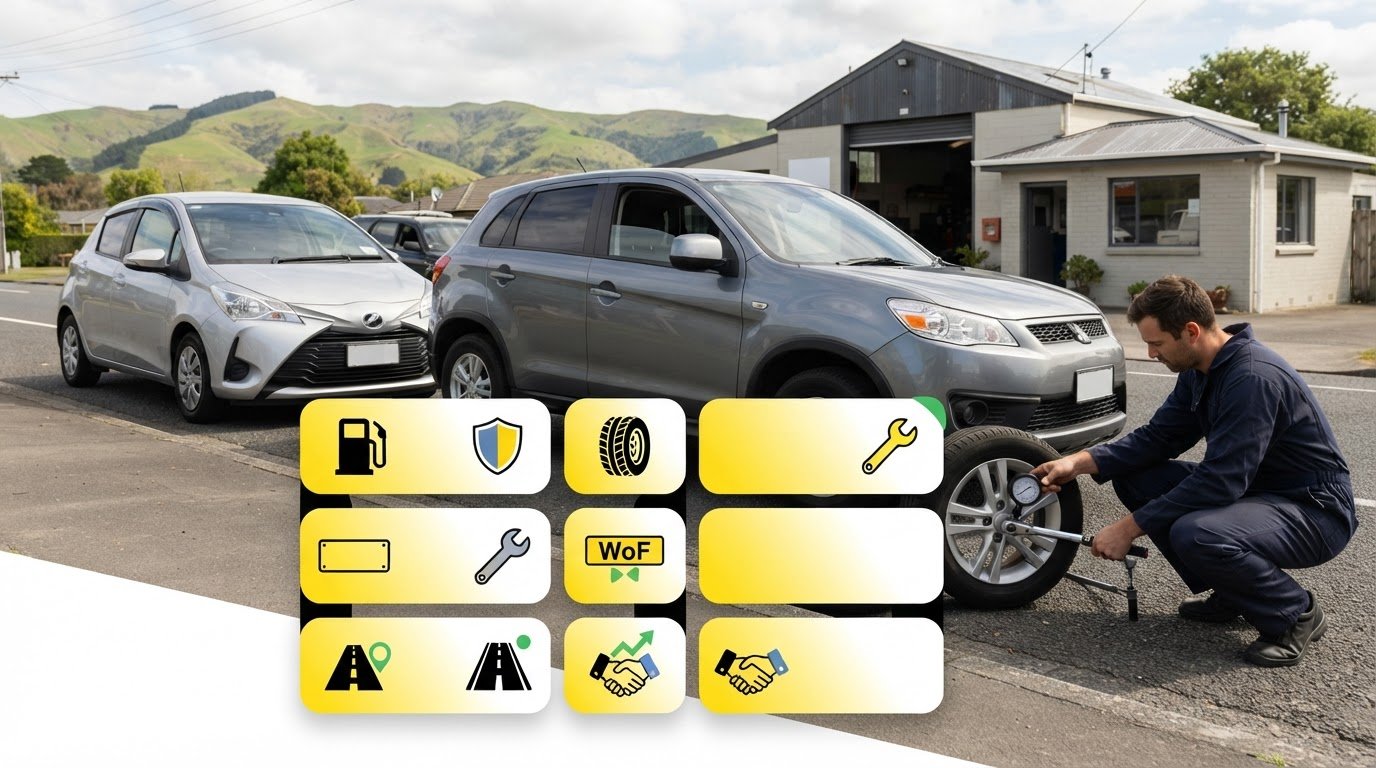
The cheaper car can end up costing more to own. A total cost of ownership calculator car NZ motorists can use helps show why, but the result is only as useful as the costs and assumptions entered. Purchase price is just the starting point: fuel, insurance, servicing, tyres and depreciation can all change the comparison.
Estimates can be hard to pin down because costs vary with the vehicle and how you use it. In New Zealand, vehicle licensing, Warrant of Fitness (WoF) checks and Road User Charges may apply differently depending on the vehicle. Your annual kilometres and ownership period also affect running costs. This guide explains what to include, how to compare cars using consistent assumptions and where calculator estimates can fall short.
Separate fixed costs from distance-based ones, then note which figures are known and which are estimates. A used car’s condition can affect future maintenance, so a cost estimate shouldn’t replace a proper assessment of the vehicle. My Auto Shop’s independent pre-purchase inspections can provide useful information before you decide.
Key Takeaways
- Estimate the full cost of owning a car by adding acquisition and ownership costs, then subtracting its expected resale value.
- Use the same ownership period, kilometres and calculation method to compare vehicles fairly.
- Treat a total cost of ownership calculator car NZ result as an estimate, and make its assumptions visible before relying on it.
- Record where and when you got changeable figures, especially New Zealand compliance charges.
- For a used car, factor in its actual condition and service history. An independent pre-purchase inspection can help uncover details a calculator can’t assess.
What does total cost of ownership mean for a car in NZ?
Total cost of ownership is the combined cost of buying, using and maintaining a car, minus what you expect to get when you sell it. A total cost of ownership calculator car NZ motorists use can organise these figures, but it can’t make uncertain inputs exact. The calculation looks beyond the purchase price: a car that costs less upfront may have different fuel, upkeep or resale costs over the time you own it.
Use this simple formula: acquisition costs + ownership costs − estimated resale value = estimated total cost of ownership. Acquisition costs include the price paid and, if you borrow, interest. Ownership costs cover the expenses of running and maintaining the car. This is different from a monthly loan repayment, which shows a cash-flow commitment but doesn’t include every ownership cost or the car’s value when you sell it. The Total Cost of Ownership (TCO) concept is useful because it looks beyond the initial purchase.
For a New Zealand example of how running costs can be broken down, watch this video from Rewiring Aotearoa:
Which costs belong in a car ownership estimate?
Group the inputs so it’s clear what you’ve included: purchase price and financing; fuel or charging; insurance; compliance costs such as vehicle licensing, WoF checks and Road User Charges where applicable; servicing; repairs; tyres; and estimated resale value. Fuel or charging depends on the vehicle and how you expect to drive it. Research insurance, tyre and servicing costs for the specific car rather than relying on a generic figure. Condition, driving patterns and the period you own the car all affect the estimate.
How can you compare cars on the same basis?
Choose the same ownership period and annual distance for each car. Then use a consistent financing method. If you include the full purchase price, add the interest cost of borrowing, but don’t also count loan principal as a separate ownership cost. That would count some of the purchase cost twice.
Label the result clearly. A total ownership figure shows estimated costs across the chosen period. An average cost per kilometre divides that figure by the kilometres driven over the period. Both can help, provided you compare like with like. Calculator outputs are estimates shaped by your inputs and assumptions, not guaranteed forecasts.
Which New Zealand car costs should your calculator include?
Build your estimate around the vehicle and how you’ll use it. Include the purchase price, any borrowing costs, fuel or charging, insurance, servicing, repairs, tyres, relevant compliance costs and estimated resale value. A total cost of ownership calculator car NZ buyers use is only as useful as its inputs, so label estimates and note where each figure came from.
- Purchase and finance: Record the agreed purchase price and, if you’re borrowing, the interest and fees relevant to your loan.
- Energy: Estimate fuel or charging based on your expected kilometres and the vehicle’s consumption under your likely driving conditions.
- Insurance: Use a quote for the specific vehicle and the cover you intend to take out.
- Servicing, repairs and tyres: Budget separately for planned upkeep and less predictable repairs. The vehicle’s age, condition, service history and use can all affect these costs.
- Compliance and resale: Include relevant vehicle-licensing, WoF and Road User Charges costs, then estimate what the car may be worth at the end of your comparison period.
How do Road User Charges, licensing and WoF fit in?
These are different costs, not interchangeable labels. Road User Charges apply to vehicles as set out in current rules; vehicle licensing is a separate cost, and a WoF is an inspection requirement. Applicability and obligations depend on the vehicle and its circumstances. Check current NZ Transport Agency Waka Kotahi guidance for the vehicle you’re comparing, then enter the relevant amounts and timing. Don’t reuse a fixed example from another car.
How should you estimate fuel, charging, maintenance and tyres?
Start with your expected annual kilometres and a realistic consumption figure for each vehicle. Regular routes, traffic and load can affect actual use, so treat the result as an estimate. For an electric vehicle, use an electricity-cost assumption that reflects how you expect to charge it.
Keep routine servicing separate from repairs. A service schedule can help you estimate planned maintenance, while repairs depend more on condition, age and use. Tyres also need a vehicle-specific estimate. For a used car, an inspection can provide information about its current condition, though it can’t guarantee future costs. Learn about a My Auto Shop pre-purchase inspection as one way to gather information before buying.
How do you compare two cars without trusting a misleading estimate?
Put both vehicles in the same comparison table and use matching assumptions. Keep the ownership period, annual kilometres and calculation method consistent. A total cost of ownership calculator car NZ drivers use may display a neat result, but it’s only comparable if the inputs cover the same costs and timeframe.
| Cost category | What to compare |
|---|---|
| Purchase and finance | Purchase price, deposit, loan amount and interest assumptions |
| Energy | Fuel or charging costs based on the same expected kilometres |
| Compliance | Vehicle-specific licensing, WoF and applicable Road User Charges |
| Servicing and repairs | Planned servicing separately from uncertain repair estimates |
| Tyres | Estimated replacement needs for each vehicle |
| Resale | Estimated value at the end of the same ownership period |
Mark each figure as known or estimated. A confirmed purchase price is different from a forecast resale value or possible repair cost. Note the source and date for figures that can change, and flag the assumptions you’re least certain about. This makes it easier to spot when one car’s apparent advantage depends on an optimistic estimate.
What changes the result most between vehicles?
Check the purchase price and finance assumptions first. A difference in price or borrowing terms can shift the comparison before you consider running costs. Distance matters too: changing expected kilometres changes fuel or charging estimates, so use the same annual distance for both vehicles. Resale value and condition-related repairs are less certain. Treat them as estimates, not guaranteed outcomes, and consider comparing a cautious and a more favourable scenario.
A calculator can organise costs, but it can’t assess a used car’s mechanical condition or predict exactly what repairs it may need. Service history and an inspection can provide additional information to help refine your assumptions, but they can’t guarantee future costs.
How can you avoid double-counting costs?
Choose one clear finance method. You can include the purchase price and borrowing interest, or use a repayment-based approach if the calculator is designed for it. Don’t add the full loan repayments on top of the purchase price and interest, as repayments include principal already represented by the purchase cost.
Keep routine servicing separate from repairs unless the calculator clearly combines them. Before comparing results, check whether each figure is a total for the ownership period, an annual or monthly estimate, or a cost per kilometre. Like-for-like figures make the comparison easier to interpret.
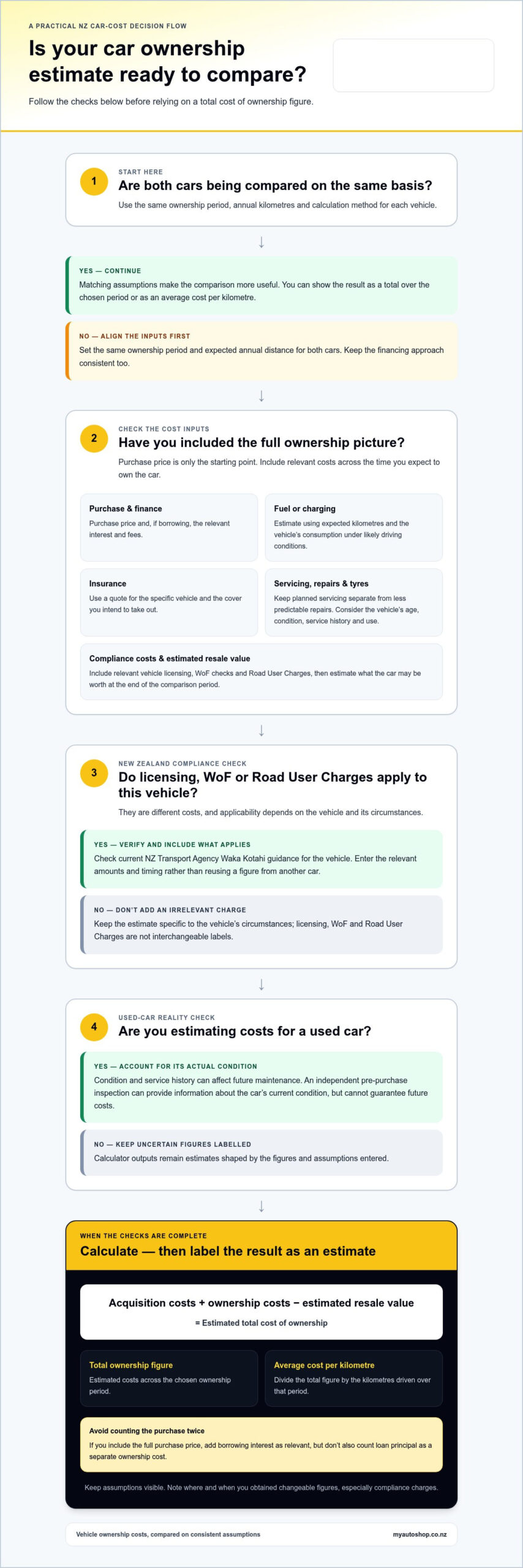
How to use a total cost of ownership calculator for a car in NZ
Before relying on a total cost of ownership calculator car NZ buyers can use, check what it includes. Follow the same steps for every vehicle, and keep a record of your inputs so you can update them when you learn more.
- Choose the vehicles. Note each car’s purchase price and, if relevant, the finance details you plan to use.
- Set the comparison period. Use the same ownership timeframe and expected annual kilometres for each vehicle.
- Gather and enter costs. Include fuel or charging, insurance, servicing, repairs, tyres and applicable compliance costs. Use consumption information relevant to each vehicle, not a generic figure.
- Check assumptions. Confirm which cost categories the calculator includes and whether it subtracts estimated resale value.
- Compare and test. Check that the outputs use the same units and timeframe. Change uncertain inputs to see whether the comparison shifts.
What information should you gather before entering figures?
Collect purchase and finance details, your expected kilometres and vehicle-specific running-cost information. Record the source and date for figures that can change, especially licensing and Road User Charges. Check current NZ Transport Agency Waka Kotahi guidance for requirements and charges relevant to each vehicle instead of reusing an old estimate.
For a used car, separate verified details from assumptions. A service record may document past maintenance, but it can’t predict every future repair. Mark condition-related estimates clearly so they don’t look as certain as a known purchase price.
How should you review the calculator result?
Check whether the result is a total, annual or monthly estimate, or a cost per kilometre. Confirm the categories included and make sure resale value has been treated consistently. If an important figure is uncertain, run a cautious and a more favourable version by changing that input while keeping the rest the same. This shows whether the overall comparison depends heavily on that assumption.
For background on routine upkeep, read this guide to car servicing. For WoF requirements, check current information from NZ Transport Agency Waka Kotahi before entering an amount. If you’re estimating costs for a used vehicle, a My Auto Shop pre-purchase inspection can provide additional information about its condition to consider alongside your calculator inputs.
Before you buy a used car, check what the calculator cannot tell you
A total cost estimate can organise the numbers, but it can’t inspect a particular car. A total cost of ownership calculator car NZ buyers use relies on the details they enter. It won’t reveal a mechanical issue, confirm the car’s condition or tell you exactly what repairs may be needed later.
That matters with used vehicles. Two cars of the same model and age may have different service histories, wear and maintenance needs. An estimate based on general assumptions may not reflect the car you’re considering. Keep documented information, such as a service record, separate from estimates about future repairs, resale value and how much you’ll drive.
What uncertainties remain after calculating ownership costs?
Condition and future repairs remain uncertain, even after you gather vehicle-specific information. Your actual driving pattern may also differ from the kilometres you assumed. Resale value is a forecast, not a guaranteed amount. Mark these figures as estimates, and don’t treat a precise-looking total as a promise of what ownership will cost.
For a used car, compare your calculator assumptions with the available service history and information about its current condition. If a likely repair or maintenance need comes to light, update the estimate instead of leaving the original figure unchanged.
When can a pre-purchase inspection help a used-car buyer?
An independent pre-purchase inspection can add useful information by assessing the vehicle you’re considering. It may help you understand the car’s present condition, but it can’t guarantee a particular buying outcome or predict every future repair. Use the findings to review your cost assumptions, while keeping inspection information distinct from forecasts such as resale value or future upkeep.
My Auto Shop provides independent pre-purchase inspections for used-car buyers. Read the New Zealand pre-purchase inspection guide and checklist to understand what to consider before buying. You can also explore a My Auto Shop pre-purchase inspection to gather information for your decision.
Make your next car decision with clearer numbers
A useful total cost of ownership calculator car NZ estimate goes beyond the asking price. Include the costs that apply to the vehicle, use the same ownership period and kilometres when comparing options, and keep uncertain figures separate from confirmed information.
A calculator can organise your assumptions, but it can’t assess a used car’s condition or predict every future repair. Review the vehicle’s history and condition before relying on the estimate. My Auto Shop provides independent pre-purchase vehicle inspections to give used-car buyers additional information.
My Auto Shop also connects motorists with automotive service and repair providers through its platform. Visit My Auto Shop to explore pre-purchase inspections as a practical next step. With clear assumptions and better information about the car, you can make your decision with greater confidence.
Frequently Asked Questions
What is the total cost of ownership of a car?
Total cost of ownership is the combined cost of acquiring, using and maintaining a car, less its estimated resale value. It includes more than the purchase price or monthly loan repayment. For a New Zealand estimate, consider relevant costs such as energy, insurance, servicing, repairs, tyres and compliance. The result is an estimate over a chosen ownership period, not a guaranteed forecast.
How do I calculate the total cost of owning a car in NZ?
Choose an ownership period and expected annual kilometres, then add the purchase and financing costs to the expected running, compliance and maintenance costs. Subtract the estimated resale value at the end of the period. A total cost of ownership calculator car NZ motorists use can organise those inputs, but check which categories it includes. Keep assumptions consistent when comparing cars, and record the source and date of changeable figures.
What costs should a car total cost of ownership calculator include?
Include the purchase price, finance interest and fees, fuel or charging, insurance, vehicle licensing, applicable Road User Charges, WoF checks, servicing, repairs and tyres. Subtract an estimated resale value for the end of your ownership period. Use vehicle-specific information where possible: energy use, insurance and maintenance needs can differ between cars. Separate known figures, such as the purchase price, from estimates about future repairs and resale.
Do Road User Charges belong in a New Zealand car ownership calculator?
Include Road User Charges when they apply to the vehicle you’re estimating. NZTA guidance identifies applicable vehicle types and current requirements, so check its information rather than assuming every car has the same RUC costs. Record the source and date of the figure, and base the estimate on your expected kilometres. Don’t treat Road User Charges as the same cost as vehicle licensing or a WoF inspection.
Can a car ownership calculator include WoF and vehicle licensing costs?
Yes. Enter the relevant WoF inspection and vehicle-licensing costs as separate inputs, using current information for the vehicle. They represent different requirements and shouldn’t be combined or assumed to apply in the same way. Check current NZ Transport Agency Waka Kotahi guidance for the vehicle’s requirements, and use current figures rather than a fixed example. If the calculator doesn’t have separate fields, note these costs in your own estimate.
Is a total cost of ownership calculator accurate for a used car?
It can help organise a used-car estimate, but it can’t assess an individual vehicle’s mechanical condition or predict every future repair. The result depends on the details entered, including service history, expected use and resale assumptions. Label confirmed information separately from estimates. An inspection can provide information about the car’s current condition and help you review your assumptions, but it can’t guarantee future costs.
How do I compare the cost of owning a petrol, hybrid or electric car?
Set the same ownership period and annual kilometres for each vehicle. Use vehicle-specific fuel or charging consumption, then include comparable costs for insurance, servicing, repairs, tyres and resale. Add compliance costs that apply to each vehicle, including Road User Charges where relevant, after checking current NZTA guidance. Keep your financing method consistent too. Test how changing uncertain inputs, such as resale value or annual distance, affects the comparison.
Can a pre-purchase inspection help me estimate used-car ownership costs?
Yes. An independent pre-purchase inspection can provide information about a used vehicle’s current condition to help inform your buying decision and refine maintenance or repair assumptions. It won’t predict all future costs or guarantee a particular outcome, so keep inspection findings separate from forecasts such as resale value. My Auto Shop provides independent pre-purchase vehicle inspections for people considering a used car.
Disclaimer
This article provides general information only and should not be relied on as professional mechanical, safety or legal advice. Vehicle requirements and circumstances vary. If you are unsure about your vehicle, have it inspected by a qualified automotive professional.