
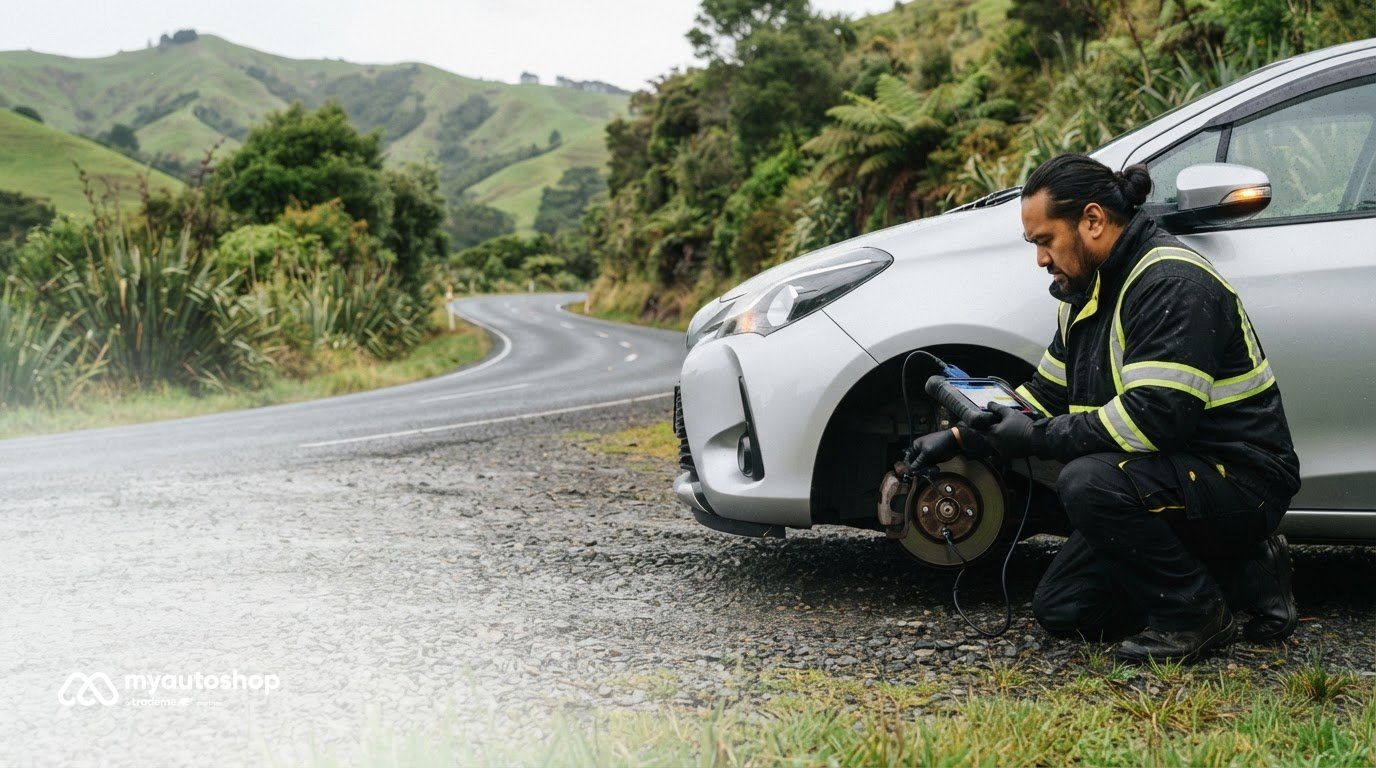
An ABS light doesn’t usually mean your brakes have stopped working, but it does mean an important safety feature may be unavailable. So, is it safe to drive with the ABS light on? Don’t treat the warning as harmless or carry on as usual. Your normal brakes may still work, but the wheels could lock during hard braking, making it harder to steer, especially on wet or loose roads.
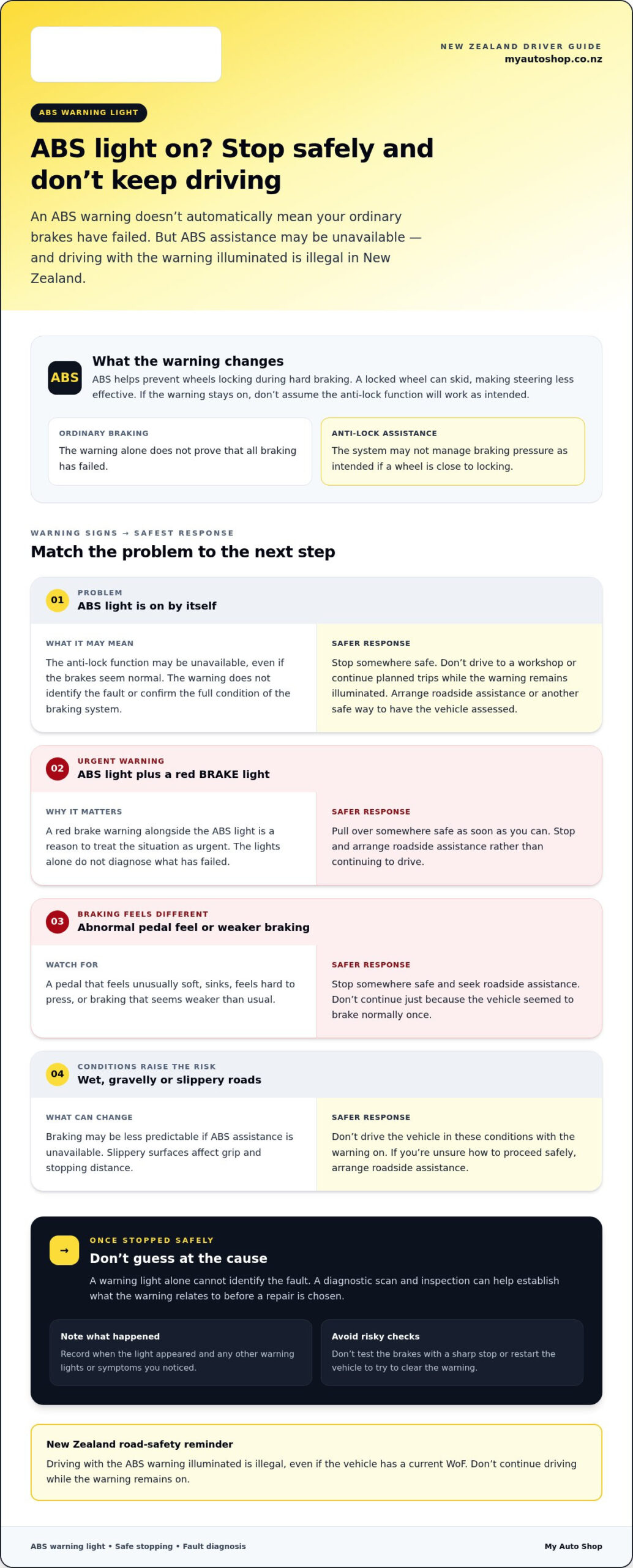
If the ABS light is on by itself and the brakes feel normal, stop somewhere safe and arrange a way to have the vehicle assessed without driving it. If it comes on with the red BRAKE warning light, or the pedal feels abnormal, stop somewhere safe and don’t continue driving.
This guide explains what ABS does, which warning lights and symptoms change the urgency, and what to do next. It also explains why a diagnostic scan can identify the fault more reliably than guesswork.
Key Takeaways
- The ABS warning means anti-lock braking assistance may be unavailable. Consider the vehicle’s behaviour and any other warning lights.
- ABS helps manage braking. If a wheel locks during a hard stop, steering can become less effective.
- Use the warning lights and symptoms to judge the urgency, and arrange a safe way to have the vehicle assessed.
- Note when the light appeared and what else you noticed. This information can help with diagnosis.
- A warning light alone does not identify the fault. Proper diagnosis is needed before choosing a repair.
ABS Light On: Is It Safe to Keep Driving?
If you’re asking whether it’s safe to drive with the ABS light on, the answer in New Zealand is no. Driving with the ABS warning illuminated is illegal, even if the vehicle has a current WoF. An ABS-only warning doesn’t automatically mean the ordinary braking system has failed, but the anti-lock function may be unavailable. Don’t continue driving to see whether the light clears or to reach a repair appointment.
An ABS warning isn’t the same as a complete loss of braking, but you can’t rely on ABS during hard braking. If the light comes on while you’re moving, focus on reaching a safe place to stop without sudden manoeuvres. Once stopped, arrange roadside assistance or another safe way to have the vehicle assessed. Don’t drive it again while the warning remains illuminated.
What an ABS warning means while you are driving
ABS helps stop the wheels from locking during hard braking. A locked wheel can skid and make steering less effective. The system uses wheel-speed information to manage braking when it detects that a wheel may lock. An illuminated warning signals a possible fault, so ABS assistance may not be available. For an overview of the system, see Anti-lock Braking System (ABS) Explained.
An ABS-only warning doesn’t identify exactly what has failed or confirm that every other part of the braking system is working normally. Pay attention to how the vehicle responds as you bring it to a safe stop. A change in pedal feel, braking performance or control makes it especially important not to continue driving.
When an ABS light means you should stop
If the ABS light appears alongside a red brake warning, treat the combination as urgent. Pull over somewhere safe as soon as you can. Do the same if the brake pedal feels unusually soft, sinks, feels hard to press, or braking seems weaker than usual. These symptoms don’t identify the fault, but they are reasons to stop and seek roadside assistance rather than continue.
If you’re on a busy road, focus on reaching a safe stopping place without sudden manoeuvres. Once stopped, arrange assistance. Don’t test the brakes with a sharp stop, restart the vehicle to try to clear the warning, or drive on because it seemed to brake normally once.
ABS light only: make a cautious decision
If the ABS light is the only warning and the brakes seem normal, that’s different from an ABS warning with a red brake light or abnormal braking symptoms. It still doesn’t make driving lawful while the warning remains illuminated. Stop somewhere safe and arrange a suitable alternative for getting the fault assessed, rather than driving to a workshop or continuing with planned trips. If you are travelling and need replacement transport while the car is inspected, services like Drive NZ Rental Cars offer an alternative way to complete your journey without risking road safety.
Wet, gravelly or slippery roads can make braking less predictable if ABS assistance is unavailable. Don’t take the risk of driving the vehicle in those conditions. If you’re unsure how to move forward safely, arrange roadside assistance.
How ABS Works and What Changes When Its Warning Light Appears
ABS uses wheel-speed information to help prevent wheels locking during hard braking, so the driver can retain more steering control. “Wheel lock-up” means a wheel stops rotating while the vehicle is still moving, causing the tyre to slide rather than roll. ABS manages braking pressure to help reduce that risk. It doesn’t remove the need to brake carefully or guarantee a shorter stop in every situation.
The anti-lock function works alongside the vehicle’s conventional braking system, but they aren’t the same thing. Pressing the brake pedal applies the brakes; ABS can adjust braking pressure if the system detects a wheel is close to locking. A fault warning means you shouldn’t assume that adjustment will happen as intended. It also doesn’t confirm that every other braking function has failed.
What ABS does during hard braking
During hard braking, wheel-speed sensors send information to the ABS control system. If a wheel is slowing sharply towards lock-up, the system can adjust pressure to that wheel and continue monitoring its speed. You may feel the brake pedal pulse when ABS operates. Keep your foot firmly on the pedal and steer where you need to go.
On a wet road, ABS may help you steer around an obstacle while braking hard, but slippery surfaces still affect grip and stopping distance. ABS isn’t a substitute for leaving space or adapting your speed to conditions.
Why an ABS fault can affect emergency braking
If the warning stays on, the anti-lock function may not work as intended in an emergency stop. The vehicle may respond differently if a wheel starts to lock, particularly on a surface with uneven grip. Don’t test emergency braking on a public road. A deliberate hard stop could put you and other road users at risk.
An ABS warning isn’t proof that all braking has failed, but it can’t confirm that conventional braking is in good condition either. Treat it as a sign that the anti-lock system needs assessment, not as a diagnosis of what is working or faulty.
Ordinary braking applies force at the wheels, while ABS manages that force to help prevent lock-up. If you’re weighing up is it safe to drive with the ABS light on, remember that the system’s response during a sudden stop may differ from what you expect. A diagnostic assessment is needed to identify the fault and check the system properly.
Once the vehicle is safe to have assessed, My Auto Shop’s service and repair options can help you find a suitable next step. A fault-code reading and inspection can establish what the warning relates to, rather than relying on the light alone.
ABS Light Only or Other Warning Signs: How to Judge the Risk
The ABS light is only one part of the picture. Check whether another brake warning is showing, then consider how the vehicle feels under normal, gentle braking. Dashboard lights can’t tell you the full condition of the brakes or establish the vehicle’s WoF status. Use the signs below to make a cautious decision, not to diagnose the fault.
ABS warning only
If braking feels normal and no other warning is showing, stop somewhere safe and arrange an assessment without driving the vehicle. Don’t rely on ABS assistance being available if you need to brake hard.
ABS and red brake warning together
Treat this combination as more urgent. Stop somewhere safe as soon as you can. If braking feels weak or inconsistent, don’t continue; arrange roadside assistance.
Abnormal braking or vehicle behaviour
A soft or unusually firm pedal, pulling to one side, grinding, reduced braking or difficulty controlling the vehicle means you should stop safely and seek assistance rather than continue driving.
ABS warning alone versus ABS and brake warning together
A second brake-related warning raises concern because the issue may involve more than the anti-lock function. The lights don’t identify the cause, so don’t assume the red brake warning is harmless or that the ABS warning explains everything. If both are lit, pull over safely. Weaker braking, an inconsistent response or any change in control is a reason not to drive on.
If the ABS light is the only warning and the car seems to brake normally, that still doesn’t confirm the system is fault-free. The decision depends on the whole picture: warning lights, pedal feel, braking response and road conditions. Don’t make a trip simply to see whether the warning clears.
How road and pedal symptoms change the decision
Notice how the pedal feels without deliberately testing it. A pedal that suddenly feels soft or unusually firm, reduced braking, grinding or the vehicle pulling during braking are all reasons to stop somewhere safe. These signs don’t prove a particular fault, but they make it unwise to rely on the vehicle’s braking performance.
Road conditions matter too. Rain, loose gravel, mud and other slippery surfaces can reduce tyre grip. If ABS assistance is unavailable, a wheel may lock during hard braking, making steering less predictable. Take extra care around these conditions, leave more space where possible, and avoid unnecessary driving. If safe braking is in doubt, don’t continue. Move to a safe place and arrange assistance. No single warning light or symptom replaces a proper assessment.
What to Do Next When the ABS Light Stays On
Take a few deliberate steps to keep yourself safe and give the person assessing the vehicle useful information. In New Zealand, don’t drive while the ABS warning remains illuminated, even if the brakes seem normal. Don’t repeatedly restart the car or try to clear the warning. If it goes out temporarily, that still doesn’t identify or repair the cause.
- Assess the warnings. Once safely parked, note whether the ABS light is on by itself or alongside a red brake warning. Record any change in pedal feel, braking or control.
- Choose a safe place. If you’re on the road, pull over somewhere secure without sudden manoeuvres. Don’t inspect the dashboard while driving.
- Don’t drive on. Whether the ABS light is alone or accompanied by another warning, arrange roadside assistance or another safe way to have the vehicle assessed.
- Arrange diagnosis. Have the fault assessed so its cause can be identified before a repair is recommended.
What to do before moving the car again
Check the dashboard only when you’re stopped safely. If the red brake warning is also showing, or the pedal feels soft, unusually firm or inconsistent, tell roadside assistance. Don’t set off again. Even if the ABS warning is the only light and the brakes seem normal, arrange a safe alternative to driving the vehicle to an assessment. Don’t rely on the warning disappearing after a restart.
What information helps a diagnostic assessment
Details about the warning can help describe the problem, though they don’t replace a proper diagnosis. Make a note of:
- Which warning lights appeared, and whether they stayed on or came and went.
- When you first noticed the ABS light, such as on start-up or while driving.
- Any change in the brake pedal, braking response, noise or vehicle control.
- What was happening around the time it appeared, including rain, gravel, a pothole or recent work on the vehicle.
Share what you observed, even if you’re unsure whether it’s relevant. A guide to describing car symptoms can help you put the signs into clear words. The diagnostic assessment should identify the fault before anyone recommends a repair. A warning light alone can’t tell you which component needs attention.
Arrange a safe way to have the vehicle assessed. If safe braking is in doubt, use roadside assistance rather than driving to an appointment.
Getting an ABS Fault Diagnosed and Choosing a Safe Next Step
An ABS warning is a signal to investigate, not a diagnosis. Several different faults can produce a similar dashboard warning, so replacing a part based on the light alone risks missing the actual cause. A proper diagnostic assessment can read the ABS system’s fault information and check what is happening before a repair is recommended.
What can trigger an ABS warning
Possible causes include a wheel-speed sensor fault, damaged or interrupted wiring, a fuse issue or a problem with another ABS component. These are examples, not a ranked list or a way to identify the fault yourself. The same warning can have different underlying causes, and a fault may not be obvious from how the vehicle looks or feels.
A diagnostic scan needs to access the ABS system, not just the engine computer. A basic engine-code reader may not retrieve ABS-specific fault codes. Scan information helps guide further checks, but it should be considered alongside an inspection and the symptoms you’ve noticed. A code points to an area to investigate; it doesn’t automatically prove which part needs replacing.
It’s better to get the warning assessed than to guess from online descriptions or buy a component in the hope it will fix the problem. If the brakes feel abnormal or another brake warning is showing, prioritise a safe stop and assistance over driving the vehicle for diagnosis.
How to arrange a suitable repair pathway
Choose a diagnostic assessment that can investigate the ABS warning and explain the findings in plain language. Share when the light appeared, whether it stayed on, which other lights came up, and any change in braking or vehicle control. Mention relevant conditions or events, such as driving over rough gravel or noticing the warning after a particular journey. These details provide context, but don’t replace the scan and inspection.
Ask for the cause to be identified before agreeing to a repair. A clear assessment should connect the symptoms and test findings to the recommended next step, rather than treating the warning light as proof that a particular component has failed. Full-service vehicle repair specialists such as ontopdieselauto.com emphasise comprehensive testing to pinpoint the exact issue before replacing parts, ensuring the underlying fault is properly resolved.
My Auto Shop connects motorists with automotive service and repair providers. These providers are separate from the platform, not employees of My Auto Shop. For an ABS warning, arrange an assessment that can investigate the system and explain the findings before a repair is recommended.
If you’re still weighing up is it safe to drive with the ABS light on, let the warning and the vehicle’s braking behaviour guide your immediate decision. Arrange an assessment rather than guessing at the cause. Explore automotive service options through My Auto Shop to find a provider for the next step.
Make Your Next Trip a More Informed One
If you’re still asking, “is it safe to drive with the ABS light on?”, base your decision on the warning and how the vehicle is behaving, not on hope that the light will disappear. If you’re unsure whether it’s safe to move the car, choose assistance over taking a chance on the road.
Before arranging an assessment, note what you noticed and what you need help with. Once the fault has been checked, ask for the findings and recommended next step to be explained clearly. That gives you a practical basis for deciding what to do, without guessing at parts or agreeing to work you don’t understand.
Safe, sensible decisions start with knowing what needs attention. Explore automotive service options with My Auto Shop to find a provider and arrange the next step.
Frequently Asked Questions
Can I drive a short distance with the ABS light on?
No. If the ABS warning remains illuminated, don’t plan even a short drive to a workshop. In New Zealand, driving with the ABS warning lit is illegal, even if the vehicle has a current WoF. If the light comes on while you’re already moving, pull over safely and arrange roadside assistance or another safe way to have the fault assessed.
Can I drive with both the ABS light and brake warning light on?
No. Treat both lights showing together as urgent, and don’t continue the journey. Pull over somewhere safe without sudden manoeuvres, then arrange roadside assistance. This combination can signal a serious braking problem, but the dashboard can’t identify the cause. Don’t try to judge the vehicle’s condition by pressing the brake pedal repeatedly or restarting the engine.
Does the ABS light mean my brakes have stopped working?
Not necessarily. The warning relates to the anti-lock braking function, and ordinary braking may still operate, but the light can’t confirm that the rest of the braking system is safe. Don’t assume the vehicle will stop as expected in an emergency. If the pedal or braking response has changed, stop safely and get assistance rather than driving on.
What should I do if the ABS light turns on while driving in the rain?
Ease off the accelerator, increase your space from other vehicles, and avoid sudden braking or steering. Rain can reduce tyre grip, so a loss of anti-lock assistance may make a hard stop less predictable. Find a safe place to pull over and assess the warning lights. If braking feels different or a red brake warning appears, don’t continue; arrange roadside assistance.
Can an ABS warning light turn off by itself?
It may go out, but that doesn’t prove the fault has been fixed. A warning that disappears and returns can still point to an intermittent problem, so note when it comes back and what the vehicle was doing. Don’t rely on switching the ignition off and on to clear it. Arrange an assessment even if the light isn’t showing at that moment.
Will a car with the ABS light on pass a WoF in New Zealand?
No. Under current New Zealand WoF requirements, an illuminated ABS warning is a failure. The light should illuminate for its self-check when the vehicle starts, then go out; if it stays on or doesn’t come on at all, the vehicle will fail the inspection. Arrange diagnosis and repair, then have the vehicle assessed again.
Disclaimer
This article provides general information only and should not be relied on as professional mechanical, safety or legal advice. Vehicle requirements and circumstances vary. If you are unsure about your vehicle, have it inspected by a qualified automotive professional.