
Is that rhythmic clicking sound during your sharp turns a minor nuisance or a looming mechanical failure? Most Kiwi drivers feel a genuine knot in their stomach when a strange noise starts under the car, especially with a Warrant of Fitness inspection on the horizon. You’re likely worried about the cv joint replacement cost nz and whether you can get away with a quick fix or if you’re facing a total axle overhaul. It’s frustrating to feel like you’re at the mercy of a workshop’s hidden fees and complex jargon while worrying about your car’s safety.
We believe mechanical repairs should be transparent and stress-free. This guide gives you a clear breakdown of how CV joint and boot repairs are priced across New Zealand for 2026. You’ll learn how to spot the early warning signs of failure before they lead to a dangerous breakdown or a failed WOF. We’ll explain the difference between a simple boot replacement and a full joint repair, ensuring you understand exactly what your vehicle needs. Finally, we’ll show you a straightforward way to book a reliably priced repair that respects your time and your budget.
Key Takeaways
- Identify that rhythmic clicking sound early to prevent a sudden roadside breakdown or expensive driveline damage.
- Discover why replacing a split rubber boot is a much cheaper preventative task than waiting for the entire joint to fail.
- Get a realistic breakdown of the cv joint replacement cost nz and see how your vehicle’s make and model affect the final price.
- Learn why a leaking CV boot is an automatic WOF failure and how to ensure your car stays road-legal.
- Find a streamlined way to book transparently priced CV repairs with a national network of vetted Kiwi mechanics.
What is a CV Joint and Why is it Clicking?
Your car’s drivetrain relies on a small but mighty component called a Constant-velocity joint. Think of it as the flexible elbow of your vehicle. It transfers power from the transmission to the wheels while allowing them to move up and down with the suspension and side to side for steering. Without these joints, your front wheels wouldn’t be able to turn while receiving power from the engine. They are essential for the smooth, predictable handling you expect from a modern car.
The clicking sound you hear is usually a distress signal. Inside the joint, precision steel balls move within a grooved housing. When these grooves become worn or contaminated with grit, the balls start to catch and snap back into place. This mechanical struggle creates that rhythmic “tick-tick-tick” sound. You’ll notice it most when you turn the steering wheel to full lock, as the joint is at its most extreme angle. Understanding this mechanical strain helps you realize why the cv joint replacement cost nz can vary, as the damage can range from a simple tear to total metal fatigue.
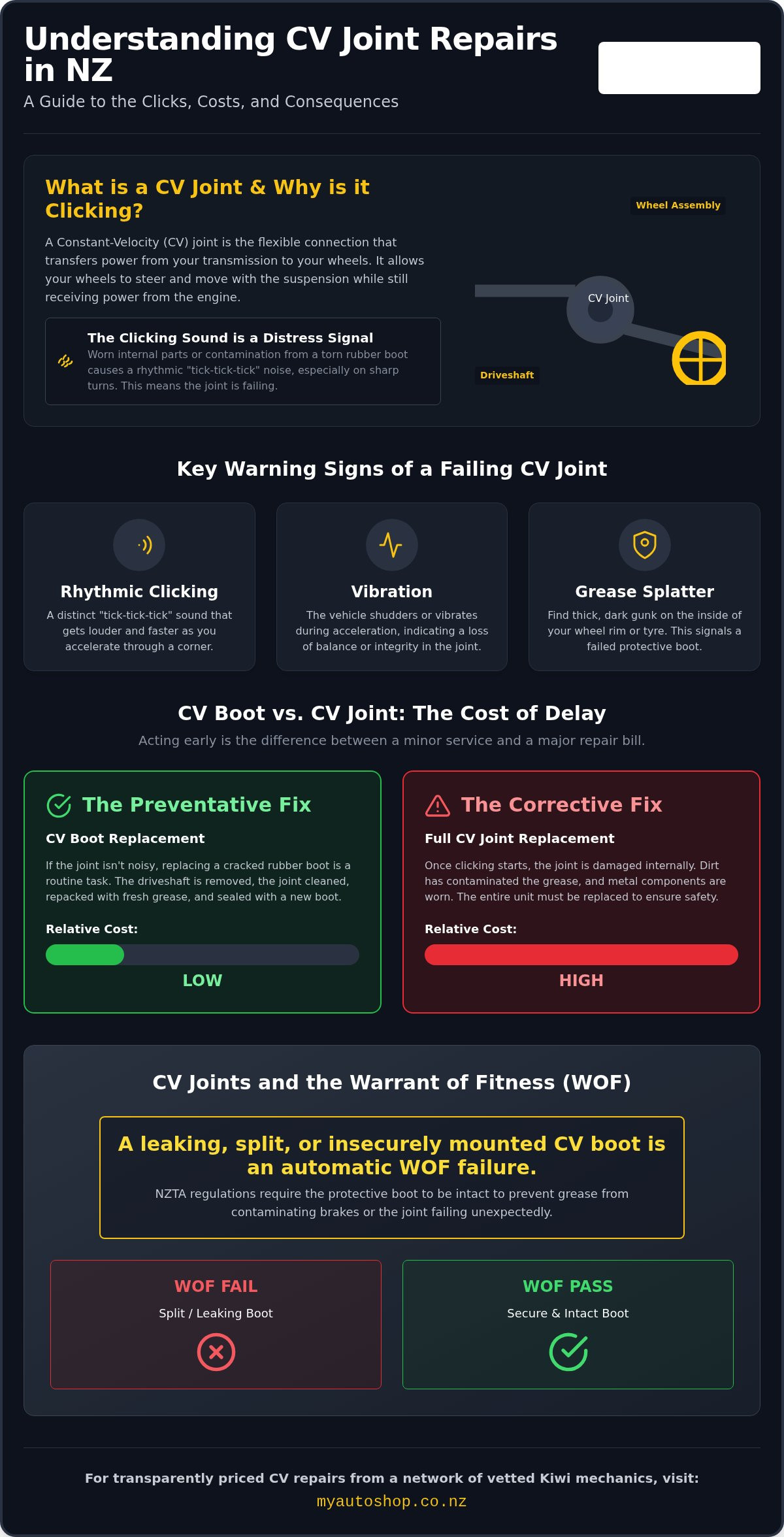
A rubber sleeve known as the CV boot protects this delicate assembly. It keeps high-pressure grease packed around the bearings and seals out the water, salt, and road grime common on New Zealand roads. Once this boot cracks or tears, the countdown to failure begins. Grease flings out, dirt gets in, and the internal components begin to grind themselves apart.
Common Symptoms of a Failing CV Joint
Don’t wait for a breakdown to take action. Keep an eye out for these three red flags that suggest your joint is on its way out:
- Rhythmic clicking or popping: This is the classic sign. It typically gets louder or faster as you accelerate through a corner.
- Vibrations during acceleration: If the car shudders when you pull away from the lights, the joint may be losing its balance or structural integrity.
- Grease on the wheel rim: Look for thick, dark gunk splattered on the inside of your rims or tires. This means the boot has failed and is flinging grease everywhere as the axle spins.
The ‘Click of Death’: Is it Safe to Drive?
A clicking joint won’t usually cause a crash the moment it starts, but it’s a ticking clock. In the short term, you might experience poor handling or annoying noise. However, if the joint seizes or snaps completely, the axle will spin freely without turning the wheel. You’ll lose all power to that side of the car instantly. This is particularly dangerous if it happens while pulling into traffic or climbing a steep hill.
For NZ families, prompt inspection is a non-negotiable safety priority. A total failure at highway speeds can be terrifying and leaves you stranded in potentially dangerous locations. Addressing the issue early often prevents a higher cv joint replacement cost nz by catching the problem while it’s still just a simple boot repair. Driving on a failing joint isn’t just a risk to your wallet; it’s a risk to your safety on the road.
CV Boot vs. CV Joint: The Cost of Delay
Think of the CV boot as a protective shield for your car’s most hardworking joint. This thick rubber sleeve has two vital jobs: keeping high-pressure grease inside the joint and preventing NZ road grit from getting in. It’s a simple, effective barrier. However, rubber eventually perishes. When a boot cracks or tears, the countdown to a higher cv joint replacement cost nz begins. If you catch a split boot early, you’re looking at a routine maintenance task. Wait too long, and that grit turns into a grinding paste that destroys the joint from the inside out.
Regular servicing stops minor issues from becoming major bills. A mechanic looks for signs of perishing rubber or grease spray during a Warrant of Fitness check or a basic oil change. Identifying a small tear now can save you hundreds later. Once the grease is gone, the joint’s metal components rub against each other without lubrication. At that point, the damage is irreversible and the entire unit requires replacement.
Repairing the Boot (The Preventative Fix)
If your CV joint isn’t making noise yet, a “re-boot” kit might be all you need. This involves removing the driveshaft, cleaning the existing joint, and packing it with fresh grease before sealing it with a new rubber boot. Don’t be tempted by “split-boots” that glue together over the axle. While they seem convenient, they often fail quickly on New Zealand’s undulating roads. A proper, solid rubber boot is the only way to ensure long-term protection.
Replacing the Joint (The Corrective Fix)
When the clicking starts, the joint is already compromised. You can’t just put a new boot on a worn joint and expect it to survive. Mechanics distinguish between the inner joint, near the transmission, and the outer joint, near the wheel. While you can replace these individually, many modern cars use complete driveshaft assemblies. This approach is often more efficient for several reasons:
- Labor Efficiency: Swapping a whole shaft is faster than disassembling and cleaning an old one.
- Comprehensive Care: You get two fresh joints and two new boots, reducing the chance of another failure soon.
- Reliability: A factory-sealed assembly is often more durable than a rebuilt unit.
This method often provides better value for your cv joint replacement cost nz in the long run. If you’ve noticed grease on your wheels or heard a faint click, it’s time to act. You can easily book a professional CV joint and boot repair through our platform to get ahead of the problem before it escalates.
Breakdown of CV Joint Replacement Costs in NZ
When you search for the factors affecting the cv joint replacement cost nz, you often find “parts-only” prices that look surprisingly low. Don’t let these figures mislead you. A professional repair involves much more than just the component itself. You need to account for specialized labor, high-pressure grease, and the technical skill required to ensure your drivetrain is safe. Most workshops in New Zealand will quote based on a combination of the part quality you choose and the time it takes to access the axle.
Expect a standard repair to take between 1.5 and 3 hours. This depends heavily on how much of your suspension needs to be dismantled to reach the joint. If your car has lived near the coast and has rusted bolts, that time can quickly climb. Complexity varies significantly between a simple front-wheel-drive hatchback and a modern SUV with intricate multi-link suspension.
Vehicle origin plays a massive role in your final bill. Japanese imports like Toyotas or Hondas usually benefit from a massive supply of aftermarket parts in NZ. European brands often require specialized tools or genuine OEM parts that must be sourced from overseas, which naturally pushes the price higher. You also need to factor in GST, specialized grease, and often a wheel alignment to ensure your car drives straight and true after the suspension has been adjusted.
Factors That Influence Your Final Bill
Front-wheel drive cars are generally straightforward. However, All-wheel drive (AWD) systems add complexity, especially if the mechanic needs to work around transfer cases or additional shielding. These extra steps can impact your overall cv joint replacement cost nz. You also have a choice between aftermarket and genuine OEM parts. While aftermarket parts offer a budget-friendly alternative, genuine parts often come with longer warranties and a guaranteed fit. Mechanics also use this time to check your wheel bearings and hub seals. Replacing a small seal while the axle is already out is much smarter than paying for the labor all over again next month.
Estimated Price Ranges by Vehicle Category
For a standard Japanese hatchback, you’re looking at the most affordable end of the pricing spectrum. These parts are readily available in Auckland, Christchurch, and beyond. European luxury or performance vehicles sit at the opposite end. Their components are engineered for higher tolerances, and the labor is often more intensive. If you drive a 4WD or a heavy-duty ute, expect to pay a premium for reinforced joints designed to handle NZ’s off-road tracks and towing demands. Always ensure your quote is comprehensive and includes all consumables to avoid surprises when you pick up your keys.
CV Joints and the Warrant of Fitness (WOF)
Failing a Warrant of Fitness (WOF) is a major inconvenience for any busy Kiwi. In New Zealand, a torn or leaking CV boot is an automatic fail. The NZ Transport Agency (NZTA) considers the integrity of your driveline a critical safety factor. When a boot is compromised, the high-pressure grease that keeps the joint lubricated leaks out. This allows water and grit to enter, which eventually causes the joint to seize or snap. If this happens while you’re driving, you lose power to the wheels instantly. Understanding how the cv joint replacement cost nz relates to your WOF can save you from a stressful day at the garage.
You might wonder if a clicking joint will fail a WOF even if the boot looks fine. Technically, the inspection focuses on the physical condition of the boot and the security of the joint assembly. If the boot is intact and there is no excessive play in the axle, you might pass. However, a clicking sound is a clear sign of internal damage. Most inspectors will record this as a “warning” or “technical note” on your sheet. Ignoring this warning only delays the inevitable and likely increases your eventual cv joint replacement cost nz as the damage worsens over time.
Why NZ Road Conditions Are Hard on CV Boots
New Zealand’s unique geography is particularly harsh on vehicle underbodies. Our extensive network of gravel roads and metal tracks poses a constant threat. Flying stones and debris can easily puncture the rubber bellows of a CV boot during a weekend trip. If you live in a coastal area, salt air accelerates the degradation of the rubber and corrodes the metal joint once it’s exposed. Even temperature swings in regions like Central Otago cause the rubber to perish faster, leading to small cracks that eventually turn into full-blown tears.
Preparing for Your Next Inspection
Take control of your car’s maintenance before you reach the testing station. Perform a simple visual check at home by turning your steering wheel to full lock and looking for dark, sticky grease splattered inside the wheel arch. If you are in the market for a new vehicle, always invest in pre-purchase inspections to identify hidden driveline issues before you commit to the buy. If you’ve already received a WOF fail for a damaged boot, acting quickly prevents the joint from failing completely. You can book a transparently priced CV Joint & Boot Repair through our platform to get your car back on the road safely and legally.
Book Your CV Repair with My Auto Shop
Mechanical repairs shouldn’t feel like a gamble. We’ve built a platform that puts the power back in your hands by providing instant, transparent quotes for your vehicle. By connecting you with a national network of high-quality NZ mechanics, we ensure you get the right fix at the right price. Whether you’re in a major city or a regional town, our system calculates a fair cv joint replacement cost nz based on your specific vehicle data. This removes the anxiety of being overcharged or surprised by a bill that doesn’t match the initial quote.
Our vetting process is rigorous. We only partner with workshops and mobile experts who meet our high standards for professionalism and reliability. You can browse real customer reviews and compare prices side-by-side. This open-book approach is our signature promise. We value your time as much as your safety, which is why we’ve streamlined the entire process from the initial diagnosis to the final sign-off. You get the confidence of an expert repair without the usual industry jargon.
The My Auto Shop guarantee is built on financial clarity. When you book through us, the price you see is the price you pay. This includes the parts, the labor, and the specialized consumables like high-pressure grease and hub seals. We act as your transparent partner, stripping away the opaque practices of the past. If your mechanic finds additional issues during the repair, they’ll communicate with you directly before any extra work begins. This commitment to openness is why thousands of Kiwi drivers trust us with their vehicle maintenance.
The Convenience of Mobile Mechanical Services
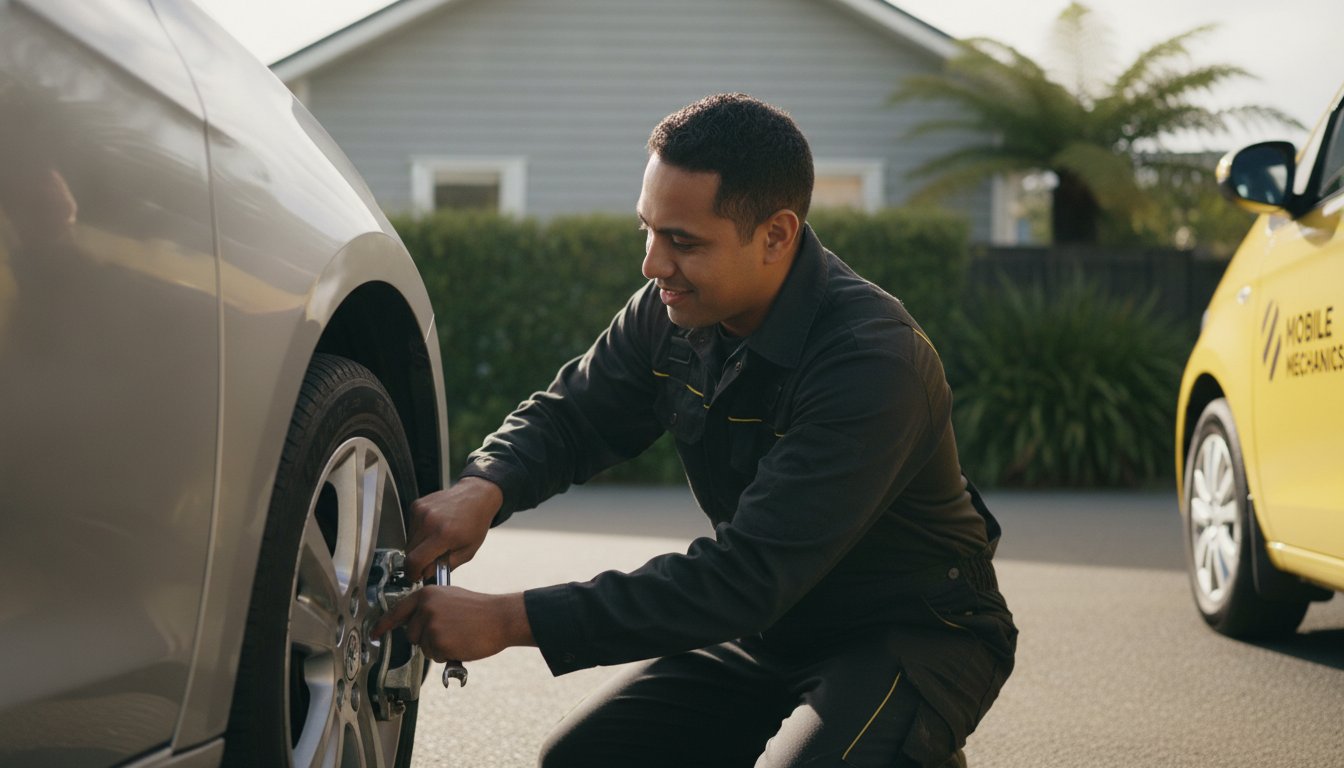
Many drivers wonder if a mobile mechanic can handle complex driveline issues. Our mobile experts are fully equipped to perform thorough inspections right in your driveway or at your workplace. This is a game-changer for busy families who can’t afford to lose a day to a workshop waiting room. They’ll assess the damage, confirm if it’s a simple boot repair or a full joint failure, and explain the next steps clearly. Learn more about the Benefits of a mobile mechanic to see how this service fits your lifestyle and saves you valuable time.
How to Book in Under Two Minutes
Booking your repair is faster than making a cup of coffee. We’ve designed our digital experience to be as punchy and efficient as possible. Follow these simple steps to secure your repair:
- Enter your registration number to identify your specific car model.
- Select ‘CV Joint & Boot Repair’ from our list of core services.
- Compare local workshop prices and reviews instantly.
- Choose a time and location that works for you.
Don’t let a clicking joint turn into a roadside breakdown or a failed WOF. Our system ensures you get a competitive cv joint replacement cost nz without the stress of hidden fees. Book your CV Joint replacement today and get back on the road with total peace of mind.
Drive Safely with Transparent Mechanical Care
Identifying that rhythmic clicking sound early is the best way to keep your maintenance bills manageable. By catching a split boot before the joint is contaminated, you avoid the higher cv joint replacement cost nz associated with a full axle overhaul. This proactive approach doesn’t just save you money; it ensures your vehicle remains roadworthy and safe for your family before your next WOF inspection. You no longer have to worry about hidden fees or mechanical jargon when your car needs attention.
We’ve simplified vehicle maintenance by connecting you with a vetted national mechanic network that values your time and safety. With our fixed-price repair quotes and a 4.8/5 star service rating, you can book your fix with total confidence. Our platform acts as your reliable partner, bridging the gap between traditional labor and modern digital convenience. Get an instant quote for CV joint replacement today and see how easy professional car care can be. Your car deserves expert service, and you deserve a stress-free experience.
Frequently Asked Questions
How much does a CV joint replacement cost in NZ on average?
The cv joint replacement cost nz depends heavily on your car’s make and the labor required to access the axle. Japanese vehicles are typically the most budget-friendly because parts are readily available. European brands or 4WDs often require more expensive components and specialized tools. Using our platform allows you to see exact, transparent pricing for your specific vehicle before you book.
Can I drive my car with a clicking CV joint?
You should avoid driving with a clicking CV joint for any extended period. The noise is a clear signal that the internal bearings are wearing down and could seize or snap at any moment. While the car might still move, a total failure at highway speeds is dangerous and can cause secondary damage to your transmission and suspension components.
How long does it take to replace a CV joint?
A professional CV joint replacement usually takes between 1.5 and 3 hours to complete. This timeframe includes the time needed to dismantle the suspension, remove the driveshaft, and install the new parts. If your vehicle has significant rust or a complex multi-link suspension, the job may take slightly longer to ensure everything is aligned and torqued to factory specifications.
Will a torn CV boot fail a WOF?
Yes, a split or leaking CV boot will result in an automatic failure during a New Zealand Warrant of Fitness inspection. The inspector checks these boots to ensure the joint is protected from road grit and water. If they find any tears or grease spray, you’ll need to have the boot or the entire joint replaced before your car is legally roadworthy.
Is it better to replace just the joint or the whole driveshaft?
It is often more efficient to replace the entire driveshaft assembly instead of just the individual joint. This method reduces labor time and gives you the peace of mind that both the inner and outer joints are fresh. Choosing a complete assembly is a smart way to manage your repair budget while ensuring the long-term reliability of your drivetrain.
What happens if my CV joint breaks while I’m driving?
If your CV joint breaks while you are driving, your car will lose power to the wheels instantly. The engine will rev, but the vehicle won’t move because the broken axle can no longer transfer torque. This can be particularly dangerous in heavy traffic or on steep hills. You’ll likely need a tow to a workshop to prevent further mechanical damage.
Why is my CV joint clicking after I just replaced the boot?
Clicking after a boot replacement suggests that the joint was already worn beyond repair before the new boot was fitted. Once grit enters the joint, it causes physical damage to the internal grooves that grease cannot fix. This is why we recommend a full inspection to see if a joint replacement is necessary rather than just a preventative boot swap.
Are mobile mechanics able to fix CV joints?
Qualified mobile mechanics are fully capable of replacing CV joints and boots at your home or work. They use specialized pullers and tools to complete the job on-site, saving you a trip to the workshop. Booking a mobile service is a convenient way to handle your cv joint replacement cost nz without disrupting your daily schedule or paying for a tow.
Disclaimer
This article provides general information only and should not be relied on as professional mechanical, safety or legal advice. Vehicle requirements and circumstances vary. If you are unsure about your vehicle, have it inspected by a qualified automotive professional.