
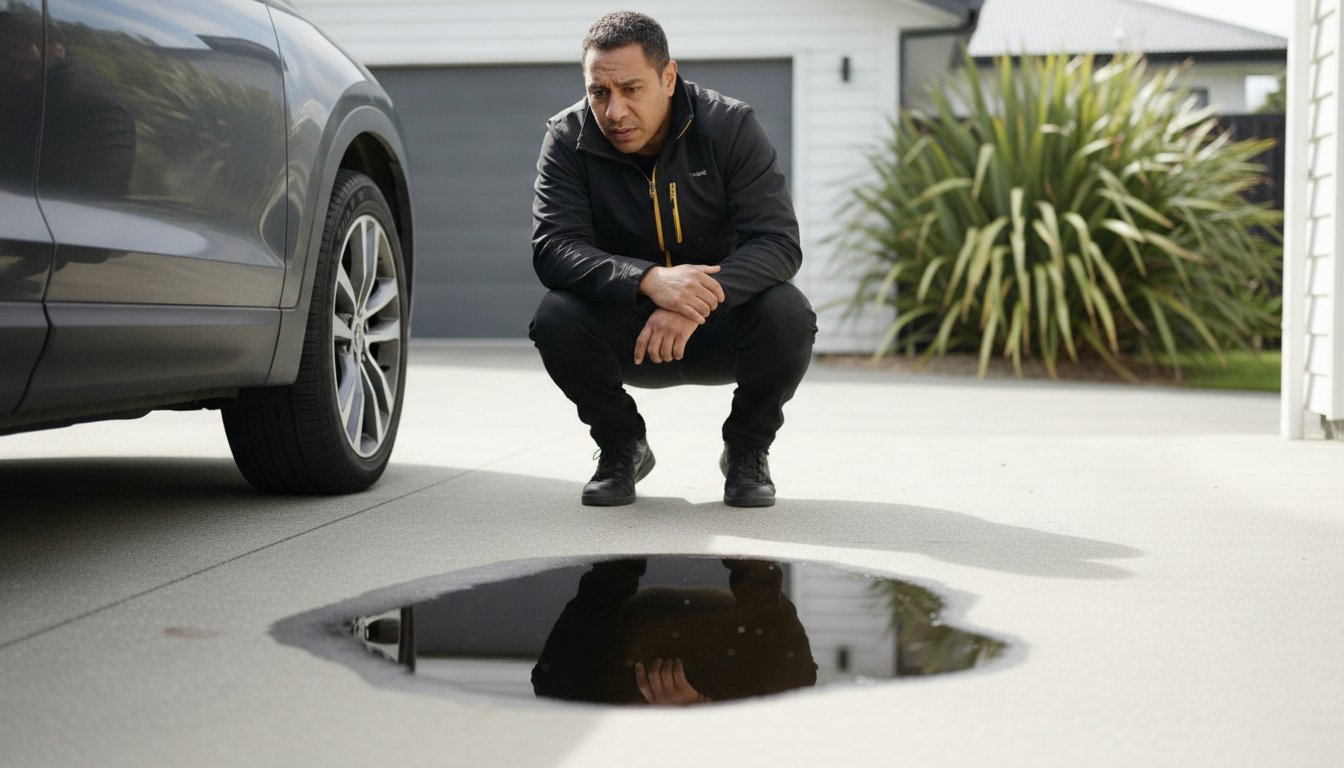
Did you know that approximately 10% of vehicles on the road are currently operating with some form of oil leakage? While it might seem common, seeing a fresh stain on your driveway still triggers a pit in the stomach for most Kiwi drivers. You’re likely wondering about the driving with an engine oil leak risks and if you can squeeze in one more trip to the shops before your engine has a total meltdown. It’s an anxious position to be in, especially when you depend on your car to keep your busy life moving.
We’re here to clear up the confusion and strip away the stress. This guide breaks down the critical dangers of ignoring a leak, from minor gasket drips to the terrifying reality of engine seizure or fire hazards. We’ll help you understand how to handle the situation safely and provide clarity on what these repairs typically involve in the New Zealand market. You’ll learn how to gauge the severity of the drip and find the most convenient way to get a professional diagnosis without the fear of getting stranded on the motorway.
Key Takeaways
- Identify the driving with an engine oil leak risks, from total engine seizure to fire hazards that can put your safety at risk.
- Learn how to use the “Drip vs. Flow” triage method to decide if your vehicle is safe to drive or needs an immediate tow.
- Master the correct way to check your dipstick and establish an oil baseline to prevent friction damage on your next trip.
- Understand how oil leaks can degrade rubber belts and hoses, turning a simple seal replacement into a much larger repair bill.
- Discover why a mobile mechanic is the most convenient way to diagnose a leak at home and keep your car compliant with NZ WoF standards.
Understanding Engine Oil Leaks: More Than Just a Puddle
An engine oil leak is more than a nuisance for your driveway or a stain on the garage floor. It represents a physical breach in your engine’s sealed lubrication system. To grasp why this matters, we first need to look at What is engine oil? and its protective role. Think of oil as the lifeblood of your vehicle. It performs the heavy lifting of reducing friction between fast-moving metal parts while simultaneously carrying heat away from the engine’s core. When this system develops a hole, your engine loses its primary defence against heat and wear.
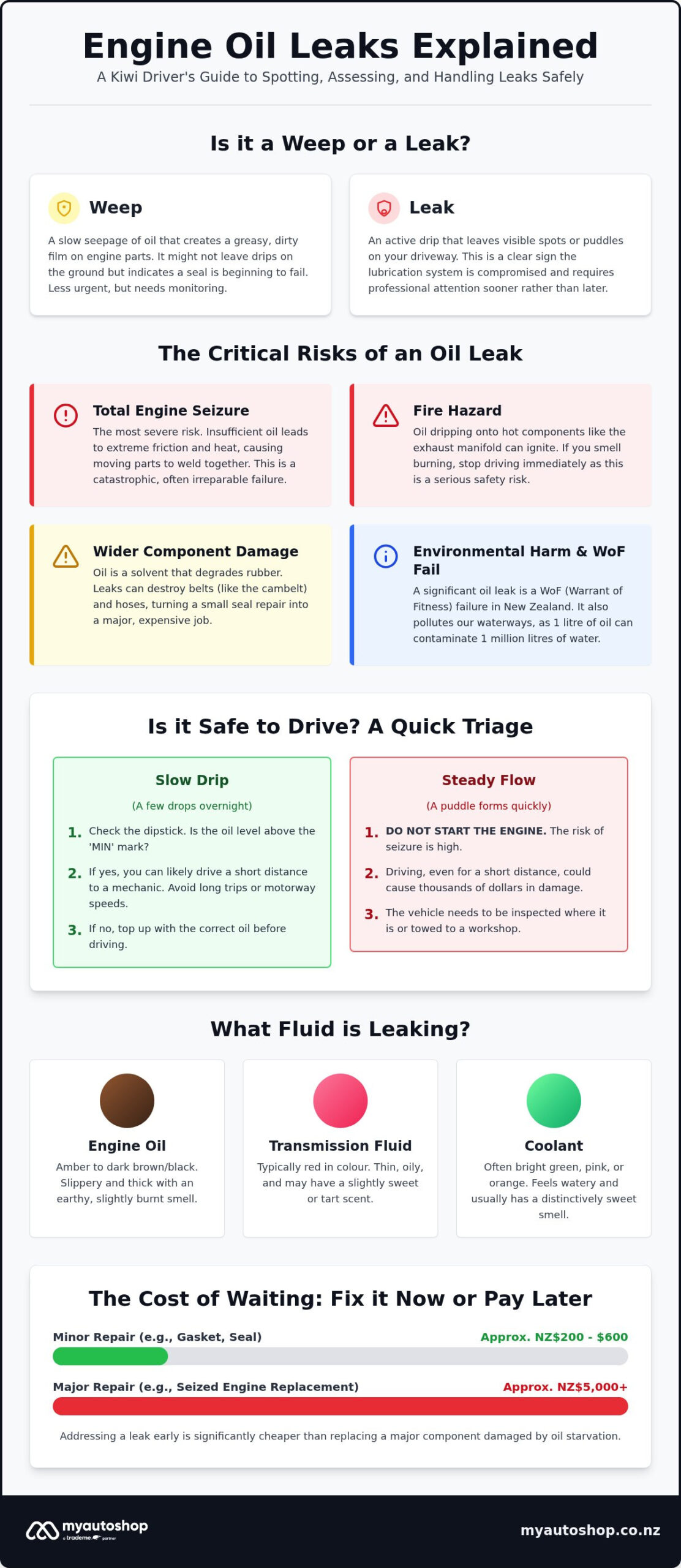
In the workshop, we often differentiate between a “weep” and a “leak.” A weep is a slow seepage that creates a greasy film on engine components but doesn’t quite make it to the ground. While less urgent, it’s a sign that a seal is starting to fail. A leak is an active drip that leaves visible puddles. Both contribute to the driving with an engine oil leak risks because they indicate that the internal pressure of your lubrication system is compromised. Even a small drop can lead to a significant loss over a long road trip.
Common Causes of Leaks in Passenger Vehicles
Gaskets and seals are your engine’s unsung heroes. They keep the oil in and the dirt out. Most leaks originate from these components once they reach the end of their lifespan. They endure thousands of heat cycles, eventually becoming brittle and losing their ability to hold a seal. The valve cover gasket, located at the very top of the engine, is a frequent offender. Down below, the oil pan gasket or the front and rear main seals can also fail.
Sometimes the cause is human error or bad luck on the road. A loose oil filter or a missing drain plug washer from a previous service can cause a messy situation. In other cases, New Zealand’s rugged backroads or high speed bumps might cause physical damage to the oil pan itself. A small crack in the metal can lead to a rapid loss of fluid that puts your engine at immediate risk.
Identifying the Fluid: Is it Definitely Engine Oil?
Not every puddle under your car is cause for a tow truck. You can perform a quick triage at home by checking the fluid’s characteristics. Fresh engine oil usually appears as a clear amber liquid, but it quickly turns dark brown or black as it works. Use the “Touch and Smell” test to be sure. Engine oil is distinctly slippery and thick, with a heavy, earthy, or slightly burnt scent.
It’s vital to rule out other fluids that might mimic a leak. If the liquid is watery and bright pink or green, it’s likely coolant. If it’s thin, oily, and red, you might be looking at transmission fluid. Identifying the fluid correctly helps you understand the specific driving with an engine oil leak risks you are facing. It ensures you get the right help when you call a mechanic and prevents unnecessary anxiety about your car’s health.
The Critical Risks of Driving With an Engine Oil Leak
Ignoring a leak turns a simple maintenance task into a high-stakes gamble. The most immediate of the driving with an engine oil leak risks is total engine seizure. When your oil level drops too low, the protective film between moving metal parts disappears. Friction generates intense heat, causing components to expand until they literally weld together. This usually happens at motorway speeds, leaving you stranded with a car that’s effectively a write-off. It’s a sudden, violent end to an engine that could have been saved by a simple gasket change.
Beyond the engine internals, leaking oil is a silent predator for your car’s rubber components. Modern engines are packed with coolant hoses, drive belts, and sensitive sensors. Because oil is a petroleum-based solvent, it causes rubber to swell and soften over time. A small leak from a valve cover can easily drip onto your cambelt, leading to a premature snap and catastrophic valve damage. While a minor seal repair might only cost a few hundred dollars, replacing a seized or damaged engine can easily exceed NZ$5,000. The math is simple: fix the drip now or pay for a new car later.
There’s also an environmental and personal safety cost to consider. In New Zealand, our stormwater systems often lead directly to local beaches and streams. A single litre of used motor oil can contaminate a million litres of fresh water, damaging the clean, green environment we all value. Beyond the ecosystem, there are significant health risks of engine oil exposure for you and your family if it’s constantly pooling in your garage or driveway. Used oil contains heavy metals and chemicals that shouldn’t be part of your home environment.
The Fire Hazard: Oil on Hot Engine Components
Your engine operates at incredibly high temperatures. If oil drips onto a red-hot exhaust manifold, it can ignite instantly. If you notice a sharp, acrid smell like burning toast or see wisps of blue smoke from under the bonnet, pull over immediately. This isn’t just a mechanical failure; it’s a safety emergency. Always keep a close eye on your temperature gauge, but trust your nose first. If smoke appears, don’t open the bonnet quickly, as the sudden rush of oxygen can feed a small flame.
WOF Failures and Legal Compliance in NZ
In New Zealand, an active oil leak is more than an eyesore. It’s a common reason for a Warrant of Fitness (WOF) failure. Inspectors specifically look for “dripping” leaks that contaminate the chassis or, worse, drip onto brake discs or tyres. Oil on your brakes drastically reduces stopping power, making your car a hazard to everyone on the road. Maintaining a roadworthy vehicle is your legal responsibility under NZ transport law. If you aren’t sure where that puddle is coming from, booking a mobile mechanic to inspect it at your driveway is the smartest way to stay compliant without the risk of driving a dangerous car.
Assessing the Severity: Can You Make it to the Workshop?
Before you turn the key, you need to perform a quick triage. Not all leaks are created equal, and understanding the “Drip vs. Flow” method can save you from a massive repair bill. The fundamental rule is simple: “safe to drive” is always relative to your current oil level. A small leak is manageable if your sump is full, but a tiny drip becomes a disaster if your oil level is already at the “minimum” mark on the dipstick. You should always check your levels before deciding to head out.
You also need to identify when the leak occurs. A leak that only happens while the engine is running is significantly more dangerous than a static drip. When the engine is on, the oil pump creates high pressure to move fluid through the block. A breach under pressure can turn a slow seep into a rapid spray, emptying your engine’s lifeblood in a matter of minutes. A critical leak is defined as any loss of fluid that leaves a continuous trail on the road or causes your oil pressure light to flicker, which requires an immediate stop and a tow to prevent terminal engine failure.
The 10-Minute Puddle Test
Grab a clean piece of cardboard and slide it under the engine bay while the car is parked. Leave it for ten minutes with the engine running, then check the results. A few small spots indicate a “weep” that you can likely monitor while driving straight to a workshop. However, a spreading pool that covers the cardboard suggests an active, high-volume leak that is too risky to ignore on the road.
Beyond the mechanical danger, consider the environmental impact of oil leaks on our local NZ ecosystems. If the rate of loss is so high that you have to top up the oil every few kilometres, the car isn’t roadworthy. You’re essentially dumping toxic waste onto the road, which will eventually wash into our storm drains and harbours. At this point, the driving with an engine oil leak risks outweigh the cost of a professional tow or a mobile repair.
Monitoring Your Dashboard Warning Lights
Your car has two primary ways of telling you something is wrong, but they don’t mean the same thing. A yellow “Low Oil Level” light is a warning that you’re running low and need to top up soon. It’s a courtesy light. The red “Low Oil Pressure” light is an emergency siren. It means oil is no longer reaching the critical parts of your engine. If this light comes on, your engine could seize within seconds. Stop the car as soon as it’s safe to do so.
Don’t rely solely on these sensors. Modern electronics can be temperamental and might not trigger a warning until the damage is already happening. Regularly checking your dipstick is the only way to establish a true baseline of how much oil you’re losing. If you’re seeing smoke or smelling burning oil, the sensors have already missed the window for early intervention, and the driving with an engine oil leak risks have become a reality.
Immediate Steps to Take When You Spot a Leak
Finding a fresh puddle under your car is stressful, but your immediate actions determine whether you face a quick fix or a total engine rebuild. Safety is your first priority. If you notice a leak while out and about, pull over to a level surface as soon as possible. Turn off the ignition and let the engine cool for at least 15 minutes. This cooldown period is essential for two reasons. It prevents burns from hot components and allows the oil to settle back into the sump for an accurate reading.
Once the engine is cool, pull the dipstick, wipe it clean with a rag, reinsert it fully, and pull it out again. This establishes your baseline. If the oil level is below the minimum notch, do not start the engine. Understanding the driving with an engine oil leak risks means accepting that even a short trip with low oil can cause permanent damage. If you must top up, always check your owner’s manual for the correct oil viscosity. Using a 10W-40 oil when your car requires 5W-30 can interfere with sensitive timing components and potentially worsen the leak.
Avoid the temptation of “stop-leak” additives found on shop shelves. While these products claim to rejuvenate seals, they often work by causing rubber components to swell unnaturally. In modern engines with narrow oil galleries, these chemicals can lead to clogs that starve your engine of lubrication. It’s a “quick fix” that often creates much larger problems down the road. Stick to fresh oil and professional advice instead.
How to Safely Top Up Your Engine Oil
If your oil is low but you haven’t reached a critical “no-drive” state, you can top it up to reach a workshop. Add oil in small increments, usually about 250ml at a time. Wait a minute for the fluid to reach the sump and re-check the dipstick. Be extremely careful not to overfill. Excess oil increases the internal pressure within the engine, which can blow out weakened gaskets and seals, turning a minor weep into a major flood. If you don’t have the right oil on hand, it’s better to stay put than to risk using the wrong grade or driving bone-dry.
Temporary Fixes vs. Professional Repairs
Topping up your oil is a “limp-home” strategy, not a solution. It might keep the engine moving for another 20 kilometres, but it doesn’t address the underlying breach in the system. Ignoring a small leak is a recipe for a more expensive failure later on. A small drip today can easily lead to the driving with an engine oil leak risks we’ve discussed, such as ruined belts or a failed WOF. Adopting a “fix it once, fix it right” mentality is always the most cost-effective path for Kiwi car owners. If you’re stuck at home or work and worried about the drive, the smartest move is to book a Mobile Mechanic to diagnose the issue right in your driveway.
Professional Diagnosis and Repair with My Auto Shop
My Auto Shop is designed to take the guesswork out of car care. We act as a transparent partner, helping you move past the anxiety of hidden costs and confusing mechanical jargon. When you are weighing up the driving with an engine oil leak risks, the most important thing you need is clarity. Our platform connects you with a national network of professional mechanics who prioritise your safety and your time. Instead of wondering if that puddle is a minor drip or a major disaster, you get a clear, fixed-price quote and a plan to get it sorted.
One of the best ways to stay ahead of these issues is through a regular Comprehensive Service. This isn’t just about changing the oil; it’s about a total health check for your engine. Our technicians look for the subtle signs of wear that you might miss, catching a “weep” before it turns into a “leak.” This preventative approach is the most cost-effective way to maintain your vehicle’s value and avoid the catastrophic engine failures mentioned earlier.
Why a Professional Inspection is Essential
Finding the source of a leak is often harder than it looks. Oil can travel along the engine block or be blown backward by the wind while you drive, making the actual breach hard to spot. Professional mechanics use specialised tools like UV dyes and high-strength degreasers to clean the engine and pinpoint exactly where the fluid is escaping.
It’s also about fixing the root cause, not just the symptom. For example, a leaking gasket might actually be caused by a blocked PCV (Positive Crankcase Ventilation) valve. If you only replace the gasket without fixing the valve, the pressure will just blow out the new seal again. To ensure your car gets the deep-dive it needs, Book a Comprehensive Service to keep your engine healthy and roadworthy.
The Mobile Mechanic Advantage
The driving with an engine oil leak risks your safety and the health of your engine. If you’re worried that your car won’t make it to a traditional workshop, you don’t have to take that gamble. We offer a Mobile Mechanic service that brings the expertise directly to your home or workplace. It’s the safest way to get a diagnosis without putting another kilometre on a potentially damaged engine.
This service fits into your busy life, removing the need to arrange a tow or a lift from a friend. You can continue your day while a pro inspects your car in the driveway. To get an expert on-site and eliminate the stress of an unsafe drive, Book a Mobile Mechanic to diagnose your leak safely on-site. We provide financial clarity from the start, so you know exactly what you’re paying for before the work begins.
Protect Your Engine and Your Peace of Mind
An engine oil leak doesn’t have to be the end of the road for your vehicle. By understanding the driving with an engine oil leak risks, you can make informed decisions that protect both your safety and your bank account. Remember to triage the severity of the drip using the cardboard test and never ignore a red oil pressure light. Addressing a small leak early prevents a minor nuisance from turning into a catastrophic engine failure that could cost thousands to fix.
You deserve car care that fits your schedule and provides total financial clarity. With our NZ-wide network of certified mechanics, you can skip the jargon and get straight to high-quality repairs. If you’re worried about the safety of your car, our mobile service options bring the expert to your driveway. This ensures you don’t have to risk a dangerous trip to the garage when your oil levels are uncertain.
Get a transparent quote for your oil leak repair today and get back on the road with confidence. We’re here to make car maintenance simple, honest, and completely stress-free for every Kiwi driver.
Frequently Asked Questions
Can I drive my car if it is leaking oil?
It depends on the rate of the leak and your current oil level. If the dipstick shows the level is between the markers and the leak is just a slow drip, you can usually drive to a nearby workshop. However, if you see a steady stream or the oil level is below the minimum, do not start the engine. Driving with an engine oil leak risks total engine failure if the lubrication system loses pressure.
How much does it cost to fix an engine oil leak in NZ?
Repair costs vary based on where the leak is coming from and the make of your vehicle. A simple fix like a new drain plug washer is relatively inexpensive, while replacing a rear main seal involves significant labour and a higher investment. Because every car has a different layout, the best approach is to get a transparent, fixed-price quote after a professional diagnosis to avoid any hidden surprises.
Will my car fail its WOF because of an oil leak?
Yes, an active oil leak is a common reason for a Warrant of Fitness failure in New Zealand. Inspectors look for leaks that drip onto the ground or contaminate the vehicle’s chassis and braking system. If oil is found on your tyres or brake discs, it’s considered a major safety hazard. Keeping your engine clean and leak-free is a vital part of maintaining your car’s roadworthy status.
What is the most common cause of an oil leak?
Worn-out gaskets and seals are the most frequent culprits, causing approximately 40% of all oil leaks according to industry data. Over time, the intense heat cycles of the engine cause components like the valve cover gasket to become brittle and lose their seal. Other common issues include physical damage to the oil pan from road debris or a loose oil filter from a previous service.
How long can I ignore a small oil leak?
You shouldn’t ignore any leak, as even a small “weep” can turn into a major failure without warning. While a minor spot on the driveway might not stop the car today, it constantly lowers your oil level and can damage rubber hoses and belts. Fixing it early is always cheaper than dealing with the driving with an engine oil leak risks that lead to a seized engine and a massive repair bill.
Can an oil leak cause a car fire?
Yes, an oil leak is a legitimate fire hazard if the fluid drips onto hot engine components. The exhaust manifold and catalytic converter reach temperatures high enough to ignite motor oil instantly. If you smell burning oil or see blue smoke coming from under the bonnet, pull over and turn off the engine immediately. This prevents a small drip from turning into a dangerous engine bay fire.
Is it worth fixing an oil leak on an older car?
Generally, yes, because the cost of a seal or gasket repair is much lower than the cost of replacing the entire vehicle. Even for older cars, maintaining the lubrication system is essential for reliability and safety. If the car is otherwise in good condition, fixing the leak ensures it stays on the road and remains compliant with NZ transport regulations, preserving its resale value.
What should I do if my oil pressure light comes on while driving?
Pull over and turn off the engine as soon as it’s safe to do so. This red light indicates that your engine is no longer being lubricated, and permanent damage can occur within seconds. Do not attempt to drive further, even for a short distance. Check your oil level once the engine has cooled, but be prepared to call for a mobile mechanic or a tow to avoid terminal engine damage.
Disclaimer
This article provides general information only and should not be relied on as professional mechanical, safety or legal advice. Vehicle requirements and circumstances vary. If you are unsure about your vehicle, have it inspected by a qualified automotive professional.