
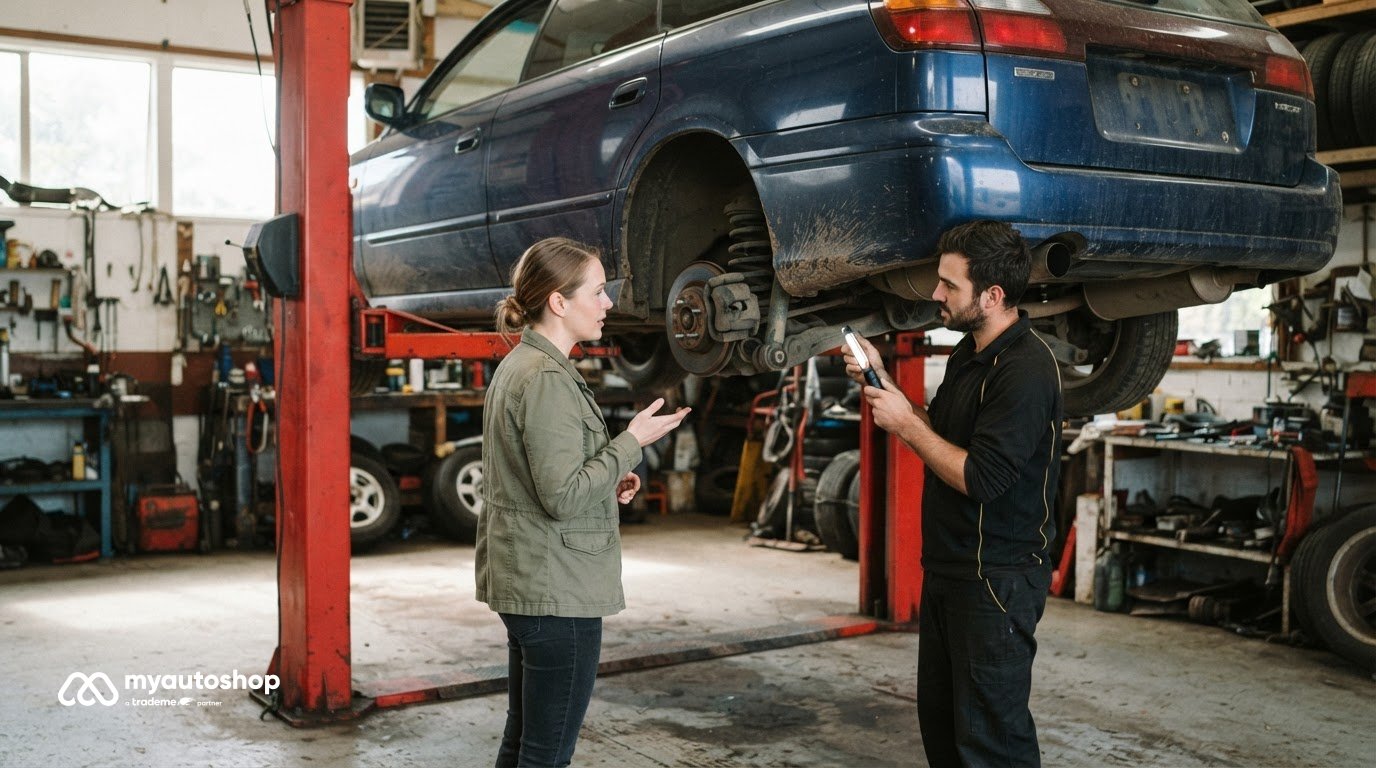
Feeling intimidated at the garage as a woman doesn’t mean you know less about cars. Bias, unfamiliar terminology and fear of being judged can make an ordinary conversation about your vehicle uncomfortable. That reaction is real, but it isn’t proof that you lack confidence or competence.
You may already know what your car is doing, what you want to ask and what decision you need to make. It can still be harder to speak up if you feel self-conscious or believe the person across the counter has more power in the conversation. Recognising those dynamics can help you separate what you know from what you’re feeling in the moment.
This article explores how gender bias, social expectations and garage interactions can affect your confidence. It also offers practical ways to steady yourself, set boundaries and recognise the skills you bring to the conversation, whether you’re discussing a service, repair or concern about how your car is running.
Key Takeaways
- Recognise how gender bias can shape the way assertiveness is perceived, without treating someone else’s reaction as proof you’ve done something wrong.
- Notice when shyness or self-consciousness is affecting what you say, and give yourself a moment to gather your thoughts.
- Use clear boundaries and a pause to respond more confidently if a conversation feels intimidating.
- Remember that you know your car’s history, symptoms and needs, even if you don’t know every mechanical term.
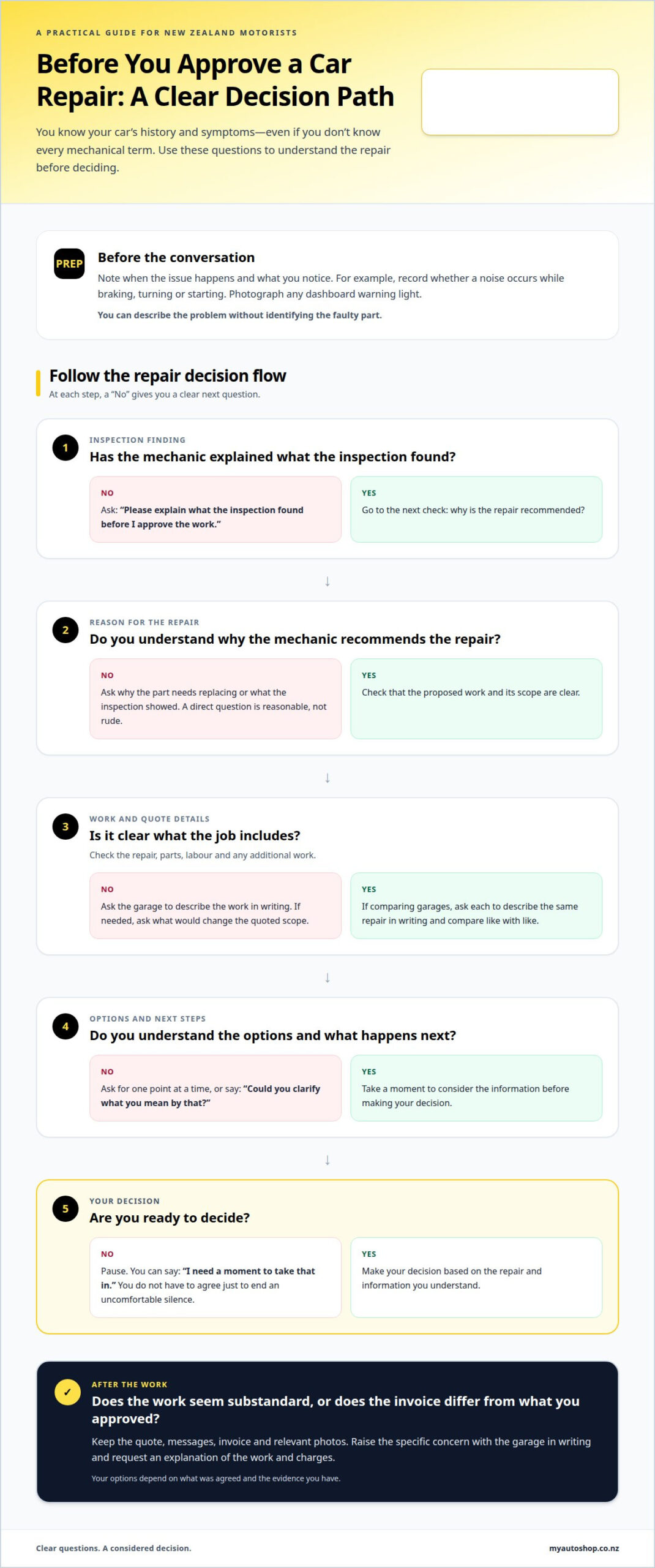
- Ask focused questions about the repair, why it’s needed and what the next steps involve before approving work.
1. Gender bias and perceptions of assertive women
At a garage, a direct question about a repair may be received differently depending on who asks it. Workplace research by Bolino and Turnley found that women perceived as intimidating were seen as less likeable and less capable than men perceived the same way. That double standard can make a woman’s confidence seem abrupt when she is simply asking for a clear explanation. Asking why a mechanic recommends replacing a part is reasonable, not rude.
Know the difference between assertiveness and aggression. Assertiveness means stating what you need, such as, “Please explain what the inspection found before I approve the work.” If someone calls that intimidating, the label alone doesn’t prove your tone or request was inappropriate. Social cues can also be misread: a serious expression may reflect concentration or nerves, not anger. Focus on specific words and actions rather than accepting a vague judgement about your personality.
To compare garage quotes in New Zealand, ask each garage to describe the same repair, parts, labour and any additional work in writing. Compare like with like, and ask what would change the quoted scope; a guide to clear repair pricing can help you understand what to look for.
If work seems substandard or the invoice differs from what you approved, keep the quote, messages, invoice and relevant photos. Raise the specific concern with the garage in writing and request an explanation of the work and charges. Your options depend on what was agreed and the evidence you have.
Women-owned and women-friendly mean different things: one describes ownership, the other the customer experience. If a welcoming conversation matters to you, look for specific details in customer feedback, such as staff explaining options clearly and answering questions without dismissing them. A label alone can’t tell you how a particular visit will feel.
Before your appointment, note when the issue happens, what you notice and any warning lights. For example, record whether a noise occurs while braking, turning or starting, and photograph a dashboard warning. These details help you describe the problem without having to identify the faulty part yourself.
Customer reviews can reveal patterns in communication, such as repeated comments about clear explanations or unresolved complaints. Motor Trade Association (MTA) membership is another factor to consider, but neither membership nor reviews prove how every repair will go. Look for feedback relevant to your needs, then keep the garage’s written estimate and approval records.
Recognising feelings of shyness and self-consciousness
Feeling intimidated at the garage as a woman can begin before you’ve spoken to anyone. You might rehearse a simple question in the car park, worry about sounding uninformed or feel your shoulders tense as you approach the counter. Notice these reactions as they happen. Naming a feeling, such as “I’m anxious about being judged,” can help separate it from the task of discussing your car.
During an appointment, notice how you respond. Perhaps you agree before you feel ready, laugh when something bothers you or speak much more softly than usual. These reactions can signal discomfort, not a lack of knowledge. Rather than criticising yourself, take them as a cue to slow the conversation and choose what you want to say next.
Separate what happened from what you think it meant. “The mechanic interrupted me” describes an observable action. “They think I’m silly” is an interpretation. Keeping the two distinct can stop one awkward exchange from defining the whole visit. If you’re unsure what someone meant, ask a neutral follow-up, such as, “Could you clarify what you mean by that?”
If feeling intimidated at the garage as a woman makes it hard to stay present, ground yourself in your surroundings. Feel both feet on the floor, take a slow breath and focus on your next sentence rather than the entire appointment. You might say, “I need a moment to take that in.” A short pause gives you room to respond deliberately instead of agreeing just to end an uncomfortable silence.
You can guide the conversation without preparing a written list. At the start, say what would make the discussion useful: “I’d like to understand the options before making a decision.” If a technical explanation moves too quickly, ask the mechanic to explain one point at a time. This sets a clear pace and gives you a chance to check your understanding.
After the visit, assess the interaction using specific details rather than replaying every expression or pause. Ask yourself whether you could speak, whether your concerns were addressed and whether you felt free to take your time. If one part felt uncomfortable, identify what you’d like to handle differently next time. That reflection turns self-consciousness into useful information, not a verdict on your abilities.
If someone feels intimidated by a woman, consider the reasons for that reaction instead of making her self-conscious about it. The feeling is worth examining, but it isn’t evidence that she has done something wrong or needs to change how she speaks. Keeping responsibility for the reaction with the person experiencing it can make room for a more respectful conversation.
Developing a strong sense of self and navigating complex social situations typically takes ongoing work throughout life. People may respond to social situations in different ways, and it can be useful to consider what is contributing to discomfort without assuming its cause. This leaves room for curiosity while still taking a woman’s experience and boundaries seriously.
3. Power dynamics and intimidation
A garage conversation can feel unequal when one person controls the technical information and repair process. A mechanic might use unfamiliar terms while you’re deciding whether to approve work. That imbalance can make it harder to interrupt, ask for clarification or take time to decide. It doesn’t automatically mean anyone intends to intimidate you, but noticing the dynamic can help you choose how to respond.
Past experiences can affect how you interpret a new interaction. If you feel unsettled, focus on observable behaviour: note the exact words used, whether your question was answered and whether the response changed after you asked for clarity. Another person may interpret a quiet manner or direct question as hostile. At a garage, distinguish observable behaviour from assumptions.
Intimidation can reinforce power differences by discouraging people from speaking up. It may be verbal, physical or written. In a repair conversation, this could mean being shouted at, receiving a message pressuring you to agree immediately or having someone use their physical presence to make you feel unsafe. One tense exchange doesn’t prove a pattern, but repeated pressure or dismissive conduct deserves attention.
Pause before responding. Take a breath and identify what you need next: an explanation, time to consider or an end to the conversation. Set a clear boundary, such as, “Please explain the reason for this repair before asking me to approve it.” If the behaviour continues, repeat the boundary once, then leave the conversation or premises if you feel unsafe. You don’t need to confront someone to prove your confidence.
Calling out intimidation directly can carry personal and professional risks in some situations. If you’re concerned about the consequences, focus on practical steps: keep relevant messages, write down what happened while it’s fresh and tell someone you trust. For example, record the date, the words used and whether anyone witnessed the interaction. Those details can help you describe the issue accurately if you later decide to raise it.
Look for patterns rather than trying to diagnose someone’s motives. Repeated threats, humiliation, deliberate exclusion or pressure to stay silent differ from a mechanic being brief or having a busy day. If a conversation becomes disrespectful, state what needs to change and leave if your boundary isn’t respected. You can make your next decision once you’re somewhere you can think clearly.
Intimidation can maintain power dynamics and social hierarchies by suppressing dissent and marginalising people who speak up. Focus on what you can observe rather than inferring a motive. Someone may also project their own feelings of intimidation onto a person who isn’t acting intimidatingly. Keep that possibility in mind without dismissing your own experience.
When someone intimidates you, pausing to take a breath can help you assess what is happening. State a boundary clearly and repeat it if needed to show that the behaviour isn’t acceptable to you. Calling out intimidation can carry risks to a person’s career, reputation and well-being, so choose a response that feels safe.
4. Reminding yourself of your skills and capabilities
Garage knowledge isn’t the only expertise that matters in a repair conversation. You already make decisions by weighing evidence, identifying priorities and asking for reasons. Those abilities apply here too. You can listen to a recommendation, consider whether the explanation makes sense and decide what you’re comfortable approving. You don’t need to know how to carry out the repair to take an active role in that decision.
Think of a choice you’ve handled confidently elsewhere, such as comparing household services or planning a major purchase. You likely considered what mattered, noticed unclear details and decided when you had enough information. The same approach can help with a repair discussion. Focus on the decision in front of you, not on matching the mechanic’s technical vocabulary.
- Use your judgement: Notice whether the explanation connects the recommended work to the issue being discussed.
- Set your priorities: Be clear about what matters most to you, such as understanding the options before agreeing to work.
- Choose your pace: You can take time to consider information rather than decide during a conversation.
- Recognise your contribution: Your observations and preferences help shape a discussion about your own vehicle.
Confidence can mean recognising what you don’t know without apologising for it. Saying, “I’m not familiar with that term,” is clear and practical. It identifies a gap in understanding, not a lack of ability. You’re entitled to decide whether an explanation is clear enough for you to make an informed choice.
Notice how you handle the conversation, not just its outcome. Did you identify what mattered to you? Did you make a decision that reflected your priorities? Those are useful signs of capability, even if you felt nervous. If the discussion left you uncertain, treat that as information about the support or explanation you need next time, not proof that you can’t manage car care.
Before agreeing to any work, remind yourself that your role is to make a decision, not to prove your technical expertise. You can ask for time, consider the information and choose what suits your circumstances. Mechanics bring knowledge of vehicles; you bring an understanding of your needs and the right to decide. Both matter in a useful repair conversation.
5. What questions should I ask a mechanic before approving car repairs?
Before approving a repair, ask what the mechanic found, why the work is needed and what might happen if you wait. These questions connect the recommendation to your car’s symptoms and help you avoid feeling pressured by technical language. You can also ask for the explanation and proposed work in writing, so you have clear details to review.
Start with the diagnosis. Ask, “What did your inspection show?” and “How does that explain the noise, warning light or change in handling I noticed?” If the answer includes unfamiliar terms, request a plain-language explanation. For example, ask what a damaged CV joint does and how it relates to a clicking sound while turning.
- What work are you recommending? Ask the mechanic to identify the repair and the part involved, such as a radiator hose or suspension component.
- Why is it needed now? Ask what condition was found and whether it affects the symptom or safe operation of the vehicle.
- What is included in the quote? Clarify parts, labour, and any checks or related work included in the proposed job.
- Could anything change the quoted work? Ask what additional findings might affect the scope, and how the garage will discuss those with you.
- What will I notice after the repair? Ask which symptom the work is intended to address and whether anything will need monitoring.
Use the written quote to confirm you understand the proposed work before approving it. If you have another quote, compare the repair descriptions and included work, not just the total. One quote, for example, may include a diagnostic check while another covers only replacement of the named part. Ask the mechanic to explain any differences you can’t account for.
Be specific about what you approve. You could say, “I’m approving the radiator repair described in this quote. Please contact me before adding other work.” That gives both sides a clear record of the decision. Keep the quote, messages and final invoice together, especially if the completed work or amount differs from what you discussed.
If you’re not ready to decide, say, “I’d like time to read the quote and understand the options.” Pausing is better than agreeing while confused. Ask how long the quote applies and whether the vehicle can be collected or needs to stay at the garage. These details help you plan without guessing.
For a repair such as a CV joint or radiator issue, ask the mechanic to connect the finding to your car’s symptoms. You can also explore repair service options to understand the types of work available.
My Auto Shop
My Auto Shop connects New Zealand motorists with professional mechanics and offers Pre-purchase Inspections, Basic Services and Comprehensive Services. For mobile vehicle servicing and repairs, the provider is Turners Service & Repairs, which operates in selected regions. Choose the option that suits your vehicle and circumstances, whether you’re arranging routine maintenance or assessing a car before buying.
If you’d like to discuss your vehicle needs, contact My Auto Shop.
Take your next step with confidence
You don’t need to become a mechanic to feel more at ease discussing your car. Treat your next visit as a chance to practise asking for the information you need, and take someone you trust along if that helps you feel comfortable. If you’re feeling intimidated at the garage as a woman, remember that your questions belong in the conversation.
My Auto Shop can connect you with professional mechanics through its network. Choose a Basic Service or Comprehensive Service for maintenance, or a Pre-purchase Inspection when you’re considering a used car. Having a clear starting point can make it easier to discuss what your vehicle needs and decide what to do next.
Contact My Auto Shop today to discuss your vehicle needs. You can take the next step at your own pace, with your questions ready and your voice included.
Frequently Asked Questions
What should I do if I feel pressured or patronised at a garage?
Pause the decision and ask to speak with the person overseeing the repair discussion. You can bring someone you trust into the conversation or ask for follow-up by email, giving yourself time to consider the information. If the interaction still feels uncomfortable, take your vehicle and raise the concern with the garage’s manager in writing. Keep your message factual: describe what was said and the outcome you’re seeking.
Are there women-friendly or women-owned mechanics in New Zealand?
Women-owned refers to ownership, while women-friendly describes the customer experience. Look for customer feedback mentioning clear explanations and staff who answer questions without dismissing them.
Disclaimer
This article provides general information only and should not be relied on as professional mechanical, safety or legal advice. Vehicle requirements and circumstances vary. If you are unsure about your vehicle, have it inspected by a qualified automotive professional.