
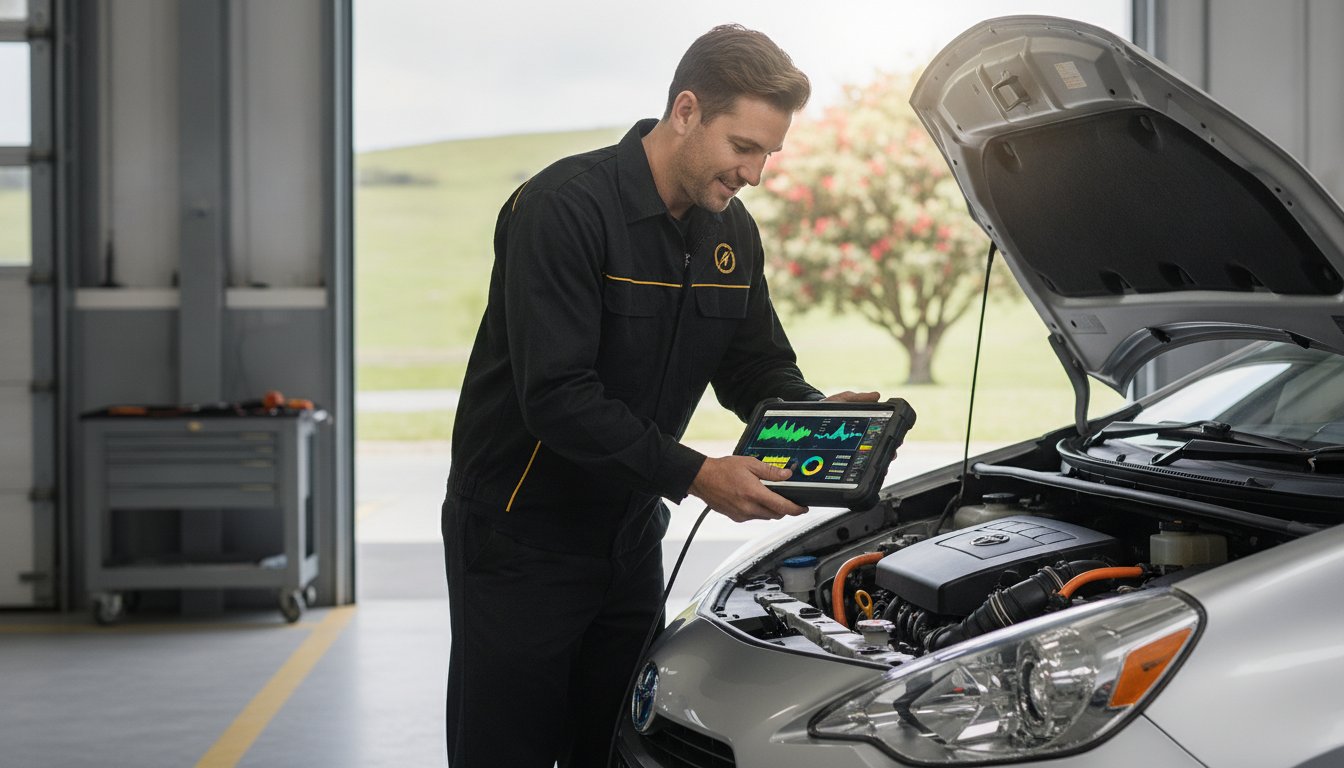
What if the bargain Toyota Aqua you’re eyeing on a Christchurch car lot is actually hiding a five thousand dollar battery replacement bill? It’s a common fear for Kiwis looking to make the switch to electric power. You want the fuel savings and the lower emissions, but the high-voltage heart of the car feels like a total mystery. With the Clean Car Standard charges for used imports dropping significantly in 2026, there are more options on the market than ever, but that just makes it harder to spot a lemon.
We understand that you need more than just a quick look under the hood to feel safe. Booking a thorough pre-purchase inspection for hybrid vehicles nz is the only way to get a clear report on battery State of Health and peace of mind for your long-term purchase. This complete guide will show you exactly what to look for when buying a used hybrid to avoid costly electrical repairs. We’ll walk through the essential diagnostic tests, the impact of recent import regulations, and how to validate the high-voltage system like an expert before you sign on the dotted line.
Key Takeaways
- Learn why high-voltage systems require specialized diagnostic tools that standard mechanical checks often overlook.
- Understand why a “no fault codes” result doesn’t guarantee battery health and how to request a true State of Health (SOH) report.
- Identify the red flags for expensive non-battery components, such as the inverter and regenerative braking actuators.
- Discover how to navigate the risks of Japanese imports and high-mileage vehicles by booking a professional pre-purchase inspection for hybrid vehicles nz.
- Find out how to access a national network of qualified mechanics who provide transparent, fixed-price reporting for total peace of mind.
Why Hybrid Vehicles in NZ Require a Specialized Pre-Purchase Inspection
Buying a used hybrid in New Zealand is a smart move for your wallet and the environment. With the Clean Car Standard charges for used imports dropping significantly in 2026, there are more options on the market than ever. However, you aren’t just buying a car; you’re buying a complex power station on wheels. Most standard mechanical checks focus on “nuts and bolts,” like checking for oil leaks or worn suspension bushes. While those matter, they won’t tell you if the high-voltage battery is about to give up. A professional pre-purchase inspection for hybrid vehicles nz bridges this gap by focusing on the “cells and software” that actually drive the car.
Hybrid systems operate under extreme pressure, often exceeding 200V. This requires specialized safety protocols and diagnostic tools that your average DIY check simply can’t provide. Understanding how hybrid-electric vehicles work is key to realizing why a simple test drive is often deceptive. A Toyota Prius or Honda Fit might feel perfectly smooth during a ten-minute cruise around the block, even if its battery capacity has dropped to 40%. You won’t notice the struggle until you’re halfway up a steep Auckland hill or loaded with groceries on a hot summer day in Christchurch. Our local topography and fluctuating temperatures put unique stress on these batteries, making a data-driven health check essential.
The Difference Between Mechanical and Electrical Health
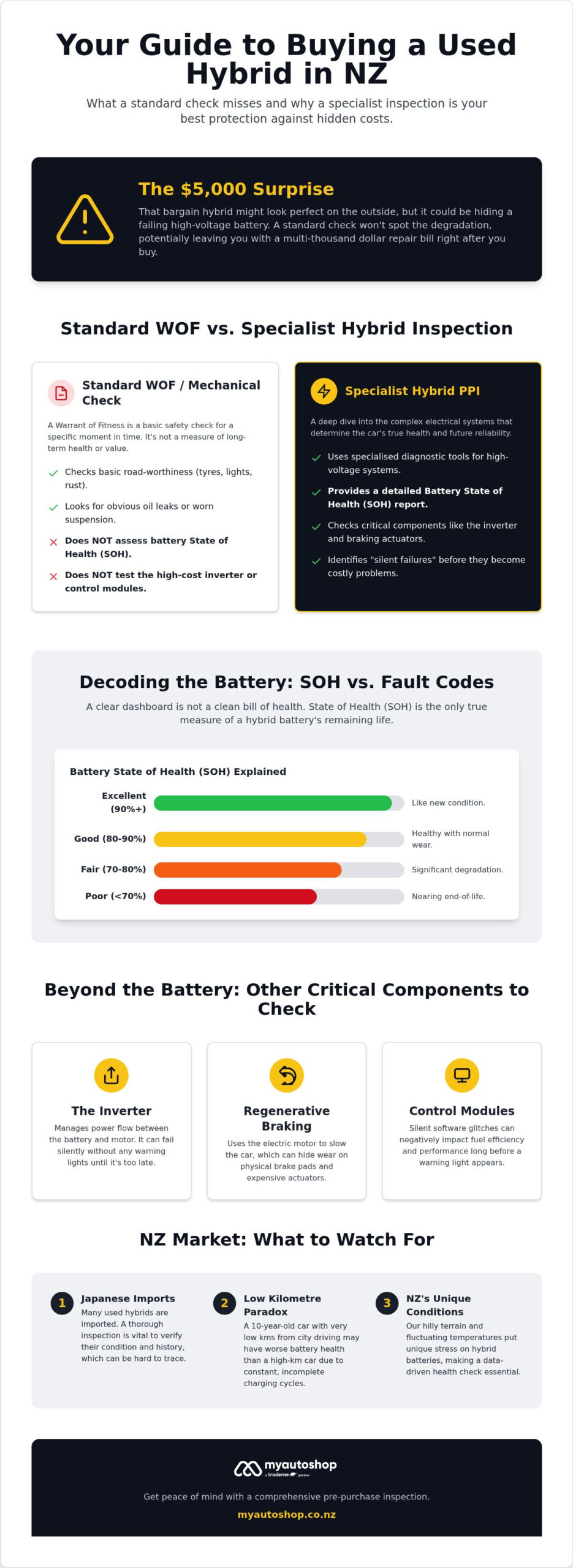
Don’t let a clean engine bay fool you. A hybrid powertrain can have a perfectly healthy internal combustion engine while the electrical side is failing silently. These “silent failures” often involve:
- The Inverter: Manages power flow between the battery and motor without making a sound until it fails completely.
- Regenerative Braking: Can mask physical brake wear during casual drives by using the motor to slow the car.
- Control Modules: Software glitches that don’t trigger a dashboard light immediately but impact fuel efficiency.
Because the car uses the electric motor to slow down, the actual brake pads might look fine even if the specialized actuators are nearing the end of their life. Specialized tools are needed to verify these high-cost components are actually doing their job.
Why a Warrant of Fitness (WOF) is Not an Inspection
The biggest mistake NZ buyers make is assuming a fresh WOF means the car is a “good one.” A WOF is a basic safety check designed to ensure the car is road-worthy at that exact moment. It doesn’t assess durability, efficiency, or future repair costs. WOF inspectors aren’t required to check the battery State of Health (SOH) or the efficiency of the inverter. If you rely solely on a WOF, you’re gambling on the most expensive components of the vehicle. A dedicated pre-purchase inspection for hybrid vehicles nz is the only way to verify you aren’t buying a multi-thousand dollar repair bill.
Decoding the Hybrid Battery: State of Health (SOH) vs. Fault Codes
When you look at a used hybrid, the dashboard might be clear of warning lights. Don’t let that fool you. A “No Fault Codes” result is a snapshot of the present, not a forecast of the future. It simply means the car’s computer hasn’t detected a total system failure yet. To truly understand what you’re buying, you need to look at the State of Health (SOH). This is the most critical metric in a pre-purchase inspection for hybrid vehicles nz, as it reveals the battery’s remaining life compared to when it left the factory.
Think of SOH like the battery health setting on your smartphone. A car with 95% SOH is nearly new, while one at 70% is nearing a significant repair bill. Recent consumer warnings have highlighted the dangers of not checking the battery, with some Kiwi buyers finding themselves stuck with unusable vehicles shortly after purchase. A specialized pre-purchase inspection for hybrid vehicles nz uses diagnostic scanning to identify weak individual cells that a standard dashboard light would miss. This data gives you the leverage to walk away or negotiate a fair price based on the car’s actual longevity.
Understanding Battery Degradation in NZ Conditions
New Zealand’s driving habits can be tough on hybrid tech. Short-trip city driving in places like Wellington or Auckland means the battery cooling fans might not run long enough to keep temperatures stable. Paradoxically, a 10-year-old hybrid with very low kilometers can be a higher risk than a newer one with high mileage. Batteries need to be used to stay healthy; sitting idle leads to chemical stagnation. The State of Health (SOH) percentage represents how much usable capacity remains compared to a brand-new battery, directly impacting the vehicle’s market value.
The Role of Live Data During the Inspection
A quality inspection goes deeper than a static scan. The mechanic checks “internal resistance” and the “voltage delta” between cells while the car is under load. If one cell shows a much lower voltage than the others during acceleration, it’s a red flag for imminent failure. This process also catches “cleared codes.” Some sellers use a cheap scanner to wipe error codes just before a viewing. However, live data reveals if the system monitors have actually finished their checks since the last reset. You can easily book a pre-purchase inspection through our platform to ensure a qualified technician uncovers these hidden truths before you commit.
Beyond the Battery: Critical Hybrid Components to Check
The high-voltage battery gets all the headlines, but several other specialized components can be just as expensive to repair. A proper pre-purchase inspection for hybrid vehicles nz must look beyond the battery cells to the supporting hardware that keeps the car moving. If these peripheral systems fail, the fuel savings you’re chasing will quickly disappear into workshop bills. Our national network of mechanics understands that a hybrid is a dual-powered machine, requiring a double-sided approach to every check.
The Inverter/Converter acts as the true brain of the vehicle. It manages the flow of electricity between the battery and the electric motor, converting high-voltage DC into AC. If this component fails, the car becomes an expensive driveway ornament. Similarly, the hybrid transaxle or CVT (Continuously Variable Transmission) requires specific fluid checks. Unlike a standard gearbox, these units are integrated with electric motors and face unique thermal stresses that traditional mechanical checks often miss.
Regenerative Braking and Inverter Health
Hybrid braking systems are incredibly complex. They use specialized actuators to blend traditional friction braking with motor-based deceleration. If you hear a persistent clicking sound from the footwell or notice unusually long brake pedal travel, the actuator might be nearing the end of its life. In New Zealand, sourcing and replacing these units is a major expense. Our inspectors also check the dedicated hybrid cooling loop. Most hybrids have two separate cooling systems; one for the engine and one for the inverter. A leak or a failed pump in the inverter loop is a direct recipe for a high-voltage meltdown.
The 12V Auxiliary Battery: The Small Part with Big Problems
It sounds simple, but the 12V auxiliary battery is a frequent source of confusion for used car buyers. This small battery doesn’t start the engine; it “boots up” the hybrid computer. When it starts to fail, it can trigger a cascade of scary dashboard warning lights that mimic a total hybrid system failure. Replacing it isn’t always cheap, either. Many hybrids require specialized AGM (Absorbent Glass Mat) batteries rather than standard lead-acid ones. A professional pre-purchase inspection for hybrid vehicles nz includes a load test on this 12V unit to ensure you aren’t starting your ownership with an avoidable headache.
By checking these peripheral systems, you protect yourself from “hidden” costs that a battery-only scan would miss. We ensure every critical component, from the inverter pumps to the braking actuators, is vetted before you commit to the purchase. This level of transparency is the only way to buy a used hybrid with total confidence.
Navigating the NZ Used Hybrid Market: Imports and High-Mileage Risks
The New Zealand hybrid market is dominated by Japanese Domestic Market (JDM) imports. While these vehicles often arrive with high specifications and clean interiors, they also come with a level of mystery. A “Certified Hybrid” sticker on a dealer’s windshield is a great start, but it isn’t a substitute for an independent pre-purchase inspection for hybrid vehicles nz. Dealers often rely on basic auction grades from Japan, which may not reflect the current state of the high-voltage system after the car has spent weeks sitting in a shipping container or on a local lot.
Identifying an “ex-Uber” or high-use commercial vehicle is another vital skill for Kiwi buyers. Look for excessive wear on the rear door seals, a polished steering wheel, or signs of removed decals. These vehicles have often been overworked, leading to accelerated battery degradation through constant charge cycles. While the price might look tempting, the hidden cost of a tired powertrain can quickly outweigh the initial savings. You need a clear picture of whether a car was a family runabout or a 24/7 workhorse before you commit your hard-earned money.
Evaluating Japanese Import History
Use the vehicle’s chassis number to verify its mileage and history before it reached our shores. This is a simple way to spot odometer tampering. Japanese imports also face the risk of coastal corrosion from salt-heavy air, which can compromise electrical grounding points and cause “ghost” faults in the hybrid system. To spot a vehicle that has spent years in stop-start Tokyo traffic, look for high wear on the driver’s seat bolster and brake pedal that doesn’t match a low odometer reading, as this suggests thousands of hours spent idling in gridlock.
Assessing High-Kilometre Hybrid Risks
Crossing the 200,000km milestone is a significant event for any hybrid. At this stage, the original battery pack is often nearing the end of its reliable life. However, a well-maintained high-km car is often a better bet than a low-km car that has sat unused for months. Regular usage keeps the battery chemistry active and healthy. Don’t forget the physical toll of the battery weight, either. Hybrids are significantly heavier than their petrol counterparts, which puts extra strain on shock absorbers and suspension bushes. A professional check ensures these heavy-duty parts aren’t ready to fail.
Don’t leave your next big purchase to chance. You can easily book a pre-purchase inspection through our platform to get a transparent report from a mechanic who knows exactly how to navigate the JDM market.
Booking Your Hybrid Inspection with My Auto Shop
You have done the hard work of narrowing down your search. Now, you need a partner who can turn that technical anxiety into a clear decision. Booking a pre-purchase inspection for hybrid vehicles nz shouldn’t feel like a chore. At My Auto Shop, we’ve streamlined the entire experience to match the speed of your digital life. Our national network of qualified mechanics is specifically vetted for their ability to handle high-voltage diagnostics. We remove the guesswork by offering transparent, fixed-price inspections. You won’t find any hidden “hybrid surcharges” here. We believe that every Kiwi deserves to know exactly what they’re buying without facing an unexpected bill at the counter.
The speed of our service is designed to keep up with the fast-moving used car market. In 2026, a good hybrid won’t stay on the lot for long. That’s why our digital reports are built for quick reading on your phone while you’re standing on the forecourt. It’s functional, high-impact information that respects your time. We act as the bridge between traditional mechanical expertise and the modern, high-speed expectations of today’s buyers. Whether you’re in Auckland, Wellington, or a smaller regional hub, our nationwide coverage ensures you have an expert in your corner.
Our Transparent Inspection Process
The journey starts with a simple online booking. Once scheduled, one of our experts conducts a deep dive into the vehicle’s systems. We look at everything we’ve discussed in this guide, from the inverter cooling loops to the internal resistance of individual battery cells. You’ll receive a comprehensive digital report directly in your inbox, often with a very fast turnaround. We don’t just dump data on you; we translate those technical readings into a clear recommendation. If we find issues that aren’t deal-breakers, we can even provide follow-up quotes for a Car Battery Replacement for the 12V system or other maintenance needs.
Why NZ Car Buyers Trust Our Expert Network
Independence is our greatest asset. Because we aren’t tied to any specific dealership, our advice is 100% objective. Whether you are looking at a Toyota Aqua, a Honda Fit, or a Lexus SUV, our mechanics have the expertise to spot the specific quirks of each brand. We also offer Mobile Mechanic options in many areas. This means we can often go directly to the seller’s house or the dealership, saving you the logistical headache of moving a car you don’t even own yet. Join the thousands of Kiwis who have used our platform to avoid “lemons” and drive away with total peace of mind. A pre-purchase inspection for hybrid vehicles nz is the smartest investment you can make before signing that final paperwork.
Drive Away with Data-Driven Confidence
Buying a used hybrid doesn’t have to be a gamble. You now know that a clear dashboard and a low odometer reading are only part of the story. The real value lies in the State of Health of that high-voltage battery and the integrity of the inverter system. By choosing a professional pre-purchase inspection for hybrid vehicles nz, you strip away the mystery and replace it with hard data. You’ll know exactly how much life is left in the cells before you commit your hard-earned money.
We make the process effortless with nationwide NZ coverage and total fixed-price transparency. Our expert network provides the high-voltage diagnostics you need to stay safe and protect your investment. Don’t let a “hidden” repair bill ruin the excitement of your new car. Book your expert Hybrid Pre-Purchase Inspection online now and get the peace of mind you deserve. You’re just a few clicks away from a smarter, safer purchase. Happy driving!
Frequently Asked Questions
Is a hybrid battery test included in a standard pre-purchase inspection?
No, most standard mechanical inspections only cover the “nuts and bolts” like suspension, brakes, and tires. You must specifically request a pre-purchase inspection for hybrid vehicles nz to ensure the high-voltage battery and inverter are tested. Standard checks don’t have the diagnostic software required to read cell-level data or State of Health percentages.
How much does a hybrid battery replacement cost in New Zealand?
The cost depends heavily on whether you choose a brand-new factory unit or a refurbished pack. It’s often the most expensive repair a hybrid will ever need, which is why verifying health before purchase is so vital. Factors like the specific model and the availability of local parts will influence the final quote you receive from a workshop.
What is a good State of Health (SOH) percentage for a used hybrid?
A State of Health above 80% is generally considered excellent for a used hybrid. If the SOH drops below 70%, the battery is nearing the end of its reliable life and may require cell balancing or replacement soon. Our reports give you this exact figure so you can negotiate the sale price with total clarity.
Can a mobile mechanic perform a full hybrid battery diagnostic?
Yes, our mobile mechanics carry specialized scanning tools that plug directly into the car’s OBDII port. They can perform a comprehensive pre-purchase inspection for hybrid vehicles nz at the seller’s home or dealership. This includes testing the battery under load and checking for any hidden fault codes in the high-voltage system.
How long does a hybrid pre-purchase inspection take?
Expect the process to take between 90 minutes and 2 hours. The mechanic needs this time to perform a full road test, a physical safety check, and the technical diagnostic scan. We prioritize accuracy over speed to ensure every critical component is vetted before we send you the final digital report.
Will a hybrid inspection tell me if the car has been used for ride-sharing?
While there isn’t a single “Uber button” in the computer, an expert inspector looks for specific red flags. These include high idle hours in the hybrid control module and excessive wear on the rear door hinges and seat bolsters. We combine this data with the car’s service history to help you identify overworked commercial vehicles.
What happens if the hybrid battery fails shortly after I buy the car?
If you buy from a private seller in NZ, you generally have very little legal protection once the money changes hands. This is why an independent inspection is your only real insurance policy. It identifies existing weaknesses and imminent failure risks before you become the legal owner of a potentially expensive problem.
Are European hybrids more expensive to inspect than Japanese ones?
We believe in financial clarity, so we don’t charge extra for European models like BMW or Volkswagen. While the software used to scan these vehicles is different from a Toyota or Honda, our network is equipped to handle both. You get the same fixed-price transparency and expert high-voltage diagnostic regardless of the car’s country of origin.
Disclaimer
This article provides general information only and should not be relied on as professional mechanical, safety or legal advice. Vehicle requirements and circumstances vary. If you are unsure about your vehicle, have it inspected by a qualified automotive professional.