
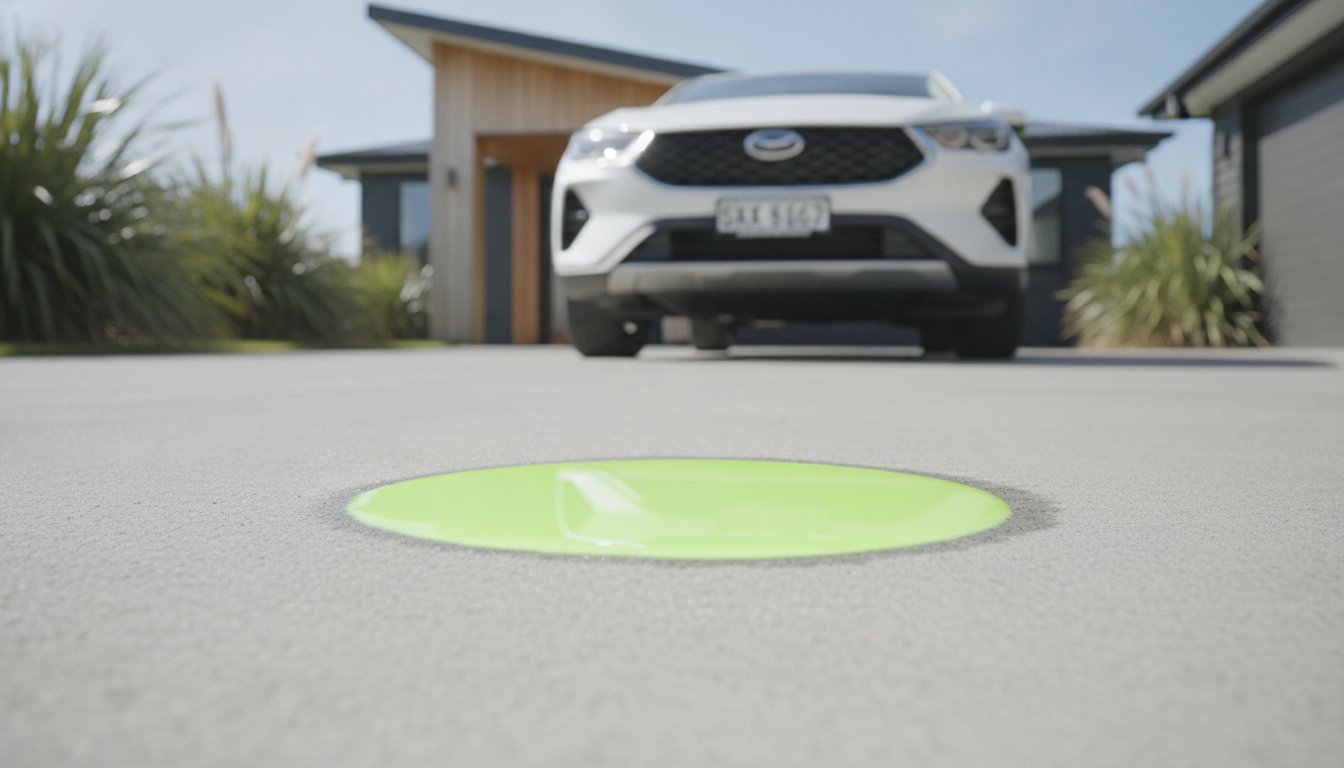
That bright green or pink puddle on your driveway isn’t just a mess; it’s a countdown to a potential engine meltdown. You’re likely staring at the ground and asking, “why is my car radiator leaking,” while worrying about being stranded on the side of the motorway. It’s a common anxiety for many Kiwi drivers, especially when you aren’t sure if you’re looking at a simple fix or a major mechanical failure.
We understand that car trouble feels like an unwelcome interruption to your busy schedule. Nobody wants the stress of unexpected repair costs or the confusion of deciphering different fluid colours under the bonnet. While standard maintenance guidelines suggest a full service every 12 months or 10,000km to prevent avoidable damage, components can still fail unexpectedly between check-ups. We’re here to help you regain control and protect your engine from terminal heat damage.
This article will help you discover the exact reason your car is losing coolant and show you how to address the leak before it leads to a costly engine failure. We will identify the seven most frequent causes of radiator leaks, explain how to spot the source of the drip, and outline the best path to a reliable repair that fits your life.
Key Takeaways
- Confidently identify your leak by recognizing the specific colours and sweet smell of engine coolant.
- Understand why is my car radiator leaking by exploring common culprits like acidic corrosion and worn-out rubber hoses.
- Discover simple diagnostic methods like the “clean slate” technique to pinpoint the exact source of a drip.
- Learn how a small leak impacts your Warrant of Fitness (WOF) and poses risks on challenging New Zealand terrain like the Desert Road.
- Compare the benefits of repairing versus replacing your radiator to make a cost-effective decision for your vehicle’s safety.
Spotting the Signs: How to Confirm Your Radiator Is Leaking
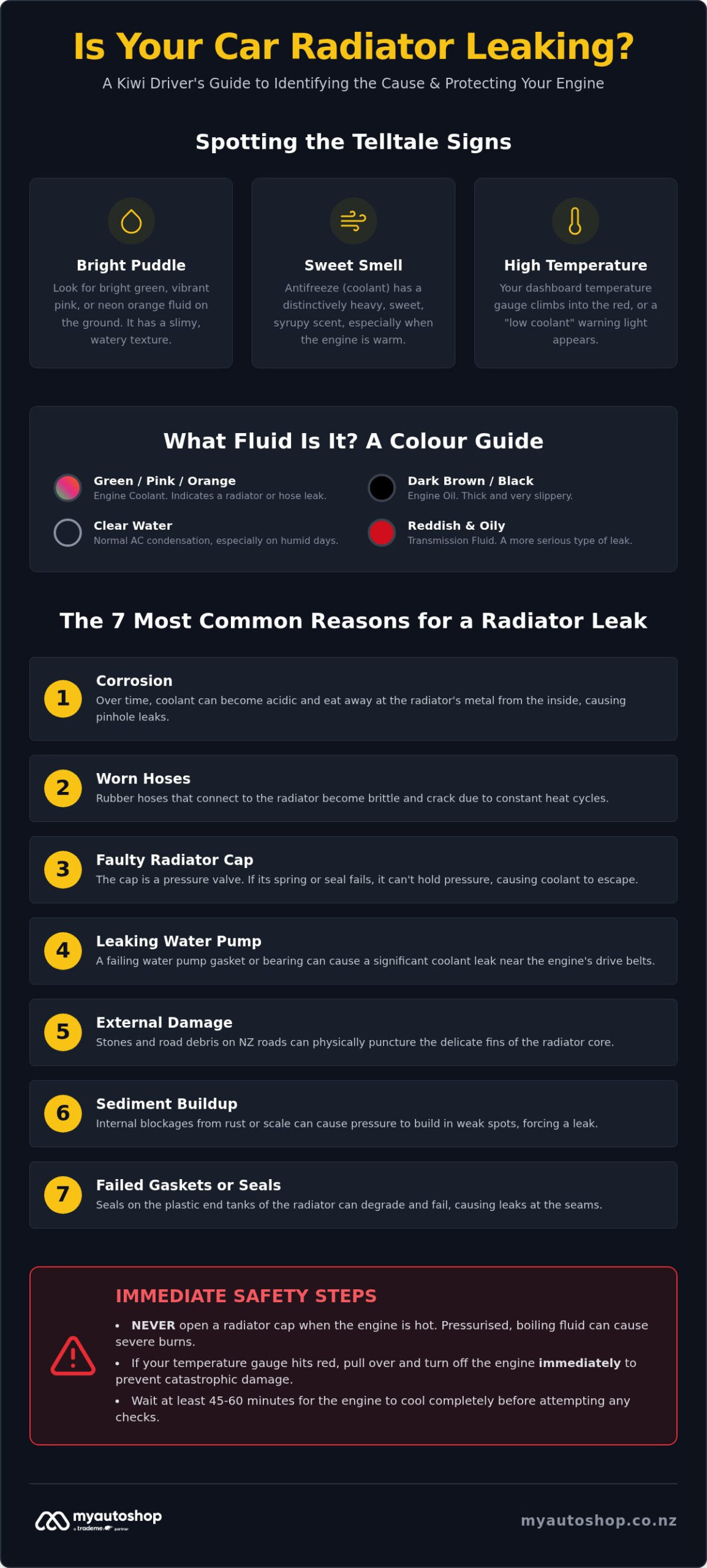
Finding a puddle under your car is never a great start to the morning. Before you stress about potential repair bills, you need to confirm exactly what you’re looking at. A radiator leak has specific “fingerprints” that set it apart from other common vehicle drips. Learning these signs helps you answer the question of why is my car radiator leaking before you even pick up a phone to call a mechanic.
Start with the ground. Engine coolant is chemically dyed to stand out. Most modern vehicles use bright green, vibrant pink, or neon orange fluid. Unlike engine oil, which is thick and slippery, coolant feels slightly watery but has a distinctively slimy texture. The most reliable giveaway is the smell. Antifreeze has a heavy, cloying, sweet scent that’s impossible to miss once the engine is warm.
Check your dashboard for digital clues. If your temperature gauge is climbing higher than the middle mark or your “low coolant” light is flickering, your car is telling you its cooling capacity is compromised. To understand the gravity of this, you can read about How a Car Radiator Works as a pressurized heat exchanger. When pressure drops due to a leak, the boiling point of your coolant also drops, leading to rapid overheating and potential engine damage.
Perform a quick visual inspection of the radiator itself. Look for “crusty” white or coloured deposits around the seams, hoses, or the radiator core. These deposits are dried coolant minerals left behind after the liquid evaporates. If you hear a faint hissing sound or see wisps of steam after a drive, you’ve likely found a pinhole leak that only opens up under high pressure. This “bonnet test” is a simple way to catch a problem before it leaves you stranded on the motorway.
Coolant vs. Other Fluids: The Colour Guide
Don’t mistake every drip for a disaster. On a humid New Zealand day, your air conditioning will drip clear, odourless water under the car; this is perfectly normal condensation. However, if you see dark brown or black fluid, you’re looking at an oil leak. Reddish fluid that feels very oily is usually transmission fluid. If the puddle matches the bright “high-vis” colours mentioned earlier and smells like syrup, you’ve confirmed why is my car radiator leaking.
Immediate Safety Steps: What to Do Right Now
Safety is your absolute priority. Never, under any circumstances, open a radiator cap or expansion tank while the engine is hot. The system is under immense pressure, and opening it can cause a geyser of boiling fluid that leads to severe burns. Park the car and wait at least 45 to 60 minutes for the system to depressurise naturally. If your temperature gauge hits the red zone while driving, pull over immediately. “Limping” the car home can warp your engine head in minutes, turning a simple radiator fix into a total engine replacement.
The 7 Most Common Reasons for a Radiator Leak
Many drivers assume a leak is just a random hole that appeared overnight. In reality, understanding why is my car radiator leaking usually comes down to one of seven specific mechanical failures. Most of these issues start small and invisible before they eventually turn into a puddle on your garage floor or steam under your bonnet.
Corrosion is the most frequent internal enemy. Your engine coolant contains specific additives designed to prevent rust and scale, but these chemicals lose their effectiveness over time. When the fluid becomes acidic, it eats through the metal radiator core from the inside out. This creates pinhole leaks that are often hard to see until the system is fully pressurised. Similarly, sediment buildup can block the tiny channels in the radiator, causing pressure to spike and blow out a weakened seal.
Rubber hoses are another common culprit. These parts endure extreme heat cycles, expanding when the engine is running and shrinking when it cools down. Over time, the rubber loses its elasticity and becomes brittle or “crunchy” to the touch. If you’re worried about the state of your cooling system, booking a comprehensive service can identify these aging parts before they fail completely.
Don’t overlook the radiator cap. It’s not just a lid; it’s a calibrated pressure valve. If the internal spring or seal fails, the system can’t maintain the pressure needed to keep the coolant from boiling. This often leads to fluid being forced out of the overflow tank. Finally, a failing water pump can cause leaks by allowing the engine to overheat. This excess heat forces coolant out of the weakest gasket or hose in the entire system.
External Culprits: Hoses, Seals, and Stones
New Zealand’s open roads can be tough on your vehicle’s cooling system. A single stone kicked up on the highway can puncture the thin aluminium fins of your radiator. You should also check your expansion tank; these are often made of plastic that becomes brittle and cracks with age. Even a rusted hose clamp can allow fluid to “seepage” slowly, leaving a telltale crust of dried coolant minerals around the joint.
Internal Failures: When the Leak Is Hidden
Sometimes the leak isn’t visible because the coolant is escaping into the internal parts of the engine. A blown head gasket can allow coolant to leak into the combustion chamber or mix with your oil, creating a thick “milkshake” texture under your oil cap. In some vehicles, the radiator also cools the gearbox. If that internal barrier fails, coolant mixes with transmission fluid, creating a pink “strawberry milkshake” that can ruin your transmission. Lastly, if you smell that sweet antifreeze scent inside the cabin, your heater core is likely the source of the leak.
DIY Diagnosis: Locating the Source of the Leak
Finding the exact spot where fluid escapes can feel like a game of hide and seek. While the previous sections helped you identify the fluid, you now need to pinpoint the source to understand why is my car radiator leaking. Start by distinguishing between external drips you can see and internal leaks that hide within the engine. Use the “Clean Slate” method: degrease the engine bay and radiator area, then dry it thoroughly. Run the engine for a few minutes and watch for the first sign of moisture. This simple step prevents old, wind-blown stains from confusing your diagnosis.
If the leak only appears under pressure, professionals often use a pressure tester. This specialized hand pump attaches to the radiator neck and simulates the pressure of a hot engine while the car is cold. It’s a safer way to find pinhole leaks without risking steam burns. For micro-cracks in plastic tanks that are invisible to the naked eye, a UV dye test is the gold standard. You add a small amount of fluorescent dye to the coolant, run the engine, and then use a blacklight to see exactly where the “glow” emerges. This is particularly effective for hairline fractures that only open up when the plastic gets warm.
Don’t forget to check the “weep hole” on your water pump. This is a small opening designed to let fluid escape if the internal seal fails. If you see a trail of dried coolant leading from this hole, your water pump is failing. Catching this early prevents the bearing from seizing, which could snap your drive belt and cause immediate engine failure.
Performing a Visual Sweep
Focus your attention on the most vulnerable components where leaks often hide. Modern vehicles rely on a mix of materials that can fail in predictable ways:
- Plastic-to-aluminium seams: These crimped joints are a common failure point because the two materials expand at different rates during heat cycles.
- Thermostat housing: Look for slow, crusty leaks or white residue that builds up over several weeks.
- Pinhole sprays: These might only appear as a fine mist when the system is at full operating temperature and under maximum pressure.
When DIY Diagnosis Reaches Its Limit
Some leaks are incredibly stubborn. Thermal expansion means a crack might stay closed when the engine is cold but open wide once you’re halfway up a steep hill. Misdiagnosing a simple cracked hose as a full radiator failure is a common mistake that wastes both time and money. If you’ve tried the basics and still can’t find the drip or understand why is my car radiator leaking, it’s time to let a partner help. Book a professional diagnostic check to get a definitive answer and a clear path to a fix.
The Risks of Ignoring a Leak in New Zealand
Ignoring a leak is a gamble you won’t win on New Zealand roads. While you might be tempted to keep driving and asking why is my car radiator leaking, the consequences of delay are much higher than the cost of a fix. Our landscape is beautiful but demanding. A small drip that seems manageable in city traffic will quickly become a disaster when you’re climbing the Kaimai Range or crossing the Desert Road. These steep gradients put your engine under massive thermal stress. Without a fully sealed, pressurized system, your coolant will boil off, leaving you stranded in a cloud of steam.
Many drivers try to manage a leak by topping up the reservoir with plain tap water. This is a major mistake. New Zealand tap water contains minerals that cause rapid internal corrosion and scale buildup. This doesn’t just explain why is my car radiator leaking; it ensures the problem gets worse by eating away at your water pump and engine block. You’re trading a temporary fix for a permanent engine failure. If you’ve been topping up regularly, it’s time to get a professional radiator repair or replacement before the internal damage becomes terminal.
WOF and Roadworthiness
In New Zealand, your cooling system’s health is a matter of legal compliance. According to NZTA requirements, a visible or significant leak can lead to an immediate Warrant of Fitness (WOF) failure. Inspectors look for active drips or evidence of “stop-leak” additives, which are often viewed as a temporary and unreliable fix. Beyond the legalities, a leaking radiator often sprays fluid onto your alternator or drive belts. This leads to electrical failures or snapped belts, leaving you with a much larger repair bill than a simple hose replacement.
The True Cost of Procrastination
The math of car maintenance is simple: fix it now or pay significantly more later. When an engine overheats, the aluminum cylinder head can warp in seconds. This leads to a blown head gasket and a repair bill that can easily reach $5,000 or more. There’s also a physical risk to consider. A weakened hose can burst under pressure while you’re inspecting the engine, causing severe steam burns. Finally, remember your environmental responsibility. Glycol-based coolant is highly toxic. Even a small leak on your driveway can wash into local NZ waterways or pose a fatal risk to neighborhood pets who are attracted to its sweet taste.
Radiator Repair and Replacement Solutions
Once you’ve figured out why is my car radiator leaking, you need to decide between a patch and a full replacement. In the past, copper radiators could be “rodded” or soldered easily. Today, most vehicles use a mix of plastic and aluminium. These modern units are difficult to patch reliably because the plastic tanks often crack from age and heat stress. While a small hose leak might only require a new clamp, a cracked radiator tank usually means a complete replacement is the only safe way to get back on the road.
We’ve removed the guesswork from finding a trustworthy fix. My Auto Shop gives you access to a national network of vetted professionals who specialize in Radiator Repair & Replacement. You don’t have to spend your afternoon calling multiple garages for prices. Our platform provides transparent, upfront quotes so you know exactly what the job costs before any work begins. This financial clarity is a core part of how we support busy Kiwi drivers.
The biggest challenge with a cooling issue is the risk of driving the car to a workshop. If your car is losing fluid rapidly, driving even a few kilometres can “cook” your engine. This is where our Mobile Mechanic service becomes a lifesaver. A qualified technician comes to your home or workplace to perform the repair on-site. It’s the safest choice for your vehicle and the most convenient option for your schedule. You avoid the stress of a breakdown and the cost of a tow truck.
What to Expect During a Radiator Service
A professional job involves more than just swapping parts. Your mechanic should perform a full system flush to remove the acidic sediment and rust mentioned earlier. It’s also standard practice to replace the thermostat and the radiator cap at the same time. These small components are relatively inexpensive but crucial for maintaining the correct pressure. Finally, the system must be “bled” to remove air pockets. Trapped air can cause localized hot spots that lead to engine damage even with a brand-new radiator.
Booking Your Repair with Confidence
We’ve streamlined the entire process to fit your life. Whether you need a workshop-based fix or a technician to visit you, My Auto Shop handles the logistics. This is especially helpful for non-driveable vehicles stuck in the driveway or for those still wondering why is my car radiator leaking and afraid to move the car. Get a fixed-price quote for your radiator repair today and let us take the anxiety out of your car maintenance.
Get Your Cooling System Back on Track
Identifying the specific signs of a leak is the first step toward saving your engine from permanent heat damage. By recognizing the bright colors of coolant and understanding the typical failure points like brittle hoses or cracked plastic tanks, you no longer have to wonder why is my car radiator leaking. You now have the tools to spot trouble before it leaves you stranded on a steep New Zealand hill. Taking fast action protects your vehicle and your wallet from avoidable stress.
Don’t let a small drip turn into a major logistical headache. We make the repair process straightforward and stress-free. Through our vetted national network of professional mechanics, you can access expert care with upfront, transparent pricing and no hidden surprises. If you’re worried about the safety of driving your car with a low reservoir, our mobile mechanic options provide ultimate convenience at your home or work.
Book your Radiator Repair or Inspection with My Auto Shop today to keep your vehicle running safely and efficiently. You’ve got the knowledge to identify the problem; now let us handle the hard work and get you back on the road with total confidence.
Frequently Asked Questions
Can I drive my car if the radiator is leaking?
No, you should avoid driving a car with an active radiator leak. Even a small drip can quickly turn into a major burst when the system reaches full operating pressure. If the coolant level drops too low, your engine will overheat within minutes, leading to warped cylinder heads or a total engine seizure. It is much safer to pull over and arrange a repair than to risk a multi-thousand dollar engine replacement.
How much does it cost to fix a radiator leak in NZ?
The cost of a repair varies significantly based on your vehicle’s make and model. A simple fix like replacing a perished rubber hose or a loose clamp is relatively inexpensive. However, a full radiator replacement involves higher part costs and several hours of labour. To avoid any guesswork or hidden surprises, we recommend getting a fixed-price quote before the work begins so you have total financial clarity.
Why is my car leaking coolant but not overheating yet?
Your engine isn’t overheating yet because there’s still enough fluid in the system to manage the heat. You might be asking why is my car radiator leaking if the temperature gauge looks normal, but this is a warning sign you shouldn’t ignore. Small pinhole leaks often only spray fluid when the system is under high pressure. Once the coolant drops below a critical level, the temperature will spike instantly without further warning.
Can I use water instead of coolant in an emergency?
You can use water to reach a safe location in a genuine emergency, but it’s a temporary fix that requires an immediate flush. Tap water contains minerals that cause rapid rust and scale buildup inside your engine. It also has a lower boiling point than proper coolant, which increases the risk of overheating on steep New Zealand hills. If you must use water, try to find distilled water to minimize internal damage.
How do I know if it’s the radiator or just a hose?
Check the specific location of the wetness or dried residue. A leaking hose usually shows spray patterns or drips near the connection points and metal clamps. If the fluid is seeping from the centre of the metal fins or the seams of the plastic side tanks, the radiator unit itself has likely failed. Use the “clean slate” method by drying the area and watching for fresh moisture to confirm the source.
Will a radiator leak cause a WOF failure?
Yes, an active or significant coolant leak will result in a Warrant of Fitness (WOF) failure. NZTA inspectors view any leak that could damage the road surface or affect vehicle safety as a reason for rejection. They also look for temporary fixes like “stop-leak” residue, which can signal an unreliable cooling system. Fixing the leak before your inspection ensures you stay legal and safe on the road.
What colour is car coolant supposed to be?
Modern coolant is dyed bright green, pink, orange, or blue to make it easy to identify. These vibrant colours help you distinguish a leak from clear air conditioning condensation or dark engine oil. If your fluid looks brown, murky, or contains floating bits, the internal corrosion inhibitors have failed. This degradation is a primary reason why is my car radiator leaking, as acidic fluid eventually eats through the metal core.
Is it worth using ‘stop-leak’ products in my radiator?
Stop-leak products are a temporary “get-home” solution and aren’t recommended for permanent repairs. These additives work by hardening when they hit the air, but they can also clog the narrow passages in your radiator and heater core. This often leads to poor heater performance or reduced cooling capacity later on. For a reliable fix that lasts, it’s always better to replace the faulty component rather than using a chemical patch.
Disclaimer
This article provides general information only and should not be relied on as professional mechanical, safety or legal advice. Vehicle requirements and circumstances vary. If you are unsure about your vehicle, have it inspected by a qualified automotive professional.