
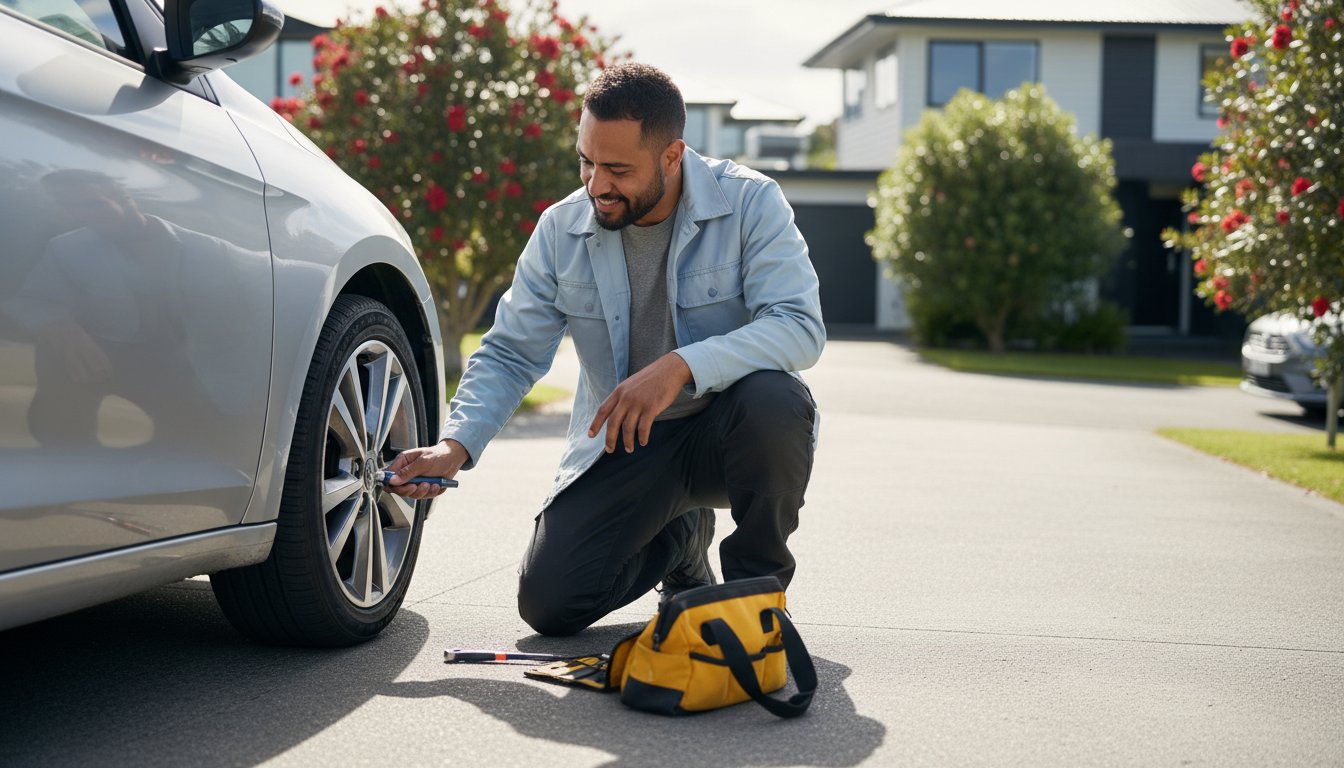
You’re sitting in the waiting room, scrolling through your phone, when the mechanic walks toward you with a clipboard and a frown. It’s a scenario 40% of Kiwi drivers face every year: a failed inspection for something as simple as a blown license plate bulb or a worn wiper blade. We know that a Warrant of Fitness often feels like a stressful roll of the dice, especially when you’re worried about hidden repair costs or the hassle of booking a re-test. Using a simple pre wof checklist can be the difference between a seamless pass and a wasted afternoon.
It doesn’t have to be a guessing game. We believe car maintenance should be transparent and easy, which is why we’ve put together this comprehensive guide to help you pass the first time. This article provides a clear list of DIY checks you can perform at home, from testing your lights to measuring tyre tread depth. You’ll gain the confidence to know your car is roadworthy and learn how to secure fast repairs if something isn’t quite right. Let’s get your vehicle sorted so you can skip the stress and stay moving.
Key Takeaways
- Get up to speed on the 2026 WOF frequency requirements to ensure your vehicle stays legal and safe on New Zealand roads.
- Save time and avoid unnecessary stress by using our pre wof checklist to catch simple issues like blown bulbs before your inspection.
- Learn how to check your tyre tread against the 1.5mm minimum standard to ensure you pass the inspector’s safety assessment.
- Decode your dashboard warning lights and seatbelt safety requirements so you can walk into your test with total confidence.
- Understand how to use the 28-day re-test rule to turn a WOF fail into a quick, transparent fix without paying for a second inspection.
Understanding the NZ Warrant of Fitness Requirements in 2026
A Warrant of Fitness (WOF) is a regular safety check to ensure your vehicle is roadworthy. It focuses on critical safety components like lights, brakes, and tire tread. It is vital to remember that a WOF is not a mechanical service. It doesn’t cover your engine health, oil quality, or cooling system. In 2026, the frequency of these checks depends on your car’s age. If your vehicle was first registered anywhere in the world after 1 January 2000, you need an annual inspection. New cars are exempt until the third anniversary of their first registration. After that, they move to the yearly cycle. For a deeper dive into the rules and requirements, our complete guide to WOF NZ regulations and what to expect at your inspection covers everything you need to know.
Neglecting your WOF carries heavy penalties. Police and council wardens can issue a NZ$200 fine on the spot. Beyond the fine, driving an uncertified vehicle puts your insurance at risk. Companies like Tower or AMI can legally decline your claim if they determine your car wasn’t roadworthy at the time of an accident. Developing a 15-minute habit of performing a pre wof checklist walk-around can save you hundreds of dollars in unnecessary re-test fees and fines.
WOF vs. COF: Which one do you need?
The distinction between a WOF and a Certificate of Fitness (COF) comes down to weight and usage. A WOF is for light passenger vehicles under 3,500kg. This covers almost every car, SUV, and light ute used by Kiwi families. A COF is mandatory for heavy vehicles like trucks and buses, or any vehicle used for commercial passenger services, including taxis and rideshare vehicles. MyAutoShop specializes in passenger vehicle WOFs, offering a seamless pick up & drop off service to take the hassle out of your day while connecting you with NZ’s best mechanics.
The Cost of Failing: Why a pre-check matters
Failing an inspection creates a ripple effect of hidden costs. You lose time off work and often face urgent repair premiums because you need the car back on the road immediately. If your car fails, the inspector applies a “Failed” sticker to your windscreen. You then have 28 days to fix the issues. During this window, you can only legally drive the car to get it repaired or re-inspected. Many testing stations charge a re-test fee of NZ$50 or more if you return after the initial visit. Catching a simple NZ$20 wiper blade failure at home with a pre wof checklist is a much smarter move than paying for a full re-test and a second trip to the workshop. Our transparent pricing ensures you know exactly what to expect, but avoiding the fail in the first place is always the best strategy for your budget.
The Ultimate Exterior and Lighting Pre-WOF Checklist
Safety starts with visibility. In New Zealand, lighting issues are the most common reason for a failed Warrant of Fitness. Statistics from 2023 show that nearly 20% of initial inspections failed due to simple bulb or lens defects. Most of these are issues you can spot at home in five minutes using this pre wof checklist. If a bulb is out, it’s often a cheap NZ$5 fix that saves you the hassle of a re-inspection.
Checking your lights is easiest with a partner. Have them stand outside while you cycle through your high beams, low beams, and hazards. If you’re alone, park facing a garage door or a large glass storefront. The reflection will show you exactly which bulbs are working. Don’t forget the rear; check your brake lights by looking for the red glow against a wall. If your indicator flashes faster than usual, it’s a clear sign a bulb has blown.
The exterior body inspection is about more than just aesthetics. Inspectors look for “sharp edges” caused by accident damage or rust. If a pedestrian could get snagged on a jagged piece of metal, it’s an automatic fail. Corrosion is another deal-breaker; any structural rust within 150mm of a suspension mounting point or seatbelt anchorage will require a professional repair. While a dirty car won’t technically fail, a clean vehicle helps the inspector quickly verify the condition of the chassis and body panels. It shows you maintain your vehicle, which sets a positive tone for the inspection.
Lights and Indicators
Every exterior light must function perfectly. This includes your high and low beams, indicators, and brake lights. People often forget the tiny bulb above the rear number plate; if this is out, you’ll fail. Ensure your plastic lenses aren’t “foggy” or yellowed from UV damage. Indicators must flash at a consistent rate between 60 and 120 pulses per minute to ensure other drivers can clearly predict your movements.
Windscreen, Wipers, and Mirrors
Your windscreen is a structural component of the car. The “Critical Vision Area” is the 300mm wide strip directly in front of the driver. Any chip larger than 10mm or any crack in this zone is a fail. Check your wiper blades for splits or “chattering” noises. If they leave smears, they need replacing. Finally, grab your side mirrors and give them a gentle wiggle. They must be secure, and the glass cannot be cracked or faded. If you notice a chip that needs a professional eye, you can book an inspection through MyAutoShop to get it sorted before your WOF expires.
Tyres, Brakes, and Suspension: The Safety Big Three
Tyres, brakes, and suspension form the foundation of your car’s safety system. These components are the most scrutinized during an inspection, and for good reason. Tyres are your only physical connection to the New Zealand road surface. Inspectors are ruthless here because even a minor defect can lead to a loss of control. When you are building your pre wof checklist, these three areas should be your top priority. If any of these systems feel “off” while you’re driving, it’s a safe bet the inspector will find a reason to fail the vehicle.
Current safety standards for 2026 emphasize the 1.5mm minimum tread depth across the entire circumference of the tyre. However, hitting exactly 1.5mm is risky. If your tread is that low, your stopping distance on a wet Auckland motorway increases by roughly 38% compared to a new tyre. You also need to look for uneven wear. If the inside edge of your tyre is smoother than the outside, your wheel alignment is likely out. This unevenness isn’t just a safety issue; it’s an instant fail that indicates deeper suspension problems.
The 20c Coin Tyre Tread Hack
You don’t need fancy tools to check your tread. A standard New Zealand 20c coin is your best friend for a DIY inspection. Follow these three steps to see if you’re legal:
- Step 1: Place a 20c coin into the deepest part of the main tread grooves.
- Step 2: Look at the number ’20’ on the coin. If the entire number is visible, your tread is likely under the 1.5mm limit.
- Step 3: Run your hand along the sidewalls. Look for ‘bulges’ or ‘cracking’ caused by age or hitting curbs. Any visible cord or internal structure means the tyre is junk.
Brake Performance and Fluid Checks
Brakes are non-negotiable. You can perform a basic check by paying attention to how the car reacts during your daily commute. Listen for any high-pitched squealing or heavy grinding noises when you apply pressure to the pedal. These sounds usually mean your pads are worn down to the metal indicators. Test your handbrake on a clear, sloped driveway. It should hold the car firmly without needing to be pulled to the very top of its travel. Finally, pop the bonnet and check the brake fluid reservoir. The fluid should be clear and sit between the ‘Min’ and ‘Max’ lines. Dark, murky fluid suggests it’s time for a flush.
Suspension and Steering ‘Bounce’ Test
Your suspension keeps your tyres in contact with the road. To check it, try the ‘Corner Push’ test. Walk to each corner of the car and push down hard on the body. The car should bounce up and settle immediately. If it continues to oscillate or ‘boing’ more than twice, your shock absorbers are likely shot. While driving slowly, listen for ‘clunks’ or ‘knocks’ when you go over small bumps or speed humps. These noises often point to worn bushes or ball joints. If the steering feels heavy or ‘notchy’ when you turn the wheel, check for power steering fluid leaks around the pump or rack. Including these quick checks in your pre wof checklist can save you the hassle of a re-test.
Interior Safety and Structural Integrity Checks
Your car’s interior is more than just a cabin; it is a survival cell designed to protect you during a collision. During a Warrant of Fitness inspection, the technician looks past the upholstery to ensure every safety system is ready to perform. Adding these checks to your pre wof checklist can save you the hassle of a re-test for easily avoidable issues.
Seatbelt and Airbag Inspections
Seatbelts are non-negotiable safety items. Inspectors examine 100% of the belts in your vehicle, looking for any signs of fraying, cuts, or UV damage. Even a small 2mm nick in the webbing can lead to a failure, as it compromises the belt’s integrity under load. Pull each belt out to its full extension to check for hidden damage. Perform the “Tug Test” by pulling the belt sharply; the retractor must lock instantly. Additionally, check the SRS (airbag) light on your dash. It must illuminate when you turn the ignition on and then turn off after a few seconds. If that light stays on, it indicates a fault in the safety system that requires professional diagnostic tools to clear.
Dashboard Warning Lights and Horn
The dashboard acts as a confession box, revealing internal faults to the inspector. Certain lights are immediate grounds for a WOF failure. These include the ABS (Anti-lock Braking System), Airbag/SRS, and Electronic Stability Control (ESC) indicators. If any of these remain lit while the engine is running, your car is deemed unsafe. Your horn must also be functional and loud enough to be heard from 100 metres away. It cannot be intermittent or have a “weak” sound. Finally, ensure your speedometer is working correctly; a broken needle or a dark digital display will result in a fail.
Structural integrity is the most critical part of the under-body check. New Zealand’s coastal air means rust is a constant battle for local car owners. Inspectors look for “structural” corrosion, which is any rust that has moved beyond the surface to weaken the metal. This is particularly dangerous if it is within 150mm of a suspension mounting point, a seatbelt anchorage, or a main chassis rail. If you notice bubbling paint or flaking metal on your door sills or under-carriage, it is best to have a professional assess it before your test.
Don’t forget the basics of emergency egress. Every door must open and latch securely from both the inside and the outside. If a child lock is stuck or a handle is broken, it’s a safety risk. Your windows must also operate smoothly. The driver’s side window, in particular, must be able to open and close to allow for hand signaling if your indicators fail on the road.
If you’re worried about a stubborn warning light or suspicious rust, we can help. You can book a pre-WOF inspection with one of our expert Kiwi mechanics to get a transparent assessment of your vehicle’s health.
What Happens If You Fail? Turning a WOF Fail into a Quick Fix
Failing a Warrant of Fitness (WOF) feels like a setback, but it is not a disaster. Think of that “failed” sheet as a professional health check for your car. It tells you exactly what needs attention to keep you safe on Kiwi roads. Even if you followed a pre wof checklist, small issues can sometimes hide until a technician gets the vehicle on a hoist. Don’t panic. You now have a clear to-do list to get your car back to 100% health.
New Zealand regulations provide a clear window for fixes. You have 28 days from the initial inspection date to complete the repairs and return for a re-check. If you go back to the same testing station within this timeframe, the re-inspection is usually free. This 28-day rule is your biggest advantage. It gives you the time to shop around for the best repair price rather than feeling pressured to pay for repairs on the spot at the testing station.
Many testing stations offer on-site repairs, but they are not always the most cost-effective option. Getting an independent quote is a smart move for your wallet. My Auto Shop streamlines this process by providing transparent pricing from a network of trusted local mechanics. You can compare costs and book a fix without the stress of hidden fees or mechanical jargon. We act as your transparent partner, ensuring you get back on the road without overpaying.
Common WOF Fails and Typical Repair Costs
Repairing WOF issues does not always break the bank. Many common failures are simple fixes that a mobile mechanic can handle right in your driveway. This saves you a trip to the workshop and gets your re-test sorted faster. Typical costs for common items include:
- Wiper blades: NZ$30 to NZ$50 per pair.
- Standard bulbs: NZ$15 to NZ$25 each.
- New tyres: Starting from NZ$150 per tyre for budget-friendly options.
- Brake pads: NZ$140 to NZ$220 depending on your vehicle model.
If your car failed on something specific, you can check My Auto Shop for instant repair quotes. Knowing the market rate before you walk into a garage keeps you in control of the situation.
Booking Your WOF and Repairs with Confidence
We’ve simplified the entire inspection process to fit your busy life. If you cannot find the time to sit in a waiting room, use our “Pick up & drop off” service. We will collect your car from home or work, take it to the inspection, and bring it back when it’s done. This service is a signature promise of our brand, designed to strip away the anxiety of car maintenance.
Our platform helps you find the best mechanics in your area by comparing real customer reviews and fixed-price quotes. Whether you are starting with a pre wof checklist or dealing with a recent fail, we provide the tools to manage your car’s health with ease. You deserve a seamless experience that values your time and your safety.
Drive Away With Your New WOF Sticker Today
Navigating the 2026 NZ Warrant of Fitness standards doesn’t have to be a headache. By following this pre wof checklist, you’ve already addressed the most common reasons for failure. Simple checks on your tyre tread depth; which must be at least 1.5mm; and ensuring every exterior bulb is bright can save you the NZ$50 to NZ$70 cost of a re-inspection fee. Your brakes and suspension are your car’s lifeline. Don’t ignore those squeaks or rattles before your official booking. Staying proactive ensures your vehicle remains a safe asset for your family and other road users.
If your schedule is packed or you’re worried about a potential fail, we’re here to help. Skip the stress. Book your WOF or pre-check repair with My Auto Shop. You’ll get instant access to NZ’s top-rated mechanics and our signature pick up and drop off convenience. We offer transparent, upfront pricing so there are no surprises when the bill arrives. We’ve simplified the entire process to fit your busy life. Let’s get your vehicle safely back on the road with total confidence and zero fuss.
Frequently Asked Questions
What are the most common reasons for failing a WOF in NZ?
Blown light bulbs, worn tyres, and streaky wiper blades are the most frequent causes of failure. NZTA data shows that roughly 40% of vehicles fail their initial inspection due to these avoidable issues. You can catch these early by using a pre wof checklist to walk around your car before your appointment.
Check that your tyre tread is at least 1.5mm deep across the entire surface. Ensure all indicators, headlamps, and brake lights work correctly. Replacing a NZ$5 bulb at home is much easier than dealing with a fail result at the garage.
Can I drive my car if it has failed its WOF?
You can only drive a vehicle that failed its WOF to a place of repair or back for a re-inspection. It’s illegal to use the car for general travel like grocery runs or commuting until it passes. If your current warrant is already expired, you’re at risk of an immediate fine.
Get your repairs sorted within 28 days to receive a free or discounted re-check at most NZ workshops. We recommend booking your repairs immediately through our platform to get back on the road safely. Our transparent pricing ensures you won’t get any nasty surprises when the bill arrives.
How much does a WOF test cost in 2026?
A WOF inspection in 2026 typically costs between NZ$65 and NZ$85 depending on your location and vehicle type. While prices vary between providers, MyAutoShop offers clear, upfront rates so you know exactly what you’ll pay. This fee covers the inspector’s time and the use of specialized testing equipment.
Remember that the inspection fee doesn’t include the cost of any repairs needed to pass. If your car needs work, we’ll provide a detailed quote for the parts and labor required. Budgeting for this small fee twice a year for older cars helps keep your vehicle legal and safe.
How long does a WOF inspection take?
A standard WOF inspection takes between 30 and 45 minutes to complete. This timeframe allows the technician to check critical safety systems including brakes, lights, and structural integrity. If the workshop is busy, you might need to leave your car for a few hours.
If you’re short on time, use our pick up and drop off service to make the process seamless. We’ll grab your car from home or work, handle the inspection, and return it once it’s finished. It’s the easiest way to manage your car maintenance without disrupting your busy day.
What happens if my WOF has expired?
Driving with an expired WOF puts you at risk of an immediate NZ$200 infringement fee from the police or local council. Beyond the fine, your insurance policy might be void if you’re involved in an accident with an unroadworthy vehicle. It’s a risk that isn’t worth taking for your safety or your wallet.
Check your expiry date on the windshield sticker today. If it’s lapsed, book an instant appointment through our site to stay legal. We work with NZ’s best mechanics to ensure you get a fair, fast inspection that gets your sticker updated without the stress.
Do I need a WOF for a trailer or caravan?
Yes, all trailers and caravans must have a current WOF to be towed on New Zealand roads. The inspection focuses on lights, tyres, couplings, and structural rust to ensure the unit is safe. For trailers with a gross laden weight over 2,000kg, the inspector also checks the braking system.
Make sure your trailer’s rego is also current, as these two requirements work together. Before you head out on a road trip, check your trailer against a pre WOF checklist for NZ trailers and caravans to ensure the lights haven’t corroded while sitting in the driveway. It’s a simple step that prevents accidents on the highway.
Is a WOF the same as a car service?
No, a WOF is a mandatory safety check, while a car service is preventative maintenance for your engine’s health. The WOF only confirms your car meets minimum safety standards at the time of inspection. It won’t check your engine oil, coolant levels, or spark plugs.
Think of the WOF as a safety exam and the service as a wellness checkup. We recommend booking a service at the same time as your warrant to ensure your vehicle is both safe and mechanically sound. This dual approach helps avoid unexpected breakdowns and keeps your car running smoothly for longer.
Can a mobile mechanic do a WOF?
No, a mobile mechanic cannot issue a WOF sticker because the inspection must happen at an NZTA-authorised site. Technicians need specific equipment like a level floor, brake testing rollers, and a vehicle hoist to perform a legal inspection. These tools aren’t portable enough for a mobile van.
However, a mobile mechanic can come to you to fix issues identified during a failed test. They can replace brake pads, bulbs, or wipers right in your driveway. Once the repairs are done, you’ll still need to take the vehicle back to a certified station for the final pass and sticker.
Disclaimer
This article provides general information only and should not be relied on as professional mechanical, safety or legal advice. Vehicle requirements and circumstances vary. If you are unsure about your vehicle, have it inspected by a qualified automotive professional.