
In New Zealand, the idea that your battery will definitely last five years is mostly a myth. While many manufacturers suggest a long life, our local conditions and frequent short trips often mean your power source is working much harder than you think. We’ve all felt that heart-sinking moment when the engine barely turns over on a frosty morning or, worse, when you’re stuck in the office car park after a long shift. It’s frustrating to wonder how long does a car battery last nz drivers, especially when you’re worried about hidden mechanical costs or the confusing choice between AGM and standard lead-acid units.
We understand that you just want a reliable car without the guesswork. This 2026 guide is here to clear up the confusion and give you total transparency. You’ll discover exactly how long your battery should last in Kiwi conditions and how to spot the signs of failure before you’re left stranded. We’ll also break down the real costs of replacement, explain why modern start-stop tech changes the price, and show you how our mobile mechanics make getting a new battery a seamless, stress-free experience.
Key Takeaways
- Learn why the typical 3 to 5 year lifespan is often shorter in NZ and how to avoid the “silent” failure of a dead battery.
- Understand exactly how long does a car battery last nz conditions and why local factors like Otago frosts or short commutes shorten that window.
- Identify the two critical warning signs that tell you your battery is failing before you end up stranded at home or work.
- Discover simple maintenance tips, from terminal cleaning to professional health checks, that can significantly extend your battery’s life.
- See how to get a transparent, upfront quote for a battery replacement that fits your specific vehicle and budget.
How Long Does a Car Battery Last in New Zealand?
Most Kiwi drivers think their battery is fine right up until the moment it isn’t. It’s a silent component that does its job without complaint until the internal chemistry simply gives up. If you are wondering how long does a car battery last nz, the answer typically falls between three and five years. However, this window is narrowing as our vehicles become more like computers on wheels. Based on 2026 NZ climate data, a standard car battery typically provides reliable service for 3 to 5 years before chemical exhaustion makes failure imminent.
The 3-to-5 Year Rule Explained
Inside every automotive battery, a chemical reaction between lead plates and an electrolyte solution creates the power needed to crank your engine. This reaction naturally degrades the internal components over time. Even the most premium brands cannot escape this reality. Your alternator plays a massive role in this cycle. It acts as a mini generator, topping up the charge while you drive. If you only do short trips around town, the alternator never gets enough time to finish its job. This leaves the battery in a partially discharged state, which speeds up the sulfation process and kills the unit early. New Zealand’s climate adds another layer of stress. While we don’t have the extreme heat of the Australian outback, our high humidity and sudden cold snaps in places like Canterbury or Otago cause the battery casing to expand and contract. This physical stress often leads to internal shorts or leaks.
AGM vs. Standard Lead-Acid Lifespans
Modern Kiwi cars are packed with sensors, heated seats, and infotainment screens that stay active even when the engine is off. This high electronic load is why some drivers find their battery failing after just two years. If your car has stop-start technology, a standard lead-acid battery won’t cut it. These vehicles require an AGM (Absorbent Glass Mat) or EFB (Enhanced Flooded Battery). AGM batteries are designed to handle frequent discharging and recharging cycles. They are more durable and can often reach that five year mark even under heavy use. The trade-off is the initial cost. While an AGM battery is more expensive upfront, it’s often the only way to ensure your modern vehicle stays reliable. Choosing a cheaper, standard battery for a stop-start car is a recipe for being stranded in a supermarket car park much sooner than you’d like. Our 2026 data shows that using the wrong battery type is now the leading cause of premature failure in New Zealand.
4 Factors That Shorten Battery Life in NZ
Many factors influence how long does a car battery last nz drivers, and it’s rarely just about the age of the unit. While global averages suggest a lifespan of three to five years, New Zealand’s unique geography and driving culture create a perfect storm for premature failure. From the freezing frosts of Central Otago to the humid salt air of Northland, your battery is constantly fighting an uphill battle against the elements and your own driving habits.
The “Short Trip” Trap
A major culprit is the “charge deficit” created by our urban driving habits. Starting your engine takes a massive burst of energy. If your commute is only five or ten minutes, your alternator doesn’t have enough time to replace the power used during that initial crank. Over weeks and months, your battery stays in a state of partial discharge. This leads to acid stratification and permanent damage. If you mainly drive short distances, your battery might only last two years instead of five. Taking your car for a longer highway run once a week helps. It gives the alternator the time it needs to fully saturate the battery plates and reverse some of that damage.
Environmental Impact: Salt and Humidity
New Zealand is an island nation, and most of us live within 50 kilometers of the coast. This means salt spray is a constant factor. Salt is highly conductive and corrosive. When it settles on your battery terminals, it creates a tiny electrical path that slowly drains power even when the car is off. Humidity also plays a role. In places like Auckland, high humidity levels significantly increase the rate of oxidation on lead terminals. This creates that white, crusty powder you might see under the hood. This buildup acts as an insulator, making it harder for the battery to receive a charge or deliver power to the starter motor. Keeping terminals clean and tight is a simple fix that can save you a lot of money and frustration.
Vibration and Parasitic Draw
Our rugged backroads and chip-seal surfaces aren’t just tough on tires; they’re tough on batteries too. Constant vibration can shake the internal plates loose or cause them to touch, creating an internal short circuit. On top of that, modern Kiwi cars often have “always-on” accessories. Dashcams, advanced security systems, and GPS trackers create a parasitic draw. These devices slowly sip power 24/7. If you aren’t driving daily, these systems can drain a battery to a point where it can’t recover. If you’re worried about your battery’s health, booking a Basic Service is a great way to get a professional health check before the next cold snap hits.
Signs Your Battery is About to Fail (Before You Get Stranded)
Your car usually talks to you before it gives up. Recognizing these signals is the difference between a planned 15-minute fix and an hour waiting for a jump-start in the rain. While we’ve discussed how long does a car battery last nz drivers on average, these physical signs are the real-world indicators that your specific unit is reaching its limit. Don’t ignore the subtle hints your vehicle drops during your morning commute.
The most common warning is the slow engine crank. If you turn the key or push the start button and hear a sluggish “rur-rur-rur” sound, your battery is struggling. It no longer has the punch required to turn the starter motor effectively. You might also notice your headlights look yellow or dim when you’re idling at a red light, only to brighten once you start moving. This happens because the alternator is doing all the heavy lifting, and the battery can’t provide a steady buffer of power. If you see a battery symbol or a “Check Engine” light on your dash, it’s time to pay attention. In some cases, you might even notice a pungent, rotten egg smell. This sulphuric scent usually means the battery is leaking or overcharging, which can lead to corrosion on other engine parts.
Electrical Gremlins and Component Failure
Modern cars are essentially rolling computers, and computers hate inconsistent voltage. When a battery begins to fail, it sends erratic power levels to your vehicle’s sensors. This can cause “ghost” issues, like flickering interior lights, power windows that move at a snail’s pace, or even erratic dashboard needles. A failing battery can cause modern infotainment systems to reboot unexpectedly as the computer prioritizes essential engine functions over your music or navigation. If your Bluetooth keeps disconnecting or your screen goes dark for no reason, your battery might be the hidden culprit. These small glitches are often the final warning before a total blackout.
The “Clicking” Sound of Silence
Sometimes, the car won’t crank at all. Instead, you’ll hear a rapid-fire clicking sound when you try to start the engine. This usually means the starter motor is trying to engage, but the battery doesn’t have enough juice to actually turn the flywheel. It’s a common point of confusion for many drivers. They assume the starter motor has failed, but 90% of the time, it’s just a lack of power. While a jump-start might get you moving again, it’s only a temporary band-aid. Jump-starting doesn’t fix the internal chemical degradation of the battery. If you find yourself reaching for the cables more than once, it’s a clear sign you need a Car Battery Replacement to avoid being stranded permanently.
How to Extend Your Car Battery’s Lifespan
Proactive care is the best way to ensure you get the maximum value from your investment. While the question of how long does a car battery last nz usually points to a three to five year average, your maintenance habits dictate where you land on that scale. Small, regular actions prevent the chemical degradation that leads to a sudden breakdown. It’s about working with your car, not just driving it until it stops.
The most effective strategy is regular professional testing. Including a battery health check in your Basic Service allows a mechanic to use a digital tester to measure the cold cranking amps (CCA). This provides a data-driven look at the remaining life of the unit. Beyond testing, ensure the battery is securely mounted. NZ’s chip-seal roads cause significant vibration. If the hold-down bracket is loose, the internal lead plates can rattle and break, causing an instant internal short. If you plan to leave your car idle for more than a week, consider using a smart trickle charger to maintain the voltage.
The 5-Minute Terminal Clean
White, powdery corrosion on your battery terminals is a silent thief of power. You can clean this yourself with a simple mixture of baking soda and warm water. Use an old toothbrush or a wire brush to scrub the terminals until the metal is shiny again. Always follow this safety rule: disconnect the negative (black) terminal first and reconnect it last. This prevents accidental electrical shorts against the car’s frame. Once clean, ensure the connections are tight enough that you cannot move them by hand. This simple step ensures the alternator can deliver a full charge without resistance.
Optimising Your Driving for Battery Health
Your driving style is just as important as physical cleaning. Consolidate your errands into one longer trip rather than three five-minute dashes to the shops. This gives the alternator sufficient time to fully recharge the battery after the stress of starting the engine. Get into the habit of turning off high-drain accessories like seat heaters, the heater fan, and air conditioning a minute before you turn off the engine. This reduces the load the battery has to deal with during the next startup. If you suspect your car isn’t charging correctly, a Comprehensive Service includes a thorough check of the alternator and drive belts to catch charging system faults early.
Don’t leave your morning commute to chance. If your battery is more than three years old, book a professional battery test today to see exactly how much life is left in the tank.
Stress-Free Battery Replacement with My Auto Shop
In 2026, you shouldn’t have to guess if your car will start tomorrow morning. We’ve established that while the typical answer to how long does a car battery last nz is roughly three to five years, the actual lifespan depends on your specific vehicle and driving habits. My Auto Shop removes the anxiety from this process. We offer a modern, efficient solution that respects your time and your budget. By partnering with a nationwide network of NZ’s best mechanics, we ensure you stay moving without the traditional workshop headaches.
Mobile Battery Replacement: How It Works
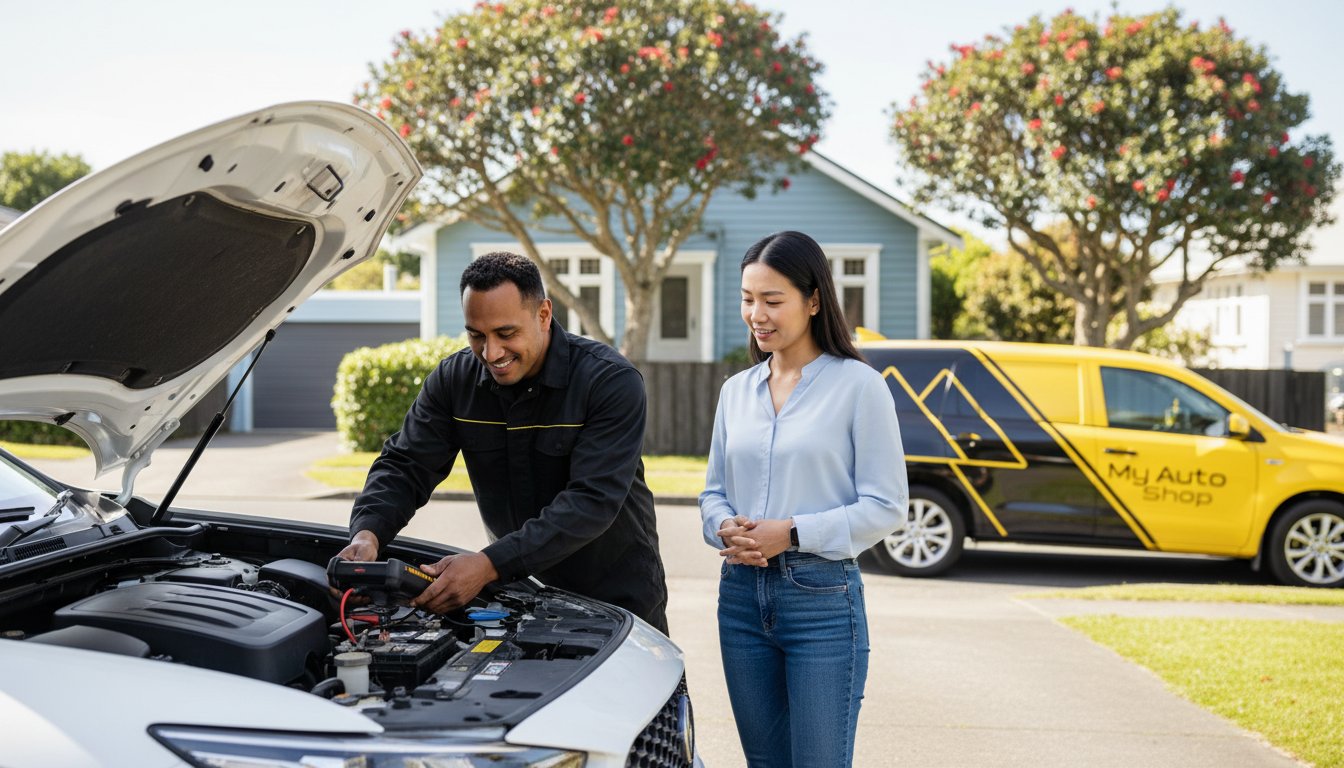
Our mobile service is designed specifically for busy lives. If your battery is showing the warning signs mentioned earlier, trying to drive to a traditional workshop is a massive gamble. You risk getting stuck at a busy intersection or stranded in a supermarket car park. Instead, we bring the expertise directly to your driveway or office. Our Mobile Mechanic service is a seamless experience that gets you back on the road without the stress of a tow truck. You can book a professional Car Battery Replacement in under two minutes through our digital platform. It’s fast, reliable, and built around your schedule.
Transparent Pricing for Kiwi Drivers
We believe in total openness. The days of “mechanic math” and hidden surcharges are over. When you use our platform, you get an instant, upfront quote. You’ll know exactly what the job costs before any tools touch your car. This commitment to transparent pricing is a hallmark of our service, setting us apart in a traditionally opaque industry. Professional fitment is also much safer than the DIY route. Modern cars have complex ECUs and sensitive electronic settings. Simply pulling the old battery can reset radio codes or cause engine management errors that are expensive to fix. Our mechanics ensure your car’s memory is preserved, saving you from a frustrating trip to the dealership later.
Being a Kiwi owned business means we understand the local conditions that wear your car down. We act as a bridge between old-fashioned service values and high-speed digital convenience. Don’t wait for the “clicking” sound of a dead engine to take action. Book your battery check or replacement now and enjoy the peace of mind that comes with a reliable start every single time.
Drive with Confidence and Zero Guesswork
Your car battery is the heartbeat of your vehicle, but it doesn’t have to be a source of anxiety. While the standard answer to how long does a car battery last nz is three to five years, your real-world results depend on how you manage those short commutes and frosty morning starts. By keeping your terminals clean and listening for that sluggish engine crank, you can avoid the frustration of a dead battery at the worst possible time. Proactive care is always cheaper and less stressful than a roadside emergency.
If you’re unsure about your current battery’s health, don’t leave it to chance. Since 2020, our Kiwi owned and operated team has been stripping away the mystery of car maintenance with transparent, instant pricing. We’ve built NZ’s largest network of mobile mechanics to ensure that expert help is always just a few clicks away, whether you’re at home or the office. It’s the simplest way to stay moving without the mechanical guesswork or hidden costs.
Book a Battery Replacement or Health Check with My Auto Shop today and enjoy a seamless, reliable service that respects your time. We’re here to make sure your next journey starts exactly when you need it to.
Frequently Asked Questions
How long should a car battery last in NZ weather?
A car battery in New Zealand typically lasts between three and five years. Our temperate climate is generally kind to batteries, but the specific lifespan depends on your region. For example, batteries in the South Island may struggle more with winter frosts, while Northland’s humidity can speed up terminal corrosion. Knowing how long does a car battery last nz helps you plan replacements before you’re stuck on a cold morning.
Can a car battery last 10 years?
It is highly unlikely for a standard starter battery to last ten years. Most lead-acid and AGM batteries reach their chemical limit by year five or six. While some drivers claim to reach a decade, these are outliers with perfect driving conditions and meticulous maintenance. For the average Kiwi car, expecting more than five years is a gamble that usually ends in a breakdown.
What are the first signs of a car battery dying?
Look for a sluggish engine crank or dimming interior lights as your first warnings. You might also notice your power windows moving slower than usual or the infotainment system resetting during startup. These electrical gremlins suggest the battery can no longer maintain a steady voltage under load. Catching these signs early allows for a stress-free replacement before the unit fails completely and leaves you stranded.
Is it worth charging a dead car battery?
Charging a battery is only a permanent fix if you accidentally drained it, such as by leaving your headlights on overnight. If the battery is more than three years old and died during normal use, charging is just a temporary band-aid. The internal plates have likely degraded, meaning the battery will fail again soon. In these cases, a full replacement is the only reliable solution for long-term peace of mind.
How much does a car battery replacement cost in NZ?
Prices vary based on your vehicle’s technology and power requirements. A standard battery for a common car like a Toyota Corolla costs around $180, while premium AGM batteries for European vehicles can reach $560. Most standard replacements fall between $200 and $350. We provide transparent, upfront quotes so you know the exact cost for your specific make and model before the job starts.
Does a WOF check the car battery?
No, a Warrant of Fitness (WOF) does not include a battery health test. The inspector checks that the battery is securely mounted and that the terminals aren’t dangerously corroded, but they don’t measure its internal capacity. You can have a healthy looking battery pass a WOF today and fail to start your car tomorrow morning. A professional health check is a separate task that ensures your battery actually holds a charge.
Why does my car battery die so fast in winter?
Winter is tough because the cold slows down the chemical reactions inside the battery. At 0°C, a battery’s power output can drop by as much as 35%. To make matters worse, cold engine oil becomes thicker and harder to move, requiring more power to start the engine. This combination of lower supply and higher demand is why older batteries often give up during the first cold snap of the year.
Can I replace my own car battery in a modern car?
You can physically swap a battery, but modern cars often require a digital relearn process. The Engine Control Unit (ECU) needs to know a new battery is installed to adjust the charging rate correctly. Without this step, your car might overcharge the new battery, significantly shortening its life. Our mechanics use specialized tools to handle this registration, ensuring your new investment lasts as long as possible and functions perfectly with your car’s electronics.
Disclaimer
This article provides general information only and should not be relied on as professional mechanical, safety or legal advice. Vehicle requirements and circumstances vary. If you are unsure about your vehicle, have it inspected by a qualified automotive professional.