
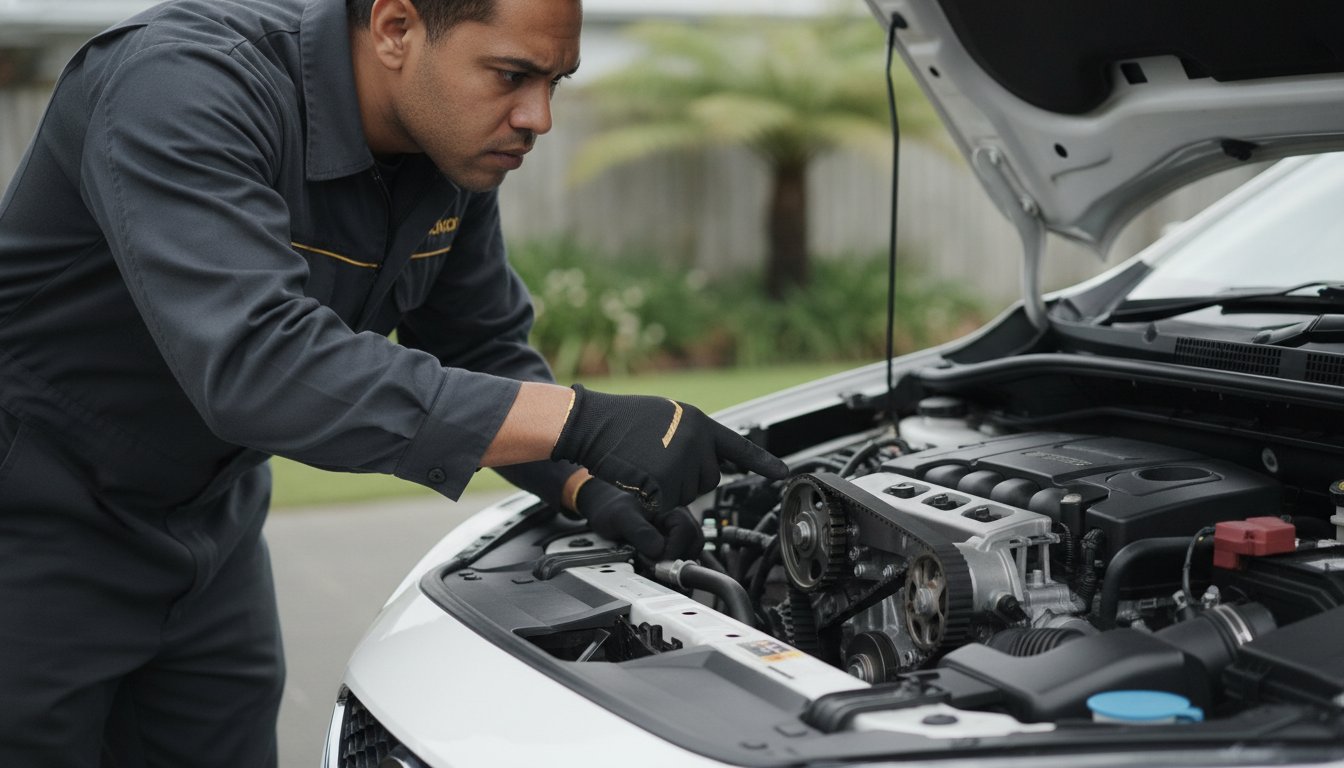
What if that faint rattling sound under your hood isn’t just a loose plastic cover, but the sound of your engine counting down its final miles? It’s a stressful thought for any driver, especially when you rely on your vehicle to keep your busy life on track. Identifying the symptoms of a failing timing belt tensioner early is the only way to prevent a minor mechanical hiccup from turning into a catastrophic engine failure.
We know that car repairs often feel like a mysterious and expensive headache. It’s confusing when you can’t tell the difference between a squeaky serpentine belt and a critical cambelt issue. You deserve clear answers and a partner who treats your safety as a priority. This guide will help you spot the warning signs before disaster strikes. You’ll learn how to identify the specific sounds of a bad tensioner, understand why the repair is so urgent, and discover how to get it fixed without the usual guesswork or hidden costs. Let’s get your car back to being the reliable tool you need it to be.
Key Takeaways
- Listen for high-pitched chirping or rattles that speed up as you drive. Identifying these early symptoms of a failing timing belt tensioner can save your engine from a total breakdown.
- Understand the difference between interference and non-interference engines to see why a loose cambelt is a high-stakes risk. A single “jumped tooth” could lead to pistons colliding with valves.
- Look for visual clues like “belt slap” marks or metal dust inside the timing cover. These signs indicate your tensioner pulley is no longer doing its job and needs urgent attention.
- Follow the “Golden Rule” by replacing your cambelt and tensioner together as a complete kit. Reusing an old tensioner is a false economy that often leads to double the labor costs later.
- Get a transparent, upfront quote for your cambelt replacement. This isn’t a DIY job, so find a reliable expert who values your time and provides clear pricing from the start.
Common Symptoms of a Bad Timing Belt Tensioner
Your engine depends on mechanical precision. The Timing belt must stay perfectly taut to keep the internal components moving in harmony. When the tensioner begins to fail, that harmony disappears. Recognizing the symptoms of a failing timing belt tensioner is your first line of defense against a total engine rebuild. It is the difference between a routine maintenance visit and a massive repair bill.
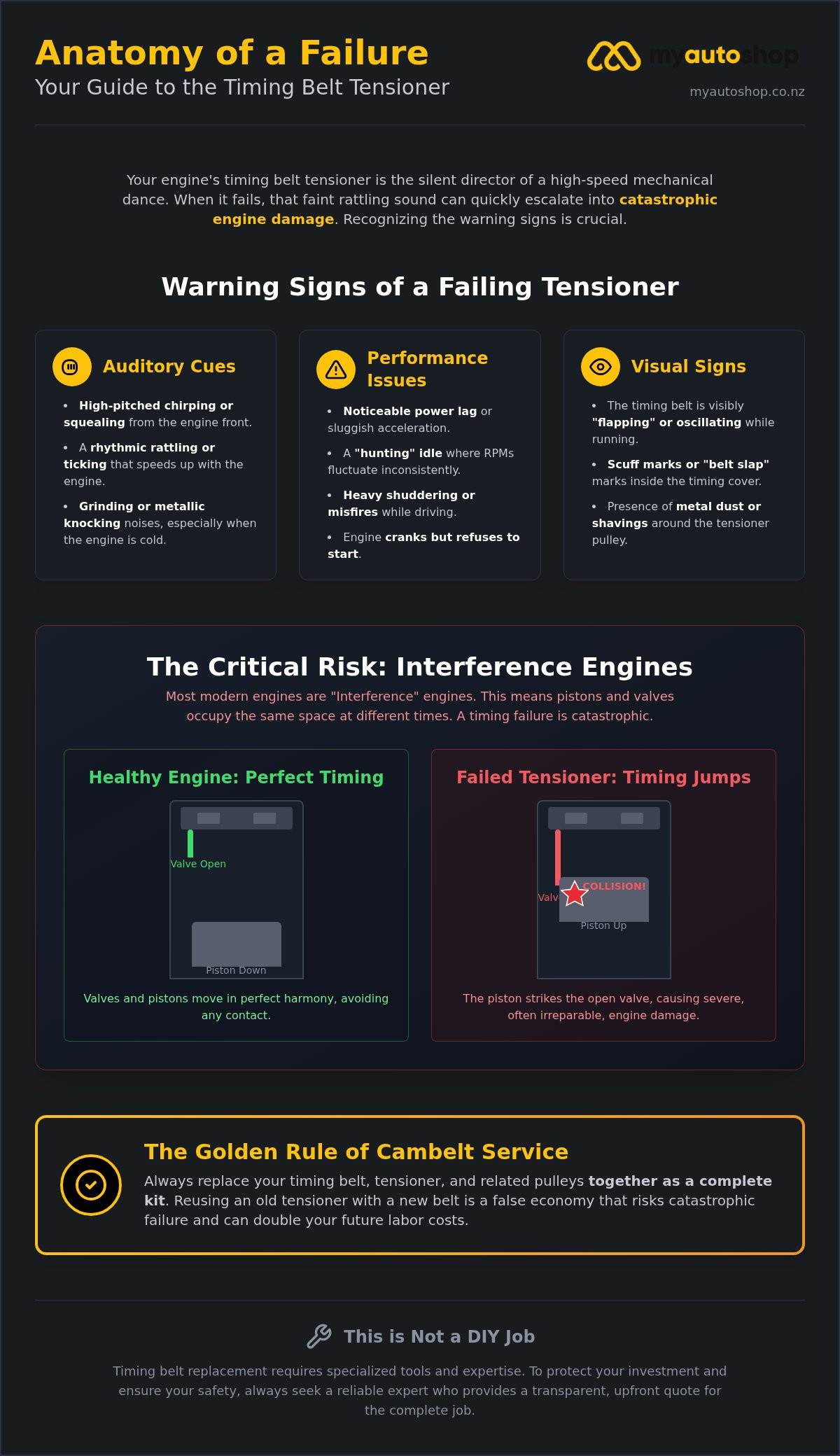
Listen for a high-pitched chirping or squealing sound coming from the front of your engine. This often signals a bearing failure within the tensioner pulley. Unlike a loose fan belt, this noise might transition into a rhythmic rattling or ticking. Pay attention to the tempo. If the rattling gets faster as your engine RPMs increase, the tensioner is likely losing its grip. This sound is the belt vibrating against the pulleys or the internal housing.
Pop the bonnet while the engine is running and look for excessive vibration. A healthy belt should run smooth and straight. If the tensioner is weak, you might see the belt “flapping” or oscillating between the gears. You might also notice a “hunting” idle, where the engine RPMs dip and rise inconsistently. This happens because the valve timing is slightly off, forcing the engine computer to constantly adjust the fuel mix to keep the car running.
If the tensioner fails completely while the car is parked, your engine might refuse to start. You’ll hear the starter motor cranking, but the engine won’t fire because the valves aren’t opening at the right time. In some cases, a loose belt causes a misfire that feels like a heavy shuddering while you drive. This is a clear sign that the belt has already “jumped” a tooth on the sprocket. Stop driving immediately if you feel this, as the next jump could be the one that destroys your engine.
Identifying the “Tensioner Tick” vs. Other Noises
Distinguishing a bad tensioner from a worn serpentine belt is a common challenge. A serpentine belt usually squeals more when you turn the steering wheel or use the air conditioning. Tensioner noises are internal and constant. Try using a long screwdriver as a makeshift stethoscope. Place the tip on the timing cover and your ear against the handle. If you hear a grinding or metallic knocking, the tensioner is likely the culprit. These sounds often change as the engine warms up and the metal components expand. Don’t ignore a sound just because it fades after five minutes of driving.
Performance Issues: When Your Timing Goes Out
When the tensioner loses pressure, the belt loses its sync with the camshaft and crankshaft. You’ll feel this as a distinct “power lag” when accelerating onto New Zealand motorways. The car might feel sluggish or hesitate under load. This isn’t just an old engine showing its age; it is a timing mismatch. Don’t wait for a dashboard warning light. In many vehicles, the Check Engine light stays off until the timing is so far out that the engine has already sustained internal damage. Trust your feet and your ears over the dashboard electronics.
Why a Failing Tensioner is a Critical Risk to Your Engine
Think of your engine as a high-speed dance where every move is choreographed to the millisecond. The timing belt tensioner is the silent director of this dance. Its job is to apply a constant, precise amount of pressure to the cambelt. This pressure ensures the belt teeth stay locked into the gears of the camshaft and crankshaft. If the tensioner loses its grip, the belt can “jump” a tooth. This tiny slip of just a few millimeters is enough to throw the entire system into chaos.
While the auditory cues mentioned earlier are the most obvious symptoms of a failing timing belt tensioner, the internal mechanical risks are far more severe. When timing shifts, the engine’s valves and pistons are no longer in sync. In a modern fuel-efficient engine, there is no room for error. A single slipped tooth can turn a smooth-running machine into a collection of broken metal in a fraction of a second. This is often why a failure leads to an “engine write-off.” A part that costs relatively little to replace can cause damage worth thousands of dollars.
The “Interference Engine” Nightmare
An interference engine is a design where the valves and pistons occupy the same physical space at different times; if the timing fails, they collide and cause catastrophic internal destruction. Most modern vehicles on New Zealand roads use this design to maximize power. If the tensioner fails in an interference engine, the pistons will physically strike the open valves. This results in bent valves, shattered pistons, and potentially a cracked cylinder head. The cost of a full engine rebuild far exceeds the price of preventative maintenance. If you suspect an issue, checking your Cambelt / Timing Belt Replacement options early is the smartest financial move you can make.
Hydraulic vs. Mechanical Tensioner Failure
Tensioners generally fail in two ways depending on their design. Hydraulic tensioners use oil pressure to maintain belt tightness. Look for oil “weeping” or oily grime around the tensioner body, as this indicates a seal has blown. Mechanical tensioners rely on a heavy-duty internal spring. Over time, these springs lose their tension, especially after years of intense heat cycles. Learning the Signs of a failing tensioner pulley is crucial because environmental factors also play a role. In New Zealand’s coastal environment, high humidity can cause surface rust on the pulley, leading to premature bearing failure and belt shredding.
Visual Signs of Wear: Inspecting the Tensioner
While listening for strange noises is a great start, a visual inspection provides the hard evidence you need. If you’re comfortable getting under the bonnet, there are several physical symptoms of a failing timing belt tensioner you can spot before the system gives up entirely. Most timing belts are protected by a plastic or metal cover; however, you can often see enough through inspection ports or by loosening a few bolts to make an informed call.
Look for “belt slap” marks on the inside of the timing cover. If the tensioner isn’t maintaining the correct pressure, the belt will whip around and strike the plastic housing. This leaves behind distinct scuff marks or grooves on the interior of the cover. You should also check for metal shavings or a fine, rust-colored dust settled around the tensioner pulley. This is a clear sign that the internal bearings are grinding against each other. Finally, inspect the back of the belt for “glazing.” If the tensioner pulley is sticking or not spinning at the right speed, it creates friction that polishes the rubber until it looks shiny and smooth. This heat damage weakens the belt’s structural integrity.
Checking the pulley bearing for play is another vital step. With the engine off, a technician can check if the pulley wobbles when moved by hand. Any movement other than a smooth rotation is a sign that the component is finished. If the pulley isn’t sitting perfectly square to the belt, it will force the belt to track off-center, leading to frayed edges and eventual snapping.
The “Bonnet-Up” Quick Check
Safety is the priority here. Ensure your engine is completely cool and the keys are out of the ignition before you start. Use a bright torch to look for oil dampness around the tensioner body. Oil leaks from nearby cam seals are a common enemy; they degrade the rubber belt and cause the tensioner mechanism to slip. To get a deeper grasp of the system, it helps to know How Do Timing Belts Work? and why tension is so vital. Remember that many tensioners use internal springs. If the spring has snapped, the part might look fine on the outside while failing on the inside.
Pulley and Bearing Failures
A seized bearing is an immediate emergency. If the pulley stops spinning, the belt will drag across the stationary metal at high speed. This creates enough friction to melt the rubber in seconds. You’ll likely notice a strong “burnt rubber” smell coming from the engine bay if this happens. If you see the pulley wobbling or vibrating unevenly while the engine is idling, do not drive the car. A wobbly pulley is seconds away from throwing the belt, which leads to the catastrophic engine collision we mentioned earlier.
The Golden Rule: Replacing Your Cambelt and Tensioner Together
When you book a cambelt service, your mechanic will almost certainly recommend a full cambelt kit. This isn’t a sneaky upsell; it’s a critical safety measure. Replacing only the rubber belt while leaving an old tensioner in place is a false economy that backfires more often than not. Even if you haven’t noticed the auditory symptoms of a failing timing belt tensioner yet, the metal components inside are reaching the end of their reliable life at the same time as the belt.
The logic is simple. A new belt is stiff and places fresh stress on the tensioner. If that tensioner is already worn, the increased load can cause it to seize or snap shortly after the repair. Because the labor required to reach the cambelt is the most expensive part of the job, doing everything at once saves you from paying for the same five hour teardown twice. Most manufacturers set a lifespan of 100,000km or five years for these components. Once you hit that milestone, the risk of failure increases exponentially.
Understanding the Cambelt Kit
A standard kit typically includes the following components to ensure a complete system refresh:
- The timing belt (cambelt) itself.
- The timing belt tensioner.
- Idler pulleys that guide the belt.
- New seals to prevent oil leaks.
- The water pump (in many vehicle models).
Including the water pump is vital because it is often driven by the cambelt. If the pump leaks or seizes later, you’ll have to pay the full labor cost all over again to replace a relatively cheap part. If you want to avoid the stress of unexpected engine failure, you can book a transparent Cambelt / Timing Belt Replacement through our platform to get a clear, upfront price for the whole job.
When Should You Proactively Replace It?
Don’t wait for a breakdown to take action. Follow your vehicle’s manufacturer service interval strictly. In New Zealand, many cars are subjected to “severe” driving conditions without the owner realizing it. Hilly terrain, towing, and short trips where the engine doesn’t reach full operating temperature all place extra strain on the timing system. If you’ve just bought a used car and the service history is blurry, treat the cambelt and tensioner as a priority. It’s the only way to drive with total peace of mind, knowing your engine’s “silent director” is in perfect working order.
How to Get Your Timing Belt Tensioner Fixed in New Zealand
Repairing a timing system is one of the most precise tasks a mechanic performs. This isn’t a DIY job for a Saturday afternoon. If you’re off by even a single millimeter, you risk the catastrophic engine damage we discussed earlier. Because the symptoms of a failing timing belt tensioner are often subtle, you need an expert eye to confirm the issue before a minor rattle becomes a total engine write-off. Precision is the only way to ensure your engine continues to fire in perfect harmony.
In New Zealand, keeping your car roadworthy is about more than just passing a Warrant of Fitness (WOF). While a noisy tensioner might not technically fail a WOF inspection, it indicates a vehicle that isn’t safe for long-distance travel or motorway speeds. A sudden failure on the Desert Road or through the Waikato Expressway is a safety risk you don’t want to take. Our platform connects you with professionals who understand these local stakes and prioritize your safety, ensuring your car is reliable for its next inspection and beyond.
We’ve stripped away the mystery of car repairs. My Auto Shop provides transparent, upfront quotes for Cambelt / Timing Belt Replacement, so you know exactly what you’re paying before the work begins. If you’re unsure about that strange noise, a Mobile Mechanic can come to your home or office for a diagnostic inspection. This saves you the stress of driving a potentially compromised engine to a workshop and gives you an honest assessment on your own driveway.
Professional Diagnosis vs. Guesswork
Professional mechanics don’t guess; they use precision tools. Replacing a tensioner requires specialized equipment like timing pins and camshaft locking bars to keep the engine perfectly synchronized. We vet every workshop and mechanic on our platform to ensure they have the right equipment and experience for these high-stakes repairs. During a service, a technician will strip back the covers, inspect the pulleys for play, and install a complete kit to ensure your engine runs like new. This level of care eliminates the “workshop shock” often associated with complex engine work.
Booking Your Service with Confidence
Finding a local expert shouldn’t be a chore. Use our digital platform to compare workshops in your area and book a time that fits your busy schedule. We prioritize logistical convenience, moving at the speed of your life while maintaining old-fashioned service values. You get the benefit of fixed-price servicing and the security of knowing your car is in capable hands. Book your Cambelt and Tensioner replacement with My Auto Shop today and get back to driving with total peace of mind.
Protect Your Engine and Drive with Confidence
Your vehicle depends on the precise coordination of its internal parts to keep you moving. Ignoring the symptoms of a failing timing belt tensioner is a risk that often leads to avoidable and expensive engine damage. By staying alert to new noises and sticking to the “Golden Rule” of replacing your cambelt and tensioner together, you keep your car reliable and your repair bills manageable.
You don’t have to navigate these repairs alone. We connect you with over 200+ certified mechanics across New Zealand to ensure you receive expert service. Whether you need the convenience of a mobile mechanic at your home or prefer a local workshop, we provide transparent, upfront pricing to remove the guesswork from your maintenance. This commitment to openness ensures you stay in control of your car’s health without the stress of hidden costs.
Book a Cambelt & Tensioner Inspection today to secure your car’s future. Take the first step toward stress-free driving and let us help you keep your engine running smoothly for years to come. Your safety is our priority, and we’re here to make every repair straightforward and reliable.
Frequently Asked Questions
Can I drive with a noisy timing belt tensioner?
No, you shouldn’t drive your vehicle if you suspect the tensioner is failing. A noisy tensioner is a warning that the component is on the verge of seizing or snapping. If it fails while you’re on the road, the timing belt will lose its grip, leading to an immediate engine stall and potentially thousands of dollars in internal damage. It’s much safer to have your car inspected immediately by a professional.
How much does it cost to replace a timing belt tensioner in NZ?
The total cost depends heavily on your vehicle’s make, model, and engine layout. European luxury cars generally require more specialized labor and parts compared to Japanese economy models. Because the tensioner is almost always replaced as part of a complete cambelt kit, you should seek a service provider that offers clear, upfront quotes. This transparency helps you avoid “workshop shock” and ensures all related components are replaced at once.
Is a cambelt tensioner the same as a serpentine belt tensioner?
They are completely different parts. A serpentine belt tensioner sits on the outside of the engine and runs accessories like your alternator and air conditioning. A cambelt tensioner is located behind a protective cover and manages the internal timing of your engine’s valves and pistons. While both can squeal when worn, a failure in the cambelt tensioner is far more serious and can lead to a total engine write-off.
What is the most common sound of a failing tensioner?
The most frequent symptoms of a failing timing belt tensioner are high-pitched chirping, squealing, or rhythmic rattling sounds. These noises usually get louder or faster as you accelerate and the engine RPMs increase. You might also hear a distinct “slapping” sound if the belt has become loose enough to hit the inside of the plastic timing cover. Never ignore new metallic sounds coming from the front of your engine.
How long does a timing belt tensioner replacement take?
A professional technician can typically complete the job in one to four hours. The duration depends on how much disassembly is required to access the timing system in your specific vehicle. Some cars have very cramped engine bays that make the process more time-consuming. It’s best to allow for a half-day booking so the mechanic can carefully calibrate the engine timing and test the new components thoroughly.
Will a failing tensioner cause a Check Engine light?
A failing tensioner usually won’t trigger a warning light until the belt actually slips or “jumps” a tooth on the gear. By the time the engine computer detects the timing mismatch and turns on the Check Engine light, internal damage may have already occurred. This is why it’s vital to listen for the physical symptoms of a failing timing belt tensioner rather than waiting for a digital signal from your dashboard.
What happens if the tensioner fails while I am driving?
If the tensioner fails at speed, your engine will stop instantly. In many modern cars, the pistons will strike the open valves, causing catastrophic internal destruction. You’ll also lose power assistance for your steering and brakes, which can make it difficult to maneuver the car to the side of the road. If your engine cuts out suddenly with a loud mechanical noise, do not attempt to restart it.
Should I replace the water pump at the same time as the tensioner?
Yes, you should definitely replace the water pump if it’s driven by the timing belt. Since the labor to reach the pump is already being done during the tensioner replacement, it’s a smart and cost-effective preventative measure. Reusing an old water pump is a risk; if it leaks or seizes later, you’ll have to pay the full labor cost all over again to pull the engine apart.
Disclaimer
This article provides general information only and should not be relied on as professional mechanical, safety or legal advice. Vehicle requirements and circumstances vary. If you are unsure about your vehicle, have it inspected by a qualified automotive professional.