
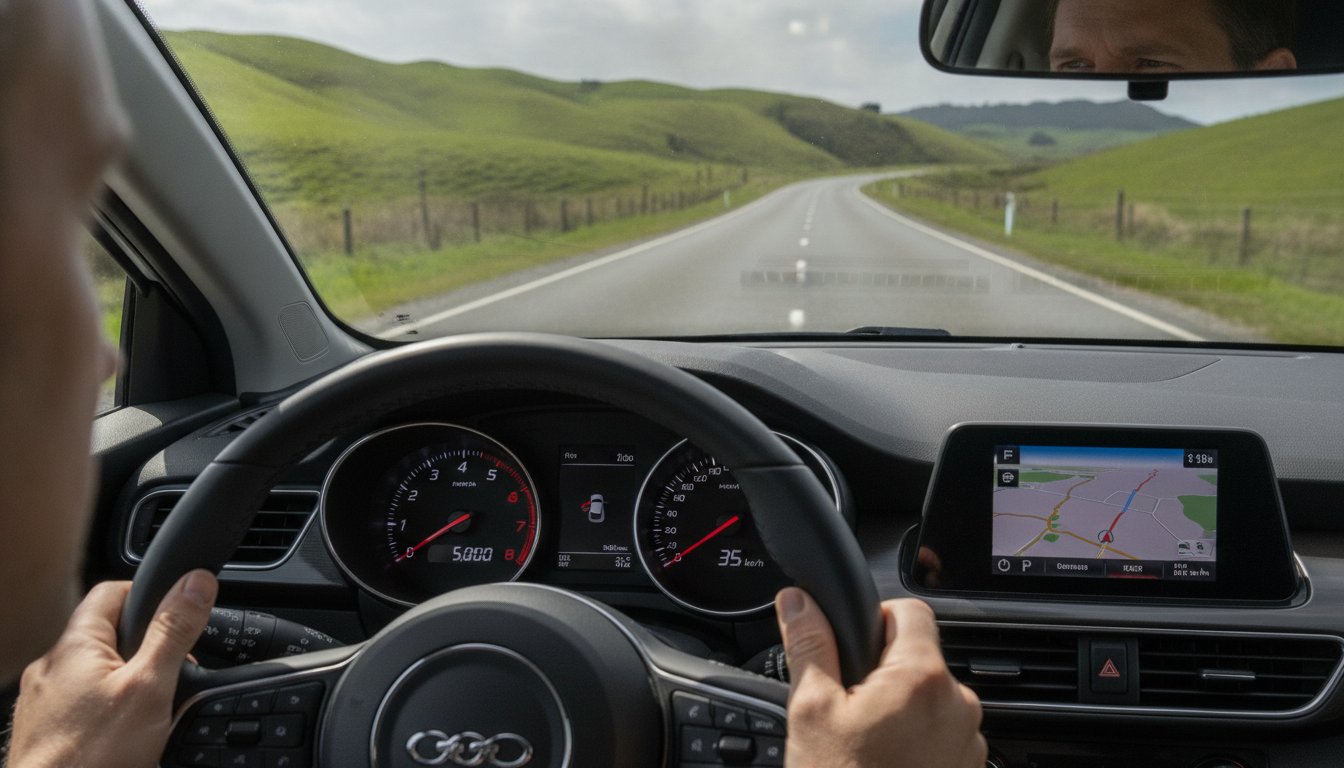
You pull away from a green light, press the accelerator, and hear your engine revving high. However, your car isn’t gaining speed. It feels like the power is simply disappearing somewhere between the engine and the wheels. This mismatch between sound and movement is often the first clue to a serious mechanical issue. Understanding what does a clutch slip feel like is the best way to protect your car and your wallet before a minor wear-and-tear problem turns into a total breakdown.
We know that unexpected car trouble is stressful. It’s frustrating to deal with confusing jargon or the fear of a massive repair bill. You deserve clear answers and a transparent partner to help you stay on the road safely. This guide explains the exact physical sensations, burnt smells, and odd noises that signal a failing clutch. We will walk you through five clear signs of trouble and help you decide if your car is still safe to drive, ensuring you have the confidence to get it fixed without the guesswork.
Key Takeaways
- Identify the “rubber band” effect where your RPMs climb without a matching increase in speed. Understanding what does a clutch slip feel like helps you catch transmission issues before they leave you stranded.
- Learn why clutches wear out over time and how the friction disc interacts with your flywheel to transfer power.
- Distinguish between a slipping clutch and other common problems like engine misfires or simple wheel spin on wet roads.
- Use our safe “High Gear Test” to diagnose your car’s health from the driver’s seat without needing a workshop.
- Discover why early detection prevents expensive flywheel damage and what a professional clutch replacement actually involves.
The Sensation of a Slipping Clutch: What to Look, Listen, and Feel For
A healthy clutch acts as a solid bridge, locking your engine’s power directly to the wheels. When that bridge starts to fail, we call it “clutch slip.” This happens when the clutch plate can no longer stay firmly locked against the flywheel. Instead of a solid connection, the two surfaces slide against each other, wasting power and creating heat. This failure in the mechanical linkage between the engine and transmission means your car isn’t getting the energy it needs to move forward efficiently.
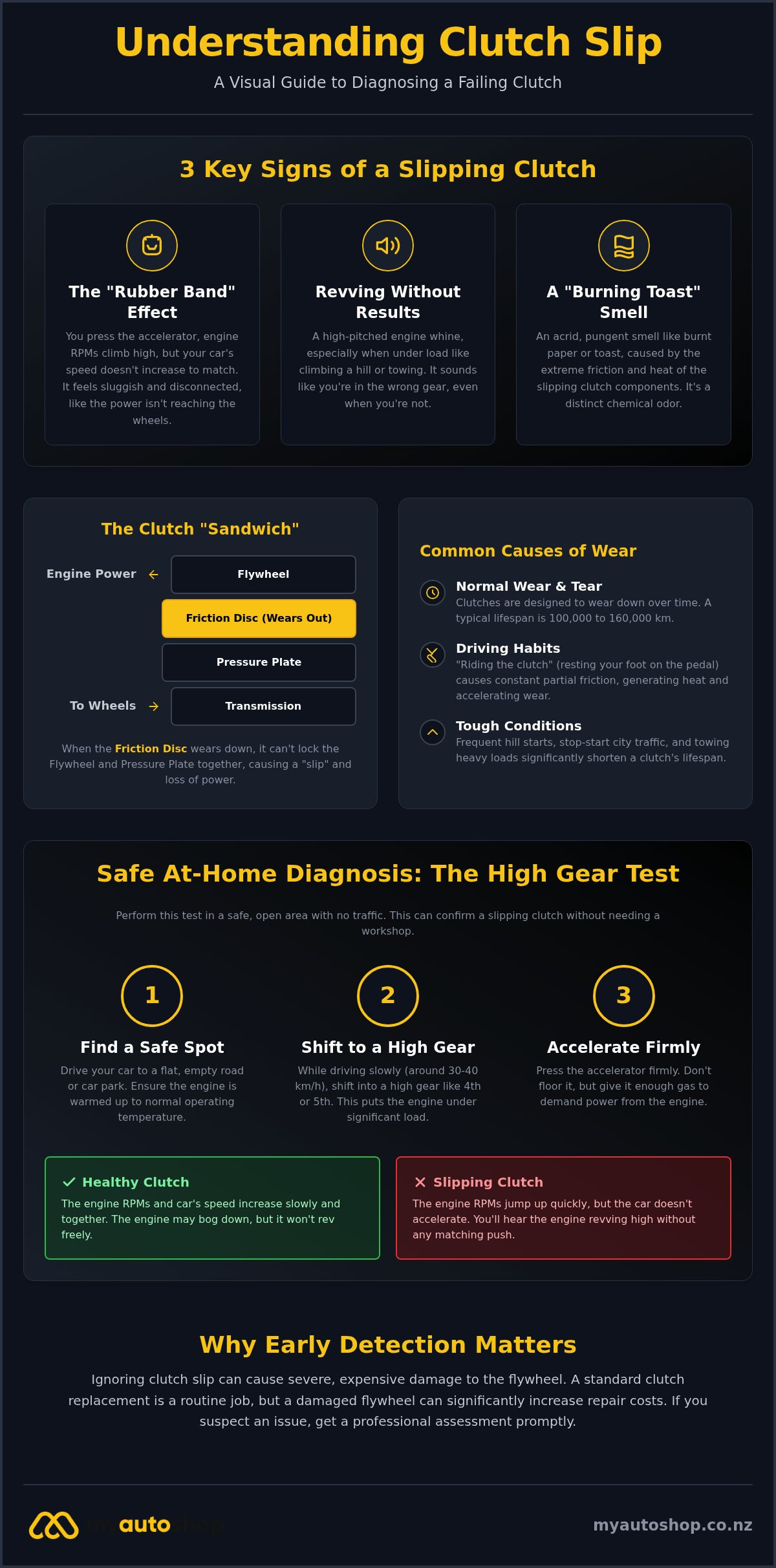
If you’re wondering what does a clutch slip feel like, think of a giant rubber band. When you press the accelerator to overtake or pull away from a stop, you expect an immediate surge of momentum. With a slipping clutch, there is a distinct delay. The engine revs up, but the car feels sluggish, as if it’s struggling to find grip on a slippery surface. You’ll notice the RPM needle on your dashboard jump upward quickly, yet your actual speed in kilometres per hour remains almost static. It’s a frustrating mismatch between the effort the engine is making and the results you see on the road.
You should also pay close attention to your left foot. As the friction material on the clutch disc wears down, the “bite point” changes. This is the specific spot in the pedal’s travel where the gears engage. In a worn system, this point moves higher and higher. You might find yourself lifting your foot almost entirely off the pedal before the car finally starts to move. This lack of “travel” is a clear physical warning that your clutch is nearing the end of its life.
The Sound of a Slip: Revving Without Results
Your ears often catch the problem before your eyes do. A slipping clutch produces a specific high-pitched engine whine that sounds like you’ve accidentally shifted into the wrong gear. This noise is most prominent when the engine is under heavy load. If you’re climbing a steep hill or towing a trailer, the extra strain forces the clutch to work harder. If it can’t hold, the engine will roar without providing any extra push. At its core, clutch slip is a mechanical disconnect between engine power and wheel rotation.
The “Burning Toast” Smell: A Chemical Warning
When those internal parts rub together instead of locking, they generate intense friction and heat. This creates a pungent, acrid smell often compared to burnt toast or singed newspaper. It’s a sharp, chemical scent that is very different from the heavy, thick smell of a leaking oil pipe or the ozone scent of an electrical fire. You’ll often notice this smell most strongly around the front wheel arches after a drive, as the heat and fumes escape from the transmission housing. If you smell this after a normal commute, your clutch is likely overheating and needs professional attention.
The Mechanics of the Slip: Why Your Clutch is Losing Its Grip
To understand what does a clutch slip feel like, you first need to visualize how your car moves. Think of the clutch system as a high-pressure sandwich. The three main ingredients are the flywheel, the friction disc, and the pressure plate. When your foot is off the pedal, the pressure plate clamps the friction disc tightly against the flywheel. This creates a solid bond that sends engine power directly to your transmission. If any part of this sandwich fails to hold its grip, the power simply leaks away as heat instead of turning your wheels.
In New Zealand, our driving conditions are particularly tough on these components. Between the steep hills of Wellington and the stop-start congestion on Auckland’s motorways, clutches work overtime. A standard clutch typically lasts between 100,000 and 160,000 kilometres. However, frequent hill starts or towing heavy loads can shorten this lifespan significantly. If you’re noticing a loss of power on inclines, it’s a good idea to book a clutch replacement assessment before the slip leaves you stranded.
Driver habits also play a massive role. “Riding the clutch”—keeping your foot slightly pressed on the pedal while driving—is a common culprit. This prevents the pressure plate from fully engaging. It keeps the disc in a state of constant, partial friction. This generates immense heat and polishes the surfaces until they can no longer bite together.
Worn Friction Material
Clutch discs are very similar to brake pads. They feature a layer of tough, gritty material designed to wear down slowly over years of use. As this material thins out, the pressure plate loses its ability to “bite” the flywheel effectively. Once the slipping begins, the heat it generates creates a destructive cycle. This heat makes the remaining friction material brittle and less effective, which leads to even more slipping. Eventually, the material becomes too thin to bridge the gap, and the car will refuse to move in gear.
Pressure Plate Failure and Contamination
Sometimes the friction material is fine, but the “clamp” is weak. The pressure plate relies on heavy-duty springs to hold the sandwich together. Over time, these springs can lose their tension or even snap. Without that firm clamping force, the disc will slide under the stress of acceleration.
Contamination is another frequent issue. A small oil leak from a faulty rear main seal can drip engine oil directly into the clutch housing. Since oil is a lubricant, it ruins the friction required for the system to work. This often leads to “glazing,” where the disc surface becomes as smooth and shiny as glass. Once a disc is glazed or oil-soaked, it loses its grip entirely, regardless of how much material is left.
Clutch Slip vs. Other Issues: How to Tell the Difference
A sudden loss of power while driving is enough to make any driver anxious. Before you assume a total transmission failure, it’s helpful to rule out other common culprits. Identifying exactly what does a clutch slip feel like compared to a tyre spin or an engine fault can save you a lot of stress. While the symptoms might seem similar, the underlying causes, and the eventual repair costs, are very different.
In modern vehicles, electronic systems often intervene when they detect a problem. This is known as “limp mode.” If your car suddenly feels sluggish and won’t accelerate past a certain point, check your dashboard for a check engine light. Limp mode is a software-based restriction designed to protect your engine from further damage. Unlike a slipping clutch, where the engine revs freely while the car stays slow, limp mode will usually prevent the engine from revving high at all. It’s a deliberate cap on performance, not a mechanical failure of the friction plate.
If you drive an automatic or a CVT (Continuously Variable Transmission), a “slip” feels slightly different. These transmissions don’t have a traditional clutch pedal, but they can still lose grip. In a CVT, you might feel a rhythmic surging or a “rubber band” effect that persists even at constant speeds. In a manual car, the slip is specifically a mismatch between engine speed and road speed during gear changes or under heavy acceleration.
Is it the Engine or the Transmission?
One of the easiest ways to distinguish these issues is by the “smoothness” of the failure. An engine misfire feels violent. You’ll experience jerking, bucking, or even popping sounds from the exhaust. This happens when a spark plug or ignition coil fails to fire correctly. A slipping clutch is much more subtle. The engine usually sounds healthy and runs smoothly; it simply feels disconnected from the wheels. If your car is stuttering, look at the engine. If it’s revving without moving, look at the clutch.
Ruling out Tyre Slip and Traction Control
New Zealand’s damp, oily roads frequently cause tyres to lose traction, especially when pulling away from intersections. This “wheel spin” can mimic a clutch issue because the engine revs up while the car stays still. However, there are three key differences to look for:
- Dashboard Lights: Your traction control light, usually an icon of a car with squiggly lines, will flash during wheel spin.
- Surface Conditions: Wheel spin usually happens on wet, icy, or gravel surfaces. Clutch slip happens even on dry, high-grip bitumen.
- The Feedback: You can often feel the vibration of spinning tyres through the steering wheel. Clutch slip is a purely internal sensation within the drivetrain.
If you’ve ruled out the tyres and the engine still feels “disconnected,” it’s time to test the transmission itself. Catching a slip early prevents the heat from damaging other expensive parts like the flywheel. Be sure to monitor any lag in power when you’re moving between gears, as this is the most common time for the friction disc to fail.
DIY Diagnostics: Safe Ways to Test for Clutch Slip at Home
Confirming your suspicions doesn’t always require a trip to the workshop. If you’ve been wondering exactly what does a clutch slip feel like in your own vehicle, you can perform a few simple tests from the driver’s seat. These diagnostics are designed to put the transmission under specific stress to see if the friction disc holds firm or gives way. Before you begin, find a flat, quiet road with plenty of space and zero traffic. Safety is your top priority, so never attempt these tests in busy areas or on steep hills where a sudden loss of power could be dangerous.
While driving, keep a close eye on your tachometer (the rev counter). You’re looking for “hunting” revs. This is when the needle bounces or climbs rapidly without a matching increase in your speedometer. If you’ve ruled out engine misfires and tyre spin as discussed earlier, these tests will help you pinpoint the clutch as the culprit. If your car fails either of these tests, it’s time to book a professional clutch replacement to avoid further damage to your flywheel.
The 4th Gear Acceleration Test
This is the safest and most common way to check for a slipping clutch while moving. It works because high gears require the most torque to maintain speed, putting the maximum load on the friction plate.
- Step 1: Drive your car at a steady speed of approximately 40 to 50 km/h. Shift into 4th gear. The engine will feel a bit sluggish at this low speed, which is exactly what you want.
- Step 2: Once you are safely in 4th gear, firmly press the accelerator pedal. You don’t need to floor it, but give it a significant amount of throttle.
- Step 3: Observe the dashboard. In a healthy car, the revs will climb slowly as the car gradually gains speed. If the revs jump up quickly while the car’s speed barely changes, your clutch is definitely slipping.
The Handbrake Stall Test
This test is performed while stationary and is a more aggressive way to check the clamping force of your pressure plate. Because it creates intense heat, you should only perform this test once. Repeating it can cause unnecessary wear on a clutch that might still have some life left.
- Step 1: Park the car on a flat surface. Set the handbrake firmly. Depress the clutch pedal and shift the car into 4th gear.
- Step 2: Slowly release the clutch pedal while simultaneously giving the engine a small amount of throttle.
- Step 3: A healthy clutch will bite hard and stall the engine almost immediately. If the engine continues to run or “chatter” while the pedal is mostly released, the friction material is toast.
By using these methods, you can move past the guesswork and understand the health of your drivetrain. Catching a slip now prevents the friction disc from grinding down into the metal of the flywheel, which can save you hundreds in additional machining costs later.
Next Steps: Repair Costs, Replacement, and Professional Help
Once you have confirmed what does a clutch slip feel like using our DIY tests, the next step is to address the issue before it escalates. A slipping clutch is more than just a performance annoyance. It is a mechanical warning that your drivetrain is under extreme stress. Continuing to drive with a worn friction disc is a gamble that rarely pays off. Eventually, the slip will become so severe that your car will refuse to move, leaving you stranded on a busy road or requiring an expensive tow.
A standard clutch replacement is a significant undertaking. It requires a professional to drop the gearbox to access the clutch assembly. Because this labor is intensive, mechanics often recommend “while you are in there” repairs. Replacing the throw-out bearing and the rear main seal at the same time is standard practice. These parts are relatively inexpensive, but replacing them while the gearbox is already out saves you from paying for the same labor twice if they fail later.
The Risks of Delaying the Repair
The biggest risk of ignoring a slipping clutch is the damage it does to your flywheel. As the disc slides against the metal surface, it generates intense heat. This heat can cause “heat checking,” which are small cracks on the flywheel surface, or even cause the metal to warp. If caught early, a flywheel can sometimes be machined back to a smooth finish. However, if the damage is deep, you will need a full flywheel replacement, which can significantly increase your repair bill. Early intervention is the most effective way to keep your maintenance costs manageable.
How My Auto Shop Simplifies Clutch Repairs
We believe that car repairs shouldn’t be a source of anxiety. My Auto Shop acts as your transparent partner, stripping away the mystery and jargon of transmission work. We provide a streamlined way to get a fixed-price quote for your car, so you don’t have to worry about hidden costs or surprises when the bill arrives. Our platform connects you with qualified professionals who value your time and safety as much as you do.
If you are in the market for a new vehicle and want to avoid these issues entirely, our Pre-purchase Inspection is a smart investment. Our mechanics can identify the subtle signs of a failing drivetrain before you commit to a purchase. For those already experiencing issues, don’t wait for a total breakdown. Book your clutch health check or replacement with My Auto Shop today.
Restore Your Car’s Power Today
Catching a slipping clutch early is the smartest way to avoid a huge repair bill and a stressful roadside breakdown. You now know that what does a clutch slip feel like is essentially a disconnect between your engine’s roar and your car’s actual movement. Identifying that “rubber band” sensation or the acrid smell of overheating friction material is the first step toward a safer drive. Don’t ignore high revs or a shifting bite point. These signs tell you that your transmission needs professional attention before the flywheel suffers permanent damage.
Getting your car back to peak performance is simple and transparent. You can book a professional Clutch Replacement through My Auto Shop to access our network of MTA-assured mechanics across NZ. We provide fixed-price quotes so you never have to guess about the final cost. Our streamlined booking process is designed to fit into your busy life, ensuring you get back on the road with total confidence. Take control of your car’s health today and enjoy the peace of mind that comes with a smooth, reliable ride.
Frequently Asked Questions
Can I drive with a slipping clutch?
You can drive for a very short distance to reach a safe location, but you should avoid any unnecessary travel. Driving with a slip generates intense heat that quickly damages the flywheel and other internal components. Eventually, the friction material will fail completely, leaving you stranded and requiring a tow truck to get to a workshop.
How much does it cost to fix a slipping clutch in New Zealand?
The cost of a repair depends entirely on your vehicle’s make, model, and the type of flywheel it uses. European cars or heavy 4WDs often require more labor and specialized parts than a standard hatchback. To avoid the stress of hidden costs, use our platform to get a transparent, fixed-price quote tailored to your specific car.
How long does a clutch replacement take?
A professional clutch replacement usually takes between four and eight hours of dedicated labor. The process is complex because the mechanic must remove the gearbox to access the clutch assembly. Most workshops will need your vehicle for a full day to ensure every component is aligned, bolted, and tested for safety.
Can a clutch slip be fixed without replacing it?
In most cases, a slipping clutch requires a full replacement of the clutch kit. Once the friction material is worn or the pressure plate springs have weakened, the parts cannot be “tightened” or repaired. If you are wondering what does a clutch slip feel like, you are likely feeling the physical end of the component’s lifespan.
Why does my clutch only slip in high gears?
High gears place the maximum amount of torque load on the clutch disc. In a high gear, the engine has less mechanical advantage over the wheels, which forces the clutch to work harder to maintain the connection. This is why a failing clutch often slips during highway overtaking before it starts failing during low-speed city driving.
Does a slipping clutch mean I need a new flywheel too?
Not always, but it requires a physical inspection once the gearbox is out. If the slipping was caught early, the flywheel might only need a simple resurface to restore the grip. However, if the heat from the slip caused deep cracks or warping, a full replacement is necessary to prevent the new clutch from wearing out prematurely.
How can I prevent my clutch from slipping in the future?
Develop better driving habits by keeping your foot completely off the clutch pedal unless you are shifting gears. Avoid holding the car on an incline using the clutch; use your handbrake for hill starts instead. These small changes reduce the heat and friction that lead to premature wear, helping your transmission last for its full intended mileage.
Disclaimer
This article provides general information only and should not be relied on as professional mechanical, safety or legal advice. Vehicle requirements and circumstances vary. If you are unsure about your vehicle, have it inspected by a qualified automotive professional.