
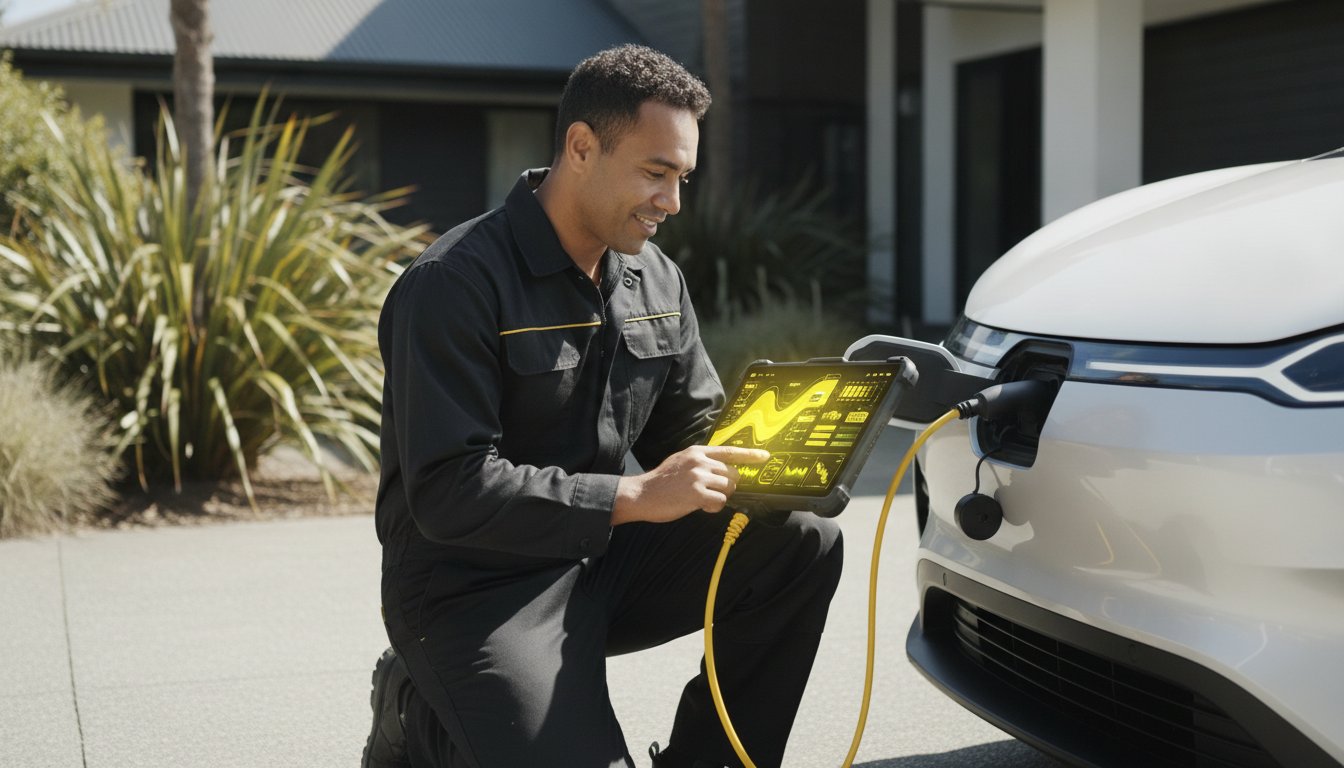
Would you hand over thirty grand for a giant smartphone without knowing if the battery can actually hold a charge? Buying a used EV in New Zealand is a smart move for your wallet and the planet, but it’s completely normal to feel a bit of “battery anxiety” before you sign the papers. You want the quiet ride and the end of petrol station trips, not a surprise five-figure bill because the previous owner fast-charged the life out of the cells. A standard mechanical check just doesn’t cut it anymore because an EV is a software-driven ecosystem, not just a collection of bolts and belts.
Booking a specialized pre purchase inspection for electric vehicles nz is the best way to get total peace of mind. We understand that the transition from internal combustion to electric can feel like a steep learning curve. This 2026 guide simplifies the process, showing you exactly why a deep dive into the State of Health (SOH) is critical and how to spot red flags that a simple dashboard display might hide. We’ll walk through the essential checks for high-voltage systems, the impact of the latest RUC regulations, and how a professional report gives you the power to negotiate a fair price. Get ready to buy your next car with the confidence of an expert.
Key Takeaways
- Move beyond the “fewer moving parts” myth and treat your EV purchase as a high-tech investment that requires a specialized health check.
- Prioritize the State of Health (SOH) diagnostic to confirm battery longevity and ensure the thermal management system is ready for NZ summers.
- Don’t rely on a basic WOF. Book a comprehensive pre purchase inspection for electric vehicles nz to uncover hidden degradation and electronic faults.
- Use our test drive checklist to verify regenerative braking performance and compare the “Guess-o-meter” against real-world range.
- Access a national network of expert mechanics who provide transparent reports and mobile convenience at the vehicle’s location.
Why EVs Need a Specialized Pre-Purchase Inspection in NZ
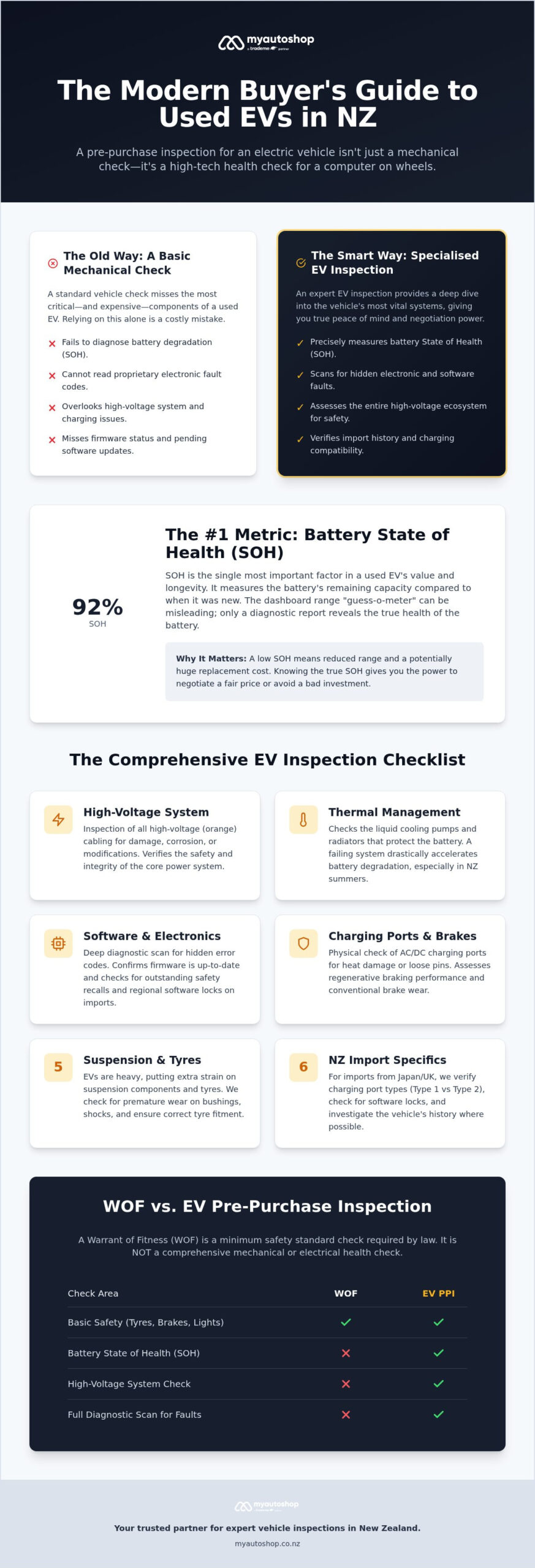
Think of an EV pre-purchase inspection as a high-tech health check for a computer on wheels. While traditional cars rely on internal combustion, electric vehicles use complex power electronics that require a different diagnostic approach. It’s a common misconception that because EVs have fewer moving parts, they’re somehow immune to failure. This myth often leads to buyer complacency, which can be a costly mistake. You aren’t just buying a chassis; you’re buying a sophisticated energy storage and management system.
When you book a pre purchase inspection for electric vehicles nz, you’re looking for more than just brake wear and tire tread. You’re assessing the “brain” of the car. If you want to understand the basics of what to know about electric cars, you’ll see that components like power inverters and onboard chargers are the lifeblood of the vehicle. These parts are incredibly expensive to replace. Unlike a petrol engine where a minor leak might be a cheap fix, a failure in the high-voltage system often requires a full component replacement, potentially costing thousands of dollars.
The Hidden Risks of Used EV Imports
New Zealand’s used EV market is heavily reliant on imports, particularly from Japan and the United Kingdom. While these vehicles offer great value, they often arrive with “blank slate” histories. A “freshly imported” sticker doesn’t guarantee the battery hasn’t been sitting at 0% charge on a wharf for months. You need to verify if the car has regional software locks or if the charging port is a Type 1 or Type 2, which affects your charging speed and cable compatibility at home. A specialized inspection digs into the country-of-origin service history to ensure you aren’t buying someone else’s problem.
Software vs. Hardware: What Really Fails?
In the world of EVs, faults are rarely mechanical. They’re electronic. A standard mechanic using basic tools might miss critical error codes hidden deep within the vehicle’s proprietary software. These codes can signal an internal cell imbalance or a failing thermal management system. It’s also vital to check the firmware status. Many EV issues are solved through software updates, and a professional inspection confirms if the car is running the latest version or if there are outstanding safety recalls that haven’t been addressed. Don’t leave your investment to guesswork when a diagnostic scan can reveal the truth.
The EV Inspection Checklist: Beyond Battery Health
Don’t fall into the trap of thinking an EV is simpler just because the engine is gone. While the drivetrain has fewer moving parts, the peripheral systems are just as critical to the car’s longevity. A proper pre purchase inspection for electric vehicles nz looks at the car as a complete high-voltage network. This includes inspecting the high-voltage orange cabling for any signs of fraying, corrosion, or questionable DIY modifications. These cables carry immense power, and any compromise in their insulation is a major safety risk that a standard visual check might miss.
The thermal management system is the unsung hero of any electric car. It keeps the battery within a safe temperature range during rapid charging or long drives in the Kiwi summer. If the liquid cooling pumps or radiators fail, battery degradation accelerates rapidly. We also examine the charging ports for physical integrity. We look for signs of heat damage, scorch marks, or loose pins in both the AC and DC ports. Poor connections here can lead to charging failures or, in extreme cases, fire risks. If you’re following the official vehicle buying process, you already know about checking the paperwork. But for an EV, the physical checklist is vastly different.
Understanding Battery State of Health (SOH)
State of Health (SOH) is the percentage of original capacity remaining in the battery. It’s the most accurate way to judge a used EV. Dashboard “bars” are often programmed to be optimistic and don’t tell the full story of how the cells are actually performing. A professional diagnostic tool is required to see how many fast-charging cycles the pack has endured. Excessive heat from constant rapid charging can reduce the SOH faster than standard home charging. Knowing this number gives you the leverage to negotiate a fair price or walk away from a “bargain” that will soon need a new battery pack.
Suspension and Tyres: The Weight Factor
Because batteries are heavy, EVs often carry significantly more weight than their petrol counterparts. This extra mass puts constant stress on suspension bushings and shock absorbers. You must verify that the tyres have a high load index specifically designed for electric vehicles. Standard tyres will wear out prematurely and can even be unsafe under the heavy load. We also inspect the CV joints and boots. The instant torque of an electric motor can tear through rubber boots and wear out joints much faster than a traditional internal combustion engine. Booking a pre-purchase inspection ensures these high-tech and heavy-duty components are functioning exactly as they should before you commit.
Regenerative braking is another key area of focus. It differs from standard friction brakes because it uses the electric motor to slow the car down and recover energy. An inspector needs to ensure the transition between “regen” and physical braking is smooth. Paradoxically, the physical brake rotors on EVs can sometimes rust from lack of use. We check that the calipers aren’t seized and that the pads still have plenty of life, ensuring your safety in emergency stopping situations.
WOF vs. Pre-Purchase Inspection: Why the WOF Isn’t Enough
Many buyers assume a fresh Warrant of Fitness (WOF) means a car is in great shape. In reality, a WOF is just a basic safety minimum required by law. It confirms the vehicle is roadworthy at the exact moment of testing, but it tells you absolutely nothing about its long-term health. For an electric vehicle, this distinction is even more dangerous. A WOF inspector won’t check your battery’s State of Health or look for software glitches that could leave you stranded next week.
Because WOF standards are designed for all vehicles, they completely ignore the high-voltage systems that define an EV. An inspector won’t open high-voltage casings or run specialized diagnostics on the powertrain. You could drive away in a car that passed its WOF with flying colors, yet possesses a battery pack nearing total failure. This is why a specialized pre purchase inspection for electric vehicles nz is the only way to protect your investment. It fills the massive gap between “legal to drive” and “safe to buy.”
Safety vs. Reliability
The simplest way to look at it is that a WOF checks if the car stops, while a PPI checks if the car will keep going. A WOF focuses on immediate safety items like seatbelts, lights, and glazing. A comprehensive PPI dives into the 100+ items that fall outside that narrow scope. It evaluates the reliability of the electronic control units and the efficiency of the charging system. Without this deeper look, you’re taking a massive financial gamble on the car’s most expensive components. A WOF doesn’t care if your charging port is melting; a PPI does.
EV-Specific WOF Failures
When EVs do fail a WOF in New Zealand, the reasons are often tied to their unique architecture. The heavy weight of the battery packs often leads to faster wear on suspension components and tyres. Common failure points include:
- Perished suspension bushings and worn shock absorbers struggling with the battery’s mass.
- Tyre tread depth that has reached the legal limit prematurely due to instant torque.
- Faulty electronic park brakes or specialized LED lighting systems.
While a WOF identifies these as safety failures, a PPI identifies them as symptoms of how the car was treated. A professional report helps you see these upcoming maintenance costs before you buy. It gives you the evidence needed to ask for a price reduction or to simply walk away if the repair bill looks too high. Don’t let a “clean” WOF blind you to the underlying reality of a used EV. Get the full picture so you can drive away with confidence.
How to Test Drive a Used EV: Red Flags and Warning Signs
Getting behind the wheel of a used electric car is a different experience than testing a petrol vehicle. You aren’t listening for a smooth idle or gear shifts. Instead, you’re looking for how the software and hardware communicate. When you’re out on the road, remember that a pre purchase inspection for electric vehicles nz starts with your own senses. Pay close attention to the regenerative braking. Switch through the different modes to ensure the transition from motor braking to friction braking feels seamless. If the car jerks or makes a grinding sound as you lift off the accelerator, there could be an issue with the motor controller or the brake calipers.
Watch the “Guess-o-meter” closely. This is the range estimator on the dashboard. Note the range at the start of your drive and check it again after ten kilometres. If the estimated range drops by thirty kilometres during a ten-kilometre loop, the battery cells may be struggling under load. You should also test the cabin heater and air conditioning. Because EVs use electric heaters rather than engine heat, a faulty HVAC system is a massive battery drain and an expensive repair. Don’t forget to stop at a public fast charger during your test. Plug it in and ensure the “handshake” between the car and the charger happens quickly without error messages.
The “Quiet” Test
The lack of engine noise is your best diagnostic tool. It makes it much easier to spot suspension rattles or excessive wind noise from perished door seals. Listen for a high-pitched whining or “whirring” sound from the electric motor, which could signal bearing wear in the reduction gear. Any clicking during acceleration could indicate CV joint failure. Because the motor provides instant torque, these joints are under constant stress and often fail earlier than they would in a traditional car. Keep the radio off and the windows up to catch these subtle warning signs.
Electronics and Infotainment
In most modern EVs, the touchscreen controls everything from the mirrors to the charging limits. Test every menu and look for software lag or “ghost” touches where the screen reacts without being pressed. These displays are the brain of the vehicle and are notoriously expensive to replace. If the car uses a mobile app for remote pre-heating or GPS tracking, ask the seller to demonstrate that the ownership is easily transferable. A “smart” car isn’t very smart if you’re locked out of its best features. To ensure every electronic and mechanical detail is verified, book a pre-purchase inspection with a technician who knows exactly what to look for.
Booking Your EV Inspection with My Auto Shop
Choosing the right car is a big decision, but finding the right expert to check it shouldn’t be a chore. We’ve built a bridge between traditional mechanical expertise and the high-tech requirements of modern electric cars. Our platform connects you with a national network of vetted professionals who understand the nuances of high-voltage systems. Booking a pre purchase inspection for electric vehicles nz through our digital platform is fast, simple, and designed to fit into your busy life. We strip away the jargon and provide the clarity you need to move forward.
One of our biggest advantages is the flexibility of our service. If the car you’re eyeing is across town or the seller can’t make it to a workshop, our mobile mechanic options can often handle the inspection right at the seller’s home or workplace. This removes the logistical headache and ensures the car is checked in its natural environment. We prioritize financial clarity from the start, so you’ll never deal with hidden costs or surprise fees. You get a professional, transparent experience that values your time as much as your safety.
What’s Included in Your Report
Once the inspection is complete, you receive a comprehensive digital report that is easy to read and even easier to use. This isn’t just a list of checkboxes; it’s a diagnostic deep dive. Your report includes:
- A detailed breakdown of all mechanical and safety components, from suspension health to brake wear.
- A specialized electrical assessment covering the battery State of Health and charging port integrity.
- Clear “Red Flag” indicators that highlight urgent repairs or potential safety risks.
- Estimated costs for any upcoming maintenance, helping you plan your future budget.
This report acts as your ultimate tool for negotiation. If the technician finds that the tyres are near the end of their life or the 12V battery needs replacing, you have the evidence to ask for a fair price reduction.
Ready to Buy with Confidence?
An EV is a significant investment, and a professional inspection is the best insurance policy you can buy. It transforms “battery anxiety” into informed confidence. You’ll know exactly how much life is left in the cells and whether the car’s software is up to date. Don’t leave your next purchase to luck or a seller’s word. Secure your peace of mind and ensure your new electric journey starts on the right track. Book your pre-purchase inspection today before that perfect car disappears from the market.
Take the Wheel with Confidence
Buying an electric car is a bold step toward a more efficient future. You now know that a simple dashboard check or a standard WOF won’t reveal the true health of a battery or the integrity of its software. By focusing on the State of Health (SOH) and the high-voltage systems, you protect yourself from the most expensive repairs. A professional pre purchase inspection for electric vehicles nz is your best tool for uncovering hidden history and negotiating a price that reflects the car’s actual condition.
My Auto Shop makes this process effortless. We connect you with a national network of qualified mechanics who deliver detailed digital reports fast. Trusted by thousands of NZ car buyers, we ensure you have the data needed to make a smart choice. Don’t leave your investment to chance. Book a Pre-Purchase Inspection with My Auto Shop and drive away knowing your new EV is ready for the road ahead. Enjoy the quiet ride and the savings that come with your new electric journey.
Frequently Asked Questions
Do I really need an inspection for an electric vehicle since there is no engine?
Yes, you definitely do. While there’s no oil to change or spark plugs to replace, the battery pack and power electronics are the most expensive parts of the car. A specialized pre purchase inspection for electric vehicles nz identifies issues with the high-voltage system that a standard mechanic might miss. It’s about protecting your wallet from a five-figure battery replacement bill.
How much does an EV pre-purchase inspection cost in New Zealand?
Costs vary depending on the depth of the diagnostic scan and whether you choose a mobile or workshop-based service. Specialized EV checks require advanced software and technical training to read internal battery data safely. You’ll find that the investment is minor compared to the potential cost of buying a vehicle with a failing thermal management system or a degraded battery pack.
What is a good SOH (State of Health) for a used Nissan Leaf in NZ?
Look for an SOH of 80% or higher if you want a reliable daily driver with decent range. For a Nissan Leaf, an SOH below 70% usually means the car has lost two or more “bars” on the dash, which significantly reduces its usefulness for highway driving. Always verify the SOH with a diagnostic tool rather than relying on the dashboard display alone, as these can sometimes be reset.
Can a mobile mechanic do a full EV inspection at a seller’s house?
Yes, a mobile mechanic can perform a comprehensive check at the seller’s location. Most EV diagnostics are software-driven, allowing technicians to plug in and read battery health data anywhere with a mobile signal. They can also perform physical checks on the suspension, brakes, and high-voltage cabling right in the driveway, making the process convenient for both you and the seller.
Will the inspection tell me exactly how long the battery will last?
An inspection provides a current snapshot of health, not a crystal ball. It tells you the current degradation level and how the car has been charged in the past, such as excessive use of rapid chargers. This data helps you estimate the remaining useful life based on average NZ driving habits, but battery longevity also depends on how you charge and store the car in the future.
Does the inspection cover the charging cables and home wallbox?
The inspection includes the portable charging cables that come with the vehicle. Technicians check the pins for heat damage and ensure the charging “brick” functions correctly during a test charge. It does not cover fixed home wallboxes. Those are considered property fixtures and require a registered electrician for a separate safety and installation assessment.
What happens if the seller refuses to let me get an independent inspection?
Walk away if a seller won’t allow an independent check. In the NZ used car market, a refusal is almost always a sign that the seller is hiding a significant fault or a history of poor maintenance. An honest seller will welcome a professional report because it confirms the car’s value and helps finalize the deal with total transparency.
How long does a professional EV pre-purchase inspection take?
Expect a professional EV inspection to take between 60 and 90 minutes. This timeframe allows the technician to run a full diagnostic scan, test the charging ports, and perform a road test to check the regenerative braking and suspension. You’ll usually receive your detailed digital report shortly after the physical check is finished, allowing you to make a fast decision.
Disclaimer
This article provides general information only and should not be relied on as professional mechanical, safety or legal advice. Vehicle requirements and circumstances vary. If you are unsure about your vehicle, have it inspected by a qualified automotive professional.