
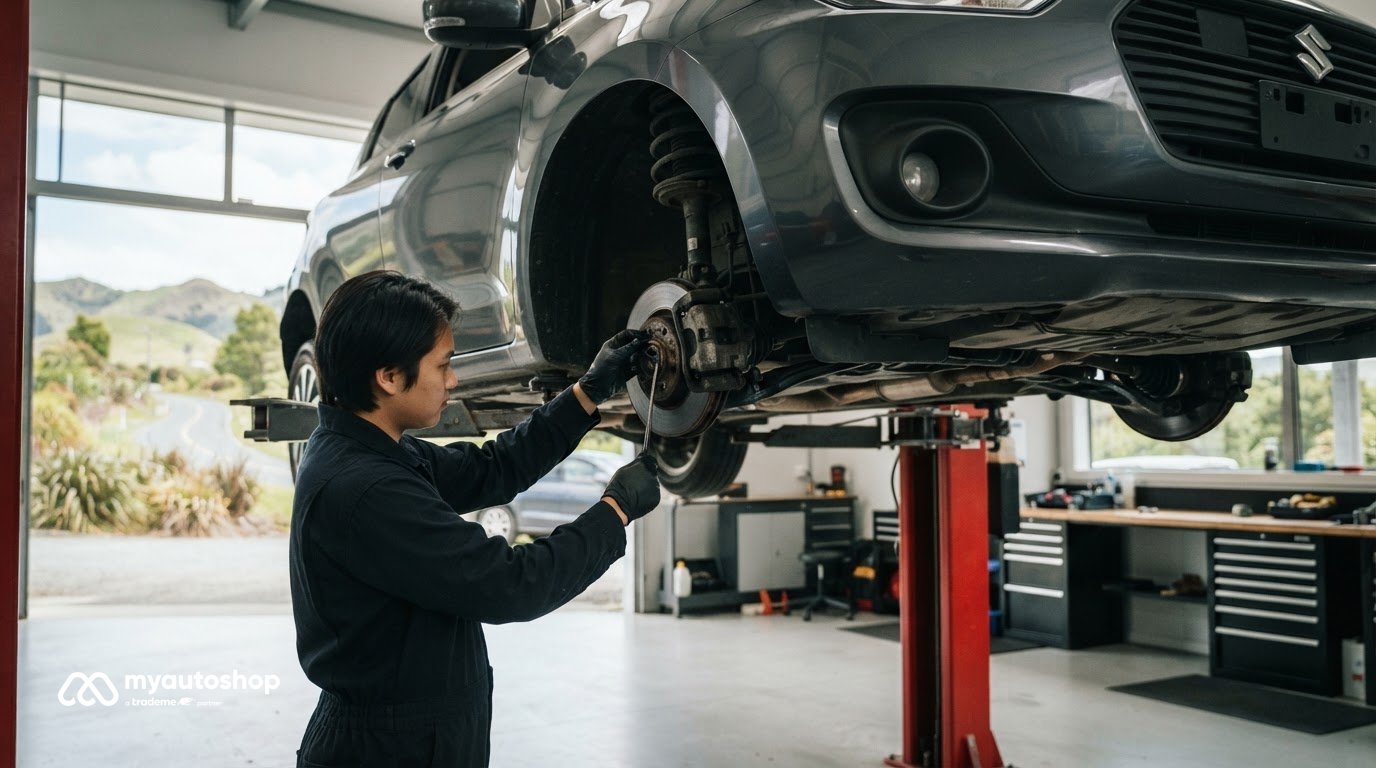
Around 40% of Kiwi vehicles fail their initial Warrant of Fitness inspection, and a split piece of flexible rubber underneath the car is often the silent culprit. It feels frustrating to fail an inspection or spot dark grease splattered across your front wheels, especially when your car seems to drive normally. If you find yourself asking what is a cv boot and why is it important, you’re certainly not alone. Most drivers only discover these parts when facing unexpected driveline repairs.
A compromised boot quickly turns an affordable maintenance task into full axle failure. In this guide, we break down the mechanical purpose of your CV boots, explain why protecting the constant velocity joint is crucial for road safety, and show you how to spot wear before that rhythmic clicking sound begins. You’ll also learn New Zealand WoF inspection rules and the exact steps to keep your vehicle safely on the road.
Key Takeaways
- Learn what is a cv boot and why is it important for sealing high-pressure grease inside your drive axles while blocking road grit and water.
- Spot early warning signs quickly, from black grease splattered across your inner tyres to rhythmic clicking noises on full steering lock.
- Understand why a split or missing boot triggers an instant Warrant of Fitness (WoF) failure under NZTA Waka Kotahi vehicle standards.
- Recognise the critical repair fork to know when replacing a rubber boot is possible versus when internal contamination demands a complete axle replacement.
What Is a CV Boot and What Does It Actually Do?
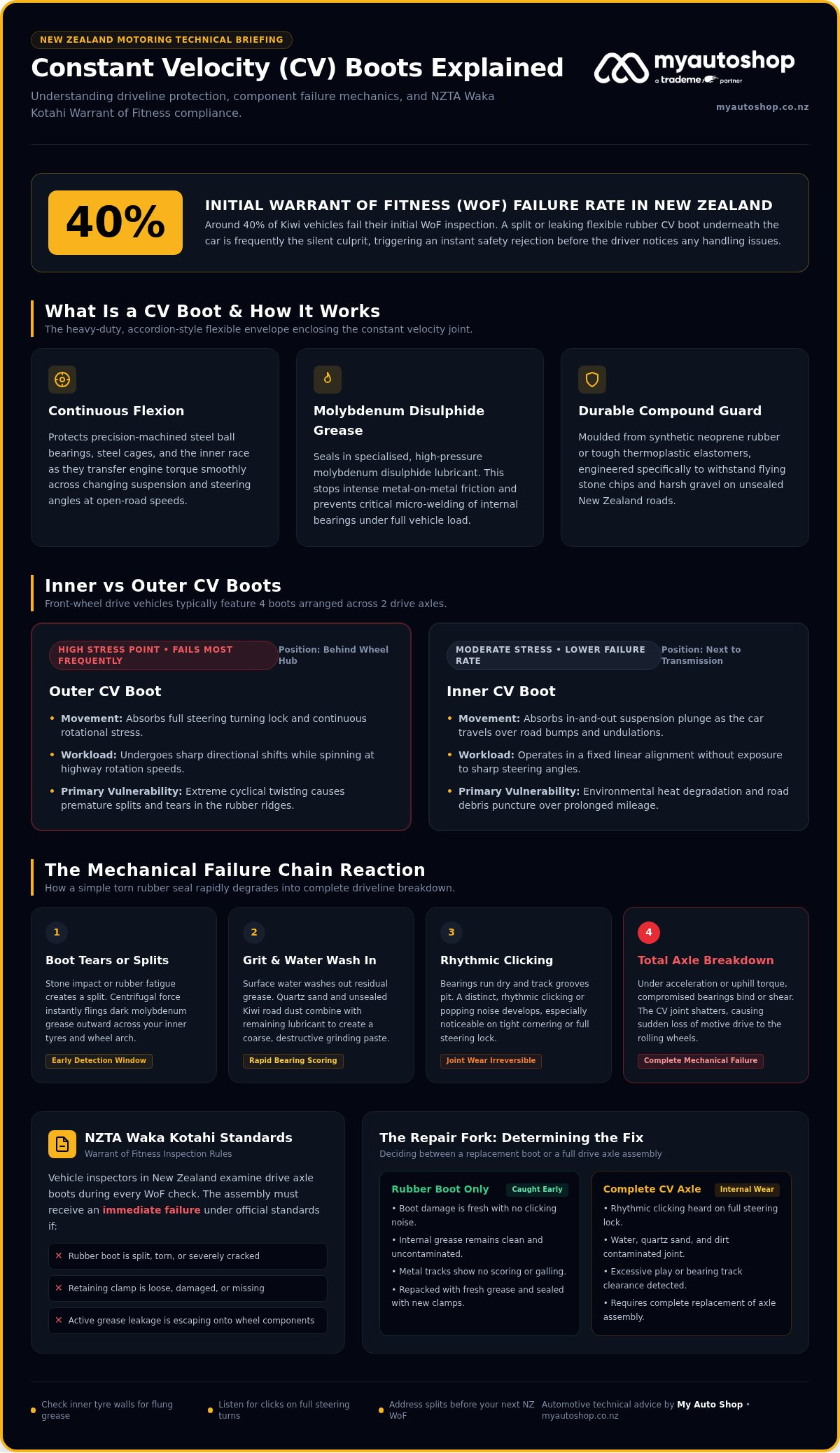
Every front-wheel drive and all-wheel drive car on New Zealand roads relies on drive axles to deliver engine power out to the rolling wheels. Understanding what is a cv boot and why is it important begins with how power moves while your vehicle steers and travels over uneven tarmac. Enclosing this rotating connection is a ribbed, accordion-style shield. A CV boot is a heavy-duty flexible cover that seals lubricating grease inside the constant velocity joint while blocking road contaminants. As your wheels turn and bounce over road imperfections, this component stretches, compresses, and spins continuously at highway speeds.
To see how this protective barrier fits into your vehicle’s driveline, watch this practical overview:
Anatomy of the Constant Velocity Joint and Flexible Boot
Inside each assembly sits a mechanical link known as a constant-velocity joint. This unit uses precision-machined steel ball bearings nestled inside a steel cage and inner race, transferring drive torque smoothly across changing angles. To prevent severe metal-on-metal friction and thermal breakdown, the joint requires continuous immersion in heavy molybdenum disulphide grease. Modern manufacturers produce boots using durable synthetic rubber (neoprene) or tougher thermoplastic elastomer compounds. Thermoplastic materials offer exceptional resistance to flying stones on unsealed Kiwi roads, while synthetic rubber ensures reliable elasticity during tight cornering.
Inner vs Outer CV Boots: Locations and Working Differences
A typical front-wheel drive car features four boots in total, arranged across two drive axles. Inner boots sit closest to the transmission, primarily absorbing horizontal suspension plunge as your vehicle travels over bumps. Outer boots attach directly behind the wheel hubs, flexing through extreme steering angles whenever you turn the steering wheel. Because outer boots endure both continuous rotational force and sharp directional changes, they face intense mechanical stress. This severe workload explains why outer boots split far more frequently than inner ones. If you notice unusual handling quirks or strange noises, our car symptoms guide can help you pinpoint whether a compromised boot is behind the problem.
Why the CV Boot Is Critical to Vehicle Safety and Drivability
A rubber seal might seem like a minor piece of hardware, but ignoring it triggers an aggressive mechanical chain reaction. Understanding what is a cv boot and why is it important comes down to preventing severe driveline damage before your vehicle becomes undriveable. When that rubber envelope tears, your drive axle loses its primary defence mechanism against rapid wear and total structural failure.
Lubrication Retention: Guarding Molybdenum Disulphide Grease
Constant velocity assemblies depend on specialised molybdenum disulphide grease. This heavy-duty lubricant withstands enormous boundary pressure, stopping high-load steel parts from micro-welding together under load. The moment road debris punctures the boot, intense centrifugal force flings this grease outward in a continuous ring around your wheel well and suspension arms. Deprived of lubrication, internal steel balls run dry. Extreme friction generates intense heat within minutes, quickly galling and pitting the polished tracking grooves.
Environmental Contamination: Road Grit, Water, and Metal Wear
Once the seal splits open, New Zealand driving conditions accelerate component destruction. Rain and standing surface water wash directly into the exposed housing, displacing any residual grease film. Meanwhile, fine quartz sand, unsealed road dust, and loose metal grit enter freely. These abrasive particles mix with remaining lubricant remnants to create an aggressive grinding paste. This grit ruins case-hardened bearing surfaces within a few hundred kilometres of open-road driving, making it critical to know how technicians diagnose and replace CV boots before internal scoring occurs.
The Risk of Complete Axle Breakdown and Loss of Drive
Leaving a compromised boot unattended leads directly to catastrophic driveline failure. As unlubricated bearings grind against pitted tracks, excessive clearance develops throughout the joint assembly. Under heavy engine torque, such as climbing a steep hill or accelerating onto an 80 km/h expressway, weakened ball cages can fracture completely:
- Instant loss of motive power: The half-shaft spins freely without transferring torque to the wheel, leaving front-wheel drive cars stranded across traffic lanes.
- Severe underbody damage: A flailing broken axle shaft can rupture adjacent brake hoses, smash suspension links, or crack the transmission case.
- Steering interference: Fragmented steel components can jam within the hub carrier, causing dangerous steering resistance or unexpected wheel lockup.
If you suspect boot splitting after hearing front-end knocks, exploring our automotive repair services helps you address minor driveline wear before an unlubricated joint leaves you stranded roadside.
Spotting the Symptoms: Torn CV Boot vs Failing CV Joint
Recognising driveline trouble early makes the difference between an affordable seal replacement and a costly roadside breakdown. Knowing what is a cv boot and why is it important helps drivers identify wear before metal surfaces suffer irreversible damage. Grease sprayed across the inside of a front tyre signals a torn boot, whereas rhythmic clicking on full steering lock proves internal joint damage.
| Driveline Stage | Visual Clues | Drivability Symptoms |
|---|---|---|
| Torn CV Boot | Dark grease thrown onto inner wheel barrels; hairline splits in rubber | None; car drives and handles smoothly |
| Worn Outer CV Joint | Gaping boot tear, dried joint cavity, metal debris | Rhythmic clicking or popping during sharp turns |
| Worn Inner CV Joint | Grease leakage near differential or transmission housing | Drivetrain shudder and floor vibrations under acceleration |
Grease Spray on the Inside Wheel Rim and Suspension
When an outer boot splits, spinning axles sling thick molybdenum grease outward. You’ll notice a sticky, dark green or black film coating the inner wheel barrel, brake calipers, and steering tie-rods. Because torn boots create zero steering noise initially, a quick visual inspection during tyre rotations or car washes helps catch tears before grit enters the joint cavity. If you spot unexplained oil patches under your front corners, our comprehensive symptoms guide helps rule out engine leaks versus drive axle contamination.
Clicking or Popping Sounds When Making Sharp Turns
Once grit washes away the protective lubricant, mechanical clicking begins. This sharp, rhythmic metallic sound typically surfaces during low-speed manoeuvres, such as parking or taking tight 90-degree corners. The noise speeds up in direct proportion to road speed while turning. While outer joint failure causes clicking, worn inner joints produce noticeable vibrations through the floorboards when accelerating between 50 and 100 km/h on open roads.
Physical Tears, Cracking, and Missing Clamps
Boots don’t always tear from acute impact. Years of heat cycling and ozone exposure cause synthetic rubber to dry out, forming micro-cracks in the accordion folds. Additionally, gravel thrown up on unsealed roads can puncture the material instantly. Even if the rubber looks intact, loose or rusted retaining clamps allow internal pressure to push grease past the housing collars, creating a pathway for moisture and road debris. While inspecting your front suspension for boot damage, it’s also worth checking for signs of worn ball joints, as clunking over bumps or changes in steering feel can indicate failing suspension components in the same area.
Why a Damaged CV Boot Fails a Warrant of Fitness (WoF) in NZ
Many drivers wonder why a simple rubber cover causes an automatic inspection failure on an otherwise smooth-running vehicle. Digging into what is a cv boot and why is it important from a regulatory perspective reveals that NZTA Waka Kotahi classifies driveshaft integrity as a safety-critical mechanical requirement. A compromised boot is never just a cosmetic flaw; it directly threatens vehicle control and stopping performance.
NZTA Waka Kotahi Roadworthiness and Driveline Inspection Rules
Vehicle inspectors assess suspension and steering linkages under the official Vehicle Inspection Requirements Manual (VIRM). During the WoF check, the technician raises the car on a hoist and turns the front wheels from lock to lock. This exposes the deep folds of the rubber gaiters:
- Penetrating splits and holes: While superficial surface perishing may yield an advisory warning, any split that exposes internal grease or allows contaminant entry results in an immediate failure.
- Insecure clamping: Missing, rusted, or loose retaining bands fail compliance because they allow grease to escape under rotational force.
- Brake contamination: Grease thrown onto brake discs, calipers, or flexible rubber brake hoses creates an indirect failure under braking performance standards, significantly extending stopping distances.
- Joint roughness: An inspector finding stiffness, free play, or clicking during steering checks will fail the vehicle under driveline smoothness rules.
Driving with a Torn Boot: How Long Can You Safely Last?
Ignoring a split boot until your next annual service is a risky bet. In wet winter conditions or along rural gravel roads, rain and sharp silica wash into the housing within days. Road grit strips the protective lubricant, turning minor rubber degradation into complete joint failure rapidly. Operating a car with a compromised boot risks a sudden axle fracture when turning across traffic or merging onto motorways at 100 km/h, stripping drive power when you need it most. If your inspection is approaching, booking through My Auto Shop allows you to schedule professional driveline repairs before minor tears turn into failed inspections.
Repair Options: Boot Replacement vs Complete CV Axle Assembly
Drivers discovering driveline damage face a critical fork: replace the rubber seal or swap out the entire driveshaft. Learning what is a cv boot and why is it important clarifies why timing dictates this choice. If a split is caught early before dirt penetrates the internal housing, fitting a fresh boot preserves your factory axle. Once road grit enters the precision bearings, replacing just the rubber becomes a wasted effort.
Catching It Early: Stretch Boots, Split Boots, and OEM Kits
When caught immediately, technicians thoroughly wash out old lubricant, inspect internal ball bearings for scoring, and repack the joint with fresh high-pressure grease. Standard OEM replacement kits require removing the driveshaft from the vehicle hub to slide the new rubber into place. Alternatively, workshops often use flexible stretch boots fitted using specialised pneumatic expanders, saving hours of labour. While glue-together split boots exist for roadside emergencies, professional mechanics rarely recommend them as permanent fixes on rough Kiwi roads.
When Full Joint or Driveshaft Replacement Becomes Necessary
Once that telltale rhythmic clicking starts during tight turns, internal metal surfaces are already pitted and worn. Putting a new boot over a noisy joint won’t restore stripped metal or eliminate dangerous internal play. In modern workshops, replacing the complete CV half-shaft assembly is the standard industry practice. Installing a brand-new or remanufactured complete axle restores factory tolerances, replaces both inner and outer joints simultaneously, and guarantees long-term reliability without recurring labour charges.
Booking Professional Inspection and Repairs Across New Zealand
Whether you need prompt boot fitting or a complete axle replacement, proper diagnosis requires experienced eyes. Catching driveline issues before signing vehicle paperwork is equally vital. Booking an independent pre-purchase inspection through My Auto Shop ensures qualified technicians inspect underbody rubber gaiters, steering arms, and suspension links on a hoist before you buy. If your daily driver needs attention, you can easily compare certified local workshops and secure upfront quotes online to get your car sorted without hassle.
Take Action Before a Split Boot Ruins Your Axle
Understanding what is a cv boot and why is it important protects both your wallet and your safety on New Zealand roads. Catching a torn rubber gaiter early keeps precision bearings packed with grease, prevents sudden roadside axle failures, and ensures you pass your next WoF without frustrating delays. Regular checks behind your front wheels let you address minor tears long before metal-on-metal clicking begins.
When repairs are needed, sorting them early saves you significant hassle over full half-shaft replacements. My Auto Shop connects you with a nationwide network of independent certified mechanics, giving you transparent upfront pricing with zero guesswork. Find a trusted mechanic for CV boot repairs today, secure your vehicle’s roadworthiness, and enjoy complete peace of mind on every journey.
Frequently Asked Questions
Can I drive my car with a torn CV boot?
You can technically drive for a short distance, but you should book a repair immediately. The tear lets out lubricating grease and invites abrasive dirt inside. If you continue driving, especially in wet weather or on unsealed rural roads, you’ll ruin the joint within days. What could have been an affordable boot replacement quickly becomes a full axle replacement.
How do I know if my CV boot or the CV joint itself is bad?
Check for grease splatter versus metallic driving noises to tell which part has failed. A torn boot sprays dark, sticky grease over the inside of your front wheels and suspension arms, but the car still steers smoothly. If you hear a rhythmic clicking or popping noise while making sharp, low-speed turns, the underlying joint is already dry and damaged. That difference explains what is a cv boot and why is it important to check early.
Why did my car fail its Warrant of Fitness for a split CV boot?
Inspectors fail torn boots because NZTA Waka Kotahi vehicle standards require critical steering and suspension components to be secure and roadworthy. A split boot allows grease to escape onto brake discs, severely diminishing your stopping power. Additionally, unlubricated joints risk seizing or shearing under high torque loads. To protect you and other road users from sudden mechanical failure, any penetrating boot split triggers an automatic WoF fail.
How much driving does it take to ruin a CV joint after the boot splits?
A joint can suffer permanent scoring within a few hundred kilometres once the boot tears. In dry conditions, residual grease might keep the bearings moving for a couple of weeks of urban commuting. However, driving through heavy rain, road grime, or gravel drives water and grit directly into the bearings. Once foreign grit enters, friction grinds down precision channels within days.
Can you replace just the rubber CV boot without replacing the whole axle?
Yes, you can replace just the rubber boot if the internal joint has no grit contamination or internal wear. Technicians will remove the driveshaft, flush away old grease, inspect the bearings for pitting, and pack it with fresh molybdenum lubricant before fitting a new boot. If the joint clicks while turning, the internal metal is ruined, meaning a complete half-shaft replacement is required.
What happens if a CV joint breaks completely while driving?
If a CV joint breaks completely while you’re driving, your car will lose all engine power to the wheels instantly. In front-wheel drive vehicles, the differential sends power through the path of least resistance, leaving you stranded without forward motion. The loose axle shaft can also whip around violently, puncturing brake lines or damaging suspension links and the transmission casing.
Are front-wheel drive cars more likely to suffer CV boot damage?
Yes, front-wheel drive vehicles put significantly more strain on their outer CV boots. Unlike rear-wheel drive axles that only handle suspension bounce, front drive axles manage engine torque, suspension travel, and sharp steering angles simultaneously. Continuous twisting and stretching cause the accordion rubber folds on front outer boots to wear down and crack much faster over time. Understanding what is a cv boot and why is it important helps front-wheel drive owners stay ahead of wear.
Disclaimer
This article provides general information only and should not be relied on as professional mechanical, safety or legal advice. Vehicle requirements and circumstances vary. If you are unsure about your vehicle, have it inspected by a qualified automotive professional.