
A fresh WoF can feel reassuring, but it isn’t proof that a used car is mechanically sound. A used car mechanical check in NZ starts with clues you can spot yourself, then looks beyond the safety items covered by a WoF.
Before you buy, look and listen carefully. Check for leaks, uneven tyre wear, warning lights and unusual noises, but remember that a quick viewing can’t reveal every fault. A WoF checks whether a vehicle meets minimum safety standards on the day of inspection. It doesn’t assess the condition of the engine, clutch or gearbox, or give you a complete picture of the car’s health.
This guide takes you through a practical check at the viewing, what to notice on a permitted test drive, and how to follow up on concerns. It also explains what a WoF does and doesn’t tell you, so you can make a more informed decision. If you want a closer assessment before committing, My Auto Shop provides independent pre-purchase inspections.
Key Takeaways
- A used car mechanical check nz is a useful first look at visible condition and basic operation, but it can’t establish the car’s full mechanical health.
- Check the tyres, look for visible leaks and warning lights, and note anything unusual around the brakes, steering, suspension or engine.
- During a permitted test drive, pay attention to start-up, warning lights, steering response, braking feel, vibration, noises and temperature indications.
- Write down what you notice, separate urgent concerns from questions, and arrange a qualified assessment when something needs a closer look.
- An independent pre-purchase inspection from My Auto Shop can help you understand more about a vehicle before deciding whether to buy.
What does a used car mechanical check in NZ involve?
A buyer’s first-pass mechanical check means looking at the car’s visible condition, basic operation and warning signs. Stick to what you can safely see and notice how the car behaves. Don’t dismantle parts or try to diagnose a fault. Your observations can help you ask better questions, but they can’t confirm the vehicle’s full mechanical condition.
A basic check can reveal clues about a used car, but it can’t show what’s happening inside every component. Treat what you notice as a starting point. Record anything you’re unsure about and follow up on symptoms rather than guessing at their cause.
For a practical look at checking a car’s interior and exterior, watch this guide:
What can you check yourself before buying a used car?
Focus on observations you can make safely, without specialist tools. Look for fluid beneath the car, check the tyres for uneven wear, and see whether dashboard warning lights remain on after start-up. Listen for unusual sounds and notice how the car responds during normal operation. These clues won’t tell you what caused a problem.
Write down what you see, hear or feel, along with questions for the seller. Don’t crawl under the vehicle, reach near hot or moving parts, or attempt checks that require lifting equipment or specialist knowledge. A broad overview of vehicle inspection standards can provide context. For your own check, focus on clues you can observe safely.
Is a WoF the same as a mechanical inspection?
No. A Warrant of Fitness (WoF) checks whether a vehicle meets minimum safety and roadworthiness standards on the day it’s inspected. It covers safety items such as tyres, brakes, lights, steering and suspension. It isn’t a comprehensive mechanical assessment. It doesn’t establish the condition of the engine, clutch or gearbox, or predict future reliability.
An independent pre-purchase inspection goes further than a buyer’s visual check or a WoF, providing a more detailed assessment to support your buying decision. My Auto Shop provides independent pre-purchase inspections for people considering a used vehicle. For more about what a WoF covers, see our guide to WoF requirements in New Zealand.
Which mechanical areas should you inspect on a used car?
A buyer’s mechanical check is about spotting and recording clues, not diagnosing faults. Work through the vehicle in a consistent order, noting what you can see and any unusual signs. Specific observations make it easier to follow up with the seller or arrange a closer assessment.
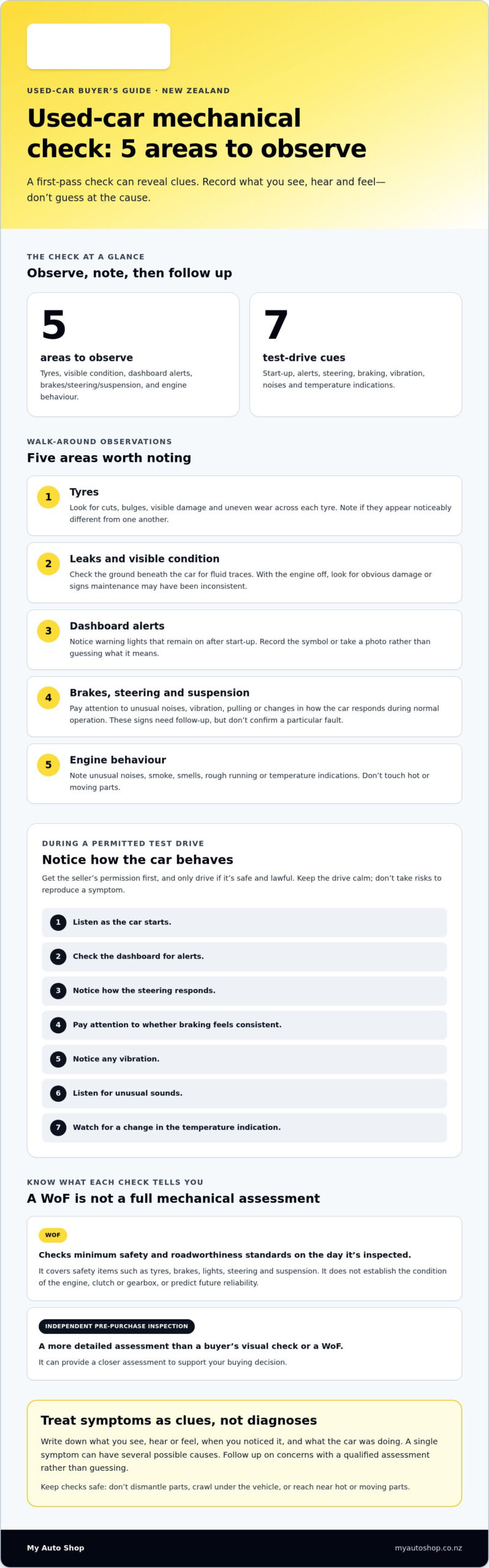
- Tyres: Look for cuts, bulges, visible damage and uneven wear across each tyre. Note if the tyres appear noticeably different from one another.
- Leaks and visible condition: Check the ground beneath the car for fluid traces. With the engine off, look for obvious damage or signs that maintenance may have been inconsistent.
- Dashboard alerts: Notice any warning lights that remain on after start-up. Record the symbol or take a photo rather than guessing what it means.
- Brakes, steering and suspension: Pay attention to unusual noises, vibration, pulling or changes in how the car responds during normal operation. These signs warrant follow-up, but don’t confirm a particular fault.
- Engine behaviour: Note unusual noises, smoke, smells, rough running or temperature indications. Don’t touch hot or moving parts.
One symptom can have several possible causes, so treat what you notice as a clue, not a diagnosis. A warning light, smell or noise gives a mechanic useful information, but it doesn’t prove which part is affected or what repair is needed. Record when you noticed it and what the car was doing.
What should you look for under the bonnet and around the car?
Look for visible damage, fluid traces and signs that maintenance may have been irregular. For example, a neglected-looking engine bay alongside gaps in the service history is worth noting. Avoid reaching near hot components, moving parts or electrical connections. Record specific observations and ask the seller for relevant maintenance information, such as service records. Factual notes will be more useful if you arrange a closer assessment.
How can tyres, brakes, and suspension reveal concerns?
Uneven tyre wear or visible damage is a reason to ask questions, not proof of a particular problem. Unusual braking feel, noise, vibration or suspension movement also deserves professional assessment rather than a guess about the cause. Use the Consumer Protection NZ checklist for broader guidance. If your checks leave important questions unanswered, My Auto Shop’s independent pre-purchase inspection can help you make a more informed decision.
What can a test drive tell you about a used car’s mechanical condition?
A test drive lets you observe how the car behaves, but it won’t diagnose what’s happening under the bonnet. Get the seller’s permission first, and only drive if it’s safe and lawful to do so. Follow a calm sequence: listen as the car starts, check the dashboard for alerts, then notice how it responds during the permitted drive.
Pay attention to how the steering responds, whether braking feels consistent, and whether you notice vibration, unusual sounds or a change in the temperature indication. Don’t push the car or take risks to reproduce a symptom. The NZTA’s used car inspection tips offer further guidance on checks before and during a drive.
| Symptom | When it occurs | Follow-up question |
|---|---|---|
| Knock, grind or other unusual noise | At start-up, while turning, braking or travelling over bumps | Has this noise been noticed or assessed before? |
| Vibration or hesitation | At a particular speed, during acceleration or when braking | Does it happen regularly, and has it been investigated? |
| Steering feels unusual | While travelling straight or turning | Has the steering behaviour changed recently? |
| Dashboard warning or temperature change | At start-up or during the drive | What does the handbook say, and has the concern been assessed? |
Which noises or driving symptoms deserve follow-up?
Note any unusual knock, grinding sound, vibration or hesitation without trying to identify the cause. Record when it happens, the approximate speed, the road surface and what you were doing, such as turning or braking. Those details can help a mechanic interpret the symptom. If the car feels unsafe or an immediate safety concern arises, stop in a safe place and don’t continue the drive.
What should you do if a warning light appears?
Record the warning, including when it appeared, and check the vehicle handbook for its meaning. A quick scan or reset doesn’t establish the car’s overall condition. If an alert or concerning symptom remains unexplained, arrange a professional assessment before buying. A used car mechanical check nz can help you identify questions to follow up, but observations from a test drive aren’t a substitute for an independent inspection.
How to assess mechanical findings before buying
Turn what you notice into a clear next step. Record each observation, arrange prompt professional assessment for anything that may affect safe use, and ask the seller for clarification. Then decide whether you need an independent inspection before proceeding. Don’t assume a symptom is minor just because the car still drives.
Keep the facts separate from explanations. For example, write “warning light stayed on after start-up” rather than guessing what caused it. A used car mechanical check nz is a way to gather clues, not a repair estimate or a complete assessment of the vehicle.
How should you record and prioritise what you find?
Use a simple table to keep the conversation and your next steps organised. If something raises an immediate safety concern, don’t continue using the vehicle to investigate it. Seek prompt professional advice. If the seller’s explanation is unclear or doesn’t match what you observed, pause your decision and look into it further.
| Observation | Seller’s explanation | Unanswered question |
|---|---|---|
| Fluid trace beneath the parked car | “It’s been there for a while” | What fluid is it, and has it been assessed? |
| Unusual vibration during a drive | “It’s normal for this model” | Can an independent assessment clarify it? |
| Warning light remains on | “It hasn’t caused a problem” | What does the handbook say, and has the cause been investigated? |
These notes aren’t a fault diagnosis. They help explain what happened and when, so a mechanic can assess it in context. Repair implications depend on the vehicle and the inspection findings, so avoid making a buying decision based on an assumed fix or cost.
Can a seller’s service history replace an inspection?
No. Service records provide useful background, but they don’t establish the vehicle’s current mechanical condition. Compare the paperwork with what you can see and how the car behaves. Missing records don’t prove neglect, and a complete-looking history can’t guarantee future reliability. If questions remain, get an independent assessment and consider its documented findings alongside the service history before deciding.
My Auto Shop provides independent pre-purchase inspections to help buyers make a more informed decision. Arrange an independent pre-purchase inspection for a closer assessment before you buy.
When should you arrange an independent used-car mechanical inspection in NZ?
Arrange an independent inspection when a quick look and test drive don’t give you enough information to understand the car’s condition. It’s especially useful if you’ve noticed something unexplained, the seller’s answers leave questions, or you want a more detailed assessment before deciding whether to buy.
A used car mechanical check nz helps you spot and record clues. An independent pre-purchase inspection goes further than what you can establish through a visual check or permitted drive. It can give you clearer information to discuss with the seller and weigh against your needs and budget. No inspection can guarantee that every fault will be found or predict what repairs may be needed in future.
What does an independent pre-purchase inspection add?
Your own observations are a useful starting point, but they’re limited to what you can safely see and notice. My Auto Shop provides independent pre-purchase inspections to help buyers make better-informed decisions. The findings can help you ask more specific questions, consider whether to proceed, or pause while an issue is clarified. They’re information to guide your decision, not a guarantee about the car’s future condition.
How can you use an inspection report in your decision?
Read the report carefully and separate what was observed from recommendations, estimates or points that need further assessment. If a mechanical term is unfamiliar, ask for an explanation before drawing conclusions. A note that an item needs further checking isn’t the same as a confirmed fault, and an estimate isn’t necessarily a final repair cost.
Compare the findings with your own notes, the service information and the seller’s explanations. If something remains unclear, take time to understand it before making a decision. The report can help you weigh the available information, but the choice to buy, negotiate or walk away remains yours.
If you’d like a closer assessment before committing, learn about My Auto Shop pre-purchase inspections.
Make your next used-car decision with confidence
A used car mechanical check nz gives you a practical way to spot clues before you buy. Look over the visible condition, note unusual behaviour during a permitted test drive, and record questions rather than trying to diagnose faults yourself. Remember, a WoF confirms minimum safety standards on the day of inspection, not the vehicle’s complete mechanical condition or future reliability.
If your checks leave questions unanswered, an independent assessment can give you more information to weigh up. My Auto Shop provides independent pre-purchase vehicle inspections to help buyers make better-informed used-car decisions. Review the findings alongside the seller’s answers and service records, then decide what feels right for you.
Ready to take the next step? Explore My Auto Shop pre-purchase inspections and approach your decision with greater clarity.
Frequently Asked Questions
What should I check mechanically before buying a used car in NZ?
Start with the car’s visible condition, then inspect the tyres and note any dashboard warning lights. Observe how the engine starts and runs, and listen for unusual sounds. If the seller permits a test drive, make sure it’s safe and pay attention to steering, braking and vibration. These are clues, not diagnoses. Record anything unexplained, and consider an independent pre-purchase inspection if you need a fuller assessment. It can inform your decision, but can’t guarantee the vehicle’s future condition.
Is a WoF enough when buying a used car in New Zealand?
No. A WoF checks that a vehicle meets minimum safety and roadworthiness standards on the day of inspection. A pre-purchase mechanical assessment has a different purpose: it helps you understand more about the vehicle’s overall condition before you buy. A WoF isn’t a guarantee of overall condition or future reliability. For details on its scope and requirements, read our guide to WoF requirements in New Zealand.
Can I check a used car’s engine without a mechanic?
You can note visible signs, dashboard warnings, unusual sounds and how the vehicle behaves when it starts or runs. Don’t dismantle components or touch hot, moving or potentially hazardous parts. These observations can point to questions worth asking, but they can’t establish the engine’s complete condition or confirm a fault. If anything seems concerning or remains unclear, arrange a professional assessment before deciding whether to buy.
What does a mechanic check during a used-car pre-purchase inspection?
An independent pre-purchase inspection assesses the vehicle’s condition and reports findings to help you make a more informed buying decision. The inspection information for the specific vehicle and service explains what was assessed and what the findings mean. Don’t assume every inspection follows an identical checklist or reveals every possible issue. Review the report carefully, and ask for unfamiliar terms or items needing further assessment to be clarified.
Can a used car pass its WoF and still have mechanical problems?
A WoF confirms that a vehicle meets minimum safety and roadworthiness standards at the time of inspection. It isn’t a comprehensive assessment of overall mechanical condition or a promise of future reliability. Don’t rely on a WoF alone to answer every question about a car you’re considering. Check current guidance from Waka Kotahi and consider an independent pre-purchase assessment if you want more information before buying.
Should I arrange an inspection before buying a used car?
Consider an independent inspection if a basic check or test drive leaves questions unanswered, or if you want more information before deciding. It can help you understand reported findings and weigh your options, but it can’t guarantee that every fault will be found or prevent future repairs. My Auto Shop provides independent pre-purchase inspections to help buyers make better-informed decisions about used vehicles.
What should I do if I notice a warning light during a test drive?
Record which warning light appeared and when, then check the vehicle handbook for its meaning. Don’t ignore or reset the alert as proof that the issue has been fixed. If you can’t establish what it means, or it remains a concern, seek a qualified assessment before buying. If the warning or the car’s behaviour raises an immediate safety concern during the drive, prioritise safety and don’t continue driving.
Disclaimer
This article provides general information only and should not be relied on as professional mechanical, safety or legal advice. Vehicle requirements and circumstances vary. If you are unsure about your vehicle, have it inspected by a qualified automotive professional.