
Could a diesel that uses less fuel still cost more to run than you expect? If you’re buying a used diesel car in NZ, Road User Charges (RUC) need to be part of the calculation, alongside fuel, vehicle licensing and maintenance.
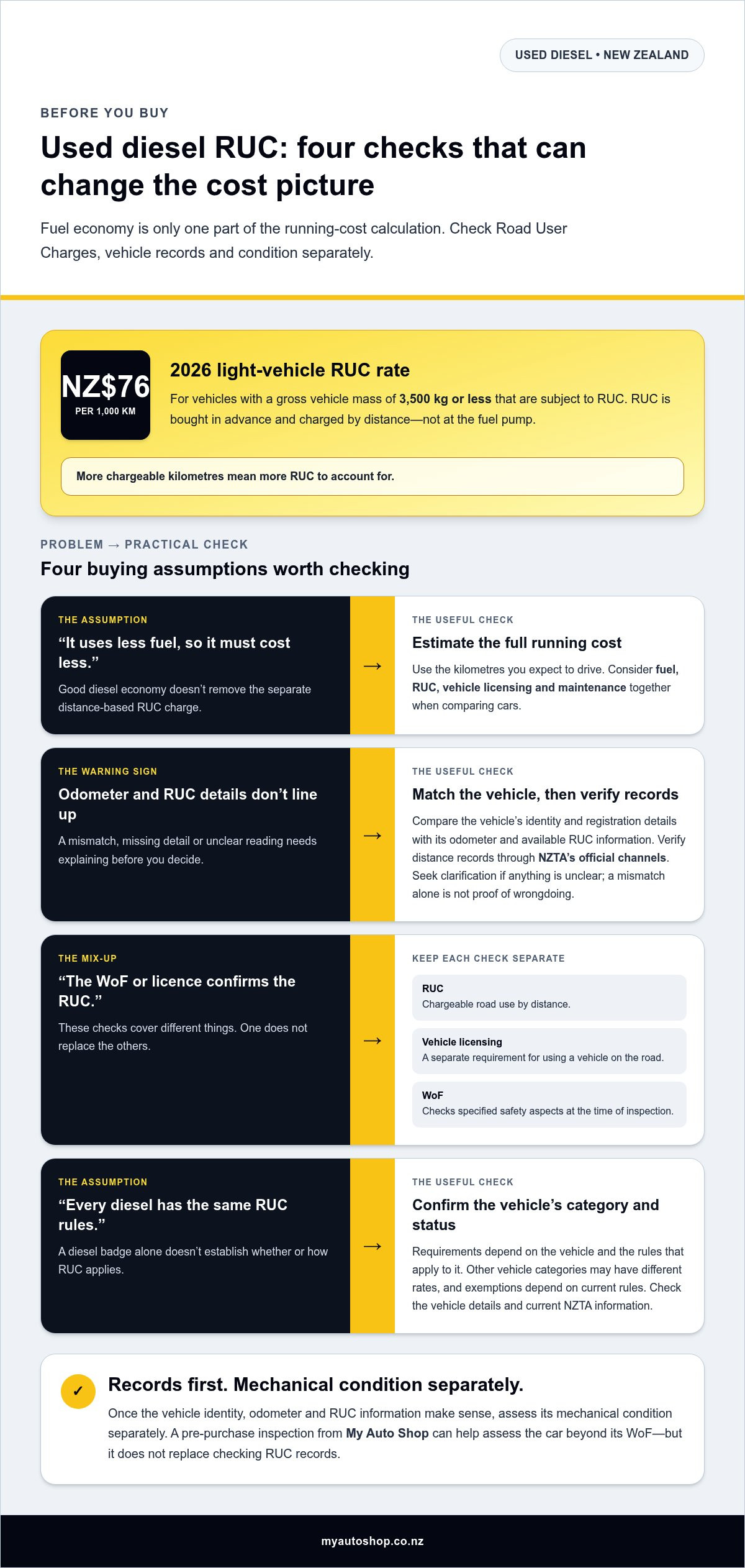
RUC is a distance-based charge, not a fuel cost or the fee for keeping your vehicle licensed. For light diesel vehicles with a gross vehicle mass of 3,500 kg or less, the 2026 rate is NZ$76 per 1,000 kilometres, bought in advance. Before you buy, compare the vehicle’s odometer reading with its available RUC information and check what the records show.
How you use the car matters too. Regular long-distance driving may make a diesel’s fuel economy appealing, but RUC and the vehicle’s condition affect its overall costs. This guide explains how RUC works, what to check in the vehicle’s records, and how a pre-purchase inspection can help you assess its condition beyond the WoF.
Key Takeaways
- Check the vehicle’s identity, odometer and available RUC information together. If the details don’t line up, get clarification before making a decision.
- Use NZTA’s official channels to verify RUC distance records rather than relying on the seller’s paperwork alone.
- Estimate costs based on how far you expect to drive, then compare fuel, RUC, licensing and maintenance across the cars you’re considering.
- Check the WoF and vehicle licensing separately from RUC. Each tells you something different about the vehicle and its records.
- A pre-purchase inspection from My Auto Shop can help assess the car’s mechanical condition, but it doesn’t replace checking RUC records.
What are RUC for diesel vehicles, and why do they matter when buying used?
If you’re buying a used diesel car in NZ, check its Road User Charges (RUC) as well as its fuel use and mechanical condition. RUC is a separate distance-based charge, so a vehicle’s diesel economy won’t tell you whether its RUC information is clear or current.
RUC is a charge for road use based on distance travelled. It is separate from the diesel you buy at the pump and from vehicle licensing. For light diesel vehicles with a gross vehicle mass of 3,500 kg or less that are subject to RUC, the 2026 rate is NZ$76 per 1,000 kilometres. RUC contributes to the costs of roads. For a historical overview, see Road user charges (RUC); use NZ Transport Agency Waka Kotahi (NZTA) guidance for current requirements.
Start with the specific vehicle, not a general assumption about diesel cars. Check its identifying details and odometer reading, then compare them with the RUC information available for that vehicle. This gives you a clearer basis for asking questions and estimating running costs before you commit.
What does RUC cover, and how is it different from fuel costs?
Diesel at the pump pays for the fuel you use. RUC is calculated separately according to distance travelled, so it remains a distinct cost for a vehicle subject to the charge. Don’t assume good fuel economy means there’s no additional distance-based cost.
Vehicle licensing is separate again. It concerns licensing the vehicle for road use, while RUC relates to chargeable distance. A current vehicle licence or WoF doesn’t, by itself, confirm the vehicle’s RUC distance or records. Check each matter separately.
Do all used diesel vehicles have the same RUC requirements?
No. Requirements depend on the vehicle and the rules that apply to its category. The light-vehicle rate above relates to vehicles with a gross vehicle mass of 3,500 kg or less that are subject to RUC. Other vehicle categories may have different rates, and applicable exemptions depend on current rules.
A diesel badge alone doesn’t settle whether or how RUC applies. Check the vehicle’s details and status using NZTA’s current information. Then consider the car’s mechanical condition separately. My Auto Shop provides independent pre-purchase vehicle inspections to help buyers make better-informed decisions about used vehicles.
How does the New Zealand RUC system work for a diesel vehicle?
For a diesel vehicle that’s subject to Road User Charges, RUC is tied to distance travelled. The distance recorded for the vehicle helps show how much road use has been covered by its RUC. When buying a used diesel car in NZ, compare the vehicle’s odometer with its RUC information rather than relying on the fuel gauge or WoF label.
Use this process to understand the system:
- Identify the vehicle. Check its registration and vehicle details so you’re looking at the right RUC category and applicable rules.
- Review its distance information. Compare the current odometer reading with the distance shown on available RUC records. Check that the information gives a clear, consistent picture of the vehicle’s recorded use.
- Check current RUC requirements. RUC rules and rates depend on the vehicle. Use NZTA’s guidance on how to buy RUC for current information about purchasing and managing RUC.
- Include it in your running-cost estimate. Consider RUC alongside fuel, licensing and maintenance, using the kilometres you expect to drive.
For a vehicle subject to RUC, the charge is based on distance travelled, so more chargeable kilometres mean more RUC to account for.
How are distance and RUC records connected?
The odometer shows the vehicle’s total recorded distance. RUC information shows the distance associated with its RUC. Compare both with the vehicle’s registration details, and check that any records or information provided by the seller relate to the same vehicle. A mismatch, missing detail or unclear reading isn’t proof of wrongdoing, but it is a reason to pause and seek clarification before deciding.
For example, if the odometer is higher than the distance indicated by the RUC information, find out why before you buy. Don’t assume a recent WoF or a seller’s verbal explanation settles the question. Check the records through NZTA’s current channels and make sure the vehicle identity matches throughout.
How is RUC different from WoF and vehicle licensing?
These are separate matters. RUC relates to chargeable road use; vehicle licensing is a separate requirement for using a vehicle on the road; and a Warrant of Fitness (WoF) checks specified safety aspects of the vehicle at the time of inspection. One does not replace the others. A WoF isn’t confirmation of RUC status, and RUC information doesn’t tell you whether the vehicle meets WoF requirements.
Once the records make sense, assess the car’s mechanical condition separately. A pre-purchase vehicle inspection can help you make a more informed decision, alongside your RUC and document checks.
What should you check about RUC before buying a used diesel car?
Before agreeing to buy, match the vehicle’s identity, odometer reading and available RUC information. This cross-check can help you spot gaps early and avoid making a decision based on incomplete records. If you’re buying a used diesel car in NZ, treat unclear distance information as something to resolve, not something to guess about.
Which vehicle details and documents should a buyer compare?
Start with the registration and vehicle details shown on the car, then compare them with the details attached to its RUC information. Check the odometer against the distance recorded in the available RUC records. Make sure each record appears to relate to the vehicle you’re viewing.
- Vehicle identity: Compare the registration and identifying details across the car and its records.
- Odometer: Note the current reading in kilometres.
- RUC information: Review the distance and other details available for that vehicle.
- Consistency: Write down any difference you can’t explain and ask for clarification before deciding.
Checklist: Compare the vehicle’s current odometer reading with the distance shown in its available RUC records, and clarify any mismatch before purchase.
A difference doesn’t automatically mean something is wrong. Records may need explanation, or information may be missing. But don’t assume the figures match or rely only on a verbal explanation. Check the current process and any buyer responsibilities in the NZ Transport Agency guide to RUC, then use its official information to decide what to check next.
What should you do if the RUC information is unclear?
Pause before committing. Ask for the missing details or an explanation of the discrepancy, then compare the information again against the vehicle’s identity and odometer. If it’s still unclear, follow NZTA’s current guidance on verifying RUC information and buyer obligations. A WoF or vehicle licence is not a substitute for this check because each concerns a separate aspect of the vehicle.
RUC records only tell part of the story. They don’t assess the engine, transmission, brakes, tyres or general mechanical condition. Once you’ve reviewed the available records, a pre-purchase vehicle inspection from My Auto Shop can help you make a more informed decision about the car itself. An inspection complements your RUC checks, but it doesn’t replace official verification.
How do you compare diesel RUC with the full cost of owning a used car?
Compare the specific vehicles you’re considering, using your expected kilometres and each car’s condition rather than fuel use alone. The useful question when buying a used diesel car in NZ isn’t simply which car uses less fuel. It’s how fuel, RUC, licensing and likely maintenance fit your driving and budget.
| Cost area | What to check |
|---|---|
| Fuel | Look at the vehicle’s stated or observed fuel use, and consider the type of trips you’ll make. Your actual use can differ with driving conditions, load and vehicle condition. |
| RUC | Check whether the vehicle is subject to RUC, review the available distance information and estimate how your expected kilometres affect this cost. |
| Vehicle licensing | Check the vehicle’s licensing status and include ongoing licensing costs separately from RUC and fuel. |
| Maintenance | Review service history and current condition. Note maintenance needs that may affect your ownership budget, without assuming a repair cost before the car has been assessed. |
| Expected distance | Estimate your own annual kilometres from regular commutes, trips and other planned use. Apply the same estimate to every vehicle you compare. |
Which ownership factors matter beyond diesel fuel consumption?
Fuel price alone can’t show which car costs less to own. A vehicle that uses less fuel may still have RUC, licensing or maintenance costs that change the comparison. Check the actual vehicle’s records and condition, then use the same driving assumptions for each option. Assess a petrol alternative on its own merits too, rather than relying on a general claim about diesel savings.
When might a used diesel suit your driving needs?
Consider how far you expect to travel, the journeys you make and the vehicle size or capability you need. A diesel may suit some patterns of use, but that doesn’t guarantee lower overall costs. The result depends on the particular vehicle, its condition and your kilometres. Avoid relying on a historical annual-distance rule of thumb. Make the comparison using current information and your own driving.
Before you commit, a pre-purchase vehicle inspection can help you understand the car’s condition as part of that comparison. Book an inspection through My Auto Shop’s pre-purchase inspection service to make a more informed decision about the vehicle you’re considering.
How can a pre-purchase inspection help you assess a used diesel car?
RUC checks tell you about the vehicle’s recorded distance and charge information. They don’t tell you whether the car is mechanically sound. A pre-purchase inspection adds an independent assessment of the vehicle’s condition, helping you weigh what you’ve learned from the records against what’s found on the car.
What can an independent pre-purchase inspection add?
An inspection can help identify mechanical or condition issues that may affect your decision to buy. This gives you a clearer basis for considering the car’s overall suitability and likely maintenance needs, rather than relying only on its appearance, seller information or a test drive.
Keep the checks distinct. An inspection assesses vehicle condition; it doesn’t verify official RUC records, confirm licensing status or replace a WoF. Each check answers a different question. For a broader overview of the buying process, read this pre-purchase vehicle assessment guide.
This separation matters when buying a used diesel car in NZ: an inspection may help you understand the vehicle, while NZTA’s current channels are the place to verify RUC requirements and records. Neither check should be treated as a substitute for the other.
What is a sensible next step before you commit?
Keep the process straightforward:
- Understand whether RUC applies to the vehicle and what information is available.
- Compare the vehicle’s identity, odometer reading and RUC details, and clarify anything inconsistent.
- Use current official guidance to verify RUC information and any buyer requirements.
- Arrange an independent assessment of the vehicle’s condition before making your decision.
My Auto Shop provides independent pre-purchase inspections to help buyers make better-informed decisions about used vehicles. The inspection complements your record checks; it doesn’t provide official RUC verification or guarantee that every issue will be identified. Use both types of checks to build a more complete picture before you commit.
Ready to assess the vehicle’s condition? Explore a pre-purchase inspection with My Auto Shop.
Make your next step a confident one
Buying a used diesel car in NZ means looking beyond fuel use. Check whether RUC applies to the vehicle, compare its odometer with the available RUC information, and clarify any gaps using current NZTA guidance. Then assess the full running-cost picture, including fuel, RUC, licensing and maintenance, against the kilometres you expect to drive.
Keep the checks separate. RUC records don’t assess the car’s mechanical condition, and a WoF or vehicle licence doesn’t verify its RUC information. An independent pre-purchase inspection can add a clearer view of the vehicle itself and help you make a better-informed decision before you commit.
My Auto Shop provides independent pre-purchase vehicle inspections for used-car buyers. Explore an independent pre-purchase inspection and take the next step with more clarity. A careful check can help you choose the car that best fits your needs and budget.
Frequently Asked Questions
Do all diesel cars in New Zealand need RUC?
No, don’t assume every diesel vehicle has the same RUC requirements. Whether RUC applies depends on the vehicle’s category and the current rules, including any applicable exemptions. A diesel badge alone won’t establish the vehicle’s status. Check its details and use NZ Transport Agency Waka Kotahi (NZTA) guidance to confirm whether it’s subject to RUC before buying or budgeting for ongoing costs.
How do RUC work for a diesel car in New Zealand?
For a diesel vehicle that’s subject to RUC, charges are based on distance travelled. RUC is generally purchased in advance, and the vehicle’s distance information helps track the kilometres covered. If you’re buying a used diesel car in NZ, compare the odometer with the vehicle’s available RUC information, then check the applicable process and category with NZTA. Don’t treat fuel purchases, RUC and vehicle licensing as one charge.
How can I check whether a used diesel car’s RUC is up to date?
Compare the vehicle’s identity and current odometer reading with the RUC information available for that vehicle. Check that the details relate to the car you’re considering, and note anything missing or inconsistent. Then use NZTA’s current official channels to verify the record and what it means. A seller’s explanation can help clarify a discrepancy, but it doesn’t replace checking the information against official guidance.
What happens if a used diesel car has unclear RUC records?
Pause your decision until you understand the gap. Ask for clarification, recheck that the vehicle details and odometer match the information provided, and follow NZTA’s current guidance on the next steps and any buyer obligations. An unclear record alone doesn’t prove wrongdoing, so avoid jumping to conclusions. Don’t assume a WoF or vehicle licence resolves the RUC question, as they relate to different matters.
Is RUC included in the price of diesel at the pump?
No. Diesel fuel is paid for at the pump, while RUC is a separate charge based on distance for vehicles that are required to pay it. That means fuel economy alone won’t show the full running cost of a diesel car. When comparing vehicles, consider fuel, applicable RUC, vehicle licensing and maintenance separately, using the kilometres you expect to drive and information about the specific car.
Does a current WoF mean a used diesel car’s RUC is up to date?
No. A Warrant of Fitness (WoF) and RUC records serve different purposes. A WoF concerns specified safety aspects of a vehicle at the time it’s inspected; it doesn’t confirm the vehicle’s RUC distance or status. Check the RUC information separately through NZTA’s current official channels. Also review vehicle licensing as its own matter, rather than treating any one record as proof of the others.
How much does RUC cost for a used diesel car?
As at October 2026, the RUC rate for light diesel vehicles with a gross vehicle mass of 3,500 kg or less that are subject to RUC is NZ$76 per 1,000 kilometres, GST inclusive. An administration fee also applies when purchasing a licence. Rates can differ by vehicle category, so confirm the applicable rate and current fees with NZTA before calculating a particular car’s running costs.
Disclaimer
This article provides general information only and should not be relied on as professional mechanical, safety or legal advice. Vehicle requirements and circumstances vary. If you are unsure about your vehicle, have it inspected by a qualified automotive professional.