
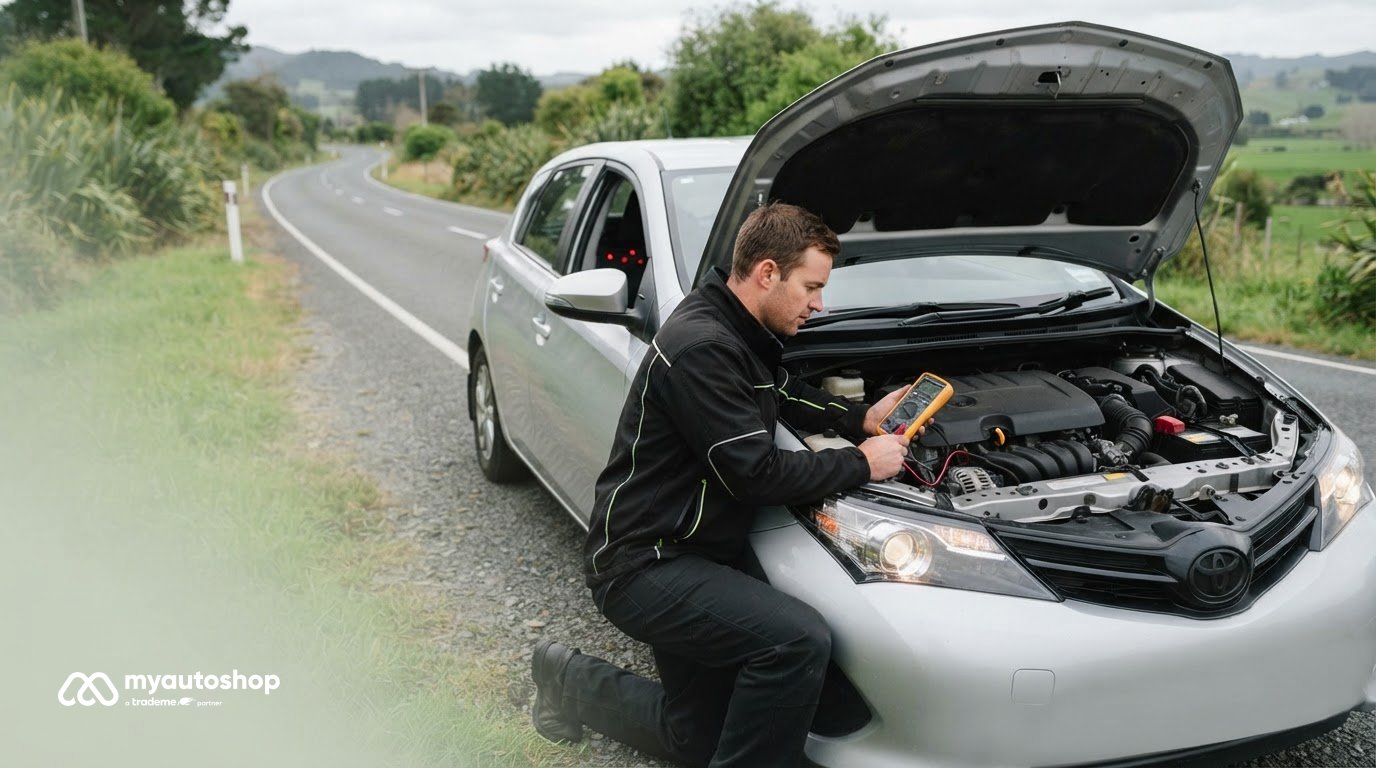
A bad alternator can turn a short trip into a roadside breakdown. How far you can drive on a bad alternator varies, but a car may run for anywhere from a few minutes to about an hour on battery power alone. That’s not a safe distance or a reliable time to count on.
It’s understandable to hope you can make it home or reach a mechanic before the car stops. But when the alternator isn’t charging the battery, the battery must power the vehicle’s electrical systems, and its remaining charge can run out quickly.
This guide explains what affects how long the car may keep running, why headlights and other electrical systems matter, and why driving at night adds risk. You’ll also learn what warning signs to watch for and how alternator diagnosis can help identify the problem before you’re left stranded.
Key Takeaways
- A failed alternator leaves the car relying on battery charge, which may last only a few minutes to about an hour.
- Battery condition and electrical demand affect how quickly that charge runs down; switching off non-essential accessories can reduce the load.
- Night driving is especially risky because headlights draw power the car needs, and dimming lights can signal a charging problem.
- Watch for warning lights, flickering or dim headlights, trouble starting, and unusual engine-bay noises.
- Alternator diagnosis can distinguish a faulty alternator from other charging-system problems, while a pre-purchase inspection can help assess a used car before you buy.
How Far Can You Actually Drive on Battery Power Alone?
With a failed alternator, a car may run for anything from a few minutes to about an hour on battery power alone. The actual time depends on the battery’s charge and condition, as well as how much electricity the vehicle uses.
Electrical Loads and Battery Drain
Electrical load is the power used by equipment such as headlights, climate controls and the radio. When the charging system isn’t replenishing the battery, each active electrical system draws from its stored charge.
That means switching off non-essential accessories can help conserve power, but it won’t restore the charge or repair the alternator. For example, turning off the radio and climate control reduces demand; headlights should stay on when needed for safe visibility. A battery warning light or dimming lights can point to a charging-system issue. See the guide to vehicle warning signs for other symptoms to watch for.
Battery Runtime and Shutdown
Battery runtime is how long a vehicle can operate before its stored charge runs out. A fully charged battery may let the engine start and run briefly, but with a failed alternator, it powers the vehicle without being recharged.
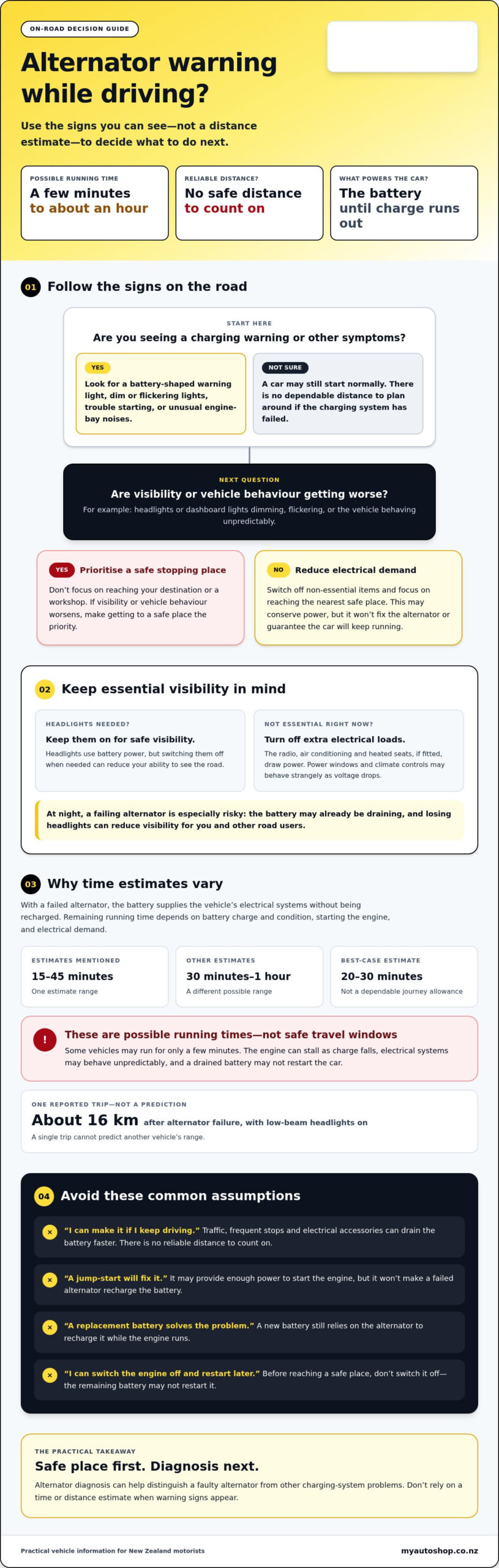
Estimates vary from 15 to 45 minutes to 30 minutes to an hour, with some vehicles lasting only a few minutes. These are possible running times, not safe travel windows. As the charge falls, electrical systems may behave unpredictably or stop working, and the engine can stall. Once the battery is drained, the car may not restart.
Modern vehicles rely on electrical power for multiple systems, so a shutdown can affect more than the ability to start. A completely drained battery may also be damaged. Don’t treat a jump-start as a fix: it may provide enough power to start the engine, but it won’t make a failed alternator recharge the battery.
Driving Distance on a Failing Alternator
Driving distance is how far the vehicle travels before the battery can no longer support its electrical needs. There’s no reliable distance to plan around, because the remaining charge and electrical demand vary from car to car and trip to trip.
So, how far can you drive on a bad alternator? It may be only a short distance, even if the car starts normally. Traffic, frequent stops and electrical accessories can drain the battery faster. A healthier, fully charged battery may keep the car running longer, but it won’t fix the charging failure.
A fully charged replacement battery can provide stored power, but it still relies on the alternator to recharge it while the engine runs. Replacing the battery alone won’t fix a failed charging system. If warning lights appear or the headlights dim, don’t rely on a distance estimate. Focus on reaching a safe place.
Is it safe to drive at night with a failing alternator?
Driving at night with a failing alternator is risky. Headlights need electrical power, while the battery may already be draining. The car can stop without predictable warning, leaving you to manage a breakdown in the dark.
Driving Time and Safety Risks
Driving time is how long the vehicle can run before its remaining battery charge is exhausted. A fully charged battery may keep a car going for up to an hour, but that’s not a safe driving allowance. The vehicle may stall within a few miles, especially when electrical demand is high.
A weak alternator can also cause voltage fluctuations, poor engine performance and electrical malfunctions. Dashboard lights may dim or flicker, and some vehicles may show erratic transmission behaviour. At night, losing headlights can reduce visibility for you and other road users. A breakdown on a highway may leave you stopped with little room to pull over safely.
Reducing Electrical Loads
Reducing electrical load means switching off equipment that isn’t essential, so the battery has less demand to meet. Turn off the radio, air conditioning and heated seats, if fitted. These steps may conserve power, but they won’t fix the charging system or guarantee the vehicle will keep running.
Keep headlights on when needed for visibility, even though they draw power. Don’t sacrifice your ability to see the road for extra battery time. Power windows and climate controls may also behave strangely as voltage drops, so avoid using them unless necessary. If dashboard lights start dimming, treat it as a warning, not a reason to continue your normal trip.
Actions While Driving
If the alternator fails on the road, focus on reaching the nearest safe place rather than completing your journey. Turn off non-essential accessories, keep required lights on, and avoid stop-and-go traffic if you can do so safely. Don’t switch off the engine before reaching a safe place, because the remaining battery may not restart it.
Watch for a battery-shaped warning light, dim headlights or flickering dashboard lights. Those signs can indicate a charging problem; this guide to battery warning lights explains what the dashboard signal can mean. If visibility or vehicle behaviour worsens, prioritise a safe stopping place over reaching a workshop. A jump-start won’t repair a failed alternator, and the vehicle can stall again once its battery drains.
How long a car may run after alternator failure
After the alternator fails, the engine draws on the battery’s stored charge instead of receiving power from a working charging system. In the best-case scenario, the car may run for 20 to 30 minutes before that charge is drained.
How long the engine may keep running
That 20 to 30-minute estimate is not a dependable journey allowance. Battery condition, starting the engine and electrical demand all affect how quickly the remaining charge runs down. A driver has reported travelling about 16 kilometres after an alternator failed, with low-beam headlights on, but one trip cannot predict another vehicle’s range.
Once the battery can no longer support the vehicle, the engine may stall and fail to restart. Another jump-start won’t repair the alternator or restore the charging system. If the car stops, avoid repeated attempts to start it, as they draw more power from the battery.
Warning signs to recognise
A battery-shaped warning light is a key dashboard sign of a possible charging-system problem. Headlights may also dim or flicker while driving, especially as electrical power becomes inconsistent. Treat either change as a prompt to find a safe place to stop, rather than waiting for the engine to cut out.
Other warning signs can include trouble starting, unusual behaviour from power windows or climate controls, and a whining or growling noise from the engine bay. A burning or electrical smell is another reason to stop driving safely. These symptoms can indicate alternator trouble, but they may also point to another charging-system fault.
Reducing the chance of alternator failure
Routine servicing provides an opportunity to check the battery and electrical system, including the alternator. Mention any battery warning light, whining noise or flickering lights when arranging a check. Explaining when the symptoms began, such as during a cold start or while using headlights, gives useful context for diagnosis.
Alternators are typically designed to last 7-10 years or 130,000-240,000 kilometres. Those figures are broad lifespan estimates, not a maintenance schedule or a prediction for a particular car. A vehicle’s actual condition and use matter. If symptoms appear, don’t wait for a scheduled service: a charging-system fault can leave the battery unable to keep the engine running.
Effects on power steering and electrical systems
A failing alternator can make the vehicle’s electrical supply inconsistent. This can affect more than the battery: engine behaviour may become erratic, warning lights may appear, and onboard electronics may malfunction. The specific effects depend on the vehicle and which systems are operating when the supply drops.
Power steering can feel different
Some vehicles use electric assistance to help turn the steering wheel. If the alternator can’t provide a steady electrical supply, that assistance may be lost. Steering can then feel heavier, particularly during low-speed turns such as manoeuvring into a car park. The car may still respond to steering input, but a sudden change in effort can make it harder to control smoothly.
Don’t dismiss a change in steering feel as a separate issue if the battery warning light or dim headlights appear at the same time. Several electrical symptoms together can point to a charging-system problem. Find a safe place to stop if steering assistance or other vehicle behaviour changes while driving.
Electrical systems may malfunction
Voltage fluctuations can affect vehicle electronics before the engine stalls. Dashboard lights may behave unusually, or power windows and climate controls may stop working as expected. Some vehicles may also show erratic transmission behaviour. These faults can make it harder to predict how the car will respond, especially if several symptoms appear together.
Headlights are essential for both seeing and being seen. If they dim or flicker, don’t assume they’ll stay bright for the rest of the trip. A failing charging system can also leave the vehicle stranded when the battery can no longer support its electrical needs. Avoid continuing a normal journey if the lights, steering assistance or dashboard functions change.
An inconsistent power supply can also put onboard electronics at risk. That doesn’t mean every warning light signals damaged components: a charging fault itself can cause unusual readings or malfunctions. Diagnosis can distinguish a supply problem from a separate fault, rather than treating each dashboard message as an unrelated repair.
Keep the electrical system maintained
Regular servicing provides an opportunity to have the battery and alternator checked as part of the vehicle’s electrical system. Mention specific changes, such as headlights dimming while the engine is running, a warning light appearing or steering effort changing during a turn. These examples help explain what happens and when.
If electrical symptoms begin while driving, reduce non-essential electrical use and prioritise a safe stop. Keep headlights on when visibility requires them. Once parked, arrange diagnosis instead of repeatedly restarting the engine or relying on a jump-start. A jump-start can’t correct a charging fault, and the same steering or electrical malfunctions may return as the battery loses charge.
Alternator diagnosis and repair
In New Zealand, alternator repair or replacement costs depend on the vehicle, the fault, parts and labour. The price is provided after a quote request.
A battery warning light or dim headlights can signal a charging-system fault, but neither proves the alternator itself has failed. A worn belt, loose electrical connection or faulty voltage regulator can cause similar symptoms. Proper diagnosis matters, because replacing the wrong component won’t fix the underlying problem.
What diagnosis checks
A charging-system test measures voltage with the engine running. A multimeter reading between 13.8 and 14.5 V is an expected range in one diagnostic test; a reading outside it can indicate a charging issue. The result needs context, including the battery’s condition and whether the fault changes under electrical load.
A mechanic can inspect the alternator belt and electrical connections, then assess the battery and charging system together. For example, a loose connection may interrupt charging even if the alternator still works. A battery-shaped dashboard light, whining noise or flickering lights can guide the checks, but symptoms alone can’t identify the failed part.
Repair or replacement
Test results show whether the problem points to the alternator or another charging-system component. A faulty voltage regulator or loose belt may need attention instead of a complete alternator replacement. If the alternator has failed, replacing it restores the part that charges the battery and supplies the vehicle’s electrical systems while the engine runs.
Ask for the diagnosis and proposed repair to be explained before work begins. The quote should state which fault was found and whether repair or replacement is recommended. The vehicle, required parts and labour affect the final cost, so a generic online estimate may not match your car.
Why prompt diagnosis matters
Continuing to drive with a failing alternator can drain the battery until the engine stalls. Repeated jump-starts won’t repair a failed alternator, and a completely drained battery may also be damaged. If warning lights, dim headlights or electrical malfunctions appear, don’t rely on the car for a normal trip.
Arrange alternator replacement when testing identifies a failed alternator. If the car has stopped after a charging failure, prioritise getting it to a safe place rather than repeatedly trying to restart it.
My Auto Shop: Pre-purchase Inspection
My Auto Shop offers a Pre-purchase Inspection to help you assess a used car before buying it. If the vehicle’s battery warning light has appeared, its headlights have flickered or it has needed repeated jump-starts, mention those details during the inspection.
An alternator fault can leave a car unable to keep running, so understanding a vehicle’s condition before purchase matters. A pre-purchase inspection gives you a clearer view of the car’s overall condition and helps you make a more informed buying decision. It’s designed for used-car buyers, not as a substitute for diagnosing a fault in a car you already own.
To arrange an inspection, visit My Auto Shop’s pre-purchase inspection page.
Choose a practical next step for your car
Before deciding how far you can drive on a bad alternator, focus on the car’s current symptoms and whether it’s safe to keep moving. If warning lights or electrical behaviour have changed, arrange a professional assessment rather than planning another trip around the vehicle.
Note what you noticed and when it began. Clear details can help you explain the issue and choose a sensible next step without guesswork.
Contact My Auto Shop to discuss your next step. A clear plan can help you move forward with confidence.
Frequently Asked Questions
Can My Car Run With A Bad Alternator?
Yes, it may keep running temporarily, but that doesn’t show whether the alternator, battery or another charging-system part is at fault. If the car starts but the battery warning light stays on, don’t treat the successful start as proof the problem has cleared. Note what the dashboard shows and whether the lights change, then arrange diagnosis before relying on the car for another trip.
What Damage Occurs When You Drive Too Long With a Bad Alternator?
Extended driving can leave the battery deeply discharged and may reduce its capacity. Voltage fluctuations can also affect onboard electronics, with some vehicles showing dashboard or transmission irregularities. A symptom alone doesn’t prove a component has been damaged, so record what changed and when. For example, note whether a warning appeared before the engine began running poorly, and share those observations during diagnosis.
Can I jump-start my car and drive with a bad alternator?
A jump-start may get the engine running, but it won’t repair the alternator or resolve the charging fault. Treat the start as temporary, not as evidence the vehicle is ready for normal use. If the car is already parked somewhere safe, avoid setting off on a longer trip. Repeated jump-start attempts won’t fix a failed alternator, and the vehicle may stop again.
Can a bad alternator damage my battery permanently?
Yes. A completely drained battery may be permanently damaged, and repeated deep discharges can reduce its capacity by 30 to 50%. After an alternator fault is repaired, have the battery assessed too, particularly if the car has needed repeated jump-starts or still struggles to start. That helps establish whether the battery can hold charge, rather than assuming the alternator repair has addressed every starting problem.
How Long Can You Drive?
There’s no reliable duration to use as a travel plan. A car might run for a few minutes or, in favourable conditions, up to about an hour, but that estimate doesn’t tell you how long your vehicle will last. If a warning appears before departure, postpone the trip and arrange an assessment. If it happens on the road, choose a safe place to stop rather than aiming for a particular arrival time.
Should You Risk Driving to a Repair Shop With a Failing Alternator?
Don’t assume the car can safely reach a repair shop, even if it seems close. A stall could leave you stopped somewhere unsafe, and the remaining battery charge can’t provide a dependable arrival time. If the car is parked after a charging failure, arrange transport for diagnosis. If you’re already driving, prioritise a safe place to stop rather than continuing to the workshop.
How long will a car run on battery power if the alternator fails?
It may keep running for a few minutes to about an hour, depending on the battery’s condition and remaining charge, as well as electrical demand. That estimate isn’t a promise for any individual vehicle. The time can vary if the battery is already partly drained or the car is using more electrical equipment. Don’t use a possible runtime as a reason to continue your journey.
What factors affect how far a car can drive with a bad alternator?
The distance depends on the battery’s condition and charge, the severity of the charging fault, and how much electrical equipment the car is using. In practical terms, the dashboard warning alone can’t predict how far you can drive on a bad alternator. The battery’s history, including recent starting trouble, can help explain its likely reserve, but it can’t provide a safe distance estimate.
Disclaimer
This article provides general information only and should not be relied on as professional mechanical, safety or legal advice. Vehicle requirements and circumstances vary. If you are unsure about your vehicle, have it inspected by a qualified automotive professional.