
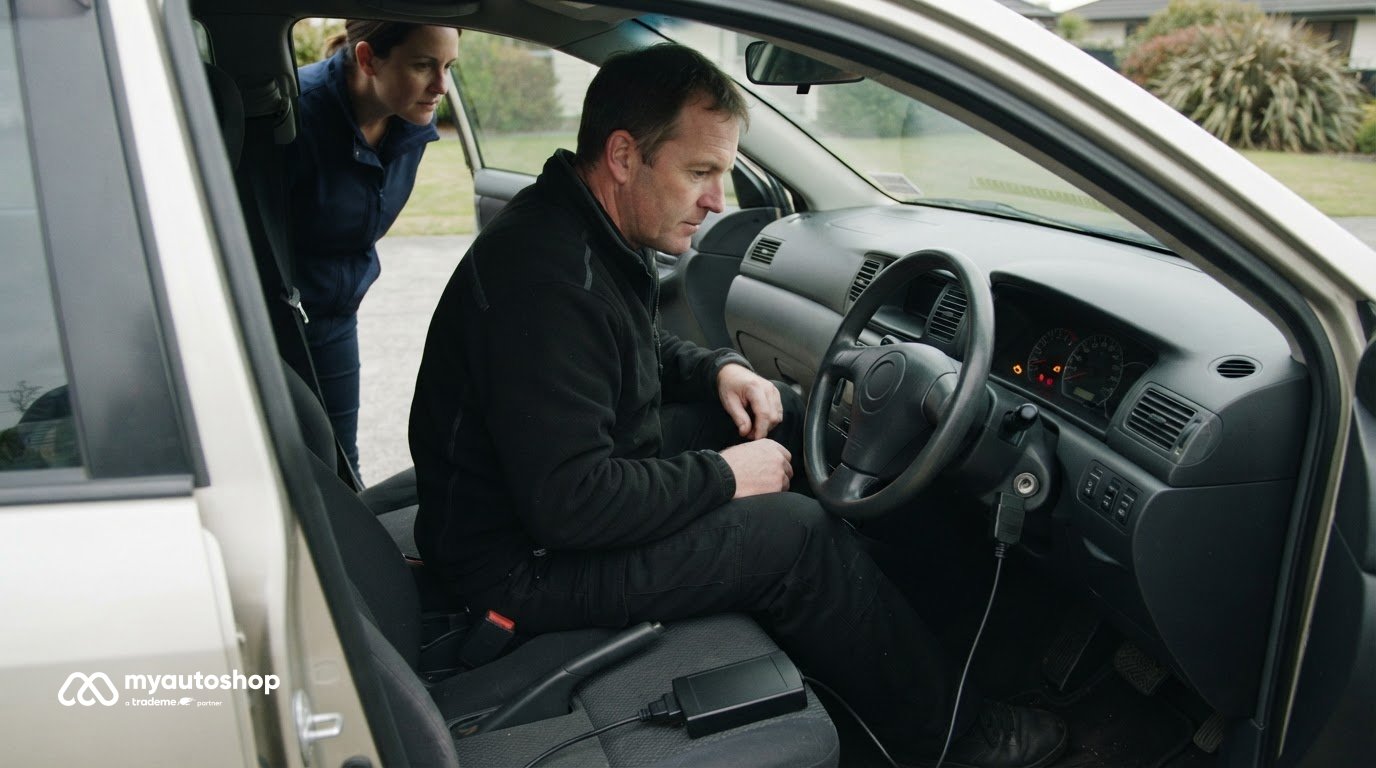
A steady check engine light may signal a fault affecting fuel economy, while a flashing light can warn of a damaging engine misfire. Long-term damage from ignoring the check engine light can include harm to the catalytic converter or engine, so don’t rely on how the car feels alone.
It’s tempting to hope the warning will disappear, especially if your car still seems to run normally. But the light doesn’t reveal the cause or severity of the fault. A diagnostic check can identify what’s happening before a small problem leads to further damage.
Here’s what steady and flashing warnings mean, how faults can affect sensors, the catalytic converter and fuel use, and what to do next. If the light is flashing, or the car is shaking, running roughly or losing power, stop somewhere safe and avoid driving normally. A steady light with no change in how the car drives is generally less urgent, but still needs attention.
Key Takeaways
- Treat a flashing warning as urgent, especially if the engine is shaking, running roughly or losing power.
- A steady light can still signal a developing fault, even when the car seems to drive normally.
- Misfires and oxygen sensor faults can affect the catalytic converter, engine performance and fuel use.
- Get the fault diagnosed rather than assuming the code identifies a defective part or clearing the warning.
- Note when the light appeared and any changes in engine sound, temperature, oil level or fuel use to help with diagnosis.
Oxygen sensor and catalytic converter damage
An oxygen sensor measures unburned oxygen in the exhaust. Its readings help the engine control unit adjust the fuel-to-air mixture. If the sensor gives inaccurate information, the engine may use too much or too little fuel, reducing fuel economy and increasing harmful emissions. The car may still feel normal while the fault develops.
Too much fuel can leave unburned petrol in the exhaust. An engine misfire can have the same effect when a cylinder fails to burn its fuel properly. That fuel can ignite inside the catalytic converter, which processes exhaust gases. Repeated overheating can damage the converter’s internal material and reduce its ability to control emissions.
A misfire may also make the engine shake, run roughly or lose power. For example, a failing ignition coil or spark plug can prevent one cylinder from firing consistently. Continuing to drive hard with an active misfire sends more unburned fuel into the exhaust. If the check engine light flashes, don’t keep driving normally to see whether the engine recovers.
Sensor faults and converter damage are related, but one doesn’t prove the other. A fault code may indicate an oxygen sensor reading outside its expected range, but that doesn’t prove the sensor itself has failed. A wiring issue, exhaust leak or another engine problem can also affect the reading. Replacing the sensor without finding the cause may leave the original fault unresolved.
As converter performance declines, the car may accelerate poorly or develop an unusual exhaust smell. These signs can have other causes, so they don’t confirm converter damage on their own. A diagnostic assessment can compare stored fault information with engine operation and exhaust readings. Share when the warning appeared and any changes in sound, power or fuel use.
Prompt diagnosis helps distinguish a sensor problem from a misfire or damaged converter. Keep the stored fault information intact, because clearing the warning can erase useful details about what the engine was doing. If the light has appeared intermittently, mention that too. A car symptoms guide can help you describe changes clearly before the issue is assessed.
On a gasoline engine, unburned fuel from a serious misfire can overheat the catalytic converter. A failing converter can reduce acceleration or cause an unusual exhaust smell, though these signs alone don’t confirm the cause.
Reduced fuel efficiency
A check engine warning can accompany faults that make a car use more fuel for the same journey. You may notice more frequent refuelling rather than an obvious drop in performance. For example, a fault affecting fuel delivery can disrupt how the engine receives or burns fuel, making it less efficient on everyday trips or longer drives.
The engine management system uses sensor information to adjust how the engine runs. A faulty mass air flow sensor, for example, can affect fuel economy and performance. If its readings are inaccurate, the engine may not get the information it needs to manage the air-and-fuel mixture correctly. The car may still start and travel, but its fuel use can change.
Some fuelling faults can have a more serious effect: excess fuel may enter the engine crankcase and dilute the oil. Diluted oil offers less protection to engine components under load. Look out for a rising oil level, a fuel smell in the oil, rough running or difficult starting. These signs help distinguish a fuel-use change from a problem that may also affect lubrication.
Oil dilution matters because engine oil protects moving parts under load. If fuel has thinned the oil, continued driving can leave components with less protection. Don’t treat a rising dipstick reading as proof that the engine has plenty of oil. If the level rises alongside a fuel smell or rough running, report those changes with the warning.
Fuel economy can worsen gradually, making the change easy to overlook. Track when the warning appeared and whether you began refuelling more often afterwards. Note changes in starting, engine sound and oil level too. For example, difficult starting combined with rough running gives a mechanic more context than fuel use alone.
Describe the symptoms clearly during diagnosis. Include whether the oil level has risen, whether the oil smells of fuel, and when the engine began running differently. A fault code helps identify the affected system, but it doesn’t prove which part has failed. Finding the cause matters: replacing a sensor won’t resolve a separate fuel delivery fault or oil dilution issue.
What Does the Check Engine Light Mean?
Your car’s onboard diagnostic system monitors the engine and important components. When it detects a problem, it can store a fault code and switch on the check engine light. The warning may relate to emissions, fuel delivery, a sensor or an engine misfire. It identifies a system needing attention, not necessarily the exact part that has failed.
That distinction matters. A code mentioning an oxygen sensor doesn’t prove the sensor is defective. Damaged wiring, an exhaust leak or another engine fault can affect its readings. If the original problem remains, the engine may continue running poorly, use more fuel or strain related components. Further faults can also generate additional codes.
Some faults cause few obvious symptoms at first. A small air leak, for example, can make an engine run lean, meaning it receives too much air for the available fuel. This can make the engine run hotter than it should. If the leak or another underlying fault is ignored, continued driving may increase wear or lead to repairs involving more than the original cause.
Can a car pass a Warrant of Fitness in New Zealand with the check engine light on? You can’t determine a WoF result from the warning alone. The light signals an engine or component fault; the WoF outcome depends on the vehicle’s inspection findings against applicable requirements.
How do I check the cause of a check engine light with an OBD-II scanner? Connect a compatible scanner to the vehicle’s diagnostic port and follow its instructions to read the stored fault code. Treat the code as a clue, not proof that the named sensor or part has failed. Don’t clear the code before diagnosis, as this can erase freeze-frame data about what the engine was doing when the fault occurred.
Note when the light appeared and what changed afterwards. Report rough running, difficult starting, reduced power, unusual engine sounds, changes in fuel use or a rising oil level. These details help connect a stored code with the symptoms. If the vehicle shakes, runs roughly or loses power, stop safely rather than continuing to drive and risking further damage.
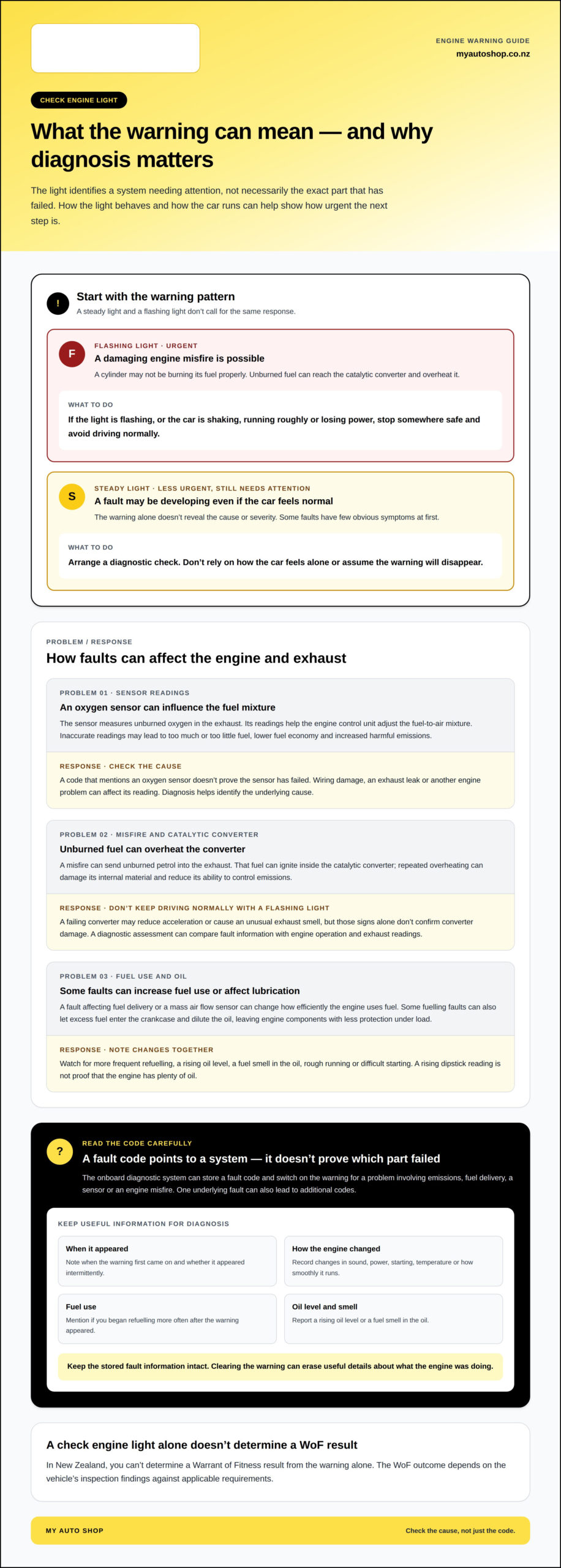
Meaning of solid and flashing check engine lights
A steady check engine light usually points to a less urgent fault, such as a loose fuel cap or a sensor issue. If your car drives normally, you may have time to arrange diagnosis and drive gently in the meantime. But a steady warning still needs attention. The light alone can’t tell you whether the fault will remain minor or affect another component.
A flashing check engine light is more urgent. It commonly warns of an active engine misfire, where one or more cylinders fail to burn fuel properly. Unburned fuel can overheat and damage the catalytic converter. Don’t keep driving normally to see if the engine settles. Reduce strain and stop somewhere safe, especially if the car begins shaking or losing power.
Use the car’s behaviour as well as the warning pattern to guide your next move. A solid light with no change in how the engine runs may allow gentle driving while you arrange diagnosis. A flashing light, rough running, shaking or sudden power loss calls for a safe stop and assistance. Low oil pressure, overheating or severe engine knocking also mean you should stop safely.
Check the dashboard for other warnings before deciding what to do. For example, a check engine light combined with an overheating warning is more urgent than a steady engine light alone. If the temperature rises or the oil pressure warning appears, stop safely and switch off the engine. Continuing to drive with those signs can risk serious damage.
Some vehicles use different colours to show warning severity. A yellow engine symbol may indicate a less serious malfunction, while red can signal a more serious engine problem. Other vehicles distinguish severity by whether the light stays solid or flashes. Check your vehicle handbook for the warning-light meanings, as displays can vary between models.
An intermittent warning still matters. If the light disappears after a restart, the fault may remain stored and could be harder to diagnose if it becomes constant. Note when it appeared and whether the engine felt different. Keep the fault information intact rather than clearing the warning, so diagnosis can use the stored details.
Can ignoring the check engine light damage the catalytic converter or engine?
Yes. Leaving the fault unresolved can affect engine components, but the warning alone doesn’t prove internal damage. For example, a faulty sensor may keep prompting the engine management system to adjust how the engine runs. That ongoing compensation can contribute to extra wear over time. Diagnosis helps establish whether another component has been affected and what’s causing the warning.
Engine damage can also depend on the underlying fault. A small air leak, for instance, can make an engine run lean, meaning there’s too much air for the available fuel. The engine may then run hotter than it should. Continuing to use a vehicle with an unresolved fault can allow that condition to persist.
Long-term damage from ignoring the check engine light depends on what has failed and how it affects the vehicle. The warning may point to an emissions-related issue or a problem affecting engine performance. It doesn’t automatically mean the engine is damaged, and a stored code alone can’t establish the full extent of a fault.
As the underlying problem continues, other systems may move outside their normal operating range and generate additional diagnostic codes. For example, a fault affecting engine operation may produce further readings that need investigating. More codes don’t automatically mean every named component has failed. Assess the original cause and related readings together.
Early diagnostic testing can show whether another component has been affected without assuming internal engine damage. Share when the warning appeared and whether you noticed changes in engine sound, power, temperature, oil level or fuel use. These observations put the stored information in context and help identify what needs attention.
Keep stored fault information intact before diagnosis. Clearing the warning can erase freeze-frame data, which records conditions when the fault occurred. If the vehicle begins running roughly, shaking or losing power, stop safely instead of continuing to drive. Report these changes alongside the warning and any other dashboard messages.
The key distinction is between the warning and the fault behind it: the light alone doesn’t show what’s happening inside the engine. A faulty sensor can cause the engine to compensate continuously, potentially creating extra wear over time. If the condition remains unaddressed, continued operation gives the underlying issue more time to affect the engine and its internal components. Ignoring a check engine light for longer can cause further damage to the engine and other components. This is a risk, not proof that damage has already occurred.
That uncertainty is why the next step is to find the cause, rather than assume the worst or treat the warning as harmless. Diagnostic results, alongside how the vehicle has been behaving, can help distinguish a limited fault from one affecting engine operation. If the warning remains on, arrange an assessment instead of relying on its disappearance or putting off attention. Prompt investigation can clarify whether damage has occurred and what response is needed, without drawing conclusions from the warning alone. The longer the cause remains unresolved, the less certain it is that the problem has stayed limited to its original symptoms. A diagnosis provides a basis for deciding what needs attention.
My Auto Shop
My Auto Shop connects motorists with automotive service and repair providers through its marketplace. If your check engine light is on, arranging an assessment can help clarify what your vehicle needs. Describe what you’ve noticed instead of assuming the dashboard warning identifies a failed part. This gives the provider useful context about your concern.
For routine maintenance, you can choose a Basic Service or Comprehensive Service. These are service options, not substitutes for assessing a specific warning or fault. If you need mobile servicing or repairs, Turners Service & Repairs is the provider, not My Auto Shop. The two brands have distinct roles.
When arranging mechanical help, share practical details: when the warning appeared, whether it stayed on or flashed, and what changed afterwards. Mention rough running, difficult starting, loss of power, unusual engine sounds or increased fuel use. Include whether the oil level has risen or the oil smells of fuel.
Keep stored fault information intact. Clearing the light can erase freeze-frame data about the engine’s condition when the fault occurred. If you’ve used an OBD-II scanner, share its code as a clue, not proof that a particular part has failed. The provider can use your details to understand the issue and assess what attention the vehicle needs.
Safety comes first. If the check engine light is flashing, or the vehicle is shaking, running roughly or losing power, stop somewhere safe rather than continuing to drive normally. Low oil pressure, overheating or severe engine knocking also call for stopping safely. With a steady light and no change in how the car drives, arrange an assessment and avoid putting unnecessary strain on the engine.
My Auto Shop’s marketplace can help you take the next step by connecting you with automotive service and repair providers. Choose an option that suits your vehicle and share the details that explain what’s happening. For more information about your situation, contact My Auto Shop.
Frequently Asked Questions
What long-term engine damage can result from ignoring a check engine light?
Possible outcomes range from reduced performance and fuel economy to engine component wear or catalytic converter damage. The warning alone can’t show whether internal engine damage has occurred. A diagnostic assessment helps distinguish a fault affecting emissions or performance from one that has caused secondary damage. Don’t assume that a stored code naming a component proves that component has failed.
How long is it safe to drive with the check engine light on?
There’s no reliable time or distance limit that applies to every car, because the warning doesn’t identify the fault’s severity. If the vehicle behaves normally and the light is steady, drive gently and arrange diagnosis promptly. Don’t treat a short trip without symptoms as proof the fault is harmless. If the warning changes or the car’s behaviour worsens, reassess before continuing.
What does a flashing check engine light mean, and should I stop driving?
A flashing light can indicate a serious fault, commonly an active misfire. Don’t accelerate hard or continue a normal journey. Find a safe place to pull over, then switch off the engine if you notice severe knocking, overheating or another serious warning. If the car is shaking or losing power, avoid driving it further. The flashing pattern signals urgency, but diagnosis is still needed to identify the cause.
Which common faults trigger the check engine light and worsen over time?
A loose fuel cap, an emissions-system leak, a sensor fault, an air leak or a misfire can trigger the warning. Battery or alternator problems can also contribute to dashboard warnings. The fault may persist or affect related systems if left unresolved. A diesel particulate filter warning, however, doesn’t automatically mean the filter needs replacing; follow the vehicle maker’s instructions rather than attempting forced cleaning.
What should I do if the check engine light comes on while driving?
First, check the dashboard for separate oil pressure or temperature warnings, then ease off the accelerator. If the light is steady and the car feels normal, avoid unnecessary strain and arrange diagnosis. If the warning flashes or the vehicle’s behaviour changes, pull over safely. Once stopped, check that the fuel cap is secure. Note when the light appeared and any changes you noticed afterwards.
Disclaimer
This article provides general information only and should not be relied on as professional mechanical, safety or legal advice. Vehicle requirements and circumstances vary. If you are unsure about your vehicle, have it inspected by a qualified automotive professional.