
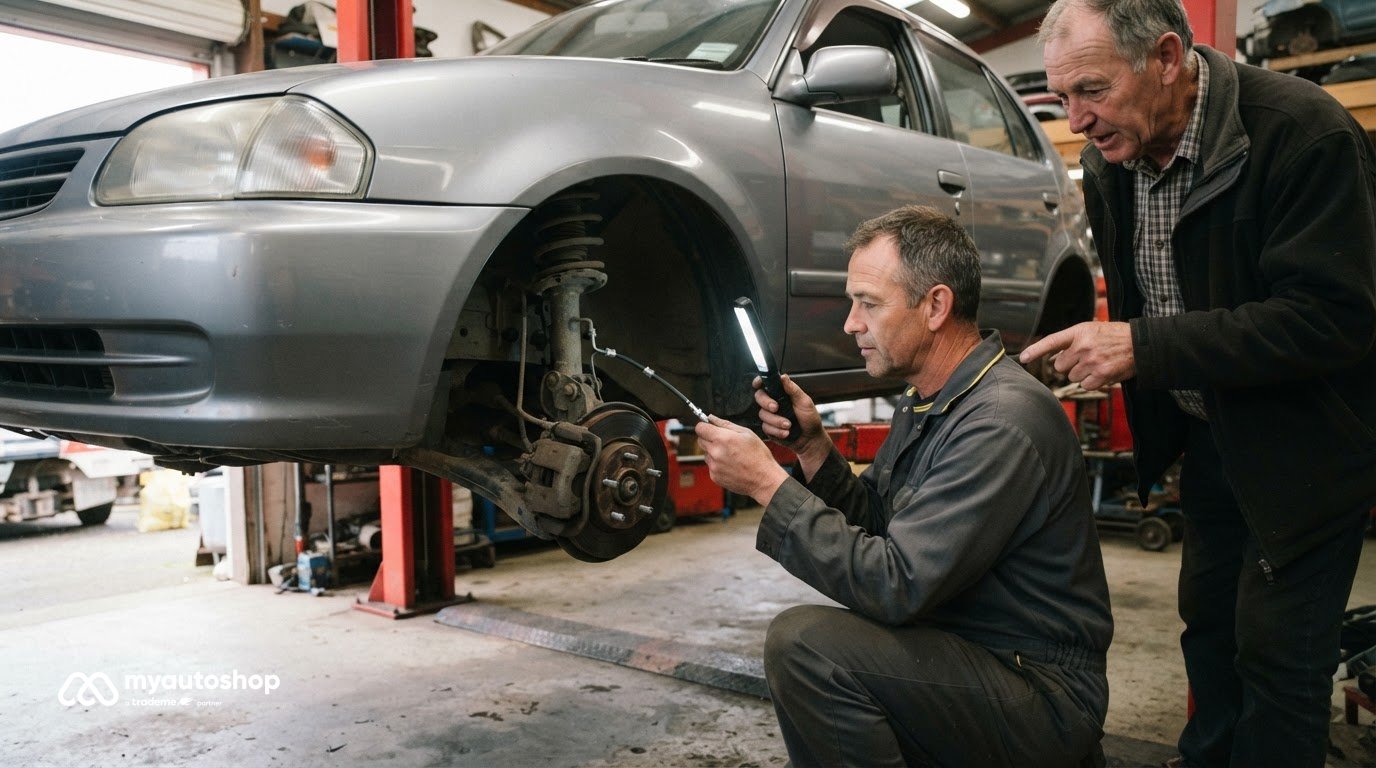
A fresh repair that fails again doesn’t automatically mean you have to pay for the same fix twice. Knowing what to do if a new repair fails shortly after the work is done starts with contacting the repairer and clearly explaining the fault. Under New Zealand’s Consumer Guarantees Act, services must be carried out with reasonable care and skill, and a repairable problem can be put right within a reasonable time.
It’s frustrating to lose confidence in a repair, especially if your vehicle may be unsafe or you rely on it every day. If the service failure is substantial or can’t be fixed, you may be able to cancel the service contract and seek a refund. If the repairer refuses to put it right, or doesn’t do so within a reasonable time, you may be able to have the work done elsewhere and recover reasonable costs. Contact the original repairer before arranging another repair, as going elsewhere first could affect your options.
This guide explains how to raise the issue, which remedies may apply, how to seek a final decision if you can’t agree, and what evidence can support your complaint.
Key Takeaways
- Tell the original repairer promptly what has gone wrong and give them a chance to address it before arranging another repair.
- If the problem can be fixed, you can require the service provider to put it right within a reasonable time.
- A substantial failure or one that cannot be fixed may give you the option to cancel the service contract and seek a refund.
- Keep the invoice, messages, photos, diagnostic reports and records of any losses to help support your complaint.
- If you can’t agree on a solution, the Disputes Tribunal can hear claims up to NZ$60,000, according to the Ministry of Justice.
What if the failure is substantial or cannot be fixed?
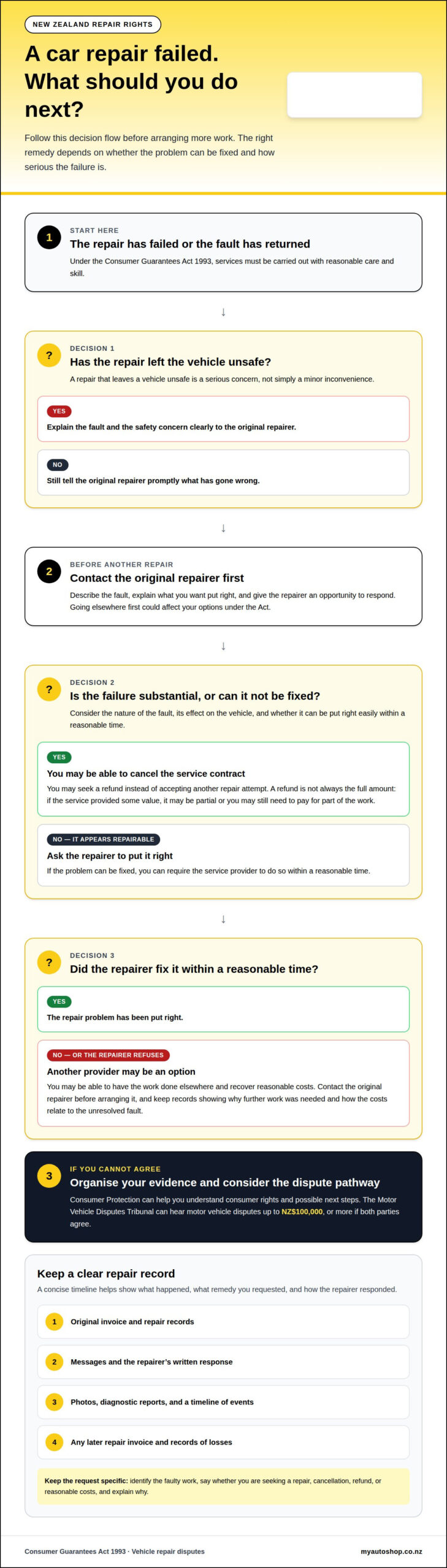
Under the Consumer Guarantees Act 1993, a service provider must address a repair problem that can be fixed within a reasonable time. If they refuse or fail to do so, your options may include seeking reasonable costs for another repair or cancelling the service contract.
Serious or Unsafe Service Problems
A service failure may be substantial if the result is substantially unfit for its usual purpose and can’t be easily fixed within a reasonable time. A repair that leaves a vehicle unsafe is serious, not simply a minor inconvenience. This distinction matters because a substantial service failure may let you cancel the contract instead of waiting for another repair attempt.
For example, if a repair leaves a braking system unsafe, explain the fault to the provider and describe the safety concern clearly. Under the Consumer Guarantees Act 1993, sections 21 and 36 relate to substantial failures. The nature of the fault, its effect on the vehicle, and whether it can be put right help determine whether the failure is substantial.
Getting Another Provider to Fix the Problem
If the original service provider refuses to fix the problem, or doesn’t do so within a reasonable time, you may be able to use another provider and recover reasonable costs. Contact the original provider first, describe the fault, and give them an opportunity to respond. Going elsewhere before contacting them could affect your ability to claim a remedy under the Consumer Guarantees Act.
Keep the original invoice, your messages, and any written response. If another repair is necessary, retain its invoice and ask for a clear description of the work completed. These records help show what the first repair covered, why further work was needed, and how the costs relate to the unresolved fault. Avoid authorising unrelated work as part of the same repair.
For a minor service problem, the business may choose to fix it or refund you. Ask the provider to explain its proposed remedy and when it will be completed. The Act requires services to be carried out with reasonable care and skill, but the remedy depends on the nature of the failure.
Escalating a Repair Dispute
If you cannot agree on a solution, Consumer Protection can help you understand consumer rights and possible next steps. The Disputes Tribunal can hear a claim if the service has no industry-specific disputes scheme. For motor vehicle disputes, the Motor Vehicle Disputes Tribunal can hear claims up to NZ$100,000, or more if both parties agree.
To escalate, organise your invoice, repair records, messages, photos, and a concise timeline of events. State what remedy you asked the provider for and how they responded. If the issue remains unresolved, you may have options for seeking a remedy when a service provider refuses or fails to fix a problem. A clear record helps explain your claim to a tribunal.
Remedies for substantial or unfixable failures
The remedy depends on whether the failed work is a service or a product, and how serious the fault is. Under New Zealand’s Consumer Guarantees Act, a substantial service failure may let you cancel the service contract and seek a refund instead of accepting another repair attempt. For example, if a repair leaves the vehicle substantially unfit for its usual purpose, the issue may be more than a minor fault. The seriousness of the problem and whether it can be fixed easily within a reasonable time both matter.
Cancellation doesn’t always mean every dollar paid must be returned. If the service has already provided some value, you may be entitled to a partial refund or may still need to pay for part of the work. A repair that successfully restores one function but leaves another contracted task incomplete could be treated differently from work that provides no useful result. When asking for a remedy, explain which parts failed and which, if any, still work.
For a faulty product that can’t be fixed, can’t be put right within a reasonable time, or has a substantial failure, you may reject it and choose a similar replacement or a full refund. A fault may be substantial if a reasonable person would not have bought the product knowing about it, considering its nature, price, and information about durability. A product that can’t serve its normal purpose and can’t easily be repaired within a reasonable time may also meet that test.
A minor product fault offers a different choice. The retailer may decide to repair the product, replace it, or refund the purchase price. A retailer can’t replace a refund you’re entitled to with store credit. If the retailer didn’t make clear that a fault was substantial before repair work, and the fault can’t be fixed, you may reject the product or service and seek a refund or replacement. Keep the repair paperwork to show the original fault and attempted remedy.
A failed repair can also cause further loss. You may claim compensation for reasonably foreseeable loss caused by a faulty service, such as damage to belongings. For a faulty product, compensation may cover a drop in value when the fault is substantial or can’t be fixed within a reasonable time. Take practical steps to limit further loss, and keep receipts or other records showing what the failure cost you.
These remedies arise under the Consumer Guarantees Act, regardless of a store warranty or guarantee. The right remedy depends on what was promised, what the work achieved, and whether the failure can be put right. Keep your request specific: identify the faulty work, state whether you’re seeking a repair, cancellation, refund, replacement, or compensation, and explain why.
Remedies when goods or services fail to meet automatic guarantees
The Consumer Guarantees Act 1993 gives consumers automatic protections when eligible goods or services fail to meet its guarantees. A repair is a service, so the key questions include whether the work had reasonable care and skill, and whether it met an agreed purpose. These guarantees apply automatically. A signed contract or separate warranty isn’t required for them to apply.
For repair work, the service provider must use reasonable care and skill. If you explained a particular purpose and the provider accepted it, the service must be fit for that purpose. For example, if you told a repairer the vehicle needed to be reliable for a specific use and they accepted that requirement, it may be relevant to whether the service met its guarantee. Keep any written discussion of that purpose.
The Act also requires a service to be completed within a reasonable time if you and the provider didn’t agree on a timeframe. What counts as reasonable depends on the work and circumstances, not a fixed number of days. Save messages about expected completion dates and note when the vehicle was available for repair. These details can help distinguish an agreed delay from work that took too long.
The Consumer Guarantees Act generally protects consumers buying goods or services typically intended for personal, domestic, or household use. The nature and use of the transaction matter. For example, a repair to a privately used car may fall within this consumer setting. A vehicle used for business can raise different questions about whether the Act applies, so don’t assume every repair transaction has identical protections.
Some circumstances can limit a consumer’s rights under the Act. The Consumer Guarantees Act 1993, sections 20 and 33, address situations including taking too long to exercise rights or being responsible for damage to goods. If a fault appeared after extra damage, separate what happened during the repair from later events. Report the problem promptly and keep records showing when it appeared and how the vehicle was used.
For goods, the remedy depends on the fault and whether the supplier can put it right. A minor fault that can be fixed may allow the supplier to choose a repair, replacement, or refund. A faulty service has different remedies. If repair work fails, describe what didn’t meet the guarantee and the outcome you’re seeking. The Act’s protections apply separately from any store warranty, so the warranty’s terms don’t replace automatic consumer guarantees.
Contacting a business and seeking a final decision
Contact the repair business promptly, while the fault and repair records are easy to link. Give the service provider your name, vehicle details, invoice date, and a plain description of what failed. Explain when you noticed the problem and whether the vehicle can be driven safely. If the repair involved a specific purpose you explained, include what you wanted the work to achieve.
Make your request in writing, such as by email, so both sides can refer to the same details. Identify the original work and state the remedy you’re seeking. For a repairable service problem, ask the provider to fix it within a reasonable time. If you believe the failure is substantial, explain why another repair attempt wouldn’t address the problem. Keep your wording factual and focused on the contract.
A clear complaint can include:
- The repair invoice and the work description.
- A brief timeline of the repair, fault, and contact with the business.
- Photos, warning messages, or diagnostic information linked to the fault.
- Your requested outcome, such as a repair, refund, or compensation for resulting loss.
Ask the business to respond with its decision and reasons. If it offers to inspect the vehicle, agree on what will be assessed and record the arrangements in writing. Don’t treat an inspection as agreement to unrelated work or extra charges. If the provider refuses your request, ask which facts or contract terms support that position. A written response can clarify whether you still disagree about the fault, its cause, or the remedy.
If the repairer doesn’t resolve the complaint, organise the records before taking the dispute further. The Consumer Guarantees Act 1993 sets out remedies for service failures, while the Contract and Commercial Law Act may provide remedies for incomplete work. A tribunal can consider a dispute when you and the provider cannot agree. Present the timeline, the work promised, what went wrong, and the remedy you wanted. Keep the original documents and provide copies for your claim.
You can also claim compensation for reasonably foreseeable loss caused by a faulty service. For example, if a repair damages personal belongings, keep evidence of the damage and related expenses. Take reasonable steps to limit further loss, and record what you did. Ask for a final decision before arranging another provider, unless safety requires urgent action. This gives the original business a chance to respond and creates a clearer record of your attempts to resolve the dispute.
Evidence and second opinions for complaints
A clear complaint links the failed repair to the problem you’re experiencing now. Start with the repair invoice, which identifies the work, date, and supplier. Add a short timeline showing when the fault returned, what symptoms appeared, and when you contacted the business. For example, note whether a warning light came on or a noise continued after the repair.
Keep records that show the vehicle’s condition without changing it. Photos can capture visible damage, warning lights, or fluid leaks. Save emails and texts with the repairer, along with any diagnostic report or written assessment. If the vehicle is unsafe to drive, record that concern. Don’t treat a dashboard warning or unusual handling as proof of what caused the problem. Your evidence should explain what happened without overstating what it proves.
Ask the original supplier to explain its assessment in writing. If it says the new fault is unrelated, ask what checks support that view. If the business offers another inspection, record the agreed scope and any findings. Keep copies of documents and note who made each statement, especially if the complaint later goes to a tribunal.
A second opinion can help if you and the supplier disagree about whether a fault is substantial. Choose someone knowledgeable about the vehicle or fault, and ask for an independent written explanation. A useful report identifies the symptoms, findings, likely cause, and whether the original work appears connected. It should separate observed facts from conclusions. Share the report with the original repairer before deciding on further work.
Keep evidence of consequential loss, meaning additional loss caused by the faulty service. For example, if a repair damages personal belongings, take photos and retain relevant receipts. Compensation for service-related loss is limited to reasonably foreseeable loss. You must also take reasonable steps to avoid or reduce further loss. Record practical steps you took, such as arranging safe transport instead of continuing to use a vehicle with a serious fault.
Build a simple complaint file with the invoice, timeline, messages, photos, assessments, and records of claimed losses. Match each document to a point in your complaint: the original promise, the fault, your attempts to resolve it, or the resulting loss. This makes it easier to explain what remedy or compensation you’re seeking and why. Keep the originals, and send copies to the supplier or tribunal if needed.
My Auto Shop
My Auto Shop can help with your next vehicle-care step after a failed repair. Its services include Basic Service and Comprehensive Service, and its platform connects motorists with automotive service and repair providers. These options may suit maintenance or further mechanical work, but they don’t replace your complaint to the original repairer or determine your rights under the Consumer Guarantees Act.
For mobile vehicle servicing and mechanical repairs, the provider is Turners Service & Repairs. Keep the original invoice and any diagnostic reports handy when describing the vehicle and the work already completed.
Contact My Auto Shop to discuss your vehicle’s next steps.
Choose a clear next step
If you’re deciding what to do if a new repair fails shortly after, focus your next move on the vehicle’s needs. A separate mechanical assessment can help you understand what attention the car needs, while your complaint to the original repairer remains a separate matter.
A Pre-purchase Inspection, Basic Service, and Comprehensive Service support different vehicle-care needs; they don’t decide a repair dispute or replace your consumer rights. Keep your repair records handy when describing the vehicle and the work already completed.
Contact details are available on the My Auto Shop contact page.
Frequently Asked Questions
What if the problem can be fixed?
If you’re working out what to do if a new repair fails shortly after it was completed, ask the repairer to put the service problem right within a reasonable time. Describe the fault clearly, including when it appears and whether it affects how the vehicle operates. For example, explain if a warning light returns only after the engine warms up. Agree on what the repairer will inspect and record the proposed next step in writing. Don’t authorise unrelated work unless you want it completed.
What rights do New Zealand consumers have if a repair fails shortly after it was completed?
For eligible personal or household services, the Consumer Guarantees Act requires a provider to carry out work with reasonable care and skill. A failed repair may indicate that the service didn’t meet this guarantee, but the fault and work completed matter. Write down what the repair was meant to achieve and what has happened since. The Act’s service guarantees apply automatically, even if you didn’t sign a written contract.
Does the Consumer Guarantees Act cover faulty repairs in New Zealand?
Yes, the Consumer Guarantees Act can cover faulty repair services for consumers, including work on a privately used vehicle. The Act requires reasonable care and skill, and the repair must be fit for a purpose you explained and the provider accepted. It may not apply in the same way to every transaction, such as work connected with business use. Keep any messages explaining how you intended to use the vehicle.
How soon must a repairer fix a failed repair under the Consumer Guarantees Act?
The Act doesn’t set a fixed number of days for every repair. If you and the repairer didn’t agree on a timeframe, the service must be completed within a reasonable time. The work involved and circumstances affect what is reasonable. Ask the repairer to give you a date for inspecting or correcting the fault, then keep their reply. A written schedule helps clarify whether further delay is becoming unreasonable.
Can I ask the original repairer to redo the repair for free?
You can ask the original repairer to correct a service problem covered by the Consumer Guarantees Act without charging you to remedy that failure. Explain which part of the original work appears faulty and ask what correction they propose. A dispute about whether the new problem relates to their work may need assessment. Before approving additional work, ask about its scope and whether the repairer considers it part of putting the original service right.
What can I do if a repairer refuses to fix a failed repair in New Zealand?
Keep a record of the refusal, then make a written request explaining the fault and the remedy you want. If the repairer won’t act or doesn’t do so within a reasonable time, you may be able to get the issue fixed elsewhere and seek reasonable costs. Contact the original repairer before arranging another repair, because going elsewhere first could affect your CGA remedy. If you can’t resolve the dispute, consider the Disputes Tribunal.
Can I get a refund or compensation if a repair fails again?
A refund may be available if a service failure is substantial or can’t be put right. If completed work still has some value, a partial refund may be appropriate. You may also seek compensation for reasonably foreseeable loss caused by the faulty service, such as damage to belongings. Keep receipts and evidence linking the loss to the repair, and take reasonable steps to prevent avoidable additional costs.
How do I make a formal complaint to a repairer in New Zealand?
Knowing what to do if a new repair fails shortly after the work is completed starts with a clear, dated complaint. Email the repairer with the vehicle details, invoice, fault, and outcome you’re seeking. Include a concise timeline and useful records, such as photos or diagnostic findings. Ask for a written response and keep copies of all messages. If you still disagree, organise your records to show what was agreed, what failed, and how you tried to resolve it.
Disclaimer
This article provides general information only and should not be relied on as professional mechanical, safety or legal advice. Vehicle requirements and circumstances vary. If you are unsure about your vehicle, have it inspected by a qualified automotive professional.