
If your vehicle has a current Warrant of Fitness or a fresh state inspection sticker, does that actually mean your kids are safe in the back seat? Most drivers assume a legal pass is a gold standard for protection. However, a standard check often overlooks the specific nuances of a car inspection for family safety. With over 90% of global accidents caused by human error, your vehicle’s safety systems are the final line of defense for your passengers. You don’t need the stress of wondering if your brakes will hold or if a used car’s history is hiding a dangerous secret.
We understand the anxiety of preparing for a long trip or buying a new family vehicle. You want absolute peace of mind, not just a sticker on the windshield. This guide explains how a specialized inspection goes beyond the bare minimum to protect what matters most. We will show you how to navigate the 2026 federal car seat standards and ensure your vehicle’s advanced driver assistance systems are correctly calibrated. You’ll learn exactly what to look for in a safety report so you can avoid “lemons” and keep your family secure on the road.
Key Takeaways
- Learn why a standard legal pass isn’t a guarantee of protection and how a car inspection for family safety provides a deeper look at life-saving systems.
- Identify the five essential pillars of vehicle health that dictate how your car handles during emergency maneuvers.
- Understand the difference between a basic roadworthiness check and a comprehensive safety inspection that evaluates long-term performance.
- Secure peace of mind when buying a used car by using a pre-purchase protocol to detect hidden structural issues or past accident damage.
- Use modern tools like mobile mechanics and clear digital reports to stay on top of vehicle maintenance without disrupting your schedule.
Why a Car Inspection for Family Safety is Non-Negotiable in 2026
Safety isn’t just a checkbox on a government form. It’s a strategy for the road. A specialized car inspection for family safety moves beyond the basic legal requirements to perform a proactive deep-dive into your vehicle’s life-saving systems. While a standard check looks for immediate failures, a safety-focused inspection evaluates how your car will perform during an emergency. It’s about shifting your mindset from “will this car pass” to “will this car protect my children.”
Modern vehicles are more complex than ever. They rely on Advanced Driver-Assistance Systems (ADAS) like Automatic Emergency Braking (AEB) and Lane Assist to prevent collisions. These systems use delicate cameras and sensors that require expert calibration. A sensor that’s even slightly misaligned due to a minor curb strike or a windshield replacement can fail when you need it most. Ensuring these high-tech features are functioning correctly is a core part of protecting your passengers in 2026.
The Legal Minimum vs. Family Protection
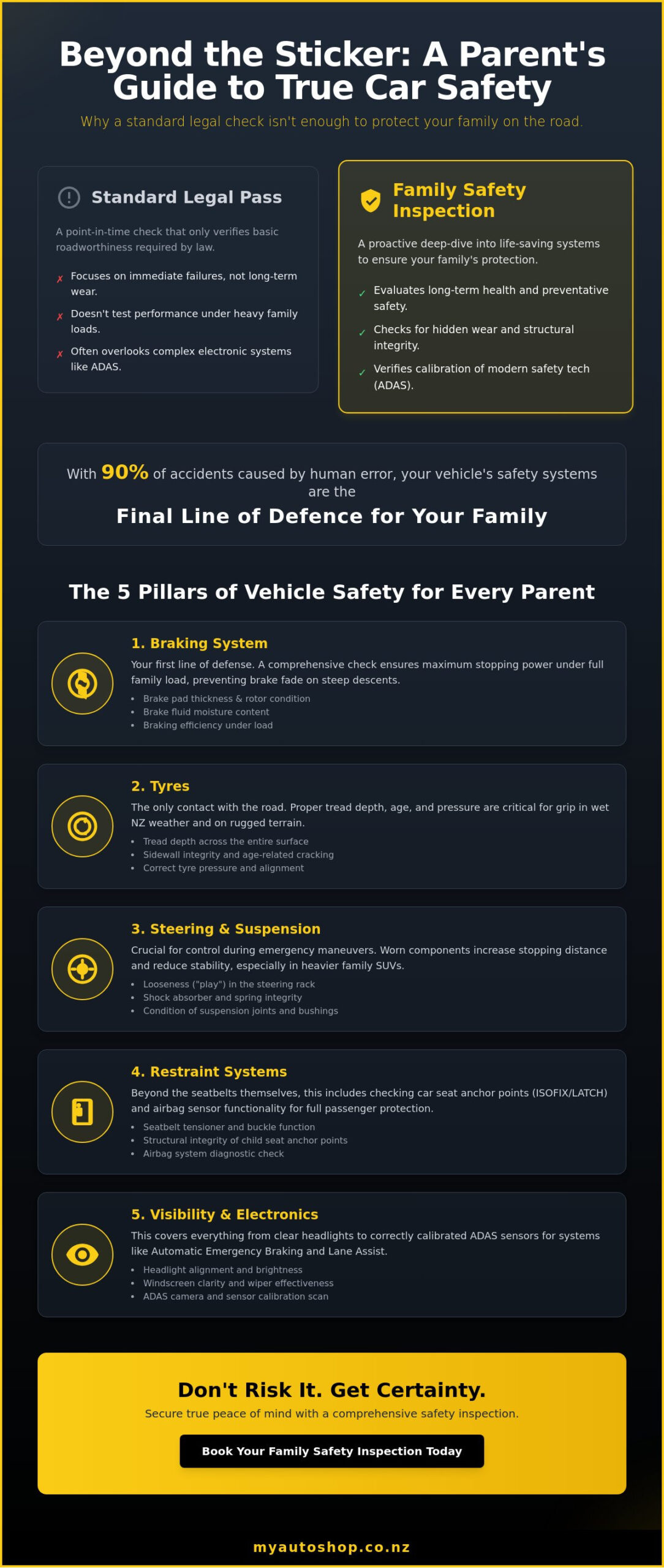
It’s a common mistake to assume a car is safe just because it’s legal to drive. A standard Vehicle inspection, such as a Warrant of Fitness (WoF), is a point-in-time assessment of basic roadworthiness. It doesn’t always account for deep mechanical wear or the longevity of critical parts. For example, your brakes might meet the legal limit today but fail during a heavy-load trip next month. Preventative safety looks at the health of your car over the long term, giving you peace of mind that your precious cargo is secure every time you buckle them in.
New Zealand Road Realities for Families
New Zealand roads present unique challenges that demand peak vehicle performance. Our varying weather and rugged terrain put immense pressure on your tyres and braking systems. Whether you’re navigating steep alpine passes or wet coastal highways, your car needs to respond instantly. This is especially true for family SUVs and people movers. These vehicles often carry heavy loads of passengers and luggage, which significantly increases the stress on your suspension and shock absorbers. A comprehensive car inspection for family safety identifies invisible wear caused by high-mileage NZ driving before it turns into a dangerous situation on the road.
- Braking Efficiency: Testing performance under full load, not just an empty car.
- Tyre Integrity: Checking for tread depth and sidewall aging that affects grip.
- Electronic Health: Verifying that safety software and sensors are active and accurate.
- Structural Checks: Ensuring seatbelts and anchor points are fully intact.
By prioritizing a “Safety First” approach, you ensure your vehicle is a sanctuary for your family rather than just a mode of transport.
The 5 Critical Safety Systems Every Parent Should Have Inspected
When you drive your family, you rely on five core systems to keep everyone safe. These are Braking, Tyres, Steering and Suspension, Restraints, and Visibility. Think of these as the five pillars of your car’s safety architecture. Each one plays a vital role when you need to avoid an obstacle or stop suddenly. Unfortunately, these systems don’t usually fail all at once. They degrade slowly over months or years. This gradual decline makes it nearly impossible for busy parents to notice a change in performance until a crisis occurs. A professional car inspection for family safety identifies these hidden risks before they put your passengers in danger.
A professional inspection uses tools parents simply don’t have at home. For example, mechanics use electronic moisture testers to check the health of your brake fluid. If fluid absorbs too much water, it can boil under high heat, leading to brake fade or total failure during a steep descent. It’s these technical details that separate a basic check from a true safety assessment.
Braking and Steering Reliability
Your brakes and steering are your primary tools for avoiding a crash. An inspector will check your brake pad thickness and the physical condition of your rotors to ensure you have maximum stopping power. If your pads are worn, a prompt Brake Pad Replacement is the most effective way to restore your car’s safety. Beyond stopping, the health of your steering rack is just as critical. Any “play” or looseness in the steering means your car won’t respond accurately when you need to swerve to avoid a hazard. We ensure every connection is tight and responsive.
Tyre Integrity and Traction
Tyres are the only part of your car that actually touches the road. While many people only look at tread depth, a safety-focused check goes much deeper. We look for age-related perishing, where the rubber becomes brittle and loses its ability to grip the road. This is a vital step when following a Pre-Purchase Safety Protocol for a used family car. A “budget” tyre might have legal tread, but it often lacks the advanced rubber compounds needed for a short emergency stop in the rain. Additionally, maintaining correct tyre pressure is essential for vehicle stability when your car is fully loaded with kids and gear.
The final pillars include checking seatbelt tensioners, ISOFIX mounts, and visibility components like wiper blades and headlight clarity. If you can’t see the road or your belts don’t lock, the other systems can’t do their jobs. If you’re unsure about the state of these systems, you can easily book a comprehensive check through My Auto Shop to get a clear, jargon-free report on your vehicle’s health.
Warrant of Fitness vs. Comprehensive Safety Inspection
Many parents look at the small sticker on their windshield and feel a sense of security. It’s a common belief that if a car passes its Warrant of Fitness (WoF), it’s perfectly safe for the family. However, a WoF is merely a “point in time” check of basic roadworthiness. It ensures your car isn’t a danger to others, but it doesn’t guarantee the vehicle is in peak condition for your passengers. A car inspection for family safety is different because it focuses on the longevity and performance of every component.
The reality is that a legal car can still be an unreliable one. A WoF examiner won’t tell you if your brake pads have 2,000 kilometers of life left or if your battery is about to fail. They only check if the part meets the minimum legal requirement at that exact moment. To truly protect your family, you need an assessment that looks ahead, identifying wear and tear before it becomes a hazard on a dark highway.
What the WoF Misses
A standard WoF ignores several systems that are vital for a stress-free family trip. It does not cover clutch health, internal engine wear, or detailed analysis of your brake fluid. These are the “hidden” factors that lead to unexpected breakdowns. A WoF won’t warn you if your car is likely to overheat while climbing a steep hill with a full load of luggage. This is why Comprehensive Servicing is so valuable. It includes deeper safety checks that go far beyond the government’s minimum requirements, ensuring your car is actually ready for the road.
The Value of a Professional Road Test
Static checks have significant limits. Most WoF inspections happen while the car is stationary or on a test rig. A professional car inspection for family safety must include a real-world road test. This allows a mechanic to use their senses to identify risks that a computer might miss. They listen for the subtle hum of a failing wheel bearing or the specific clunk of a worn suspension bush.
During a road test, the technician assesses how the car handles under heavy braking and during sharp turns. This is the only way to verify that the Anti-lock Braking System (ABS) and electronic stability control are engaging correctly. It provides a clear picture of how the vehicle behaves in an emergency, giving you the confidence that your car will respond exactly as it should when you need it most.
Buying a Used Family Car? The Pre-Purchase Safety Protocol
Buying a used car for your family shouldn’t feel like a gamble. While a clean interior and a shiny coat of paint are nice, they can hide serious safety flaws. A dedicated car inspection for family safety is your best defense against buying someone else’s problems. You might feel a strong connection to a specific vehicle after a test drive, but you should always verify that feeling with a professional mechanical report. Trust your gut if something feels off, but let the data from a technical assessment make the final decision.
Don’t forget to check the history of safety recalls before you commit. High-profile issues, such as the Takata airbag recall, affected millions of vehicles globally. A professional inspector ensures that any mandatory safety updates have been completed by the previous owner. This step is vital because many sellers aren’t even aware their vehicle is subject to a recall. Getting this information upfront prevents you from inheriting a dangerous defect.
Child Restraints and Cabin Safety
Most general inspections ignore the parts of the car that matter most to parents. We specifically check the ISOFIX anchor points and seatbelt tensioners to ensure they are ready to secure a car seat. It’s also essential to test “child lock” functionality and window safety sensors. These sensors stop a power window from closing if they detect an obstruction, which prevents pinched fingers or worse. We even look at the cabin air filter. A clogged filter can harbor allergens and pollutants, impacting your family’s respiratory health during long drives.
Structural Integrity and Airbags
One of the biggest risks in the used market is hidden structural damage. If a car was in a major accident, the “crumple zones” might have already been compromised. These areas are designed to absorb impact energy to protect the passengers. Once they are damaged or poorly repaired, they lose their effectiveness in a second collision. An inspector looks for tell-tale signs of past repairs that affect future safety. Even worse, some sellers use tools to “re-set” airbag warning lights without actually fixing the underlying system. This leaves you with a non-functioning safety feature that looks fine on the dashboard. Structural safety is the most expensive and critical thing to verify before purchase.
Before you sign the papers, make sure you have the full picture of the vehicle’s health. You can book a comprehensive Pre-purchase Inspection today to ensure your next family car is truly road-ready.
How My Auto Shop Simplifies Your Family Road Safety
Busy parents already have a full schedule. Between school runs, sports practice, and work, finding time to drop a vehicle off at a workshop is a major hurdle. We’ve removed that barrier. By choosing a car inspection for family safety through My Auto Shop, you get the expertise of a professional without the logistical headache. We’ve built our platform to bridge the gap between traditional mechanical service and the high-speed expectations of modern life. It’s about making safety fit into your routine, not the other way around.
Our national network of trusted mechanics spans across New Zealand, ensuring you have access to top-tier talent regardless of your location. We prioritize financial clarity above all else. You’ll receive upfront pricing for every service, which means the days of hidden costs and guesswork are finally over. We treat your time and your budget with the same respect we give your safety. This commitment to openness is our signature, setting us apart in an industry that can often feel opaque or intimidating.
Expertise That Comes to You
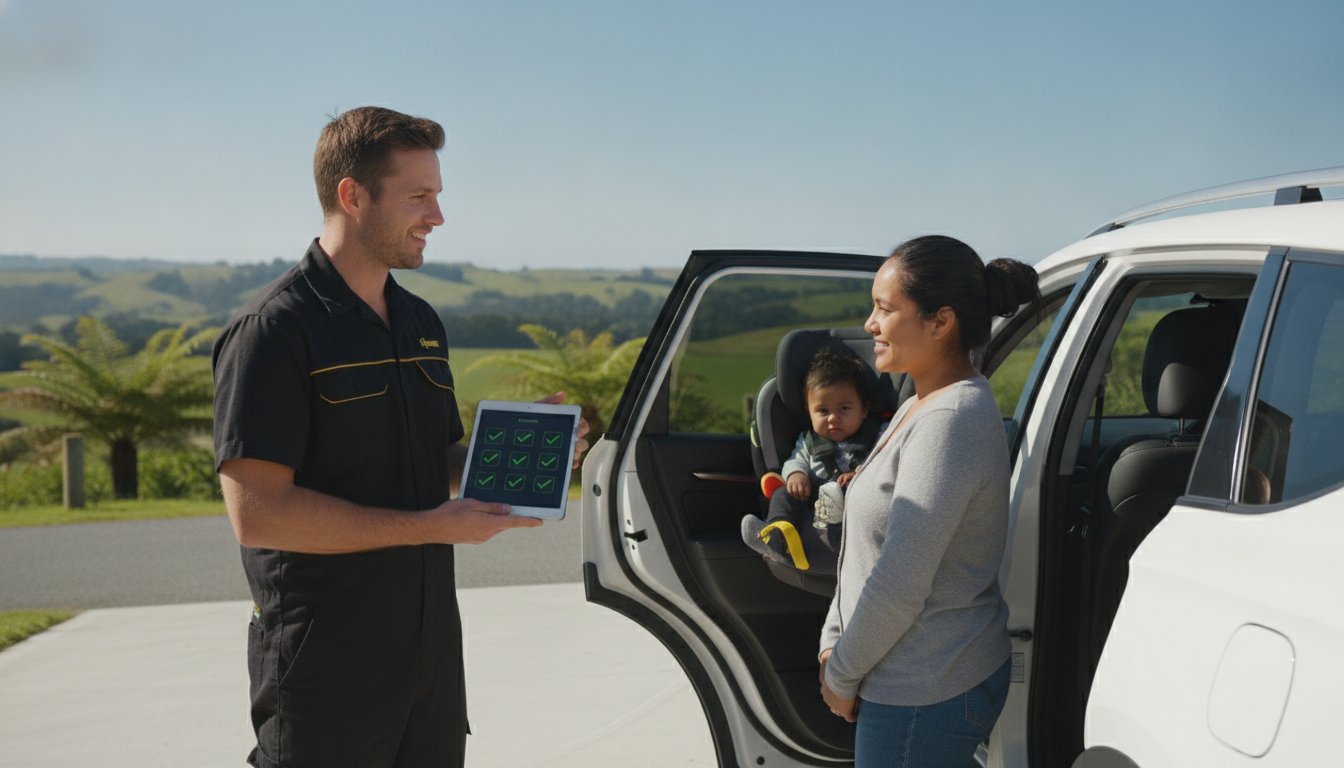
You don’t need to disrupt your day to ensure your vehicle is safe. Our Mobile Mechanic service brings the inspection right to your driveway or office. This means you can keep focusing on your family while an expert evaluates your car’s critical systems in a familiar environment. Booking a safety check is incredibly simple. You can schedule your appointment online in under two minutes through our streamlined digital platform. Our mechanics specialize in passenger vehicle safety standards, so they know exactly what to look for to ensure a car inspection for family safety is truly comprehensive.
Clear Reports for Confident Decisions
Transparency is the core of our communication style. After the inspection, you’ll receive a digital report that is easy to read and completely free of confusing industry jargon. We don’t just give you a list of problems; we provide clear facts that help you make informed choices for your passengers. Our reports prioritize findings so you can see exactly which repairs are urgent for safety and which ones can wait. This logical, step-by-step approach ensures you never feel overwhelmed by technical details.
Taking care of your passengers shouldn’t be a source of anxiety. With our efficient process and dependable service model, you can move from a potential problem to a scheduled solution effortlessly. Book your family safety inspection today for total peace of mind and a vehicle that is truly ready for your next adventure.
Secure Your Family’s Future on the Road
Your family’s safety shouldn’t depend on a legal minimum. We’ve explored how a dedicated car inspection for family safety looks beyond the sticker to evaluate life-saving tech and structural integrity. By prioritizing the five critical pillars of vehicle health, you shift from basic roadworthiness to true passenger protection. Whether you’re preparing for a holiday or vetting a used SUV, these professional insights remove the guesswork from vehicle maintenance.
My Auto Shop makes this process effortless. Our national network of certified NZ mechanics provides transparent, jargon-free safety reports that prioritize your needs. With convenient mobile service options, we bring expert care directly to your driveway. Take control of your road safety today and enjoy the peace of mind that comes with a healthy vehicle.
Book Your Family Safety Inspection Online and get a clear picture of your car’s health. You’ve got this, and we’re ready to help you keep your precious cargo moving safely.
Frequently Asked Questions
Is a car safety inspection different from a standard car service?
Yes, these two services have very different goals. A standard service focuses on engine maintenance, such as changing oil and filters to keep the car running smoothly. A car inspection for family safety is a targeted audit of the systems that protect you during a crash. It prioritizes brakes, tyres, and electronic safety aids over routine engine maintenance items.
How long does a comprehensive family safety inspection take?
A thorough inspection typically takes between 60 and 90 minutes to complete. This timeframe allows the mechanic to perform a detailed static check and a real-world road test. It’s a small investment of time that provides total peace of mind before a long family holiday or a new vehicle purchase. You’ll get the results immediately after the check is finished.
Can a mobile mechanic perform a full safety inspection at my house?
Absolutely. A mobile mechanic arrives at your home or workplace with all the specialized tools required for a professional assessment. They can check your brakes, suspension, and safety electronics right in your driveway. This saves you the hassle of coordinating a workshop drop-off while still ensuring your car inspection for family safety is performed to the highest standards.
What are the most common safety red flags found in used family cars?
The most frequent issues we find include aged tyres with brittle sidewalls and worn brake pads that are near their limit. We also often discover non-functioning child safety locks and seatbelts that don’t retract or lock correctly. These “invisible” problems are exactly why a professional check is so important for anyone buying a used vehicle for their children.
Does a safety inspection include a check of the child seat anchor points?
Yes, inspecting child restraint systems is a core part of our family-focused safety check. We verify that ISOFIX anchor points are secure and that seatbelt tensioners lock as intended during a sudden stop. It’s about ensuring that your car seats can do their job effectively if an accident occurs, keeping your most precious cargo as secure as possible.
How much does a pre-purchase safety inspection cost in New Zealand for 2026?
Costs for inspections in New Zealand fluctuate based on your location and the specific level of detail required for the vehicle. We recommend checking our booking platform for the most up-to-date, transparent pricing. You’ll see the full cost upfront before you confirm your booking, so you don’t have to worry about hidden surprises or unexpected fees later.
Should I get a safety inspection even if the car has a brand new WoF?
You definitely should. A brand new WoF only proves the car met the bare legal minimum on the day it was tested. It won’t tell you if the brakes are nearing the end of their life or if the safety sensors are misaligned. A safety inspection provides a much deeper look into the car’s actual protective capabilities and long-term reliability.
What happens if the inspection reveals a major safety fault?
If we find a serious issue, it’s clearly highlighted in your digital report with no confusing jargon. We prioritize these faults based on safety urgency so you know exactly what needs immediate attention. You’ll receive a transparent quote for the necessary repairs, and you can choose how to move forward with total confidence and no pressure from us.
Disclaimer
This article provides general information only and should not be relied on as professional mechanical, safety or legal advice. Vehicle requirements and circumstances vary. If you are unsure about your vehicle, have it inspected by a qualified automotive professional.