

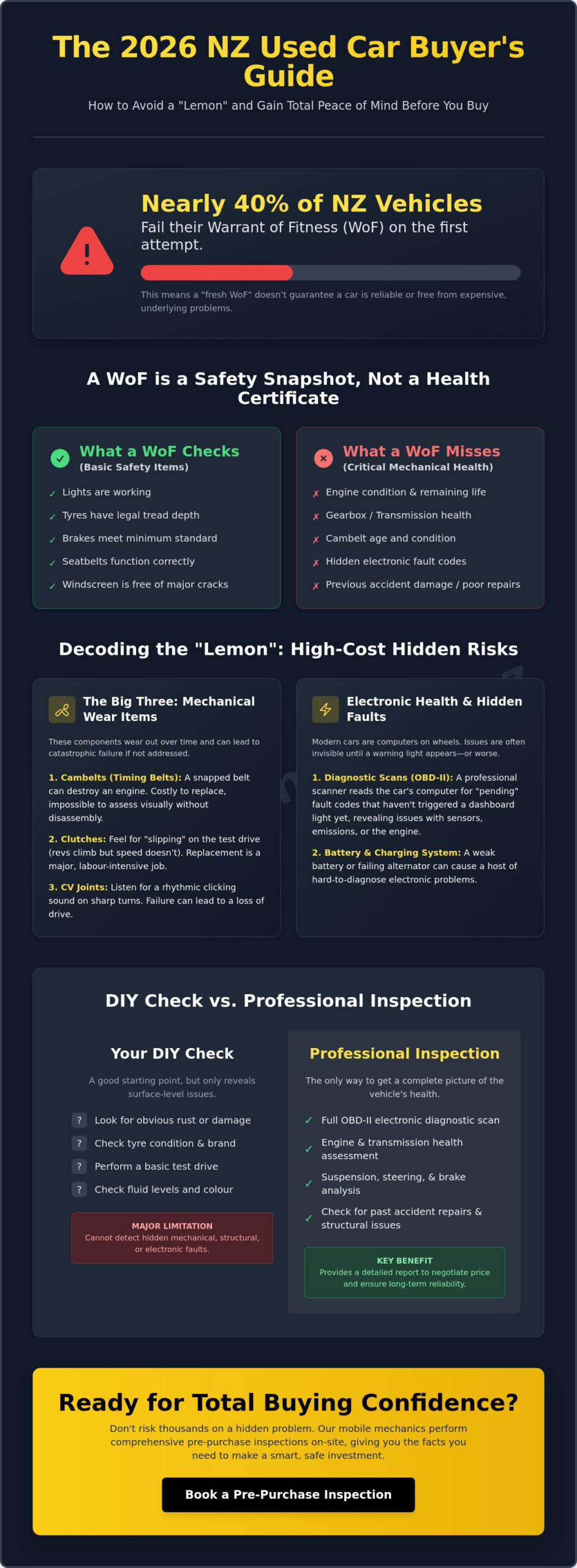
Nearly 40% of vehicles in New Zealand fail their Warrant of Fitness inspection on the first attempt. That is a staggering number when you are the one standing in a car yard trying to decide if a deal is too good to be true. It’s natural to feel anxious about hidden mechanical failures or getting ripped off by a seller who knows more than you do. You want a reliable vehicle for your family, but you don’t have the time to visit five different workshops. Finding genuine peace of mind before buying a car shouldn’t feel like a full-time job.
We believe that transparency is the key to a stress-free purchase. You deserve a clear path to verify a car’s health without getting lost in technical jargon. This 2026 NZ Buyer’s Guide will show you exactly how to strip away the guesswork and confirm a vehicle’s condition before you commit. We will walk through the latest WoF inspection cycles, highlight common “lemon” red flags, and provide a simple plan to help you negotiate a fair price. You’ll gain the confidence to make a smart choice that keeps your family safe and your budget intact.
Key Takeaways
- Understand why “buyer beware” remains the reality of the NZ used car market and how to navigate the specific risks of private sales.
- Identify hidden mechanical risks that a standard test drive won’t reveal to ensure total peace of mind before buying a car.
- Learn the critical differences between a basic DIY assessment and a professional pre-purchase inspection to avoid high-cost, invisible repairs.
- Follow a clear, step-by-step checklist to research common vehicle faults and perform an effective initial inspection with confidence.
- Discover how mobile mechanic services provide on-site technical expertise, streamlining your buying journey while securing your family’s safety.
The Anxiety of Used Car Buying in New Zealand
Buying a used car in New Zealand is a high-stakes game. For many Kiwis, this is the second largest purchase they will ever make, trailing only behind a home. Yet, most people walk into a car yard or a private driveway with little more than a “gut feeling” and a prayer. The reality is that “buyer beware,” or Caveat Emptor, remains the dominant rule in our local market. If you buy a vehicle privately and the engine light flickers on two days later, you are almost always stuck with the bill. This inherent risk is exactly why the market price tends to adjust downwards for vehicles with unknown histories.
The fear of buying a “lemon” is not just in your head. It is a logical response to a market that often lacks transparency. You might worry about hidden mechanical failures, or worse, buying a car with outstanding debt that could lead to repossession. To solve this, you need to replace anxiety with hard data. We recommend using a verification framework. This is a logical process where you use objective mechanical facts to make your decision. It removes the emotional pressure of the sale and ensures you have genuine peace of mind before buying a car.
Why a WOF is Not a Mechanical Guarantee
A Warrant of Fitness is a safety check, not a mechanical health check. It confirms your lights work, your tyres have legal tread, and your brakes meet a minimum safety standard at that exact moment. It tells you nothing about the state of your engine, the health of your gearbox, or how much life is left in your clutch. A car can pass a WOF while its cambelt is on the verge of snapping. Relying on a “fresh WOF” as a seal of quality is a mistake. It can easily mask underlying long-term issues that will cost thousands to fix just a few months down the road.
The Digital Maze: TradeMe vs. Marketplace Risks
Online platforms have made car shopping convenient, but they have also increased the risk of a bad deal. When you buy from a private seller on TradeMe or Facebook Marketplace, you lose the protections offered by the Consumer Guarantees Act. You are essentially trading security for a lower price. Watch for red flags in digital listings. Vague descriptions like “runs well for its age” or a complete lack of service history are warnings. Without a professional deep dive, you are simply guessing. Professional intervention is the only way to bridge the gap between a shiny exterior and a reliable machine.
Decoding the “Lemon”: Hidden Risks You Can’t See
In the automotive world, a “lemon” isn’t just a car that needs a new lightbulb. It is a vehicle with significant, undisclosed defects that compromise its safety, value, or reliability. Sellers often use a “shiny exterior” to distract you from these issues. A fresh coat of wax and a vacuumed interior can hide a multitude of mechanical sins. To find genuine peace of mind before buying a car, you must look past the polished paint and focus on the components that actually keep the vehicle moving. Professional tools can identify structural weaknesses or engine fatigue that the human eye simply cannot detect.
Many cars in the New Zealand fleet suffer from high-cost, invisible wear. These aren’t always obvious during a quick drive around the block. Using a formal Pre-purchase checklist is a great start, but some risks require a deeper dive into the mechanical heart of the machine. If you miss these “invisible” repairs now, you’ll likely be paying for them within the first six months of ownership.
The Big Three: Cambelts, Clutches, and CV Joints
Cambelts, or timing belts, are the silent killers of engines. If a cambelt snaps, the resulting internal collision often destroys the engine entirely. Always check for a service sticker, but remember that stickers can be faked or outdated. Clutches are another high-wear item. During your test drive, try accelerating in a high gear at low speed. If the engine revs climb but the car doesn’t speed up, the clutch is slipping. Finally, listen for a rhythmic clicking sound when making sharp turns. This usually indicates worn CV joints or split boots, which can lead to total axle failure if left ignored.
Diagnostic Scans and Electronic Health
Modern vehicles are essentially computers on wheels. You can’t diagnose a modern car by just listening to the exhaust anymore. A professional mechanic uses an OBD-II scanner to “talk” to the vehicle’s Engine Control Unit. This tool reveals hidden fault codes that haven’t triggered a dashboard light yet. These codes might point to intermittent sensor failures or catalytic converter issues that are expensive to rectify. It’s also vital to check the battery health and charging system, especially with the growing number of hybrids on our roads. A weak battery can cause a cascade of electronic glitches that are difficult to trace.
Don’t leave your investment to chance. Booking a professional Pre-purchase Inspection ensures that an expert eye evaluates these hidden systems before you hand over your hard-earned cash.
DIY Checks vs. Professional Pre-Purchase Inspections
Most car buyers start with a basic “vibe check.” You walk around the vehicle, kick the tyres, and see if the interior smells like cigarette smoke. While these initial impressions matter, they rarely reveal the true state of the machine. The “Kick the Tyres” method is a surface-level ritual that offers a false sense of security. To achieve real peace of mind before buying a car, you need to transition from a subjective feeling to an objective, professional deep dive. A non-mechanical buyer simply lacks the tools and experience to see through a seller’s quick fixes.
Investing in a professional report provides a massive psychological advantage during negotiations. When you find a fault yourself, it can feel like a personal confrontation with the seller. When a mechanic finds it, it’s a documented fact. You can use this data to justify a lower offer or ask for repairs to be completed before you sign. Many buyers worry about the upfront cost of an inspection. However, when you consider that a single clutch replacement or cooling system failure can cost thousands, the inspection pays for itself by preventing a financial disaster. Following Top tips for buying a used car from advocacy groups like Consumer NZ highlights that expert verification is the most effective way to protect your wallet.
What You Can Check (and What You Should)
You don’t need a hoist to spot basic red flags. Start with the tyres. Check the tread depth; while the legal limit is 1.5mm, anything under 3mm means you’ll be buying new rubber soon. Look for uneven wear patterns, which often signal alignment or suspension issues. Test every button inside the cabin. Check the wipers, the air conditioning, and the infotainment system. Finally, review the service history. Look for consistent oil change intervals. A gap of two years in the logbook is a sign of neglect that no amount of car wax can fix.
What Only a Mechanic Can Verify
A professional inspection goes where you can’t: under the car. A mechanic will check the chassis for structural rust or signs of previous accident repairs that have been poorly hidden. They’ll measure brake pad thickness and inspect the rotors for thinning or warping. One of the most critical tests is a cooling system pressure check. This identifies tiny leaks or head gasket issues that only appear when the engine is under load. These “invisible” faults are the ones that turn a dream car into a driveway ornament three weeks after the purchase.
Your Step-by-Step Checklist for Total Buying Confidence
Buying a car shouldn’t feel like a gamble. It is a sequence of logical steps designed to protect your bank account. Start by researching the specific make and model you are interested in. Every car has its quirks. Whether you are looking at a popular Toyota Aqua or a rugged Ford Ranger, knowing common faults ahead of time helps you ask the right questions. This initial research is the foundation of peace of mind before buying a car. It allows you to walk onto a lot with the authority of someone who knows exactly what to look for.
Once you’ve narrowed down your choices, perform a thorough “vibe check.” This isn’t just about the color or the cup holders. It’s about verifying the small details that signal how well the previous owner cared for the machine. Check for matching tyre brands across the axles. Look for consistent service stamps in the logbook. If these basics are missing, it’s a sign that the bigger mechanical needs might have been ignored too. These clues help you decide if a vehicle is even worth the time of a professional inspection.
The 20-Minute Test Drive Protocol
Turn the radio off before you pull away. You need to hear the car. Listen for knocks or rattles when going over speed bumps, which often indicate worn suspension components. Find a safe, quiet stretch of road to test the brakes. If the steering wheel pulses or the car pulls to one side, the rotors might be warped or the calipers could be sticking. Pay close attention to the transmission. Shifts should be crisp and immediate. Any hesitation, shuddering, or high revving between gears is a major red flag that requires immediate professional investigation.
The most critical pivot point in your journey is the transition from your own observations to a professional’s data. Don’t treat a mechanical check as an optional extra. It is the central pillar of a smart purchase. A comprehensive report turns “maybe” into “yes” or “no.” It bridges the gap between liking a car and knowing it is safe for your family to drive.
Reviewing the Inspection Report
A professional mechanical summary can look intimidating at first glance, but it’s simpler than you think. Focus on categorizing the findings into “must-fix” safety issues and “future-fix” maintenance items. Immediate safety risks, like worn brake pads or leaking fuel lines, are non-negotiable. Routine maintenance, such as an upcoming basic service or slightly worn tyres, are things you can plan for. Use this data to estimate your first year of ownership costs. This clarity ensures there are no financial surprises waiting for you a month after the papers are signed.
Armed with a factual report, you have the power to negotiate a fair price based on the car’s actual condition. If a seller is unwilling to budge on a price that doesn’t reflect the needed repairs, you have the confidence to walk away. Ready to take the next step? Book a Pre-purchase Inspection today and get the facts you need to buy with confidence.
Securing Your Investment with My Auto Shop
Finding the right vehicle is only half the battle. The other half is ensuring you have a partner who understands the local market and your busy schedule. At My Auto Shop, we act as that bridge. We connect you with a nationwide network of qualified mechanics who speak your language. Our goal is simple: to provide total peace of mind before buying a car by removing the mystery from the mechanical process. We treat your potential purchase with the same care we would give our own neighbor’s vehicle.
Transparency is our signature. We’ve all dealt with workshops that hide behind technical jargon and unexpected costs. We do things differently. Our reports are designed to be clear and actionable. You get a direct summary of what needs fixing now and what can wait. This commitment to openness sets us apart in an industry that has traditionally been opaque. It’s about giving you the data you need to move forward with confidence.
Nationwide Coverage, Local Expertise
Our platform links you to top-rated workshops across New Zealand. Whether you are buying in Auckland, Christchurch, or a smaller regional town, you receive the same high standard of care. This standardized inspection process ensures that a report from one end of the country is just as reliable as one from the other. You can book everything online in minutes. It’s a streamlined digital experience that fits perfectly into your lunch break or evening routine. No more calling around multiple workshops to find an opening.
One of our most popular options is the Mobile Mechanic service. If you can’t get the car to a workshop, we bring the expertise to you. Our mechanics can perform on-site inspections at a seller’s home or a car yard. This logistical convenience is a game-changer for busy buyers. It saves you time and ensures the car is checked in its natural environment before any money changes hands. It’s the ultimate way to verify a vehicle’s health without the hassle of coordinating transport.
Beyond the Inspection: Maintenance Made Easy
Our relationship doesn’t end when you sign the papers. We are here for the entire life of your car. If your inspection report identifies a worn set of brake pads or a leaking radiator, we help you book those repairs instantly. We offer transparent pricing for both a Basic Service and a Comprehensive Service, so you always know what you are paying upfront. Maintaining your vehicle shouldn’t be a source of stress. With the right plan in place, you ensure the long-term reliability and safety of your family’s new ride.
Book your Pre-Purchase Inspection today for total peace of mind and start your ownership journey on the right foot.
Drive Away with Absolute Certainty
Buying a used vehicle shouldn’t feel like a leap of faith. By looking past the polished paint and focusing on the mechanical heart of the machine, you protect both your family and your finances. Remember that a fresh WOF is merely a snapshot of roadworthiness, not a guarantee of the engine’s long-term health. Using a structured checklist and professional data puts you in the driver’s seat during negotiations, allowing you to settle for nothing less than a reliable ride.
Achieving total peace of mind before buying a car is easier than ever with the right partner. Our nationwide network of 300+ certified mechanics is ready to help you uncover the truth about any vehicle. With easy online booking that takes under 2 minutes and detailed, easy-to-read digital reports delivered straight to your device, you can make your next move with confidence. Don’t leave your investment to chance.
Book a Pre-Purchase Inspection Today and secure a vehicle you can truly depend on. You’ve done the research; now get the proof.
Frequently Asked Questions
Is a pre-purchase inspection worth the money for a cheap car?
Yes, it is often more important for budget vehicles than newer ones. Cheap cars typically have higher mileage and more wear on critical components like the clutch or cambelt. Spending a small amount now prevents you from buying a vehicle that requires immediate repairs costing more than the car is worth. It ensures your bargain doesn’t turn into a financial burden within the first month of ownership.
Can a mobile mechanic do a full pre-purchase inspection on the street?
Our Mobile Mechanic service is specifically designed to perform thorough checks wherever the car is located. They carry the necessary diagnostic tools and jacks to inspect the engine, electronics, and underbody on any flat surface or driveway. This convenience allows you to get a professional assessment without the hassle of coordinating transport to a fixed workshop, making the buying process much smoother.
How long does a professional car inspection usually take?
A comprehensive inspection typically takes between 60 and 90 minutes to complete. This timeframe allows our mechanics to perform a full road test, run electronic diagnostic scans, and conduct a physical check of all major mechanical systems. We prioritize accuracy over speed to ensure every potential issue is identified. You’ll receive a digital report shortly after the physical check is finished.
What happens if the seller refuses to let me get an inspection?
If a seller refuses to allow a professional inspection, you should consider it a major red flag and walk away. Honest sellers have nothing to hide and will welcome a check that confirms their car’s condition. A refusal often suggests there are significant hidden defects they don’t want you to find. Your safety and financial security are worth more than any single car deal.
Does a pre-purchase inspection guarantee the car won’t have problems?
No inspection can predict every future mechanical failure, but it significantly reduces your risk. Our mechanics identify existing wear, previous accident damage, and fault codes that indicate a problem is brewing. While it isn’t a crystal ball, it is the most effective way to gain peace of mind before buying a car. You’ll move forward with a clear understanding of the vehicle’s current health.
Should I get an inspection if the car has a current WOF and service history?
Yes, because a WOF is a safety minimum and service history only records past events. A car can pass a WOF while its transmission is failing or its radiator is leaking. An inspection looks at the current state of the engine and drivetrain, which are not covered by standard safety checks. It provides a level of technical detail that a service logbook simply cannot match.
Can I use an inspection report to negotiate a lower price?
Absolutely, and we encourage you to do so. A factual report from a qualified mechanic is a powerful negotiation tool. If the inspection identifies that the car needs a new battery or brake pad replacement soon, you can use those estimated costs to justify a lower offer. It takes the emotion out of the conversation and focuses the deal on the actual condition of the vehicle.
What is the difference between a basic and a comprehensive inspection?
A basic check usually covers the essential safety items and visible leaks. In contrast, a comprehensive Pre-purchase Inspection includes a much deeper dive into the vehicle’s “brain” using OBD-II scanners to find hidden fault codes. It also involves a more rigorous assessment of the engine health and drivetrain. For total confidence, we always recommend the comprehensive option to ensure no high-cost issues are lurking beneath the surface.
Disclaimer
This article provides general information only and should not be relied on as professional mechanical, safety or legal advice. Vehicle requirements and circumstances vary. If you are unsure about your vehicle, have it inspected by a qualified automotive professional.