

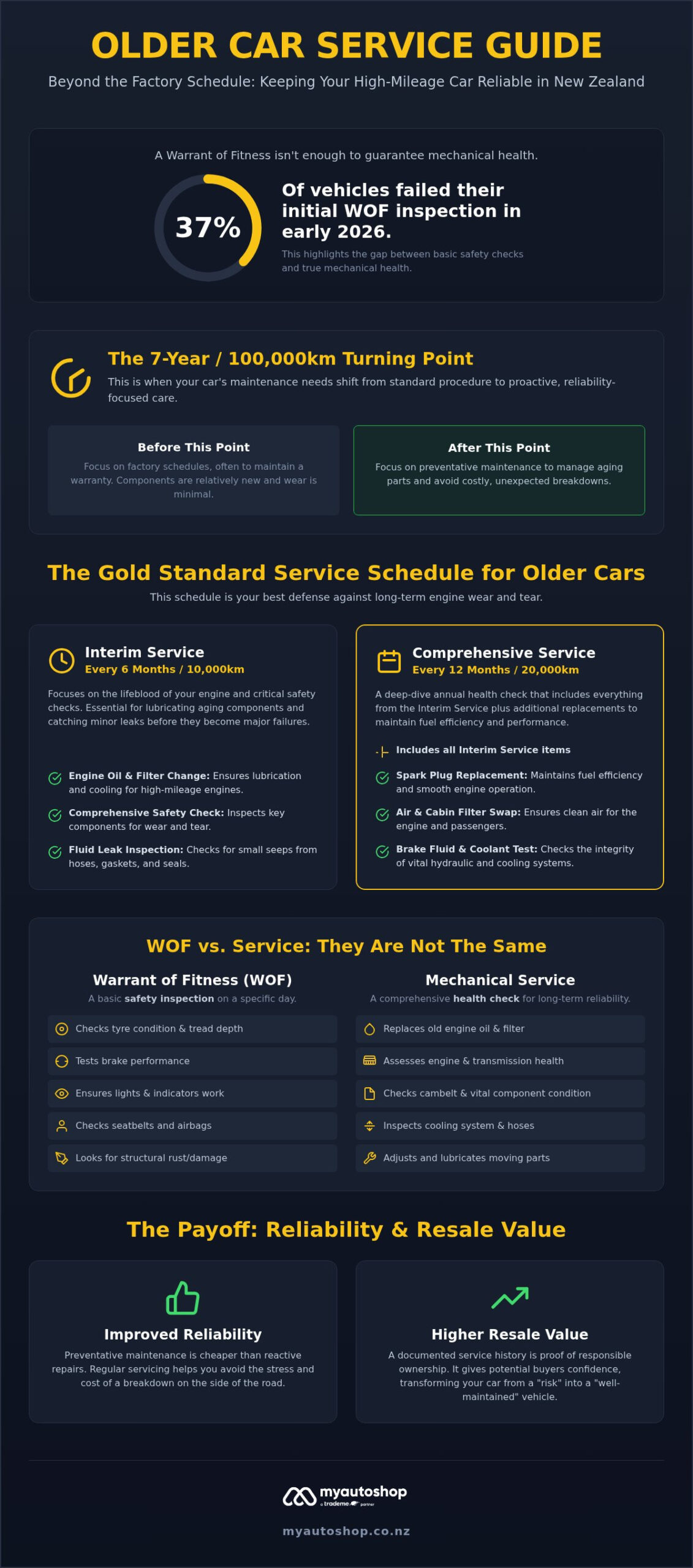
Did you know that 37% of vehicles failed their initial WOF inspection in the first three months of 2026? It’s a staggering number that proves a simple safety check isn’t enough to guarantee mechanical health. If you want to avoid the rising cost of specialized parts and catastrophic engine failure, you must adjust your car service intervals for older cars. Relying on a factory schedule designed for a brand-new vehicle often leads to expensive, avoidable breakdowns.
We know it’s frustrating to juggle confusing mechanical jargon with the fear of an unexpected repair bill. You need a partner who values your safety and your time as much as you do. This guide promises to show you exactly how to maintain your high-mileage vehicle so it stays reliable and holds its resale value. We will walk through the upcoming November 2026 WOF law changes and provide a step-by-step maintenance schedule tailored for the unique needs of older engines.
Key Takeaways
- Learn why 7 years or 100,000km is the critical turning point where your vehicle’s maintenance needs shift toward reliability-focused care.
- Discover why a 6-month or 10,000km schedule is the gold standard for car service intervals for older cars to prevent long-term engine wear.
- Identify high-stakes maintenance tasks like cambelt replacements and cooling system refreshes that protect your car from major mechanical breakdowns.
- Understand why a Warrant of Fitness pass doesn’t mean your engine is healthy and how to bridge the gap with regular servicing.
- Explore how mobile mechanics and upfront pricing provide a convenient, jargon-free way to maintain your high-mileage vehicle.
Why Service Intervals Change as Your Car Enters its “Golden Years”
Most drivers think a car is “new” until it hits a decade. In reality, the 7-year mark or the 100,000km odometer reading is the true turning point for any vehicle. This is the stage where factory warranties have usually evaporated, and the focus shifts from keeping a dealer happy to keeping your car on the road. Adjusting your car service intervals for older cars is the most effective way to prevent a minor leak from turning into a total engine replacement.
During the first few years of a vehicle’s life, a motor vehicle service is often just a formality. For an older vehicle, it’s a vital health check. As engines age, internal tolerances change. Parts that were once tight begin to vibrate or seep. If you only fix things when they break, you’re practicing reactive maintenance. This approach is almost always more expensive than preventative care, especially with the rising labour rates and part costs we’re seeing in 2026.
The Science of Aging: Heat, Friction, and Fatigue
Rubber is the first victim of time. Every time you drive, your engine goes through a heat cycle. Over ten years, these cycles make seals and gaskets brittle. Once they lose their flexibility, they stop sealing, leading to oil leaks and vacuum issues. High-mileage engines also benefit from specific oil viscosities that help coat worn internal components. In New Zealand, our “severe” driving conditions, like frequent short trips to the shops or hilly terrain, accelerate this wear. Your oil doesn’t just lubricate; it cleans. In an older engine, that cleaning job gets much harder, much faster.
Reliability vs. Resale: The Dual Purpose of Servicing
Regular maintenance isn’t just about avoiding a tow truck. It’s a financial strategy. A documented service history is the best way to fight age-related depreciation. When you go to sell, a folder full of receipts proves you’ve been a responsible owner. With the cost of car repairs climbing, buyers are terrified of “hidden” problems. Showing that you’ve stuck to consistent car service intervals for older cars gives them the confidence to pay a premium. It transforms your vehicle from a “risky old car” into a “well-maintained classic.” This peace of mind is invaluable, ensuring you aren’t left stranded on the side of the road when you least expect it.
Recommended Service Intervals for Cars Over 7 Years Old
The factory manual in your glovebox was written for a version of your car that no longer exists. Once a vehicle crosses the seven-year threshold, the manufacturer’s original timeline becomes a suggestion rather than a rule. Setting the right car service intervals for older cars requires a shift in perspective. You are no longer just maintaining a machine; you are managing the natural wear of mechanical components that have worked hard for years.
The 6-month or 10,000km rule is the gold standard for high-mileage vehicles. This frequency ensures that a professional eye is on your engine twice a year. It’s particularly vital for low-use vehicles. If you only drive a few thousand kilometres a year, you might think you can skip a service. This is a mistake. Oil degrades over time through oxidation and moisture buildup, even if the car is sitting in a garage. For older engines, the chemical integrity of the oil is your primary defense against internal friction.
As you approach milestones like 150,000km and 200,000km, your car enters its “second life.” These stages require specialized inspections that go beyond the basics. We look for suspension fatigue, transmission fluid health, and the condition of rubber bushings. Catching these issues early prevents the “cascading failure” where one worn part destroys three others. If you want to keep your car on the road without the stress of “what’s next,” booking a Basic Service every six months is the most cost-effective strategy you can adopt.
The Interim Service (Every 6 Months / 10,000km)
This service focuses on the lifeblood of your engine. Older cars naturally burn more oil as piston rings and valve seals age. A six-monthly oil and filter change ensures your engine stays lubricated and cool. During this visit, we perform a comprehensive safety health check. We look for fluid leaks that only appear when the system is under pressure. Small seeps from a power steering rack or a radiator hose are easy to fix now but disastrous if they fail on the motorway.
The Comprehensive Service (Every 12 Months / 20,000km)
Once a year, your car needs a deep dive. This includes replacing spark plugs to maintain fuel efficiency and swapping out air and cabin filters. We also test your brake fluid and coolant. These fluids are often neglected, but they are the invisible killers of older systems. Brake fluid absorbs water over time, which can lead to internal corrosion and reduced stopping power. We also check your battery health. Older cars put more strain on the electrical system, and a quick test can prevent a frustrating winter non-start.
Beyond the Oil Change: Critical “Big Ticket” Maintenance
While a six-monthly oil change is your first line of defense, it isn’t the whole story. As your vehicle ages, certain major components move to the top of the priority list. Ignoring these items often leads to the catastrophic engine failures that force older cars off the road prematurely. When you plan car service intervals for older cars, you must look beyond the dipstick to the high-pressure systems that keep the car moving.
Many manufacturers once claimed their transmissions were “sealed for life.” If your car is over 10 years old, that “life” is effectively over. Changing the transmission fluid can prevent gear slipping and save you from the cost of a full rebuild. Similarly, worn suspension bushings and shock absorbers are why older cars often feel “loose” or “clunky” on the road. Replacing these parts restores the safety and precise handling you felt when the car was new. Keeping a strict schedule for these car service intervals for older cars ensures your vehicle remains a pleasure to drive, not just a way to get from A to B.
Heat is the ultimate enemy of an aging engine. A cooling system refresh, including a new thermostat and a radiator flush, prevents the overheating that warps cylinder heads. This is cheap insurance compared to the price of a replacement engine. By being proactive with these major systems, you move away from the stress of reactive repairs and toward a predictable maintenance budget.
Cambelts and Water Pumps: The Preventive Power Couple
The cambelt is the essential heartbeat of your engine that requires replacement every 80,000 to 100,000 kilometres to prevent total engine destruction. It is highly cost-effective to replace the water pump at the same time because the mechanic already has the engine disassembled. This saves you from paying the same labour costs twice just a few months apart. While you should watch for fraying or glazing on the belt during inspections, remember that many belts fail without any visible warning signs at all.
The Rubber and Plastic Perishables
Rubber becomes brittle and loses its integrity after a decade of use. Inspect your brake lines and fuel hoses for tiny cracks or damp spots that indicate perishing. You should also listen for a high-pitched squeal when you start the engine, as this usually signals a worn drive belt. Finally, keep a close eye on the plastic end-tanks of your radiator. These are common failure points in cars over 10 years old, often cracking under pressure during a hot summer drive or a long trip up the coast.
Warrant of Fitness (WOF) vs. Servicing: Understanding the Difference
Many New Zealand drivers fall into a dangerous trap. They assume that a pink WOF sticker on the windscreen means their car is in perfect health. This is a myth that leads to some of the most expensive repairs we see. A Warrant of Fitness is a mandatory safety check designed to ensure your car isn’t a danger to other road users. It is a safety floor, not a mechanical ceiling. It guarantees that your lights work and your tyres have tread, but it says nothing about whether your engine will start tomorrow morning.
Relying only on the WOF for your maintenance leads to “surprise” breakdowns. Because the inspector doesn’t look at the internal health of your vehicle, minor issues like a thinning cambelt or a clogged radiator go unnoticed until they cause a total failure. This is why sticking to dedicated car service intervals for older cars is so important. While the WOF looks at the outside, a service looks at the “guts” of the machine. By the time a mechanical issue is bad enough to fail a WOF, it’s usually already become a costly repair.
The best strategy for 2026 is to align your service schedule with your WOF inspections. This approach offers maximum convenience and ensures your car is seen by a professional twice a year. If you want to stop guessing about your car’s health, you can book a Comprehensive Service to get a full picture of your vehicle’s mechanical status.
What a WOF Doesn’t Tell You
A WOF inspector will never pull your dipstick to check your engine oil quality or level. You could have old, gritty oil that is actively scouring your engine bearings, and you’ll still get a pass sticker. They also ignore your transmission health. Shift quality and fluid condition are completely outside the WOF scope. Most importantly, a car can pass a WOF while on the verge of overheating. The inspector checks for visible leaks, but they don’t test the integrity of your water pump or the efficiency of your radiator.
The Synergy of Combined Maintenance
Regular servicing makes your next WOF inspection much cheaper and faster. When a mechanic services your car every six months, they catch small things like worn brake pads or perished wiper blades before the WOF inspector marks them as a fail. You can use these service reports to predict and budget for future repair needs. Having a professional mechanic look at the car twice a year provides a level of security that a once-a-year safety check simply can’t match. It transforms your maintenance from a legal chore into a reliability strategy.
Maintaining Older Cars with Confidence: The My Auto Shop Approach
Keeping an older car on the road shouldn’t feel like a gamble. We’ve built a platform that brings financial clarity to a traditionally opaque industry. By standardizing car service intervals for older cars, we help you budget effectively. You see the cost upfront before any work begins. This means no more “surprise” bills or hidden fees when you go to pick up your keys. We act as your transparent partner, stripping away the jargon and anxiety often found in local workshops.
For many, getting an older car to a workshop is a logistical headache. Our Mobile Mechanic service brings the workshop to your driveway or office. We’ve vetted a national network of mechanics who actually understand the nuances of high-mileage engines. They know what to look for and, more importantly, what to prioritize. This localized expertise ensures your vehicle receives the specific care it needs to stay on the road longer.
One of the biggest stressors for owners of aging vehicles is the “Repair vs Replace” dilemma. Is that Cambelt / Timing Belt Replacement worth the investment? We provide a clear framework to help you decide. By looking at the overall health of your vehicle, our mechanics help you determine if a repair adds years of life or if it’s time to consider a change. We value your safety and your wallet equally.
Simple Booking for Complex Cars
Finding parts for a 15-year-old Japanese import or a European classic can be a nightmare. Our digital platform simplifies this process by connecting you with specialists who have the right components in stock. We offer fixed-price Basic and Comprehensive service tiers. You know exactly what you’re paying for, regardless of the car’s age. Clear, digital communication keeps you updated at every step. This reduces the typical anxiety of garage visits and puts you back in control of your maintenance schedule.
Your Partner in Vehicle Longevity
Our mission is to keep New Zealand’s older fleet safe and reliable through smart preventive care. Transparency isn’t just a buzzword for us; it’s our ultimate signature. We believe that an informed owner is a confident owner. By sticking to the right car service intervals for older cars, you protect both your investment and your safety. Ready to give your high-mileage hero the care it deserves? Book your older car service with a My Auto Shop mechanic today.
Secure the Future of Your High-Mileage Vehicle
Your car still has plenty of life left in it. You just need to switch from a mindset of basic survival to one of proactive, expert care. By committing to shorter car service intervals for older cars, you protect your engine from the hidden wear that a standard WOF inspection simply ignores. It’s about making smart choices today to avoid the high cost of reactive repairs tomorrow. You’ve learned how to identify the big-ticket items and why timing matters more than kilometres for aging fluids.
My Auto Shop is here to take the guesswork out of your maintenance schedule. We offer a nationwide network of professional mechanics and transparent, upfront pricing so you always know where you stand. If you’re short on time, our mobile mechanic options bring the workshop directly to your home or office for ultimate convenience. It’s the modern, efficient way to keep your older car reliable, safe, and ready for the road ahead.
Don’t wait for a warning light or a breakdown to take action. Book a Comprehensive Service for your older car today and join thousands of Kiwi drivers who value reliability. We’re ready to help you drive with total peace of mind.
Frequently Asked Questions
Is it worth servicing a car with over 200,000km?
Yes, it’s definitely worth it. A well-maintained vehicle with 200,000km can easily reach 300,000km or more with the right care. Regular servicing prevents the catastrophic failures that lead to high repair bills. Investing in consistent maintenance helps you avoid the sudden high cost of buying a replacement vehicle in today’s market.
How often should I change the oil in a 10-year-old car?
You should change your oil every 6 months or 10,000km, whichever comes first. Older engines have wider internal tolerances and produce more contaminants that dirty the oil quickly. Even if you don’t drive often, oil degrades over time due to moisture and oxidation. Sticking to these car service intervals for older cars keeps your engine internals clean and lubricated.
Can I skip a service if my car passed its WOF?
No, you shouldn’t skip a service just because you passed a WOF. A Warrant of Fitness only confirms your car meets minimum safety standards for the road. It doesn’t check your engine oil, transmission fluid, or internal mechanical health. Skipping services leads to hidden wear that a WOF inspector will never see until it’s too late.
What is the most important service for an older car?
The most important service is the interim oil change and safety inspection. This ensures your engine has fresh lubrication and allows a mechanic to spot leaks or worn components early. Catching a small radiator leak or a fraying belt during a routine check prevents a breakdown. It’s the simplest way to manage car service intervals for older cars effectively.
Should I use synthetic oil in an older engine?
Synthetic oil is usually the best choice for older engines because it handles heat better and flows more easily. However, some very old engines with high mileage might benefit from a high-viscosity mineral oil to prevent leaks. Always check with your mechanic to see which oil grade suits your specific engine’s wear levels and seal condition.
How do I know if my cambelt needs replacing?
You usually won’t know until it’s too late, so you must rely on your service history. Most cambelts need replacing every 100,000km or every 5 to 10 years. If you don’t have a record of the last change, it’s safer to replace it now. A snapped belt often causes internal engine damage that costs more than the car is worth.
Does an older car need a comprehensive service every time?
No, you don’t need a full comprehensive service every time. Most owners alternate between a basic service every 6 months and a comprehensive one once a year. This balance ensures your oil stays fresh while providing a deep dive into spark plugs and filters annually. It’s a cost-effective way to maintain reliability without overspending on parts you don’t need yet.
What are the signs that an older car is no longer worth repairing?
A car is usually not worth repairing if the cost of a single fix exceeds its market value. Major structural rust or a combination of transmission and engine failure are common deal-breakers. We help you use a “Repair vs Replace” framework to decide if your vehicle still has a safe, reliable future on the road.
Disclaimer
This article provides general information only and should not be relied on as professional mechanical, safety or legal advice. Vehicle requirements and circumstances vary. If you are unsure about your vehicle, have it inspected by a qualified automotive professional.