
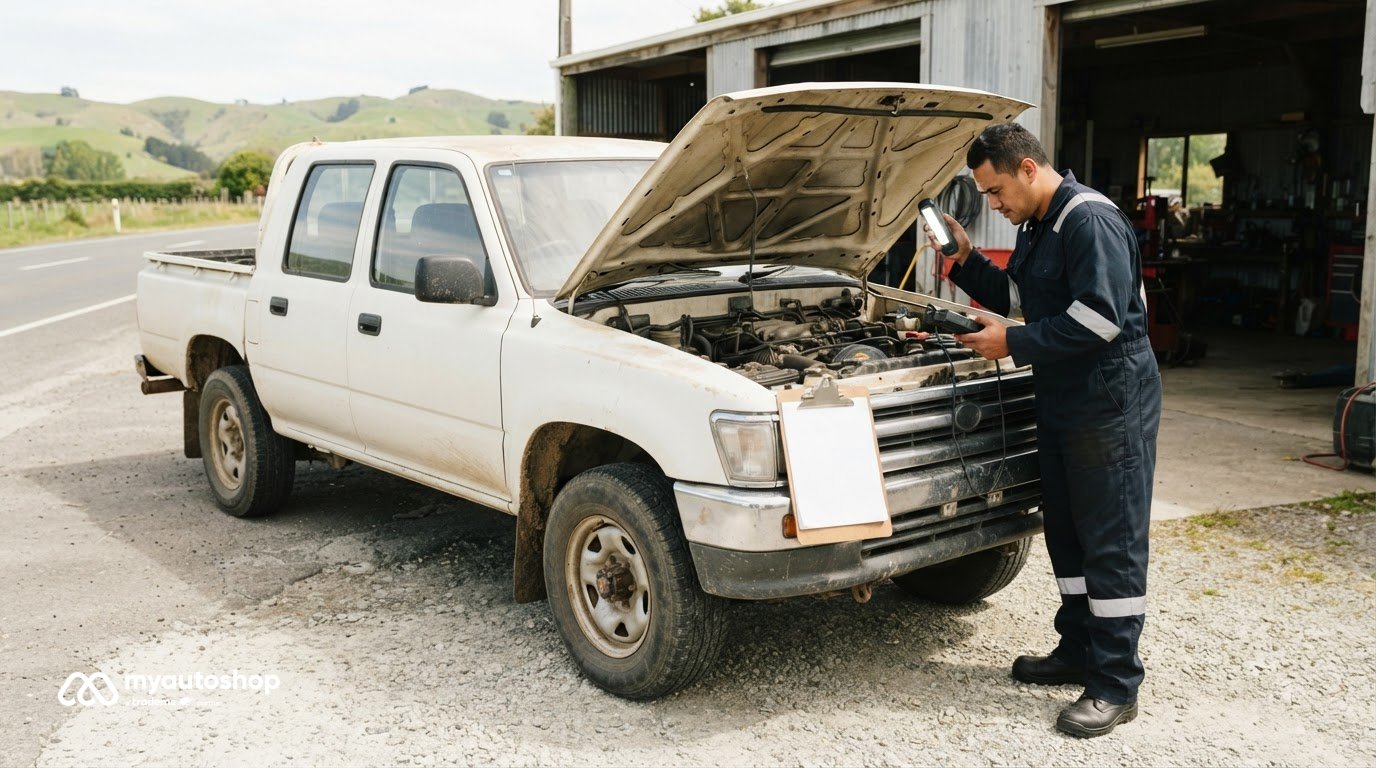
A tidy Toyota Hilux can still be hiding a hard working life. The common problems with used toyota hilux nz buyers should check depend on the engine, maintenance history and how the ute has been used, not just its age or appearance. A clean exterior won’t tell you whether it has spent years towing, working on a farm or driving through dust.
It’s understandable to trust the Hilux’s reputation for toughness, but no model is immune to wear or mechanical faults. Some older 3.0-litre diesel models need particular attention to injector seals, while certain later diesel models have reported Diesel Particulate Filter (DPF) concerns. That doesn’t mean every Hilux has these issues. The specific engine and evidence of past repairs matter.
This guide explains which warning signs to look for, how work and driving history can affect what needs checking, and what service records may tell you. You’ll also learn how to distinguish visible wear from concerns that need closer investigation. A current Warrant of Fitness is useful, but it isn’t a full mechanical assessment. Consider an independent pre-purchase inspection before deciding whether a particular Hilux is right for you.
Key Takeaways
- The common problems with used toyota hilux nz buyers should investigate vary by engine, maintenance history and how the ute has been used.
- Treat smoke, warning lights, unusual noises or reduced performance as reasons to investigate, not proof of a specific fault.
- Use signs of towing, off-road driving or heavy work to guide closer checks of the clutch, suspension, chassis and drivetrain.
- Follow a clear inspection order: check the vehicle details and service records, inspect it, take a road test, then seek professional assessment where concerns remain.
- An independent pre-purchase inspection can help clarify costly-looking concerns and incomplete history, but it only reports the vehicle’s condition at the time.
Common problems with used Toyota Hilux NZ buyers should understand first
Reported Hilux trouble spots are prompts to investigate, not proof that every ute has a fault. The common problems with used toyota hilux nz buyers hear about can relate to particular engine variants or patterns of use. Clutch, suspension and chassis wear can also build up on any used ute. Start with the individual vehicle’s records and condition, not assumptions based on its badge.
Why the Hilux’s year and engine matter
Confirm the build year, engine, transmission and specification using the vehicle documents and service records. Hilux models have changed across generations; the Toyota Hilux history gives an overview of those changes. A concern reported for one diesel engine or generation may not apply to another, even if the utes look similar.
For example, injector-seal concerns are reported for some older 3.0-litre diesels, while DPF concerns have been reported for some later diesel variants. A DPF, or diesel particulate filter, captures soot in the exhaust. Treat these reports as a reason to check the vehicle’s specific engine, service history and repair evidence, not as a diagnosis. Confirm any engine code, applicable build dates and technical differences against reliable vehicle-specific information before relying on a model-wide claim.
Reliability reputation versus the individual vehicle
A strong reputation is useful context, but it can’t replace an inspection. Look for regular, relevant service records and ask how the Hilux was used. Work, towing and off-road driving can put extra demands on the clutch, suspension and chassis. If the ute has been used in dusty conditions, check the air-intake system and look for evidence of suitable maintenance. None of these details proves damage. They help you decide where to look more carefully.
Reliability reputation is context; condition and evidence should guide this purchase. Separate model-specific reports from ordinary wear, then follow up on signs that fit the vehicle in front of you. A warning light, unusual noise or missing service history may need further assessment, but isn’t conclusive on its own. For help understanding symptoms, see this guide to vehicle symptoms.
Use the checks below to connect what you can see with what the records show. A tidy exterior or current Warrant of Fitness alone won’t establish the condition of the engine, transmission or components that may need specialist assessment.
Used Hilux engine and diesel problems: symptoms worth investigating
Diesel warning lights, smoke or sluggish performance deserve a closer look, but none confirms a particular fault by itself. Reports of DPF and air-intake concerns relate to specific engines and conditions. Check the exact vehicle and its history before treating a reported issue as relevant.
DPF warning signs and questions for a diesel Hilux
A diesel particulate filter (DPF) captures soot from the exhaust. Some later Hilux diesels have reported DPF concerns, including warning lights, excessive white smoke, poor performance and poor fuel efficiency. These signs can have other causes, too. Farmers Weekly reported on a New Zealand class action alleging DPF faults in certain Toyota diesel vehicles, including Hilux models. An allegation or reported symptom doesn’t establish that an individual ute has a defect.
Ask for service and repair records, and check whether the seller knows of previous DPF warnings, repairs or software updates. During your inspection, note any warning lights and unusual exhaust behaviour, including when they occur. A professional assessment can check vehicle-specific fault codes and help establish whether further diagnosis is needed. Don’t assume a warning light has been resolved just because it isn’t showing during a brief viewing.
Intake dusting, rough running, and service-history clues
Reports have linked dusty use to concerns about dust passing the air filter in some 2.8-litre diesel Hilux intake systems. Applicability depends on the exact variant and conditions. Have the intake and air-filter area checked rather than assuming a design concern means this ute has suffered damage. If the seller describes frequent work in dusty environments, look for service records that show routine maintenance.
Rough idling, reduced power or unusual running can have several causes, including fuel or air-intake issues. Symptoms are a reason to investigate, not a confirmed diagnosis. Ask an inspector to consider them alongside fault codes, service evidence and the vehicle’s exact engine. That’s more reliable than diagnosing the common problems with used toyota hilux nz buyers may encounter from a sound or warning light alone.
If the Hilux has unexplained symptoms or an incomplete repair history, an independent pre-purchase inspection can help you gather evidence before making an offer. It records findings at the time of inspection; it doesn’t guarantee the vehicle won’t develop a fault later.
Hilux suspension, chassis, transmission, and work-wear checks
A Hilux used for towing, farm work or off-road driving may show wear in different places from one used mainly for commuting. In coastal New Zealand, many utes are tasked with hauling vessels to boat ramps; while marine care specialists like Boat Valet Auckland maintain and protect the boats themselves, tow vehicles face their own ramp wear and saltwater exposure. That history doesn’t prove a fault, but it helps you choose where to look closely. Treat the following signs as prompts for further assessment, not Hilux-specific defects or a diagnosis based on appearance alone.
Rear leaf springs, tyres, and signs of heavy use
Stand back and compare the ute’s stance from behind. A rear end that looks uneven or lower on one side deserves a closer look, but load, modifications, parking position or suspension condition could all affect what you see. Don’t assume the leaf springs are faulty based on stance alone.
Check the tyres for uneven wear, too. It can relate to alignment, suspension, loading or other issues, so ask for an inspection if the wear looks irregular. Look for several clues together, such as a sagging stance, worn tyres and signs of frequent heavy loads. A mechanic can assess the suspension and help explain whether the observations are connected.
Undercarriage, transmission, and modifications
From a safe position, look underneath for visible impact damage, corrosion, fluid leaks or signs of repairs. Pay particular attention to structural areas and suspension mounting points, but leave any close inspection that requires lifting the vehicle to a professional. A mark or patch can have several explanations. Ask what it is and request evidence of repair work rather than guessing at the cause.
On a road test, listen for knocks or other unusual noises, and notice whether the transmission changes gears consistently. Make a note of when a sound occurs, such as over bumps or during gear changes. That gives an inspector useful context, but doesn’t identify a failed component by itself.
Check whether accessories or modifications are listed in the vehicle information and supported by paperwork. Ask what has been changed and whether the seller has documentation showing the work and its suitability. For vehicles upgraded with aftermarket equipment, off-road truck specialists like Platinum Wheels highlight how oversized wheel and tyre packages can alter suspension geometry, clearance, and odometer readings. If the ute has been modified for towing or off-road use, include those changes in the assessment rather than treating them as proof of misuse.
- Uneven stance or tyre wear: Ask for suspension and alignment assessment.
- Leaks, damage or repair marks: Have their location and significance checked.
- Knocks or inconsistent gear changes: Describe the conditions to an inspector and request follow-up.
These checks help narrow down the common problems with used toyota hilux nz buyers may need to investigate, without mistaking normal wear for a confirmed defect. If you want an independent assessment before making an offer, consider a pre-purchase inspection to gather evidence about the vehicle’s condition at the time.
How to inspect a used Hilux before you make an offer
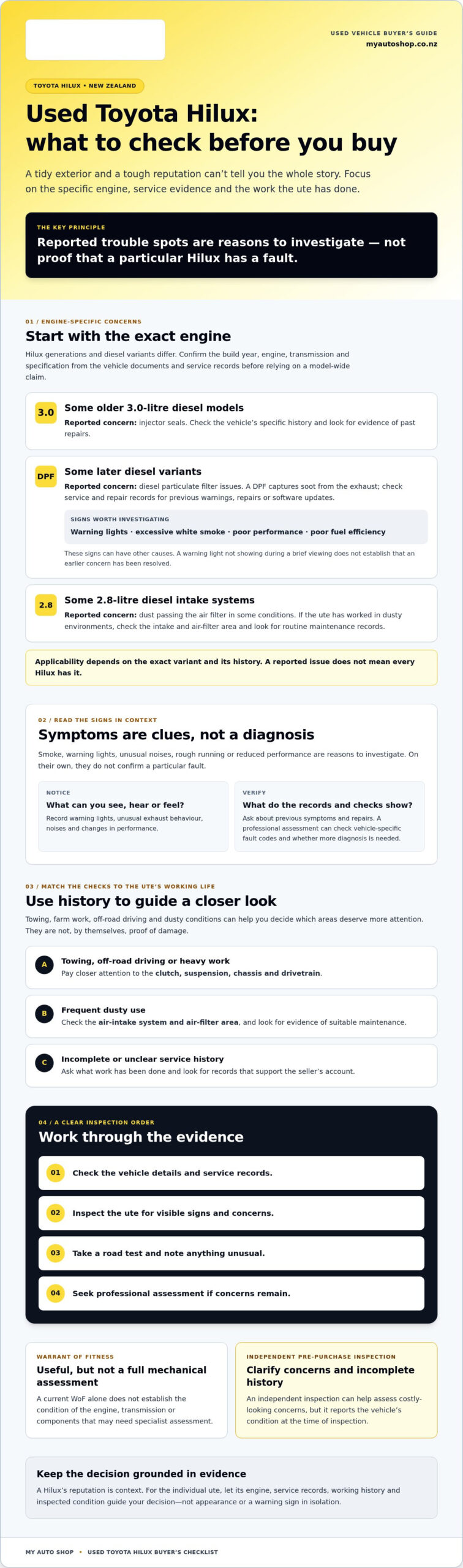
Work through the checks in order: confirm the vehicle’s identity and history, inspect what you can see, take a careful road test, then arrange a professional assessment for anything you can’t verify yourself. This turns concerns about the common problems with used toyota hilux nz buyers hear about into specific questions about the ute in front of you.
Review the vehicle history and service evidence
Compare the advertised year, engine and specification with the vehicle documents and service records. Check that the details are consistent, then ask about missing records, long gaps or recent major repairs. Look for invoices or service entries that explain what work was done, rather than relying only on a verbal assurance.
A service history helps show how the Hilux was maintained, but it doesn’t prove every component is currently in good condition. For more detail on what an assessment can cover, see this guide to pre-purchase vehicle assessments.
Walk around the ute, then take a road test
Check the body and cabin for damage, signs of repairs and warning lights. Look at the tyres for uneven wear. Under the bonnet, note anything visibly unusual, such as fluid residue or damaged intake components, but don’t dismantle parts or diagnose a fault from appearance. Record questions for the seller or inspector.
If it’s safe and the seller agrees, take a road test. Notice how the engine starts and idles, whether warning lights remain on, and whether steering, braking and gear changes feel consistent. Listen for unexpected knocks. A test drive can reveal symptoms, but it can’t confirm every underlying fault. Don’t continue driving if you’re concerned about safe operation. Stop and seek professional advice.
Know what a WoF does and doesn’t tell you
A current Warrant of Fitness is a useful safety check, but it isn’t a comprehensive mechanical assessment or a guarantee of reliability. It won’t establish the condition of every engine, gearbox or clutch component. Check current Waka Kotahi guidance for the WoF’s scope, then assess the Hilux separately. For faults that need diagnostic equipment or a closer underbody inspection, seek professional assessment.
If records are incomplete, symptoms appear or a concern could affect your decision, an independent assessment can add evidence before you commit. Arrange a pre-purchase inspection through My Auto Shop to help make a better-informed buying decision. The findings describe the vehicle’s condition at the time of inspection, not what may happen later.
When a pre-purchase inspection can help with a used Hilux
Consider an independent pre-purchase inspection if the Hilux has unexplained warning lights, smoke, unusual noises, signs of heavy use, modifications or an incomplete service history. It’s also useful when a visible concern could affect your decision but you can’t tell whether it’s ordinary wear or something needing attention. The common problems with used toyota hilux nz buyers read about can help shape your questions, but an assessment should focus on the vehicle being offered.
What an independent assessment adds to your own checks
A walk-around and road test can reveal clues, but they can’t assess every component or confirm the cause of a symptom. An independent inspection adds a professional assessment of the vehicle’s condition at that time. Beforehand, share the Hilux’s available service records, the seller’s account of its work or towing history, any modifications, and the concerns you’ve noticed. Tell the inspector how you plan to use it, too. That context helps focus attention on what matters to your purchase.
My Auto Shop offers independent pre-purchase inspections to help buyers make better-informed decisions. Read more about My Auto Shop’s pre-purchase inspection and what the service is intended to support.
How to use inspection findings in your decision
Read the report as evidence, not a simple pass-or-fail verdict. Separate items that may affect safe use from mechanical concerns that need prompt clarification, issues to monitor, and routine maintenance noted by the inspector. If the report identifies a possible fault but can’t confirm its cause, ask what further assessment is needed before you decide. Don’t treat uncertainty as proof of failure, but don’t ignore it if it could change the value or suitability of the ute for your needs.
Use the findings alongside the service history, your own observations and the seller’s answers. A documented repair may address a previous issue, while an unexplained symptom or missing evidence may justify more questions. If important details remain unclear, pause before making an offer and ask for clarification or further diagnosis. The right decision depends on the vehicle’s condition, the evidence available and whether it suits the work you expect it to do.
An inspection records findings at the time; it can’t guarantee that a vehicle won’t develop faults later. If you’ve found concerns you can’t assess yourself, request an independent pre-purchase inspection before committing to the Hilux.
Make your Hilux decision with confidence
The common problems with used toyota hilux nz buyers should check depend on the ute’s engine, service evidence and working life. Treat reported DPF or intake concerns as reasons to investigate the specific vehicle, not proof of a fault. Look for signs of hard use across the suspension, chassis and transmission, and follow up on anything you can’t confidently assess yourself.
A tidy exterior and a test drive can reveal useful clues, but neither confirms the full mechanical condition. An independent pre-purchase inspection adds evidence about the vehicle at the time of assessment. It can help you weigh concerns alongside the Hilux’s records and your intended use, though it can’t guarantee that faults won’t develop later.
My Auto Shop offers independent pre-purchase vehicle inspections to help buyers make better-informed used-vehicle decisions. If you’re considering a Hilux and want a clearer picture before committing, arrange an independent pre-purchase inspection. Take the time to check the evidence, ask questions and choose the ute that fits your needs.
Frequently Asked Questions
What are the most common problems with a used Toyota Hilux in New Zealand?
The common problems with used toyota hilux nz buyers hear about vary by model year, engine, maintenance and previous use. Published guides discuss diesel emissions equipment, air-intake concerns, running issues in some older diesels and rear suspension wear. These are prompts to check the exact vehicle, not proof that every Hilux has a fault. Confirm its engine and specification, then compare reported concerns with its service records and inspection findings.
Are Toyota Hilux diesel engines reliable?
There’s no reliable blanket yes or no for every Hilux diesel. Condition, servicing, engine variant and previous work all matter. Confirm the exact engine from the vehicle documents, then review its maintenance and repair records. Rough running, warning lights or reduced power call for further investigation, but don’t prove a particular component has failed. Treat model-specific reliability claims cautiously and verify that they apply to the vehicle you’re considering.
What should I check on a used Hilux before buying?
Start by confirming the vehicle details, then review its service and repair history. Inspect the tyres, visible bodywork and underbody for uneven wear, damage, corrosion or leaks. Check the dashboard for warning lights, then arrange a road test if it’s safe to do so. Treat unusual noises or inconsistent operation as reasons for follow-up, not a diagnosis. An independent pre-purchase inspection can assess concerns you can’t confirm yourself.
How can I tell if a used Hilux has DPF problems?
A diesel particulate filter (DPF) captures soot from the exhaust. Check for relevant dashboard warnings and ask the seller about previous DPF repairs or recurring issues, but don’t assume a warning or symptom confirms a blocked filter. Ask a professional to assess the vehicle’s condition and fault codes. The relevance of reported DPF concerns depends on the Hilux’s exact engine and specification, so verify details for that specific vehicle.
Is a WoF enough when buying a used Toyota Hilux?
No. A WoF and a pre-purchase condition assessment serve different purposes. A current WoF doesn’t confirm that the Hilux is free of mechanical faults or establish the condition of every major component. Check current Waka Kotahi guidance to understand the WoF’s scope, then consider an independent assessment of the vehicle’s mechanical condition. This can help identify concerns that a basic safety inspection isn’t designed to assess.
Should I get a pre-purchase inspection for a used Hilux?
An independent pre-purchase inspection is especially useful if the service history is incomplete, the ute shows signs of hard use, or a test drive raises questions. It gives you an assessment of the vehicle’s condition at the time, helping you make a better-informed used-vehicle decision. It can’t guarantee that faults won’t develop later. My Auto Shop offers independent pre-purchase vehicle inspections for buyers considering a used Hilux.
Can a used Hilux’s work or towing history affect what I should inspect?
Yes. Work, towing, off-road or dusty use can guide where to look more closely, but history alone doesn’t prove damage. Ask the seller how the Hilux was used and compare their account with its condition and service records. For example, towing history may make it sensible to ask an inspector to assess relevant wear. Have concerns checked professionally rather than assuming a particular type of use caused a fault.
Disclaimer
This article provides general information only and should not be relied on as professional mechanical, safety or legal advice. Vehicle requirements and circumstances vary. If you are unsure about your vehicle, have it inspected by a qualified automotive professional.