
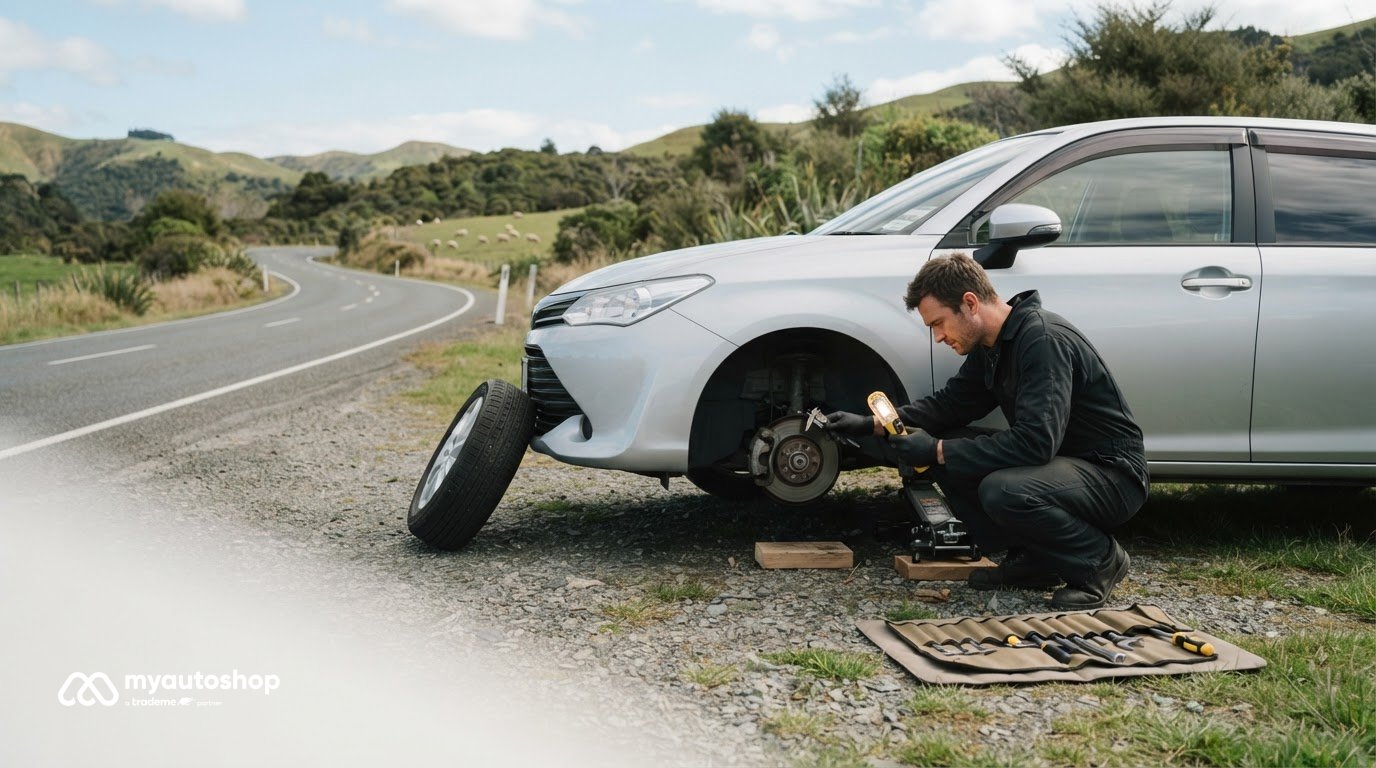
A long trip is unsafe with a confirmed bad wheel bearing. Keep driving to a minimum: the recommended limit is no more than a few miles. Driving with a bad wheel bearing long distance risks sudden loss of control if the bearing deteriorates further. If grinding gets loud or vibration intensifies, pull over and arrange a tow.
It’s understandable to hope the noise will hold off until you reach your destination. But a wheel bearing can deteriorate as you drive, affecting how the wheel turns and how the brakes behave. Early signs can be easy to miss, especially when the noise changes with speed or while turning.
Learn which humming, grinding, wobbling or steering changes can point to a failing bearing, why a long journey increases the risk, and what to do if symptoms worsen on the road. You’ll also learn how a mechanic can diagnose the problem and what repair support is available in New Zealand.
Key Takeaways
- A confirmed wheel bearing fault makes a long trip unsafe. Keep driving to a minimum rather than relying on the noise to stay manageable.
- Listen for humming, grinding or growling, and watch for wheel wobble, vibration or changes in steering feel.
- If grinding becomes loud or vibration intensifies, pull over and arrange a tow instead of continuing the journey.
- Wheel-bearing symptoms can overlap with other mechanical problems, so a mechanic’s diagnosis can help identify the cause and the right repair.
- Acting early can help limit damage to nearby parts, including the hub, axle and braking components.
Can I Drive with a Bad Wheel Bearing?
A suspected bad wheel bearing makes a long journey unsafe, so avoid driving any farther than necessary. Continued driving can worsen the fault and affect the wheel, steering or braking.
For WoF requirements, refer to current NZTA/Waka Kotahi guidance. Regardless of a vehicle’s WoF status, a new bearing-like noise or worsening vibration needs prompt mechanical assessment before a long trip.
Consequences of Complete Bearing Failure
A completely failed wheel bearing can seize the wheel or, in the worst case, allow it to detach from the car. That can cause sudden loss of control, particularly at open-road speeds, when there is less time to respond. A loose bearing can also let the brake rotor push the piston farther back, making the brakes feel weak when applied.
Several factors can contribute to bearing wear or failure. Faulty installation, unbalanced tyres, excessive loads and poor road conditions can all damage a bearing. Repeated hard impacts on rough roads, for example, may add stress, while an unbalanced tyre can increase vibration around the wheel. These are possible contributors, not a way to diagnose the fault from symptoms alone.
Responding to Bearing Noise on a Long Trip
If a wheel bearing starts making noise during a trip, take the change seriously and find a safe place to pull over. If grinding becomes loud or vibration intensifies, stop driving and arrange a tow. Don’t continue to your destination hoping the noise will settle. A worsening fault can affect wheel movement and braking, making it more dangerous to continue.
If the sound is faint, note when it occurs, such as during acceleration, turning or braking, and share those details during an inspection. Avoid testing the car with sudden turns or hard braking. A mechanic can distinguish a bearing fault from other causes of noise and check for wheel play or affected components.
Wheel-bearing replacement time in New Zealand depends on the vehicle’s design, how accessible the bearing is, and whether failure has damaged the hub, axle or brake parts. These factors determine the repair’s scope, so no single duration applies to every car.
Until the fault is assessed, don’t treat a short, quiet drive as proof that the car is safe. A bearing may become noisier or less stable as it deteriorates. If you suspect a problem before setting off, postpone the trip and have the wheel checked. With a confirmed fault, keep driving to a minimum rather than attempting a long journey.
Risks of driving with a failing bearing
A failing wheel bearing can cause more than noise at one corner of the car. As damage progresses, corrosion and wear can affect nearby components and the axle, turning a bearing repair into a broader mechanical problem. A long journey gives the damaged assembly more time and distance to deteriorate, so continuing without an assessment risks making the fault harder to contain.
The bearing helps the wheel rotate smoothly. As it wears, the wheel may develop movement or wobble, changing how the car feels through the steering. You might notice the vehicle pulling, vibration, or a sound that grows louder with speed. These signs can have other causes, but several changes around one wheel warrant prompt inspection.
Braking can also be affected. A loose bearing may let the brake rotor push the piston farther back when the brakes are applied. The pedal can then feel less effective because the braking system must take up extra movement before the pads clamp the rotor. If braking feels weak or changes unexpectedly, don’t treat it as a minor noise issue.
Heat is another concern. A wheel bearing lets the wheel turn without generating large amounts of heat. Damage can interfere with smooth rotation, while continued movement puts further strain on the bearing and nearby parts. A low growl that becomes grinding, for example, may signal a worsening fault rather than road noise.
Road conditions and vehicle use can add stress. Potholes or rough surfaces can subject the wheel assembly to impacts, while excessive loads place more demand on its components. Unbalanced tyres and faulty bearing installation can also contribute to damage. These factors don’t prove which part has failed, but they help explain why a bearing can deteriorate faster under demanding conditions.
The risk extends beyond the bearing itself. If left untreated, corrosion and damage can spread to surrounding components and the axle. This may mean a more involved repair than replacing the bearing alone. A mechanic can inspect the wheel assembly, identify related damage and determine whether the car should be driven or transported.
Pay attention to changes, not just the first symptom. A faint hum that becomes a loud grind, new wheel wobble or increasing vibration is a reason to stop and reassess the journey. If the noise grows loud or vibration intensifies, pull over safely and arrange a tow. Continuing to drive can increase the chance of losing control or damaging more parts.
Typical wheel bearing lifespan
Wheel bearings typically last around 137,000 to 161,000 kilometres under normal conditions. Treat that range as a broad guide, not a replacement schedule for every New Zealand car. A bearing may need attention earlier if its installation, tyres, load or road conditions place extra stress on the wheel assembly.
A bearing contains steel balls held in a metal ring called a race. The balls help the wheel turn freely without generating large amounts of heat. Wear or damage to these surfaces can interfere with smooth rotation. Unlike a part replaced at a fixed distance, a bearing’s condition depends on how it has been used and whether damage has begun.
Faulty installation can shorten a bearing’s working life. If fitted incorrectly, the bearing may not operate as intended within the hub. Unbalanced tyres can also contribute to damage by adding vibration around the wheel. These factors can affect a bearing before the car reaches a broad kilometre range, so odometer readings alone can’t confirm its condition.
Vehicle use matters, too. Excessive loads place more demand on the wheel assembly, while poor road conditions can expose it to repeated impacts. A car regularly carrying heavy loads on rough roads, for example, faces different stresses from one used lightly on smoother routes. These conditions help explain why two vehicles with similar mileage can have different levels of bearing wear.
Listen for a change rather than waiting for a particular kilometre reading. A developing hum, growl or grinding sound can be a warning, especially if it changes as the vehicle moves. Wheel wobble or steering vibration also deserves attention. These symptoms can have other causes, but an inspection can establish whether a bearing is involved.
A past WoF or a quiet drive doesn’t show how much life remains in a bearing today. Wear can develop after an inspection, and early symptoms may be easier to notice at certain speeds or on particular roads. If a noise appears, note when it happens and whether it changes during turns. Share those observations during a mechanical assessment.
Treat mileage as context, not permission to keep driving with a suspected fault. A bearing near the typical range may still be working, while a damaged one can become unsafe sooner. Consider symptoms, the car’s load and how it’s used on the road. If noise or vibration is worsening, arrange an assessment instead of waiting for the odometer to reach a target.
Wheel bearings typically last around 85,000 to 100,000 miles. This is another broad lifespan guide, not a fixed point at which every bearing must be replaced. Mileage can help frame a discussion about wear, but it cannot show whether a bearing has been fitted correctly or exposed to unbalanced tyres, excessive loads or poor roads. The same reading should not be treated as proof that a wheel assembly is sound.
Consider the vehicle’s history and any changes in sound or vibration. If a hum, growl, grinding noise, wobble or steering vibration develops or worsens, arrange an assessment and describe when it occurs. A mechanical inspection is more useful than mileage alone when evaluating a suspected fault.
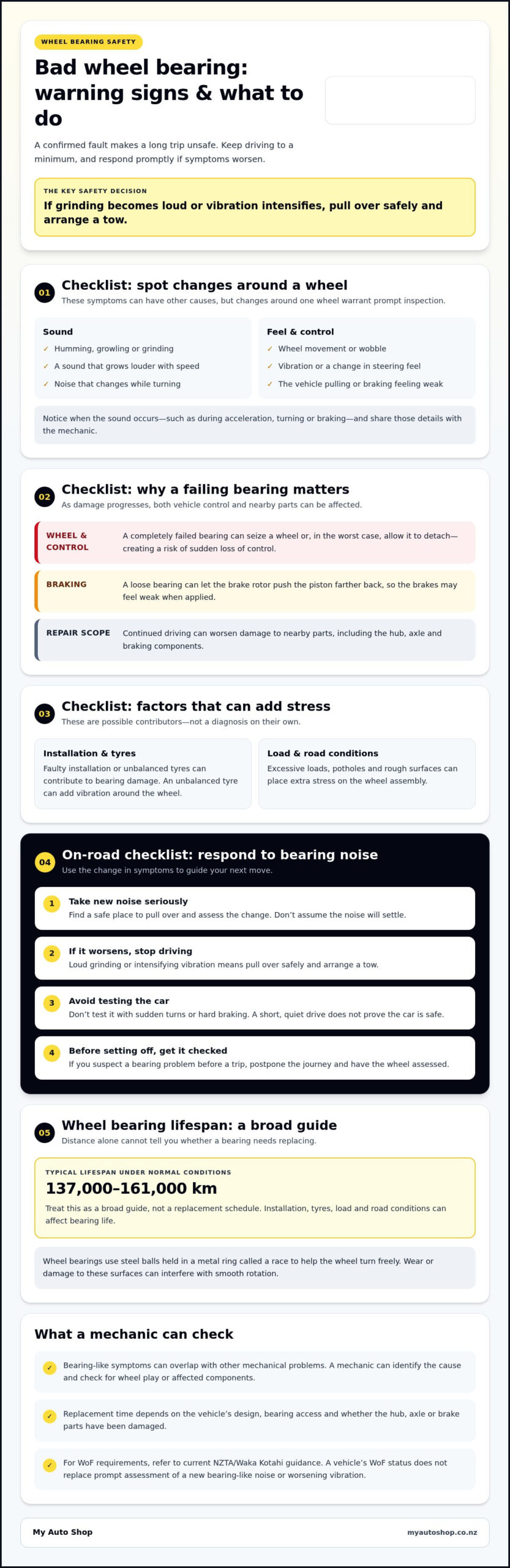
Warning noises and speed-related changes
A wheel bearing fault can create humming, squealing, grinding or growling sounds. The noise may change with road speed, turning or the load on a wheel. A faint hum above about 64 kilometres per hour can be an early clue. It may become more noticeable as speed rises, so pay attention to changes rather than trying to diagnose it by sound alone.
Other symptoms can accompany noise. Watch for steering-wheel play, wheel wobble, the car pulling to one side, steering vibration or uneven tyre wear. A hum from one corner combined with vibration through the steering wheel, for example, gives a mechanic useful clues. These signs can have other causes, so describe exactly what you notice and when it happens.
Note whether the sound changes while travelling straight or through a gentle bend. A bearing may sound louder as the vehicle’s weight shifts, but that pattern alone doesn’t identify the faulty side. Don’t weave or make sudden turns to test the noise in traffic. If the sound becomes a loud grind or vibration intensifies, pull over safely and arrange a tow.
Before a long drive, a mechanic can inspect a suspected wheel bearing and assess whether the vehicle is safe to use. A basic check involves raising the car securely, then checking each wheel for looseness, wobble or unusual noise. Share the speed, road conditions and steering changes associated with the sound to help the mechanic focus the diagnosis.
Make your observations specific. Note whether the noise is a steady hum, an intermittent squeal or a rough grinding sound. Record whether it changes while cornering, braking or accelerating, and whether the steering wheel vibrates. Uneven tyre wear is another useful detail. These observations help distinguish a wheel-bearing concern from other faults without relying on one symptom alone.
A single quiet drive doesn’t rule out a bearing problem. Road surface and speed can make a sound easier or harder to hear, and early symptoms may be subtle. If the hum returns on the same route or grows louder as speed rises, arrange an inspection before a longer trip. Don’t use a test drive to push a suspected fault further.
Use the full pattern to decide what to do next: sound, speed, steering feel and tyre condition. A mechanic can compare these details with wheel play and unusual noise during an inspection. If symptoms worsen before the appointment, stop driving and arrange transport rather than continuing to monitor them on the road.
Safe driving distance with a confirmed bad wheel bearing
With a confirmed fault, keep driving to a minimum. The guidance is no more than a few miles. Treat this as a limit, not a guarantee of a safe distance or permission to continue a long trip.
Distance Limits with a Confirmed Fault
“A few miles” means only the shortest necessary movement, not travelling to your destination or completing errands. A bearing can deteriorate as the wheel turns, and distance alone can’t show how much damage has occurred. If the car is already at home or in a safe stopping place, leave it parked and arrange transport for assessment rather than starting another journey.
If the vehicle must be moved from an unsafe position, take the shortest route to a safer place and drive gently. Don’t add distance for convenience. Loud grinding, worsening vibration, wheel wobble or changed braking calls for stopping and arranging a tow, not using the remaining few miles as a target.
Failure After Symptoms Begin
There is no fixed interval between the first symptom and complete failure. Progression depends on the bearing’s existing damage and the stresses it faces, including vehicle load, road conditions and continued driving. A faint hum may not reveal how much wear is inside the assembly, so symptom duration can’t establish how far the car can safely travel.
A sound that changes to grinding during one trip, for example, signals a different situation from a stable noise noticed earlier. Treat each worsening symptom as a reason to stop and reassess. Don’t estimate the remaining distance based on how the car felt on the previous drive.
A bearing can fail in ways that affect the wheel suddenly. A seized wheel may stop turning, and a severely failed bearing can contribute to wheel detachment. That makes an open-road journey especially risky: higher speeds leave less time to respond if the vehicle’s movement changes unexpectedly.
Consider the route, too. Even a short trip along a quiet street involves traffic, intersections and turns; an extended open-road drive adds sustained wheel rotation and distance from a safe stopping place. Neither route makes a confirmed fault safe. If the car is near traffic, move only as needed to reach a safer position, then arrange a tow.
Tell the mechanic when the noise began, how it has changed, and whether the steering or braking feels different. These details help assess urgency, but don’t replace inspection of the wheel assembly. If symptoms intensify before the car is assessed, stop driving rather than testing how much farther the bearing will last.
My Auto Shop: Pre-purchase Inspection
If a wheel bearing fault is confirmed, avoid further driving and arrange an assessment. My Auto Shop’s Mobile Mechanic offering gives motorists a way to arrange mobile mechanical support. If you’re considering a used car with humming, grinding or wheel play, a Pre-purchase Inspection can help assess its condition before you buy.
A pre-purchase check is useful when symptoms appear during a test drive or the car’s condition is uncertain. Share what you’ve noticed, such as when the noise occurs or whether the steering feels different. This gives the inspection a clearer starting point.
For help choosing the next step, contact My Auto Shop.
Choose a safer next step before your next trip
Driving with a bad wheel bearing over a long distance is a risk not worth taking. Before planning another journey, decide what support you need: a mechanical assessment for a fault, or an independent inspection of a used vehicle you’re considering. For a potential purchase, My Auto Shop offers a Pre-Purchase Inspection. Basic Service and Comprehensive Service are for routine vehicle maintenance, not substitutes for diagnosing a suspected bearing problem.
Share the symptoms you’ve noticed and the kind of help you’re looking for. Clear details can make it easier to choose a relevant next step without guesswork. If you’re weighing up a vehicle purchase or need help with general servicing, contact My Auto Shop for help. Make the next decision with care, and put a safe vehicle ahead of keeping to your travel plans.
Frequently Asked Questions
What are the symptoms of a bad wheel bearing while driving?
Common signs include a hum or growl that changes as the car moves, vibration through the steering wheel, or a vehicle that feels less steady. Any one symptom can have several possible causes, so don’t rely on sound alone to identify the faulty part. If you notice a new noise, note when it occurs and whether it changes while turning, then share those observations during an inspection.
Is it safe to drive a car with a bad wheel bearing long distance?
No. Driving with a bad wheel bearing long distance risks worsening the fault while you’re far from a safe place to stop. A long journey also leaves fewer convenient opportunities to respond to a sudden change in steering or wheel movement. If the fault is confirmed, postpone the trip and arrange an assessment rather than trying to reach your destination first.
How far can you drive with a failing wheel bearing?
With a confirmed bad bearing, keep driving to a minimum: the guidance is no more than a few miles. This isn’t a guaranteed safe range, so don’t plan a detour or use it to complete a journey. If the car is parked safely, leave it there and arrange help. If you’re on the road, prioritise reaching a safe stopping place.
What are the risks of driving with a bad wheel bearing, including wheel failure or loss of control?
A severe bearing failure can seize a wheel or, in the worst case, lead to wheel detachment. Either could cause sudden loss of control. A loose bearing can also affect braking, making the brakes feel weak. If the car’s movement changes unexpectedly in traffic, for example, you may have less control over its path. Stop driving if symptoms worsen and arrange a tow.
Disclaimer
This article provides general information only and should not be relied on as professional mechanical, safety or legal advice. Vehicle requirements and circumstances vary. If you are unsure about your vehicle, have it inspected by a qualified automotive professional.