
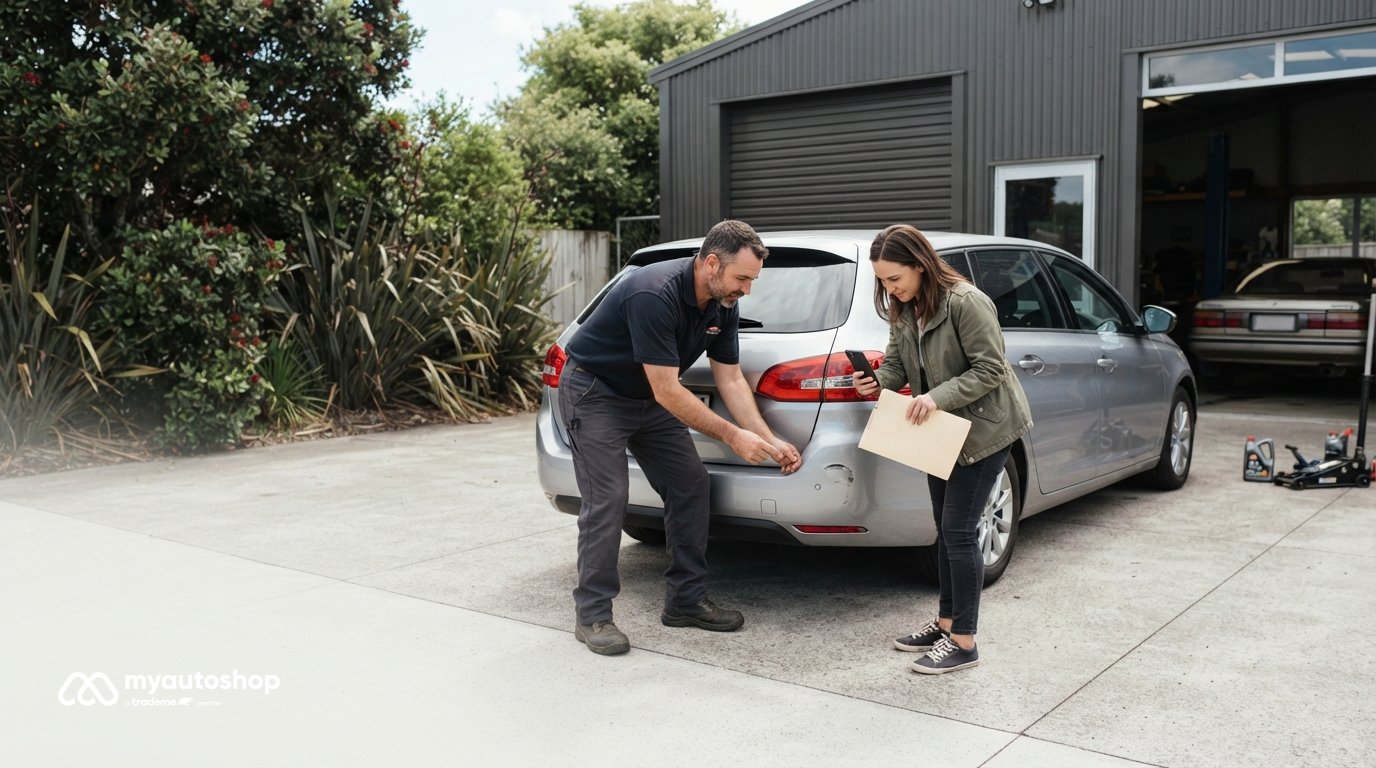
Don’t assume you have to pay for damage caused during a repair. In New Zealand, the Consumer Guarantees Act requires professional mechanics to carry out repairs with reasonable care and skill, so if you’re working out what to do when a mechanic damages your car, photograph the damage, keep your repair records and contact the workshop promptly. Explain what you’ve found and ask how it happened and how it will be put right.
It’s unsettling to collect your car and find damage that wasn’t there before. A clear record of what changed, when you noticed it and what the workshop says can help you discuss a remedy and decide what to do next. This guide explains how to document the damage, raise a complaint, seek compensation and understand when the workshop’s liability insurance or your own car insurance may apply. Cover depends on the policy and circumstances, so preserve evidence first, then speak calmly and directly with the repairer.
Key Takeaways
- Photograph new damage, keep your repair paperwork and messages, and tell the workshop promptly what you’ve found.
- Review the repair agreement and any warranty or guarantee, then ask the repairer to explain how the damage will be addressed.
- Keep evidence that may help connect the damage to the repair, including records and an independent assessment where useful.
- Compensation may be an option if the repairer’s failure to use reasonable care and skill caused the damage.
- The workshop’s liability insurance or your own car insurance may apply, depending on the policy and circumstances.
1. What if the Mechanic Damaged My Car During a Repair?
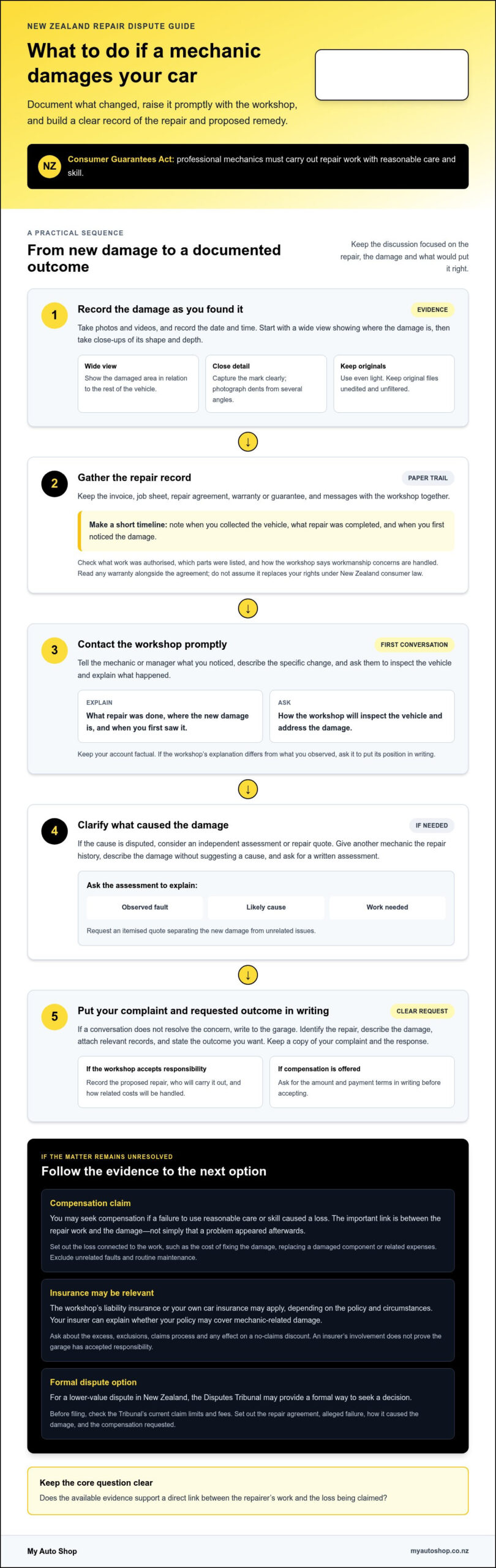
If you’re working out what to do when a mechanic damages your car, photograph the damage, keep the repair paperwork, and contact the workshop promptly. Tell the mechanic or manager what you noticed and ask them to inspect the vehicle and explain what happened.
In New Zealand, the Consumer Guarantees Act requires professional mechanics to carry out repair work with reasonable care and skill. This standard applies to the service itself, not just the vehicle’s condition when it leaves the workshop. Explain what repair was done and describe the specific change, such as a new scrape beside a panel the mechanic worked on.
Review the repair agreement, invoice and any warranty or guarantee before discussing a remedy. Check the authorised work, listed parts and process for raising workmanship concerns. A warranty may explain how the repairer handles a fault linked to its work. Read its terms alongside your agreement, rather than assuming a warranty replaces your rights under New Zealand consumer law.
Ask the mechanic or workshop manager to inspect the car and explain their findings. If the workshop accepts responsibility, record the proposed repair, who will carry it out and how related costs will be handled. If it offers compensation instead, ask for the amount and payment terms in writing before accepting.
Keep your account factual. Note when you collected the vehicle, what repair was completed and when you first noticed the damage. Save the invoice, job sheet and messages together. If the workshop’s explanation differs from what you observed, ask it to put its position in writing so both accounts are clear.
For an independent assessment or repair quote, give another mechanic the repair history and describe the damage without suggesting a cause. Ask for a written assessment that explains the observed fault, likely cause and work needed. Request an itemised quote separating the new damage from unrelated issues. This can help clarify the repair needed before you agree to a remedy.
If a conversation doesn’t resolve your concern, write to the garage. Identify the repair, describe the damage, attach relevant records and state the outcome you want. Keep a copy of your complaint and the response. A clear written record helps keep later discussions focused on the work, damage and proposed solution.
2. Can I Seek Compensation for the Damage?
You may seek compensation if the workshop’s failure to use reasonable care or skill caused a loss. The key issue is the link between the repair work and the damage, not simply whether a problem appeared afterwards. For example, a claim is stronger when an assessment explains how a repair error caused another component to fail, rather than merely noting that both events occurred.
Negligence, breach of contract and warranty claims address different issues. Negligence concerns careless work that causes harm. A contract claim concerns whether the agreed service was delivered as promised. A warranty claim may apply if the repairer fails to honour coverage for its work. Identify what the workshop agreed to do and what it actually did before deciding which basis best fits your situation.
Set out the loss you’re claiming and connect each part to the workshop’s work. This could include the cost of fixing the damage, replacing a damaged component or related expenses. A lasting reduction in the vehicle’s value may also be relevant. Exclude unrelated faults and routine maintenance. A clear claim separates the repair dispute from costs you would have faced anyway.
Ask the garage to resolve the matter directly first. If it rejects your request or proposes an inadequate remedy, explain your position in writing and state what outcome would settle the claim. Keep the exchange focused on the repair, resulting loss and remedy sought. An insurer’s involvement does not prove that the garage has accepted responsibility.
For a lower-value dispute in New Zealand, the Disputes Tribunal may provide a formal way to seek a decision. Before filing, check the Tribunal’s current claim limits and fees, then weigh them against the loss at issue. Your case should explain the repair agreement, alleged failure, how it caused the damage and the compensation requested.
Your car insurer can explain whether your policy may cover mechanic-related damage. Cover depends on the policy wording and circumstances. Ask about the excess, exclusions, claims process and any effect on a no-claims discount. A claim may affect that discount depending on the type of insurance, so understand the policy consequences before choosing this route.
If a workshop refuses responsibility, keep its explanation and consider whether an independent technical opinion addresses the disputed cause. A decision-maker needs more than a disagreement over fault. The useful question is whether the available evidence supports a direct link between the repairer’s conduct and the loss you’re claiming.
3. Documenting new vehicle damage with photos and videos
Make each image useful to someone who hasn’t seen the vehicle. Start with a wide view showing the damaged area’s position, then take closer views that reveal its shape and depth. For a scrape near a wheel arch, include the wheel and surrounding panel in one frame, then photograph the scrape close up. Record the date and time with the photos and videos.
Use steady, even light so colour and surface changes are visible. Photograph a dent from several angles, as changes in reflection can show its contour better than a straight-on image. Avoid filters, annotations or edits to the original files. To highlight a detail, make a separate marked copy and keep the unaltered image too.
Show scale without touching or altering the damage. Place a ruler or familiar object beside a mark only if it’s safe and doesn’t cover the area. Include a wider shot identifying the vehicle panel, then close views showing the measurement reference. This helps distinguish a small paint chip from a longer scrape.
For a sound or intermittent warning, make a short video that captures the conditions when it occurs. State whether the engine is running, whether the vehicle is stationary and what action came before the symptom. For example, note whether a warning appears after starting rather than while driving. Don’t recreate a symptom if doing so could risk further damage.
Capture the vehicle’s condition before cleaning, polishing or a temporary fix changes what’s visible. If rain, road grime or poor lighting affects the view, note that context and take clearer images when conditions allow. Photograph each damaged area separately rather than relying on one crowded frame that hides detail.
Organise files so their sequence is easy to follow. Use descriptive filenames such as “left rear door, wide view” and “left rear door, close view”, while retaining the original capture date and time. Store a backup separately from your phone. If someone else witnessed the damage, note their name and what they observed, without asking them to guess the cause.
If the workshop mentions a fault that might appear later, record the exact symptoms it describes and any conditions attached to its advice. For example, distinguish a vibration at a particular speed from a noise during braking. Ask the repairer to confirm any agreed follow-up or remedy in writing, so you can compare future observations with the original description.
4. Damage caused while the car is at the garage
A vehicle can be damaged at a workshop without the repair itself causing it. A scrape on a door while the car is parked differs from a fault caused by incorrect repair work. Establish what happened, when it happened and whether the garage’s actions directly caused the damage. Those details shape any request for the workshop to put things right.
Ask the garage to explain how the vehicle was handled and where it was kept. Request a written account, including who moved it and whether staff noticed an impact or fault. For example, if a technician says a trolley struck a door, ask the workshop to record that explanation and inspect the damage with you.
Keep the repair paperwork in view. The Consumer Guarantees Act requires professional mechanics to carry out repair work with reasonable care and skill. If the damage resulted from a failure to take that care, the garage may be liable. The key issue is the direct link between its conduct and the damage, not simply that your car was on its premises.
Compare the vehicle’s condition before and after the visit. Check any existing marks noted on the job sheet, check-in record or messages against the new damage. If the workshop recorded a dent before work began, that weakens an argument that the garage caused it. If the record is silent, explain when you noticed the damage and request the garage’s account.
Ask the manager to inspect the vehicle and explain the workshop’s findings. Be specific: identify the damaged area, describe the change and ask what remedy the garage proposes. If it accepts responsibility, agree in writing on the repair, who will complete it and how any compensation will be handled. A clear agreement prevents confusion about the promised work.
Separate damage from disputed repair work. If the garage fitted a part incorrectly and that caused further damage, ask it to explain the diagnosis and repair procedure. A written assessment can link the failed procedure to the resulting problem. If the issue is unrelated to the authorised work, the garage’s presence alone doesn’t establish responsibility.
Keep charges and authorisation separate from damage discussions. In New Zealand, a mechanic must check with you before doing extra work, and you don’t have to pay for unauthorised extra work. If the garage says it completed additional work, compare the invoice with your approval messages and ask it to explain each charge.
A garage must complete agreed repairs within a reasonable time, judged by how long a competent mechanic would take. If a delay worsens a problem, record the dates, symptoms and communications. If the workshop refuses to explain or address the damage, send a concise written complaint and keep its response with your repair records.
5. Shop liability insurance and customer auto insurance
Two insurance policies may be relevant after a workshop damages your car: the garage’s liability cover and your own vehicle policy. They serve different purposes, so identify the possible routes before deciding how to proceed. A garage’s liability insurance might cover damage caused by negligence, while your policy may respond depending on its terms and the circumstances.
Start with the repairer. Describe the damage and ask whether the workshop accepts responsibility, intends to arrange repairs or plans to refer the matter to its insurer. Ask for the insurer’s claims process and any reference details the garage can provide. Keep conversations factual. A workshop contacting its insurer does not, by itself, mean the insurer will accept the claim.
Liability cover does not automatically mean compensation. The key issue remains whether the garage’s actions caused the damage through a failure to use reasonable care and skill. For example, a workshop’s insurer may consider whether the damage occurred during the repair and whether the proposed repair cost relates to it. Dated records, repair paperwork and an independent assessment can help explain the sequence.
Ask how the proposed remedy will work before authorising repairs. Clarify whether the garage, its insurer or you will arrange the repair, who will approve the work and how the final invoice will be handled. If the garage offers payment instead, record the amount and terms in writing. Don’t assume a verbal promise or an insurer’s initial response settles every part of the dispute.
Your own car insurance may cover mechanic-related damage, but the answer depends on policy wording and circumstances. Contact your insurer, explain that the vehicle was at a repair shop and ask what cover applies. Check the relevant excess, exclusions, claims process and any effect on a no-claims discount. The effect of a claim on that discount depends on the type of insurance.
Compare the two routes before making a claim. Ask your insurer whether a claim could affect your excess or discount, and ask the garage how it proposes to resolve the damage. Keep each answer in writing. Don’t assume you must use your policy first or that the workshop’s insurer will deal directly with you.
If the damage affects safe driving, tell both the garage and your insurer before moving the vehicle. Explain what is damaged and whether the car can be driven safely. Follow the policy’s claims instructions, retain records of the vehicle’s condition and avoid authorising work that could remove useful evidence before the cause is documented.
The practical takeaway is to separate responsibility from payment. First establish what caused the damage, then clarify which policy may respond, what conditions apply and how repairs will be approved. This sequence helps you choose the right claims route and keep the discussion focused on resolving the actual loss.
My Auto Shop: Pre-purchase Inspection
My Auto Shop offers a Pre-purchase Inspection for motorists assessing a used car before buying. It can help you understand a vehicle’s condition before committing, but it isn’t a substitute for evidence about damage caused during a repair or a decision on compensation.
If you’re buying another vehicle after resolving a garage dispute, arrange a pre-purchase inspection to help assess its condition. For ongoing care of your current car, My Auto Shop also offers Basic Service, Comprehensive Service and Mobile Mechanic options.
Choose the service that matches your next step: an inspection before purchase, servicing for routine maintenance, or mobile mechanical help. To discuss an appropriate option, contact My Auto Shop.
Take the Next Step with Confidence
Once the dispute is under way, give your next vehicle decision the same care. Whether you’re preparing to buy a used car or planning routine maintenance, understanding the vehicle’s condition helps you make informed choices and keep useful records.
If you’re considering what to do when a mechanic damages your car, focus on the next outcome you need: resolving the repair dispute, arranging future servicing or checking a vehicle before purchase. My Auto Shop offers a Pre-purchase Inspection, Basic Service and Comprehensive Service to support those separate needs. Choose the option that matches your situation, rather than treating a new inspection or service as a substitute for pursuing a damage claim.
Take one practical step today. Organise the paperwork for your next conversation, or plan ahead for your next vehicle purchase or service. Contact My Auto Shop for help choosing a suitable automotive service. A steady, well-documented approach can help you move forward with greater confidence.
Frequently Asked Questions
What if the Mechanic Damaged My Car During a Repair?
Tell the repairer promptly and ask them to inspect the specific damage. If a warning light appears or the vehicle feels unsafe, don’t drive it until its condition has been assessed. Focus the discussion on what changed during the repair, rather than assuming timing alone proves the cause. For example, a new steering vibration after wheel work needs a clear explanation and mechanical assessment.
Can I File a Complaint Against the Mechanic?
Yes. Raise the issue with the mechanic or workshop manager first, then put your complaint in writing if it remains unresolved. State what outcome you’re seeking and include relevant repair details. You can seek free consumer-rights advice by phone. A written complaint also gives you a clear record of the issue and the workshop’s response.
Can I Seek Compensation for the Damage?
You can seek compensation when the repairer’s failure to use reasonable care or skill directly caused your loss. Explain the link between the work and the damage, then identify the remedy you want. For example, if a repair-related fault damaged another component, an independent assessment can explain the connection and work required. Keep your request proportionate to the loss and support each claimed cost with relevant records.
What Are a Mechanic’s Responsibilities?
Under New Zealand’s Consumer Guarantees Act, a professional mechanic must carry out repair work with reasonable care and skill. The mechanic must also check with you before doing extra work, and you don’t have to pay for unauthorised extras. If no repair price was agreed beforehand, you need only pay a reasonable price. Agreed work must be completed within a reasonable time, judged by how long a competent mechanic would take.
What Counts as Damage Caused by the Garage?
Damage is more than a problem noticed after a workshop visit. The key question is whether the garage’s actions directly caused it. A fresh dent from moving the car differs from a worn component failing during a service. Compare the car’s previous condition, the work performed and any technical assessment. A fault unrelated to the repair, such as an existing leak, doesn’t become garage-caused simply because it appeared afterwards.
What Role Does a Warranty or Insurance Play?
A repair warranty can describe the repairer’s commitments and the process for addressing covered workmanship problems. Read its terms alongside your repair agreement. Insurance is separate: the garage’s liability cover might respond to damage caused by negligence, while your own vehicle policy may cover damage under its terms. Ask what each policy covers, which exclusions apply and how a claim could affect your excess or no-claims discount.
What if the Shop Says It’s Not Their Fault?
Ask the workshop to explain its position in writing and identify the facts behind it. Compare that explanation with the repair record, the timing of the fault and an independent mechanic’s findings. If the evidence supports your concern, send a concise response addressing the disputed points. If direct discussion still fails, consumer-rights advice or mediation can help you consider a next step without turning the exchange into an argument.
What Evidence Should I Collect When a Repair Shop Damages My Vehicle?
Keep evidence that helps establish both the damage and its likely cause. Alongside photographs and repair paperwork, save diagnostic reports, messages, relevant job sheets and the names of people who saw the vehicle before or after the visit. Ask an independent mechanic to explain technical findings in plain language. If a component is removed during assessment, ask the repairer to record what it was and why it needed to be removed.
Disclaimer
This article provides general information only and should not be relied on as professional mechanical, safety or legal advice. Vehicle requirements and circumstances vary. If you are unsure about your vehicle, have it inspected by a qualified automotive professional.