
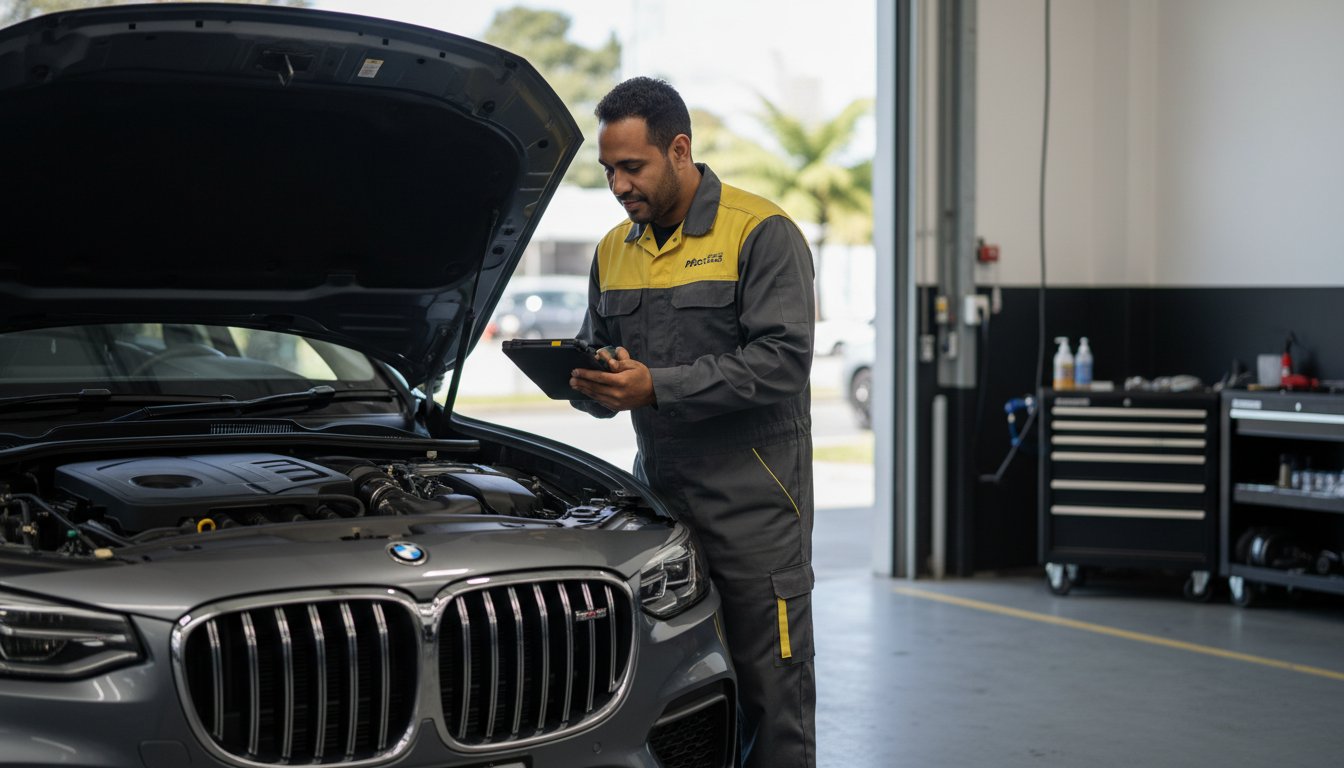
Did you know that European cars in New Zealand typically cost 30% to 50% more to service than Japanese models? It’s a frustrating reality for many owners who love the performance of an Audi or BMW but hate the “Euro-tax” markups at the workshop. If you’re tired of mysterious diagnostic lights and confusing quotes, you aren’t alone. Effective car maintenance for european cars nz shouldn’t feel like a luxury expense; it should be a straightforward part of owning a great vehicle.
We understand that you want reliability without the anxiety of hidden costs. You deserve a partner who speaks your language and respects your budget. This 2026 guide will teach you how to maintain your vehicle using a transparent, expert-led framework designed to lower your long term repair costs. We will walk through the new 1 November 2026 WoF regulations, explain how to avoid the increased $350 fines for expired inspections, and provide a clear roadmap for your service intervals so you can drive with total confidence.
Key Takeaways
- Understand why precision engineering and specialized synthetic oils are non-negotiable for maintaining European engine health.
- Learn the ideal 10,000km service interval for car maintenance for european cars nz to avoid costly repairs caused by New Zealand’s unique driving conditions.
- Get clarity on when to choose OEM parts versus aftermarket alternatives for essential components like brake pads and cambelts.
- Discover how to protect your vehicle from local environmental challenges, including coastal salt air and the “short trip” DPF issues common in Kiwi towns.
- Gain the confidence to book a comprehensive service with upfront pricing, stripping away the mystery of specialist labour rates.
Why European Cars Require Specialized Maintenance in New Zealand
European vehicles aren’t just cars; they’re high-performance machines built with a different philosophy than their Japanese counterparts. While some people label them “over-engineered,” the reality is a focus on precision tolerances. These tight gaps between moving parts allow for better fuel efficiency and power, but they leave zero room for error. If you use the wrong oil or skip a service, those tolerances become your worst enemy. Proper car maintenance for european cars nz requires moving away from the “she’ll be right” attitude common in some local workshops.
Specialized fluids are the lifeblood of these engines. European manufacturers often require specific synthetic oils that maintain viscosity under extreme pressure. Using a generic mineral oil can lead to sludge buildup or premature wear on sensitive sensors. Following an Essential Maintenance Schedule isn’t a suggestion; it’s a requirement to keep these complex systems in harmony. In the world of European engineering, “close enough” is never good enough for your timing systems or internal sensors.
The Difference Between European and Japanese Engineering
Japanese engineering often prioritizes simplicity and wide tolerances, making them more forgiving of missed appointments. European designs are different. For instance, European cooling systems often operate at higher pressures to manage engine heat more effectively. In New Zealand’s varied climate, these components face intense heat cycles that can fatigue plastic parts over time. Even a simple Car Battery Replacement isn’t always simple anymore. Modern Euro models often require “coding” the new battery to the alternator so the charging system knows how to handle the fresh cells. Without the right diagnostic tools, a new battery might only last a fraction of its intended life.
Why NZ Owners Often Face the “Euro-Tax”
The dreaded “Euro-tax” is usually a mix of logistics and lack of transparency. Being at the bottom of the world means specialized parts take longer to arrive and cost more in freight. Additionally, many general workshops lack the expensive diagnostic software needed to talk to your car’s onboard computers. You end up paying for “guesswork” rather than solutions. This is where costs spiral out of control.
You can eliminate this anxiety through proactive care. Investing in a Comprehensive Service or a regular check-up from a Mobile Mechanic prevents small issues from turning into catastrophic failures. By using the right tools and parts the first time, you avoid the repeat visits that drive up costs. Proactive car maintenance for european cars nz transforms your vehicle from a financial mystery into the reliable, high-performance machine it was designed to be.
The Essential Maintenance Schedule for European Vehicles
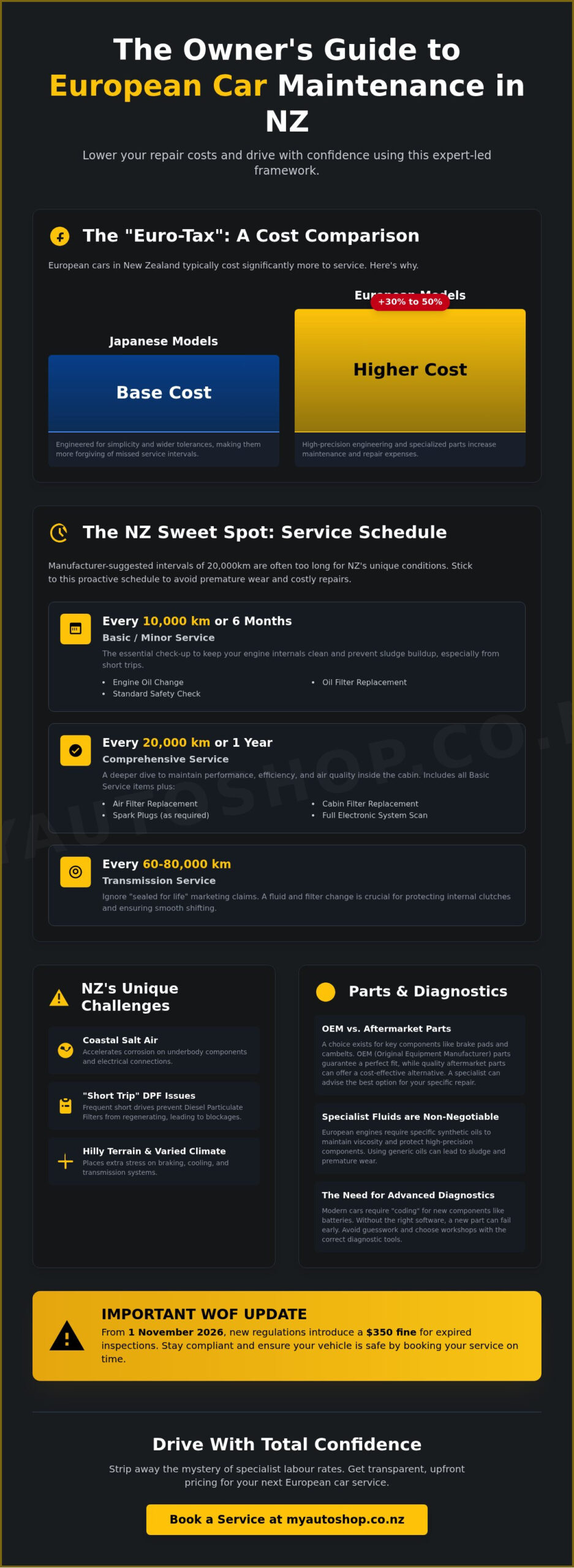
Owning a European car in New Zealand means staying ahead of the clock. While some manufacturers suggest long-life oil intervals of 20,000km, our local conditions tell a different story. New Zealand’s hilly terrain and frequent short city trips lead to faster oil degradation. Stick to a 10,000km “sweet spot” for your engine oil and filter changes. This proactive approach to car maintenance for european cars nz keeps your engine internals clean. It also prevents the sludge buildup that often causes premature turbo failure.
High performance comes with specific requirements for your braking system. European cars often use softer friction materials for a Brake Pad Replacement to provide that signature “bite” and stopping power. These pads wear faster and produce more dust than those on a standard commuter car. If you ignore the warning light, you’ll likely need to replace the rotors as well. Similarly, don’t believe the “sealed for life” labels found on many modern transmissions. Most gearbox manufacturers recommend a service every 60,000km to 80,000km to ensure smooth shifting and protect the internal clutches. Effective car maintenance for european cars nz relies on ignoring these marketing myths in favor of mechanical reality.
Minor vs. Comprehensive Servicing
A Basic Service focuses on the essentials: oil, filter, and a standard safety check. It’s perfect for keeping things ticking over between major milestones. However, once a year or every 20,000km, you should opt for a Comprehensive Service. This includes air and cabin filters, spark plugs, and a full electronic system scan. Following Consumer Protection advice means choosing a provider who uses the correct diagnostic tools. You need to read hidden fault codes before they become expensive problems on your dashboard.
Critical Milestone Repairs
Between 60,000km and 100,000km, your car enters a high-stakes zone. This is the window where a Cambelt / Timing Belt Replacement becomes critical for many models. If this belt snaps, the resulting engine damage is often terminal. At the same time, have a technician check your cooling system. European brands like BMW and Audi use various plastic cooling components that become brittle over time. A fresh coolant flush every few years can prevent a sudden Radiator Repair & Replacement job. Don’t forget your brake fluid either. It absorbs water over time, so flush it every two years to maintain pedal feel and protect your ABS module.
If you’re unsure where your car sits on this timeline, you can easily book a professional assessment to get a clear picture of what’s needed next.
Navigating the Logistics: Parts, Labour, and Specialist Diagnostics
Managing the logistics of car maintenance for european cars nz often feels like a balancing act between quality and cost. You want the best for your car, but you don’t want to pay a premium just for a fancy badge on a box. Understanding the hierarchy of parts is the first step to saving money. Genuine parts come in a branded box from the manufacturer. OEM (Original Equipment Manufacturer) parts are the same components made by the same companies, like Bosch, Brembo, or ZF, but without the manufacturer’s markup. High-quality aftermarket parts can be excellent for non-critical items. However, for a Cambelt / Timing Belt Replacement, sticking to OEM or Genuine is usually the safest bet to ensure engine longevity.
Sourcing Parts in New Zealand
Sourcing parts at the edge of the world can be slow and expensive. We use a massive network of local and international suppliers to find the best value for your specific model. This approach avoids the pitfalls of ordering uncertified parts from overseas marketplaces that might not meet New Zealand safety standards. Whether you need a Radiator Repair & Replacement or just new filters, getting the right part the first time is essential. It prevents the frustration of a car sitting on a hoist for weeks while you wait for a shipping container to arrive.
The Value of Specialized Labour
You might notice that specialist workshop labour rates in New Zealand often range between $130 and $180 per hour. While this is higher than a general workshop, it actually saves you money. A specialist uses dedicated diagnostic software like VAG-COM for Volkswagen Group or ISTA for BMW. They can identify a fault in 20 minutes that might take a generalist two hours of trial and error to find. Precision matters when your car’s computer system manages everything from fuel trim to suspension damping.
Specialized technicians also have the correct tools for delicate European fasteners and trim. Using the wrong torque settings or generic pry tools can lead to broken clips and expensive interior rattles. Transparent pricing models help remove the anxiety of that final bill. You should always know what you’re paying for before the work begins. This level of clarity is vital for car maintenance for european cars nz, especially when dealing with complex tasks like a Clutch Replacement or CV Joint & Boot Repair. Finally, ensure your chosen provider is approved by your mechanical breakdown insurance. Keeping your service history up to date with a Comprehensive Service ensures your warranty remains valid when you need it most.
Proactive Maintenance Tips for NZ’s Unique Conditions
New Zealand roads present a unique set of challenges that European engineers might not always anticipate. From the subtropical humidity of Northland to the alpine grit of the South Island, our environment is demanding. Mastering car maintenance for european cars nz means adapting to these local factors. If you live near the coast, salt air is a silent threat to your vehicle. It corrodes electrical connectors and underbody components faster than in landlocked regions. A simple underside wash during your regular cleaning routine can prevent rust from taking hold in places you can’t see.
Our national vehicle fleet is aging, with the average car now 15 years old. This makes proactive care even more vital. With the Warrant of Fitness (WoF) failure rate reaching 41% in 2024, many owners are finding out the hard way that “she’ll be right” doesn’t work for precision machinery. Staying ahead of these issues is the only way to ensure your car remains a reliable partner on the road.
Managing the DPF and Carbon Buildup
Many Kiwi owners use their Audi or VW diesels for short school runs or quick trips to the local shops. This driving pattern is the primary enemy of the Diesel Particulate Filter (DPF). These systems require sustained heat to burn off collected soot. Without a long run, the filter clogs, eventually triggering a “limp mode” that can be expensive to clear. Give your car an “Italian Tune-up” at least once a fortnight. A 20 minute run on the motorway at 100km/h allows the system to regenerate naturally. If your engine feels sluggish or hesitant, it might be time for an intake system carbon cleaning to restore the airflow your engine needs to breathe.
Suspension and Tyres on NZ Backroads
New Zealand’s coarse-chip road surfaces provide excellent grip, but they are incredibly abrasive. They wear down the soft-compound performance tyres found on many European models much faster than smooth European asphalt. Pay close attention to your tread. As of 1 November 2026, the fine for an unsafe tyre increases to $350, with court-ordered fines reaching up to $1,000. Our potholes also punish precision suspension components. If you notice a “bouncy” feel or unusual vibrations, a Shock Absorber Replacement or a CV Joint & Boot Repair might be necessary. A simple wheel alignment after hitting a significant pothole can save you hundreds of dollars by preventing uneven tyre wear.
Don’t let hidden issues lead to a failed WoF or a costly breakdown. Book a Comprehensive Service today to ensure your car is perfectly tuned for New Zealand’s rugged landscape.
Reliable European Car Servicing with My Auto Shop
Finding a trusted partner for car maintenance for european cars nz shouldn’t be a gamble. While many specialist workshops are isolated to the main centers, we provide a national perspective for Kiwi owners. We’ve curated a network of vetted technicians that stretches from Cape Reinga to the Bluff. This ensures that whether you drive an Audi in Dunedin or a Volvo in Whangarei, you have access to the same high standard of care. Our platform acts as a bridge, connecting you with professionals who possess the right diagnostic tools and specialized knowledge for your vehicle’s complex systems.
Transparency is our signature promise to you. We’ve all experienced the “guessing game” at the mechanic, where a simple check-up turns into a financial headache. We provide upfront, transparent pricing for every job. Whether you need a Brake Pad Replacement or a Comprehensive Service, you see the cost before you book. This commitment to openness sets us apart in a traditionally opaque industry. It allows you to plan your vehicle expenses without the fear of hidden markups or “Euro-tax” surprises.
How Our Platform Works for You
Booking is straightforward and efficient. Just enter your registration number on our site to get an instant quote tailored to your specific make and model. We vet every workshop and mechanic in our network, so you don’t have to spend hours sifting through conflicting reviews. Once the work is finished, your detailed service records are stored digitally. This is a vital asset for maintaining your car’s resale value and proving a consistent history of car maintenance for european cars nz. It’s organized, honest, and highly competent service designed for the modern age.
Book Your European Service Today
Our Mobile Mechanic service offers a signature level of convenience for busy professionals. You don’t need to disrupt your day by dropping your car at a workshop and finding a way back to the office. We bring the expertise to you. If your Mercedes needs a Car Battery Replacement or your BMW is due for a check-up, our technicians can often handle it on-site. This modernized approach respects your time as much as your vehicle’s safety.
Take the first step toward proactive, stress-free vehicle care. Don’t wait for a warning light to dictate your schedule. Book your European car service with My Auto Shop today and experience a modern way to keep your car running at its peak.
Drive With Total Confidence in 2026
Maintaining a European vehicle in New Zealand doesn’t have to be a source of financial stress. You now have the roadmap to navigate precision engineering, the ideal 10,000km service interval, and the unique challenges of our local roads. By choosing proactive care over reactive repairs, you protect your car’s performance and its long term resale value. Quality car maintenance for european cars nz is about using the right tools and having total clarity on every cost.
We are here to make that process effortless. With access to over 200+ vetted NZ mechanics and transparent upfront pricing, the days of “Euro-tax” guesswork are officially over. Whether you need a workshop specialist or the convenience of mobile service options available nationwide, we have you covered. Take control of your vehicle’s health today and keep your driving experience as smooth as the day you first turned the key.
Get an instant quote for your European car service
Frequently Asked Questions
Do I really need a specialist for my European car in NZ?
Yes, because European vehicles require specific diagnostic software and specialized tools that general workshops often lack. These tools allow technicians to communicate with complex onboard computers for precise troubleshooting and system resets. Specialist knowledge ensures you don’t pay for unnecessary trial and error labour. It’s about getting the job done right the first time with someone who understands the engineering philosophy of your specific brand.
Why are oil changes more expensive for European cars?
European engines require high-grade synthetic oils with specific manufacturer approvals to protect tight internal tolerances. These vehicles also typically have larger oil capacities, often holding 6 to 9 litres compared to the 4 litres found in standard cars. High-quality specialized filters also carry a higher price point than generic counterparts. Investing in the correct oil is essential for car maintenance for european cars nz to prevent expensive engine sludge issues.
Can a mobile mechanic service my European vehicle?
Yes, a qualified Mobile Mechanic can perform many essential tasks including a Basic Service, Brake Pad Replacement, or Car Battery Replacement at your location. They carry specialized diagnostic equipment to your home or office to provide expert care without the hassle of a workshop visit. This is a convenient option for busy professionals who want to maintain their vehicle’s performance without disrupting their daily schedule.
Will servicing my car outside the dealership void my warranty?
No, your warranty remains valid as long as the service is performed by a qualified technician using manufacturer-approved parts and fluids. This is a vital part of car maintenance for european cars nz that allows you to choose a transparent service provider. Always ensure you receive a detailed invoice and keep your digital service records updated. This documentation is your proof of care if you ever need to make a warranty claim.
How often should I change the cambelt on a European car?
Most manufacturers recommend a Cambelt / Timing Belt Replacement every 60,000km to 100,000km or every 5 to 7 years. You should check your specific owner’s manual because intervals vary significantly between brands like Audi, Volkswagen, and Volvo. Skipping this critical milestone is a major risk. If the belt snaps, the resulting engine damage is often terminal and far more expensive than the replacement service itself.
What are the most common European car repairs in New Zealand?
Common repairs include cooling system failures, worn suspension components from our coarse-chip roads, and DPF clogs in diesel models. You might also frequently see a need for a Radiator Repair & Replacement or CV Joint & Boot Repair. Our unique environment and aging fleet contribute to these specific wear patterns. Regular inspections help catch these issues early before they lead to a failed Warrant of Fitness or a roadside breakdown.
Why is my European car’s dashboard showing so many warning lights?
European cars feature highly integrated sensor networks that monitor everything from tyre pressure to exhaust emissions. A single fault can sometimes trigger multiple lights because the car’s systems are deeply interconnected for safety and performance. You don’t need to panic, but you do need a professional diagnostic scan. This identifies the specific fault code stored in the computer so you can address the root cause rather than guessing.
Are European cars less reliable than Japanese cars in NZ?
European cars are exceptionally reliable when you follow the manufacturer’s maintenance schedule strictly. They are precision machines that are less forgiving of neglected oil changes or low-quality parts than many Japanese models. When you commit to proper car maintenance for european cars nz, these vehicles offer superior handling, safety, and comfort. Reliability is a direct reflection of how well the vehicle is cared for over its lifetime.
Disclaimer
This article provides general information only and should not be relied on as professional mechanical, safety or legal advice. Vehicle requirements and circumstances vary. If you are unsure about your vehicle, have it inspected by a qualified automotive professional.