

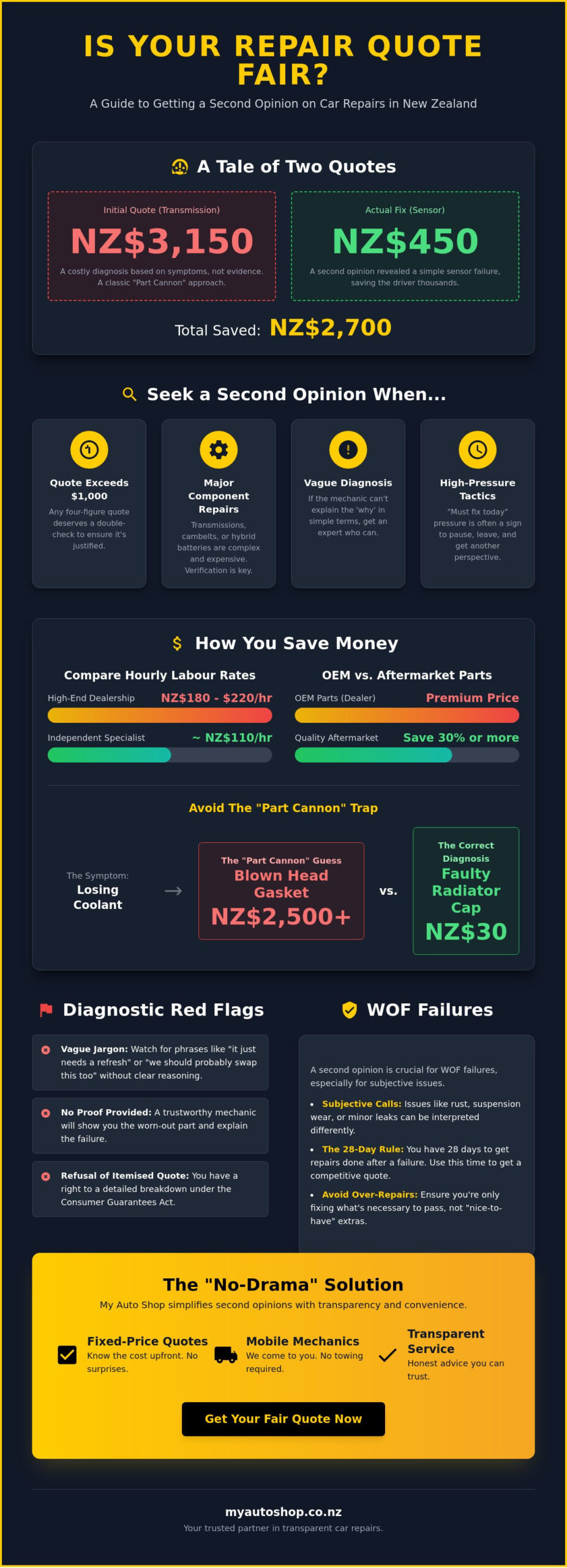
Last Tuesday, a Wellington driver was handed a repair quote for NZ$3,150 for a transmission issue that actually required a simple NZ$450 sensor fix. It’s a stressful situation that leaves many Kiwis feeling vulnerable and worried about their bank balance. If a mechanic’s explanation feels heavy on jargon and light on logic, getting a second opinion on car repairs is the most effective way to protect your wallet.
We understand that you’d rather spend your Saturday at the local footy than haggling over engine parts. It’s completely normal to feel anxious about vehicle safety when a quote seems suspiciously high. This guide shows you exactly when to seek a new perspective, how to compare quotes like a pro, and what red flags to watch for at the workshop. You’ll gain the confidence to ensure your car is roadworthy without paying for unnecessary extras.
Key Takeaways
- Understand why modern vehicle electronics make an independent assessment essential to avoid overpaying for unnecessary work.
- Discover how to spot “part cannon” repairs and compare labour rates to keep more NZD in your pocket.
- Learn the “No-Drama” protocol for requesting your diagnostic report and itemised quote legally under the Consumer Guarantees Act.
- Master the 28-day rule for WOF failures and identify when getting a second opinion on car repairs is most valuable for subjective issues like rust or suspension.
- Use transparent, fixed-price quotes and mobile mechanic services to simplify your repair process without the stress of towing.
Why Getting a Second Opinion on Car Repairs is Essential in 2026
A second opinion is an independent assessment of your vehicle’s health after an initial workshop diagnosis. In 2026, cars are essentially high-powered computers on wheels. This complexity means a simple sensor glitch can lead to a quote for thousands of dollars. While most Kiwis accept the concept of a second opinion in medical scenarios, applying it to your car is just as vital for your bank balance. It’s about ensuring the diagnosis matches the reality of the mechanical failure.
Modern vehicle electronics have made repairs more technical and significantly more expensive. In New Zealand, the average cost of mechanical labor has risen by 15% since 2024. This environment creates “Repair Creep.” This phenomenon occurs when a small, straightforward fix like a brake pad replacement suddenly balloons into a massive quote for rotors, calipers, and fluid flushes. You went in for a NZ$250 job and left with a NZ$1,500 estimate. Getting a second opinion on car repairs helps you identify if those extra items are actually necessary right now.
It’s crucial to distinguish between critical safety repairs and “nice-to-have” maintenance. A worn cambelt is a ticking time bomb; a slightly dusty cabin filter is not. Professional mechanics should prioritize your safety without padding the bill with non-essential work. By seeking another perspective, you gain the clarity needed to decide what must be fixed today and what can wait until your next service.
When should you definitely seek a second assessment?
- Quotes exceeding NZ$1,000 or those involving major components like transmissions, hybrid batteries, or cambelts.
- When a mechanic uses high-pressure “must fix today” sales tactics to stop you from leaving the shop.
- If the diagnosis feels vague or the technician cannot explain the “why” behind the fix in plain English.
Diagnostic Red Flags to watch out for
Diagnostic red flags are phrases or behaviors that prioritize profit over proof. Look out for vague terms like “it just needs a refresh” or “we should probably swap this too while we’re in there.” If a shop refuses to show you the worn part or explain the failure points clearly, take your keys and walk away. A transparent partner will always be happy to prove why a repair is needed. Getting a second opinion on car repairs gives you the confidence to know you’re making the right choice for your safety and your wallet.
The Financial Benefits: How Much Can You Actually Save?
Stop viewing a second opinion as a lack of trust. View it as a strategic cost-control measure. In New Zealand, the price for the same repair can swing by hundreds of dollars depending on the suburb or the shop’s overheads. By getting a second opinion on car repairs, you ensure you aren’t overpaying for a service that another qualified mechanic could perform for less.
The return on investment for an inspection is often massive. Spending NZ$150 on a fresh diagnostic check might feel like an extra cost, but it can prevent a NZ$1,500 mistake. Many Kiwi drivers find that a second pair of eyes identifies a simpler, more cost-effective repair path, such as using reconditioned parts instead of brand-new components from the factory.
Understanding Labour Rates and Part Markups
Labour rates in New Zealand vary significantly. A high-end dealership in central Auckland might charge NZ$180 to NZ$220 per hour, while a reliable independent specialist in the same region might charge NZ$110. These shops also interpret “book time” differently. This is the standard time a job should take. Some shops stick strictly to the guide, while others add extra hours for “unforeseen complications.”
- OEM vs. Aftermarket: Dealerships usually insist on Original Equipment Manufacturer (OEM) parts, which carry a premium. Independent shops often offer high-quality aftermarket alternatives that can save you 30% or more on your total invoice.
- Markup Variance: Different garages apply different margins to the parts they source. A second quote highlights these discrepancies immediately.
The hidden cost of “Unnecessary” repairs
Some mechanics rely on the “Part Cannon.” This happens when a technician replaces parts one by one, hoping to hit the right solution without a proper diagnosis. It is expensive and inefficient. For example, a car losing coolant might be diagnosed with a blown head gasket, a repair costing upwards of NZ$2,500. A second opinion might reveal the culprit is actually a faulty NZ$30 radiator cap. Small components often mimic the symptoms of major mechanical failures.
Modern vehicles use complex sensors that can trigger “check engine” lights for minor electrical glitches. Before you commit to major engine work, insist on a clean diagnostic report. Knowing your rights under the Consumer Guarantees Act protects you if a repair doesn’t solve the problem you paid to fix. If you’re feeling unsure about a quote you’ve received, you can easily book a diagnostic check through a transparent platform to get a clear, unbiased perspective on what your car actually needs.
The “No-Drama” Protocol: How to Ask for a Second Opinion
Professional mechanics don’t take it personally when you ask for a copy of your quote to shop around. It’s a standard business practice. If a workshop reacts with hostility, take it as a red flag. To start the process, ask for a printed diagnostic report and an itemised quote. This document must break down the cost of parts and the estimated hours of labour. Having this data allows you to compare apples with apples when getting a second opinion on car repairs.
Before you leave the first shop, ensure you have your vehicle’s health check results. This FTC consumer advice on car repairs confirms that for any expensive or complex repair, a second look is the best way to verify the necessity of the work. Bring your service book and any recent invoices from the last 12 months to your second appointment. This helps the new technician understand the car’s history without duplicating work you’ve already paid for.
Your rights under the Consumer Guarantees Act
In New Zealand, the Consumer Guarantees Act (CGA) 1993 ensures that every repair is performed with “reasonable care and skill.” You’re legally entitled to receive a clear explanation of what’s wrong with your vehicle. You also have the right to keep any old parts that were replaced, provided they aren’t “exchange items” like reconditioned engines or alternators. If a shop attempts to charge “storage fees” for the time your car sat while you considered the quote, they can only do so if this was clearly stated in a signed agreement before the work began. If no such agreement exists, they cannot legally hold your car for ransom while you seek other options.
What to tell the second mechanic
You can approach the second workshop in two ways. The “Blank Slate” method is often the most effective. Simply describe the symptoms, such as a specific noise or a warning light, and let them perform their own diagnosis. This prevents the new mechanic from simply agreeing with the first one. Alternatively, use the “Quote Match” strategy. Hand over the first itemised quote and ask if they can offer a better price or a more efficient solution. Most Kiwi mechanics appreciate the honesty. It signals that you’re a price-conscious customer who values transparent service, which often leads to a sharper quote and better communication. Honesty about getting a second opinion on car repairs creates a relationship built on trust rather than guesswork.
WOF Failures and Second Opinions: A New Zealand Perspective
Failing a Warrant of Fitness (WOF) feels like an immediate hit to the wallet. Many drivers assume they’re locked into getting repairs done by the mechanic who issued the fail. That isn’t the case. Under New Zealand law, you have 28 days to fix the issues and return for a re-check. You can take your car anywhere for those repairs. This is the perfect time for getting a second opinion on car repairs, especially if the initial quote seems steep.
If you believe a failure is unfair, you can challenge it. Start by asking the inspector to show you the specific fault against the Vehicle Inspection Requirements Manual (VIRM). If you’re still not satisfied, the Motor Trade Association (MTA) provides a mediation service for customers of its 3,800 member businesses. They help resolve disputes between car owners and garages without needing to head straight to the Disputes Tribunal. This oversight ensures that inspectors remain honest and consistent with national safety standards.
Navigating the WOF re-check process
The 28-day rule is your best friend. If you return to the original testing station within 28 days of the initial failure, the re-check is often free or heavily discounted. If you miss this window, you’ll pay for a full inspection again. If a second mechanic suggests the initial fail was unjustified, don’t just take their word for it. Ask them to document why the component meets NZTA standards. You can then present this evidence to the original inspector. It’s about being informed and staying within that legal timeframe to keep costs down. If the inspector refuses to budge despite evidence, you can lodge a formal complaint with Waka Kotahi NZTA.
Subjective vs. Objective failures
Understanding the failure type helps you decide if another look is necessary. Objective failures are black and white. A blown bulb, a tyre with less than 1.5mm tread, or a frayed seatbelt are clear fails. There’s little room for debate here because the measurements are absolute.
Subjective failures rely on the inspector’s judgment. Common examples include:
- “Excessive” play: Deciding if a steering joint or suspension bush has too much movement.
- Corrosion: Determining if surface rust has become structural damage near a mounting point.
- Oil leaks: Judging if a leak is “minor” seepage or a “major” safety hazard that could hit the road or brakes.
Subjective calls are the primary reason for getting a second opinion on car repairs. One mechanic might see minor seepage on a shock absorber, while another calls it a major leak requiring immediate replacement. Getting another expert to look can save you hundreds on parts you might not actually need yet. It provides peace of mind that you’re only paying for genuine safety issues.
How My Auto Shop Simplifies Second Opinions and Transparent Repairs
Getting a second opinion on car repairs shouldn’t be a stressful ordeal. Our platform is built to take the mystery out of the workshop experience by providing instant, fixed-price quotes from a network of over 300 MTA-approved mechanics across New Zealand. Instead of calling around and trying to translate technical jargon, you can compare prices and reviews directly from your phone. This transparency ensures you never pay more than the fair market rate for your specific make and model.
The Mobile Mechanic: A convenient diagnostic tool
Mobile mechanics offer a unique advantage when you need to verify a major repair quote. Because these technicians don’t have the massive overhead costs of a traditional “big shop” workshop, their advice is often more objective. They aren’t under pressure to fill a multi-bay service schedule. You can book a diagnostic call-out to your own driveway, which saves you the hassle and expense of towing a vehicle that might not be roadworthy. To get an expert to look at your car at home, visit our Mobile Mechanic service page and book a time that fits your schedule.
For used car buyers, our Pre-Purchase Inspection acts as the ultimate second opinion. Before you hand over thousands of dollars to a private seller or dealer, an independent technician checks the vehicle’s health. This service identifies hidden issues that a standard WOF might miss. It gives you the leverage to negotiate a better price or walk away from a potential lemon before the deal is done.
Booking with confidence
The My Auto Shop platform is designed for busy Kiwis who value their time as much as their bank balance. We ensure every quote is based on standardized labor times and high-quality parts. If you are dealing with a major repair that requires a workshop, our signature “Pick up & drop off” service makes the process seamless. A driver collects your car from work or home, takes it to the mechanic to have the repairs verified, and returns it once the job is finished.
We believe in honest communication and clear pricing. You’ll receive a detailed breakdown of the work required without the confusing fluff. Getting a second opinion on car repairs through our diagnostic service gives you peace of mind before committing to expensive parts. This approach empowers you to make informed decisions about your vehicle’s maintenance. Book a diagnostic check with a top-rated NZ mechanic today.
Take the Driver’s Seat on Your Repair Costs
Repairing your car shouldn’t feel like a gamble. By getting a second opinion on car repairs, you protect your bank account from unnecessary markups and ensure your vehicle actually needs the work quoted. Industry reports from the Motor Trade Association (MTA) highlight that labor rates and parts margins can vary significantly across different New Zealand regions. This means a simple verification could save you hundreds of NZ$ on a single invoice. Whether you’re facing a complex engine issue or a surprise WOF failure, seeking a second perspective is the most effective way to validate mechanical advice and keep your maintenance budget on track.
MyAutoShop makes this process seamless by connecting you with NZ’s largest network of trusted garages and MTA Assured mechanics. We provide the clarity you need through transparent, upfront pricing that eliminates hidden fees. You can finally stop worrying about mechanical jargon and focus on getting back on the road safely. It’s about making sure your car gets exactly what it needs without the stress of the unknown.
Get a transparent, fixed-price quote for your car repairs now and experience a more reliable way to look after your vehicle. Your car and your wallet will thank you.
Frequently Asked Questions
Is it rude to tell my mechanic I want a second opinion?
Not at all. Professional mechanics understand that getting a second opinion on car repairs is a standard part of making an informed financial decision. It is your car and your budget, so you have every right to feel confident before signing off on expensive work. A reputable technician will respect your choice and provide a clear quote for you to take away. If a mechanic gets defensive or tries to pressure you, it is usually a sign that you should definitely seek advice elsewhere.
Will I have to pay for a second opinion if they don’t find anything wrong?
You should expect to pay a diagnostic fee for the mechanic’s time and expertise. Even if they confirm the original diagnosis or find no fault, they have used specialized tools and their professional training to inspect your vehicle. Most New Zealand workshops charge for 30 to 60 minutes of labor for this service. This small upfront cost is a smart investment that can prevent you from paying for unnecessary parts or labor later on.
Can I get a second opinion after the repairs have already started?
You can ask a mechanic to stop work at any stage, but you’ll be responsible for the labor and parts used up to that point. If you lose confidence mid-repair, request an immediate halt and ask for an itemized invoice of the completed tasks. You will likely need to pay for a tow truck to move your vehicle to a different workshop if it’s not in a drivable state. This situation occurs in roughly 5% of complex mechanical cases where costs begin to exceed the original estimate.
What should I do if the two mechanics give me completely different diagnoses?
Ask both mechanics to show you physical evidence of the problem, such as worn components or fluid leaks. Many modern Kiwi workshops now provide digital health checks with photos or videos sent straight to your phone. If the two reports still don’t match, consider a third opinion from a specialist or an MTA-assured garage. This helps you avoid paying for a misdiagnosis, which can happen when shops rely on different diagnostic equipment or experience levels.
Does a second opinion guarantee a lower price for my car repairs?
A second opinion does not always mean a cheaper bill, but it does ensure you are paying for the correct fix. Sometimes a second technician identifies a more serious safety issue that the first one missed entirely. However, it often uncovers more affordable repair paths or the option to use high-quality aftermarket parts instead of expensive original equipment manufacturer components. Getting a second opinion on car repairs is about finding the best value and long-term reliability for your vehicle.
Can a mobile mechanic provide a valid second opinion for a WOF failure?
A mobile mechanic can provide a professional assessment of the failed items and give you a repair quote at your home or office. This is a highly efficient way to understand your options without driving an unsafe vehicle around town. Just keep in mind that the official WOF re-check must still be performed by a certified vehicle inspector. Under NZTA regulations, you have 28 days from the initial failure to fix the faults and return for a re-inspection.
How much does a typical diagnostic second opinion cost in New Zealand?
Most workshops across New Zealand charge between NZ$80 and NZ$180 for a standard diagnostic inspection. This price depends on whether the technician needs to use advanced computer scanning software or perform a manual teardown of mechanical parts. For a basic visual check, you will typically pay the shop’s standard hourly labor rate. Always confirm the diagnostic fee over the phone before you book your car in to keep your costs transparent.
Disclaimer
This article provides general information only and should not be relied on as professional mechanical, safety or legal advice. Vehicle requirements and circumstances vary. If you are unsure about your vehicle, have it inspected by a qualified automotive professional.