
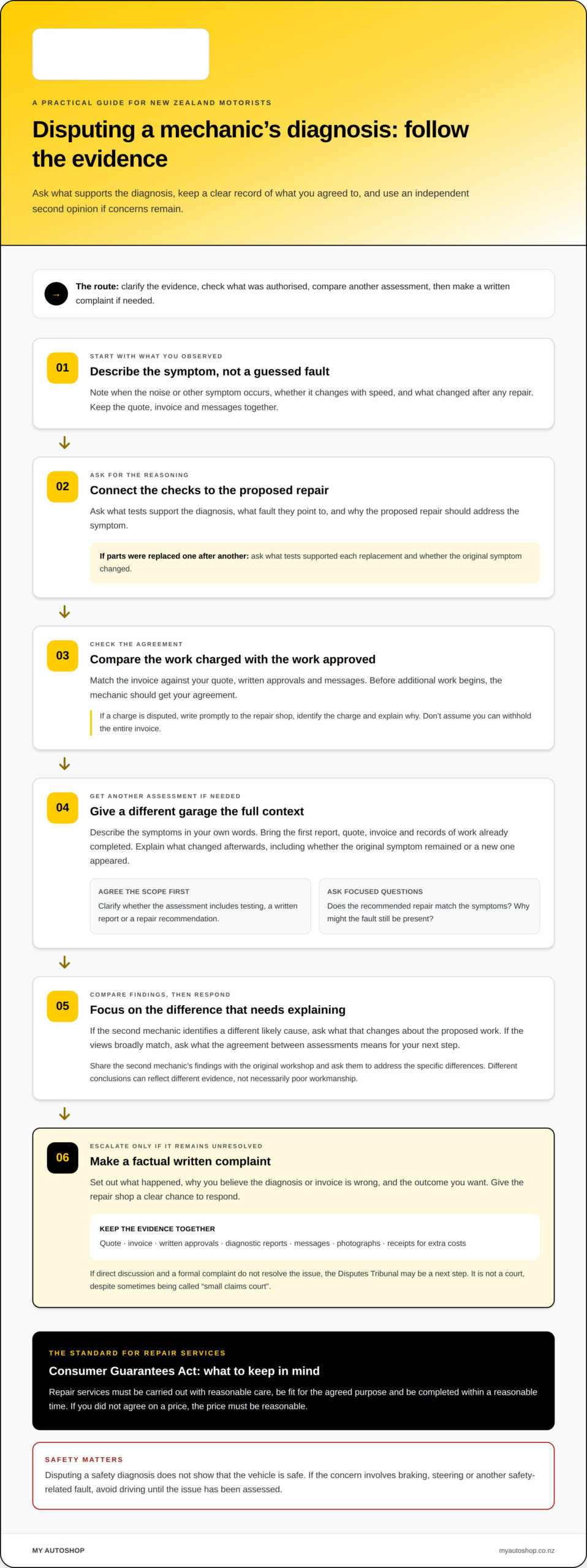
A confident diagnosis isn’t the same as a clear explanation. To understand how to dispute a mechanic’s diagnosis in New Zealand, ask what checks support it, record what you agreed to, and consider an independent second opinion if needed.
It’s reasonable to want evidence before approving more work or accepting a bill. Under the Consumer Guarantees Act, repair services must be carried out with reasonable care, be fit for the agreed purpose and be completed within a reasonable time. If you didn’t agree on a price, the price must be reasonable.
This guide explains how to question a diagnosis, challenge work you didn’t authorise, assess repair charges and make a complaint. It also covers when the Disputes Tribunal may be a next step, so you can focus on the facts and decide what to do next.
Key Takeaways
- Keep the quote, invoice and messages so you can compare the work charged with what you agreed to.
- Ask the mechanic to explain what tests support the diagnosis and why the proposed repair should address the fault.
- Get a second opinion if the explanation doesn’t resolve your concerns, and share the original diagnosis and repair records.
- Under the Consumer Guarantees Act, repair work must be done with reasonable care and at a reasonable price if no price was agreed.
- If direct discussion and a formal complaint don’t resolve the dispute, the Disputes Tribunal may be a next step.
Consumer Guarantees Act protections for repair work
In New Zealand, the Consumer Guarantees Act protects consumers who buy repair services. The work must be done with reasonable care, suit the agreed purpose and be completed within a reasonable time. If you didn’t agree on a price, the charge must be reasonable. These standards give you a basis to question poor repairs or an invoice that doesn’t match your agreement.
Can you refuse to pay a mechanic’s invoice while disputing the diagnosis in NZ? Don’t assume you can withhold the entire amount. Write to the repair shop promptly, identify the charge you dispute and explain why. Keep the invoice and the mechanic’s response. If the repair failed or caused a new problem, ask the mechanic to fix it at no extra cost.
If you paid by credit card, ask your card issuer how it handles disputed repair charges. Provide the invoice, quote, payment record and messages showing what work you authorised. A card dispute is separate from your complaint to the repair shop, so continue communicating with the shop in writing while the issuer considers your claim.
Before additional work begins, the mechanic should get your agreement. If the invoice includes parts or labour you didn’t approve, ask the shop when you authorised them. A “parts cannon” approach means replacing parts one after another without establishing which one is causing the fault. Ask what tests supported each replacement and whether the original symptom changed. A clear diagnosis connects the evidence, suspected fault and proposed repair.
Keep the conversation factual. Send one concise message listing the diagnosis, disputed work and outcome you want, then save the reply. A symptom guide for common car problems can help you describe what happened without presenting symptoms as proof of a fault.
What are the risks of driving after disputing a mechanic’s safety diagnosis? Disputing the diagnosis doesn’t show that the car is safe. If the concern involves braking, steering or another safety-related fault, avoid driving until the issue has been assessed. A genuine fault could have serious consequences.
If direct discussion and a formal complaint don’t resolve the dispute, the Disputes Tribunal can assess whether a charge is reasonable under the Consumer Guarantees Act. Consider the time and effort involved before escalating, as the process may take time.
Getting a second opinion and a new diagnosis
A second opinion can help you decide whether to approve a repair, request a different investigation or return to the original workshop. Choose another garage and describe the symptoms without presenting the first diagnosis as fact. For example, explain when a noise occurs, whether it changes with speed and what you’ve noticed while driving.
Bring the first mechanic’s report, quote and invoice, along with records of any work already completed. Tell the second mechanic what changed after the repair, including whether the original symptom remained or a new one appeared. This context helps them assess the vehicle’s current condition and identify which parts of the earlier assessment still need attention.
How much does an independent vehicle inspection or diagnostic report cost in New Zealand? There’s no single price. It depends on the vehicle, fault complexity and report scope. The price for your case is provided after you request a quote.
Before the assessment, explain what you need from the second mechanic. You might want a written diagnosis, an explanation of whether the recommended repair matches the symptoms, or clarification about why the fault persists. Agree on the scope before work begins, so you know whether the assessment includes testing, a report or a repair recommendation.
Use the new opinion to make a focused decision. If the mechanic identifies a different likely cause, ask what that changes about the proposed work. If their view broadly matches the first diagnosis, ask what the agreement between the assessments means for your next step. Different conclusions can reflect different evidence, not necessarily poor workmanship.
If you’re deciding how to dispute a mechanic’s diagnosis, share the second mechanic’s findings with the original workshop and ask them to address the specific differences. Keep the conversation focused on the vehicle and the proposed resolution. The Motor Trade Association can also provide advice about a mechanic dispute. A clear, independent assessment may help both sides understand what remains unresolved.
If you’re still unhappy with the explanation, identify what remains unclear: whether the fault was found, whether the proposed work addresses it, or why the symptom continues. Taking one question at a time makes it easier to compare explanations and decide what response you need from the workshop.
Keep your notes and assessments together so you can refer to the same concerns in later conversations. The aim is to understand the diagnosis and proposed resolution well enough to choose your next step.
Small claims court as a last resort
In New Zealand, unresolved disputes with a mechanic can go to the Disputes Tribunal. It isn’t a court, despite sometimes being called “small claims court”. Treat it as a last resort, after trying to resolve the issue directly and making a written complaint. A claim might concern a diagnosis that led to unnecessary repairs, work that failed, or a charge you believe isn’t reasonable.
Set out the disagreement in a formal letter to the repair shop. State what happened, what outcome you want and why you believe the diagnosis or invoice is wrong. For example, explain that you approved a specific repair but the original fault remained afterwards. Keep the tone factual and give the shop a clear chance to respond before taking the next step.
Build your case around documents, not assumptions. Gather the quote, invoice, written approvals, diagnostic reports, messages, photographs and receipts for extra costs caused by the repair. Arrange them by date and write a brief timeline linking the original symptoms to the diagnosis, work completed and result. A second opinion can help explain why another mechanic reached a different conclusion.
Mediation may resolve the disagreement before a Tribunal claim. The Motor Trade Association offers free mediation to its members when both the customer and mechanic are willing to try it. If mediation doesn’t work, or you don’t want to try it, the next step is a claim at the Disputes Tribunal. Keep copies of the complaint and any response, including a refusal to fix the problem.
Explain the remedy you’re seeking and connect it to the evidence. For example, show how an invoice differs from the agreed work, or document the cost of correcting a repair that caused a new fault. The Disputes Tribunal can assess whether a price charged under the Consumer Guarantees Act is reasonable. A clear timeline and supporting records help present the dispute without relying on competing recollections.
Consider the time and effort involved before escalating. Resolving an appealed repair dispute may take time. That’s why a direct conversation, written complaint and willing mediation are useful steps to try first. If the shop refuses to address the issue, organised evidence gives you a stronger basis for explaining your claim to the Tribunal.
Charges for unauthorised or unnecessary work
Check the invoice against the exact work you approved. Asking a mechanic to investigate a fault doesn’t automatically mean you approved every repair they later recommend. Separate diagnostic time, parts and labour into distinct lines, then compare each with the quote or messages describing the agreed scope. This makes it easier to identify charges that need an explanation.
Approval for a specific job doesn’t necessarily cover extra work discovered during it. If you agreed to replace a starter motor, for example, that doesn’t necessarily mean you approved a new battery too. Ask the workshop what additional work was done, when you approved it and what information you were given beforehand.
Pay attention to how the agreement was described. A fixed price, an estimate and permission to investigate can create different expectations. If the final invoice exceeds the amount discussed, ask what new finding changed the work and whether you agreed to the revised scope. A dated message or call note can help clarify what you authorised.
Unnecessary work may be harder to identify than work you never approved. Focus on the link between the recommendation and the fault: what did the mechanic find, and why was that repair needed? If a part was replaced but the reported symptom continued, ask whether the invoice includes follow-up testing or another proposed repair. The guide to fair repair pricing explains factors that can affect a repair charge.
Write a concise question beside each disputed invoice line. For example: “I approved the diagnostic check, but I can’t find approval for the additional part replacement. Please explain when I agreed to it.” This gives the workshop a specific issue to answer and avoids mixing an unauthorised charge with wider concerns about the diagnosis.
Keep a simple record of approvals as the job progresses. Note the date, the work discussed, the amount quoted and whether you accepted or declined it. If the mechanic calls with new findings, ask for the additional work and revised amount in writing before deciding. A clear record helps distinguish the original agreement from later recommendations and assess whether each charge matches your instructions.
Distinguishing professional diagnosis from guesswork
A professional diagnosis explains how the mechanic moved from a symptom to a fault, then to a repair recommendation. Look for a specific finding, such as a test result or visible damage, rather than a list of possible parts. If the explanation jumps straight from “the warning light is on” to “replace this component”, ask what connects the two.
For a car made after 1996, a mechanic may connect its computer to the garage’s base computer to identify the area of a fault. That result can narrow the investigation, but it may not identify a failed part by itself. Ask what inspection or test established the cause, and whether the finding was reproduced on the vehicle.
What evidence should you collect to challenge a mechanic’s diagnosis or repair recommendation? Keep the diagnostic report, quote, invoice, written messages and a dated record of symptoms. Ask for the test findings that support the recommendation, including relevant readings or fault information, and save the mechanic’s explanation with them.
A replaced part can support a diagnosis if the mechanic found a fault in that component and the repair addressed the symptom. The replacement alone doesn’t prove it caused the problem. For example, if a warning light remains after a part is replaced, ask what the repair established and what evidence supports any further work.
Check that each recommendation has a clear reason. “The part is old” doesn’t explain whether it caused the reported fault. A stronger explanation identifies what was found, why it matters to the symptom and how the proposed repair should address it. If the mechanic describes several possible causes, ask what test could distinguish between them before approving parts replacement.
Keep a symptom log that records the conditions around each occurrence. Note whether the issue appears during a cold start, while turning or when braking, and whether a dashboard warning appears. These details can make an intermittent fault easier to investigate. They’re observations, not proof that a particular component has failed.
When working out how to dispute a mechanic’s diagnosis, focus on the evidence for the repair, not the mechanic’s confidence or technical language. Ask them to explain one finding at a time in plain terms. A clear trail from symptom to test result to recommendation gives you a practical basis for deciding whether the proposed work makes sense.
Turners Service & Repairs mobile mechanics
My Auto Shop connects New Zealand motorists with automotive services, including a mobile mechanic service through Turners Service & Repairs in selected regions. If you want another assessment after questioning a diagnosis, a mobile mechanic may be a practical next step, especially when the vehicle is at home or work.
Give the mechanic a clear starting point. Share the symptoms, original diagnosis and any repair already completed. For example, explain when a warning light appears, what the first mechanic recommended and whether that work changed the problem. This helps focus the assessment on the fault and evidence, rather than repeating the same assumptions.
A mobile mechanic can assess a vehicle at its location, which may help if you’re uncomfortable driving it after a safety concern. A diagnosis still depends on the symptoms and checks required. If the vehicle may be unsafe to drive, don’t treat a second opinion as permission to use it. Arrange an assessment without driving until the safety issue has been addressed.
Turners Service & Repairs also provides mobile servicing, including Basic Service and Comprehensive Service. These are useful for routine maintenance, rather than a disputed diagnosis. A service isn’t a substitute for targeted fault-finding, so describe the specific concern when arranging the right type of help.
Keep the original quote, invoice, diagnostic report and written messages together. These records give the mechanic context and help distinguish the earlier recommendation from new findings. Ask for a plain explanation of what was checked, what the results indicate and how the proposed repair relates to the fault. You can then compare the evidence and decide whether to approve further work.
My Auto Shop also offers a Pre-purchase Inspection for motorists assessing a used vehicle before buying it. That service has a different purpose from resolving a disagreement over repairs already completed. Choose the option that fits your situation: a mobile mechanic for on-location mechanical help, servicing for routine maintenance, or an inspection before purchase.
Turners Service & Repairs operates in selected New Zealand regions. Contact Turners Service & Repairs to discuss mobile mechanical help.
Frequently Asked Questions
What are my rights in New Zealand if I dispute a mechanic’s diagnosis?
Your rights depend partly on who provided the service and why you engaged them. The Consumer Guarantees Act applies to consumer services from businesses. If it doesn’t apply, such as when you’re a business customer or a private individual carried out the repair, the Contract and Commercial Law Act may be relevant. Keep the agreement and repair records so you can explain what service you expected and what happened.
How does the Consumer Guarantees Act apply to car repairs and mechanic diagnoses in NZ?
The Act applies to the repair service, including whether it was performed with reasonable care and suited the agreed purpose. A diagnosis is useful evidence about the proposed work, but the dispute may turn on the service delivered. For example, if you agreed to repair a fault and it remains, explain that to the workshop and ask how it will address the problem.
How do I get an independent second opinion on a mechanic’s diagnosis in New Zealand?
Arrange an assessment by another mechanic and explain the symptoms in your own words before sharing the first recommendation. Bring the diagnostic report and repair history so the mechanic can distinguish earlier findings from fresh checks. If the assessments differ, ask what evidence supports each conclusion. You can also ask the Motor Trade Association for advice about a mechanic dispute.
How do I raise a complaint with a mechanic or workshop in NZ?
Start by discussing the issue directly with the workshop, using a specific example, such as a fault that continued after the agreed repair. If that doesn’t resolve it, send a written complaint describing the problem and the outcome you’re seeking. Keep a copy and attach relevant records. A clear, dated account helps keep later discussions focused on the work and response.
How can I escalate a dispute to the Motor Vehicle Disputes Tribunal or Disputes Tribunal?
For an unresolved dispute about a mechanic’s diagnosis, repair or invoice, the relevant next step is generally the Disputes Tribunal, after you’ve attempted a direct complaint. The Motor Vehicle Disputes Tribunal is a separate forum and isn’t the usual route for a workshop repair dispute. The Motor Trade Association offers mediation to its members when both the customer and mechanic agree to try it.
Disclaimer
This article provides general information only and should not be relied on as professional mechanical, safety or legal advice. Vehicle requirements and circumstances vary. If you are unsure about your vehicle, have it inspected by a qualified automotive professional.