
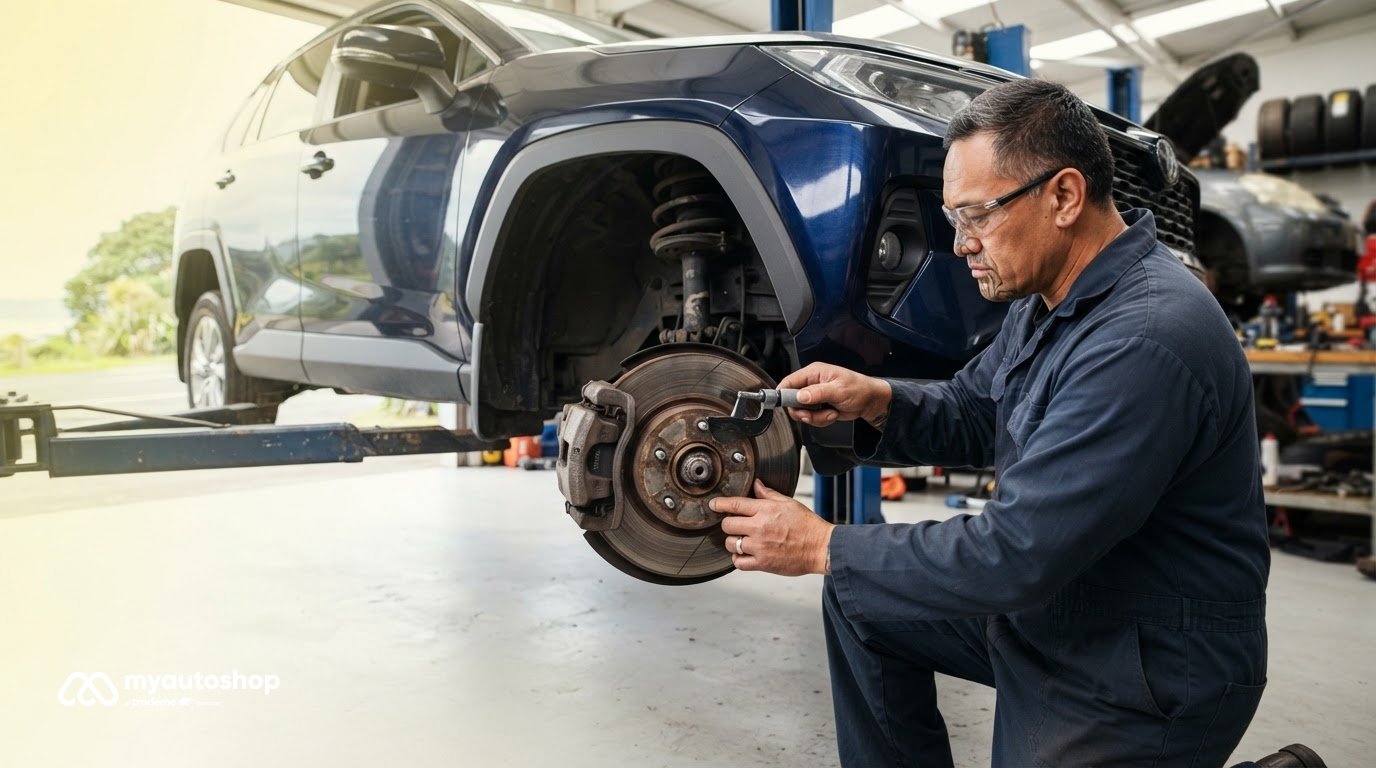
What if a brake pedal that pulses doesn’t mean your rotors are the problem? If you’re wondering how to tell if you need new brake rotors, unfamiliar noises, vibrations and visible marks can all raise questions, but none confirms the cause on its own. Worn brake pads or other brake faults can create similar symptoms.
Take changes in braking seriously, but don’t guess at the repair. An inspection can show whether a rotor is worn below its manufacturer’s minimum thickness or damaged enough to affect braking. A WoF check is a minimum safety assessment, not a measure of how much life a rotor has left.
This guide covers warning signs, other possible causes and when to arrange a professional inspection. It also explains what to ask the mechanic, so you can understand the findings and weigh up repair or replacement without feeling pressured into unnecessary work.
Key Takeaways
- For how to tell if you need new brake rotors, treat noise, pulsing or uneven braking as clues to investigate, not proof of a rotor fault.
- Note when symptoms occur and share those details with a mechanic to help narrow down possible causes.
- Ask how the rotor’s condition compares with the vehicle manufacturer’s specifications, and whether pad wear or another issue may be contributing.
- If braking feels unsafe, pull over somewhere safe and arrange suitable professional assistance.
- Before deciding on repair or replacement, ask for a clear explanation of the findings and why the recommended work is needed.
Warning Signs You Need New Brake Rotors
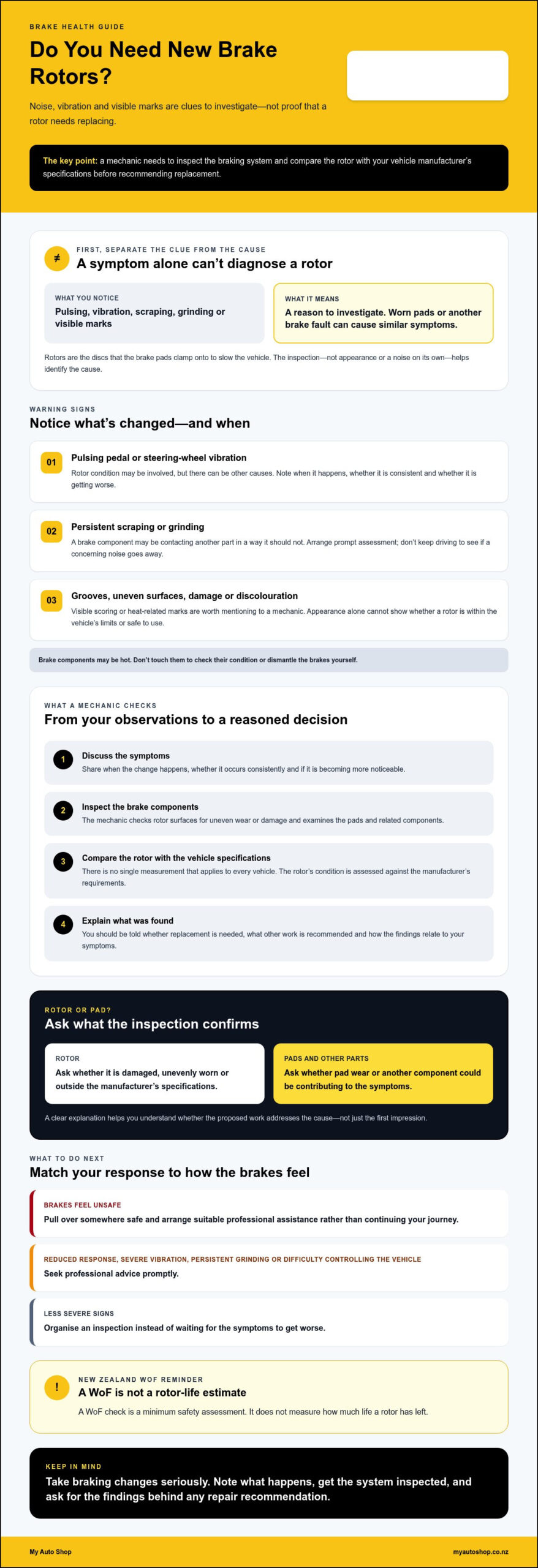
If you’re asking how to tell if you need new brake rotors, watch for changes such as vibration while braking, persistent scraping or grinding, and visible scoring. These signs can point to rotor trouble, but they don’t confirm the cause. Brake pads and other parts can produce similar symptoms, so a mechanic needs to inspect the braking system before recommending replacement.
Rotors are the discs that brake pads clamp onto to slow the vehicle. For a simple overview of how these parts work together, see this explanation of the disc brake system.
What brake pedal vibration, scraping, or grinding may mean
A pulsing brake pedal or steering-wheel vibration while braking can be related to rotor condition, but it may have other causes too. Note when it happens, whether it occurs consistently and if it’s getting worse. Share those details with the mechanic rather than assuming the rotor is at fault.
Persistent scraping or grinding deserves prompt assessment. It can indicate that a brake component is contacting another part in a way it shouldn’t. A brief, isolated noise doesn’t establish that rotors need replacing, but don’t dismiss a sound that returns or continues. Don’t keep driving to see if a concerning noise or vibration goes away.
What visible rotor wear can, and cannot, tell you
If you can see the rotor through the wheel, deep grooves, an uneven-looking surface or obvious damage are reasons to arrange an inspection. Discolouration or heat-related marks are also worth mentioning. These are clues for further checks, but appearance alone can’t show whether a rotor is within the vehicle manufacturer’s limits or safe to use.
Don’t touch brake components to check them, as they may be hot, and don’t dismantle the brakes yourself. A mechanic can assess the rotor properly and identify whether the cause lies elsewhere.
Act promptly if braking feels different. Reduced braking response, severe vibration, persistent grinding or a feeling that the vehicle is difficult to control calls for professional advice. If the brakes feel unsafe, pull over somewhere safe and arrange suitable assistance rather than continuing your journey. For less severe signs, organise an inspection instead of waiting for them to get worse.
How a mechanic checks whether brake rotors need replacing
A mechanic won’t decide on new rotors from a noise or mark alone. They’ll consider what you’ve noticed, inspect the brake components and assess the rotors against the vehicle manufacturer’s specifications. This helps establish whether replacement is necessary or whether another part may be causing the symptom.
What happens during a brake rotor inspection?
The assessment typically follows a clear sequence:
- Discuss the symptoms. Explain when the noise, vibration or change in braking response happens, whether it occurs consistently and if it’s becoming more noticeable.
- Inspect the brake components. The mechanic checks the rotor surfaces for uneven wear or damage, and examines the pads and related components so the symptom isn’t attributed to the rotor too soon.
- Assess the rotor’s condition. Its condition is compared with the vehicle manufacturer’s requirements. There isn’t one universal measurement that applies to every vehicle.
- Explain the findings. You should be told what was found, whether the rotor needs replacing and what other work, if any, is recommended.
A professional brake inspection involves looking at the braking components and their condition, not just responding to the driver’s first impression. The linked guide offers a general visual overview, but your vehicle’s specifications and the inspection findings are what matter for a replacement decision.
What should the inspection findings explain?
Ask the mechanic to show or describe the finding behind their recommendation. Is the rotor damaged, unevenly worn or outside the manufacturer’s specifications? Ask whether the brake pads or another component also needs attention, and why. A clear explanation helps you understand whether the proposed work addresses the cause of the symptoms.
Rotor and pad problems can overlap, so it’s useful to understand the signs of brake pad wear as well. The aim isn’t to diagnose the fault yourself, but to understand what the inspection has confirmed.
If the assessment confirms that repair or replacement is needed, you can use My Auto Shop’s service platform to connect with automotive service and repair providers. Review the findings and proposed work before deciding how to proceed.
Brake rotors or brake pads? Compare symptoms before assuming
Brake pads press against the rotors to slow your vehicle, so wear or problems in either part can affect braking. A squeal, vibration or uneven braking may point to a rotor, a pad or another part of the braking system. No single sound or visible mark proves that a rotor needs replacing. Use the clues to describe what’s happening, then have the system checked.
Rotor symptoms compared with worn brake pad symptoms
The table shows possible connections, not a way to diagnose the fault yourself. A mechanic needs to confirm the cause and whether any component is outside the vehicle manufacturer’s specifications.
| What you notice | Possible causes | What needs professional confirmation |
|---|---|---|
| Pedal pulses or steering wheel vibrates while braking | Rotor condition, pad contact or another braking component | Whether the rotor is uneven or damaged, and whether another component explains the vibration |
| Squealing or other repeated brake noise | Pad wear, rotor surface condition or another source in the brake system | Where the noise comes from and whether the pads or rotors need attention |
| Scraping or grinding during braking | Possible contact or wear involving pads, rotors or related components | Whether continued driving is safe and what repair is needed |
| Visible grooves or an uneven rotor surface | Rotor wear or damage, though appearance can be misleading | Whether the rotor’s measured condition meets the vehicle’s specifications |
Because pads and rotors work together, wear in one can affect the other. Even if a rotor looks marked, its appearance alone can’t confirm that it must be replaced. Likewise, a noise often associated with pad wear doesn’t rule out a rotor or another cause. For more on pad-specific symptoms, see the brake pad wear guide.
Could another brake problem cause the same warning signs?
Yes. Related components can create overlapping noise, vibration or uneven braking, so checking only the visible rotor may miss the cause. Tell the mechanic when the symptom occurs, whether it affects the pedal or steering wheel, and if it happens every time you brake. Those details can help guide a wider inspection.
A squeal, in particular, can have more than one explanation. Read the brake squealing explainer for common noise-related causes, but don’t use a sound alone to decide whether to replace rotors. If you’re weighing up how to tell if you need new brake rotors, the answer comes from comparing your symptoms with an inspection of the pads, rotors and related components.
When to stop driving and arrange a brake inspection
Brake symptoms don’t tell you exactly which part has failed, but some changes call for urgent action. Don’t rely on a quick look at the wheels or a checklist to decide that the vehicle is safe to drive. If braking feels unreliable, put safety first and get professional advice.
Which brake symptoms should you treat as urgent?
Seek prompt advice if you notice severe grinding, markedly reduced braking, or a brake pedal that feels unusually soft, hard or otherwise different from normal. These symptoms can have several causes, and you can’t confirm the fault or its seriousness from the symptom alone.
If you can’t brake confidently, slow down as safely as you can and pull over somewhere safe. Arrange suitable professional assistance rather than continuing to drive to see whether the problem improves. There’s no universal safe distance to travel with a brake fault, so don’t assume you can reach a workshop under your own steam.
A new but less severe noise or vibration still deserves a scheduled assessment, especially if it returns or becomes more noticeable. Describe when it happens and how the braking feels. That information helps a mechanic decide what to inspect without treating a suspected rotor issue as a confirmed diagnosis.
Does a WoF check replace a brake repair assessment?
No. A WoF checks whether a vehicle meets minimum safety requirements at the time of inspection. It isn’t a full mechanical health check, and a pass doesn’t confirm how much useful life a rotor has left or rule out a fault that develops later. If you notice a braking change, arrange an assessment rather than waiting for the next WoF.
Waka Kotahi’s inspection requirements include brake rotor condition, but that check serves a different purpose from diagnosing a symptom or estimating remaining rotor life. Ask the inspector or mechanic what was checked and whether a separate assessment is needed if you still have concerns. If a soft or spongy pedal is part of what you’ve noticed, it’s also worth understanding what a brake fluid flush costs in NZ and what the service involves, since fluid condition can affect pedal feel independently of rotor or pad wear.
Once you understand the issue, you can consider suitable next steps. My Auto Shop connects motorists with service and repair providers. Explore the available service options after you’ve had the cause assessed.
What to do next if your brake rotors may need replacing
If you suspect a rotor problem, keep the next steps simple: note what you’ve noticed, arrange an assessment, review the findings and then decide how to proceed. Symptoms can help a mechanic investigate, but they can’t confirm on their own that replacement is needed.
- Record the symptoms. Note whether you hear noise, feel vibration or notice a change in braking, and when it happens.
- Arrange an assessment. If braking feels unsafe, don’t continue driving. Otherwise, book a professional inspection rather than relying on appearance alone.
- Review the findings. Ask what the mechanic found on the rotors, pads and related components.
- Decide with clear information. Check that you understand the recommended work and why it’s being suggested before approving it.
This gives you a practical answer to how to tell if you need new brake rotors: match your observations with the inspection findings, not a guess based on one symptom.
Questions to ask before approving rotor work
Ask which specific inspection findings show that replacement is needed for your vehicle, and how the rotor’s condition compares with the manufacturer’s specifications. A clear explanation should connect the evidence to the recommendation.
Also ask whether the brake pads or other components are affected, and whether that work is related to the rotor concern. Request an explanation of each proposed job and any relevant follow-up checks. Reputable independent repair facilities like Speedy Roo Motorsports & Repair Inc routinely walk motorists through these details so you don’t need to diagnose the fault yourself, but can easily understand what’s being recommended and why.
Finding a suitable repair option in New Zealand
Once you’ve reviewed the findings, choose a repair option that suits your needs. My Auto Shop connects motorists with service and repair providers. Marketplace providers aren’t necessarily employed by My Auto Shop, so check the provider’s details and the proposed work before making a decision.
Keep the inspection findings handy when comparing options, and make sure you understand what each proposed repair covers. When you’re ready to consider a provider, explore the service options available through My Auto Shop.
Get clear answers before deciding on brake repairs
Brake pedal vibration, scraping, grinding or visible rotor marks can be clues, but they don’t confirm that the rotors need replacing. Pads and other brake components can cause similar symptoms. If you’re wondering how to tell if you need new brake rotors, the reliable next step is a professional assessment against your vehicle’s specifications.
Note what you’ve noticed and ask the mechanic to explain the rotor condition, any related pad wear and the reason for each recommended repair. If braking feels unsafe, stop somewhere safe and arrange suitable assistance. A WoF check isn’t a substitute for investigating a change in braking or confirming how much life a component has left.
Once you understand the findings, you can make a more informed decision. Explore My Auto Shop’s service platform to connect with a provider and discuss suitable next steps for your vehicle.
Frequently Asked Questions
How do I know if my brake rotors are worn?
Vibration while braking, persistent scraping or grinding, and visible grooves can be clues, but they don’t prove the rotors are worn out. If you’re asking how to tell if you need new brake rotors, look for changes in how braking feels and arrange an inspection. A mechanic can assess the rotor condition against your vehicle manufacturer’s specifications and check whether pads or other components could be causing the symptoms.
Can warped brake rotors cause the steering wheel to shake?
Rotor condition can be one possible cause of steering-wheel vibration during braking, but it isn’t the only explanation. The brake pedal may also pulse. Describe when the shaking happens and whether it occurs each time you brake. A mechanic needs to inspect the braking system and confirm the cause, rather than assuming a rotor is warped from vibration alone.
Can you tell if brake rotors need replacing by looking at them?
You may notice grooves, uneven-looking surfaces or obvious damage, and these are good reasons to request an inspection. But appearance alone can’t confirm whether a rotor is within the vehicle manufacturer’s specifications or needs replacement. Don’t touch brake parts that may be hot or dismantle the brakes yourself. Ask a mechanic to assess the rotor and explain what the findings mean.
Is it safe to drive with worn or damaged brake rotors?
You can’t confirm that it’s safe to drive from a symptom checklist or visual check. If braking feels markedly reduced, the pedal feels abnormal, or you hear severe grinding, seek prompt professional advice. If you can’t brake confidently, pull over somewhere safe and arrange suitable assistance. Don’t keep driving to test whether a concerning brake symptom disappears.
Do brake pads need replacing when brake rotors are replaced?
Not automatically. Whether pads also need replacement depends on their condition and the mechanic’s findings. Ask how much wear is present, whether the pads are affected by the rotor condition, and why any additional work is recommended. A clear explanation should connect the inspection results to each proposed repair, so you can make an informed decision.
Can noisy brakes mean the rotors need replacing?
Yes, brake noise can be a clue, but it doesn’t confirm that the rotors need replacing. Squealing, scraping or grinding may relate to pad wear, rotor condition or another brake component. Note whether the noise is brief or keeps returning, and when it occurs. Arrange an assessment for persistent or concerning noise instead of diagnosing it by sound alone.
Does a WoF check mean my brake rotors are in good condition?
No. A WoF checks whether the vehicle meets minimum safety requirements at the time of inspection. Under Waka Kotahi’s Vehicle Inspection Requirements Manual, a rotor worn below the manufacturer’s specified minimum thickness, or damaged enough to affect braking, can fail. A WoF doesn’t assess how much life a rotor has left, so arrange an inspection if you notice a braking change.
Disclaimer
This article provides general information only and should not be relied on as professional mechanical, safety or legal advice. Vehicle requirements and circumstances vary. If you are unsure about your vehicle, have it inspected by a qualified automotive professional.