
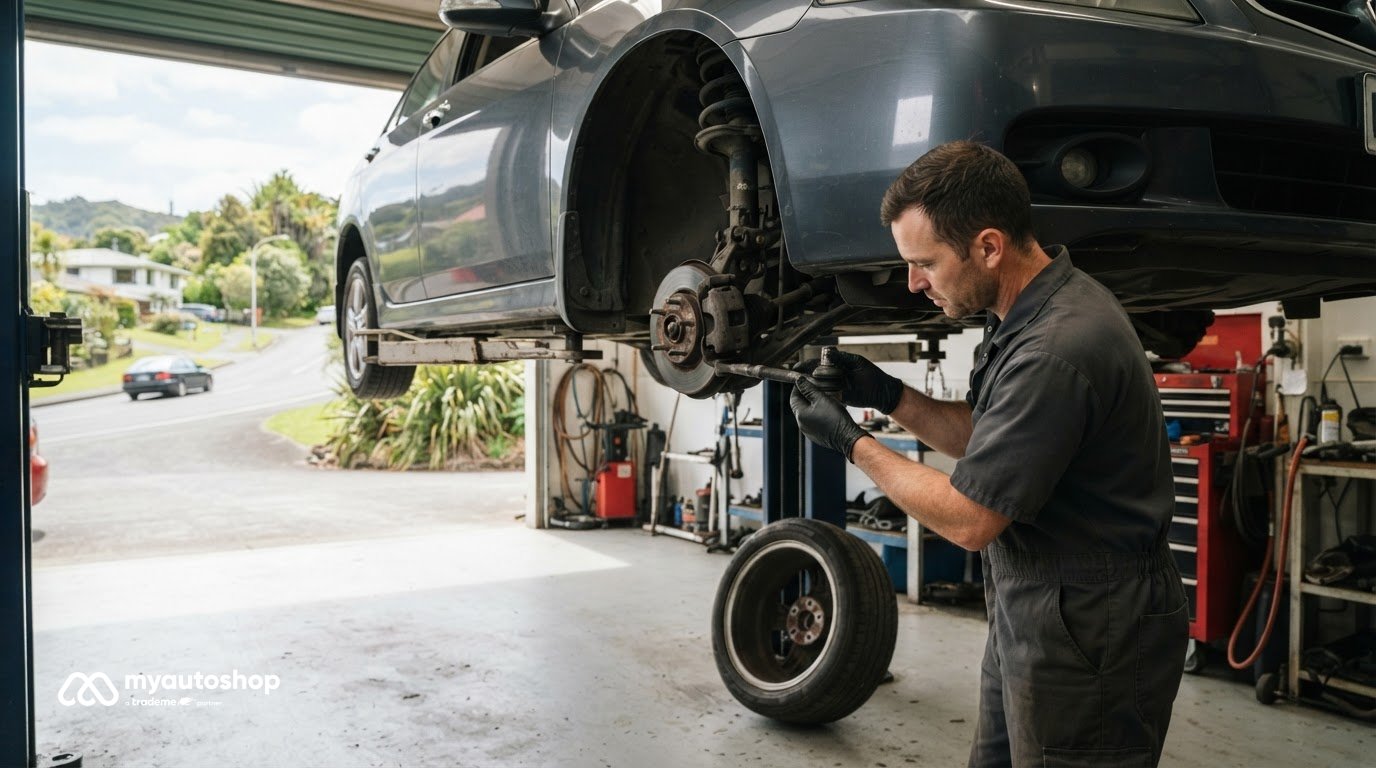
Could a clunk from the front of your car be more than a nuisance? The signs of a bad tie rod end can include knocking when turning or driving over bumps, vibration through the steering wheel, loose or wandering steering, and uneven wear on the front tyres. These symptoms are worth checking, but they don’t prove the tie rod end is at fault.
It’s understandable to wonder whether you’re dealing with a serious steering problem or another worn suspension part. Several faults can feel or sound similar, so a mechanic needs to inspect the steering and suspension before confirming the cause. A badly worn or broken tie rod can affect your ability to steer. Don’t ignore symptoms that persist or get worse.
This guide explains what to look and listen for, why symptoms alone aren’t enough to diagnose a tie rod end, and when to arrange a professional inspection. It also covers what to tell the mechanic, such as when the noise happens, how the steering feels, and whether you’ve noticed changes in tyre wear. If the car feels difficult to control, stop somewhere safe and seek professional advice before driving further.
Key Takeaways
- The signs of a bad tie rod end can overlap with other front-end faults, so treat symptoms as clues rather than a diagnosis.
- Use symptom patterns to organise what you’ve noticed, not to identify the failed part yourself.
- Remote advice can’t confirm whether your car is safe to drive. Worsening steering, pronounced looseness, or new concerning noises call for prompt professional assessment.
- A mechanic checks related steering and suspension components before recommending what, if anything, needs repair.
- Note when symptoms occur and how they’re changing, then share those details when arranging an assessment.
Signs of a Bad Tie Rod End: What Changes in Your Steering?
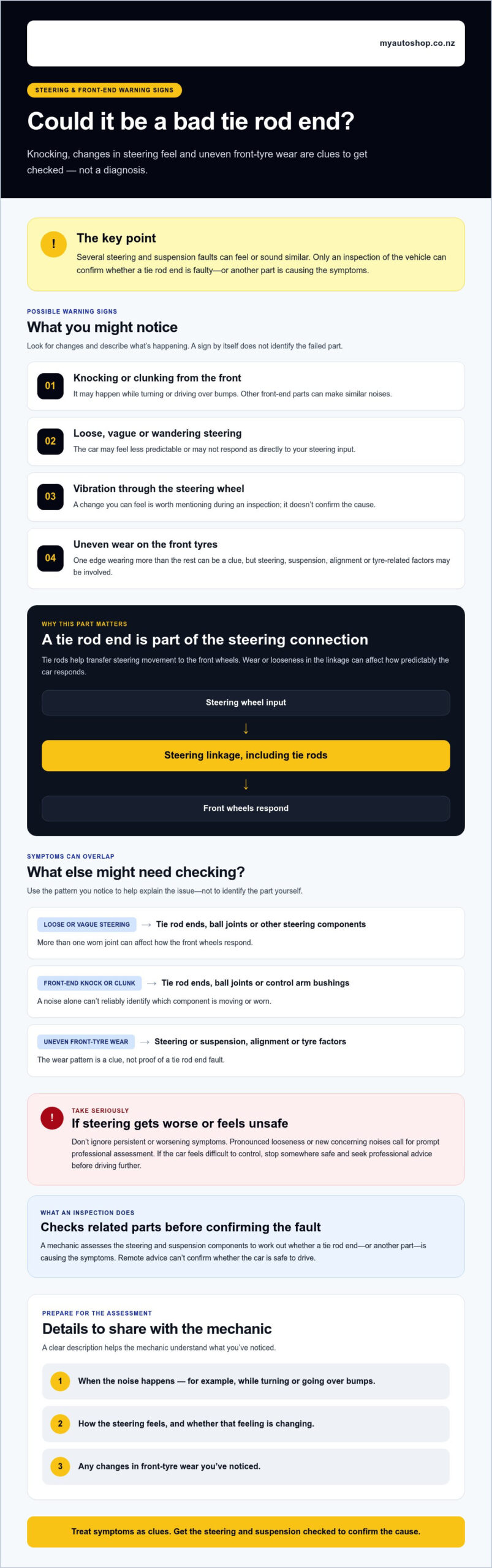
Steering that feels loose or vague, unusual wear on the front tyres, or a knock from the front of the car may warrant an inspection. These are possible signs of a bad tie rod end, but none confirms the part has failed. Other steering or suspension problems can cause similar symptoms. Treat what you notice as a reason to arrange a check, not as a diagnosis.
A tie rod end is part of the steering linkage. It helps transfer steering movement to the front wheels, so wear or looseness in the linkage can affect how predictably the car responds. This overview of how tie rods are part of the steering mechanism explains their basic role.
This video looks at identifying front-end suspension noises. Treat it as general information, not a way to confirm which part is faulty.
What does a tie rod end do?
When you turn the steering wheel, connected steering components move the front wheels in response. Tie rods form part of the connection between the steering system and the wheels. If a joint develops wear or excess movement, steering may feel less precise. The car’s feel cannot show exactly which component is worn, so its condition needs to be assessed on the vehicle.
Which warning signs should drivers notice?
Pay attention to changes you can describe clearly. The steering might feel loose, vague, or less predictable than usual, or the car may not respond as directly to your input. A knocking or clunking sound from the front, especially over bumps or while turning, is another possible clue. Other front-end components can also make similar noises.
Look for uneven wear across the front tyres, such as one edge wearing more than the rest. That pattern can be associated with steering or alignment concerns, but it can have several causes. Don’t assume a tie rod end is responsible based on tyre wear alone.
Warning signs: Changes in steering feel, front-end knocking or clunking, and uneven front-tyre wear may justify an inspection. Confirmed diagnosis: Only an assessment of the vehicle can establish whether a tie rod end is faulty or another part is causing the symptoms.
How to Tell Tie Rod End Symptoms from Other Front-End Problems
Steering changes, knocks, and uneven tyre wear can point to more than one fault. A worn tie rod end is one possibility, but ball joints, control arm bushings, tyre condition, and wheel alignment can also be relevant. The pattern you notice helps a mechanic narrow down what to inspect, but it can’t confirm the failed part.
Use this table to organise your observations, not to diagnose the car. Even a symptom that seems to fit one component may have another cause. MOOG’s overview of symptoms of a failing tie rod end is useful background, but an inspection is still needed to identify the fault on your vehicle.
| What you notice | Possible areas to check | Why inspection matters |
|---|---|---|
| Loose or vague steering | Tie rod ends, ball joints, or other steering components | More than one worn joint can affect how the front wheels respond. |
| Knocking or clunking near the front | Tie rod ends, ball joints, or control arm bushings | A noise alone can’t reliably identify which component is moving or worn. |
| Uneven front-tyre wear | Steering or suspension wear, wheel alignment, or tyre-related factors | The wear pattern is a clue, not proof of a tie rod end fault. |
Could a ball joint cause similar symptoms?
Yes. Ball joints connect suspension components and allow movement as the wheel travels and turns. If one is worn, it may contribute to front-end noise or changes in handling, but those signs can overlap with tie rod end symptoms. No single knock or steering sensation reliably separates the two. A mechanic needs to check the relevant joints and surrounding parts together.
Could control arm bushings or tyres be involved?
Control arm bushings help cushion and locate suspension movement. Wear can contribute to changes in how the car feels, while uneven tyre wear may also relate to alignment or tyre condition. These clues can occur together, so don’t assume that a tyre wearing more on one edge identifies the cause. A mechanic can assess the components and alignment as part of a broader check.
Keep a note of what you notice, including which tyre is wearing unevenly, when a noise occurs, and whether steering has changed. That gives the mechanic a useful starting point without relying on guesswork. For information about arranging automotive services, see My Auto Shop service options.
Is It Safe to Drive with a Suspected Bad Tie Rod End?
You can’t tell remotely whether a car is safe to drive from symptoms alone. A loose steering feel, unusual noise, or other signs of a bad tie rod end need an in-person assessment to establish what’s wrong and how serious it is. If steering control feels compromised, don’t continue the trip. Pull over somewhere safe and seek professional assistance.
Steering is safety-critical. If the car’s response is getting worse, feels markedly loose or unpredictable, or you hear a concerning new noise, arrange a professional assessment promptly. Avoid testing the fault with abrupt turns, sudden braking, or high-speed driving. These manoeuvres won’t confirm the cause and could put you and others at risk.
Which symptoms should prompt urgent attention?
Take changes in control seriously. If the car doesn’t seem to respond reliably to steering input, starts wandering, or feels difficult to keep on course, find a safe place to stop and ask for advice before driving further. If you’re unsure whether it’s safe to continue, don’t rely on an online description to make that call. Explain what has changed and ask a vehicle professional what to do next.
A physical check helps a mechanic assess what is happening on your vehicle. Any demonstration of an inspection is only an illustration, not a substitute for having your own vehicle assessed.
Does a tie rod end fault automatically fail a WoF?
A suspected fault, noise, or steering symptom on its own doesn’t establish a WoF result. The inspector assesses the vehicle’s condition against current requirements. Keep that question separate from the immediate safety decision: don’t wait for a WoF inspection if steering feels compromised or symptoms are worsening. Ask an inspection provider or check current Waka Kotahi guidance for WoF requirements.
A mechanic can examine the steering and related front-end components to identify the cause and advise on the next step. My Auto Shop’s automotive service information explains the types of services available through its marketplace, where customers connect with service and repair providers.
How a Mechanic Checks a Tie Rod End Problem
A mechanic won’t assume that a tie rod end is the cause just because the steering feels loose or the front end knocks. They’ll use your description as a starting point, then inspect the steering and suspension to find where any wear or movement is coming from.
The check may include looking over the front tyres for uneven wear, assessing steering and suspension components, and checking for excess movement in relevant joints. The mechanic may raise the vehicle and examine how the parts move under controlled conditions. They’ll consider nearby components too, since a ball joint, bushing, or another steering part can produce similar symptoms. The exact inspection depends on the vehicle and what you’ve noticed.
What should you tell the mechanic?
Give clear observations rather than a diagnosis. Note what you hear or feel, when it happens, and whether the steering has changed. For example, mention if a clunk occurs over bumps, while turning, or in both situations. Share any visible uneven tyre wear and mention recent wheel alignment work, if you know about it.
- Describe when the symptom occurs and whether it’s getting worse.
- Explain how the steering feels, such as vague, loose, or difficult to keep predictable.
- Point out any tyre wear you’ve noticed and mention relevant recent work.
These details help the mechanic focus their assessment, but they don’t confirm the cause. A checklist of the signs of a bad tie rod end can help you explain what’s happening. It can’t identify the failed part or specify the repair.
Why can’t a symptom checklist confirm the fault?
Steering and suspension components work together, and their symptoms can overlap. A front-end clunk, for instance, may come from more than one part. That’s why a physical inspection matters. Ask the mechanic to explain what they found, which component is responsible, and what they recommend next. The repair should follow the inspection findings, not an assumption based on a noise or tyre-wear pattern.
When you’re ready to arrange an assessment, My Auto Shop’s marketplace connects customers with automotive service and repair providers. Explore the automotive service options to learn more.
What to Do Next if You Notice Tie Rod End Warning Signs
If you notice possible signs of a bad tie rod end, keep the next steps simple: record what’s happening, avoid testing the steering yourself, and arrange a professional assessment. Symptoms can point to a steering or suspension issue, but the inspection findings determine whether a tie rod end or something else needs attention.
How to prepare for a steering inspection
Before booking, make a brief note of what you’ve noticed. Include when a noise happens, whether the car’s handling or steering feel has changed, and which tyres appear to be wearing unevenly. Mention any recent wheel alignment work if you know about it. Don’t try to recreate a clunk with abrupt turns or other risky manoeuvres.
Share these observations as clues, not as a confirmed diagnosis. Ask the mechanic what they inspected, what they found, and how those findings point to the cause. The appropriate repair depends on the assessment, so avoid requesting replacement of a particular part before the fault has been confirmed.
Where to find related guidance or services
If a clunk over bumps is part of what you’re experiencing, read this guide to vehicle symptoms for related context. It may help you describe the noise, but it can’t establish which component is responsible.
My Auto Shop’s marketplace connects customers with automotive service and repair providers. Those providers aren’t necessarily My Auto Shop employees. Mobile servicing and repairs are a separate offering from Turners Service & Repairs, which operates in selected New Zealand regions.
A professional inspection is the sensible next step if steering symptoms persist or worsen. My Auto Shop’s services information explains how to explore automotive service options through its marketplace.
Take the Next Step with Confidence
Loose or unpredictable steering, front-end noises, and uneven tyre wear can be signs of a bad tie rod end, but they don’t confirm which part is at fault. Similar symptoms can come from other steering or suspension issues, so a mechanic needs to inspect the vehicle before recommending a repair.
Note what you’ve heard or felt, when it happens, and any changes in tyre wear. Share those details when you arrange an assessment, and ask the mechanic to explain what they found. If steering control feels compromised, stop somewhere safe and seek professional advice rather than continuing to drive.
My Auto Shop connects motorists with automotive service and repair providers through its marketplace. A clear account of the symptoms can help the provider understand what you need assessed.
A professional assessment can help you make a more informed decision about what your car needs. Take it one step at a time.
Frequently Asked Questions
What are the most common signs of a bad tie rod end?
Common signs include loose or vague steering, front-end knocking or clunking, and uneven wear on the front tyres. You may also notice the car feels less predictable or doesn’t respond as directly to steering input. These symptoms can have other causes, including faults elsewhere in the steering or suspension. Treat them as reasons to arrange an inspection, not as proof that a tie rod end has failed.
Can you drive with a bad tie rod end?
You can’t tell from symptoms alone whether a vehicle is safe to drive. A severely worn or failed steering component can affect control, so arrange a professional assessment promptly if steering feels loose, unpredictable, or is getting worse. If you feel you can’t control the car reliably, stop somewhere safe and seek assistance. Don’t try to test the suspected fault with abrupt manoeuvres or high-speed driving.
Can a bad tie rod end cause uneven tyre wear?
Yes, a worn tie rod end can contribute to uneven wear on the front tyres because it’s part of the steering linkage. However, tyre wear can have several causes, including wheel alignment or other steering and suspension issues. Look for changes such as one edge wearing more than the rest, then mention what you’ve noticed when arranging an inspection. The wear pattern alone can’t confirm which part is responsible.
What does a bad tie rod end sound like?
A worn tie rod end may make a knocking or clunking sound from the front of the car, sometimes when turning at low speeds or travelling over bumps. But that noise isn’t unique to a tie rod end. Other steering or suspension components may produce similar sounds. Note when the noise occurs and whether it’s changing, then share those details with a mechanic rather than trying to identify the part by sound alone.
Can a bad tie rod end cause loose steering?
Yes, wear or looseness in a tie rod end may contribute to steering that feels vague, loose, or less responsive. The car might not seem to react as directly as you expect when you turn the wheel. Other faults can cause a similar change, so steering feel alone can’t identify the cause. If control feels compromised or the looseness is worsening, stop somewhere safe and seek professional advice.
Does a bad tie rod end automatically fail a WoF in New Zealand?
Not every suspected tie rod end issue automatically means a WoF failure. The inspector assesses the vehicle’s actual condition against current New Zealand WoF requirements, so a symptom or suspected fault alone doesn’t determine the result. If you’re concerned about a steering change, arrange an assessment rather than waiting for a WoF inspection, and check current Waka Kotahi guidance for requirements.
How does a mechanic confirm a bad tie rod end?
A mechanic physically inspects the steering system and related suspension components, checking for wear, looseness, or excess movement. They may also consider tyre wear and your description of when noises or handling changes occur. This helps distinguish a tie rod end fault from other possible causes. Share your observations, then ask what the inspection found and how it supports the recommended next step. Don’t assume a particular part needs replacement before it’s checked.
To explore automotive service options through My Auto Shop’s marketplace, visit My Auto Shop.
Disclaimer
This article provides general information only and should not be relied on as professional mechanical, safety or legal advice. Vehicle requirements and circumstances vary. If you are unsure about your vehicle, have it inspected by a qualified automotive professional.