
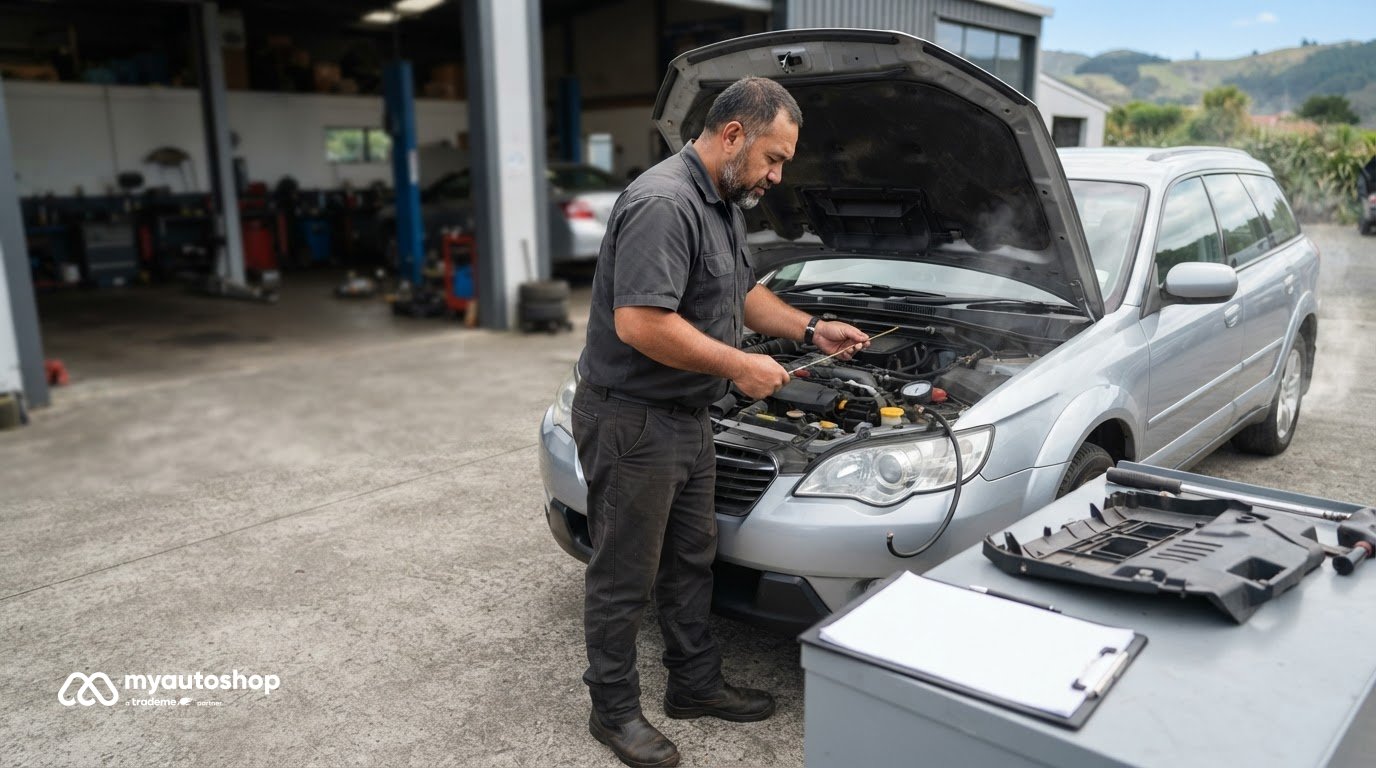
What if the head gasket is only part of the problem? If you’re asking, is it worth fixing a car with a blown head gasket, the answer depends on what the diagnosis reveals and how the rest of the vehicle is holding up. A gasket repair may make sense for a car in good overall condition, but overheating can also damage the cylinder head or other engine parts.
It’s understandable to hesitate before approving a major repair, especially when the symptoms could have another cause. White exhaust smoke, unexplained coolant loss and milky-looking oil can point to a head gasket fault, but they don’t confirm it on their own. Get the problem properly diagnosed before deciding, and avoid driving an overheating car because further damage can follow.
This guide explains what to ask about the diagnosis, how the repair scope affects your decision, and how to weigh the car’s condition and market value. You’ll also find practical next steps for comparing repair, replacement and moving on, so you can decide with clear information rather than guesswork.
Key Takeaways
- Whether it’s worth fixing a car with a blown head gasket depends on confirmed damage and the condition of the whole vehicle.
- Compare the written repair scope with the car’s age, kilometres, service history and other likely maintenance needs.
- Before approving work, record the symptoms and request a clear explanation of the findings and proposed repairs.
- Use the diagnosis and repair details to compare your practical options, rather than deciding from the suspected fault alone.
- My Auto Shop connects New Zealand motorists with automotive service and repair providers.
Is it worth fixing a car with a blown head gasket?
It can be worth fixing a car with a blown head gasket, but the answer depends on three things: whether the fault is confirmed, what work the engine needs, and the condition of the rest of the car. A gasket fault doesn’t automatically mean the vehicle is beyond repair, and a suspected fault isn’t enough to approve a repair.
Overheating, coolant loss, unusual exhaust smoke or contaminated-looking fluids can raise suspicion. They don’t prove the gasket has failed or show how much damage there is. The same symptoms can have other causes, so get a proper assessment before deciding what the car needs.
This video discusses symptoms and the repair-or-scrap decision:
What a head gasket does, in plain English
The head gasket seals the joint between the engine block and the cylinder head. It helps keep combustion pressure inside the cylinders while keeping engine oil and coolant in separate passages. If the seal fails, gases or fluids can escape or mix, potentially causing symptoms such as overheating or changes in the oil or exhaust. The Head gasket overview explains its role and common failure modes.
That description explains why a fault matters, but it doesn’t tell you the full repair scope. A gasket may have failed without causing the same degree of damage in every engine. If the engine has overheated, the cylinder head may also be warped or cracked. That possibility needs assessment rather than assumption.
Why the same diagnosis does not mean the same decision
Two cars with a confirmed gasket failure can call for different decisions. One may be in sound condition, with a clear repair scope and few other known issues. Another may have extensive engine damage as well as worn tyres, overdue maintenance or other faults. The diagnosis is one part of the picture, not a verdict on whether the car is worth keeping.
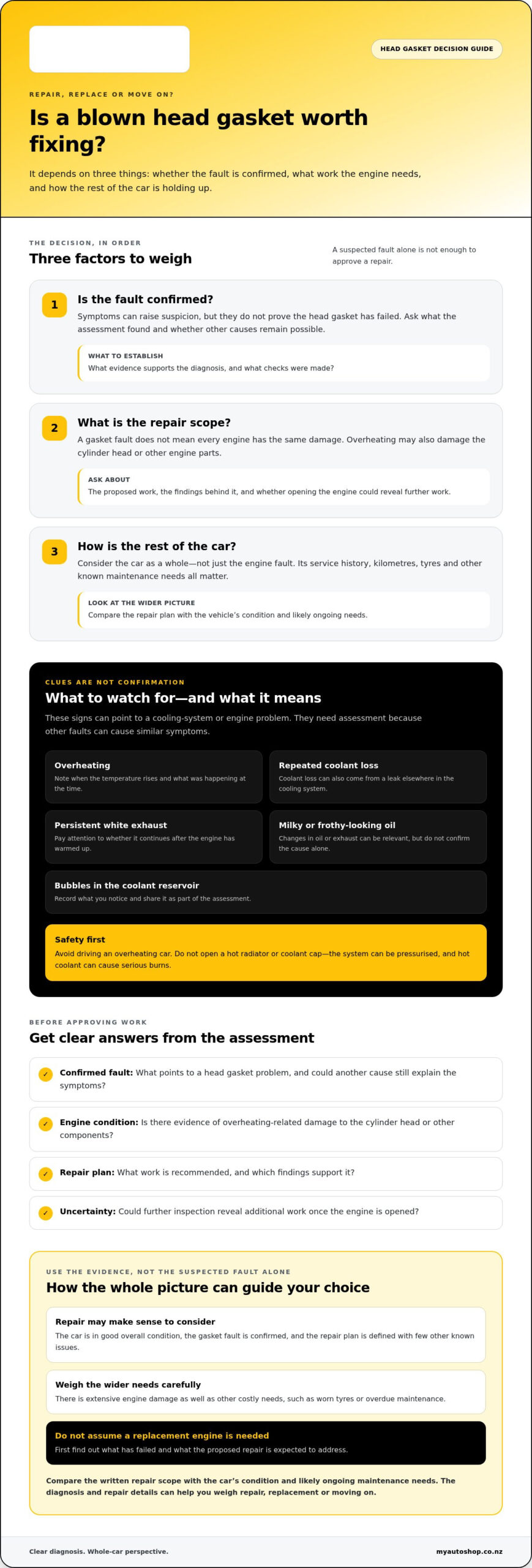
Before weighing up whether it’s worth fixing a car with a blown head gasket, separate the decision into three inputs:
- Confirmed fault: What did the assessment establish, and what remains uncertain?
- Repair estimate: What work is proposed, including any additional engine damage found?
- Wider vehicle condition: What do the car’s service history, kilometres, tyres and other known maintenance needs tell you?
For example, a well-maintained car with a confirmed gasket fault and a defined repair plan may be a more sensible repair candidate than a car with the same fault plus several other costly needs. Don’t assume every blown head gasket requires a replacement engine. First, understand what has failed and what the proposed work is expected to address.
Use that information to compare the repair with the vehicle’s overall condition and likely ongoing needs. The next step is to confirm the fault and get a clear explanation of the assessed damage before committing to work.
How to confirm a blown head gasket before repairs
Warning signs can point to a cooling-system or engine problem, but they can’t identify the cause on their own. A clear diagnosis matters because symptoms may come from different faults, and the repair required depends on what an assessment finds. A mechanic should confirm the fault and explain any related damage before you decide what to do.
Which symptoms can raise suspicion?
Keep track of what you notice and when it happens. An overheating temperature gauge, repeated coolant loss, persistent white exhaust after the engine has warmed up, or oil that looks milky or frothy can all warrant investigation. Bubbles in the coolant reservoir may also be relevant. These signs need context. For example, white vapour on a cold start can be condensation, while coolant loss can result from a leak elsewhere in the cooling system.
Look for patterns, not just one-off clues. Note whether the temperature rises during a particular trip, whether you need to top up coolant, and whether exhaust changes continue once the engine is warm. Don’t open a hot radiator or coolant cap. The system can be pressurised, and hot coolant can cause serious burns.
Symptoms alone cannot confirm a failed head gasket or the repair needed. Overheating, coolant loss, exhaust changes and fluid contamination must be assessed alongside the vehicle’s condition and other possible causes. Ask a mechanic to investigate before treating the gasket as a confirmed fault.
What a diagnosis should establish
A useful assessment should go beyond repeating the symptoms you’ve reported. It should explain whether the evidence supports a head gasket failure, what checks were made, and whether there are signs of damage beyond the gasket. Depending on the vehicle and findings, a mechanic may use cooling-system checks or engine tests to help narrow down the cause. No single result should be treated as the whole story without the relevant context.
Ask for a clear explanation of:
- The confirmed fault: What points to a head gasket problem, and are other causes still possible?
- The engine’s condition: Is there evidence of overheating-related damage to the cylinder head or other components?
- The proposed work: What repair is recommended, and what findings support it?
- Any uncertainty: Could further inspection reveal additional work once the engine is opened?
These answers help separate evidence from assumptions. To decide whether it’s worth fixing a car with a blown head gasket, consider the confirmed fault and repair scope together. If you need help finding an automotive service or repair provider for an assessment, My Auto Shop’s repair-provider marketplace connects motorists with providers.
Repair or replace the car? Compare the whole picture
Once you have a written repair scope, compare it with the condition and value of the car as a whole. The decision isn’t just about whether the engine can be repaired. Consider the car’s age, kilometres, service history, current faults and likely maintenance needs, then weigh those against the repair estimate and what a suitable replacement would mean for your budget.
There’s no single age or kilometre reading that settles whether it’s worth fixing a car with a blown head gasket. Use the table to decide whether the information points towards repair, more investigation or comparing replacement options.
| What you find | What it may suggest | What to consider next |
|---|---|---|
| The car has a good service history, is otherwise in sound condition, and the confirmed repair scope is clear. | Repair may be worth considering. | Compare the estimate with the car’s value and expected maintenance needs. |
| The diagnosis is uncertain, or the full extent of engine damage isn’t clear. | Further assessment may be the sensible next step. | Get the findings and any remaining uncertainties explained before deciding. |
| There is extensive confirmed engine damage alongside several other significant faults. | Replacing the car may be more practical. | Compare the total repair needs with the condition and cost of a suitable replacement. |
When repairing may make sense
A car with a consistent service history and few other known problems may still have useful life ahead, regardless of its age or kilometres. Repair can be a reasonable option if the assessment has identified the fault, the proposed work addresses it, and the rest of the vehicle is in a condition you’re comfortable keeping. Factor in upcoming needs, such as maintenance already due, rather than assuming this repair will prevent future faults.
When replacing may be the more practical option
If the assessment finds extensive engine damage and the car also needs substantial work elsewhere, compare the combined repair needs with your replacement options. Include any likely maintenance on the current car, not only the immediate engine work. High kilometres or age can be relevant, but neither is a verdict on its own. A well-maintained older car may suit you better than a newer car with a poor history or unresolved faults.
For a grounded comparison, write down the repair estimate, confirmed findings, other known faults and upcoming maintenance. Then compare that list with the vehicle’s realistic market value and the cost and condition of a suitable replacement. If repairs simply cost too much, selling a non-running or damaged car to a buyer such as Windward Auto Removal Service can provide immediate cash to put toward your next vehicle. If key details are still unknown, seek clarification before making a final decision.
What to do before approving a head gasket repair
Before authorising a major engine repair, make sure you understand what has been confirmed, what work is proposed and how it fits with the car’s overall condition. Keep the process simple and in order. A written explanation helps you compare options without relying on a symptom or verbal estimate alone.
- Document what you’ve noticed. Record when the temperature rises, whether coolant levels keep dropping, and any changes in the exhaust or engine fluids. Include when symptoms began and whether they happen on particular trips. This history can help the mechanic investigate the fault.
- Get the vehicle assessed. Ask for the suspected head gasket fault to be investigated, rather than assuming one warning sign proves it. Request a clear written explanation of the findings, including any evidence of related engine damage and any uncertainty that remains.
- Review the proposed repair scope. Check what work is included, what parts of the engine may need attention, and whether further damage could be discovered during the repair. Make sure you understand what the estimate covers before approving the work.
- Compare your options. Consider the repair estimate alongside the car’s service history, kilometres, other known faults and likely maintenance needs. If the information is incomplete, resolve those gaps before deciding whether to repair or replace the vehicle.
Ask direct questions before you give approval: What findings support the diagnosis? Was any damage beyond the gasket identified? Which work is included, and what might change the estimate? How does the repair fit with the car’s other faults and overall condition? Clear answers make it easier to judge whether the proposed work addresses the problem and makes sense for your car.
Don’t keep driving an overheating car. If the temperature warning appears or the gauge moves into the danger zone, pull over somewhere safe and switch off the engine. Continuing to drive while it overheats can worsen engine damage. Don’t remove a radiator or coolant cap while the engine is hot, as hot, pressurised coolant can cause burns.
A current WoF is not a diagnosis of a suspected engine fault. It doesn’t replace an assessment of overheating, coolant loss or other symptoms that have appeared since the inspection. Keep the repair decision focused on the vehicle’s present condition and the mechanic’s findings, not on the WoF alone.
Use this process to decide whether the repair scope is clear enough to approve or whether you need more information first. If you’re ready to compare repair options, explore car repair services through My Auto Shop, which connects motorists with service and repair providers.
Arrange a clear repair assessment through My Auto Shop
You’ve now got the key points for deciding whether a head gasket repair may suit your car: confirmed findings, a clear repair scope and an honest view of the vehicle’s wider condition. If you’re still weighing up the options, My Auto Shop can help with a practical next step by connecting motorists with automotive service and repair providers.
Use the information you’ve gathered to keep the decision focused. A written diagnosis and proposed work give you something concrete to consider alongside the car’s age, kilometres, service history and other known faults. If the findings are incomplete, seek clarity before authorising a major repair. If the scope is clear, compare it with your plans for the vehicle and the likely needs of a replacement.
Turn your diagnosis into a practical plan
There isn’t one right outcome for every car. A repair may suit a vehicle in sound condition with a defined fault and a repair plan you’re comfortable with. If the assessment identifies wider damage or the car has several other significant needs, you may prefer to compare replacement options or look into car disposal services like Melbourne Car Removal to recoup value from a severely compromised vehicle. Your decision should reflect the vehicle’s assessed condition and what works for you, not a general rule based on age or kilometres.
Before moving ahead, keep your key information together:
- The diagnosis: What fault has been confirmed, and what evidence supports that finding?
- The repair scope: What work is proposed, and what remains uncertain?
- The wider picture: What other faults or maintenance needs should be included in your comparison?
This gives you a clear basis for deciding whether it’s worth fixing a car with a blown head gasket in your circumstances. My Auto Shop’s car repair services information can help you understand the broader service options available through the platform. My Auto Shop connects motorists with providers; those providers are not necessarily My Auto Shop employees.
Know which service brand is involved
Keep the names clear as you look at next steps. My Auto Shop is the automotive services platform and repair-provider marketplace. Turners Service & Repairs is a separate business that provides mobile servicing and repairs in selected New Zealand regions. Marketplace providers are not Turners Service & Repairs technicians, and the two brands are not interchangeable.
If a mobile repair option is relevant to your situation, identify it as a Turners Service & Repairs service, not as a My Auto Shop marketplace repair. Otherwise, use My Auto Shop to explore the provider marketplace and general automotive information without assuming who employs a particular mechanic.
When you’re ready to explore automotive service and repair providers, take your written diagnosis and repair details with you. That keeps your decision based on what’s been found, not guesswork.
Make your next move with confidence
A major engine fault can make the next step feel urgent, but you don’t have to decide from worry alone. Consider what suits your transport needs, budget and plans for the car. If you’re still asking, “is it worth fixing a car with a blown head gasket”, focus on choosing the option that makes sense for your circumstances.
Once you’ve settled on a direction, make a practical plan to carry it out. If you’re exploring repair options, explore car repair services and take your next step with a clearer idea of what you need.
Whatever you decide, an informed choice is a practical one. Trust the information you’ve gathered and move forward with confidence.
Frequently Asked Questions
How much does it cost to fix a blown head gasket?
The cost depends on your vehicle and the confirmed repair scope, so an assessment is needed for a useful estimate. The work may involve more than replacing the gasket if inspection finds damage to the cylinder head or other engine components. Ask for a written breakdown of the proposed work and what could change if further damage is found. That gives you a clearer figure to compare with the car’s value and condition.
Can a car still run with a blown head gasket?
Yes, an engine may continue to run, but that doesn’t mean it’s safe or sensible to keep driving. If the temperature gauge rises, a warning light appears, or coolant is escaping, pull over somewhere safe and switch off the engine. Continuing to run an overheating engine can worsen damage. Don’t open the coolant system while it’s hot. Arrange an assessment before using the car again.
Does head gasket sealer work?
Pour-in sealer may temporarily reduce a very minor leak, but it doesn’t repair the underlying mechanical failure and shouldn’t be treated as a dependable permanent fix. It may also block parts of the cooling system, including the radiator or heater core. If you’re considering it for an older car, weigh that risk against getting a proper diagnosis first. A mechanic can explain whether the symptoms point to a gasket fault or another problem.
Can a blown head gasket be mistaken for another problem?
Yes. Similar warning signs can come from other engine or cooling-system faults, so a symptom doesn’t identify the failed part by itself. For instance, coolant loss may be caused by a leak elsewhere, while white vapour on a cold start can be condensation. Note when the signs occur and whether they persist as the engine warms. A mechanic’s assessment helps distinguish a suspected gasket issue from other possible causes.
Is a blown head gasket covered by car insurance in New Zealand?
It depends on your policy and the circumstances behind the failure. Don’t assume that mechanical breakdown is covered, or that it is automatically excluded. Check your policy wording for sections on mechanical faults, gradual damage, exclusions and any optional cover you have selected. If the wording isn’t clear, contact your insurer and describe what happened before the fault was diagnosed. Keep any inspection findings and repair documents for reference.
How long does a head gasket repair take?
There isn’t one set timeframe. The vehicle’s design, parts access and confirmed repair scope all affect how long the work takes. If inspection finds additional damage, such as a cylinder head that needs attention, the job may take longer than a gasket replacement alone. Ask for an estimated timeframe based on your vehicle and the work proposed, and clarify whether that estimate could change if further issues are found during repair.
Does a blown head gasket always mean the engine needs replacing?
No. A failed gasket doesn’t automatically mean the whole engine must be replaced. The appropriate repair depends on the engine’s condition and whether overheating has caused further damage. In some cases, the gasket may be the main fault; in others, inspection may find damage that changes the repair plan. Before deciding whether it’s worth fixing a car with a blown head gasket, ask what the assessment confirms and why the recommended work is needed.
Disclaimer
This article provides general information only and should not be relied on as professional mechanical, safety or legal advice. Vehicle requirements and circumstances vary. If you are unsure about your vehicle, have it inspected by a qualified automotive professional.