
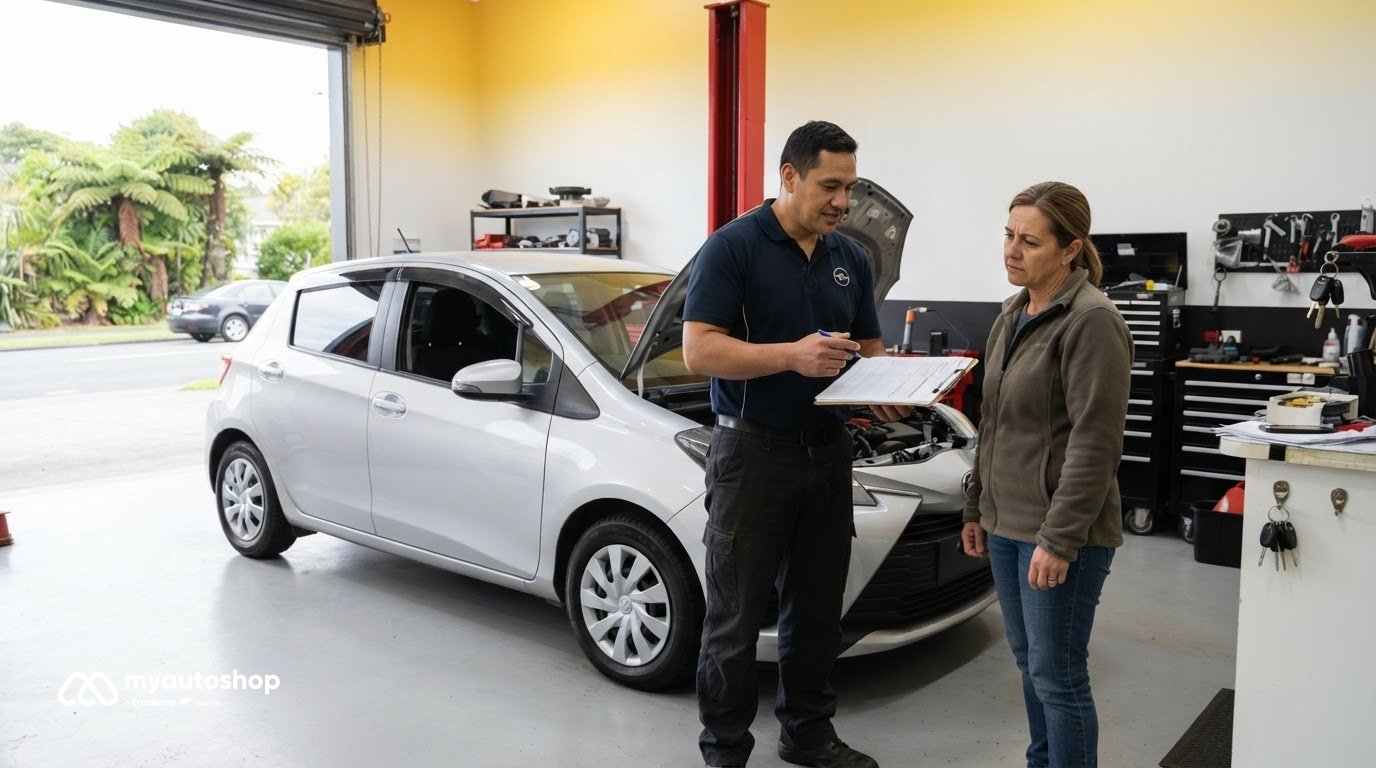
Can a mechanic keep your car over a bill you believe is wrong? A mechanic’s lien on your car is a specific right to retain the vehicle for unpaid work, not a blanket answer to every repair dispute. If you’re asking “mechanic’s lien on my car what are the rules nz”, start with what work you authorised, what price was agreed and whether you’ve paid it.
It’s stressful to lose access to a car you rely on, especially if you’re unsure whether the bill is fair. In New Zealand, a repairer’s lien under the Contract and Commercial Law Act 2017 may allow a mechanic to retain your vehicle for work done at your request until the amount owed is paid. Extra work you didn’t authorise, or a charge above an agreed quote, can affect the situation.
This guide explains when a repairer may be entitled to keep your car, which paperwork and messages to gather, and how to raise the issue calmly. It also covers options such as paying under protest to retrieve the vehicle and taking an unresolved repair-bill dispute to the appropriate place.
Key Takeaways
- A repairer’s lien may let a mechanic retain your car in specific circumstances, but it doesn’t make the vehicle theirs.
- To understand “mechanic’s lien on my car what are the rules nz”, check the work you agreed to, the invoice, payment status and who currently has the car.
- Gather the quote, job authorisation, invoice, payment records and messages before discussing the dispute.
- Separate questions about retaining the car from concerns about unauthorised work, extra charges or repair quality. Each may require different evidence.
- Ask the mechanic to explain the reasons in writing, then decide whether to seek clarification, negotiate or get independent legal guidance.
What is a mechanic’s lien on a car in New Zealand?
A repairer’s lien may allow a mechanic to keep your car in legally defined circumstances, but it doesn’t transfer ownership. A lien is a claimed right to retain property as security for payment. Whether it applies depends on the repair arrangement and relevant legal rules, not simply on whether the mechanic has sent an invoice.
That distinction matters when your car is unavailable and you’re trying to understand “mechanic’s lien on my car what are the rules nz”. The lien question is about possession: can the repairer lawfully hold the car? Whether the amount charged is fair, the work was authorised or the repair was done properly are related but separate questions. A repairer’s lien is a limited right to retain a vehicle as security for payment for work, not a right to own or automatically sell it.
What does a repairer’s lien mean for a car owner?
Think of an unpaid repair invoice as a possible example, not an automatic answer. If you asked a workshop to carry out repairs and the invoice remains unpaid, the mechanic may claim a lien and refuse to release the car. Whether that claim is valid depends on the circumstances and the law. Disputing a bill doesn’t, by itself, settle the question either way.
Ownership and possession are different. The car remains yours; the issue is whether the repairer can keep it while seeking payment. Don’t assume that a disagreement means the workshop must release it immediately, or that holding it proves every charge is correct. Keep the discussion focused on the work requested, the amount claimed and the basis for retaining the vehicle.
If the disagreement also concerns a fault that remains after repair, describe that separately from the question of possession. A car symptoms guide can help you put the mechanical concern into clear terms.
Which New Zealand law should you check?
The relevant legislation identified for a repairer’s lien is the Contract and Commercial Law Act 2017. Check the current Act’s wording for the circumstances and limits that apply. Don’t assume overseas rules or terminology are the same in New Zealand. For general background only, What is a Mechanic’s Lien? outlines the concept, but New Zealand legislation is the relevant source for local rules.
Consumer-protection law may also matter, depending on who arranged the repair and the circumstances. For consumer repair services, the Consumer Guarantees Act may be relevant to questions about reasonable care and skill. That doesn’t answer the separate lien question by itself. Keep evidence about the repair agreement, invoice and any concerns about the quality of the work, then identify which issue you need resolved.
When can a mechanic keep your car under NZ lien rules?
A mechanic may be able to retain your car where work was done at your request and payment remains due for that work. An unpaid invoice alone doesn’t settle whether a lien applies. The agreed job, amount charged, payment history and the mechanic’s possession of the vehicle all matter. The Contract and Commercial Law Act 2017 is the relevant New Zealand legislation to check for the current rule.
Establish what repair or service you authorised, what the mechanic did, what price was agreed, if any, and whether you’ve paid that amount. A lien concerns work on the vehicle and a debt for that work. It shouldn’t be treated as a general right to hold a car over unrelated charges or work the owner never requested.
Does an unpaid repair bill automatically let a mechanic retain a car?
No automatic conclusion follows just from an unpaid bill. Consider the work requested and completed, the payment due for it, and whether the repairer still has the car. If a price was quoted, compare the invoice with the quote and any later approval for extra work. If no price was agreed, the amount claimed may need to be assessed as a reasonable price for the work.
For example, if a workshop says an additional repair increased the bill, check whether you approved that work and how the added charge was explained. Paying the quoted amount may also be significant if the mechanic is seeking more. Don’t assume that a disputed extra charge automatically cancels a lien, or that it automatically justifies keeping the vehicle. The details and applicable law matter.
What if you did not approve the work or dispute the invoice?
Keep the authorisation issue separate from the retention issue. You may dispute whether particular work was agreed to or completed properly, while the mechanic may still claim a right to retain the car. A complaint, refusal to pay or disagreement about quality doesn’t by itself guarantee the car’s immediate release. Citizens Advice Bureau’s Your Rights When a Mechanic Holds Your Car provides New Zealand-focused information about repairer’s liens and consumer rights.
Build a clear record of what was agreed and when. Useful evidence may include:
- The written quote or estimate and any revised version.
- Job sheets, signed approvals or messages authorising repairs.
- Invoices that separate agreed work from additional charges.
- Payment records and messages about the work, price or vehicle release.
If the issue is the final bill, compare the quote, approvals and invoice carefully. My Auto Shop’s guide to fair repair pricing can help explain why clarity about quoted and estimated costs matters. Keep notes of conversations too, including the date and what each person said.
Unpaid bill, disputed work, or storage charge: which situation applies?
An invoice can raise several questions at once: what work was agreed, what was actually done, whether the charge is payable, and whether the repairer can keep the car. Treat these as connected issues, but don’t assume that one answer settles them all. The relevant legal framework includes the Contract and Commercial Law Act 2017. The Personal Property Securities Act provisions on liens may also need consideration in the circumstances. Check current legislation and get legal advice where its application is unclear.
Use this comparison to identify the facts to establish. It doesn’t decide whether a lien or charge is legally valid.
| Situation | What to investigate | Legal point to confirm |
|---|---|---|
| Unpaid agreed invoice | What work and price were agreed? What has been paid, and what remains outstanding? | Whether the statutory conditions for retaining the car are met. |
| Disputed work or invoice | Does the dispute concern the scope, price, completion or quality of the work? | How the dispute affects the claimed debt and any right to retain the vehicle. |
| Work you say you didn’t authorise | What do the job sheet, messages, call notes or approvals show you agreed to? | Whether the work and amount claimed can support a lien in these circumstances. |
| Separate storage charge | Was storage discussed or agreed, and is it separate from the repair invoice? | The basis for the charge and whether it affects retention under current law. |
How does an agreed invoice differ from a workmanship dispute?
Compare the authorised scope with the work listed on the invoice. Then identify any workmanship concern separately: for example, a fault that remains, a repair that appears incomplete, or a new problem after the work. The same evidence may matter to both the invoice dispute and vehicle retention, but a quality complaint alone doesn’t prove the bill is wrong or determine whether a lien applies.
Can a separate storage charge change the dispute?
Ask the repairer to itemise storage separately from labour and parts, and identify the agreement or legal basis relied on. Check booking terms and messages for what was explained. Don’t assume a storage charge can automatically be added, or that it automatically forms part of a repairer’s lien. Its enforceability and effect on retaining the vehicle require assessment under current law and the specific facts.
If you’re weighing up mechanic’s lien on my car what are the rules nz, keep the questions distinct: what debt is claimed, what work supports it, and what justifies holding the vehicle? Write down where you agree and disagree, then ask for an itemised explanation. This gives you a clearer basis for discussing the invoice without treating a disputed charge, repair concern and storage claim as the same issue.
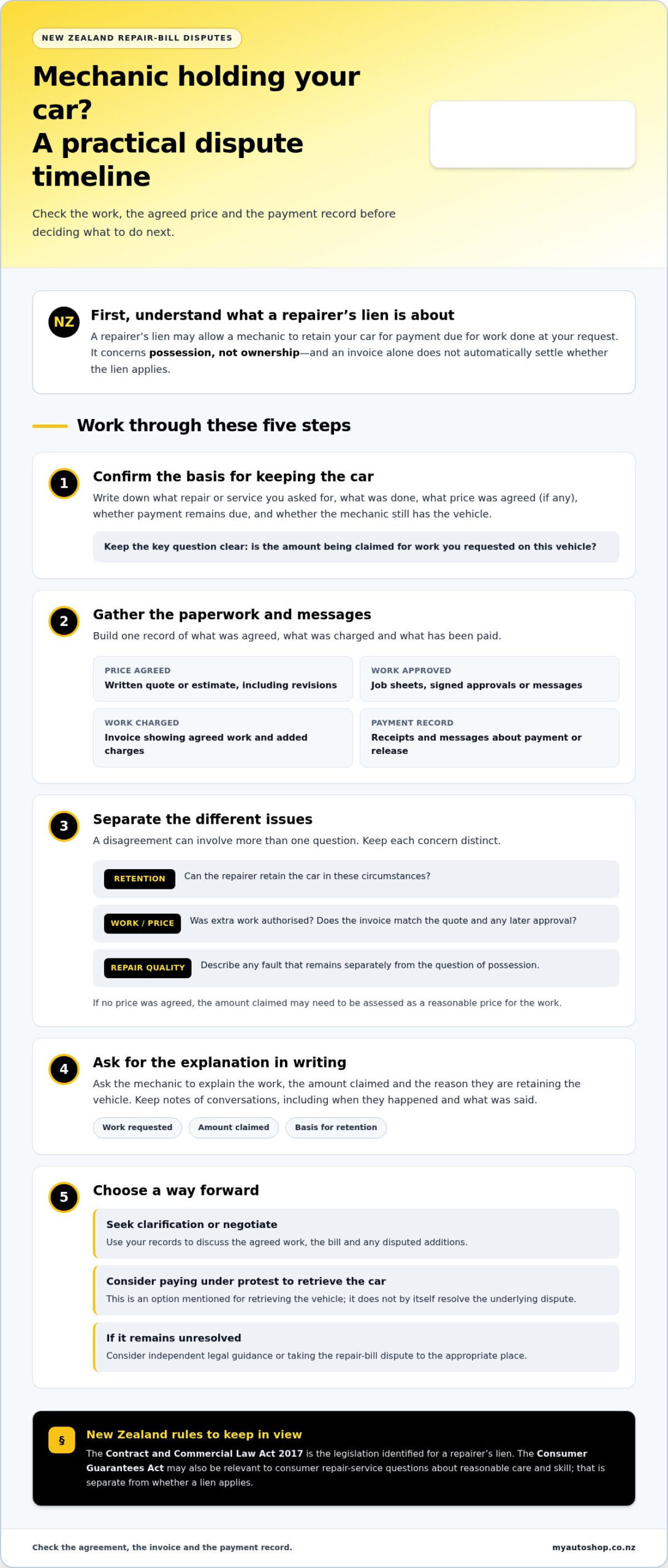
What to do if a mechanic is holding your car
Keep the conversation calm and build a clear record before deciding how to respond. Ask the mechanic in writing why they’re retaining the vehicle, what amount they say is owing, and which work or agreement supports the claim. This won’t guarantee the car’s release, but it will make the disagreement more specific and help you identify what needs resolving.
What information and documents should you collect?
Start with the basics: note where the car is, who has possession, the amount claimed and the mechanic’s stated reason for holding it. Then gather records showing what you requested, what was approved and what you’ve paid. Save copies together, including messages that clarify changes to the work or price.
- The original quote or estimate, plus any revised versions.
- Job authorisations, work orders and records of approvals given by phone or in person.
- The itemised invoice, receipts and payment records.
- Emails, text messages and notes of conversations about repairs, charges or vehicle collection.
- Any photos, inspection notes or other records relevant to a claimed repair fault.
Ask for an itemised explanation of the charges and the basis for retaining the car. Keep the request neutral. For example, ask which work each charge relates to and whether it was included in the original approval. An explanation can clarify the dispute, but it doesn’t determine whether the lien is valid or require the mechanic to release the vehicle.
How can you raise the dispute safely?
Send a short written summary that separates facts from concerns. State what you believe you authorised, what you’ve paid, which items you dispute and what outcome you’re seeking, such as a corrected invoice or a discussion about collection. Ask for a written reply and keep the exchange factual. Avoid threats, forced entry or trying to take the car without agreement. Those steps can escalate the situation without resolving the legal question.
Be careful before either withholding payment or paying to get the vehicle back. Payment may affect your immediate access to the car, while refusing payment may leave it in the workshop longer. If considering payment under protest, get current advice on how to record it and what it may mean for your ability to challenge the bill later. Don’t assume that writing those words on a receipt settles the dispute.
For New Zealand guidance, Citizens Advice Bureau’s information on your rights when a mechanic holds your car can help you understand the issue. If direct discussion doesn’t resolve it, check the current eligibility and process for the Disputes Tribunal before making a claim. For questions about mechanic’s lien on my car what are the rules nz, independent legal guidance can help assess the specific agreement and evidence.
Before your next conversation with the garage, organise your records and write down the outcome you’re asking for. A clear, consistent account can keep the discussion focused as you work out the appropriate next step.
How to resolve a car lien dispute and decide your next step
Choose your next step based on what remains unclear. If the disagreement is about how the invoice was calculated, ask for an itemised explanation and compare it with the quote and approvals. If you agree on the work but dispute whether it was done properly, focus on the repair outcome and evidence of the fault. If the mechanic’s right to keep the car is uncertain, get advice on that legal question separately.
Keep the issues distinct. A complaint about repair quality may involve the Consumer Guarantees Act, including whether the service was carried out with reasonable care and skill. A lien dispute concerns whether the repairer can retain the vehicle in the circumstances. The documents and questions needed to resolve one issue may not settle the other.
When should you seek independent legal advice?
Get independent legal advice if the basis for retaining the car is unclear, the parties disagree about what was authorised, or the consequences could affect ownership, safety or significant legal rights. Seek help promptly if the situation is escalating or you’re unsure what a proposed payment or agreement would mean. General information can explain the usual process, but only advice based on your records and circumstances can address your individual position.
Which dispute pathway fits a repair disagreement?
Start by trying to resolve the issue directly with the garage, keeping your request and its response in writing. If that doesn’t work, the Disputes Tribunal may be an option for a repair dispute. The supplied current guidance gives a maximum claim of NZ$60,000, but check the Tribunal’s latest rules, eligibility and fees before applying. The Motor Vehicle Disputes Tribunal is different: it deals with disputes arising from buying a vehicle from a registered motor vehicle trader, not a repair dispute with a mechanic.
Before making a claim, define what you want decided. You might be asking whether a charge was agreed, whether the repair met the required standard, or whether the car can be retained for the amount claimed. Keep the relevant quote, invoice, payment record, messages and evidence of any repair problem together. A focused claim is easier to assess than a broad account that mixes every concern.
What should you do before agreeing to a resolution?
Get the proposed settlement in writing before accepting it. Check that it states the amount to be paid, what that payment covers, when the vehicle will be released, and whether either party is expected to do anything else. If you’re being asked to pay a disputed amount, understand the effect of the wording before you agree. Don’t rely on a verbal assurance when a clear written record can prevent a later misunderstanding.
Read the terms carefully and make sure they match what was discussed. If anything is unclear or has lasting consequences, ask for clarification before agreeing. A measured decision based on the written terms can help you move forward with confidence.
Take a clear next step
Before agreeing to anything, decide what outcome matters most: getting the car released, resolving a charge, or addressing a concern about the repair. That priority can keep conversations focused and help you judge whether a proposed arrangement works for you. If the legal basis for retaining the vehicle remains unclear, pause before making a decision with lasting consequences and seek advice based on your circumstances.
Questions about “mechanic’s lien on my car what are the rules nz” are best approached with the specific agreement and records in front of you. General information can point you in the right direction, but it can’t replace individual legal advice where ownership, safety or significant rights are at stake.
Keep your records close, ask for anything unclear in writing, and take time to understand the options and consequences. If you’re considering buying a used vehicle, book a pre-purchase inspection through My Auto Shop to help make a better-informed decision.
Frequently Asked Questions
Can a mechanic keep my car if I dispute the repair bill?
Possibly, but disputing an invoice doesn’t by itself decide whether a repairer’s lien applies. The key issue is whether the amount relates to work you requested and whether the legal conditions for retaining the vehicle are met. Compare the invoice with the quote and any later approvals. If you need the car back before resolving the bill, get advice before deciding whether to pay under protest or withhold payment.
Can a mechanic keep my car if I did not approve the repair?
Work you didn’t authorise raises a different issue from work you agreed to but now dispute. Check texts, emails, job sheets and notes of phone calls to establish what you approved. If an initial repair led to a proposed extra job, look for a record that you agreed to that addition. Whether any amount is payable, and whether it can support retaining the vehicle, depends on the facts and applicable law.
Can a mechanic charge storage fees while holding my car?
A storage charge isn’t automatically the same as the repair bill or automatically covered by a repairer’s lien. Ask the garage to identify the amount, the period it relates to, and the agreement or legal basis for charging it. Check any booking terms and messages about storage. Don’t assume the charge is valid, or that it can be added to the amount required to release the car, without checking the circumstances.
Can a mechanic sell my car to recover an unpaid repair bill?
A repairer may have a statutory power to sell a vehicle if the repair bill remains unpaid for two months, but the required notice process matters. Before selling, the repairer must give one week’s notice by letter to the owner’s address or by advertising in a local newspaper, describing the vehicle and amount owed. If you receive notice, seek prompt legal advice and check the current statutory requirements rather than ignoring it.
What can I do if a mechanic refuses to give my car back?
Ask the mechanic in writing to explain the basis for keeping the car and provide an itemised amount claimed. Keep your messages, quote, invoice and payment records together, and state clearly which details you dispute. If you need the car urgently, get advice on your options before paying or attempting to collect it without agreement. The answer to mechanic’s lien on my car what are the rules nz depends on the agreement and evidence.
Does a repairer’s lien mean the mechanic owns my car?
No. A lien concerns a claimed right to retain the vehicle as security for payment; it doesn’t itself transfer ownership to the mechanic. If someone says the car has been sold or ownership has changed, ask for the legal basis and copies of any notices or sale documents. Get independent advice promptly if ownership is being disputed, because that raises a separate and potentially serious issue.
Where can I get help with a car-repair dispute in New Zealand?
Start with the garage and set out the issue and the outcome you want in writing. Citizens Advice Bureau can provide general information about consumer rights. For an unresolved repair dispute, check whether the Disputes Tribunal can hear your claim and confirm its current eligibility rules and limits. The Motor Vehicle Disputes Tribunal handles disputes about buying a vehicle from a registered motor vehicle trader, not ordinary repair disputes.
Disclaimer
This article provides general information only and should not be relied on as professional mechanical, safety or legal advice. Vehicle requirements and circumstances vary. If you are unsure about your vehicle, have it inspected by a qualified automotive professional.