
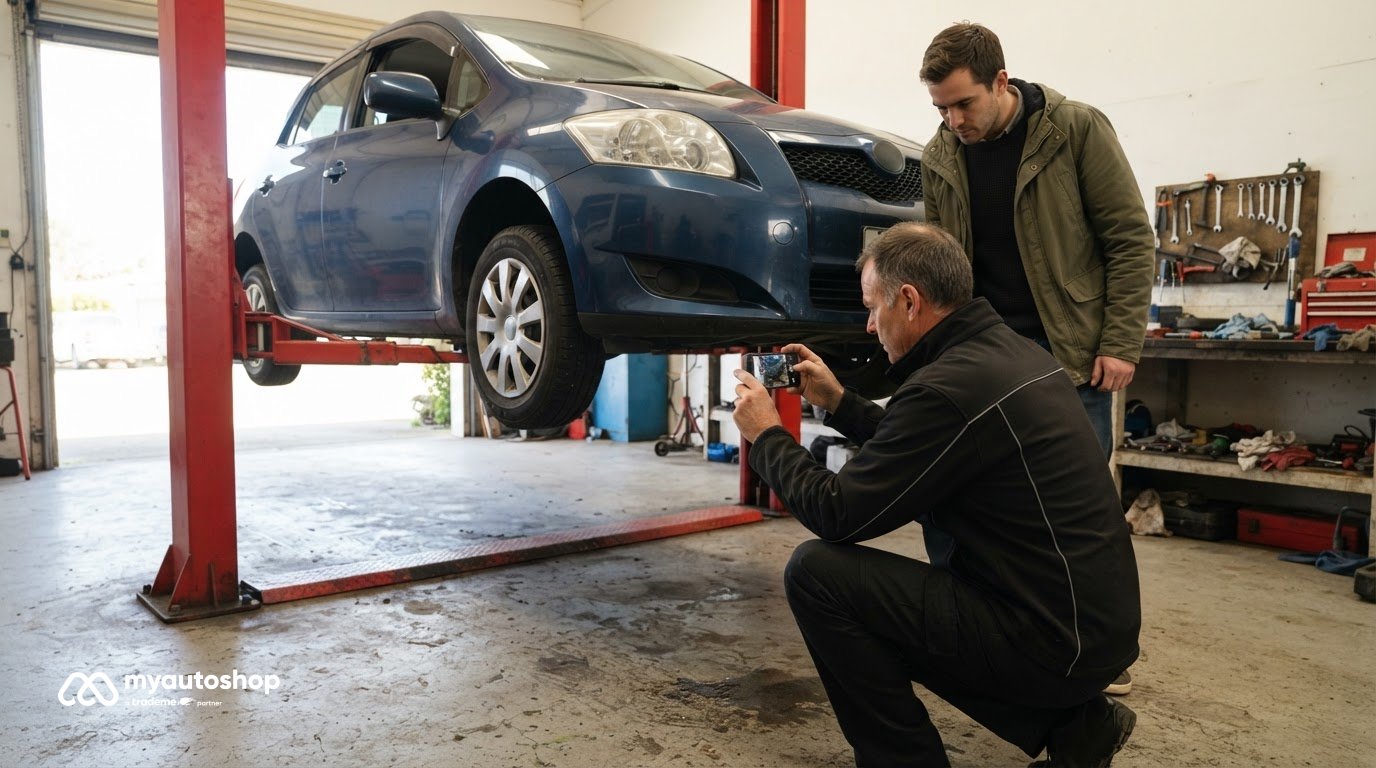
Could a clear video still leave you guessing about the car you’re about to buy? A video inspection from a mechanic in NZ can show visible signs of wear, but it can’t tell the whole story. Footage may reveal an obvious leak or damaged part, for example, but it won’t necessarily show what’s happening inside the engine or how the car performs on the road.
It makes sense to want more than a seller’s description or a quick look around, especially if you’re buying from a distance. Treat video as useful evidence, not a complete verdict. A WoF checks minimum roadworthiness at the time of inspection, while a pre-purchase inspection is designed to help assess a used car before you commit.
This article explains what inspection footage may show, what can remain hidden, and how video, a written report, a WoF and an independent assessment differ. You’ll also learn how a My Auto Shop pre-purchase inspection, performed by certified inspectors, can help put unanswered questions into context before you decide whether to buy.
Key Takeaways
- A video inspection from a mechanic in NZ can mean different things, so identify what the footage covers before relying on it.
- Check what’s clearly visible, then consider how the camera angle, lighting and access may leave parts of the vehicle out of view.
- Separate recorded observations from your own conclusions, and list unanswered questions before deciding what to do next.
- Compare video evidence, a WoF and an independent pre-purchase inspection to work out what information you need before buying.
- When footage leaves important questions open, consider My Auto Shop’s buyer-focused pre-purchase inspection, performed by VTNZ inspectors.
What does a video inspection from a mechanic in NZ mean?
A mechanic’s video inspection is footage used to communicate observations about a vehicle. It might be recorded during a workshop visit, shared after someone looks over a car, or filmed to discuss a particular concern. The term doesn’t describe one universal process. Before relying on a clip, find out which vehicle it shows, what it was intended to capture and whether it records a brief observation or forms part of a broader assessment.
Video can take different forms. A recorded clip can be paused and replayed, while a live video conversation lets you ask questions as the camera moves. A written inspection report is different again: it presents findings in text, with or without footage. These formats aren’t interchangeable. A live view may let you ask for another angle, but it doesn’t automatically document a complete assessment. A report may record more observations than a short clip, but its value depends on its scope and detail.
What information can a vehicle inspection video provide?
Footage can help you understand what the person filming noticed at a particular time. It may show part of the vehicle’s exterior, a dashboard display or a sound captured while the vehicle is running. Separate what is directly visible or audible from what the person recording says about it. The clip provides context only for the areas and moments it includes. It doesn’t confirm the condition of parts outside the frame or explain the cause of every observation.
Consider how the video was captured. A moving camera may make a detail hard to examine, and lighting or recording quality can affect what you see or hear. If a view is unclear, mark it as uncertain rather than assuming the component is either damaged or sound. That distinction helps you ask focused questions without treating an impression as a diagnosis.
How is video evidence different from a pre-purchase inspection?
Video is a way to present observations, not a defined inspection standard by itself. An independent pre-purchase inspection (PPI) is intended to help a buyer assess a particular used vehicle. The scope of an assessment matters, so don’t assume that footage alone gives you the same context. A general overview of independent pre-purchase inspections can help explain how these assessments differ from a visual record.
A WoF has a separate purpose from a PPI. Keep that distinction in mind as you gather information about a car, and don’t treat a video or a WoF as proof that a vehicle has no faults. For a practical overview of the buying assessment, the Pre-Purchase Car Inspections NZ: The Ultimate 2026 Buyer’s Guide explains how a PPI can fit into your decision-making. If you’re considering one, My Auto Shop’s pre-purchase inspection is a buyer-focused option.
What can a mechanic’s video show, and what might remain unseen?
Footage can help you notice a concern, but what it tells you depends on the view and recording conditions. A close-up of a tyre or body panel may show a visible mark clearly; a quick pan across the vehicle may not. Treat each clip as a record of what was captured, not as a complete picture of the car’s condition.
Visible clues a video may help you notice
A clip might show obvious body damage, a dashboard warning light or a sound recorded while the vehicle is running. Note where the camera is pointed and what was happening at the time. Was the car stationary, or was the sound captured while it was moving? Is the person filming describing what they see, or explaining what they think it might mean? Keep those details separate. A visible mark or unusual noise may be worth asking about, but footage alone may not establish its cause.
Image quality also affects what you can assess. Glare, shadows, a shaky camera or a short recording may make a detail difficult to judge. If you can’t see the area clearly, record that uncertainty rather than deciding the part is fine or faulty.
Why footage may not answer every mechanical question
A camera only records what’s in frame and accessible during filming. It can’t show components that aren’t visible or demonstrate every way a vehicle behaves. Some questions need an appropriate hands-on check, a road test or diagnostic equipment. For example, a clip of an engine running can capture a sound, but it may not reveal what causes it or whether the vehicle behaves differently under load.
Use video to identify questions, not to rule out every concern. A WoF is also separate from a broader assessment of mechanical condition. For details about its purpose, refer to the NZTA Warrant of Fitness guidelines. Neither footage nor a WoF should be treated as proof that a used car is fault-free.
If a clip leaves important questions about a car you’re considering, an independent pre-purchase assessment can help inform your decision. Explore the My Auto Shop pre-purchase inspection as one practical next step before deciding whether to buy.
Video inspection, WoF, or pre-purchase inspection: which answers your question?
Each option answers a different question. A clip may show a particular observation, a WoF checks minimum roadworthiness at the time of inspection, and an independent pre-purchase inspection (PPI) is intended to help you assess a specific used car before buying. A reassuring clip or current WoF can be useful, but neither proves that a vehicle has no faults.
| Option | Purpose and information | Questions it may leave open |
|---|---|---|
| Mechanic’s video | Shows recorded observations, such as a visible concern or a sound captured at a particular moment. | What wasn’t filmed? Does the observation indicate a fault, and what is its cause? |
| WoF | Checks whether a vehicle meets minimum roadworthiness requirements at the time of inspection. | What is the vehicle’s wider mechanical condition? What repairs or maintenance might be approaching? |
| Independent PPI | Assesses a specific used vehicle to inform a buyer’s decision. | What might change after the assessment, or become apparent with future use? |
Think of these as different pieces of information, not competing guarantees. A video inspection from a mechanic in NZ can help explain what was observed, but it doesn’t automatically provide the scope or context of a buyer-focused assessment.
What question does a WoF answer compared with a buyer’s inspection?
A WoF is a compliance check, not a full mechanical assessment for someone considering a purchase. It tells you whether the vehicle met the relevant minimum roadworthiness requirements when checked. It doesn’t answer every question about condition, past repairs or future maintenance needs. For background on its purpose, use the NZTA Warrant of Fitness information.
That distinction matters when you’re viewing a used car with a current WoF. Treat it as one useful piece of information, then consider what you still need to know about that vehicle. A WoF doesn’t replace a buyer’s assessment, and it shouldn’t be read as a promise that the car is fault-free.
When does a pre-purchase inspection add useful context?
A PPI is relevant when you want an independent assessment of the car you’re considering, rather than a clip of selected observations or a compliance result. Its findings can help you weigh concerns, plan questions about the vehicle and make a more informed buying decision. They describe the vehicle at the time it’s assessed. They can’t guarantee future reliability or rule out every possible fault.
For a practical next step, My Auto Shop offers a pre-purchase inspection for used-car buyers. Use the findings alongside the video, WoF information and your own priorities to decide whether to proceed, seek clarification or reconsider the purchase.
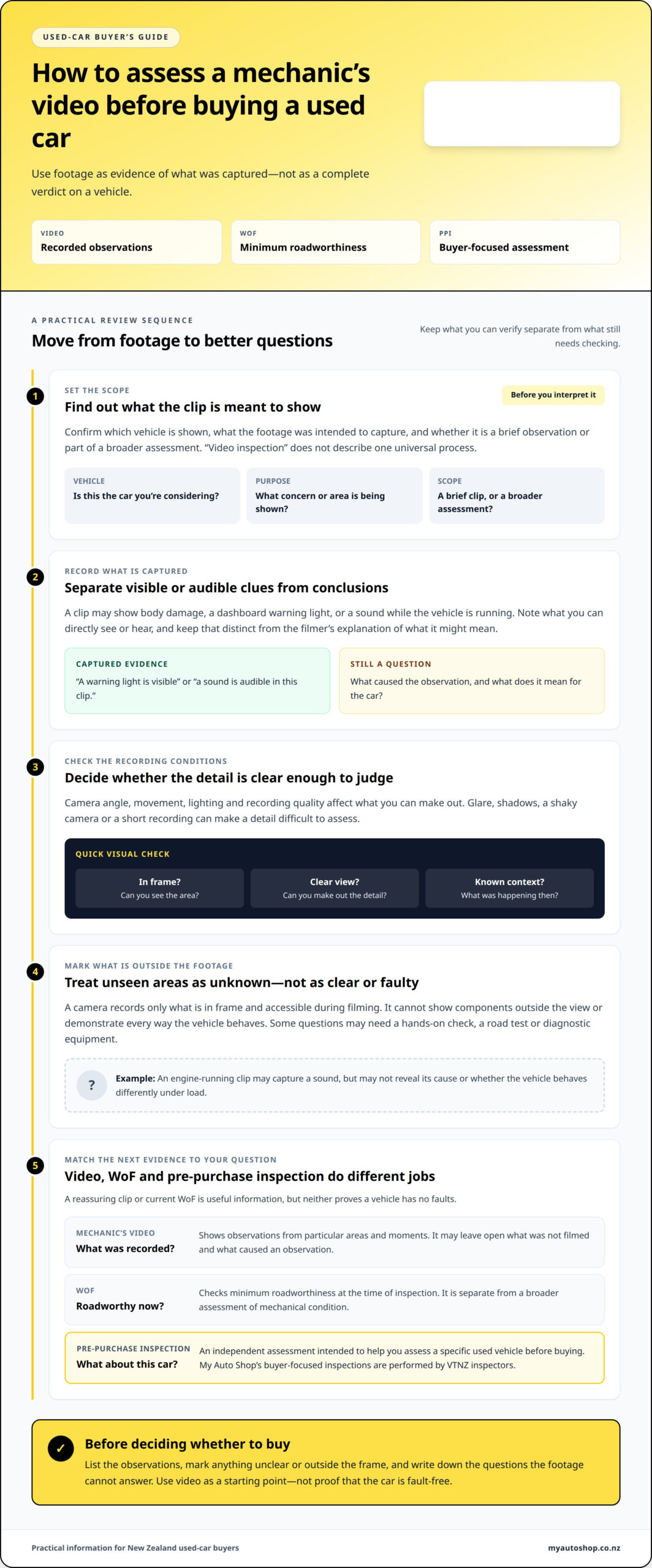
Review a mechanic’s video before deciding to buy
Use the footage to organise what you know about the car, not to make a snap judgement. Keep the vehicle listing nearby and work through the clip with a note open. This gives you a clear record of what you observed and what you may need to consider before making an offer.
- Identify the vehicle. Check that the registration, make and model in the footage match the car in the listing. If the video doesn’t clearly identify the vehicle, note that before relying on its content.
- Record each observation. Write down the vehicle area and what you can directly see or hear. For example, note “warning light visible on dashboard” rather than assuming what caused it.
- Mark unanswered questions. Record anything that’s unclear, not shown or missing context. Link each question to the relevant part of the car so you can track why it matters to your decision.
- Choose your next step. Consider whether the remaining unknowns affect your willingness to buy. If they do, decide whether you need a broader assessment before committing.
Turn footage into clear questions about the vehicle
For each point, note what the camera shows and the conditions at the time. Was the vehicle running? Was the sound recorded while it was stationary or moving? Is the person filming describing an observation or suggesting what might be causing it? These distinctions help you avoid treating a brief clip as a complete diagnosis. Keep your questions specific, such as asking which area the footage shows or what further information would clarify an observation.
Separate evidence from interpretation in your notes. “A noise is audible” describes the recording; “the gearbox is failing” goes beyond what a sound alone can establish. This keeps your assessment grounded and helps you judge which concerns need attention before you decide.
Decide when a broader assessment would help
If you still have important questions about the car’s condition, an independent pre-purchase inspection can give you additional information to weigh. Use its findings to support your decision, not as a promise that the vehicle will remain trouble-free. Consider the assessment alongside the footage, listing details and your priorities as a buyer.
If a broader buyer-focused assessment would help, explore the My Auto Shop pre-purchase inspection. It’s a practical next step when the video has helped you identify concerns but hasn’t settled your decision.
Make a more informed used-car decision with an independent NZ inspection
A mechanic’s video can communicate what was observed in the areas it shows. An independent pre-purchase inspection (PPI) adds assessment context to help you consider the condition of a specific used car before buying. Use the two together: note what the footage shows, then weigh it against the questions still open. Neither a video nor an inspection can promise that a vehicle will remain fault-free.
What to expect from My Auto Shop’s partnered PPI
My Auto Shop’s PPI is designed to help New Zealand buyers make better-informed decisions about used vehicles. It’s partnered with VTNZ, and VTNZ inspectors perform the inspection. They are not My Auto Shop staff. The purpose is to give buyers an independent assessment to consider alongside the vehicle’s other information, not to guarantee a particular result or future reliability.
This distinction matters if you’ve been sent a clip focused on one component or concern. The PPI is a buyer-focused assessment, while video is simply a way of communicating selected observations. Keep the video available as context, but don’t assume it represents the full assessment or that every point raised in the footage has been independently confirmed.
Choose your next step with the evidence in front of you
Before deciding, bring together the footage, the listing details, any vehicle information you have and the questions you wrote down. Sort each point into what is directly visible or audible, what the person recording says they observed, and what still needs assessment. This gives you a clearer basis for weighing the car’s appeal against uncertainties that matter to your budget and intended use.
If you’re not sure what to prepare or how an independent assessment fits into the buying process, the Pre-Purchase Car Inspections NZ: The Ultimate 2026 Buyer’s Guide offers related buyer guidance. Use it to organise your next steps, not as a substitute for considering the specific vehicle in front of you.
If important questions remain after reviewing the video, an independent PPI can help inform your decision. Explore the My Auto Shop pre-purchase inspection as a practical next step. Take the time to understand the evidence, consider the assessment findings and decide whether the car is right for you.
Take your next step with confidence
Before you commit to a used car, give yourself room to make a considered decision. A video inspection from a mechanic in NZ can help you frame useful questions, but a short clip doesn’t have to be the final word. If anything important remains uncertain, pause and get the information you need to weigh the risks against what the car offers.
That extra step can be especially helpful when you’re buying from a distance or can’t easily return to view the vehicle. Keep your notes and the vehicle details together so you can assess what you know, what remains unclear and whether you’re comfortable proceeding. An independent pre-purchase inspection is one practical way to bring more context to your decision, without promising that every future issue can be ruled out.
Ready to consider an independent assessment? Explore My Auto Shop’s Pre-Purchase Inspection and choose your next step with care. A little more clarity now can help you move forward feeling better informed.
Frequently Asked Questions
Can a video inspection from a mechanic replace a pre-purchase inspection?
No. A video inspection from a mechanic can help you understand specific observations, but it isn’t a replacement for an independent assessment of the used car you’re considering. A clip focused on the exterior, for example, won’t answer questions about how the vehicle drives. If you’re deciding between two cars or planning a long-distance purchase, consider whether you need broader information before committing. Neither option guarantees a fault-free vehicle.
Does a video inspection show every problem with a used car?
No. Footage can only record what’s in view at the time, so it may leave out areas that weren’t filmed or details that need another kind of check. A brief walkaround, for instance, won’t necessarily answer questions about how a car performs on a drive. Note what you can’t confirm from the clip, then decide whether those unknowns matter enough to seek a broader assessment.
Is a WoF the same as a pre-purchase inspection in New Zealand?
No. A WoF is a separate compliance check, while a pre-purchase inspection is intended to help you assess a vehicle you may buy. If a seller points to a current WoF, treat it as one part of the vehicle’s information, not a complete buying assessment. WoF requirements can change, so use current guidance from Waka Kotahi NZ Transport Agency for details about the warrant itself.
What should I look for in a mechanic’s inspection video?
First, check that the footage clearly relates to the car you’re considering. Then note which area is shown, whether the observation is visible or audible, and any explanation provided. For example, record “sound heard while turning” rather than assuming what caused it. If the clip doesn’t show when the sound occurs or where the camera is pointed, add that to your questions instead of filling in the gaps yourself.
Can a mechanic diagnose a car fault from a video?
Sometimes footage can help communicate a symptom, but a video alone may not establish its cause. A warning light, for example, shows an indicator is on, not necessarily why it appeared. The next step depends on the concern and what further assessment is appropriate. Treat a diagnosis explained in a clip as information to consider, and don’t assume that addressing one visible issue means other parts of the vehicle have been checked.
Who performs My Auto Shop’s pre-purchase inspections?
VTNZ inspectors perform My Auto Shop’s pre-purchase inspections through its partnership with VTNZ. The service is intended to help used-car buyers make a better-informed decision about a vehicle before purchase. It’s an independent assessment, not a promise that the car will have no faults or remain trouble-free. Consider the findings alongside the vehicle’s history, the seller’s information and any questions raised by inspection footage.
Disclaimer
This article provides general information only and should not be relied on as professional mechanical, safety or legal advice. Vehicle requirements and circumstances vary. If you are unsure about your vehicle, have it inspected by a qualified automotive professional.