
Last Tuesday, Sarah sat in a testing station only to be handed a “fail” sheet because of a single NZ$8 license plate bulb she hadn’t noticed. It’s a frustrating scenario that plays out for roughly 40% of Kiwi drivers during their annual inspection. Understanding the most common wof fails nz vehicle owners encounter is the best way to avoid that 28-day re-check window and the unexpected repair bills that follow.
We agree that keeping your car roadworthy shouldn’t feel like a guessing game or a technical exam. You deserve a transparent look at what inspectors are actually checking in 2026. This article promises to give you a clear, jargon-free checklist to identify issues before your appointment. We will cover the latest safety standards, simple DIY fixes that save you a trip to the mechanic, and how to ensure you pass on your first attempt.
Key Takeaways
- Understand why nearly 40% of Kiwi cars fail their inspection and how to stay ahead of the latest 2026 NZTA standards.
- Identify the most common wof fails nz inspectors encounter, from simple blown bulbs to critical tyre tread issues.
- Save time and money by spotting “easy wins” you can fix yourself at home before heading to the garage.
- Follow our 10-minute pre-WOF checklist, including the 20c coin test, to audit your vehicle’s safety in minutes.
- Navigate the post-inspection process with confidence by understanding the 28-day repair rule and how to read inspector notes.
Why Vehicles Fail: The State of WOF Inspections in NZ
Getting a fail sticker on your windscreen is a hassle nobody needs. In New Zealand, recent data shows that nearly 38.6% of vehicles fail their initial inspection. This high number highlights why understanding common wof fails nz is essential for every driver. For 2026, the NZTA has tightened standards to account for modern vehicle technology like lane-assist and autonomous braking. These updates ensure that even the smartest cars meet basic safety requirements on our roads.
It’s vital to distinguish between a WOF and a full mechanical service. A WOF is a snapshot of safety. It ensures your car is safe to be on the road right now. It isn’t a guarantee that your car will stay reliable for the next year. While a WOF checks the basics like lights and tires, a service looks at your engine’s health, fluid levels, and internal wear. Safety standards have evolved quickly. Modern inspections now include rigorous checks on electronic stability control and SRS airbag systems that weren’t standard a decade ago.
The Purpose of the Warrant of Fitness
The Warrant of Fitness (WoF) is a mandatory safety check required by law to ensure roadworthiness. Roadworthiness focuses on the safety of the vehicle and its occupants, while reliability focuses on whether the car will actually start tomorrow morning. The NZTA sets strict inspection criteria that vary based on your car’s age:
- Vehicles registered on or after Jan 1, 2000: Annual inspections (every 12 months).
- Vehicles registered before Jan 1, 2000: Bi-annual inspections (every 6 months).
- New vehicles: First inspection is required three years after the first registration.
The Cost of Failing: Time and Money
Failing your WOF triggers a 28-day re-inspection window. During this time, you can only legally drive the vehicle to get it repaired or to a testing station. This delay often leads to expensive “patch-up” repairs. Spending NZ$70 on a rushed fix just to pass often leads to a NZ$600 bill later when the underlying issue worsens. We’ve seen that a simple pre-check can eliminate the “failed” sticker anxiety. By identifying common wof fails nz before your appointment, you stay in control of your schedule and your budget. Transparent pricing and proactive maintenance are the best ways to avoid the hidden costs of a surprise failure.
The ‘Big Five’ Common WOF Fails in NZ
Understanding why cars fail helps you fix issues before you even pull into the garage. In New Zealand, roughly 40% of vehicles fail their initial inspection. Most of these common wof fails nz drivers face fall into five specific categories. These aren’t complex mechanical mysteries. They’re often simple maintenance tasks that got missed during a busy month.
Lighting and Electrical Issues
Lighting is the most frequent reason for failure across all vehicle types. A single blown indicator bulb or a mismatched headlight alignment will stop you in your tracks. Your high-stop brake light, located in the middle of your rear window or spoiler, is a frequent culprit because it’s hard to check alone. Check your dashboard too. If your ABS or SRS airbag lights stay on after the engine starts, it’s an automatic fail. You can see the full list of requirements in the official WOF inspection checklist provided by Waka Kotahi.
Tyre Safety and Compliance
Your tyres are your only contact with the road. NZ law requires a minimum tread depth of 1.5mm across the central three-quarters of the tyre. If you notice the inner edge is bald while the outer edge looks new, your wheel alignment is likely out. Inspectors also look for “sidewall perishing,” which is when the rubber starts cracking due to age or sun exposure. While you don’t technically need a spare tyre to pass a WOF, if you have one mounted on the exterior of your vehicle, it must be secure and roadworthy.
Vision and Visibility Standards
Visibility is about more than just a clear view. Any crack larger than 25mm in your “critical vision area,” the space directly in front of the driver, will cause a fail. Your wipers shouldn’t leave smears, and your washer reservoir must be full. Even a floppy sun visor that won’t stay up or a loose side mirror can result in a trip back for a re-check. These small fixes take minutes but save you the hassle of a second appointment.
Beyond these three, inspectors focus heavily on your brakes and suspension. Brakes must be balanced, meaning the car shouldn’t pull to one side when you hit the pedal. They also check for worn suspension bushes and leaking shock absorbers, which are common issues given the rugged nature of many NZ backroads. If you’re unsure about your car’s condition, you can book a quick safety inspection to catch these issues early. Staying on top of these “Big Five” keeps you safe and keeps your repair bills transparent and predictable.
DIY vs. Professional: What You Can Fix Yourself
Tackling common wof fails nz drivers face doesn’t always require a workshop visit. You can handle several minor issues at home, saving you the $10 or $15 re-check fee and a second trip to the testing station. However, some systems are strictly for experts. Knowing the difference keeps you legal and ensures your car stays safe on the road.
Simple At-Home Fixes
You don’t need a trade certificate to swap out a blown bulb. Check your indicators, brake lights, and park lights before your appointment. If they’re out, a $5 bulb from an auto shop and five minutes of your time prevents a fail. Replace streaky wiper blades and top up your windscreen washer fluid. Use a microfiber cloth to clean your headlight lenses and mirrors for maximum clarity. Clear visibility is a non-negotiable safety requirement that you can easily manage yourself.
When to Call a Professional Mechanic
Safety-critical components require a qualified hand. If your brake pads are under 1.5mm or your rotors need machining, call a pro. Suspension repairs, such as replacing worn bushings or torn CV boots, are complex and require specialized tools. Attempting “backyard hacks” like taping a CV boot will result in an immediate fail. If you’re buying or selling a vehicle, follow Consumer NZ advice to ensure the vehicle has a valid WOF and all paperwork is legal. Professional repairs provide a verified paper trail that gives inspectors confidence in your vehicle’s structural integrity.
The Transparency Advantage
Hidden costs are the biggest frustration in car maintenance. At MyAutoShop, we prioritize transparent pricing so you know exactly what a repair costs before the work starts. We connect you with vetted Kiwi mechanics who understand the local standards for common wof fails nz. If you’re tight on time, our mobile mechanics can come to your driveway for pre-WOF repairs, or we can arrange a pick up & drop off service for your convenience. This proactive approach avoids the stress of a “fail” sticker. Always document your own repairs by keeping receipts for parts. It shows the inspector you take vehicle maintenance seriously.
Your 10-Minute Pre-WOF Checklist
Failing an inspection is a massive time-waster. Statistics from Waka Kotahi show that roughly 40% of vehicles in New Zealand fail their initial inspection, often for minor issues you can spot yourself. Use this quick guide to identify common wof fails nz motorists face before you head to the garage. Spending ten minutes on your driveway can save you the hassle of a return trip.
External Vehicle Walk-around
Start by checking your lights with a partner. Have them stand outside while you test indicators, park lights, and number plate lights. Check your windscreen for any chips or cracks. If a chip is larger than 13mm, which is roughly the size of a NZ$1 coin, it’s likely to result in a fail if it’s in the driver’s line of sight. Inspect the bodywork for sharp edges or significant rust. Any rust within 150mm of a structural mounting point, such as a suspension component or seatbelt anchorage, is a serious safety concern. Finally, open the fuel flap. The seal on your fuel cap must be intact and the cap must click into place securely.
Internal Safety Checks
Your seatbelts are critical for safety and compliance. Pull every belt out to its full length to check for fraying, cuts, or fading. Give them a sharp tug to ensure the retractor locks instantly. While you’re in the driver’s seat, give it a firm shake. It must be securely bolted to the floor with no movement. Turn your ignition on and watch the dashboard. The SRS (airbag) and ABS lights must illuminate and then disappear. If these lights stay on, your car won’t pass. Don’t forget the basics: test the horn and ensure your wipers clear the glass without leaving streaks. New wiper blades often cost as little as NZ$20, which is much cheaper than a re-inspection fee.
Under the Bonnet Basics
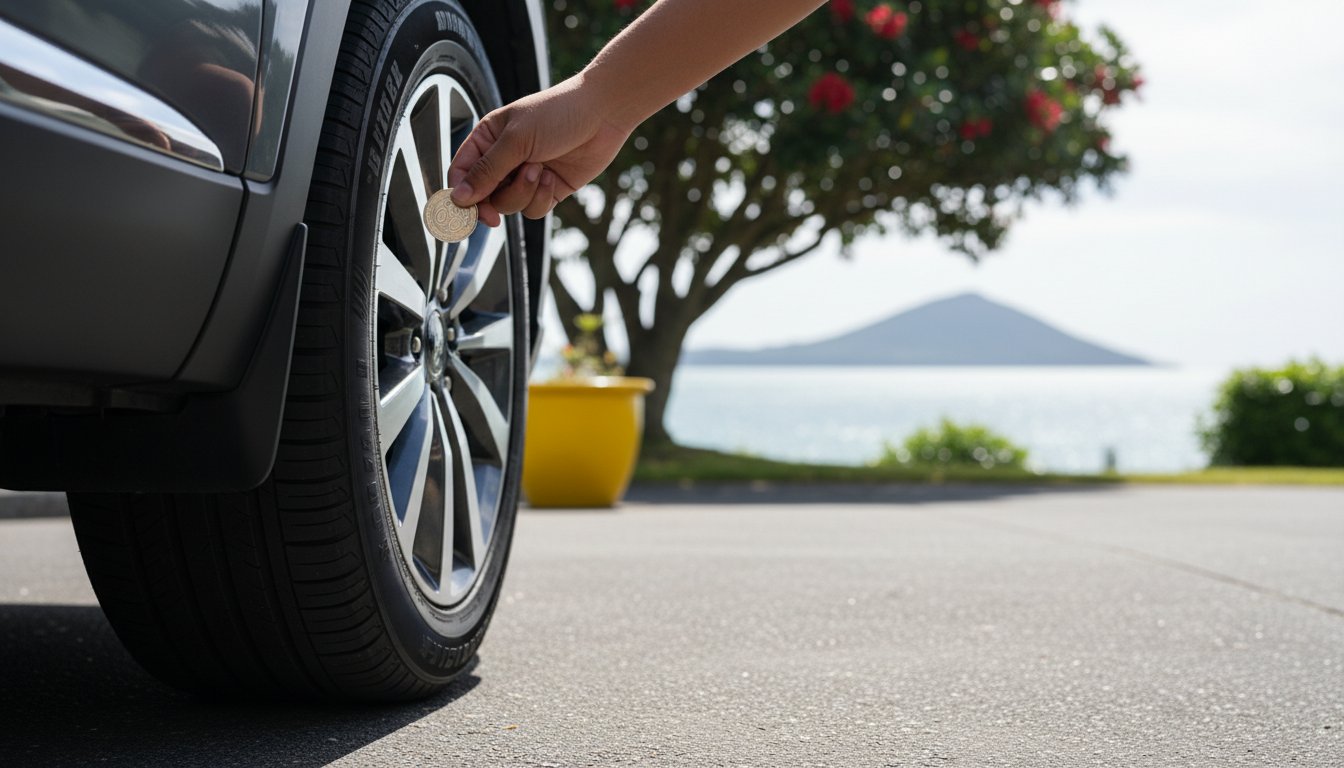
Pop the hood and check your fluid levels. Brake fluid and power steering fluid should sit comfortably between the minimum and maximum markers. Look for obvious signs of leaks. A small damp patch of oil might pass, but a steady drip will cause a fail. Check your battery too. It needs to be clamped down tight. If you can move it with your hand, you need to tighten the bracket. Check the tyre tread while you’re at it. Use a 20c coin; if you can see the whole number ’20’ when the coin is placed in the groove, your tread is likely below the 1.5mm legal limit. Most experts recommend replacing tyres at 3mm for better wet-weather grip.
Want to skip the stress of the testing station? Book a pre-WOF check or service with MyAutoShop and let our experts handle the details.
What Happens If You Fail? The Road to a Pass
Failing an inspection is frustrating, but it is a normal part of car ownership. When your vehicle does not meet the standard, the inspector provides a check sheet. This document lists every item that failed, from worn tires to flickering bulbs. It is your roadmap for repairs. To avoid the most common wof fails nz drivers experience, use this list as a direct guide for your mechanic.
The check sheet clearly marks items as failed or as “notes” for future attention. Focus on the failed items first. You have exactly 28 days to get these issues fixed. During this time, your vehicle is only legal to drive if you are heading to a repairer or returning to the testing station. If your current WOF has already expired, you are technically at risk of a fine, so move quickly.
Navigating the Re-check Process
You must return to the same testing station to receive a free re-check. If you choose a different station, you will likely have to pay the full inspection fee again, which usually ranges from NZ$50 to NZ$75. If you miss the 28-day deadline, the law requires a completely new inspection at full cost.
Can you drive a vehicle with a failed WOF? Only for the purpose of repairs. However, if the inspector finds a fault that is “dangerous,” they may issue a notice that the vehicle is unsafe. In these rare cases, you cannot drive the car at all. You will need to arrange a tow to a workshop to avoid heavy fines or safety risks.
Stress-Free Repairs with My Auto Shop
We know you are busy. Sorting out common wof fails nz should not take over your entire week. My Auto Shop simplifies the process by offering a “Pick up & drop off” service. We collect your car from your home or office, get the repairs sorted by NZ’s best mechanics, and bring it back to you with the pass sticker or re-check completed.
Transparency is our priority. You will receive an instant quote for common repair items like brake pads or wiper blades before any work begins. There are no hidden costs or confusing jargon, just straightforward service that respects your time and budget. We act as your partner to ensure your car stays safe and road-legal without the usual stress.
Drive Straight to Your New WOF Sticker
Passing your inspection in 2026 doesn’t have to be a gamble. Most common wof fails nz motorists encounter are entirely avoidable with a bit of foresight. A simple NZ$5 bulb or a worn wiper blade shouldn’t stand between you and a legal vehicle. By spending 10 minutes on a pre-inspection walk-around, you catch these small issues before they lead to a costly re-test. Focus on the big five categories like tyres and brakes to ensure your car meets the latest safety standards. Taking charge of your maintenance now saves you hours of frustration later.
If your checklist shows you need professional help, we’ve got you covered. My Auto Shop gives you instant access to NZ’s largest network of over 100 vetted mechanics across the country. We provide transparent, fixed-price quotes so you know exactly what you’re paying before the tools even come out. Plus, our convenient pick-up and drop-off options mean you don’t even have to leave your house or office. Book a transparent WOF repair or service with My Auto Shop to keep your car in peak condition. You’re just a few clicks away from a stress-free pass and total peace of mind on the road.
Frequently Asked Questions
Can I drive my car if it fails its WOF in New Zealand?
You can only drive a vehicle with a failed WOF to a place of repair or back for a re-check. Waka Kotahi regulations are strict about this. If the inspector deems your car “unsafe,” you must tow it immediately. Driving for any other reason risks a NZ$200 infringement fee. Stay safe and legal by booking a repair through MyAutoShop right away.
How much does a WOF re-check cost if I fail?
A WOF re-check is free if you return to the same testing station within 28 days of the initial failure. If you miss this 28 day window, you’ll need to pay for a full new inspection, which typically costs between NZ$50 and NZ$75. We ensure transparent pricing by connecting you with mechanics who respect these industry standards. Fix your common wof fails nz quickly to avoid extra costs.
What is the minimum tyre tread depth for a WOF in 2026?
The minimum legal tyre tread depth for a WOF in 2026 remains 1.5mm across three quarters of the tyre’s width. However, safety experts recommend replacing tyres when they hit 3mm, especially for wet Auckland or Wellington roads. Check your tread depth with a 20 cent coin; if the base of the number is visible, you’re likely below the 1.5mm limit.
Will a cracked windscreen result in an automatic WOF fail?
A cracked windscreen results in a fail if the damage is larger than 25mm or sits within the driver’s critical vision area. Small chips under 10mm are usually okay, but anything obstructing your view is a safety hazard. We can help you arrange a seamless glass repair or replacement before your inspection to ensure you pass first time.
Does my spare tyre need to be roadworthy for the WOF?
Your spare tyre doesn’t need to be roadworthy because it’s not a mandatory part of the WOF inspection. You won’t fail if your spare is bald or missing. However, if you’re currently driving on a space saver or a temporary spare, your car will fail. Always ensure your primary four tyres meet all safety standards before heading to the garage.
What are the most common reasons for a 2026 WOF failure?
Blown light bulbs, worn tyres, and perished wiper blades are the most common wof fails nz in 2026. Data shows that 30% of initial failures are due to simple lighting issues like a dead number plate bulb. Another 20% of cars fail because of tyre tread depth. Check these three areas at home to save time and avoid the frustration of a “fail” sticker.
How long do I have to fix WOF faults in NZ?
You have exactly 28 days to fix any faults and return for a re-check. If you wait 29 days, the law requires a completely new inspection and a second full payment. Use our “Pick up & drop off” service to get your repairs handled quickly. This ensures your vehicle stays compliant without disrupting your busy schedule or costing you double in fees.
Can a mobile mechanic do my WOF inspection?
A mobile mechanic cannot perform a WOF inspection because the law requires specific equipment like brake rollers and vehicle hoists found only at authorized sites. While they can’t issue the warrant, a mobile mechanic can pre-inspect your car or fix issues at your driveway. We partner with NZ’s best mechanics to provide transparent solutions, whether you’re at home or the office.
Disclaimer
This article provides general information only and should not be relied on as professional mechanical, safety or legal advice. Vehicle requirements and circumstances vary. If you are unsure about your vehicle, have it inspected by a qualified automotive professional.