
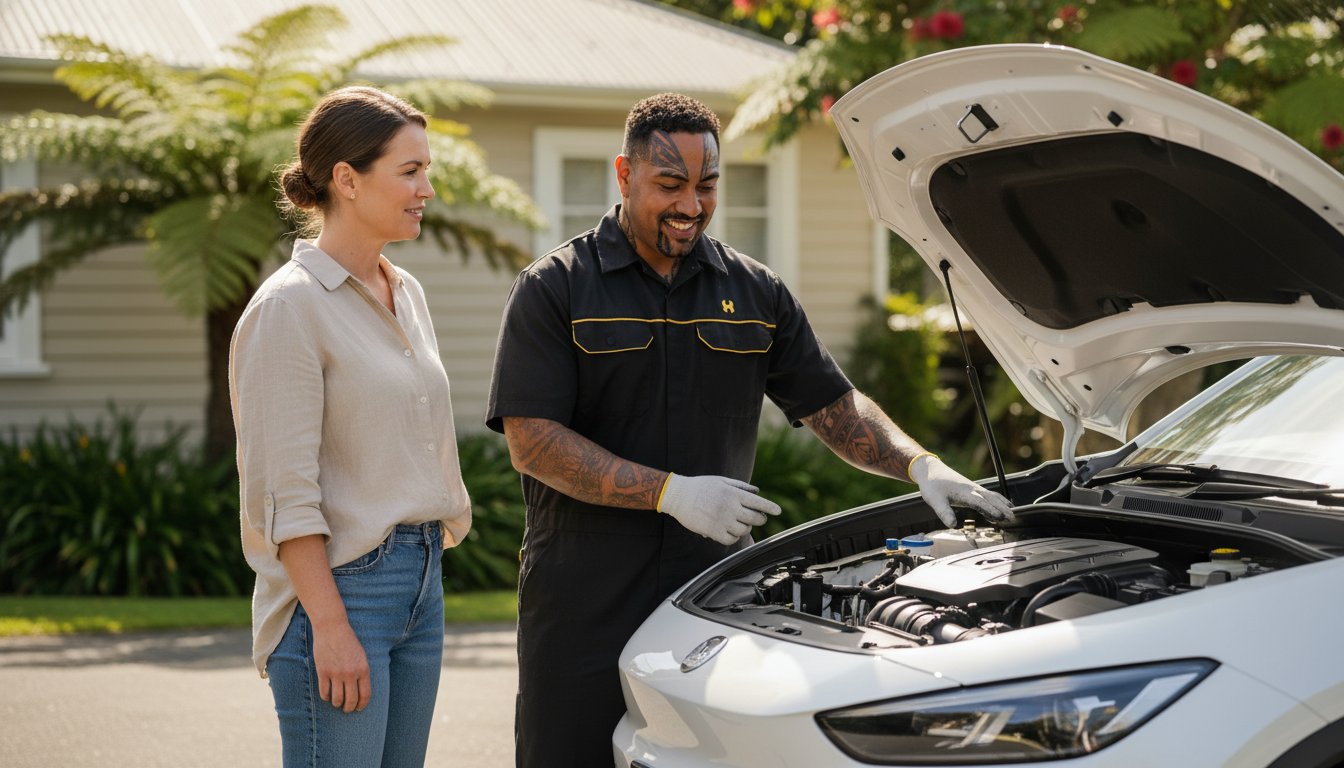
You are standing at the service desk, and the mechanic mentions a “perished CV boot” or “pitting on the rotors.” You nod along, but inside, you are wondering if your car is actually safe to drive or if you are about to pay for something you don’t really need. It is a common scenario that leaves many Kiwis feeling frustrated or confused by their final invoice. Getting common car repair terminology explained shouldn’t require a mechanical engineering degree, yet the gap between technical jargon and your peace of mind often feels huge.
We believe transparency is the foundation of a good repair. You deserve to feel like a partner in your car’s maintenance, not just a bystander. This guide will help you master the mechanical language so you can talk to your mechanic with confidence and understand exactly what is happening under the bonnet. We will break down the most frequent terms you’ll encounter in 2026; from suspension basics to brake system specifics. You will learn how to recognize which repairs are urgent safety priorities and which ones are standard maintenance, ensuring you never feel overwhelmed by a service booking again.
Key Takeaways
- Understand that mechanical jargon is a tool for precision between professionals, and learning it helps you close the trust gap at the workshop.
- Decode the standard terms used during your annual service and WOF to better understand your car’s specific safety and maintenance requirements.
- Master common car repair terminology explained for major components like cambelts and clutches to avoid the risks of critical mechanical failure.
- Learn the difference between OEM and aftermarket parts and how “Book Time” affects your final invoice for better financial clarity.
- Discover how transparent, fixed-price bookings and digital solutions eliminate the anxiety of hidden costs and unexpected “mechanic-speak” surprises.
Why Mechanic Jargon Feels Like a Secret Language (And Why It Matters)
Mechanical jargon is simply technical shorthand. Mechanics use these specific terms to communicate complex ideas with precision and speed. While it helps professionals work faster, it often creates a massive trust gap for New Zealand car owners. When you don’t speak the language, a simple explanation can sound like a high-pressure sales pitch. Having common car repair terminology explained is about more than just knowing what a part does; it is about protecting your bank account and your peace of mind. Getting common car repair terminology explained ensures you aren’t just nodding along while your budget disappears.
Understanding these terms reduces “upselling” anxiety. If you know exactly what a technician is describing, you can distinguish between a critical safety issue and a recommendation for the future. You can use a Glossary of automotive terms to verify the basics, but the real value comes from applying that knowledge during a service booking. My Auto Shop acts as your digital translator. We bridge the gap between technical workshop speak and clear, actionable information. We ensure you always know what you are paying for before the tools even touch your car.
The Difference Between Maintenance and Repair
Confusing these two categories is the most frequent cause of invoice shock. It is helpful to view them as two distinct stages of car care:
- Maintenance: These are proactive, scheduled steps designed to prevent parts from failing. Think of oil changes, fluid top-ups, or filter replacements.
- Repair: These are reactive steps. You perform a repair after a component has already broken or stopped functioning correctly.
If you treat maintenance as optional, you will inevitably face more expensive repairs later. Knowing the difference helps you budget effectively and keeps your car reliable for the long haul.
The Layman’s Terms Framework
You are the customer. Never feel embarrassed to ask for a simpler explanation. If a term sounds like gibberish, ask the mechanic to explain it in plain English. A good technician will have no problem breaking it down. Always ask for visual proof. If a mechanic says a part is worn out, ask to see it. Looking at a “pitted” rotor or a “perished” bush makes the technical term concrete. This transparency speeds up the repair process. It builds trust and ensures everyone is on the same page regarding the work required. Clear communication is the fastest route to a safe car and a fair price.
Routine Maintenance & WOF Terms You Hear Every Year
Every year, New Zealand drivers face a familiar cycle: the Warrant of Fitness (WOF) and a scheduled service. These two events are distinct, but they often overlap in the workshop. Having common car repair terminology explained helps you understand why your mechanic might suggest work that wasn’t strictly required for your WOF. A WOF check ensures your car is safe for the road right now. A service ensures it stays reliable for the next 10,000 kilometres. For vehicles first registered on or after 1 January 2000, this inspection happens annually, making it the perfect time to address wear and tear.
The Warrant of Fitness (WOF) Vocabulary
A “WOF Fail” is straightforward; your vehicle did not meet the minimum safety standards and cannot be legally driven. However, a “WOF Advisory” is a professional heads-up. It means a component, like your brake pads, is still legal but will likely fail before your next inspection. When an inspector mentions “Structural Integrity,” they are looking for rust or corrosion that weakens the car’s frame. This is a critical safety issue in NZ due to our coastal environment. Similarly, while the legal tyre tread depth is 1.5mm, most experts recommend replacing tyres at 3mm to maintain grip on wet Kiwi roads. Understanding these common car repair terminology explained basics helps you prioritize safety over mere compliance.
Fluids and Filtration Explained
During a service, you will hear about “Viscosity.” This refers to how easily your oil flows at different temperatures. Using the wrong viscosity can lead to engine wear or poor fuel economy. Your mechanic will also replace the “Sump Plug Washer.” This tiny component is essential. It creates a fresh seal every time your oil is changed to prevent slow leaks on your driveway. Don’t confuse your “Air Filter” with your “Cabin Filter.” The air filter prevents dust and grit from entering the engine. The cabin filter cleans the air you breathe inside the car. If you notice a musty smell when the AC is on, it is likely time for a new cabin filter.
A “Basic Service” usually covers the essentials: an oil and filter change plus a safety check. A Comprehensive Service is much more thorough, checking everything from cooling systems to spark plugs. Choosing the right level of care depends on your car’s age and how much you drive. By mastering these terms, you can make informed decisions that keep your car running smoothly without any invoice surprises.
Major Mechanical Repairs: Deciphering the Big-Ticket Items
While routine servicing keeps you moving, certain components require specialized attention as your vehicle ages. Having common car repair terminology explained for these major systems helps you understand the “why” behind higher quotes. These are the big-ticket items that keep your car reliable and out of the scrap yard. When a mechanic talks about these systems, they are often discussing the core “health” of your vehicle’s most expensive parts.
Belts, Chains, and Timing
In New Zealand, we almost always use the term “Cambelt” rather than “Timing Belt.” This rubber belt synchronizes the top and bottom of your engine. Think of it like a bicycle chain; if it snaps, the movement stops instantly. Many modern cars have an “Interference Engine.” This means that if the belt snaps, the heavy metal pistons and valves will collide at high speed. This usually “kills” the engine, leading to a massive repair bill. Replacing your cambelt on schedule is the ultimate preventative move. You might also hear about the “Serpentine Belt” or “Drive Belt.” This is a separate belt that powers your alternator and air conditioning. It is less critical than a cambelt but still essential for your car to function.
Braking and Suspension Systems
When you book a Brake Pad Replacement, your mechanic might also mention “Rotors.” The pads are the friction material that grips the metal rotors to stop your car. If the rotors are “pitted” or too thin, simply fitting new pads won’t provide safe stopping power. Suspension terms like “Shock Absorbers” and “Struts” describe the parts that dampen road bumps. Worn shocks lead to a bouncy, unsafe ride and poor handling during an emergency. Another common term is “CV Joints and Boots.” The CV joint allows your wheels to turn while still receiving power from the engine. If the rubber “boot” tears, the grease leaks out and dirt gets in. This creates a distinct clicking sound when you turn a corner, signaling that the joint is failing.
The Drivetrain: Clutch and Transmission
A Clutch Replacement is a significant job for manual vehicles. If your engine revs loudly but the car doesn’t speed up, your clutch is “slipping.” It is like trying to run on a slippery floor; the power is there, but there is no grip to move you forward. The “Master and Slave Cylinders” are the hydraulic muscles that move the clutch when you press the pedal. If these fail, you won’t be able to change gears at all. Finally, a “Transmission Flush” involves cleaning the old fluid out of your gearbox. Think of this fluid as the “blood” of your transmission. If it gets dirty or burnt, your gears will struggle to shift smoothly, eventually causing internal damage. Having these common car repair terminology explained allows you to recognize these symptoms before they become total failures.
Understanding Parts & Labour: OEM, Aftermarket, and Menu Pricing
When you look at a quote, the numbers are often split into two categories: parts and labour. Having common car repair terminology explained for these items is the best way to ensure you are getting a fair deal. You don’t have to be an expert to ask the right questions about what is actually being installed under your bonnet. It’s your car, and you have every right to know if a part is coming from the original factory or a trusted third party. By getting common car repair terminology explained, you can have a productive conversation with your mechanic about which parts balance your budget with your safety needs.
Genuine, OEM, and Aftermarket: What’s the Difference?
The “who” and “what” of car parts can be confusing. Genuine parts come directly from the vehicle manufacturer, like an oil filter in a Toyota-branded box. These are the safest bet but usually the most expensive. OEM (Original Equipment Manufacturer) parts are made by the same company that built the genuine part, just sold under their own brand name. You get the exact same quality without paying for the manufacturer’s logo. Aftermarket parts are produced by third-party companies. While some people worry about quality, many aftermarket parts are actually superior to the originals because they fix known design flaws. They offer excellent value for older vehicles where saving money is a priority.
How Labour Costs Work
Labour is usually calculated by “Book Time.” This is a standardized estimate of how long a specific job should take based on industry data. If a Brake Pad Replacement is “booked” for one hour, that is what you pay, even if the mechanic finishes in 45 minutes because they are highly efficient. You might also see a “Diagnostic Fee” on your estimate. Don’t view this as a fee just for looking. It is a charge for the specialized electronic tools and years of training required to find a hidden fault. To avoid invoice shock, look for workshops that offer “Menu Pricing.” This approach bundles parts and labour into a single, fixed price for common jobs, giving you total financial clarity before the work begins.
Ready to see how simple car care can be? You can view fixed-price options for a Comprehensive Service and book online in minutes, ensuring there are no surprises when you pick up your keys.
How My Auto Shop Strips Away the Jargon for NZ Drivers
My Auto Shop was built to solve the transparency problem in the New Zealand automotive industry. We act as a digital bridge between high-tech workshops and busy drivers who just want their cars to work. Having common car repair terminology explained shouldn’t be a chore you do after receiving a confusing bill. Our platform does the heavy lifting for you by providing clear, upfront information before you even step foot in a garage. We partner with a massive network of local workshops to ensure that no matter where you are in the country, you receive the same level of honesty and clarity.
The “Fixed Price” guarantee is our core promise to you. We know that the biggest fear for most car owners is the “open-ended” invoice where costs spiral out of control. By using our digital booking tool, you get an instant price tailored to your specific make and model. This eliminates the guesswork and ensures you aren’t paying for “hidden” extras or unnecessary labour. It’s car care designed for the digital age: fast, predictable, and completely transparent.
Transparent Booking and Mobile Solutions
Our online platform doesn’t just show you prices; it explains the work involved in every job. If you are booking a Brake Pad Replacement, we show you exactly what that entails and why it matters for your safety. If you can’t make it to a workshop, our Mobile Mechanic service brings the expertise directly to your driveway. This allows you to chat with the technician while they work, making it even easier to get common car repair terminology explained in real-time. For those looking to buy a used vehicle, our Pre-purchase Inspections provide a comprehensive, jargon-free report so you can make a smart investment without the stress.
Your Next Steps for Stress-Free Car Care
Maintaining your vehicle shouldn’t be a source of anxiety. Take control of your car’s health today by following these simple, proactive steps:
- Check your dashboard for any warning lights. Use our online guides to identify what they mean before you assume the worst.
- Book a Basic or Comprehensive Service to get a clear health check and keep your service history up to date.
- Contact our team if you have received an invoice from another workshop that you don’t understand. We are happy to help you decipher the technical details.
We value your time as much as your safety. By stripping away the mystery of the workshop, we empower you to make smarter decisions for your car and your budget. Stop guessing and start booking with the confidence of an expert.
Take Control of Your Car Care Today
Mastering the basics of car maintenance doesn’t just save you money; it gives you the confidence to make safe decisions for your family. You now have common car repair terminology explained, from the critical timing of a cambelt to the financial logic of choosing aftermarket parts. This knowledge is your best tool for ensuring your vehicle remains reliable on New Zealand roads without overpaying for unnecessary work.
My Auto Shop supports your journey with a nationwide network of professional mechanics and fixed-price servicing guarantees. We focus on financial clarity so you never face unexpected costs at the checkout. Whether you prefer a local workshop or the logistical convenience of a mobile mechanic arriving at your driveway, we ensure the process is streamlined and stress-free. Don’t let technical language stand in the way of your safety or your budget.
Get a transparent, jargon-free quote for your car repair today. We are proud to be your local partner in modern, honest car care. You are now ready to handle your next service booking like a pro.
Frequently Asked Questions
What is the difference between a cambelt and a timing belt?
A cambelt and a timing belt are exactly the same component. The difference is purely regional terminology, with “cambelt” being the standard term used by Kiwi mechanics while “timing belt” is more common in North America. Both terms describe the critical rubber belt that synchronizes your engine’s crankshaft and camshaft to ensure the valves open and close at the correct intervals.
Why do mechanics charge a diagnostic fee just to look at my car?
Mechanics charge a diagnostic fee to cover the time, expertise, and expensive electronic equipment required to identify a specific fault. Modern vehicles are complex computers on wheels, and pinpointing a sensor failure or electrical ghost requires specialized software and training. This fee ensures the technician finds the actual root cause rather than just guessing and replacing parts that might still be functional.
What does it mean when a mechanic says my car is “throwing a code”?
“Throwing a code” means your car’s On-Board Diagnostics (OBD) system has detected a malfunction and stored a specific error code in its computer memory. This event usually triggers the “Check Engine” light on your dashboard. Having common car repair terminology explained like this helps you realize that the light is just a symptom; the stored code tells the mechanic which specific system needs attention.
Are aftermarket parts safe to use for my car repair?
Yes, aftermarket parts are safe and often meet or exceed the quality of the original components. Many reputable third-party manufacturers specialize in specific systems, like brakes or filtration, and produce high-quality alternatives used by workshops across New Zealand. Using aftermarket parts is a standard way to maintain your vehicle’s safety and performance while managing your repair budget effectively.
What is a WOF advisory and do I need to fix it immediately?
A WOF advisory is a formal notice that a component is currently legal but is likely to fail before your next inspection. You don’t have to fix it immediately to receive your Warrant of Fitness sticker. However, it serves as a professional “to-do” list for upcoming maintenance. Addressing an advisory early prevents safety risks and avoids the stress of a definite “WOF Fail” in six or twelve months.
What is the difference between a minor and a major car service?
A minor service, often called a Basic Service, focuses on an oil and filter change along with a general safety inspection. A major or Comprehensive Service is much more thorough, including the replacement of spark plugs and cabin filters, plus checks of the cooling and braking fluids. Major services are essential every 30,000 to 40,000 kilometres to ensure the long-term health of your engine.
How do I know if my brake pads actually need replacing?
You can tell your brake pads need replacing if you hear a high-pitched squealing sound or feel a pulsing vibration through the pedal. Most pads include a small metal “wear indicator” that creates this noise when the friction material becomes dangerously thin. If your vehicle features electronic wear sensors, a “Brake” warning light will illuminate on your dashboard to signal that a replacement is required.
What does “logbook servicing” mean for my car warranty?
Logbook servicing means your vehicle is maintained exactly according to the manufacturer’s specified schedule and technical requirements. Under New Zealand law, you don’t have to return to a dealership to keep your warranty valid, provided the work is done by a qualified professional using appropriate parts. Getting common car repair terminology explained ensures you understand that a correctly stamped logbook is vital for protecting your car’s resale value.
Disclaimer
This article provides general information only and should not be relied on as professional mechanical, safety or legal advice. Vehicle requirements and circumstances vary. If you are unsure about your vehicle, have it inspected by a qualified automotive professional.