

That high-pitched chirp coming from your wheel well isn’t just an annoyance. It’s often the first warning sign of a mechanical failure that could leave you stranded. You’re likely asking, is my car safe to drive with a squeaking noise, or are you risking a major breakdown every time you hit the road? It’s completely normal to feel anxious about unexpected sounds, especially when you’re worried about being overcharged or losing your car to a shop for days on end.
We believe car maintenance should be transparent and fit your busy schedule. This guide will help you identify exactly what that noise means, whether it’s a simple belt issue or a critical brake problem. With New Zealand’s WoF regulations changing on November 1, 2026, staying on top of these sounds is more important than ever for your safety and your wallet. We’ll give you a clear yes or no on safety and show you how to get professional help without the typical garage stress. You deserve a car that runs quietly and a service that treats you like a partner.
Key Takeaways
- Identify the source of the sound by noting if it comes from the engine bay or the wheels during specific driving actions.
- Find the answer to “is my car safe to drive with a squeaking noise” by checking for steering pull or unusual vibrations.
- Understand why brake pads are designed to squeak before they fail and how to catch this early warning sign.
- Avoid a failed Warrant of Fitness (WoF) by addressing suspension squeaks that signal worn safety-critical components.
- Save time and reduce stress by booking a mobile mechanic to handle your diagnostic inspection right in your own driveway.
Safety Triage: Is it Safe to Drive With a Squeak?
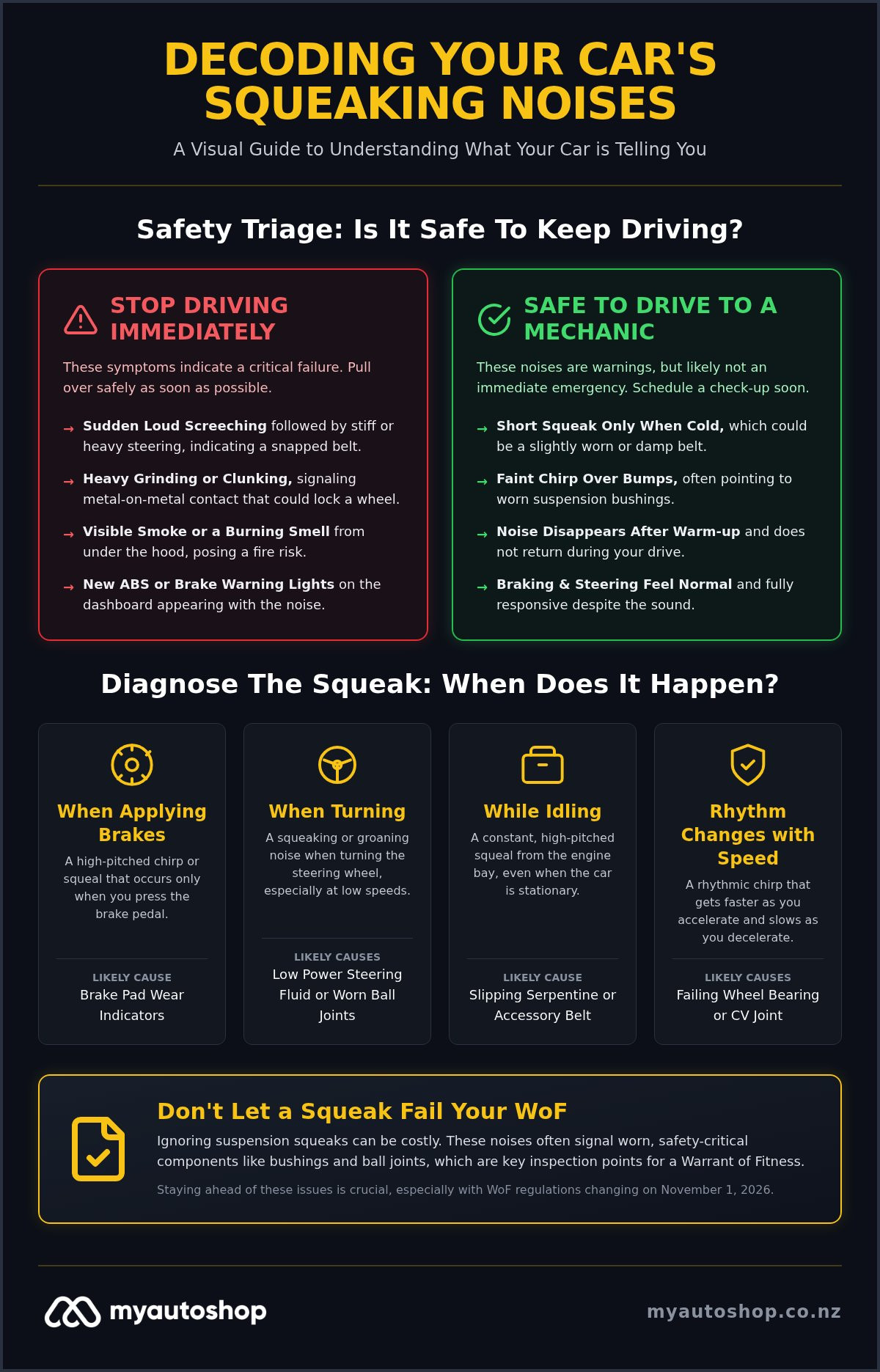
Hearing a high-pitched chirp while you’re cruising down the motorway is an instant stress trigger. Your first thought is likely a practical one: is my car safe to drive with a squeaking noise, or am I about to be stranded? Start your assessment by paying close attention to how the car feels, not just how it sounds. If your steering wheel pulls to one side or vibrates while the squeak is happening, your safety is at risk. These physical symptoms often point to a failing wheel bearing or a seized brake caliper. If the noise changes pitch as you accelerate or slow down, it’s likely linked to a rotational part like a belt or a tire. Always check your dashboard for new warning lights. An ABS or brake light appearing alongside a squeak is a clear signal that a critical safety system is reaching its limit.
A squeak becomes a no-drive emergency the moment it is accompanied by a loss of vehicle control, visible smoke, or a transition into heavy, rhythmic grinding.
When to Stop Driving Immediately
Pull over safely if you hear a sudden, loud screeching followed by a heavy, stiff feeling in the steering wheel. This usually means your serpentine belt has snapped or slipped, cutting off your power steering and potentially your engine’s cooling system. If that squeak suddenly turns into a rhythmic grinding or a heavy clunking, your mechanical components are likely touching metal-to-metal, which can cause a wheel to lock up. You should also stop immediately if you notice visible smoke or a sharp, burning rubber smell coming from under the hood. These are signs of extreme friction or a seized pulley that could lead to a fire if you continue to drive.
When it is “Safe” to Drive to a Mechanic
Some noises are less urgent but still require a professional look. If you hear a short-duration squeak only when the engine is cold, it might just be a belt that’s slightly worn or damp from morning dew. Faint chirping that only triggers when you hit speed bumps or uneven roads often points to worn suspension bushings or brake wear indicator tabs. These tabs are specifically designed to make a noise to tell you your pads are low. If the noise disappears completely after the car has warmed up for five minutes, you likely have enough time to schedule a mobile mechanic. Driving to a local shop is generally acceptable in these scenarios, provided your braking and steering feel completely normal and responsive.
Remember that even “safe” squeaks are early warning signs. Addressing a small chirp today is much cheaper than replacing a shattered component tomorrow. Use your senses to evaluate the severity. A light “cricket” sound is a helpful reminder from your car; a “metal-on-metal” scream is a crisis that needs an immediate stop.
Diagnosing the Squeak: When Does the Noise Happen?
To pinpoint the root cause of an annoying car sound, the “when” is far more important than the “what.” Mechanical components fail in predictable ways, and the timing of the noise acts as a map for your diagnostic journey. Start by opening your windows and listening closely. Does the sound come from the engine bay directly in front of you, or is it isolated to one of the four wheel areas? If you’re still wondering, is my car safe to drive with a squeaking noise, the answer often depends on whether the sound persists while you’re stationary. A noise that happens while idling in park suggests an engine-related issue, whereas a sound that only triggers when the wheels are turning points to your suspension, tires, or brakes.
Observing the rhythm of the sound provides another vital clue. A constant, high-pitched squeal often points to a slipping belt. In contrast, a rhythmic chirp that speeds up as you accelerate usually indicates a rotational component like a wheel bearing or a CV joint. Paying attention to these patterns helps you describe the problem clearly to a professional, saving you time and ensuring an accurate fix.
Squeaking While Turning the Steering Wheel
If your car chirps every time you navigate a tight corner or pull into a parking spot, your steering system is likely struggling. Low power steering fluid is a common culprit. When levels drop, the pump strains and produces a high-pitched protest. Alternatively, dry ball joints or worn steering rack components can create friction that sounds like a door hinge in need of oil. In some cases, the noise is purely internal. Dry seals within the steering column can rub together, creating a squeak that feels closer to your hands than the road. Checking your fluid levels is a great first step to rule out a simple fix.
Squeaking When Applying the Brakes
Braking noises are your vehicle’s most vocal safety warnings. Most modern pads include a metal tab that acts as a wear indicator. This tab is designed to scrape against the rotor and chirp when the friction material gets too thin. It’s a proactive safety feature, much like the advanced systems discussed by the NHTSA on braking safety. However, a squeak doesn’t always mean you need new parts. Dust, road salt, or moisture trapped between the pad and the rotor can cause temporary noise. If the sound is constant and high-pitched, your pads may have become “glazed” from overheating. This happens when heavy braking causes the pad material to harden and lose its grip.
Squeaking While Accelerating or Idling
A constant squeal that gets louder as you rev the engine usually signals a belt issue. The serpentine belt, or fan belt, powers your alternator, water pump, and air conditioning. If this belt is loose, worn, or glazed, it will slip on the pulleys and scream for attention. You might also have a worn bearing inside one of those powered components. A failing alternator bearing often creates a rhythmic chirp that matches the engine’s RPM. If you notice this sound while your car is idling in the driveway, it’s a good idea to have a mobile mechanic take a look before a snapped belt leaves you without a battery charge or a functioning cooling system.
Common Mechanical Culprits Behind the Noise
Pinpointing the part responsible for that high-pitched protest is the next step in deciding: is my car safe to drive with a squeaking noise? While a squeak might sound like a minor annoyance, it’s usually the result of friction where there should be smooth movement or lubrication. Understanding these common culprits helps you prioritize repairs before they turn into a roadside emergency. Experts often recommend diagnosing car noises by their specific tone and location to avoid unnecessary parts replacement. Most squeaks stem from three main areas: your engine belts, your braking system, or your suspension bushings.
Brake pads are a frequent source of these sounds. Manufacturers actually design them to chirp once the friction material wears down to a specific level. This built-in alarm system tells you it is time for a Brake Pad Replacement before you damage the more expensive rotors. Wheel bearings can also produce a squeak, though they more commonly create a low hum or a growl. If the sound changes when you shift the vehicle’s weight from side to side, you’re likely dealing with a bearing issue rather than a simple belt slip.
The Role of the Serpentine and Cambelt
Don’t confuse your belts. The serpentine belt is an external rubber loop that powers your alternator and water pump. When it loses tension or gets old, it slips and creates that classic “dying bird” scream. A slipping serpentine belt is a safety risk because it can lead to a flat battery or engine overheating. In contrast, a cambelt (or timing belt) is usually internal and silent. If your cambelt fails, it won’t squeak first; it will simply snap and cause major engine damage. Check your serpentine belt for visible cracks or “glazing” where the rubber looks shiny and hard. If you see these signs, book a Cambelt / Timing Belt Replacement or serpentine service immediately to stay mobile.
Suspension and Chassis Noises
If your car sounds like an old rocking chair every time you hit a bump, the problem lies in your chassis. Suspension bushings are small rubber parts that cushion the joints between metal components. Over time, these bushings dry out, crack, and create a “rubber-on-rubber” squeak. While a dry bushing might just be an annoyance, it often signals that your Shock Absorber Replacement is overdue. Worn suspension components reduce your tires’ contact with the road, which compromises your braking distance and steering accuracy. Sometimes a simple lubrication service can silence these non-critical squeaks, but a professional inspection is the only way to ensure your car remains stable and safe at high speeds.
Why Ignoring a Squeak Could Cost You a WOF
In New Zealand, your Warrant of Fitness (WOF) is more than just a sticker on the windscreen. It’s a rigorous safety check designed to keep dangerous vehicles off our roads. If you’re currently wondering, is my car safe to drive with a squeaking noise, you should consider how that sound will be interpreted during an inspection. A persistent squeak is often the first sign of a component that no longer meets NZTA safety standards. Addressing the noise early is a smart financial move; a simple $50 adjustment today can easily prevent a $500 repair bill when your WOF is due and your vehicle is grounded.
Starting November 1, 2026, the penalties for driving with an expired WOF or non-compliant tires will increase significantly. Fines for a WOF expired by more than two months will rise to $350, making it even more critical to resolve mechanical issues before they lead to a failed inspection. A squeak isn’t just an annoyance. It’s a red flag for an inspector that your vehicle’s safety-critical systems are reaching the end of their functional life.
WOF Standards for Brakes and Suspension
Brakes and suspension are the two areas where squeaks most frequently lead to a WOF failure. NZTA requirements are strict regarding brake pad thickness and rotor condition. If your brakes are chirping, it’s a sign that the pads are nearing the legal limit. Inspectors also look for “excessive play” in steering joints and suspension arms. A squeak from a dry ball joint or a cracked bushing is a clear indicator of wear that will result in an automatic fail. These issues don’t just affect your safety; they create uneven tyre wear patterns that can lead to additional fines of up to $350 per non-compliant wheel.
The Risk of Long-Term Damage
Ignoring a minor noise often triggers a costly domino effect. A squeaking pulley in your engine bay might seem harmless, but it can eventually seize. When a pulley stops spinning, it snaps the drive belt instantly, which can lead to engine overheating or a total loss of power steering. Similarly, worn suspension bushings put extra strain on your shock absorbers and steering rack. Driving with compromised steering or braking systems isn’t just a legal risk; it’s a fundamental safety hazard for you and other road users. If your car is making noise, don’t wait for your inspection date to arrive. Book a Mobile Mechanic to identify the source and keep your car road-legal without the stress of a failed WOF.
How to Resolve the Noise Without the Stress
Dealing with car trouble shouldn’t feel like a part-time job. If you’ve spent the last few days asking, is my car safe to drive with a squeaking noise, you’ve already done the hard work by paying attention. The final step is to move from worry to a solution. A professional diagnostic inspection is the most efficient way to pinpoint the exact source of that chirp or squeal. This removes the guesswork and prevents you from spending money on parts that don’t actually need replacing. My Auto Shop acts as your transparent partner, providing a streamlined digital experience that connects you with experts who value your time as much as your safety.
Our platform was built to strip away the anxiety of the traditional garage experience. We focus on logistical convenience and financial clarity, ensuring you know exactly what you’re paying for before the work even begins. You don’t have to be a mechanical expert to get a fair deal. We provide the tools and the talent to get your car back to its quiet, reliable self without the typical industry jargon or hidden costs.
Choosing Between a Workshop and a Mobile Mechanic
Deciding where to get your car fixed depends on the type of noise you’re hearing. A Mobile Mechanic is often the perfect solution for diagnostic inspections and common repairs like a Brake Pad Replacement or a Car Battery Replacement. They come directly to your home or office, which means you don’t have to risk driving a noisy car across town. It’s the ultimate way to fit car maintenance into a busy schedule. However, some jobs require heavy machinery. If your squeak is tied to deep suspension issues or requires a Shock Absorber Replacement, a traditional workshop with a hoist might be necessary. You can use the My Auto Shop platform to compare local providers and choose the option that fits your needs and your location.
What to Tell Your Mechanic
Clear communication helps your mechanic work faster and more accurately. Before you book, take a moment to note the specific behavior of the noise. Use this checklist to provide a helpful overview:
- Does the noise happen when the engine is cold, or only after 15 minutes of driving?
- Is the sound speed-dependent, getting faster as the wheels turn?
- Does it sound like a high-pitched chirp, a rhythmic squeal, or a thin whistling?
- Does the sound stop the moment you touch the brake pedal or turn the steering wheel?
Sharing these details helps the technician narrow down the culprits quickly. If you’re ready to stop worrying and start driving with confidence again, Book a comprehensive inspection with My Auto Shop to get peace of mind today. We’ll help you identify the cause, provide a clear quote, and get you back on the road safely.
Get Your Quiet Ride Back Today
A squeak is your car’s way of asking for attention before a minor issue becomes a major safety risk. By identifying when the noise happens and checking for physical symptoms like steering pull, you’ve taken the first step toward a solution. You now know that while some chirps are just early warnings from your brake wear indicators, others require an immediate stop to protect your engine and your WOF status. Addressing these sounds early keeps your repair costs low and your vehicle road-legal.
If you’re still feeling uncertain about whether is my car safe to drive with a squeaking noise, don’t leave it to chance. We make it easy to get an expert opinion without the stress of traditional workshops. You can book a professional car inspection with My Auto Shop to access our network of 300+ certified NZ mechanics. We provide transparent, upfront pricing with no hidden surprises. Whether you need the convenience of a mobile mechanic at your home or a comprehensive workshop check, we’ve got you covered. Drive with confidence knowing your vehicle is in top shape and your safety is prioritized.
Frequently Asked Questions
Is it normal for brakes to squeak in the morning?
It is common for brakes to squeak first thing in the morning due to a thin layer of surface rust. This moisture-induced oxidation happens overnight and usually clears after your first few stops. If the sound continues throughout your commute, it’s a sign that your pads are thin or glazed. Don’t ignore a persistent chirp that lasts beyond the first mile.
How much does it cost to fix a squeaking car noise in NZ?
The cost to resolve a squeak varies significantly depending on whether you need a simple belt adjustment or a full Brake Pad Replacement. If you’re wondering is my car safe to drive with a squeaking noise, getting a professional quote is the best way to find out. We provide transparent, upfront pricing through our platform so you can see the total cost before any work begins on your car.
Can a low oil level cause my car to squeak?
Low oil levels typically cause a metallic ticking or knocking sound rather than a high-pitched squeak. Squeaking is usually the result of external components like belts or suspension bushings rubbing together. However, extreme internal friction from a lack of oil can lead to catastrophic engine failure. Always check your dipstick if you hear any new engine noises, regardless of the pitch.
What happens if my serpentine belt snaps while I am driving?
Your car will lose several critical functions immediately if the serpentine belt snaps while you are driving. You’ll feel the steering become very heavy as power steering assist fails, and your battery will stop charging. Most importantly, the water pump will stop circulating coolant, which can lead to engine overheating in just a few minutes. Safely pull over and stop the engine right away.
Will a squeaking noise make my car fail its WOF?
A squeaking noise will cause a WOF failure if it’s linked to a safety-critical component like your suspension or braking system. NZTA inspectors check for worn bushings and brake pad thickness during every inspection. If you’re asking is my car safe to drive with a squeaking noise, remember that a noise indicating “excessive play” in your steering joints is an automatic fail. Fix it early to avoid a grounded vehicle.
Why does my car squeak only when I turn the AC on?
A squeak that only appears when the AC is on usually indicates that the serpentine belt is slipping under the added load of the AC compressor. It could also mean the bearings inside the compressor clutch are starting to fail. This extra resistance makes it harder for the belt to grip the pulley. Have a mechanic check the belt tension and the condition of the compressor clutch.
Can I use WD-40 to stop my car from squeaking?
You should never use WD-40 on your brakes or engine belts to stop a squeak. WD-40 is a lubricant, and applying it to brakes will destroy your stopping power, creating a massive safety hazard. Similarly, putting lubricant on a serpentine belt will cause it to slip even more. Use specialized products like “belt dressing” only if recommended, but replacing the worn part is always the safer fix.
Is a squeak the same as a grinding noise?
A squeak is fundamentally different from a grinding noise and usually indicates a less advanced stage of wear. Squeaks are high-pitched vibrations caused by friction or thin pads. Grinding is a deeper, metallic sound that means two parts are rubbing metal-on-metal. If your squeak turns into a grind, you’ve likely moved from a simple repair to a more expensive component replacement.
Disclaimer
This article provides general information only and should not be relied on as professional mechanical, safety or legal advice. Vehicle requirements and circumstances vary. If you are unsure about your vehicle, have it inspected by a qualified automotive professional.