
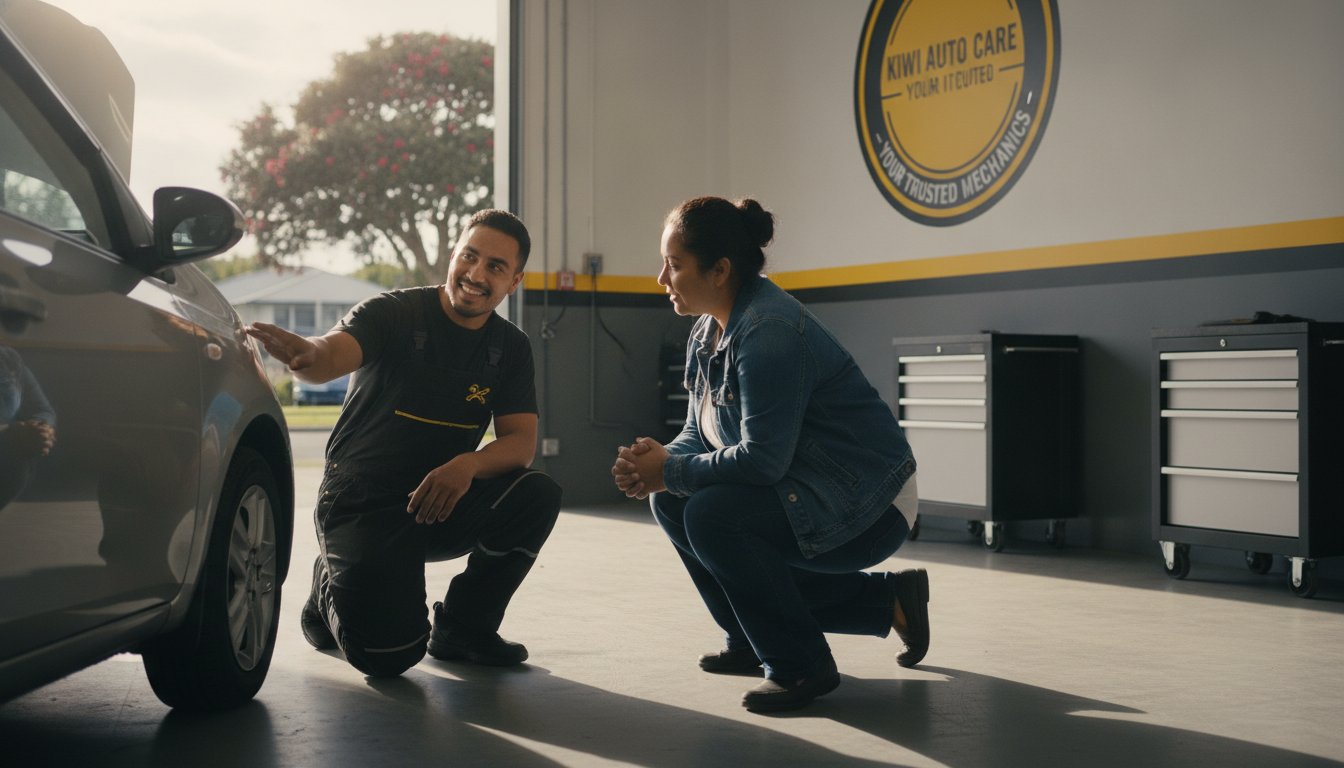
That rhythmic clicking sound while you’re turning into the supermarket car park isn’t just annoying. It’s often the first sign that your car needs professional attention before a small issue turns into a roadside breakdown. Many Kiwi drivers ignore these early warning signs, only to face a higher cv joint replacement cost nz when the vehicle eventually fails its WOF. We understand the anxiety that comes with unexpected mechanical noises and the fear of being overcharged for a repair you don’t fully understand.
You deserve to know exactly what’s happening under your car without the jargon or hidden fees. Catching a split boot early is often the difference between a simple maintenance task and a major mechanical failure that leaves you stranded. In this guide, we provide a clear breakdown of CV joint and boot repair costs across New Zealand for 2026. You’ll learn how to spot the symptoms of failure, understand if your vehicle is still safe to drive, and find a simple way to book a transparently priced repair with a local expert.
Key Takeaways
- Identify the early symptoms of CV joint failure, like clicking during turns, before they lead to a total roadside breakdown.
- See how a simple boot repair can prevent a much higher cv joint replacement cost nz by keeping dirt and grit out of your driveline.
- Prepare for your next Warrant of Fitness by understanding why NZTA inspectors consider a leaking CV boot an automatic safety fail.
- Compare average 2026 repair rates for different vehicle types to ensure you get a fair deal and avoid workshop overcharging.
- Learn how to book a high-quality repair through a trusted national network with complete financial clarity and no hidden fees.
What is a CV Joint and Why is it Clicking?
Every time you turn your steering wheel, a complex piece of engineering works hard to keep your car moving. A Constant-velocity joint, or CV joint, is the critical link that transfers power from your engine and transmission to the drive wheels. Unlike a simple rigid axle, these joints allow your wheels to move up and down with the suspension while simultaneously turning left and right. It’s a tough job that requires precision and constant lubrication. Most modern front-wheel drive and all-wheel drive vehicles rely on these components to maintain a smooth delivery of power regardless of the road surface or steering angle.
In New Zealand, our roads can be demanding. Between the chip seal on rural highways and the grit used to treat icy winter roads, your car’s undercarriage faces constant bombardment. This is where the CV boot plays its part. This flexible rubber sleeve keeps high-pressure grease packed around the joint while sealing out water and abrasive dirt. When that boot tears, the grease escapes and the grit gets in. Without lubrication, the internal bearings begin to grind against the housing. This metal-on-metal friction creates that distinctive clicking sound you hear when turning at full lock. If you’re starting to worry about the cv joint replacement cost nz, catching this noise early is the best way to keep your bill manageable.
Common Symptoms of a Failing CV Joint
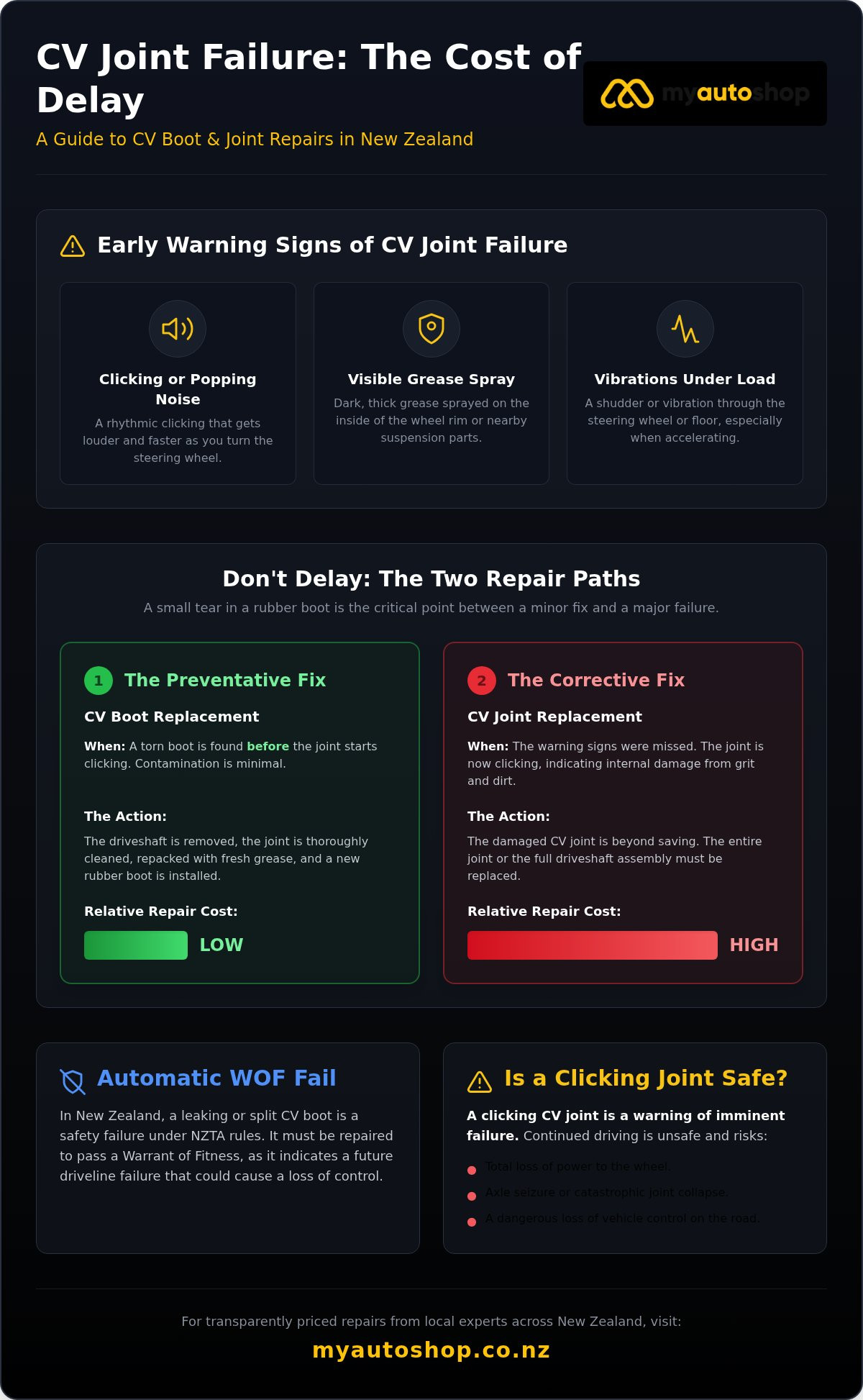
Identifying a problem early saves you from a much larger headache later. Listen for a rhythmic clicking or popping sound that gets louder as you turn the steering wheel sharply. You might also feel a strange vibration through the steering wheel or floorboards when you accelerate. If you want a visual check, look behind your front wheels. A failing joint often sprays dark, thick grease across the inside of the wheel rim or the suspension components. These signs indicate that the protective boot has failed and the joint itself is now wearing down.
The ‘Click of Death’: Is it Safe to Drive?
A clicking CV joint is a warning, not an immediate breakdown, but you shouldn’t ignore it. While your car might feel fine on a straight road, the joint is structurally compromised. If it fails completely while you’re driving, the axle can snap or seize. This leads to a total loss of power to that wheel and can potentially cause a dangerous loss of control. For NZ families, ensuring your driveline is secure is a basic safety priority. Addressing the cv joint replacement cost nz now is much safer and cheaper than paying for a tow truck and emergency repairs after a failure on the motorway.
CV Boot vs. CV Joint: The Cost of Delay
A small tear in a rubber boot might seem like a minor detail, but it’s the primary cause of major driveline failure. Think of the CV boot as a protective bodyguard. Its only job is to keep high-pressure grease inside the joint while blocking out water, salt, and road grit. If the boot stays sealed, a CV joint can easily last the lifetime of the vehicle. However, once that rubber perishes or rips, the lubricant escapes almost immediately. This leaves the precision bearings exposed to the elements, leading to rapid wear and a much higher cv joint replacement cost nz than a simple preventative fix.
Regular servicing is the best way to catch these issues before they escalate. During a standard inspection, a mechanic looks for early signs of cracking or “weeping” grease. Catching a fault at this stage allows for a relatively simple boot replacement. It’s the mechanical equivalent of an ounce of prevention being worth a pound of cure. If you ignore the warning signs, that tiny crack will eventually turn into a clicking sound that signals the end of the joint’s life.
Repairing the Boot (The Preventative Fix)
If your mechanic finds a torn boot but the joint isn’t clicking yet, a “re-boot” kit is your best friend. This involves removing the driveshaft, thoroughly cleaning the joint of any potential contaminants, and installing a fresh rubber boot with new grease. It’s important to note that labor is a significant part of this job. The mechanic must still disassemble part of the suspension to extract the shaft. While you might see “split-boots” sold as a quick DIY fix, they rarely provide a long-term seal. A proper, solid boot is the only way to ensure your car meets Warrant of Fitness requirements and stays reliable on the road.
Replacing the Joint (The Corrective Fix)
Once you hear that rhythmic popping sound, the joint is likely beyond a simple grease and boot swap. Grit has already acted like sandpaper on the internal metal surfaces, creating “pits” that cause the noise. At this point, the cv joint replacement cost nz becomes unavoidable to ensure the vehicle remains safe. Most cars feature both an inner joint near the transmission and an outer joint near the wheel. The outer joints fail more frequently because they endure the extreme angles of steering. In many modern workshops, it’s now standard practice to replace the entire driveshaft assembly. This is often more cost-effective than spending hours of labor to replace a single joint on an old shaft. If you’ve noticed grease on your rims or heard a new noise, booking a professional CV Joint & Boot Repair assessment will help you decide the best path forward.
Breakdown of CV Joint Replacement Costs in NZ
If you’ve been browsing online, you might see advertisements for cheap parts that don’t tell the whole story. The true cv joint replacement cost nz includes more than just the metal component itself. A professional repair involves specialized tools, high-pressure grease, and the expertise to ensure your suspension remains aligned. Most mechanics in New Zealand will require between 1.5 and 3 hours to complete the job properly. This timeframe accounts for the labor-intensive process of removing the wheel, brakes, and driveshaft to access the damaged joint. Don’t be fooled by “parts-only” prices; the labor is where the real work happens.
The origin of your vehicle plays a massive role in the final invoice. Japanese imports, common on Kiwi roads, benefit from a massive supply chain of affordable aftermarket parts. In contrast, European luxury brands often require specific components that must be sourced through official dealerships or specialized importers. This can extend both the wait time and the overall expense. Beyond the part and labor, you should also account for GST and consumables like specialized molybdenum grease and new hub nuts. Some workshops also recommend a wheel alignment after the suspension has been disassembled to ensure your tyres don’t wear unevenly.
Factors That Influence Your Final Bill
Front-wheel drive cars are generally straightforward, but All-wheel drive (AWD) systems add layers of complexity. If your mechanic discovers Symptoms of a failing CV joint on an AWD vehicle, they may need to navigate extra transfer cases or differential components. You also have a choice between genuine OEM parts and high-quality aftermarket alternatives. While genuine parts offer a perfect fit, modern aftermarket options often provide a reliable balance between durability and budget. Smart drivers often ask their mechanic to check wheel bearings and hub seals while the driveshaft is already removed, as this can save you on future labor costs.
Estimated Price Ranges by Vehicle Category
Standard Japanese hatchbacks or sedans are usually the most budget-friendly to repair due to high part availability. Expect these to sit at the lower end of the cv joint replacement cost nz spectrum. European luxury or performance vehicles sit at the opposite end, requiring precision parts that meet strict factory specifications. For 4WDs and utes, the requirements are different again. These vehicles often need heavy-duty joints designed to handle the stress of NZ off-roading and towing. While the parts for a Hilux or Ranger are common, they are built to a tougher standard than a small city car, which is reflected in the total investment for the repair.
CV Joints and the Warrant of Fitness (WOF)
Facing a Warrant of Fitness inspection can be stressful, especially when an unexpected repair bill is on the line. In New Zealand, a torn or leaking CV boot is an automatic WOF failure. NZ Transport Agency inspectors view driveline integrity as a core safety requirement. If the boot is compromised, the joint will eventually fail, potentially causing a loss of power to the wheels or steering interference. Understanding the cv joint replacement cost nz early helps you plan ahead instead of scrambling when your car is stuck at the testing station.
A common question is whether a clicking joint will fail if the boot looks fine. The WOF check focuses primarily on the condition of the rubber boot and the security of the joint. If the joint is clicking but the boot is intact and there is no excessive play or movement, you might pass with a warning. However, it’s a gamble that usually ends in a roadside breakdown or a failed inspection later. Using a pre-WOF check is a smart way to identify these issues on your own terms before they become official failures.
Why NZ Road Conditions Are Hard on CV Boots
Our unique geography puts immense pressure on rubber components. If you frequently drive on gravel roads or “metal” tracks, small stones can easily flick up and puncture a CV boot. Once a small tear starts, the centrifugal force of the spinning axle flings the grease out, leaving the joint dry and exposed. NZ’s coastal salt air also accelerates the corrosion of any exposed metal parts once the protective grease is gone. Even the temperature fluctuations between a frosty morning and a hot afternoon can make older rubber brittle and prone to perishing.
Preparing for Your Next Inspection
Don’t wait for the testing station to tell you there’s a problem. You can do a quick visual check at home by turning your wheels to full lock and looking for dark grease splattered inside the wheel arch. If you’re buying a used car, booking Pre-purchase inspections is the best way to ensure you aren’t inheriting a hidden cv joint replacement cost nz from the previous owner. If your WOF sheet already says “CV Boot Damaged,” it’s time to act quickly to save the joint. You can easily book a CV Joint & Boot Repair through our platform to get back on the road with total price transparency and no hidden surprises.
Book Your CV Repair with My Auto Shop
Finding a reliable workshop shouldn’t feel like a part-time job. We’ve built a bridge between traditional mechanical labor and the digital speed you expect in 2026. Whether you’re concerned about the cv joint replacement cost nz or you’re simply trying to avoid a WOF failure, we provide financial clarity from the very start. No more mystery bills or vague estimates over the phone. Our platform connects you with a national network of vetted, high-quality NZ mechanics who value your time as much as your safety. You get to see upfront pricing and real customer reviews before you ever hand over your keys.
Every mechanic in our network undergoes a strict vetting process to ensure they meet our high standards for workmanship and transparency. This means you can book with confidence, knowing the person working on your car is a qualified professional. We handle the logistical heavy lifting so you can focus on your busy life. From the moment you notice that first clicking sound to the final turn of the wrench, we act as your transparent partner in car maintenance. Our goal is to make the cv joint replacement cost nz predictable and the repair process entirely stress-free.
The Convenience of Mobile Mechanical Services
Many Kiwi drivers wonder if a mobile mechanic can handle a job as technical as a CV joint replacement. The answer is a clear yes. Our mobile partners come equipped with the specialized tools required to inspect your driveline and replace boots or joints right on your driveway. This eliminates the need to coordinate a lift or wait around in a cold workshop waiting room. Understanding the Benefits of a mobile mechanic means realizing you can get expert-level repairs at your home or workplace without sacrificing quality. It’s the ultimate solution for a busy schedule.
How to Book in Under Two Minutes
We’ve streamlined the booking process to be as fast as a mobile app. Start by entering your registration number on our homepage. Select ‘CV Joint & Boot Repair’ from our list of services to see a range of instant, transparent quotes tailored to your specific vehicle. You can compare local workshop prices and read genuine reviews from other NZ drivers in your area. Once you’ve found the right fit, choose a date and time that works for you. Take control of your car’s health and Book your CV Joint replacement today to ensure your vehicle stays safe and WOF-compliant.
Take Control of Your Driveline Health Today
Ignoring that clicking sound won’t make it go away. It only increases the final cv joint replacement cost nz as internal wear accelerates. By catching a split boot early or addressing a failing joint before your next WOF, you protect both your safety and your wallet. You now have the knowledge to spot early warning signs like grease splatters and rhythmic popping sounds before they lead to a total breakdown.
We believe car maintenance should be simple and transparent. Our vetted national mechanic network provides fixed-price repair quotes that remove the guesswork from your bill. With a 4.8/5 star service rating from Kiwi drivers, we ensure you get expert care without any hidden surprises. Take the stress out of your next workshop visit and get back to your busy life with confidence.
Get an instant quote for CV joint replacement
Don’t let a small mechanical issue turn into a major headache; expert help is just a few clicks away.
Frequently Asked Questions
How much does a CV joint replacement cost in NZ on average?
The total cv joint replacement cost nz depends heavily on whether you drive a standard Japanese import or a high-performance European model. Parts for common vehicles are readily available and affordable, while luxury brands often require specialized components that must be sourced through specific channels. Your final bill will include the cost of the joint, specialized molybdenum grease, and roughly two to three hours of professional labor.
Can I drive my car with a clicking CV joint?
You can drive short distances with a clicking joint, but it isn’t a safe long-term solution. That rhythmic clicking means the internal bearings are already wearing down and could seize or snap at any time. If the joint fails while you’re moving, your car will lose power to the wheels and could potentially leave you stranded in a dangerous position on the road.
How long does it take to replace a CV joint?
A professional mechanic typically needs between 1.5 and 3 hours to complete the job. This timeframe allows them to disassemble the wheel and brake assembly, remove the driveshaft, and install the new joint with a fresh, sealed boot. Some modern cars are designed for a full driveshaft swap, which can sometimes be completed even faster than replacing a single joint.
Will a torn CV boot fail a WOF?
Yes, a torn or leaking CV boot is an automatic Warrant of Fitness failure in New Zealand. NZTA inspectors check these boots because they protect critical driveline components. If the boot is ripped, the grease that lubricates the joint will fly out, leading to rapid mechanical wear and a potential safety hazard on the road.
Is it better to replace just the joint or the whole driveshaft?
Replacing the entire driveshaft is often the smartest choice for modern vehicles. While the part itself might be more expensive, the labor time is significantly lower because the mechanic doesn’t have to spend hours disassembling and cleaning the old shaft. This often results in a similar total cv joint replacement cost nz while giving you two brand-new joints and boots for extra peace of mind.
What happens if my CV joint breaks while I’m driving?
If a CV joint breaks completely, your car will lose the ability to move forward under its own power. You’ll likely hear a loud snapping sound followed by the engine revving without any acceleration. In some cases, a snapped axle can flail around and cause extensive damage to your brakes, suspension, or transmission housing.
Why is my CV joint clicking after I just replaced the boot?
Clicking after a boot replacement usually means the joint was already worn out before the new boot was fitted. A boot is a preventative cover, but it can’t repair metal bearings that have already been “pitted” by grit and dirt. If the clicking started before the repair, the joint likely needed a full replacement rather than just a fresh rubber sleeve.
Are mobile mechanics able to fix CV joints?
Yes, qualified mobile mechanics are fully equipped to handle CV joint and boot repairs at your home or workplace. They carry the specialized pullers and tools required to extract the driveshaft and perform the swap on-site. This is a great way to handle your car’s maintenance without the hassle of arranging a tow or taking a day off work.
Disclaimer
This article provides general information only and should not be relied on as professional mechanical, safety or legal advice. Vehicle requirements and circumstances vary. If you are unsure about your vehicle, have it inspected by a qualified automotive professional.