

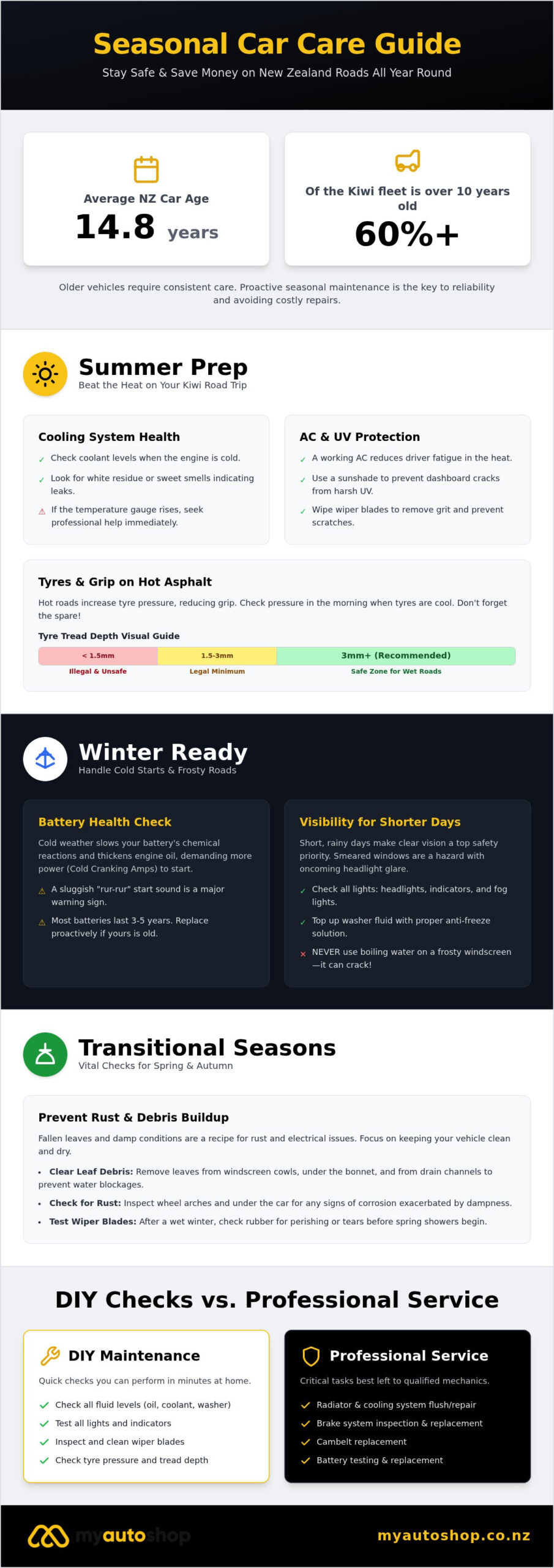
Did you know that the average car on New Zealand roads is now 14.8 years old? With over 60% of our fleet aged ten years or older, it’s natural to feel a bit of anxiety when heading out on a long trip or into remote areas. You want a vehicle that starts every time and handles the unpredictable Kiwi weather without draining your bank account. Following the right seasonal car maintenance tips nz provides the clarity you need to stay safe and efficient all year round.
We understand that car care can feel like a guessing game, especially with the 2026 WoF regulation changes and increased fines now in effect. You deserve a transparent partner to help you navigate these shifts. This guide promises to strip away the jargon and show you how to keep your vehicle in peak condition. We will preview essential checks for every season, clarify the difference between DIY tasks and professional servicing, and provide a roadmap to lower your long-term costs. It is time to build a reliable maintenance routine that respects your time and your budget.
Key Takeaways
- Learn why summer heat is the biggest threat to your radiator and how to prep your tyres for hot Kiwi asphalt.
- Discover how to avoid cold-start failures by understanding battery health and maintaining clear visibility during frosty mornings.
- Master essential seasonal car maintenance tips nz for transitional months, including how to prevent rust and electrical issues caused by leaf debris.
- Identify which safety checks you can perform in minutes and when to book a professional for critical work like brake or cambelt replacements.
- Understand how regular seasonal care reduces the risk of unexpected breakdowns and lowers your total vehicle ownership costs.
Summer Car Care: Prepping for the Kiwi Road Trip
Summer in New Zealand means long drives, boat trailers, and steep hills. While we focus on the destination, the heat works against your car’s most vital components. Heat is often the silent killer for older vehicles, especially those with aging cooling systems. Following proactive seasonal car maintenance tips nz ensures your classic Kiwi road trip doesn’t end on the side of a state highway with a steaming bonnet.
Cooling System and Radiator Health
Your radiator is the heart of your car’s temperature control. During a summer hill climb, like the Crown Range or the Kaimais, your engine works at maximum capacity. If your coolant is old or the radiator is partially blocked, the system can’t dissipate heat fast enough. Always check your coolant levels when the engine is stone cold to avoid nasty burns. Look for signs of trouble like white residue around hose joins or a sweet smell after driving. If you notice the temperature needle creeping up during a climb, it’s time to consider a professional Radiator Repair & Replacement before the plastic tanks crack under pressure. Incorporating these checks into your regular vehicle service routine keeps you moving safely.
Tyres and Grip in Hot Conditions
Hot asphalt transfers heat directly into your tyres, causing the air inside to expand and pressure to rise. Over-inflated tyres have a smaller contact patch with the road, which reduces grip and increases wear. Check your pressures in the morning when the rubber is cool for the most accurate reading. While the NZ legal minimum tread depth is 1.5mm, we recommend at least 3mm for summer safety to handle sudden afternoon downpours on greasy roads. Don’t forget to check the spare tyre in the boot. There’s nothing worse than being stuck in a remote area only to find your spare is flat. These simple seasonal car maintenance tips nz prevent small oversights from ruining your holiday.
A functional air conditioning system is more than just a luxury; it plays a critical role in managing driver fatigue by keeping the cabin fresh and cool. If your AC is blowing lukewarm air, it’s likely struggling with the summer load. Additionally, New Zealand’s harsh UV levels are brutal on rubber and plastic. High UV exposure can perish your wiper blades and crack your dashboard. Use a sunshade when parked and treat your wipers to a quick wipe with a damp cloth to remove grit that can scratch your windscreen. These small habits protect your interior and ensure clear visibility when you need it most.
Winter Maintenance: Handling Cold Starts and Frosty Roads
Winter in New Zealand demands a different kind of resilience from your vehicle. As the mercury drops, internal components face increased friction and electrical strain. While summer was about managing heat, winter is a battle against the cold, moisture, and reduced visibility. Integrating specific seasonal car maintenance tips nz into your routine helps you avoid the frustration of a car that won’t start on a crisp Otago morning or a rainy Auckland commute.
The Winter Battery Health Check
Cold Cranking Amps (CCA) is a rating used to define a battery’s ability to start an engine in cold temperatures. When it’s freezing, the chemical reactions inside your battery slow down, while your engine oil thickens, requiring more power to turn the motor over. If you hear a sluggish “rur-rur” sound when turning the key or notice your interior lights dimming, your battery is likely on its last legs. Most batteries in New Zealand last between three and five years. If yours is reaching that age, booking a professional Car Battery Replacement before the first frost can save you from a stressful morning breakdown. It’s a small step that ensures your car remains a reliable partner through the coldest months.
Visibility and Lighting for Shorter Days
Shorter days and heavy rain make visibility your top safety priority. Smeared wiper blades aren’t just annoying; they’re a significant hazard when they catch the glare of oncoming headlights. Waka Kotahi NZ Transport Agency recommends performing basic safety checks regularly to ensure your vehicle is roadworthy. Check your wiper rubber for tears and ensure your washer fluid is topped up with a proper cleaning solution to prevent freezing. Never use boiling water to clear frost from your windscreen, as the thermal shock can cause the glass to crack instantly. Instead, use a plastic scraper or lukewarm water. Don’t forget to walk around your car and check that all headlights, indicators, and fog lights are functioning correctly for those dark winter commutes.
Beyond the basics, winter roads in the South Island and Central Plateau often feature grit or salt to manage ice. This debris can be incredibly abrasive, quickly wearing down rubber components like your CV boots. If these boots tear, grit enters the joint and leads to an expensive CV Joint & Boot Repair. Keeping your underbody clean with a quick hose-down after driving on salted roads is one of the best seasonal car maintenance tips nz for longevity. Additionally, your stopping distances increase significantly on wet or icy bitumen. If you feel any vibration or pulsing through the pedal, it’s wise to have a professional look at your Brake Pad Replacement options to ensure you can stop safely when it matters most. For peace of mind, you can easily book a winter safety inspection through our platform to catch these issues early.
Spring and Autumn: The Vital Transitional Checks
Spring and autumn are the forgotten seasons of vehicle care. While summer and winter present obvious extremes, these transitional months are when small, hidden issues often take root. By following specific seasonal car maintenance tips nz during these periods, you can address the wear and tear left behind by winter or prepare for the coming rains. It is the perfect time to reset your vehicle’s health before the next major weather shift.
Spring: Air Quality and Engine Breathing
After a damp winter, your car’s filtration systems are likely working overtime. Spring in New Zealand brings high pollen counts that can quickly clog your cabin air filter. If your windows are fogging up or there is a stale smell in the cabin, it is time for a change. A fresh filter ensures you are breathing clean air rather than allergens. Similarly, check your engine air filter; a clean intake is essential for maintaining fuel efficiency as you start planning weekend getaways. Take a moment to inspect your bodywork too. Any stone chips from winter road grit should be touched up now to prevent surface rust from taking hold in the spring humidity.
Autumn: Visibility and Suspension
Autumn is the season of falling leaves and shorter days. Those leaves often collect at the base of your windscreen, blocking the scuttle drains. If water cannot escape, it can overflow into your footwells or, worse, your electrical system. Clear these areas weekly to prevent expensive moisture damage and rust. As the light fades earlier, test your high beams and fog lights now rather than waiting for a dark, misty morning. It’s also the time to address the physical toll of winter driving. Potholes are more common after heavy frosts and rain, which can lead to leaking struts or poor handling. If your car feels “floaty” or bounces over bumps, you may need a Shock Absorber Replacement to restore safety and comfort.
Preparation is your best defense against the unpredictable Kiwi weather. Consistent seasonal car maintenance tips nz should always include basic vehicle safety checks like inspecting tyre tread and brake responsiveness. As we move into the wetter months of autumn, ensure your tyres have enough depth to clear water effectively. If you notice any squealing or a soft pedal, don’t ignore it. Catching these issues during a transitional check-up is far cheaper than dealing with an emergency repair later in the year.
DIY Maintenance vs. Professional Servicing
Knowing where your DIY skills end and professional expertise begins is the secret to successful seasonal car maintenance tips nz. You don’t need to be a mechanic to keep your car in top shape, but you do need to recognize when a job requires specialized tools. Handling the basics yourself saves money. Calling in a pro for the complex stuff ensures your car stays safe, legal, and reliable for the long haul.
What You Can Safely Do at Home
Start with the basics. Check your engine oil by pulling the dipstick, wiping it clean, and reinserting it. The level should sit between the two markers. For tyre pressure, use the gauge at your local petrol station and match the reading to the sticker inside your driver-side door. Test your lights by parking facing a garage door or large window. Flip through your indicators and beams to see the reflection. These simple seasonal car maintenance tips nz are easy habits that prevent major headaches later. Check your oil. Check your tyres. Stay safe.
When Professional Expertise is Mandatory
Certain tasks carry high stakes and require mandatory professional expertise. A Cambelt / Timing Belt Replacement is a prime example. If this belt is installed incorrectly or snaps, it can cause catastrophic engine failure. Similarly, Brake Pad Replacement demands precision to ensure your stopping power remains consistent and safe. Modern vehicles also use complex electronic systems. While you can see a blown bulb yourself, you need a professional scan tool to identify hidden electrical faults or sensor issues. A qualified technician provides the accountability and precision that a home garage cannot match.
For busy Kiwis, finding the time to drop a car at a workshop is often the biggest challenge. A Mobile Mechanic solves this by bringing the expertise directly to your home or office. Whether you need a Basic Service or a more thorough Comprehensive Service, you get the benefit of a professional eye without losing your day. This yearly oversight goes beyond the DIY list to inspect your suspension, driveline, and safety systems in detail. It’s about total peace of mind. To keep your vehicle in peak condition without the stress, book your professional car service online today.
Booking Your Seasonal Maintenance with My Auto Shop
Keeping your vehicle roadworthy in New Zealand shouldn’t be a source of constant stress or hidden costs. We’ve shared the essential seasonal car maintenance tips nz to help you understand exactly what your car needs as the weather shifts. Now, it’s about putting that knowledge into action with a partner you can trust. My Auto Shop bridges the gap between traditional mechanical expertise and the digital convenience you deserve. We treat your time and safety with the respect they deserve, ensuring every service is as streamlined as a mobile app.
The My Auto Shop Difference
We operate as a transparent partner rather than a mysterious service provider. One of the biggest frustrations in car care is the lack of financial clarity. We’ve solved this by providing instant quotes for every job. Whether you need a Basic Service to keep your engine oil fresh or a Comprehensive Service for a total vehicle health check, you’ll see the price upfront. Our national network connects you with high-quality mechanics across the country. If your schedule is too tight for a workshop visit, our Mobile Mechanic service comes directly to your home or office. From a Car Battery Replacement to more complex work like a Cambelt / Timing Belt Replacement, we handle the logistics so you don’t have to. Our approach is built on being a reliable innovator, combining modern efficiency with down-to-earth service values.
Ready for the Next Season?
Proactive care is the only way to lower long-term maintenance costs and avoid the fear of breaking down in remote areas. Using these seasonal car maintenance tips nz helps you stay ahead of the curve. Before you head out on a summer road trip or face the first frost of winter, consider a professional check-up to ensure your cooling system or battery is up to the task. If you’re currently in the market for a vehicle, our Pre-purchase Inspection provides a detailed report on its condition, helping you buy with confidence. We are committed to high-quality mechanical repairs for passenger vehicles, stripping away the jargon to keep you empowered and safe. Don’t wait for a warning light to appear on your dashboard. Take control of your car’s health today. Book your next service with My Auto Shop and experience car care designed for your busy life.
Drive with Confidence Through Every Kiwi Season
Mastering these seasonal car maintenance tips nz is about more than just checking boxes; it’s about ensuring your vehicle stays as resilient as the landscape it travels. You now have the roadmap to prep for summer heat, survive winter frosts, and navigate the vital transitional months. By balancing simple home checks for fluids and tyres with professional expertise for brakes and cambelts, you protect both your safety and your wallet. Proactive care is the most effective way to eliminate the anxiety of unexpected breakdowns and the sting of hidden repair costs.
My Auto Shop makes this entire process effortless and transparent. We provide upfront pricing so you’re never left guessing, backed by a nationwide network of qualified mechanics who value your time. If you have a busy schedule, our convenient mobile mechanic options bring the workshop directly to your home or office. Don’t wait for the weather to change before you take action. Book your seasonal car service with My Auto Shop today and enjoy total peace of mind on the road. Your car is a vital part of your life; let’s keep it running at its absolute best.
Frequently Asked Questions
How often should I service my car in New Zealand?
You should aim to service your vehicle every 12 months or every 10,000km to 15,000km, whichever comes first. Because the average Kiwi car is nearly 15 years old, regular maintenance is vital for reliability. Even with the 2026 WoF frequency changes for newer vehicles, consistent servicing catches small issues like fluid leaks or worn belts before they cause a breakdown.
What is the difference between a basic and comprehensive car service?
A Basic Service focuses on essential engine health, covering an oil and filter change along with a safety inspection of your tyres and lights. A Comprehensive Service is a much deeper dive into your vehicle’s condition. It includes everything in a basic service plus a detailed check of the fuel system, spark plugs, and driveline components to ensure long-term efficiency.
Can a mobile mechanic do a full car service at my house?
Yes, a Mobile Mechanic can perform most routine maintenance tasks, including a full service, right at your home or office. They arrive with specialized tools to handle oil changes, brake repairs, and diagnostic scans on-site. It is a highly efficient solution for busy people who want professional results without the hassle of dropping their car at a workshop.
How do I know if my car battery needs replacing before winter?
Look for warning signs like a sluggish engine start, dimming headlights when idling, or a battery light appearing on your dashboard. Most car batteries in New Zealand have a lifespan of three to five years. Testing your battery as part of your seasonal car maintenance tips nz ensures you aren’t left stranded on the first frosty morning of the year.
What are the most common reasons for a WoF fail in NZ?
Tyres, lights, and wipers are the most frequent reasons for a failed Warrant of Fitness. Issues like tyre tread depth below the 1.5mm legal limit or a single blown bulb will result in a fail. With the 2026 increase in infringement fees for non-compliant tyres, checking these basics yourself can save you from both a failed inspection and a costly fine.
Is it worth getting a pre-purchase inspection for a used car?
A Pre-purchase Inspection is essential when buying a used car, especially since used imports make up over 40% of our national fleet. This inspection uncovers hidden mechanical faults, evidence of past accidents, or overdue maintenance like a worn cambelt. It provides the financial clarity you need to negotiate a fair price or walk away from a potential lemon.
How much does a standard car service cost in NZ?
As of 2026, a basic service in New Zealand generally costs between $150 and $250, while a full annual service typically ranges from $300 to $450. Prices vary based on your vehicle’s make and your location. In major centres like Auckland or Wellington, workshop labour rates are often higher, usually ranging from $100 to $140 per hour.
Does road salt in the South Island really damage my car?
Yes, the salt and grit used to manage ice on southern roads are highly corrosive to metal and rubber. If left on your vehicle, salt can lead to premature rust on the chassis and perish your CV boots. One of the best seasonal car maintenance tips nz for alpine drivers is to hose down the underbody and wheel arches after every trip on treated roads.
Disclaimer
This article provides general information only and should not be relied on as professional mechanical, safety or legal advice. Vehicle requirements and circumstances vary. If you are unsure about your vehicle, have it inspected by a qualified automotive professional.