
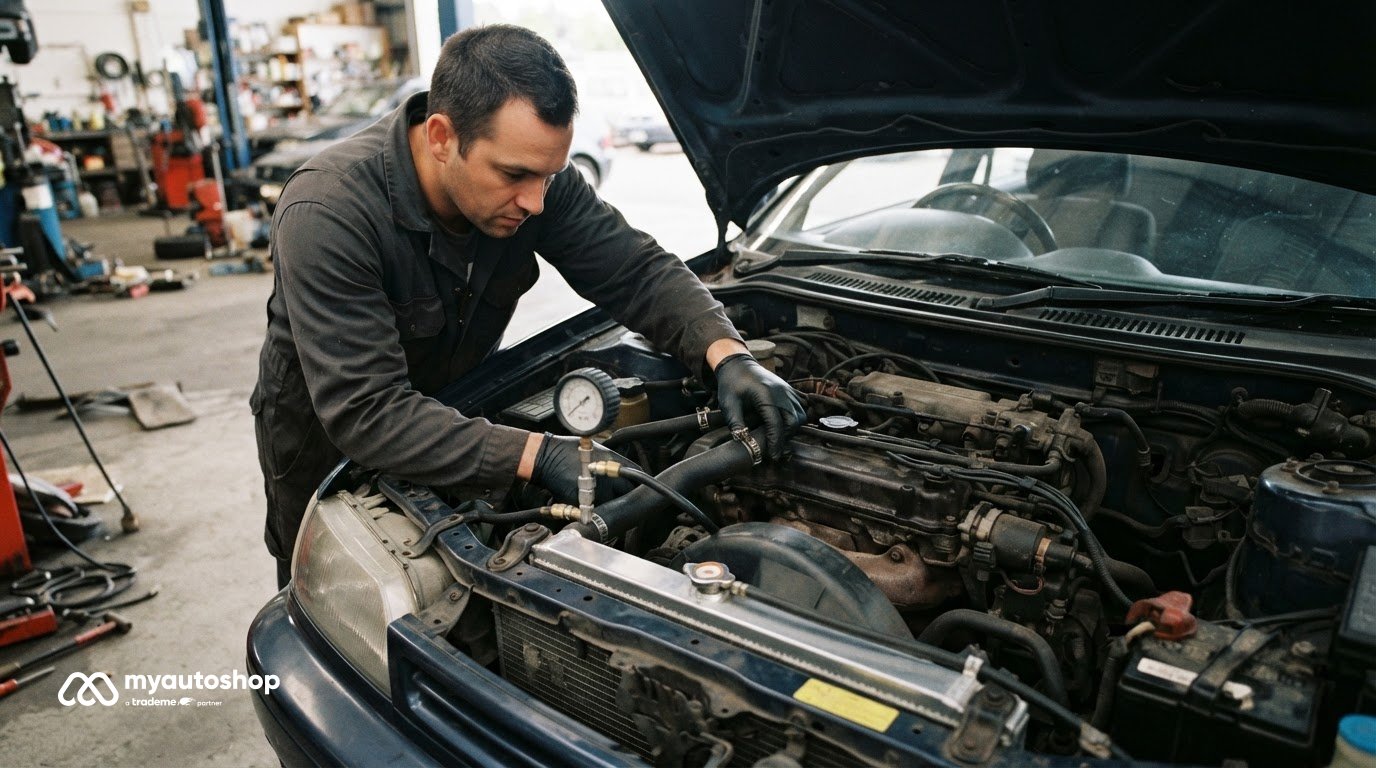
Choosing a nearby radiator specialist is easier when you focus on diagnosis, repair scope and post-repair checks. For car radiator repair near me, look for a service that can identify the cause of the cooling problem, explain whether repair or replacement is needed, and test the system afterwards. Get the job details and quote in writing before approving the work.
It’s understandable to want a clear answer when the temperature gauge rises or coolant leaks. The right fix depends on what has failed. The radiator may need repair or replacement, but a leak or overheating can also point to another part of the cooling system.
This guide explains how to find a suitable local repairer in New Zealand, what can affect the cost, and how to compare example radiator-repair task prices without treating them as a quote for your car. You’ll also learn what post-repair checks matter, what details to share when arranging help, and when a mobile mechanic may be a practical option. Use these points to make the next step clearer and avoid agreeing to work before you understand what it covers.
Key Takeaways
- Spot warning signs such as coolant leaks or a rising temperature gauge, and know what details to share when arranging help.
- Compare example New Zealand repair tasks by looking at what each job includes, not just the total.
- Understand which details shape a quote, from the fault diagnosed to the work and parts required.
- See what a sound post-repair check can reveal about leaks, coolant flow and the wider cooling system.
- Learn when My Auto Shop’s Basic Service may help with your car’s broader maintenance needs.
How do I find car radiator repair specialists near me?
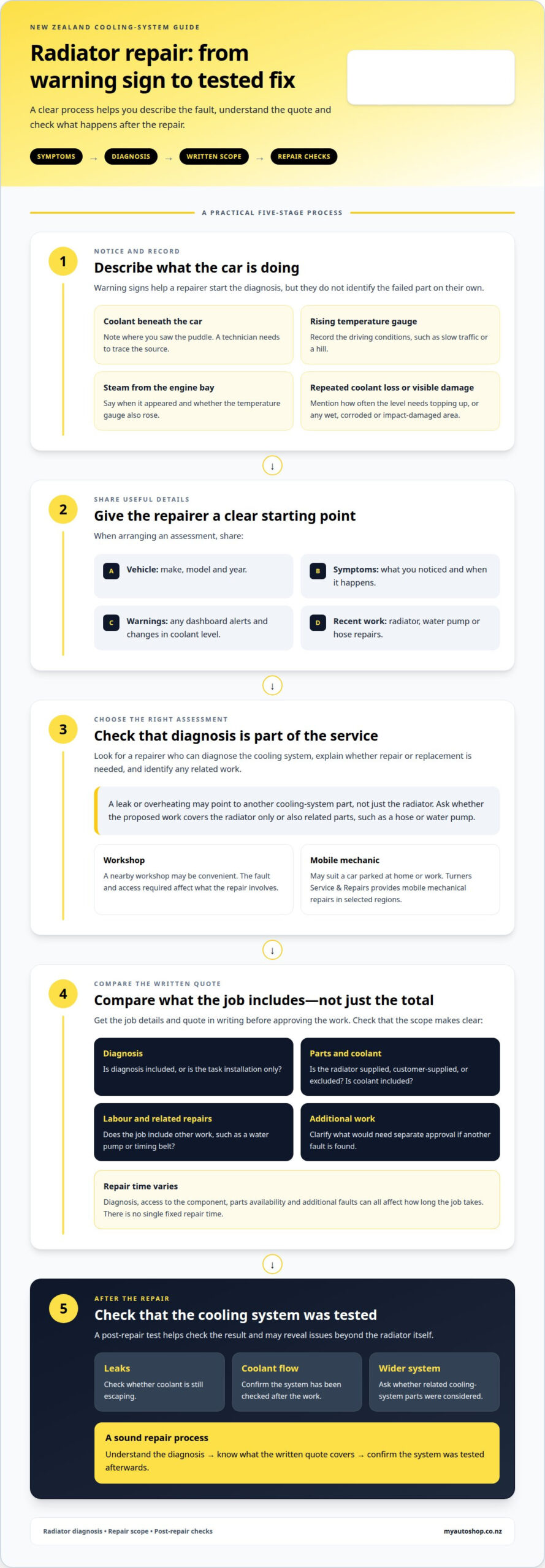
Start with the symptoms, then find a repairer who can diagnose the cooling system, explain the work and test the result. A coolant puddle on the driveway, a temperature gauge rising above its usual position, or steam from the engine bay can all point to trouble. These signs help describe the problem, but they don’t identify the failed part by themselves.
Note what happens and when. For example, record whether the temperature climbs in slow traffic, after a hill, or soon after starting the car. Tell the repairer if you’ve seen a leak, noticed a change in coolant level, or had recent work on the radiator, water pump or hoses. Those details give diagnosis a useful starting point.
Common warning signs include:
- Coolant beneath the car: A coloured or watery puddle after parking can indicate a leak. Its position may help describe where you noticed it, but a technician needs to trace the source.
- Rising temperature gauge: If the gauge moves higher than normal, note the driving conditions. A climb during traffic, for instance, is useful context for diagnosis.
- Steam from the engine bay: Describe when it appeared and whether the temperature gauge also rose. Avoid guessing which component caused it.
- Repeated coolant loss: If the level needs topping up more than once, explain how often and whether you’ve seen drips or damp areas.
- Visible radiator damage: Corrosion, impact damage, or a wet area around the radiator can help a repairer decide where to inspect first.
Choose a repairer whose service covers radiator diagnosis as well as repair or replacement. Ask for a clear explanation of the proposed work, including whether it addresses only the radiator or related cooling-system parts too. A written quote should identify the included work and parts, so you can compare like with like rather than choosing by headline price alone.
There’s no single fixed repair time. Replacing a radiator directly involves different steps from tracing a hard-to-find leak or replacing the radiator alongside a water pump or timing belt. Diagnosis, access to the component, parts and any additional faults all affect the time required.
When arranging the job, provide the vehicle’s make, model and year, then describe the symptoms and when they occur. Share any dashboard warnings and mention recent cooling-system work. Turners Service & Repairs provides mobile mechanical repairs in selected regions, which may suit a vehicle parked at home or work. These details help the repairer plan an inspection and explain the next step before work begins.
Example New Zealand radiator repair task prices
Listed New Zealand radiator tasks show why prices vary with the work involved. Fitting a radiator supplied by the customer is different from replacing one as part of a job that includes diagnosis or other repairs. Treat each figure below as an example of a listed task, not a quote or standard rate for your vehicle.
- The customer already had the radiator, so this example concerns installation rather than a supplied replacement unit.
- The listed work combined replacement with diagnosis, so it differs from an installation-only task.
- It was dated 3 January 2024, and included several components.
These examples aren’t directly comparable. The Hamilton listing involved a customer-supplied radiator, while the Auckland task bundled three replacements. The Blenheim listing covered several maintenance and repair items beyond the radiator. A higher total can reflect more extensive work, not simply a different price for the same radiator job.
For a useful comparison, separate the quote into diagnosis, parts, labour, coolant, and any related repairs. Check whether it includes radiator supply or installation only. A water pump or timing belt adds work beyond replacing the radiator, while engine diagnosis investigates an underlying fault. Ask for the written scope to identify what the total covers and what would require approval as additional work. A guide to understanding repair pricing can help you read a quote’s breakdown.
Insurance cover depends on the policy wording, the cause of the radiator damage and any applicable exclusions or excess. A repair resulting from a covered incident is assessed differently from deterioration or a mechanical fault, so read the terms that apply to the cause.
Before agreeing to work, compare the vehicle, supplied parts, diagnostic work, included coolant and any associated repairs. Use the listed examples as context, then judge a quote by its itemised scope and the work your vehicle needs.
Finding and hiring a local repairer
Start with repairers in your town or suburb, then narrow the list to businesses that handle radiator diagnosis and replacement. A workshop nearby can be convenient, while a mobile mechanic may suit a vehicle parked at home or work. The right option depends on the fault, where the car is, and what access the repair requires.
Same-day bookings and emergency breakdown assistance aren’t standard across New Zealand repair shops. Capacity, location, the fault and parts availability all affect how quickly a repair can happen. If the car has overheated or is losing coolant, describe that clearly when arranging an assessment.
Use the first conversation to establish whether the repairer understands the job. Share the vehicle’s make, model and year, the symptoms, and any recent cooling-system work. Then ask how diagnosis is handled and what the quote includes. A clear response should distinguish a radiator fault from related work, such as checking a hose or water pump.
Before accepting a quote, look for these details in writing:
- Diagnosis: What fault has been identified, and what inspection supports that finding?
- Work scope: Is the job a repair, a replacement, or both? Does it include coolant and post-repair testing?
- Parts: Does the quote include the radiator, or is it for fitting a part supplied separately?
- Approval: How will additional work be explained and approved before it proceeds?
- Timing: What work is planned, and how will delays caused by parts or further diagnosis be communicated?
Warranty terms depend on the repair and the parts supplied. Read the written terms for what’s covered, how long coverage lasts and any conditions that apply. Keep the quote and invoice together: they record the agreed work and make it easier to refer to the repair later.
Compare quotes by matching their scope, not just their totals. One quote may cover radiator installation only, while another includes diagnosis, a new radiator, coolant and testing. Ask for any differences to be explained in plain language. A low total may exclude work included in another quote, so itemisation matters.
Agree on the next step and how you’ll receive an update. If the vehicle can’t be driven comfortably because of overheating, explain its location and symptoms before arranging transport or a mobile assessment. Clear details help the repairer plan the inspection and discuss practical options for that vehicle.
Post-repair testing
A radiator repair isn’t complete when a new part is fitted or a leak is sealed. The cooling system needs testing to check the repair, coolant circulation and temperature control. The repairer should explain which checks were performed and what they showed, especially if the original fault involved overheating or coolant loss.
Testing starts with the work area. The mechanic checks radiator connections, hoses, clamps and drain points for signs of escaping coolant. After a radiator replacement, they also check that the new unit is seated correctly and connected. A leak at a hose joint, for example, can undermine an otherwise sound replacement.
The next checks focus on how the cooling system operates. The mechanic fills the system with the appropriate coolant and removes trapped air as required by the vehicle’s procedure. Air pockets can interfere with circulation or cause inconsistent cabin heating. The engine is then run while the temperature gauge and system behaviour are monitored.
- Leak inspection: Check the radiator, hose connections, clamps, and other disturbed joints for fresh coolant.
- Temperature monitoring: Confirm the engine temperature behaves normally as it warms up, rather than continuing to climb.
- Coolant circulation: Assess whether coolant moves through the system as expected and whether trapped air needs attention.
- Cabin heater check: Confirm the heater produces consistent warmth, which can help identify circulation or air issues.
- Final visual inspection: Look again around the repair area for drips or damp patches after the engine has run.
Some faults need more than a stationary check. If the original symptom appeared while driving, such as the gauge rising on a hill, the repairer may need to assess the car in conditions that help reproduce it. Ask whether a road test is part of the job and what the results indicate.
Ask for a plain-language summary before collecting the vehicle. It should state what was repaired or replaced, whether the system was tested for leaks and whether the engine temperature behaved as expected. If diagnosis found a separate issue, such as a faulty hose or water pump, the summary should distinguish it from the radiator work.
After driving, note any return of the original symptom, such as a rising gauge, coolant smell or fresh puddle where the car was parked. Share that specific observation with the repairer rather than assuming the radiator has failed again. A leak elsewhere in the cooling system can produce similar signs, so the location and timing help guide further diagnosis.
A clear handover connects the repair to its test results. Keep the invoice with the repair summary, including the parts fitted and checks completed. That record gives a future mechanic useful context if the same symptom returns or the cooling system needs more work.
Radiator and cooling-system checks
A radiator inspection looks for the source of a leak and checks related cooling-system parts. The repair decision depends on the damage, its location and the radiator’s condition.
Assessing Radiator and Cooling-System Condition
A mechanic starts by examining the radiator core, tanks, seams, hoses, clamps and nearby connections. Dried coolant residue can point to an earlier leak, while fresh moisture helps identify an active one. The inspection also considers the coolant’s condition and whether the system may need flushing.
Diagnosis matters because a wet radiator isn’t always the only fault. A loose hose connection, damaged hose or failing water pump can also cause coolant loss. The mechanic traces the leak and checks for damage, corrosion or restricted flow before recommending work. This helps distinguish a radiator fault from another cooling-system problem.
Useful inspection points include:
- Radiator body: Look for leaks, corrosion, impact damage, or cracks around seams and tanks.
- Hoses and joints: Check for splits, loose clamps, swelling, or coolant around connections.
- Coolant: Assess its condition and whether old coolant needs flushing during the repair.
- Related components: Inspect parts such as the water pump if symptoms or leak patterns point beyond the radiator.
Never remove a radiator cap while the engine is hot. A mechanic can inspect the system safely and explain which findings support the proposed repair.
Repairing or Replacing a Leaking Radiator
A leaking radiator may be repairable, depending on the leak’s location and the extent of the damage. A small, accessible hole or crack may be suitable for sealing, while extensive damage, serious corrosion or a compromised tank can make replacement the practical option. The mechanic’s assessment should explain why the recommended method suits the radiator’s condition.
Ask what the proposed work covers. A repair may involve sealing a specific leak, while replacement means removing the damaged radiator and fitting another. The job may also include flushing old coolant, refilling the system and testing the installation. If a hose or water pump is leaking instead, replacing the radiator alone won’t address the cause.
A crack in a radiator tank calls for a different decision from a loose hose clamp. In the first case, the mechanic assesses whether the tank can be sealed or needs replacement. In the second, correcting the connection may resolve the leak without changing the radiator. The location and extent of the damage guide the choice.
Before approving work, ask for the fault, repair method and included parts to be set out clearly. A written scope should distinguish radiator repair or replacement from coolant flushing or other cooling-system work. This makes it easier to understand what the job addresses and why.
My Auto Shop: Basic Service
My Auto Shop can help with radiator repair or replacement when a diagnosed cooling-system fault needs attention. Once the radiator issue is addressed, a Basic Service may suit routine maintenance, while a Comprehensive Service covers a broader servicing need.
Choose the next step based on the problem: radiator work for a cooling-system fault, or servicing for scheduled vehicle maintenance. When arranging help, share the vehicle details and the symptoms or service required. That gives the repair request useful context from the outset.
For help with the next step, contact My Auto Shop.
Choose a clear next step for your car
If you need car radiator repair near me, make your next move a clear repair request. Describe what the car is doing, where it’s located and any work already completed. That gives the repair process a practical starting point without guessing at the cause.
My Auto Shop can help with radiator repair or replacement. For other needs, its services also include a Basic Service, Comprehensive Service, and Pre-purchase Inspection. Choose the option that matches your vehicle’s situation, whether you’re addressing a cooling fault, planning maintenance, or considering a used car.
Ready to take the next step? Contact My Auto Shop about radiator repair. A clear request can get the conversation moving and help you decide what your car needs next.
Frequently Asked Questions
What radiator repair shops are near me in New Zealand?
My Auto Shop connects New Zealand motorists with automotive service providers, including those handling radiator repair and replacement. Use your location and vehicle details when exploring available repair services. A provider familiar with your vehicle’s make and model can assess its cooling-system fault and explain the work required. Include the symptoms and the car’s location when making your request.
Which local workshops specialise in radiator repairs and replacements?
Look for a workshop or mechanic that specifically handles radiator diagnosis, repair and replacement, rather than general servicing alone. Check that its service information covers cooling-system faults and your type of vehicle. A vehicle with a radiator leak, for example, may need the leak traced before anyone can say whether sealing or replacement is suitable. Share the vehicle’s make, model and year to help identify the right repair pathway.
How much does car radiator repair cost in New Zealand?
There isn’t one fixed New Zealand price for every radiator repair. The total depends on the fault, the vehicle, required parts, diagnosis and whether related cooling-system work is needed. A leak from a connection differs from damage to the radiator itself. For a useful estimate, describe the symptoms and ask for a written quote that separates work and parts. A price for another vehicle isn’t a reliable guide to yours.
How much does radiator replacement cost, including parts and labour?
Replacement cost depends on the radiator suited to your vehicle and the labour involved in accessing and fitting it. The quote should make clear whether it includes the radiator, fitting, coolant and diagnostic work. It should also identify any associated repairs separately. A quote that excludes the radiator itself, for example, can’t be compared fairly with one that includes the part. Provide your vehicle details to get an estimate relevant to its configuration.
How can I tell whether my car radiator needs repair or replacement?
A mechanic needs to locate the leak and assess the radiator’s condition before deciding. A localised hole or crack may be sealable, while extensive corrosion or tank damage can point to replacement. Also distinguish radiator damage from a leaking hose or connection, since replacing the radiator won’t fix a separate leak. Ask what the inspection found and how that supports the recommended repair method.
What should I do if my car is overheating or leaking coolant?
If the temperature rises sharply or coolant is leaking, pull over somewhere safe and switch off the engine. Don’t remove the radiator cap while the engine is hot, as pressurised coolant can cause burns. Once the vehicle is safe, note what happened and where you saw the leak. Arrange an assessment before driving further: overheating can cause additional engine damage.
How do local radiator repair shops compare on reviews, pricing and workmanship?
Look for feedback that describes radiator work specifically, rather than relying only on a workshop’s overall rating. Check for comments about diagnosis, communication and how clearly completed work was explained. Compare written quotes with the same inclusions, such as parts and labour. Ask what testing follows the repair and what records you’ll receive. These details give you a more useful view of the work than a headline price alone.
Disclaimer
This article provides general information only and should not be relied on as professional mechanical, safety or legal advice. Vehicle requirements and circumstances vary. If you are unsure about your vehicle, have it inspected by a qualified automotive professional.