
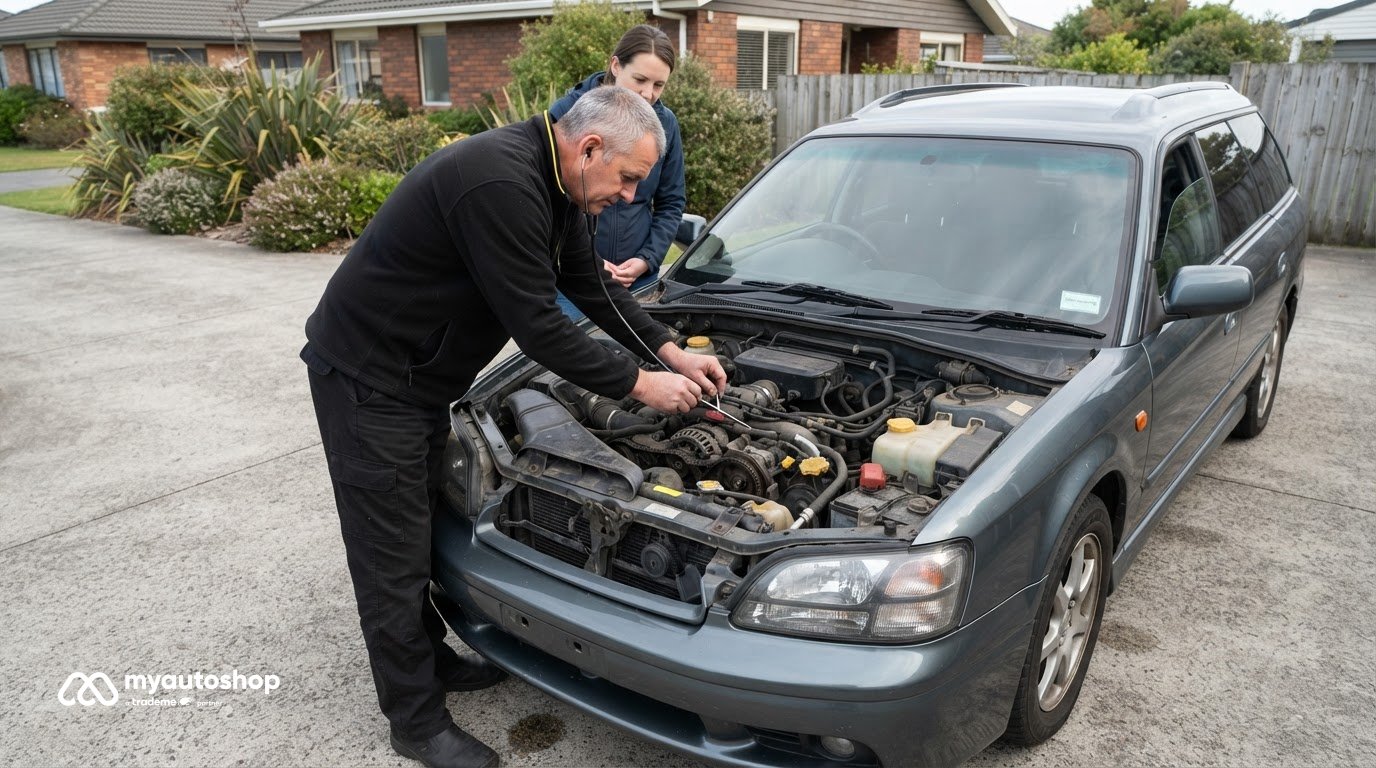
A timing chain can wear early without snapping. Understanding what causes premature timing chain wear starts with the engine oil: low, dirty, incorrect or neglected oil can increase wear on the chain’s links and rollers, while a faulty tensioner can leave excess slack. Heat, engine load and frequent short trips can also affect how quickly wear builds.
An engine code can point to a timing problem, but it doesn’t prove the chain is the cause. As wear increases the chain’s effective length, cam timing can drift and trigger a camshaft and crankshaft correlation or variable cam timing fault code. Rattling, rough idling or reduced performance can also be clues, so it’s worth seeking a clear diagnosis rather than guessing.
This guide explains how oil condition, tensioner and guide wear, and driving conditions contribute to early chain wear. You’ll also learn which symptoms matter, how a mechanic can diagnose timing issues, and which maintenance habits may help protect the chain. The aim is to make warning signs easier to understand and help you decide when to arrange an assessment.
Key Takeaways
- Chain wear can increase slack, putting extra strain on guides, tensioners and sprockets. These parts need assessment alongside the chain.
- A timing-related engine code is a clue, not a diagnosis. Fault-code scans and timing checks can help identify the cause.
- There’s no single mileage that determines chain life. Wear depends on oil condition, maintenance and how the engine is used.
- Follow the vehicle manufacturer’s maintenance schedule and use the recommended engine oil to help reduce avoidable wear.
- Rattling, rough idling or reduced performance can signal a developing timing problem. Treat new symptoms promptly rather than waiting for a breakdown.
What Causes Timing Chains To Stretch and Set Engine Codes?
A timing chain becomes effectively longer as wear builds at its links and rollers, increasing slack and affecting cam timing. A timing-related fault alone doesn’t establish whether a vehicle warranty or consumer-protection claim applies in New Zealand. The written warranty terms and circumstances of the fault are relevant; this mechanical explanation can’t determine eligibility.
Wear to Guides and Sprockets
Guides keep the chain aligned, while sprockets mesh with its links to transfer drive. As the chain wears and develops slack, it can strike its guides harder, accelerating wear on their surfaces. Worn sprocket teeth can also affect how the chain engages. The GM High-Feature V6, Ford Modular V8 and Nissan VQ V6 are among engine designs associated with timing-chain stretch. If a chain is worn, inspect the guides and sprockets too.
Tensioner Failure and Chain Slack
A tensioner applies pressure to control slack, but a malfunctioning unit can leave the chain loose. As wear accumulates, the tensioner may extend farther to manage the slack. If it fails, the chain can move against the guides and become less stable. That movement can contribute to cam timing lag and trigger a camshaft and crankshaft correlation code or a variable cam timing fault code.
On engines with variable cam timing, the control system may try to correct timing errors until it detects a fault or reaches the limit of its adjustment. The resulting code indicates a detected timing problem, but doesn’t identify the failed part by itself. Assessing the tensioner and chain together helps distinguish wear in one component from related damage elsewhere.
Oil Level, Viscosity, and Quality
Low oil level can limit lubrication for the chain and its tensioner. Incorrect viscosity or poor-quality oil may also fail to protect moving surfaces while the engine runs. The chain’s rollers and links then experience more contact wear, gradually increasing its effective length. Oil also powers variable cam timing actuators, so worn or unsuitable oil can damage their fine surfaces and seals.
Use the oil grade and specification recommended by the vehicle manufacturer. Requirements vary between engines, so oil suitable for one model may not suit another.
Oil Changes and Sludge
Infrequent oil changes leave worn oil circulating for longer, reducing its ability to lubricate chain links, rollers and tensioner components. Sludge can interfere with oil flow and tensioner operation, contributing to excess slack. Soot particles suspended in oil can also become abrasive when they clump together.
Follow the vehicle manufacturer’s maintenance schedule and use its recommended oil. If a chain is replaced, inspect the tensioning components, guides and sprockets too. Replacing a chain while leaving worn supporting parts in place may leave the underlying slack or alignment problem unresolved.
Diagnosing timing chain problems
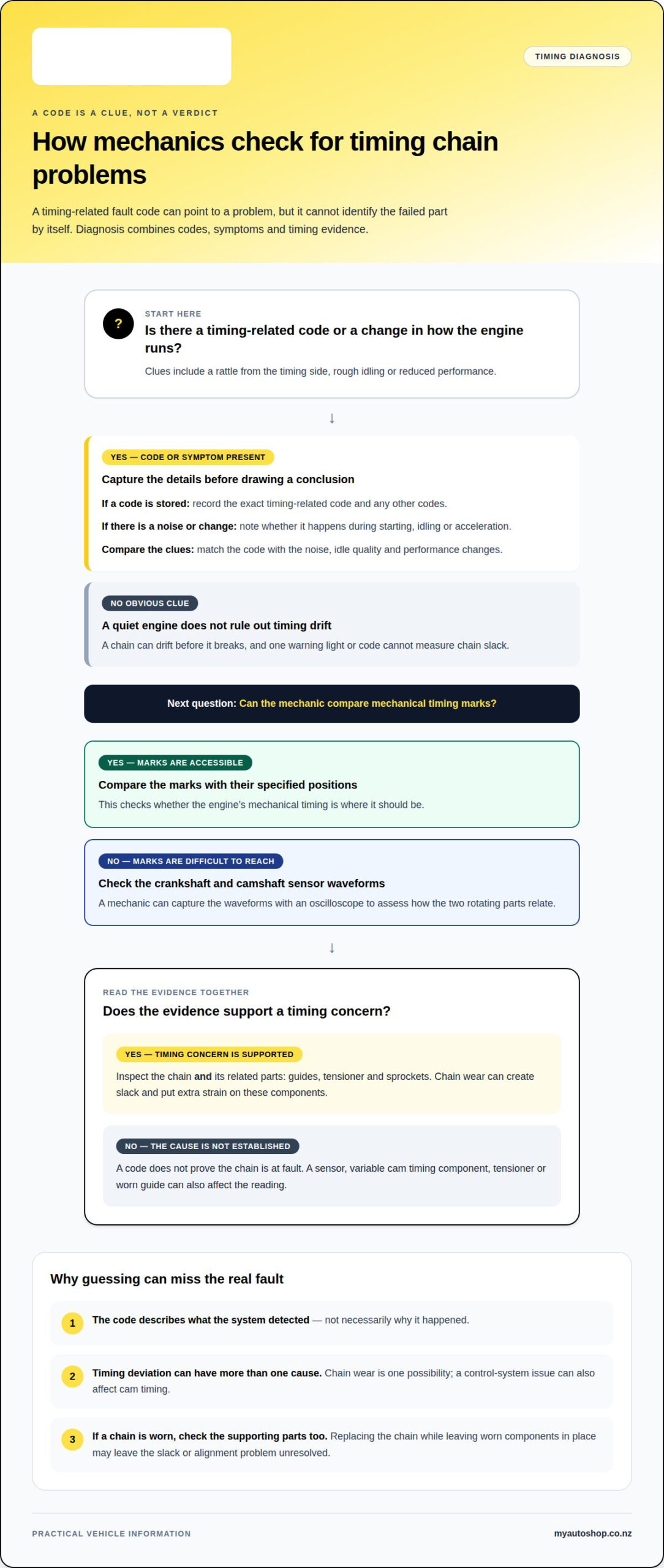
A timing-related engine code can show that camshaft and crankshaft positions no longer match as expected. It doesn’t prove the timing chain is at fault. A sensor, variable cam timing component, tensioner or worn guide may also affect the reading. Diagnosis means comparing stored fault codes with engine behaviour and mechanical timing, rather than replacing parts based on one warning light.
Start with the symptoms and when they occur. A rattle from the timing side, rough idle or reduced performance can help connect a fault code to a timing concern. Note whether the noise appears during starting, idling or acceleration. Those details give the mechanic useful context, especially when the sound comes and goes rather than staying constant.
A diagnostic scan helps identify whether the engine computer has recorded a camshaft and crankshaft correlation fault or a variable cam timing fault. The code describes what the system detected, not necessarily why it happened. For example, a timing deviation can result from chain wear, but a control-system issue can also affect cam timing. The mechanic interprets the code alongside symptoms and further tests.
Where accessible, a mechanic can compare the engine’s mechanical timing marks with their specified positions. If those marks are difficult to reach, crankshaft and camshaft position-sensor waveforms can be captured with an oscilloscope. The waveform pattern helps assess the relationship between the two rotating parts without relying only on a visual check. This matters because a chain can drift before it breaks.
- Read the fault codes: Record the exact timing-related code and any other codes stored with it.
- Match codes to symptoms: Compare the code with noises, idle quality and changes in engine performance.
- Check timing evidence: Assess mechanical timing marks or sensor waveforms, depending on access.
- Inspect related parts: Examine the chain, guides, tensioner and sprockets for wear or damage.
These checks work together. A single code cannot measure chain slack, and a quiet engine doesn’t rule out timing drift. If timing-side noise becomes more pronounced or new symptoms appear, arrange an assessment promptly. A worn chain can jump time, so leaving a developing fault unattended can lead to more serious engine damage.
Keep a clear record of changes, such as a new rattle after starting or a rough idle alongside a warning light. That timeline helps connect stored codes with real driving symptoms. A car symptoms guide can also help you describe what you’ve noticed before the diagnostic assessment.
Maintenance to help prolong timing chain life
Regular oil changes and the correct engine oil are the main maintenance habits that help reduce premature timing-chain wear. Follow the vehicle manufacturer’s maintenance schedule, since oil requirements and service intervals vary between engines. A timing chain depends on oil reaching its links, tensioner and related components during operation.
Use the oil grade and specification recommended for your vehicle, not simply a product that seems suitable for another car. Incorrect viscosity or poor-quality oil can reduce protection for the chain and tensioner. Oil also powers variable cam timing actuators on engines with that system. Worn or unsuitable oil can damage their finely machined surfaces and seals, affecting timing control as well as lubrication.
Check the oil level as directed in the owner’s manual, and address a low reading rather than continuing to drive with insufficient oil. If the level keeps dropping, the engine may need assessment to identify the cause. Dirty or degraded oil can also provide less effective lubrication. Regular servicing helps keep oil changes aligned with the manufacturer’s schedule.
Driving patterns matter too. Frequent short trips can affect the rate of chain wear, as can engine heat, rpm and load. If a car is mainly used for short journeys, don’t assume its chain is protected simply because it has low kilometres. Keep maintenance records and follow the schedule for that specific vehicle, rather than applying another model’s service routine.
If a timing chain is found to be worn, replacing the chain alone may leave other worn parts in place. The guides, tensioner and sprockets should be inspected, as should variable valve timing actuators where fitted. Replacing the full chain kit, including tensioners and guides, is recommended to help avoid related problems returning. The parts selected should suit the engine and its oil-fed timing system. For enthusiasts who want to learn how to tackle in-depth engine work and classic rebuilds themselves, Restomod Academy offers practical training in automotive craft.
- Follow the manual: Use the vehicle manufacturer’s oil-change schedule and specified oil.
- Keep the level right: Check it as the owner’s manual directs and investigate repeated drops.
- Consider how you drive: Short trips, heat, rpm and load can influence wear.
- Inspect the whole system: Assess guides, sprockets, tensioners and fitted cam timing actuators with a worn chain.
These habits can reduce avoidable wear, but they can’t reverse damage already present. A rattling chain or timing-related engine code needs diagnosis, even after recent servicing. If repairs are needed, the condition of the chain’s supporting parts matters as much as the new chain itself.
Mileage and regular wear and tear
Timing chains are designed to last for the life of an engine, but that does not mean every chain lasts equally long. A chain may need replacement after 200,000 kilometres or when wear symptoms appear. Treat that mileage as a point for closer attention, not an automatic replacement interval for every vehicle.
Odometer readings show distance travelled, but they don’t reveal how the engine was used. Two vehicles with similar kilometres can have different timing-system wear. Heat, engine rpm, load, short trips and maintenance all influence how quickly wear builds. A vehicle used mainly for short journeys may experience a different wear pattern from one driven regularly on longer trips.
Chain wear accumulates at the links and rollers, gradually increasing the chain’s effective length. That change can add slack and allow cam timing to drift. The tensioner may extend farther to control the extra slack, while guides and sprockets can also wear. Mileage gives useful context, but it cannot show the condition of those components by itself.
Consider the vehicle’s history alongside its odometer. Regular oil changes using the manufacturer-recommended oil can help reduce avoidable wear. Gaps in service records leave less clarity about past maintenance, especially in a used vehicle. A service record is useful evidence of maintenance, but it does not measure chain stretch or confirm the tensioner’s current condition.
Symptoms can matter more than the kilometre reading. A rattling sound, rough idle or reduced performance may indicate a timing concern, even before a vehicle reaches 200,000 kilometres. Conversely, reaching that distance does not prove the chain has failed. A mechanic assesses the symptoms and timing evidence, then inspects the chain and related parts as needed.
Regular wear also depends on the engine’s operating conditions. High engine load and rpm place the timing system under stress, while heat can affect how quickly materials fatigue. Short trips and poor maintenance can add to the strain. These factors help explain why a chain’s service life cannot be predicted from distance alone.
Use mileage as one part of a practical picture:
- Review the service history: Note oil-change records and any previous timing-system work.
- Track new symptoms: Record rattling, rough idling or performance changes as they appear.
- Arrange an assessment: Have timing concerns checked rather than relying on the odometer alone.
A timing chain can develop drift before it breaks, so don’t wait for a particular kilometre reading if symptoms appear. Prompt assessment can establish whether the chain, tensioner, guides or sprockets need attention. Mileage helps frame that assessment; the engine’s actual condition determines what the findings mean.
Symptoms of a failing timing chain
A worn timing chain can cause rattling, rough idling, reduced performance and noise from the timing side of the engine. These signs may develop before the chain breaks. Notice when each symptom occurs, such as a rattle during starting or an uneven idle while stationary. Those details help you describe the fault clearly during diagnosis.
A rattle or knock near the timing side deserves prompt attention. Extra chain slack can make the chain strike its guides, creating noise as the engine runs. The sound may be more noticeable at particular times, including engine start-up. Don’t dismiss a new or worsening noise simply because the vehicle still drives.
Rough idling is another possible clue. Incorrect valve timing can affect how evenly the engine runs, so you may notice shaking or an irregular idle. Reduced performance can also follow when camshaft timing no longer matches the crankshaft’s position. These symptoms have several possible causes, so none confirms chain failure on its own.
Watch for changes in how the engine behaves together. For example, a timing-side rattle combined with rough idling or reduced power gives a mechanic more useful information than one symptom alone. A timing-related engine code may also appear if the camshaft and crankshaft relationship drifts. The code identifies a detected timing issue, not the failed part.
- Rattling or knocking: Note where the sound seems to come from and when it occurs.
- Rough idle: Pay attention to uneven running while the vehicle is stationary.
- Reduced performance: Record changes in engine response or power.
- Engine codes: Share any timing-related warning or stored code during diagnosis.
Don’t wait for the engine to stop running before taking these signs seriously. A worn chain can jump time, shifting the relationship between the crankshaft and camshaft. If that happens, the engine may lose substantial power or develop a multi-cylinder misfire. Continued operation after timing has jumped can increase the risk of serious engine damage.
Keep your description specific. Write down whether the rattle happens at start-up, whether the idle changes, and when performance feels different. Include any warning light or engine code. These observations help connect symptoms with diagnostic findings, such as timing marks or crankshaft and camshaft sensor waveforms.
If you notice a new timing-side rattle, rough idle or loss of power, arrange a prompt assessment rather than waiting for another symptom. Use this vehicle symptoms guide to organise what you’ve noticed before seeking a diagnosis.
Cambelt / Timing Belt Replacement
A cambelt or timing belt replacement is a repair for vehicles fitted with a belt-driven timing system. A timing belt and a timing chain are different components, so replacing a belt isn’t the same repair as addressing a worn chain. If a mechanic diagnoses chain wear, the chain and its related parts need attention as a timing-chain repair.
For a vehicle with a cambelt, follow the manufacturer’s replacement guidance and arrange the work when it’s due. If you’re unsure whether your engine uses a belt or chain, the vehicle’s service information can help identify the system. For repair or servicing options, contact Turners Service & Repairs, where available.
For general vehicle information, contact My Auto Shop.
Choose a clear next step for your car
Knowing what causes premature timing chain wear can help you describe a concern clearly, but the useful next step is choosing support that fits your situation. If you’re buying a used vehicle, a My Auto Shop pre-purchase inspection can help assess its condition before you commit. For ongoing vehicle care, contact Turners Service & Repairs about servicing that suits your maintenance needs.
Keep a note of any new engine noise, warning light or change in how the car runs. Share those details when arranging help, so the concern is clear from the start. If you’re unsure which service suits your circumstances, explain what you’ve noticed and what you need the vehicle to do.
My Auto Shop provides pre-purchase inspections, while Turners Service & Repairs handles servicing and repairs. Find out more about My Auto Shop and take a practical next step with confidence.
Frequently Asked Questions
What happens if the timing chain breaks?
A broken chain can no longer transfer drive from the crankshaft to the camshaft, disrupting their positional relationship. The engine may stop operating correctly, and timing-related damage can be severe. A chain can also jump time without breaking, with possible power loss or a multi-cylinder misfire. If the engine develops a sudden major change in performance, describe what happened and when it began during a professional assessment.
What causes premature timing chain wear in an engine?
Premature wear can result from accumulated stress on the chain and its supporting parts. Engine operation under high-stress conditions can fatigue chain materials, while poor lubrication increases wear at the links and rollers. There isn’t one cause that fits every vehicle. For a useful assessment, consider the engine’s maintenance history, how it’s used, and whether related timing components show wear alongside the chain.
How do worn chain tensioners, guides, or oil pressure affect timing chain wear?
A tensioner, guide and chain work as connected parts, so wear in one can affect the others. A failing tensioner may leave the chain with excess slack, while a worn guide can be struck harder by that movement. Low or inadequate oil supply can also affect oil-dependent tensioners. For this reason, a repair assessment should distinguish the original fault from damage that developed elsewhere in the timing system.
Can a faulty variable valve timing system or oil control valve cause chain wear?
A variable valve timing fault can affect how the engine adjusts cam timing, but that fault alone doesn’t establish that the chain has worn. Engine oil operates variable valve timing actuators, so oil-related damage can affect their finely machined surfaces and seals. The useful distinction is whether the fault lies in the control system, the chain or connected components. Inspection should account for the system fitted to that engine.
What are the symptoms and warning signs of a worn or stretched timing chain?
A timing chain concern may show up as engine noise, uneven running or a change in performance. The pattern matters: note whether symptoms appear together, develop over time or begin suddenly. A multi-cylinder misfire or pronounced power loss can indicate that timing has shifted significantly. These observations don’t identify the failed part, but they help explain the issue’s progression during an assessment.
How is timing chain wear diagnosed, including chain stretch measurements and fault codes?
There isn’t a single chain-stretch measurement that applies to every engine. The relevant method depends on the vehicle’s design and the access available for inspection. Fault codes help identify what the engine control system detected, while timing checks provide further evidence. A useful diagnosis connects those findings with the engine’s symptoms, rather than treating a code or measurement as a complete answer by itself.
How can drivers prevent premature timing chain wear, and what maintenance schedule is recommended?
To help prevent premature timing chain wear, follow the maintenance schedule and oil specification for the particular vehicle. Keep service records that identify the work completed and oil used; they can help show whether maintenance has stayed on track. Don’t assume another model’s schedule applies, even if the vehicles share a manufacturer. The owner’s manual is the practical reference for the engine’s servicing requirements.
Disclaimer
This article provides general information only and should not be relied on as professional mechanical, safety or legal advice. Vehicle requirements and circumstances vary. If you are unsure about your vehicle, have it inspected by a qualified automotive professional.