
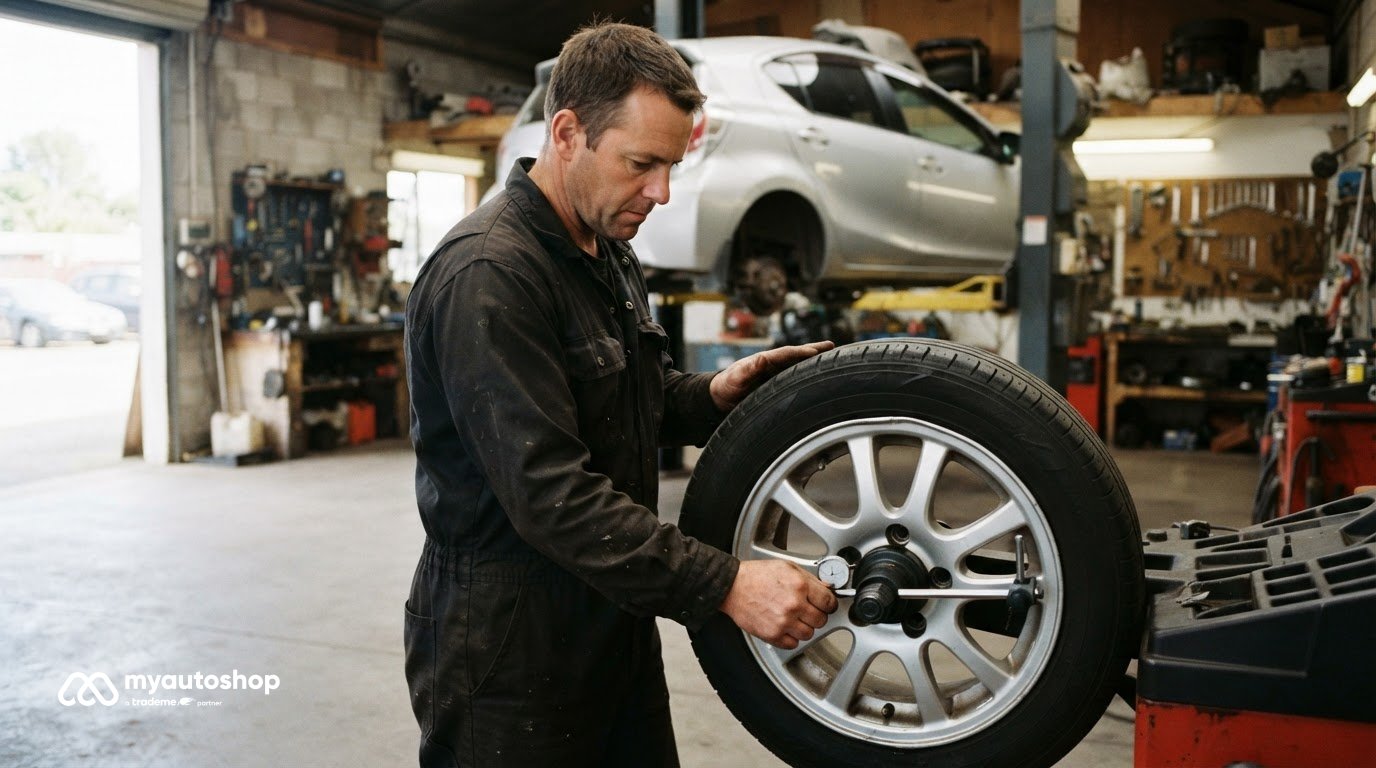
A pothole can bend or crack a wheel rim, even if the tyre still holds air. Getting a car checked after hitting a large pothole can uncover damage that is not obvious at first, including a tyre sidewall bulge or a slow leak. If the car pulls to one side, the steering wheel vibrates or you hear a new noise, arrange an inspection.
It’s understandable to hope the car is fine after a jarring impact, but visible damage is not the only concern. A tyre can have internal damage, and a small crack in a wheel can let air escape gradually. Pull over somewhere safe to look for obvious damage, then arrange a thorough tyre and wheel inspection if the impact was hard or anything feels different.
This guide explains what a professional checks, which warning signs matter and when to have the wheels and tyres inspected. You’ll also learn why a car can seem unaffected at first but develop symptoms later, helping you decide what to do next.
Key Takeaways
- Have a tyre specialist assess the tyres and wheels after a hard impact, even if the car seems to drive normally.
- Monitor tyre pressures over the next few days, as damage can cause air loss later.
- Watch for changes in steering, new noises or uneven tyre wear, which can point to issues beyond the wheel.
- A professional inspection can help identify damage to suspension and steering components, as well as alignment problems.
- Tell the mechanic when and where the impact happened, and describe any changes you’ve noticed since.
Get damaged tyres and wheels examined by a tyre specialist
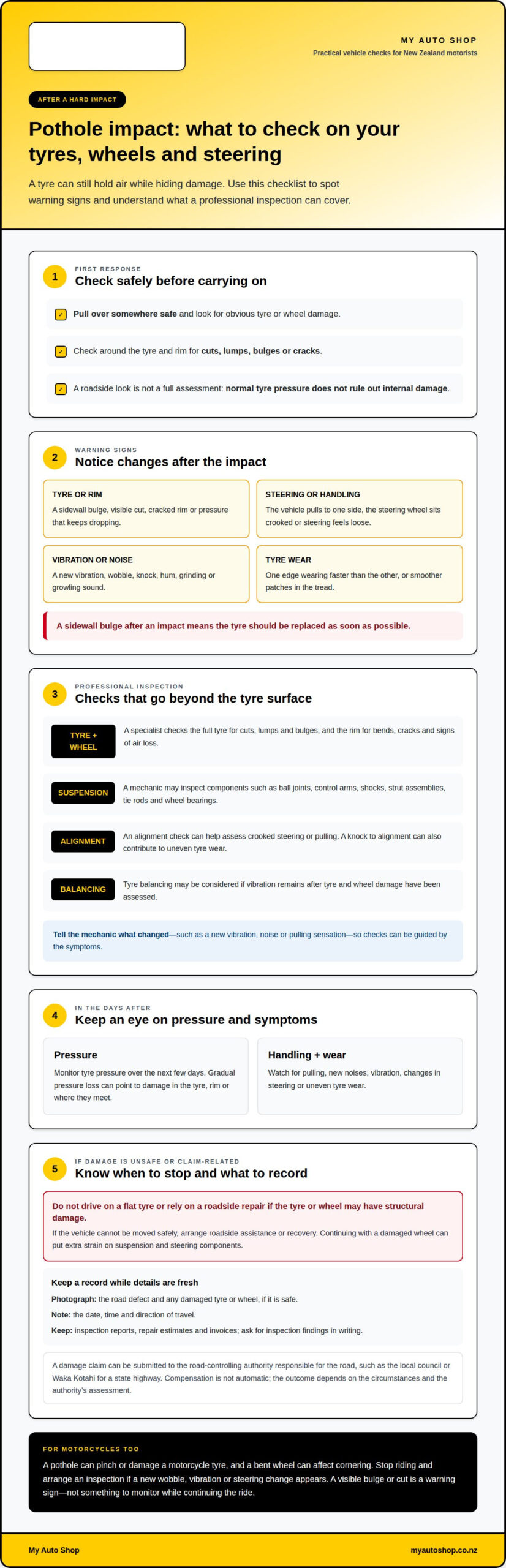
After a hard pothole impact, pull over somewhere safe and look for visible tyre or wheel damage before continuing. A tyre specialist can inspect both tyres and wheels thoroughly, including damage that isn’t obvious from the roadside. A tyre may still hold air despite internal damage, so normal pressure alone doesn’t rule out a problem. If the vehicle pulls, vibrates or makes a new noise, don’t ignore the change.
Check for cuts, lumps, bulges and cracks around the tyre and rim. A sidewall bulge can indicate damage to the tyre’s internal structure and means the tyre should be replaced as soon as possible. A bent or cracked rim can also let air escape where it meets the tyre. Even a hairline crack in an alloy wheel may cause gradual pressure loss. Monitor tyre pressure over the next few days, as a leak can develop after the initial impact.
Motorcycle tyres need prompt attention too. A pothole can pinch or damage a tyre, while a bent wheel can affect how the motorcycle tracks through a corner. A new wobble, vibration or change in steering after an impact is a reason to stop riding and arrange an inspection. A visible bulge or cut is a warning sign, not something to monitor while continuing the ride.
Document the pothole damage while details are fresh. If it’s safe, photograph the road defect, the damaged wheel or tyre, and the location. Note the date, time and direction of travel, then keep inspection reports, repair estimates and invoices. You can submit a damage claim to the road-controlling authority responsible for the road, such as the local council or Waka Kotahi for a state highway. Compensation is not automatic; the outcome depends on the circumstances and the authority’s assessment.
A sudden loss of pressure, a visibly damaged tyre or a wheel that no longer runs smoothly can make a vehicle unsafe to drive. Don’t drive on a flat tyre or rely on a roadside repair if the wheel or tyre may have structural damage. Arrange roadside assistance or recovery if the vehicle cannot be moved safely. Continuing with a damaged wheel can also put extra strain on suspension and steering components.
A specialist will assess whether the tyre can remain in service or needs replacing, considering its visible condition and any air loss. Sidewall damage, such as a bulge after impact, calls for replacement as soon as possible. Ask for the inspection findings in writing. That record can help explain the repairs needed and support a compensation claim.
Can a Pothole Damage a Rim?
Yes. A pothole impact can bend or crack a rim, damage a tyre and affect alignment. Ask for an alignment and suspension inspection if the steering wheel sits crooked, the vehicle pulls to one side or new vibrations appear.
Impact Effects on Vehicle Components
A pothole impact transfers force through the tyre and wheel into the suspension and steering components. The tyre may be pinched or ruptured, while the rim can bend or crack where it strikes the edge of the pothole. This damage matters because a bent rim can let air leak where it meets the tyre, and a crack may cause gradual pressure loss.
The force can also affect ball joints, control arms, shocks, strut assemblies, tie rods or wheel bearings. A knock to the alignment can make the vehicle pull or leave the steering wheel off-centre. A wheel bearing problem may cause humming, grinding or growling that changes with speed or when turning.
Post-Impact Tyre and Vehicle Inspections
A post-impact inspection is a professional check for visible and hidden damage to tyres, wheels and related components. A specialist examines the full tyre for cuts, lumps and bulges, then checks the rim for bends, cracks and signs of air loss. A tyre can have internal damage even if it still holds air, so pressure alone cannot rule out damage.
Describe the impact and any changes you noticed while driving, such as a new vibration, noise or pulling sensation. The mechanic can use these symptoms to guide checks of the suspension, steering and wheel alignment, rather than focusing only on the tyre’s outer surface.
Monitor tyre pressure over the next few days. Gradual pressure loss after a pothole can point to a damaged tyre or a leak where the tyre meets the rim. If a warning light appears, the vehicle pulls or the steering feels loose, arrange an inspection instead of treating the issue as a minor wheel blemish.
Alignment, balancing and suspension checks address different possibilities. Ask for a wheel alignment check if the steering wheel is crooked, the vehicle pulls or steering vibrations begin after the impact. A suspension inspection is sensible if you hear new knocks or notice a change in handling. For owners of motorhomes or commercial vans experiencing ongoing suspension strain from rough roads, specialist suppliers such as Marcle Leisure Ltd provide air suspension kits and pneumatic components designed to enhance vehicle stability. Tyre balancing may be considered if vibration remains after tyre and wheel damage have been assessed.
A mechanic should check tyre pressures after the impact and compare them with the vehicle’s recommended settings. If pressure keeps dropping, a specialist can find out whether the leak comes from the tyre, rim or the point where they meet. Arrange an inspection promptly if you find a sidewall bulge, a cracked rim, new noises or a change in steering. These signs can reveal damage that a quick visual check misses.
Recognise uneven tyre wear and increased fuel costs
A pothole can shift wheel alignment without leaving obvious damage on the tyre’s surface. If the wheels no longer point in the correct direction, the tyres may scrub against the road while driving. That friction can create uneven tread wear and may increase fuel use. The change can be gradual, so compare how the vehicle handles and how its tyres wear after an impact.
Look for a tyre wearing faster along one edge than the other, or patches that look smoother than the surrounding tread. These patterns can point to alignment trouble, although other faults can also affect tyre wear. A crooked steering wheel while travelling straight, or a vehicle that drifts to one side on a level road, adds to the warning signs. A wheel alignment check can establish whether the wheel angles need correction.
Fuel use can rise when misaligned wheels make the tyres resist rolling freely. The effect may be difficult to separate from changes in route, traffic or driving style, so consider whether higher fuel use began alongside new steering symptoms or uneven tyre wear. Don’t treat extra fuel use alone as proof of pothole damage. A mechanic can assess alignment and tyre condition together, then identify whether another component is contributing.
Small punctures and sidewall damage may also appear after an impact. A tyre can lose air gradually, even if it looked normal immediately afterwards. Check for pressure loss over the next few days and watch for a new bulge, cut or lump. A sidewall bulge is a serious warning because it can indicate damage inside the tyre. Arrange a prompt specialist assessment rather than waiting for the tread to look uneven.
In New Zealand, the cost depends on whether the work involves wheel alignment alone or also checks for pothole damage and repairs. Vehicle setup, the extent of damage and any parts needing attention affect the inspection and work required.
A professional assessment helps distinguish alignment issues from tyre or suspension damage. It can cover tyre condition and pressure, wheel condition, steering response and suspension components. Tell the mechanic when the impact happened and describe changes such as pulling, vibration or new noises. This context helps direct the checks towards the likely cause, rather than treating uneven wear as an isolated tyre problem.
- Uneven wear: Ask for wheel alignment to be assessed when one tyre edge wears faster or the steering wheel sits crooked.
- Pressure loss: Arrange a tyre inspection if pressure drops after the impact, even without a visible puncture.
- Bulge or cut: Treat sidewall damage as a warning sign and have the tyre assessed promptly.
Correctly inflated tyres can help reduce potential damage from potholes, but they cannot prevent every impact-related fault. If tyre wear changes after a pothole, consider that pattern alongside steering or pressure symptoms and arrange a professional inspection.
Have a professional inspect tyres and wheels after hitting a pothole
A professional inspection can give you a clear record of what needs attention after an impact. Tell the specialist when and where it happened, which wheel took the hit, and what changed afterwards. For example, note whether the steering felt different immediately or a noise appeared later. Getting a car checked after hitting a large pothole also gives you an assessment to refer to when planning repairs or documenting a claim.
Before the appointment, gather useful details while they’re easy to recall. Record the road name or nearest landmark, your direction of travel and the time of the incident. If you took photographs from a safe place, keep the original images and note which wheel they show. A clear timeline helps the specialist connect the reported impact with the vehicle’s current condition.
A professional report is most useful when it separates observations from recommended work. It can identify the affected wheel, describe the inspection findings and explain why a repair or replacement is recommended. Ask for the findings to be written clearly, especially if you need to discuss the damage with an insurer or road-controlling authority.
- Record the incident: Note the location, direction of travel and when the impact occurred.
- Keep evidence: Save relevant photographs, inspection findings, repair estimates and invoices.
- Ask for clear findings: Keep the observed damage distinct from suggested repair work.
- Track follow-up: Store later invoices or assessments with the original inspection record.
If you’re seeking compensation, send your claim to the authority responsible for maintaining that road. This may be the local council or Waka Kotahi for a state highway. Include a concise account of the incident and supporting records, such as photographs and repair documents. The authority considers the circumstances, so an inspection report is evidence of the vehicle’s condition, not a guarantee of compensation.
Keep copies of any communication about the claim alongside the mechanic’s findings. If the repair estimate changes after further work reveals additional damage, retain both versions and the final invoice. These records help show how the recommended work relates to the original impact. An organised file also makes it easier to explain the sequence of events without relying on memory.
Have a professional thoroughly inspect both wheels and tyres after a pothole impact. A crooked steering wheel, vibration, pulling, new noises or warning lights are reasons to seek an inspection and alignment check. The RAC advises holding the steering wheel in the ‘10 to 2’ position when encountering potholes.
How does a mechanic inspect tyres, wheels, suspension and alignment after a pothole impact?
A mechanic traces the impact symptoms from the tyre and wheel through to the suspension and steering. Tell them which wheel hit the pothole and describe any change in handling or noise. This helps guide the inspection while allowing for damage that may not be immediately visible.
The mechanic checks the tyre and wheel, then assesses suspension and steering components if the symptoms point to possible damage. If the car pulls, the steering wheel sits crooked or the tyres wear unevenly, they can assess wheel alignment. A vibration or new humming noise may prompt further checks of the wheel and bearing.
For mobile mechanical repairs in selected regions, Turners Service & Repairs provides a mobile mechanic service.
My Auto Shop
My Auto Shop’s marketplace connects motorists with automotive service and repair providers, which can help you seek an assessment when pothole damage leaves you unsure what needs attention. Describe the impact and any changes you’ve noticed, such as unfamiliar noises or altered handling, to give a provider useful context.
For a broader assessment before buying a used vehicle, My Auto Shop also offers pre-purchase inspections. That service is designed for a different decision, helping buyers understand a vehicle’s condition before purchase.
Contact My Auto Shop to discuss your next step.
Choose the right next step for your car
Getting your car checked after hitting a large pothole can help you decide what needs attention now and what can wait. Use the mechanic’s findings to plan repairs in a clear order, especially if the car’s handling has changed. If you’re concerned about pothole damage, arrange an inspection focused on the affected vehicle rather than relying on a general service alone.
Basic Service and Comprehensive Service are routine-maintenance options available through My Auto Shop’s mechanic marketplace, where you can connect with independent mechanics. A Pre-purchase Inspection is designed to assess a car before purchase. These options address different needs, so choose based on the work your vehicle requires.
Contact My Auto Shop for help with your next step. A clear assessment can make it easier to get back to driving with confidence.
Frequently Asked Questions
How dangerous are potholes to your tyres?
Potholes can pinch or rupture a tyre, damage its internal structure or cause a slow leak. The risk depends on the impact and the tyre’s condition. A sidewall bulge is a serious sign of possible structural damage, even if the tyre still holds air. Don’t keep driving on a tyre with a bulge; arrange an assessment and replacement as soon as possible.
What Happens When You Hit a Pothole?
The impact travels from the tyre through the wheel and into connected parts of the vehicle. A hard strike can bend or crack a rim, affect wheel alignment or put stress on suspension and steering components. You might notice an immediate vibration or change in handling, but some problems emerge later. A vehicle that feels normal at first can still develop symptoms over the following days.
What should a mechanic check after you hit a pothole?
A mechanic should assess the tyre, rim, air retention and related suspension and steering parts. Tell them which side of the vehicle hit the pothole and describe any change in handling or noise. For example, a humming sound that changes as you turn can help direct attention to a wheel bearing. The mechanic can also check alignment if the steering feels off-centre.
When is it necessary to bring my car in for a professional assessment?
Arrange an assessment if you notice pressure loss, a sidewall bulge, a change in steering, vibration, new noises or a warning light after an impact. Don’t wait for uneven tread wear to appear before acting on handling changes. Damage can become noticeable days after the vehicle first seems unaffected. If you’re unsure whether it’s safe to continue, stop in a safe place and arrange assistance.
What damage can a large pothole cause to a car?
A large impact can damage tyres and rims, knock alignment out of specification, and stress suspension or steering parts. On a low-clearance vehicle, a severe strike may also damage exhaust components, including the catalytic converter. A new scrape or rattling sound underneath the car can help you describe the event to a mechanic. The areas affected depend heavily on the impact and the vehicle’s clearance, which is why drivers frequently navigating rough or pothole-prone roads often look into higher-clearance models like those featured at whitesidecars.com to minimize undercarriage risks.
What warning signs can a mechanic check for after you hit a pothole?
A mechanic can investigate a crooked steering wheel, pulling, vibration, pressure loss, new noises or warning lights. Humming, grinding or growling that changes with speed or turning can point to a wheel bearing concern. A knock over bumps may lead to closer suspension checks. Describe when each symptom occurs, such as during cornering or braking, to help the mechanic narrow down the inspection.
Can I drive after hitting a large pothole, or should I stop?
Pull over to a safe spot as soon as possible and look for visible tyre or wheel damage. If you see a bulge, a flat tyre, a cracked wheel, or the vehicle feels difficult to control, don’t continue driving; arrange roadside assistance or recovery. If there’s no obvious damage and the vehicle feels normal, continue carefully and arrange an inspection if symptoms develop.
How soon should I get a car checked after hitting a pothole?
Arrange an assessment as soon as possible if you spot damage or notice a change in steering, handling, pressure or noise. A tyre sidewall bulge needs prompt attention because it can indicate internal structural damage. If the vehicle initially seems fine, stay alert for symptoms over the next few days, when hidden damage or gradual air loss may become apparent.
Disclaimer
This article provides general information only and should not be relied on as professional mechanical, safety or legal advice. Vehicle requirements and circumstances vary. If you are unsure about your vehicle, have it inspected by a qualified automotive professional.