
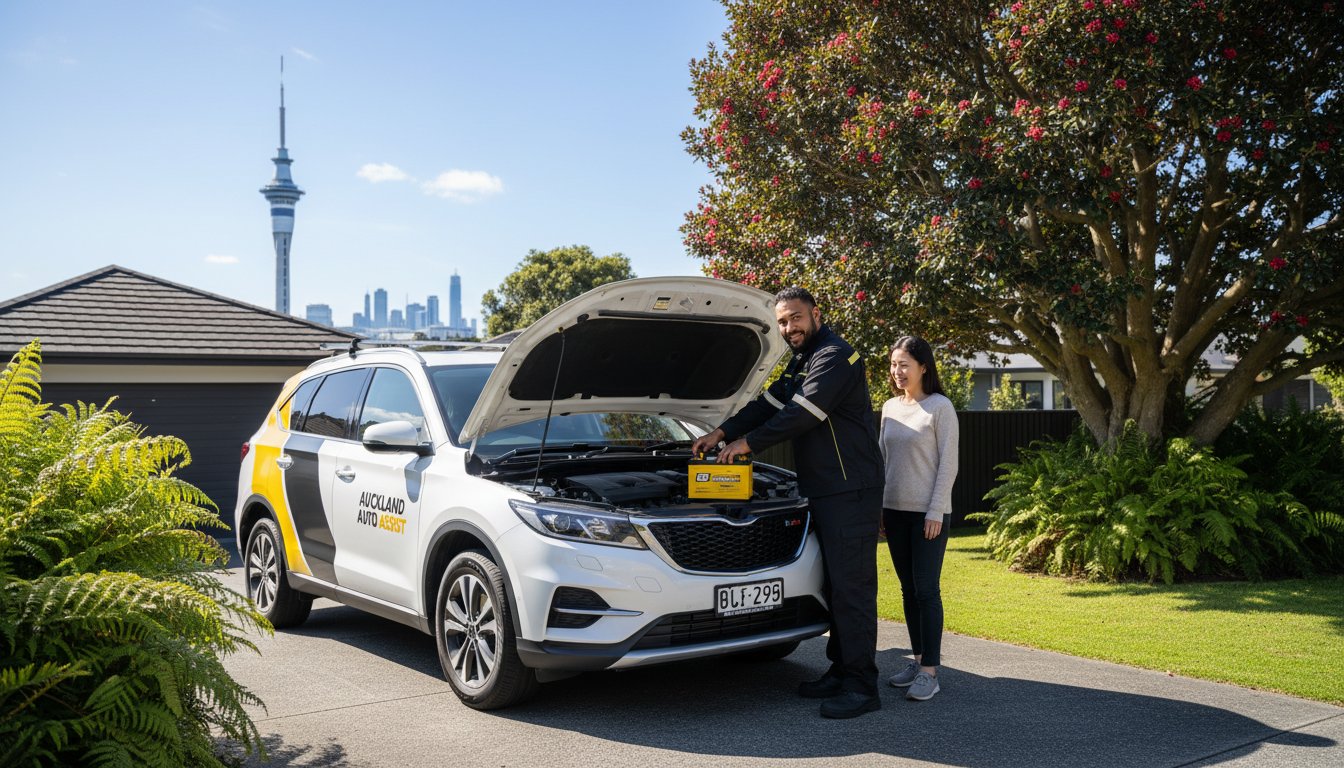
Imagine it’s a frosty Tuesday morning, and you’re already behind schedule for the school run. You turn the ignition, but instead of a roar, you get a sluggish click and a dashboard full of flickering lights. It is a frustrating reality for thousands of Kiwis every winter. Dealing with a car battery replacement shouldn’t feel like a high-stakes guessing game or a chore that ruins your entire weekend. We understand that the fear of being stranded is only matched by the confusion of choosing between AGM and Lead Acid tech.
You likely agree that your time is too valuable to spend hours stuck in a workshop waiting room or worrying about resetting complex radio codes. This guide is here to hand that time back to you. You will master how to identify early failure signs, pick the perfect battery for your specific vehicle, and decide whether a DIY approach or a seamless mobile replacement is your best path forward. We provide a clear roadmap through the latest 2026 battery standards so you can make an informed, stress-free decision for your car.
Key Takeaways
- Learn to spot the early warning signs of failure, like the “slow crank,” before you’re left stranded with a flat battery.
- Decode technical specs like Cold Cranking Amps (CCA) and Reserve Capacity to ensure your new battery handles New Zealand conditions.
- Weigh up the safety and tools required for a DIY swap versus the convenience of a professional car battery replacement.
- Master simple maintenance habits, such as terminal cleaning and trickle charging, to extend your battery’s life and save on long-term costs.
- Discover how to access transparent, upfront pricing and New Zealand’s largest network of mobile mechanics for a hassle-free experience.
Recognising the Warning Signs: Is Your Battery Actually Dying?
Don’t wait until you’re stranded at the supermarket with a boot full of melting frozen peas. Most batteries give you plenty of warning before they give up for good. Understanding these signals helps you book a car battery replacement before a minor inconvenience becomes a roadside emergency.
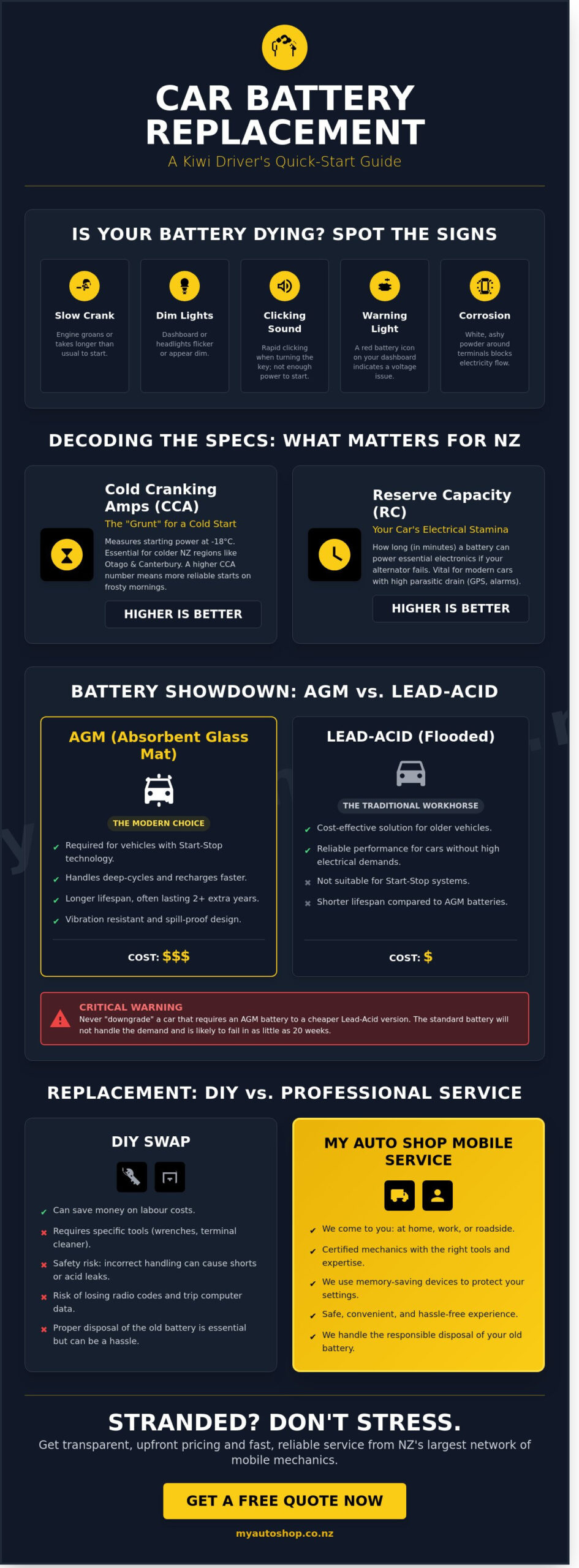
The most common sign is the “slow crank.” When you turn the key or push the start button, the engine should fire up almost instantly. If it groans or takes five seconds longer than usual to turn over, your battery is struggling to provide the necessary cold cranking amps. You might also notice your dashboard lights flicker or your power windows moving slower than a Sunday driver on the motorway. These are clear indicators that your Automotive battery no longer holds a steady charge.
Sometimes, you’ll hear a rapid-fire clicking sound when you try to start the car. This happens when the starter motor receives enough juice to engage the solenoid but not enough to actually spin the engine. If you see a red battery icon on your dash, your car’s computer has already detected a voltage drop. Pop the bonnet and look for physical cues. A battery casing that looks bloated or swollen has likely been damaged by heat. If you see white, ashy powder around the metal terminals, that’s corrosion, which blocks the flow of electricity.
The Impact of New Zealand Conditions
Kiwi drivers face unique challenges. In colder regions like Central Otago or Canterbury, winter temperatures can reduce a battery’s power output by up to 30%. Chemical reactions inside the cells slow down in the cold, making it harder to start the engine. Short “around town” trips are the biggest killer of batteries in NZ. It takes roughly 20 minutes of continuous driving for your alternator to replace the energy used just to start the car. If your daily commute is only a five-minute dash to the train station, your battery never fully recharges. Coastal living also plays a part, as salt air accelerates terminal oxidation, leading to poor connections.
Battery vs. Alternator: How to Tell the Difference
It’s frustrating to buy a new battery only to find your alternator was the real problem. Try the “headlight test” tonight. Turn your headlights on while the engine is off. If they look dim, but brighten significantly once you rev the engine, your battery is likely weak. If the lights stay dim or flicker while the engine is running, your alternator might not be charging the system correctly. A jump-start is a great temporary fix, but if your car dies again shortly after you disconnect the cables, the battery has lost its ability to hold a charge and needs replacing.
Choosing the Right Replacement: CCA, RC, and Battery Types
Selecting a new battery involves more than just finding a plastic box that fits under the bonnet. You need to match the technical specifications to your vehicle’s electrical demands. Start by looking at Cold Cranking Amps (CCA). This figure measures how much power the battery can deliver for 30 seconds at -18°C. In colder parts of New Zealand, like Otago or Canterbury, a high CCA rating is a necessity for reliable morning starts. A higher number means more starting “grunt” when the oil is thick and the engine is stubborn.
Reserve Capacity (RC) is the next vital metric. It calculates how many minutes the battery can supply power if your alternator fails. Modern cars have a high parasitic draw, meaning electronics like GPS, security systems, and dash cams pull power even when the engine is off. A higher RC ensures your car stays ready to go after sitting in the driveway for a few days. Consulting a Car Battery Buying Guide can help you understand how these ratings impact long-term performance across different brands.
Physical fit is non-negotiable. Batteries are categorised by Group Size, which defines the length, width, and height of the unit. If you choose the wrong size, it won’t sit securely in the tray, leading to vibration damage. Premium options often cost NZ$60 to NZ$120 more than standard units. This extra investment usually buys you thicker lead plates and better internal construction, which can extend the life of your car battery replacement by an extra two years.
AGM vs. Flooded Lead-Acid: Which Does Your Car Need?
Modern vehicles with start-stop technology require Absorbent Glass Mat (AGM) batteries. These units handle frequent engine restarts and deep cycles better than traditional flooded batteries. Never “downgrade” an AGM-equipped car to a cheaper flooded version. The standard battery will likely fail within 20 weeks because it cannot recharge fast enough between stops. Enhanced Flooded Batteries (EFB) serve as a middle ground, often found in entry-level European hatches that require more durability than a standard battery but don’t quite need full AGM specs.
Understanding New Zealand Battery Warranties
In the New Zealand market, most quality batteries come with a 24-month or 36-month warranty. You should distinguish between “full replacement” and “pro-rata” cover. A full replacement warranty means you get a brand-new unit at no cost if yours fails within the timeframe. Pro-rata warranties only offer a discount on a new battery based on how much time was left on your old one. Always keep your physical receipt or a digital scan. Without it, making a claim for a premature car battery replacement becomes nearly impossible with local retailers.
How to Replace a Car Battery: DIY vs. Professional Service
Deciding between a DIY car battery replacement and calling in the pros depends on your tool kit and your vehicle’s age. If you choose to tackle it yourself, you will need a 10mm socket or wrench, safety glasses, and acid-resistant gloves. Lead-acid batteries contain corrosive sulphuric acid that can cause skin burns, so protection is mandatory. Always work in a well-ventilated area to avoid inhaling hydrogen gas.
The removal sequence is the most critical safety step. You must disconnect the negative (black) terminal first. This breaks the electrical circuit. If your wrench touches the metal frame of the car while loosening the positive terminal first, it will create a massive electrical short. Once the old unit is out, clean the tray and terminals with a wire brush. When installing the new battery, reverse the order: connect the positive terminal first, followed by the negative. Ensure the hold-down clamp is tight. A loose battery can suffer internal plate damage from road vibrations, which reduces its lifespan by up to 15% over a year of driving on bumpy NZ backroads.
The Hidden Risks of DIY on Modern Vehicles
Modern cars are essentially computers on wheels. Over 70% of vehicles manufactured after 2015 use complex Engine Control Units (ECUs) that don’t like losing power. If you disconnect the battery without a “memory saver” device, you might lose your radio codes, seat presets, or even cause the engine to idle roughly while the computer tries to re-learn its settings. Many European models also require Battery Registration. This process involves using a scan tool to tell the car it has a new power source. Without this, the alternator may overcharge the new battery, thinking it’s still the old, failing unit. Following professional car battery maintenance tips can help you avoid these digital headaches.
The Benefits of a Mobile Mechanic for Replacement
Choosing a mobile mechanic for your car battery replacement saves you from being stranded at home or work. MyAutoShop connects you with experts across NZ who come to your location, whether you are in Auckland, Wellington, or Christchurch. A professional doesn’t just swap the part; they perform a full diagnostic. They check if a parasitic drain or a failing alternator is the real culprit, preventing you from wasting money on a battery you might not need. Plus, they handle the heavy lifting and ensure the old lead-acid core is recycled through proper environmental channels. It’s a seamless, transparent way to get back on the road without the grease or the guesswork.
Maximising Your New Battery’s Lifespan
Your car battery replacement is a significant investment in your vehicle’s reliability. To ensure it lasts the full five-year expected lifespan, you need to be proactive. Maintenance starts with the terminals. White, crusty lead sulphate buildup on the posts creates electrical resistance. This resistance causes a voltage drop, which forces your alternator to work harder and prevents the battery from reaching a full charge. A quick scrub with a wire brush and a simple solution of baking soda and water every six months keeps the connection clean and efficient.
If your car stays parked in the garage from Monday to Friday, buy a smart trickle charger. Lead-acid batteries naturally discharge when sitting idle. A charger maintains a steady 12.6V, which prevents the internal plates from sulphating and hardening. You also need to manage “parasitic draw” from modern accessories. Dashcams and aftermarket alarms are silent killers; they can pull enough current to drain a fresh battery in 72 hours if the vehicle isn’t driven regularly. Ensuring these devices are wired to an ignition-switched power source rather than a constant live feed will save your battery from premature failure.
A regular car service is your best line of defence. Mechanics use digital conductance testers to measure internal resistance and health. This 5-minute check identifies a failing cell before it leaves you stranded in a supermarket car park. It’s a standard part of the My Auto Shop service experience because we believe in transparent maintenance that prevents surprises. Just as it pays to understand the brake pad replacement cost NZ drivers face before heading to a workshop, knowing your battery’s health upfront helps you budget for all your vehicle’s needs without any nasty surprises.
Eco-Friendly Disposal in New Zealand
New Zealand takes automotive waste seriously. Car batteries are 99% recyclable, meaning the lead, plastic casing, and sulphuric acid can all be repurposed for new products. These units should never hit the landfill because toxic components can leach into Kiwi soil and waterways. You can find recycling centres at most major parts retailers or local scrap metal yards across the country. When you book a car battery replacement through My Auto Shop, our partner mechanics handle the disposal responsibly, ensuring your old unit is processed through certified NZ recycling channels.
Winter Prep: Keeping Your Battery Strong
Cold weather is the ultimate test for any battery. In New Zealand, May is the best time for a pre-winter test because the first frost will expose any existing weaknesses in the chemical plates. While battery blankets help insulate against extreme temperature swings, they are most effective in the South Island where sub-zero mornings are common. Cold Cranking Amps is the measure of a battery’s ability to start an engine in 0-degree temperatures.
Don’t wait for the first frost to leave you stuck in the driveway. Book a battery health check with My Auto Shop and stay mobile this winter.
Seamless Battery Replacement with My Auto Shop
Dealing with a flat battery shouldn’t ruin your entire week. My Auto Shop changes the game by offering a car battery replacement service that prioritizes your schedule and your wallet. We provide transparent, upfront pricing before you even book. This means you can say goodbye to hidden call-out fees or the “emergency” surcharges that traditional roadside services often tack on at the last minute. Our network is the largest of its kind in New Zealand, connecting you with hundreds of qualified mobile mechanics who are ready to help.
You have total control over how the service fits into your life. You can choose a simple on-site replacement right in your driveway or take advantage of our signature “Pick up & drop off” service. We designed this specifically for the busy Kiwi who doesn’t have time to sit in a workshop waiting room. We handle the logistics and the heavy lifting while you focus on your work or family. This modern approach is why thousands of vehicle owners across the country have moved away from traditional repair shops in favor of our streamlined model.
Instant Quotes and Easy Booking
Our digital platform does the heavy lifting so you don’t have to. When you enter your rego on our website, our smart database immediately identifies the exact battery group size and cold cranking amps your specific vehicle requires. You won’t have to guess between different technical specifications; we ensure the part is a perfect match for your engine. The entire booking process is designed to be completed in under 120 seconds, making it ideal for a quick fix during a lunch break. Once your appointment is set, our platform provides real-time updates on your mechanic’s arrival. You’ll know exactly when they are around the corner, which keeps your day moving without unnecessary interruptions or vague “morning or afternoon” arrival windows.
The My Auto Shop Guarantee
Every service is backed by the My Auto Shop Guarantee, ensuring your vehicle is in safe hands. We only use high-quality parts that meet or exceed original equipment manufacturer standards, and every installation is performed by a vetted professional from our local network. By choosing us, you’re directly supporting local Kiwi mechanics and small businesses while enjoying the efficiency of a high-tech platform. We blend old-fashioned service values with 21st-century convenience to make car maintenance honest and accessible for everyone in New Zealand. Don’t let a failing battery leave you stranded in the driveway. Get an instant quote for your car battery replacement today and experience the most reliable way to keep your car on the road.
Stay Powered Up and Ready for the Road
Don’t let a flat battery stall your plans. You now know how to spot the early warning signs like a sluggish engine crank or flickering dashboard lights before they leave you stranded. Selecting a unit with the correct Cold Cranking Amps (CCA) and Reserve Capacity (RC) ensures your vehicle handles New Zealand’s crisp winter mornings without a hitch. While a DIY swap is possible, many modern cars require digital resets that are best handled by a pro.
My Auto Shop makes your next car battery replacement entirely effortless. We are 100% Kiwi owned and operated, offering transparent, fixed-price quotes that eliminate the guesswork of repair costs. Our network includes over 200 certified NZ mechanics ready to provide mobile service directly to your home or office. It’s the most efficient way to maintain your car’s health without disrupting your busy schedule.
Book your mobile car battery replacement with My Auto Shop and enjoy the peace of mind that comes with expert service. You’ve got this, and we’re here to help you stay mobile.
Frequently Asked Questions
How long does a car battery typically last in New Zealand?
Most car batteries in New Zealand last between 3 and 5 years. Our unique climate and short city trips can impact this, with many batteries showing signs of failure around the 48 month mark. If your battery is older than 4 years, it’s a good idea to have it tested during your next service to avoid being stranded on a cold morning.
Can I replace my own car battery if my car has a Start-Stop system?
It’s best to avoid a DIY car battery replacement if your vehicle uses Start-Stop technology. These cars require specific AGM or EFB batteries and need to be digitally “registered” with the car’s computer system. Skipping this step can lead to the new battery failing in under 6 months because the alternator won’t charge it correctly.
Why did my car battery die suddenly without any warning?
Batteries often fail without warning due to internal lead plate corrosion or a sudden short circuit. In New Zealand, a single frost can reduce a battery’s cranking power by 30 percent instantly. Modern cars also use complex electronics that draw power even when the engine is off, which can push a weak battery over the edge without any prior symptoms.
How much does a car battery replacement cost in NZ?
A standard car battery replacement in New Zealand generally costs between NZ$150 and NZ$450. The price depends on whether you need a basic lead-acid battery or a high-performance AGM unit for a modern European car. This total usually covers the battery itself and the professional fitting to ensure everything is connected and configured safely.
Do I need to drive my car after a jump-start to charge the battery?
Yes, you should drive your car for at least 30 minutes at open-road speeds to give the alternator enough time to recharge the battery. Simply idling in the driveway won’t provide enough current to restore the charge. If your battery is more than 3 years old, a jump-start is often a sign that you need a permanent replacement soon.
What happens if I install a battery with lower CCA than recommended?
Installing a battery with lower Cold Cranking Amps (CCA) than your manufacturer recommends will lead to sluggish starts, especially in cold regions like Otago or Canterbury. If the CCA is 20 percent lower than required, the battery will work harder to start the engine. This extra strain significantly shortens the battery’s lifespan and can eventually damage your starter motor.
Will replacing my battery myself void my car’s warranty?
Replacing the battery yourself won’t typically void your entire vehicle warranty, but it can complicate claims for electrical issues. If an incorrect DIY installation damages the alternator or the engine control unit, those specific repairs won’t be covered by the manufacturer. Most NZ warranties prefer that a qualified technician handles the installation to ensure the electrical system remains protected.
How do I know if the problem is my battery or my starter motor?
If you hear a rapid clicking sound when you turn the key, the battery is likely too weak to engage the engine. A failing starter motor usually makes a single loud click or no sound at all while your dashboard lights stay bright. You can check this by turning on your headlights; if they dim significantly when you try to start the car, the battery is the culprit.
Disclaimer
This article provides general information only and should not be relied on as professional mechanical, safety or legal advice. Vehicle requirements and circumstances vary. If you are unsure about your vehicle, have it inspected by a qualified automotive professional.