
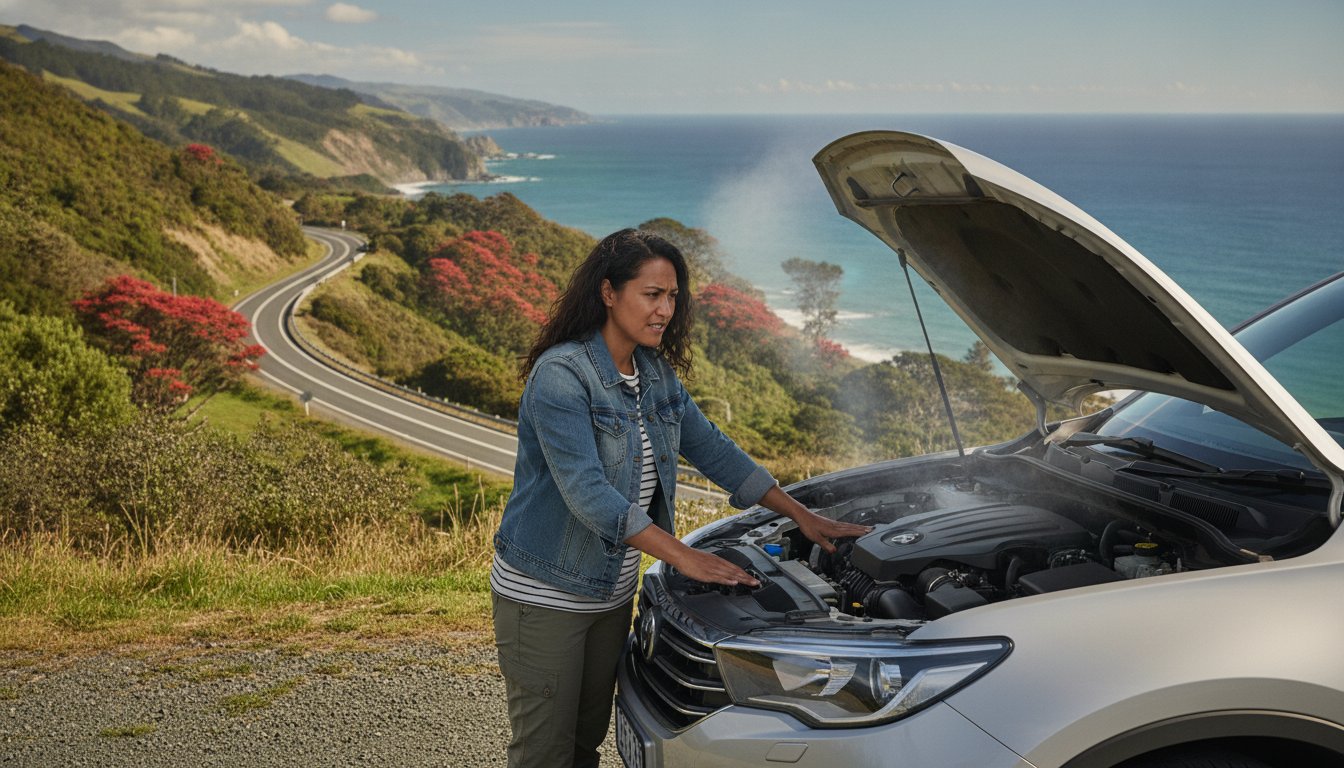
Imagine you’re halfway through a summer road trip to the Coromandel when a strange smell hits your cabin and the temperature needle starts its dreaded climb into the red. That sinking feeling in your stomach is usually followed by one big question: “Is my engine about to melt?” Understanding car overheating causes and solutions is the difference between a quick cooling system fix and a repair bill that costs more than your vehicle’s actual value. It’s completely normal to feel anxious about a blown head gasket or being stranded on the side of State Highway 1.
We know you’re busy and don’t have time for mechanical jargon or hidden costs. This guide is designed to strip away the confusion of dashboard warning lights and give you clear, action-oriented steps to take right now. You’ll learn exactly why your engine is running hot and the immediate moves you must make to protect your engine from permanent damage. We’ll walk through how to identify faulty parts like a stuck thermostat or a leaking radiator, ensuring you know when it’s a simple DIY top-up and when it’s time to call in a professional.
Key Takeaways
- Pull over safely and blast your heater to draw heat away from the engine. This simple step can prevent a minor issue from turning into a total engine meltdown.
- Master the basics of car overheating causes and solutions by learning to spot “telltale” coolant stains and checking your oil for signs of serious damage.
- Understand the difference between a simple radiator flush and a full replacement. Using the correct coolant mix for Kiwi conditions is vital for long-term engine health.
- Avoid the risk of driving a hot vehicle to a garage. Use a mobile mechanic to diagnose the problem at your location and keep your engine safe from further harm.
Immediate Action: What to Do When Your Car Overheats
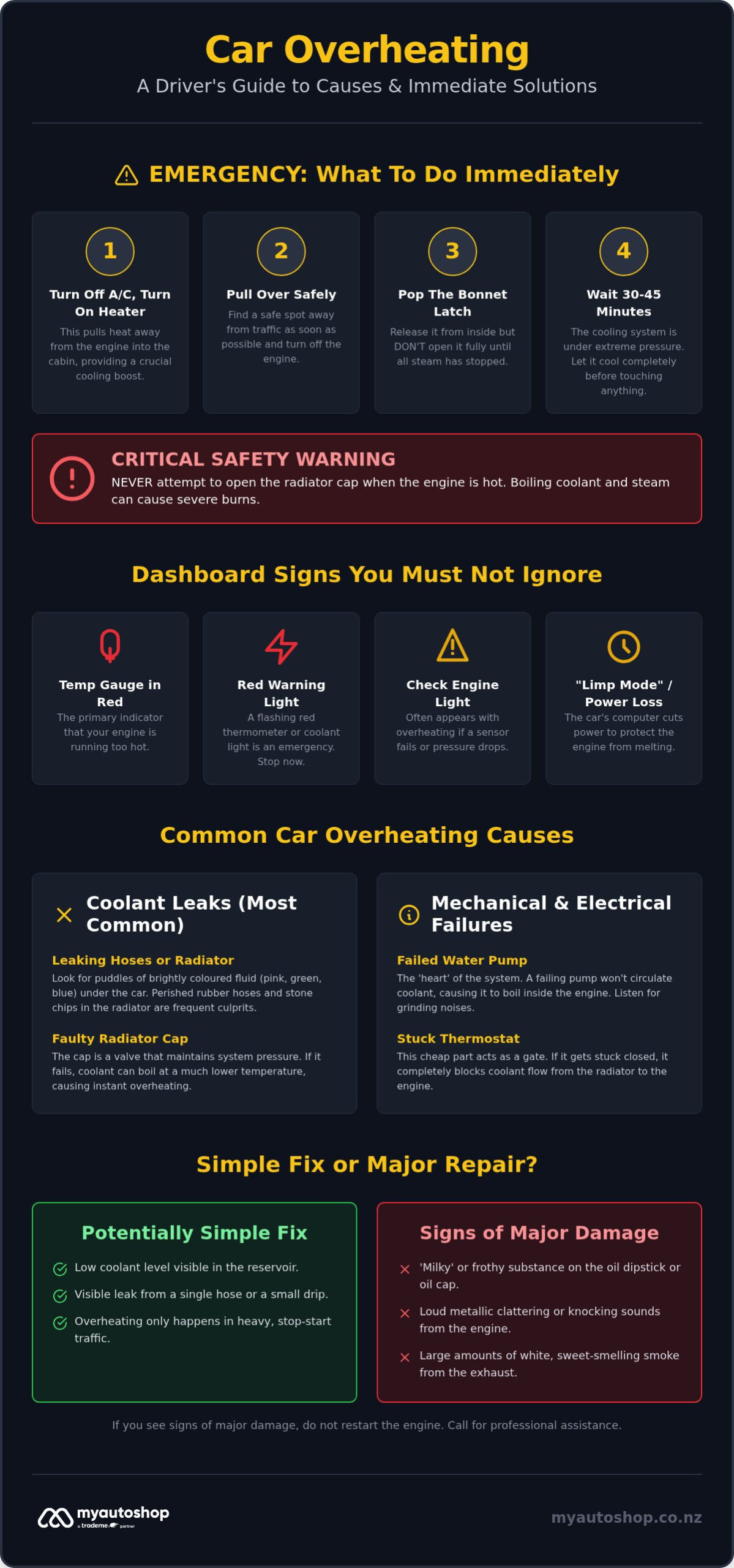
Seeing steam billow from your bonnet is a stressful moment for any driver. If your temperature gauge spikes or a red warning light appears, your priority is to stop safely without destroying your engine. Acting quickly helps you manage car overheating causes and solutions before a small leak becomes a massive repair bill. Your first move should be to turn off the air conditioning and blast the heater on its maximum setting. It sounds counter-intuitive during a Kiwi summer, but this pulls excess heat away from the engine block and into the cabin, providing a vital cooling boost while you look for a place to pull over.
Once you’ve found a safe spot, turn off the engine immediately. Do not attempt to open the radiator cap. The cooling system is under immense pressure, and opening that cap can result in a geyser of boiling coolant and steam. To understand why this pressure exists, you can read more about how a car’s cooling system works. Give the vehicle at least 30 to 45 minutes to cool down before you even think about touching the cooling system components. This cooling-off period is non-negotiable for your safety.
The Emergency “Stop and Cool” Protocol
Follow a logical sequence to assess the damage safely:
- Pull over: Get as far from traffic as possible on a flat surface.
- Pop the latch: Release the bonnet from inside the car, but don’t lift it yet.
- Observe: Wait for all visible steam to stop before fully opening the bonnet.
- Check for puddles: Look for brightly coloured fluid (pink, green, or blue) under the front bumper.
If you see coolant spraying or hear heavy hissing, do not attempt to restart the engine. If the engine makes a loud metallic clattering sound when you try to turn it over, it has likely suffered internal damage and needs a professional inspection.
Dashboard Warning Signs You Should Not Ignore
Modern cars often use a “Limp Mode” to protect the engine when temperatures soar. If your car suddenly loses power and won’t shift out of low gears, it’s the computer trying to save the engine from melting. A rising needle on the gauge is a warning, but a flashing red thermometer light is an emergency. If your “Check Engine” light also appears, the computer has likely detected a sensor failure or a major drop in pressure. Don’t try to “push through” to your destination; stop and call for help instead.
Common Car Overheating Causes: Identifying the Culprit
Many drivers panic the moment they see steam, immediately fearing a blown head gasket. While that’s a serious repair, it’s often the final result of a smaller issue left unchecked. To master car overheating causes and solutions, you need to look at the components that fail first. In New Zealand, the most frequent culprit is a simple coolant leak. Whether it’s a perished hose from years of Auckland humidity or a stone chip in your radiator from a gravel road in the Mackenzie Country, losing fluid is the fastest way to cook an engine.
The cooling system relies on a delicate balance of pressure and flow. According to industry experts at AAA, there are several common causes of car overheating that range from electrical glitches to mechanical wear. Identifying which one is affecting your vehicle helps you decide if you can fix it yourself or if you need professional help. Acting early prevents a minor leak from turning into a permanent engine failure.
Leaks, Hoses, and Seals
Start your inspection by looking for wet spots. A pinhole leak in a rubber hose often sprays a fine, almost invisible mist that only appears when the engine is hot and under pressure. In contrast, a cracked radiator tank usually leaves a steady drip or a pool of fluid on the ground. Don’t overlook the radiator cap; it’s a precision-engineered valve that maintains system pressure to raise the boiling point of the fluid. Coolant is a chemical mixture designed for heat transfer, not just “anti-freeze”. If your cap fails to hold pressure, the coolant boils prematurely, leading to instant overheating.
Mechanical and Electrical Component Failures
If your fluid levels are fine, the problem is likely circulation. The water pump is the heart of the system. Look for dried crusty residue around the “weep hole” on the pump body or listen for a low-pitched grinding noise, which signals a failing bearing. If the pump stops, the coolant sits still and boils in the engine block. Another common failure is the thermostat. This small $30 part acts as a gatekeeper. If it gets stuck closed, it blocks coolant from reaching the radiator, causing a $3,000 engine failure in minutes.
Finally, check your electric cooling fan. If your car only runs hot while sitting in traffic but cools down on the motorway, the fan or its sensor has likely failed. If you’re unsure which part is the culprit, booking a Mobile Mechanic to diagnose the issue at your home can save you the risk of driving a compromised vehicle.
Diagnosing the Problem: Is it a Simple Fix or a Major Repair?
Finding the root of the issue doesn’t always require a workshop. You can start by looking for dried residue on your engine block. These crusty, salt-like deposits are usually pink, green, or blue, depending on the brand of coolant used in your car. They mark exactly where a leak occurs under pressure, even if the fluid evaporates before hitting the ground. If you’ve been researching common causes of car overheating, you’ll know that these visual cues are your first line of defense. Catching a leak on a hose early is a simple fix. Ignoring it leads to the dreaded “milky” oil on your dipstick, which indicates coolant is mixing with your engine oil. This is a clear sign of a blown head gasket and requires immediate professional intervention.
Check your radiator hoses when the engine is completely cool. Give them a firm squeeze. They should feel firm but pliable, like a thick rubber garden hose. If they feel crunchy or brittle, they are past their use-by date and prone to sudden failure. If they are bulging or feel excessively soft, the internal structure has failed. This quick check helps you navigate car overheating causes and solutions by identifying parts that need replacing before they leave you stranded on the side of the Southern Motorway.
DIY Diagnostic Checks You Can Perform Safely
Check your coolant levels in the translucent overflow bottle first. Never open the radiator cap if the engine is warm. If you notice a sweet, syrup-like smell inside the cabin while driving, your heater core might be leaking. Listen to your engine while it’s idling. A sharp ticking sound often means the oil has thinned out due to high heat. A heavy knocking suggests internal components are already suffering. Look for bubbles in your expansion tank while the engine is running; this often points to a head gasket leak pushing combustion gases into the cooling system.
When Professional Diagnostics are Essential
Sometimes a leak is invisible to the naked eye. This is where professional tools become essential for your safety. A mechanic uses a pressure tester to simulate operating conditions, forcing coolant out of hidden cracks in the radiator or water pump. If we suspect a head gasket issue, a combustion leak test looks for specific exhaust gases inside your radiator. Avoid the temptation to just “throw parts” like a new thermostat or cap at the car without a clear answer. A proper diagnosis saves you money by fixing the actual fault the first time, preventing a cycle of expensive and unnecessary repairs.
Practical Solutions: Fixing and Preventing Overheating
Resolving car overheating causes and solutions effectively means moving beyond emergency top-ups. If you find yourself pouring water into the radiator every few days, you’re not fixing the fault; you’re just managing a symptom. Using tap water is a risky emergency move. It lacks the essential corrosion inhibitors required for New Zealand’s damp climate and can cause internal rust in weeks. Always use the specific coolant type recommended for your vehicle to protect sensitive aluminium parts from electrolysis and mineral buildup.
Don’t rely on “Stop Leak” additives. These products are a temporary band-aid that can cause permanent damage. While they might plug a small external hole, they also settle in the narrow veins of your heater core and engine block. This restricts flow and reduces the system’s ability to shed heat. Replacing a perished hose or a worn drive belt is always cheaper than dealing with a roadside breakdown. Inspect your belts for fraying or glazing, as a snapped belt will stop your water pump instantly and lead to immediate engine failure.
The Cooling System Flush
A professional flush removes more than just old fluid. It circulates a cleaning solution to break down rust, scale, and sludge that builds up over time. Aim to do this every 2 to 3 years. This process is different from a simple top-up because it involves a full system bleed. Trapped air pockets can cause “hot spots” where the metal reaches dangerous temperatures even if the dashboard gauge looks normal. Proper bleeding ensures the system is 100% full of liquid and operating at the correct pressure.
Major Component Replacement
When a component reaches the end of its life, replacement is the only path to reliability. If your water pump shows signs of failure, it’s often most efficient to replace it during a Cambelt / Timing Belt Replacement since the mechanic is already working in that specific area. For Kiwis who tow heavy trailers or drive older vehicles, a new radiator can offer significantly better cooling capacity. If your car has overheated even once, replace the thermostat immediately. It’s a low-cost part that acts as vital insurance against future engine failure. To get your cooling system back to peak performance, schedule a professional Radiator Repair & Replacement before your next long trip.
Long-Term Protection: Keeping Your Car Cool in NZ
New Zealand’s unique geography puts immense pressure on your engine. Between the steep inclines of the Kaimai Ranges and the heavy loads of towing a boat to the Coromandel, your cooling system works harder than it would on a flat motorway in Europe. Long-term protection starts before you even own the vehicle. Investing in a Pre-purchase Inspection is the most effective way to uncover hidden car overheating causes and solutions that a seller might not disclose. A technician can spot signs of previous overheating, like warped plastic components or mineral staining, saving you from inheriting a mechanical nightmare.
It’s a common misconception that a Warrant of Fitness (WOF) covers your engine’s health. A WOF is a safety check focused on tyres, lights, and brakes; it doesn’t inspect your radiator’s internal flow or the health of your water pump. With WOF frequency changes implemented in late 2026, many vehicles now go longer between official inspections. This makes proactive maintenance even more critical. If you’re towing, remember that your engine generates significantly more heat at low speeds under high load. Drop down a gear to keep the water pump spinning faster and increase airflow through the radiator.
The Mobile Mechanic: The Safest Way to Fix an Overheating Car
If your car has already started running hot, the worst thing you can do is try to drive it to a workshop. Driving even two kilometres with a failing cooling system can warp your cylinder head, turning a simple hose replacement into a total engine rebuild. The most logical choice is to use a Mobile Mechanic. Having a professional come to your home or office eliminates the risk of further damage and saves you the cost of a tow truck. They can perform on-site pressure tests and radiator repairs while you continue with your day, providing a transparent and efficient solution to a stressful problem.
Preparing for the New Zealand Summer
Summer in NZ means stop-start traffic and high ambient temperatures. Your engine oil actually plays a secondary role in cooling by drawing heat away from the internal moving parts. A Basic Service or a Comprehensive Service ensures your oil is fresh and capable of managing this thermal load. Before heading out on a long road trip, check your coolant levels and look for any cracks in your drive belts. A quick five-minute visual check of your hoses can be the difference between reaching your holiday destination and spending your afternoon on the side of State Highway 1.
Keep Your Engine Cool and Your Budget Intact
Dealing with a rising temperature gauge doesn’t have to lead to a financial disaster. By mastering the basics of car overheating causes and solutions, you’ve gained the tools to protect your engine from permanent damage. Remember that early detection through visual checks and regular cooling system flushes is your best defense against the high costs of a major rebuild. Acting quickly ensures your car stays reliable for every Kiwi road trip, from the morning school run to a weekend at the beach.
If you’re worried about a leak or don’t want to risk driving a hot car, we’ve got you covered. You can book a Mobile Mechanic or Radiator Repair with My Auto Shop to get expert help delivered right to your driveway or office. We provide a professional network of NZ-wide mechanics and transparent, upfront pricing with no hidden surprises. It’s the most convenient way to get back on the road safely without the stress of the unknown. Keep your cooling system in check and enjoy the peace of mind that comes with a healthy, reliable vehicle.
Frequently Asked Questions
Is it safe to drive my car if it is overheating?
No, you should never drive a car that is overheating. Continuing to drive even a short distance puts your engine at risk of catastrophic failure, such as a warped cylinder head or a blown head gasket. Pull over as soon as it is safe to do so and turn off the engine to prevent a small cooling issue from becoming a total engine replacement.
How much does it cost to fix a car that is overheating in NZ?
The cost depends entirely on which component has failed and the make of your vehicle. A simple thermostat replacement is relatively affordable and mostly involves labour, while replacing a water pump or a radiator is more complex. Labour rates in New Zealand typically vary between $95 and $140 per hour, so getting an accurate diagnosis early is the best way to manage your repair budget.
Can low oil cause a car to overheat?
Yes, low engine oil can lead to overheating. While coolant is the primary temperature regulator, engine oil reduces friction and carries heat away from the moving internal parts. When oil levels are low, friction increases significantly, generating extra heat that can overwhelm your cooling system and lead to engine damage.
Why is my car overheating even though the coolant is full?
If your coolant is full but the engine is still hot, you likely have a circulation or airflow problem. This is a common scenario when exploring car overheating causes and solutions. The most likely culprits are a thermostat that is stuck closed, a failed water pump that isn’t moving the fluid, or an electric cooling fan that isn’t turning on when the car is stationary.
How long should I let my car cool down before checking the coolant?
Wait at least 30 to 45 minutes before attempting to check the coolant levels. The system operates under extreme pressure when hot, and opening a cap too early can cause boiling liquid to spray out. Ensure the radiator or overflow tank feels cool to the touch before you carefully unscrew any caps.
What is the most common cause of a car overheating?
Coolant leaks are the most frequent cause of engine overheating in New Zealand. These leaks often occur in ageing rubber hoses, radiator tanks, or through a worn water pump seal. Because the system is pressurised, even a tiny pinhole leak can quickly empty the system and cause the temperature to spike.
Will my car fail its WOF if the radiator is leaking?
Yes, a significant radiator leak can result in a WOF failure. While a minor “weep” might only be noted as an advisory, any leak that drips onto the ground or is deemed a risk to the vehicle’s safe operation will lead to a rejection. It is always better to repair cooling system leaks before your inspection to avoid the fine for an expired WOF.
Can I use tap water in my radiator in an emergency?
You can use tap water as a temporary emergency measure to reach a safe location, but it must be flushed out quickly. Tap water contains minerals that cause internal rust and scale buildup in modern aluminium engines. It also has a lower boiling point than proper coolant, so replace it with the correct manufacturer-approved mixture as soon as possible.
Disclaimer
This article provides general information only and should not be relied on as professional mechanical, safety or legal advice. Vehicle requirements and circumstances vary. If you are unsure about your vehicle, have it inspected by a qualified automotive professional.