
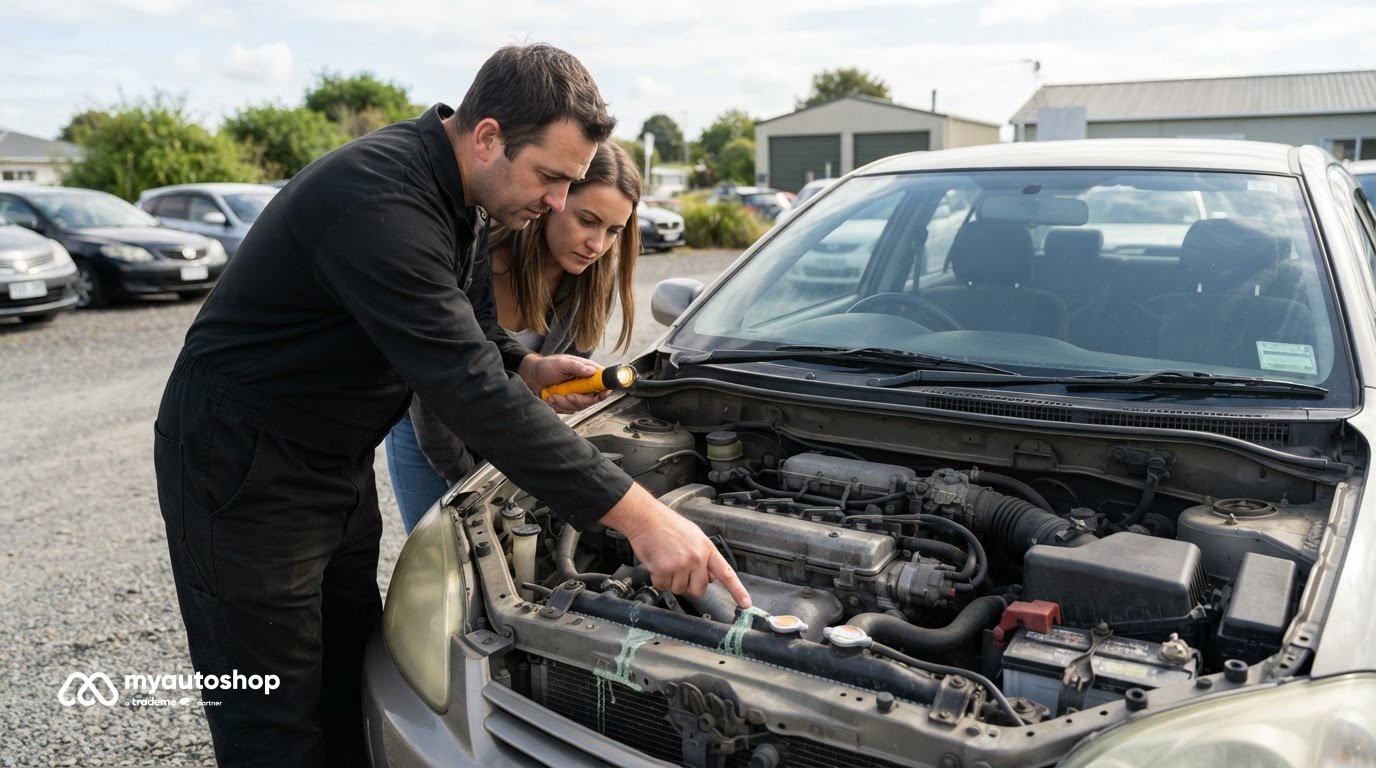
A cracked radiator can turn a short trip into an overheated engine. If you’re wondering whether it is safe to drive with a cracked radiator, the answer is no: coolant can escape, and the engine may overheat within minutes. If the temperature rises or a warning light comes on, pull over safely, switch off the engine and let it cool.
It’s understandable to hope you can reach your destination, especially if the leak looks small. But how quickly overheating happens depends on how much coolant remains, the driving conditions and the size of the leak. Continuing to drive risks serious engine damage.
This guide explains the warning signs to watch for, why a radiator leak affects engine temperature and what to do once you’ve stopped. You’ll also learn why even a short drive can be too risky, and why arranging a radiator repair or replacement is the safer next step.
Key Takeaways
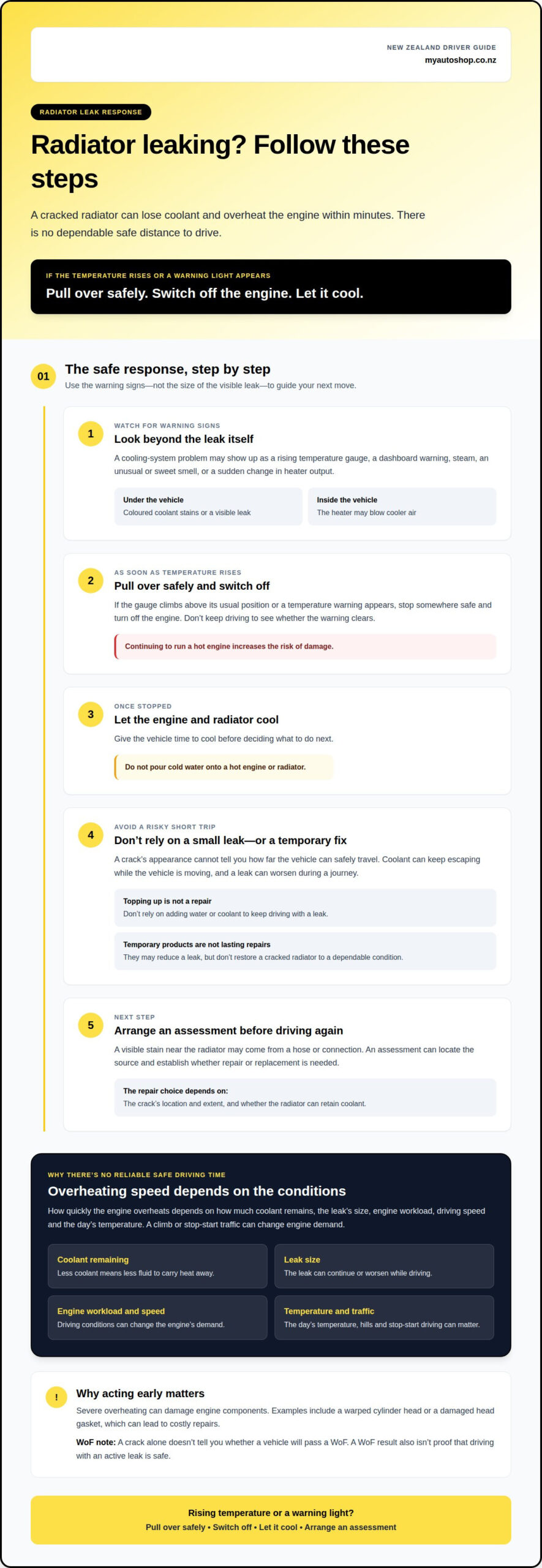
- If the temperature gauge rises or a warning light appears, pull over safely, switch off the engine and let it cool.
- A radiator leak can drain coolant and lead to overheating; how quickly depends on the leak, remaining coolant and driving conditions.
- Look for clues such as coloured coolant stains, a sweet smell or low coolant, but don’t rely on a small-looking leak as proof the car is safe to drive.
- Radiator leaks can stem from ageing or damaged parts, including hoses, corrosion or cracks caused by physical damage.
- After a radiator breaks, avoid pouring cold water onto a hot engine or radiator and arrange repair before driving again.
Coolant loss and engine overheating
A cracked radiator lets coolant escape, reducing the fluid available to carry heat away from the engine. A vehicle with a damaged radiator might overheat within a few minutes, so even a small-looking leak can become a serious problem.
Effects of Coolant Loss
Coolant circulates through the engine and radiator to control temperature. As the level falls, the cooling system has less fluid to absorb and release engine heat. The heater may also blow cooler air because reduced coolant can affect the heater core. Watch for low coolant, coloured stains beneath the vehicle or a sweet smell near the engine bay.
How quickly overheating develops depends on the amount of coolant remaining, the leak’s size, the engine’s workload, driving speed and the day’s temperature. For example, a leak may worsen on a climb or in stop-start traffic as engine demand changes. There’s no reliable safe driving time to assume based on the appearance of a crack. Coolant can keep escaping while the vehicle is moving.
Engine Damage Risks
Overheating occurs when the cooling system can’t remove enough heat to keep the engine within its normal operating range. Continued high temperatures can damage engine components and lead to costly repairs. A warped cylinder head or damaged head gasket are examples of problems associated with severe overheating. The longer the engine runs hot, the greater the risk that a radiator fault leads to engine repairs.
Watch for more than a rising temperature gauge. A dashboard warning light, steam, an unusual smell or a sudden change in heater output can point to a cooling-system problem. If these signs appear, don’t keep driving to see whether they clear. Pull over safely, switch off the engine and let it cool before deciding what to do next.
Temperature Monitoring
Watch the dashboard gauge and warning lights for signs that the engine is getting too hot. Coolant loss can cause the temperature to rise before the vehicle stops running. If the gauge climbs above its usual position or a temperature warning appears, pull over safely and switch off the engine. Continuing to drive increases the risk of engine damage.
Check the gauge regularly while driving, especially if you know coolant is leaking. If the temperature rises again after restarting, the cooling problem remains, even if the engine initially seems normal. Don’t take a short stretch of steady temperature as proof that the leak has stopped. Arrange a repair rather than relying on the gauge to make continued driving safe.
Can I drive with a car radiator leak without damage?
Driving with a radiator leak can lead to coolant loss and overheating, so the crack’s appearance can’t show how far the vehicle can safely travel. The priority is finding the fault and determining whether the radiator needs repair or replacement.
Radiator Repair and Replacement
Radiator repair addresses damage that can be fixed, while replacement means fitting another radiator. The right option depends on the crack’s location and extent, and whether the radiator can retain coolant.
A visible leak may not reveal the full fault. Coolant can run from a hose or connection and collect near the radiator, for example. An assessment can locate the source and determine what repair is needed, rather than relying on the visible stain alone.
Temporary Crack Repairs
Temporary repair products may reduce a leak, but they don’t restore a cracked radiator to a dependable condition. The leak can continue or worsen, so don’t treat a temporary measure as a lasting repair.
Topping up coolant doesn’t fix the crack either. Don’t rely on topping up with water or coolant to keep driving with a leak. Arrange help to assess and address the fault rather than driving the vehicle.
Can a vehicle with a cracked radiator pass a WoF in New Zealand? You can’t tell from a crack alone whether the vehicle will pass a WoF. Have the fault assessed, and don’t treat a WoF result as proof that driving with an active leak is safe.
Does car insurance cover radiator damage in New Zealand? Cover depends on the policy terms and what caused the damage. Check your policy wording to see how it treats radiator damage, mechanical failure and any related engine damage.
How much does radiator repair cost? The price depends on the case and is given after a quote request. Factors include the vehicle, the source and extent of the damage, and whether repair or replacement is needed. A visible crack doesn’t establish the full work required, so an assessment helps clarify the repair before it proceeds.
If coolant is leaking, arrange an assessment rather than planning a journey around the fault. The radiator’s condition and the leak’s source determine whether repair or replacement is appropriate. Until the problem is addressed, don’t treat a temporary reduction in leaking as evidence that the vehicle is ready for normal driving.
Safety of driving with a cracked radiator
Driving with a radiator leak is risky because coolant can escape while the engine runs. There’s no dependable safe distance: a damaged radiator may lead to overheating within a few minutes, depending on the coolant remaining, workload, speed and temperature.
Driving With a Radiator Leak
A radiator leak means coolant is escaping from the cooling system, and it can make a journey unsafe before you reach your destination. Don’t continue driving. Arrange a safe way to have the vehicle assessed.
Even a short trip can involve stop-start traffic, hills or a warm day, affecting engine workload or cooling. A leak can also worsen during the journey. Don’t take a quiet engine or a small patch beneath the car as proof that driving is safe.
If the temperature rises or a warning appears, pull over somewhere safe and switch off the engine. Avoid stopping in a live lane if you can reach a safer place without travelling a hazardous distance. Once stopped, let the engine cool rather than pressing on to a more convenient destination.
Distance Before Overheating
The distance before overheating is how far a vehicle can travel before coolant loss prevents effective cooling. It matters because the same visible crack can behave differently in different conditions.
A car with a damaged radiator might overheat within a few minutes. The timing depends on how much coolant remains, the engine’s workload, speed and the day’s temperature. A leak on a steep climb, for example, puts different demands on the engine than one on a flat road. No single kilometre estimate can reliably make the trip safe.
Even if the temperature gauge looks normal at first, coolant may still be escaping. Keep watching the dashboard, but don’t take a steady reading as permission to continue to a distant repairer. If a warning light comes on or the gauge climbs, stop safely and switch off the engine. Continuing to drive can expose engine components to damaging heat.
In New Zealand, a route may include open-road stretches, winding climbs or congested urban traffic. These conditions change speed and engine workload, so a distance that looks short on a map may not be safe to drive with a leak. Choose a nearby stopping place rather than attempting a longer journey, and arrange help before driving again.
Common causes of radiator leaks
A radiator leak can come from the radiator itself or connected cooling-system parts. Cracks may develop through age, extreme temperatures or physical damage. Hoses, corrosion, the radiator cap and header tank can also let coolant escape.
Age and temperature changes: A radiator heats up and cools down repeatedly as the vehicle is driven and parked. Over time, this stress can weaken materials and contribute to cracks. Extreme temperatures can add strain, particularly if a weak point is already present. Age alone doesn’t identify the exact fault, but a leak on an older radiator needs a proper inspection. Don’t assume the visible spot tells the whole story.
Physical damage: An impact can damage the radiator and cause a leak. The damage may be visible on the radiator, but a stain beneath the vehicle only shows where fluid has collected, not necessarily where it escaped. Coolant can run down from a higher point before dripping onto the ground, for example. A mechanic can trace the leak and distinguish radiator damage from a nearby hose or connection.
Hoses and connections: Radiator hoses can crack or become disconnected over time. Either fault can let coolant escape even when the radiator itself is intact. A wet patch around a hose or connection may point to the area, but visual clues don’t confirm the source. Look for coloured coolant marks around the front of the vehicle after it has been parked, and avoid touching hot components.
Corrosion: Corrosion can weaken radiator materials until coolant finds a way out. The leak may appear as a damp patch or dried coloured residue, but corrosion can affect areas that aren’t easy to see from above. A slow drip doesn’t rule out a weakened radiator; more coolant may escape as the cooling system operates.
Radiator cap and header tank: The radiator cap helps maintain pressure inside the cooling system. If the cap malfunctions, coolant can boil over or escape. The header tank can also crack or become perforated at weak stress points, allowing coolant to leak. These faults may leave residue near the cap or tank, but the cooling system still needs to be checked to locate the actual source.
Look for clues such as a high temperature reading, a warning light, low coolant, coloured stains or a sweet smell. These signs can indicate coolant loss, but they don’t identify whether the cause is a hose, corroded radiator, damaged tank or faulty cap. Avoid opening the cooling system while it’s hot. Arrange an inspection to pinpoint the leak before choosing a repair.
Safe steps after a radiator breaks
If the radiator breaks, stop driving as soon as you safely can. Switch off the engine and let it cool before approaching the cooling system.
- Choose a safe place to stop. If the temperature rises or a warning light appears, move out of traffic when safe. Avoid continuing to a preferred destination. A radiator leak can worsen while the engine runs, and overheating can damage engine components.
- Switch off the engine. Once stopped, turn the engine off rather than leaving it idling. This reduces further heat and avoids continuing to circulate coolant through a leaking system. If you’re on a busy road, prioritise a safe position for yourself and passengers.
- Let the engine cool fully. Don’t open the radiator cap while the engine is hot. The cooling system can be under pressure, and hot coolant can cause burns. Wait until the engine has cooled before looking for the source of a leak.
- Keep cold water away from hot components. Don’t pour cold water over a hot engine or radiator. A rapid temperature change can damage components. Adding water also won’t fix a crack, and any liquid added may continue to leak out.
- Arrange repair or recovery. Don’t set off on a normal journey with a broken radiator. Arrange a safe way to have a vehicle with a coolant leak assessed. If the engine has overheated, avoid restarting it for the trip.
Once the engine is cool, look for clues without touching hot or moving parts. Coloured stains beneath the vehicle, dampness around a hose or residue near the radiator can help describe what happened. A sweet smell or temperature warning can also be useful details when arranging an inspection. These clues don’t prove which component has failed.
Note whether the temperature gauge climbed, a warning light appeared or steam came from the engine bay. Share those observations, along with where you saw coolant, when arranging help. For example, a stain near the front of the car and a warning light give a clearer account than saying only that the radiator broke.
Don’t rely on a temporary top-up to make the vehicle safe for a longer drive. Distilled water isn’t a suitable coolant replacement and will continue to leak through the break. Keep the engine off and arrange an assessment before driving again.
Turners Service & Repairs: Radiator Repair & Replacement
Turners Service & Repairs can help with mechanical repairs for motorists dealing with a cracked radiator or coolant leak. Arrange an assessment to identify the source of the leak and determine whether repair or replacement is appropriate. The right option depends on the damage and where coolant is escaping.
When arranging help, describe any warning lights, rising temperature readings, visible coolant stains or recent overheating. These details help explain what happened and why the vehicle needs attention. If the engine overheated, don’t drive it to a workshop; arrange a safe way to have the vehicle assessed.
Contact Turners Service & Repairs to discuss radiator repair or replacement.
Make your next trip a safer one
If you’re still wondering whether it’s safe to drive with a cracked radiator, arrange an assessment before relying on the car again. Addressing the fault gives you a clearer basis for planning your next trip.
My Auto Shop offers Pre-purchase Inspections, as well as Basic Service and Comprehensive Service options. Choose the service that fits your vehicle’s needs.
Contact My Auto Shop for help with your next step. You can move forward with a clearer plan for the road ahead.
Frequently Asked Questions
How much does it cost to fix a broken radiator?
There isn’t one price that applies to every vehicle. The cost depends on the vehicle and whether the radiator can be repaired or needs replacing. The price depends on the case and is given after a quote request. Include your vehicle’s make and model, and describe the damage you’ve noticed, so the quote request has useful context. An assessment can establish what work is needed.
How serious is a cracked radiator?
A cracked radiator can be a serious fault because it may compromise the cooling system. The seriousness depends on the damage and whether coolant continues escaping. A crack that looks small from outside doesn’t show how the radiator performs under operating conditions. Treat it as a repair issue, not a cosmetic defect, and don’t rely on appearance alone to judge the vehicle’s condition.
What happens if the radiator breaks?
A damaged radiator can affect more than the area around the visible leak. If the engine has already run too hot, a mechanic may need to assess whether related components have also been affected. Tell them how long the vehicle was driven after the problem appeared and whether the temperature warning came on. That history helps distinguish a radiator fault from possible damage caused while the engine was running hot.
What to do if a radiator is leaking?
Arrange an assessment and describe where you first noticed the leak, such as beneath the front of the parked vehicle or around a hose. Note whether the fluid appeared after driving or was still visible later. Don’t assume the nearest wet area identifies the failed part, because coolant can travel before dripping. Clear observations help narrow down the fault without dismantling anything or handling hot components yourself.
Is it safe to drive with a cracked radiator?
No. Avoid driving a vehicle with a cracked radiator. A normal-feeling drive doesn’t prove that the cooling system can keep operating properly. Arrange a safe way to have the vehicle assessed rather than driving it to a workshop.
What are the risks of driving with a cracked radiator?
A radiator fault can damage engine components or leave you needing assistance away from home or in an inconvenient place. A journey involving hills, traffic or a long open-road stretch can also put different demands on the vehicle than a brief stationary check. Don’t plan around reaching a particular destination. Prioritise the vehicle’s condition and a safe repair plan.
What are the signs of a cracked radiator and coolant leak?
Look for a pattern, not just one clue. Recurring coloured residue in the same parking spot, combined with repeated coolant loss, suggests an ongoing leak that needs investigation. Note where the marks appear and whether they return after the vehicle has been parked. This record can help a mechanic locate the source, even when the crack itself isn’t easy to see.
What should you do if your radiator cracks while driving?
Once safely stopped, keep the engine off and arrange a suitable way to get the vehicle assessed. If you’re travelling with passengers, make sure everyone can wait in a safe place away from moving traffic. When organising help, share your location, vehicle details and what you observed. Don’t restart the car simply to move it closer to a workshop if the engine has overheated.
Disclaimer
This article provides general information only and should not be relied on as professional mechanical, safety or legal advice. Vehicle requirements and circumstances vary. If you are unsure about your vehicle, have it inspected by a qualified automotive professional.