
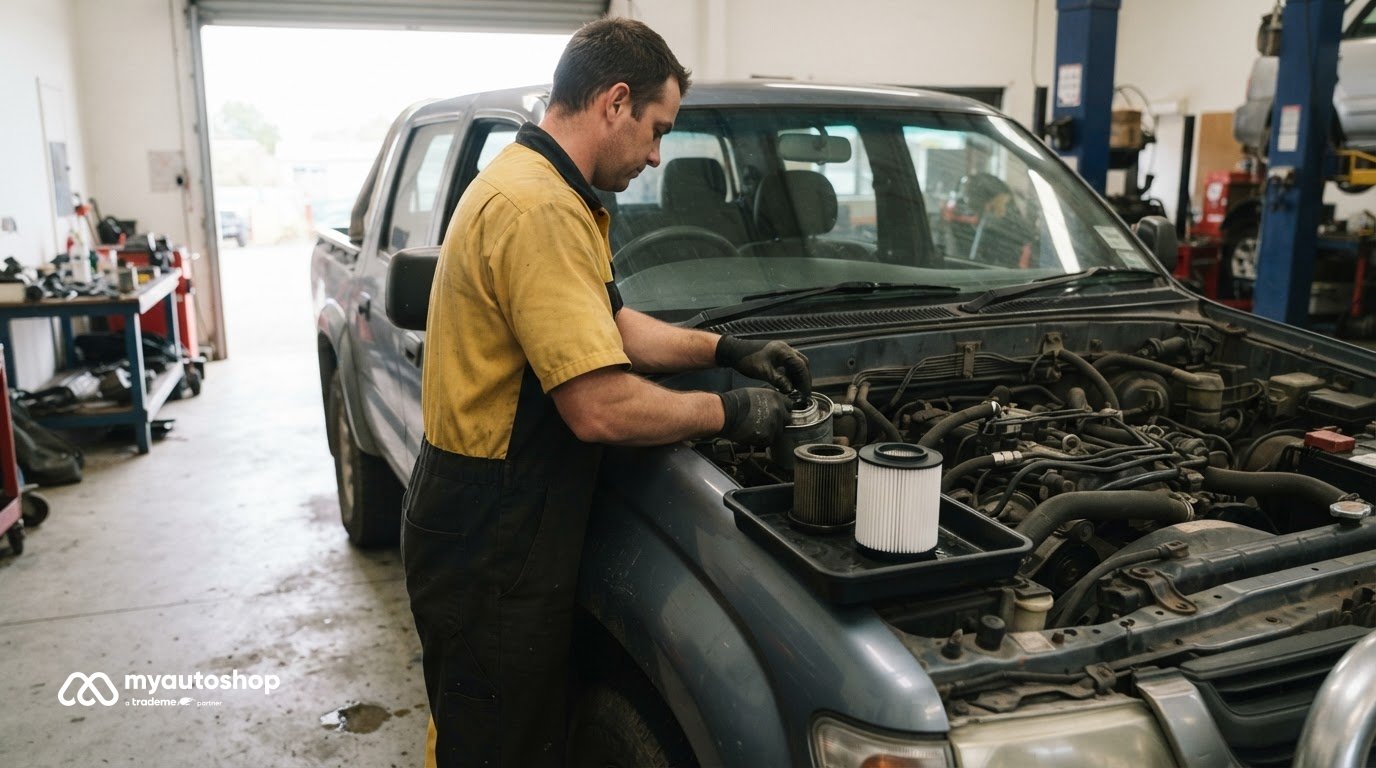
Could a diesel pass its WoF and still need important engine maintenance? Yes. A WoF checks roadworthiness, but it doesn’t assess things like engine oil or filter condition. For diesel car servicing NZ motorists can plan with confidence, start with the manufacturer’s schedule rather than a one-size-fits-all checklist.
The right checks and intervals depend on your vehicle, its age and how you drive. Short trips, towing and regular stop-start journeys are useful context to share when arranging maintenance, but they don’t replace the manufacturer’s guidance.
This guide explains what a routine diesel service may cover, why oil and fuel filtration matter, and which symptoms call for diagnosis. It also explains how servicing differs from a WoF and how to use your owner’s manual and service history to plan the next step.
Key Takeaways
- Diesel car servicing nz should follow your vehicle’s maintenance schedule, with work suited to its model and service history.
- Oil, filters and fuel-system checks help identify maintenance needs before symptoms become harder to ignore.
- A scheduled service, symptom-led diagnosis, repair and WoF have different purposes. Choose the appointment that matches your need.
- Gather service records and note when symptoms or dashboard warnings appear before arranging an appointment.
- My Auto Shop connects New Zealand motorists with automotive service and repair providers through its marketplace.
What does diesel car servicing in NZ involve?
Diesel servicing is planned maintenance carried out according to the vehicle manufacturer’s schedule. The work depends on the model, engine, service history and schedule, so there isn’t one checklist or interval that suits every diesel car, ute or SUV.
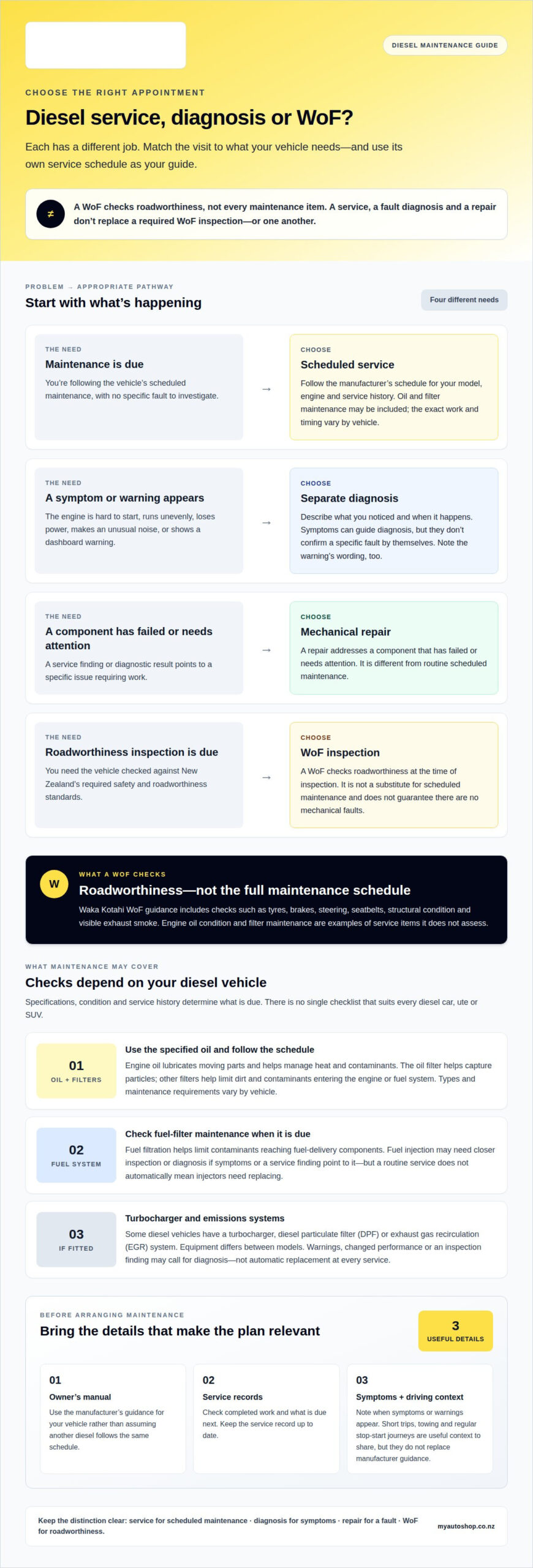
A scheduled service is preventive maintenance, not an automatic diagnosis. The work follows the relevant maintenance requirements and may identify visible concerns, but a warning light, unusual noise or loss of power may need separate diagnostic work. A repair is different again: it addresses a component that has failed or needs attention. For diesel car servicing nz, start with your owner’s manual and service records instead of assuming guidance for another vehicle applies to yours.
What can a routine diesel service include?
The exact service depends on the vehicle. Oil and filter maintenance is commonly part of scheduled servicing, but the correct oil specification and replacement timing should come from the manufacturer’s guidance. Diesel engines use compression ignition and fuel injection, as outlined in these diesel engine operating principles. That technical background doesn’t replace your vehicle’s service schedule.
A service may also include checks of relevant systems and visible wear. What gets inspected, adjusted or replaced depends on the scheduled work and what is observed. A routine service isn’t the same as investigating every possible fault, so describe any concerns when arranging an appointment. Keep the service record up to date and use it with the manufacturer’s schedule to track completed work and what is due next.
How is diesel servicing different from a WoF?
A service and a Warrant of Fitness (WoF) have different jobs. Servicing follows the maintenance schedule to care for the vehicle’s mechanical systems. A WoF inspection checks whether the vehicle meets New Zealand’s required safety and roadworthiness standards at the time of inspection. Waka Kotahi guidance includes checks such as tyres, brakes, steering, seatbelts, structural condition and visible exhaust smoke.
A WoF isn’t a substitute for scheduled maintenance. It doesn’t assess every item covered by a manufacturer’s service schedule, such as engine oil condition or filter maintenance, and it doesn’t guarantee that a vehicle has no mechanical faults. Likewise, a recent service doesn’t replace a required WoF inspection. If a symptom appears between appointments, note when it happens and any dashboard warning rather than waiting for the next service. The guide to common vehicle symptoms can help you describe what you’re noticing.
Keep the distinction clear: use the service schedule to plan maintenance, arrange diagnosis when something seems wrong, and book a WoF inspection to meet roadworthiness requirements. One appointment doesn’t replace the others.
Which diesel engine checks matter during servicing?
Diesel servicing isn’t a fixed list of parts to replace. The vehicle’s specifications and condition should guide which checks are due. A useful rule for diesel car servicing nz is: servicing checks should follow the vehicle’s specifications and condition. That keeps routine maintenance relevant to your car instead of relying on assumptions about all diesel engines.
Oil, filters, and the fuel system
Engine oil lubricates moving parts and helps manage heat and contaminants. Its required specification matters, so use the owner’s manual or manufacturer guidance rather than choosing oil based on a general rule. The oil filter helps capture particles in the oil; other filters help limit dirt and contaminants entering the engine or fuel system. Their type, inspection and replacement requirements vary by vehicle.
Fuel filtration matters because contaminants can affect the components that deliver fuel to the engine. A service may include checking whether fuel-filter maintenance is due under the vehicle’s schedule. Fuel injection, which meters and delivers fuel into the engine, may need closer inspection or diagnosis if there are symptoms or a service finding. A routine service doesn’t automatically mean injectors or other fuel-system parts need replacing.
Keep scheduled maintenance separate from fault-finding. If the engine is hard to start, runs unevenly or loses power, note what you’ve noticed and when it happens. Those details can help guide diagnosis, but they don’t confirm a particular fault by themselves.
Turbochargers and emissions-related systems
Some diesel vehicles have a turbocharger, which uses exhaust energy to help move more air into the engine. Some are also fitted with emissions-control systems such as a diesel particulate filter (DPF) or exhaust gas recirculation (EGR). Equipment differs between models, so don’t assume your vehicle has every system or needs the same checks as another diesel.
These components may need attention if a dashboard warning appears, performance changes or an inspection identifies an issue. Diagnosis should follow those symptoms or findings, rather than treating these systems as automatic replacement items at every service. If a warning comes on, note its wording and when it appears. Avoid guessing at the cause or attempting a repair without the right information.
A WoF is a separate roadworthiness inspection, not a check of every engine system. Waka Kotahi’s WoF requirements explain its inspection purpose. For maintenance, follow your vehicle’s schedule and service history, and make sure any recommended work relates to a specific requirement or finding.
For scheduled servicing or a mechanical repair, My Auto Shop connects motorists with automotive service and repair providers. The marketplace provides a route to a provider, while the work itself depends on the service arranged and your vehicle’s needs.
Diesel service, specialist repair, or WoF: which do you need?
Choose an appointment based on why you’re taking the vehicle in. Scheduled servicing follows the manufacturer’s maintenance plan. Diagnosis investigates a symptom, a repair addresses an identified fault, and a WoF checks roadworthiness. A WoF isn’t a substitute for regular maintenance, and passing one doesn’t establish that every engine component is in good condition.
| Appointment | A good fit when… |
|---|---|
| Scheduled service | Maintenance is due under the vehicle’s schedule, or you’re reviewing what’s due next. |
| Symptom-led diagnosis | A warning light, unusual noise, smoke or change in performance needs investigation. |
| Repair | A fault has been identified and a component needs adjustment, repair or replacement. |
| WoF inspection | You need the vehicle assessed against New Zealand roadworthiness requirements. |
When is scheduled servicing the right next step?
Check the handbook, service records and manufacturer schedule to see what maintenance is due. If the history is incomplete, don’t guess an interval or assume everything was done when the vehicle changed hands. Share the records you have and use them to plan maintenance. For diesel car servicing nz, the vehicle’s own service information is a better guide than a generic timetable.
When should a diesel warning sign be diagnosed?
Arrange an assessment if you notice a dashboard warning, unusual noise, visible smoke or a change in how the vehicle starts or drives. These are reasons to investigate, not proof of a particular fault. Record when the symptom occurs and whether it changes. If it affects safe or reliable operation, seek professional assessment promptly. A diesel symptoms guide can help you describe what you’ve noticed.
Fuel-system concerns also call for evidence-led checks. Filters help limit contamination reaching the engine’s fuel-delivery components, but the correct maintenance depends on the vehicle. The U.S. Energy Information Administration explains general diesel fuel specifications; use your vehicle manufacturer’s guidance for the requirements that apply to your car in New Zealand.
Preventive servicing follows the maintenance schedule; fault-led work starts with a symptom or inspection finding. If the vehicle is due for routine maintenance, arrange a service. If something has changed, describe the symptoms when arranging diagnosis. Keep a WoF appointment separate from both: it addresses roadworthiness, not the full maintenance history or every mechanical concern.
How to prepare for a diesel car service in New Zealand
A little preparation makes it easier to discuss the work your vehicle needs. Service records, a clear description of symptoms and an accurate picture of how you use the vehicle give useful context. You don’t need to identify the fault yourself. Focus on what you’ve noticed and when.
What information should you have ready?
Before booking, gather the handbook, service history and details of recent repairs if you have them. Note any warning lights, unusual sounds, smoke or changes in starting, performance or fuel use. Write down when they happen, such as on a cold start, during acceleration or after a longer drive. These observations are more useful than guessing at a cause.
Use this short sequence to get ready:
- Gather records. Find the handbook, service entries and invoices or notes from recent repairs. If the history is incomplete, say so rather than assuming particular maintenance has been done.
- Record symptoms. Note what you see or hear, when it occurs and whether it happens consistently. Photograph a dashboard warning if that helps you describe it accurately.
- Describe vehicle use. Mention frequent short trips, regular longer drives, stop-start traffic, hills, carrying loads or towing if these apply. Include changes in use since the last service.
- Choose the right appointment. Explain whether you’re following scheduled maintenance or arranging an assessment because something has changed. Share your notes when booking.
How should New Zealand driving conditions inform maintenance?
Driving patterns differ from one owner to another. A diesel used mainly for short local trips has a different routine from one that regularly travels longer distances or carries loads. Weather and road conditions can also provide useful context: mention cold starts, steep routes or frequent gravel-road driving if they describe your use. These details help frame the maintenance discussion, but they don’t replace the manufacturer’s schedule or establish a different interval by themselves.
For broader background on planning routine vehicle maintenance, the car service guide can help explain the general service process. For diesel car servicing nz, bring your vehicle’s handbook and records into that discussion. The appropriate checks depend on its model, history and schedule.
Keep the service appointment separate from any required WoF inspection. A WoF is a roadworthiness check, not a substitute for scheduled engine maintenance. If you’re unsure which appointment fits, describe the vehicle’s maintenance history and any symptoms when booking instead of trying to diagnose the issue first.
To arrange maintenance, find a vehicle service through My Auto Shop, which connects motorists with automotive service and repair providers.
Arrange diesel car servicing through the right New Zealand service pathway
Once you know whether your vehicle needs scheduled maintenance, diagnosis or a repair, choose a service pathway that suits the work and your routine. My Auto Shop is a New Zealand automotive services platform that connects motorists with service and repair providers. It’s a marketplace, so mechanics connected through it are not necessarily employed by My Auto Shop.
What to expect when using a mechanic marketplace
A marketplace connects motorists with providers offering automotive services and repairs. The provider carries out the work, while My Auto Shop provides the connection. When arranging a diesel service, describe your vehicle, its maintenance history and the work you need so the request includes useful context.
A marketplace connection doesn’t guarantee a particular outcome or mean every provider has the same experience with every diesel system. Keep the request specific to the service or repair you need. Share relevant records and symptoms, and use the vehicle manufacturer’s schedule to describe what maintenance is due. This keeps the conversation focused on your car rather than assumptions about all diesel vehicles.
If you’re comparing routine maintenance options, explore car servicing options and consider which service fits your vehicle’s schedule and history. A clear diesel car servicing NZ request should state whether you’re arranging planned maintenance or bringing the car in because something has changed.
When mobile servicing may suit your routine
Mobile servicing can be convenient if fitting a vehicle drop-off into your day is difficult. Turners Service & Repairs provides mobile vehicle servicing and mechanical repairs in selected New Zealand regions. Its technicians travel to the customer’s home, workplace or another suitable location, making this a practical option for routine servicing or suitable repairs in the regions it serves.
Consider the type of work needed. A mobile appointment may suit planned servicing or a repair, while a symptom that needs further investigation calls for diagnostic attention. Describe the concern when arranging the work so the appointment matches the vehicle’s needs. Turners Service & Repairs is a distinct provider, separate from the independent service and repair providers connected through the My Auto Shop marketplace.
Whichever pathway you choose, have service records and notes about the vehicle’s use ready. They give the provider a clearer starting point and help keep maintenance decisions tied to the car’s actual needs. Choose the next step that matches the evidence: scheduled servicing for planned maintenance, diagnosis for a new concern, and repair when a fault has been identified.
Make your next maintenance decision with confidence
Turn your next maintenance decision into a simple plan. Whether you’re arranging diesel car servicing nz for routine care or responding to a change in how the vehicle feels, a clear appointment helps you discuss the issue and understand the next step.
You don’t need to know the mechanical cause before taking action. Start with the concern that matters most, then choose a service option that fits. Record what has been done and what is due next to make future maintenance easier to plan.
Explore car servicing options and arrange the next step for your vehicle.
Frequently Asked Questions
How often should a diesel car be serviced in New Zealand?
Check whether your vehicle’s schedule is based on kilometres, elapsed time, or whichever comes first. A car that travels relatively few kilometres can still reach a time-based service point. If the dashboard service reminder doesn’t match your paperwork, check the handbook for how the reminder works before resetting it. Don’t use low annual mileage alone as a reason to postpone maintenance.
Does a diesel car need a different service from a petrol car?
Some general maintenance is similar, but diesel and petrol engines can have different service requirements. Give the mechanic the vehicle’s make, model, year and engine details when arranging an appointment. Similar-looking versions of a model may have different engines, so these details help avoid relying on a schedule for the wrong variant. Use the diesel vehicle’s own handbook, not a petrol version’s service information.
Does a WoF include a full diesel engine service?
No. Keep the next WoF date and the next maintenance due date as separate reminders. Check the WoF label or your vehicle records for the inspection date, and use the manufacturer’s schedule for servicing. If you’re unsure which date applies or what inspection is due, consult current Waka Kotahi information. A WoF appointment shouldn’t be used to reset or replace your vehicle’s maintenance plan.
What is checked during a diesel car service?
Check the service record for what was completed and what, if anything, is recommended for later. This makes it easier to distinguish work carried out during the appointment from an observation that may need attention. Keep the record with your vehicle documents and note the odometer reading. At your next appointment, it provides a useful reference without relying on memory.
Can short trips affect a diesel car’s maintenance needs?
They can be relevant, particularly if most journeys begin with a cold engine and end before the vehicle has been driven for long. Describe your usual week of driving, not only an occasional longer trip. If your handbook gives instructions for a dashboard prompt related to emissions equipment, follow those instructions for your vehicle instead of improvising a fix.
What should I do if my diesel car shows a warning light?
Check the handbook for the meaning of the symbol and any immediate instructions for your model. Avoid clearing fault codes or disconnecting the battery before an assessment, as stored information may help with diagnosis. If the light comes with a change in how the vehicle runs, include that detail when arranging help. Don’t assume a warning has resolved just because it disappears temporarily.
Can I book mobile servicing for a diesel car anywhere in New Zealand?
No. Turners Service & Repairs provides mobile servicing and repairs in selected New Zealand regions. For an on-site appointment, consider where the vehicle will be parked and whether the mechanic can access it safely. Have the keys and relevant vehicle information ready. That preparation can make an appointment at home or work easier to organise.
Disclaimer
This article provides general information only and should not be relied on as professional mechanical, safety or legal advice. Vehicle requirements and circumstances vary. If you are unsure about your vehicle, have it inspected by a qualified automotive professional.