
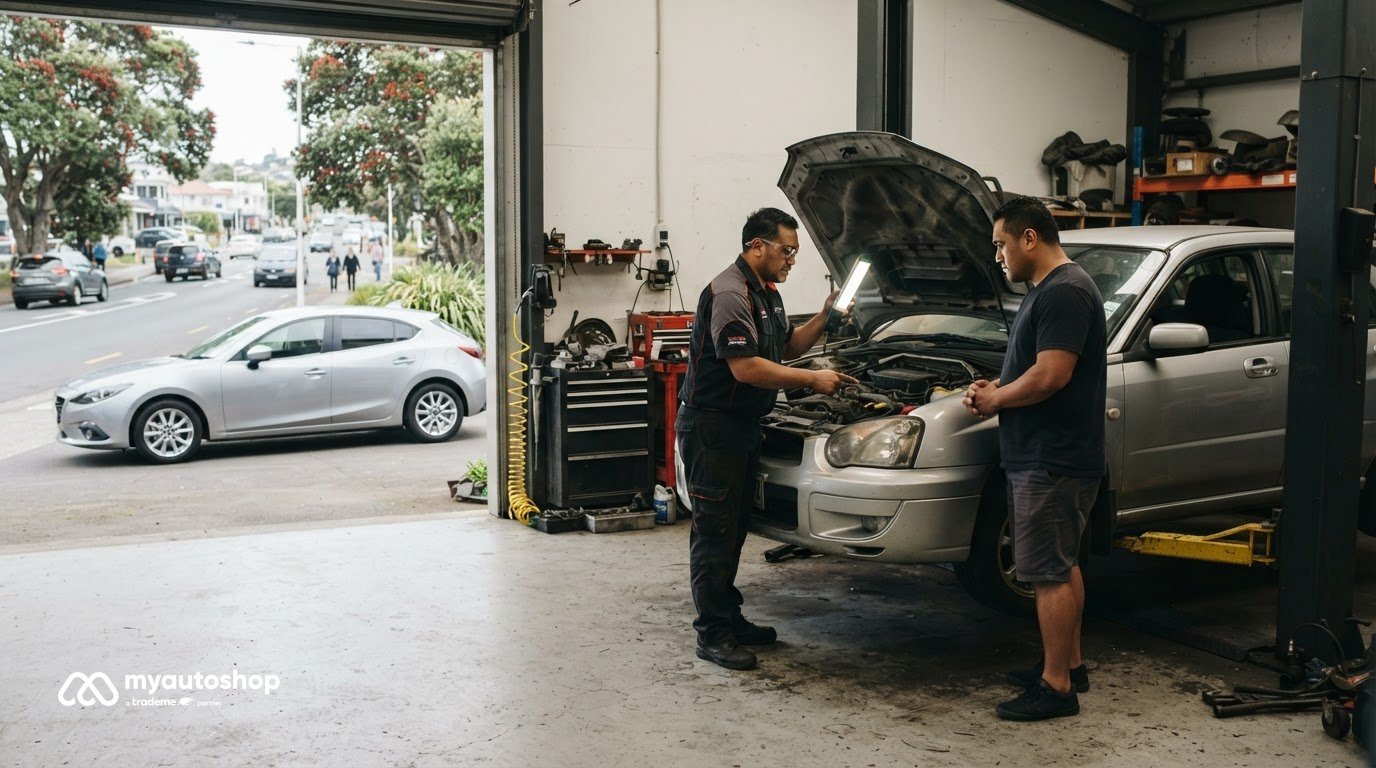
A big repair bill doesn’t automatically mean it’s time to replace your car. To decide whether to keep your old car, compare its likely repair and maintenance costs with the total cost of replacing it, including finance payments. A useful warning sign is a single repair costing more than 50% of the car’s current market value.
It’s understandable to favour a familiar car that’s already paid off, especially when replacing it brings new costs. But age and mileage alone don’t show whether it’s still a sound choice. This guide explains how to weigh repair estimates against your car’s value, condition, safety and likely future maintenance.
You’ll also see how rust, WoF concerns and high mileage can affect the decision, and how keeping your car compares with financing a replacement. The aim is to help you estimate what your car may cost next, so you can make a practical choice based on evidence rather than guesswork.
Key Takeaways
- Compare the likely cost of repairs and future maintenance with the full cost of replacing your car, including finance payments.
- Judge mileage alongside servicing history and the vehicle’s condition; a high odometer reading alone doesn’t settle the decision.
- Take structural rust and safety concerns seriously, as they can change whether further repairs make sense.
- Use the car’s current market value to put a major repair bill in context, then weigh that against what you could sell it for.
- Estimate resale value by comparing similar vehicles and adjusting for your car’s condition, features and maintenance history.
Comparing repair costs with replacement finance payments
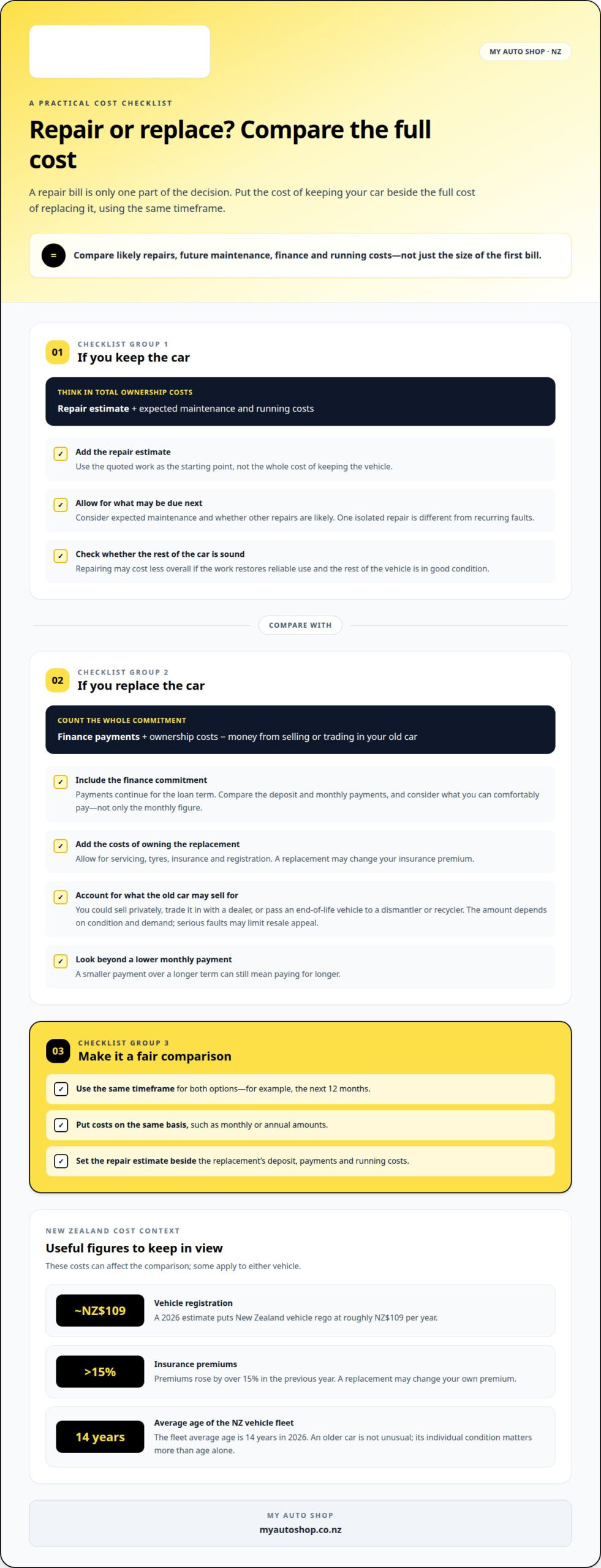
A repair bill can look large as a lump sum, while finance spreads replacement costs across monthly payments. Compare both options over the same period, then include the costs that come with keeping or replacing a vehicle.
In New Zealand, you can sell an old car privately, trade it in with a dealer, or pass an end-of-life vehicle to a dismantler or recycler. What you receive depends on the car’s condition and demand. A vehicle with serious faults may have limited resale appeal.
That comparison is only a starting point. Finance payments continue for the loan term, and a replacement still needs servicing, tyres, insurance and registration. Put each option’s expected costs on a monthly or annual basis before deciding.
- Keeping the car: add the repair estimate to expected maintenance and running costs.
- Replacing it: add finance payments and ownership costs, then account for money from selling or trading in the old car.
- Comparing fairly: use the same timeframe for both options, such as the next 12 months.
That doesn’t mean repairing is automatically better. If the repair restores reliable use and the rest of the vehicle is sound, keeping it may cost less overall. If more repairs are likely, the first bill may understate the cost of keeping it.
Include costs that can be easy to overlook. A 2026 estimate puts New Zealand vehicle rego at roughly NZ$109 per year, and insurance premiums rose by over 15% in the previous year. Those costs can apply to either vehicle, but a replacement may change your insurance premium. The New Zealand vehicle fleet’s average age is 14 years in 2026, so an older car isn’t unusual; its individual condition still matters more than age alone.
Finally, compare the finance commitment with what you can comfortably pay, rather than judging by the monthly figure alone. A smaller payment over a longer term can still mean paying for longer. Set the repair estimate beside the replacement’s deposit, monthly payments and running costs. That gives you a clearer basis for deciding whether to repair, sell, trade in or recycle your car.
High-mileage vehicle reliability
The odometer shows how much a car has been driven, but not its full condition. Consider its service history, how it runs and the repairs it needs alongside the kilometres travelled.
Reliability as Mileage Increases
High mileage means more distance travelled, not a fixed point when a car becomes unreliable. Some Japanese imports in New Zealand can reliably reach 350,000 km with consistent servicing. That example shows why maintenance history and mechanical condition matter alongside the odometer reading.
Check service records for regular oil changes and completed scheduled maintenance. Clear records can show how a car has been cared for more reliably than an odometer reading alone. Also consider how it behaves on the road: changes in engine noise, handling, braking or temperature can signal issues that need investigating.
Ask which components have been repaired and what work may be due next. A replaced part can reduce an immediate concern, while neglected maintenance may leave several issues to address. The pattern matters: one isolated repair differs from recurring faults that affect different systems. Note the symptoms and when they occur, then use them to guide a mechanical assessment. A guide to common car symptoms can help you describe what you’ve noticed.
WOF Costs and Repair Risks
A WoF inspection assesses whether a vehicle meets required safety standards at the time of inspection. Older cars may need repairs before passing, and repeated faults can make the cost and inconvenience of keeping the car on the road harder to predict.
The risk of breakdowns and expensive repairs rises when worn or poorly maintained components fail, sometimes leaving the car unusable. Consider both the immediate repair and whether other problems may follow. A current WoF alone doesn’t predict future reliability.
WoF inspection intervals also affect how often an older car needs checking. Vehicles first registered in New Zealand before 1 January 2000 have a six-month WoF inspection cycle. Newer New Zealand vehicles can have a 12-month WoF inspection cycle. More frequent inspections mean more regular opportunities to identify issues, but they don’t remove the need for ongoing maintenance.
Use inspection results as information, not a complete forecast. Separate safety-related work from maintenance that can be planned, and note repeat advisories or repairs. Then consider how each issue affects reliability, your usual journeys and the vehicle’s overall condition. A car used for long trips or daily commuting may leave less room for unexpected downtime than one used occasionally.
Before deciding, compare the repair history, servicing records and current symptoms. High kilometres can be manageable when maintenance has been consistent; a lower reading doesn’t make up for neglected servicing or recurring faults.
Structural rust and safety concerns
Rust can be cosmetic or structural, and that difference matters when deciding whether an older car is safe to keep. Check where corrosion appears, how deeply it has affected the metal, and whether repairs would address the underlying damage.
Surface rust on a removable panel may affect appearance without compromising the vehicle’s structure. Corrosion around the sills, floor, chassis rails or suspension mounting points needs closer attention because these areas support the vehicle or its components. Don’t rely on a quick look at the paint: rust can develop underneath, where it’s harder to see. A proper inspection can identify its extent and whether the affected metal needs repair.
Rust repairs can involve more than treating visible discolouration. If corrosion has weakened a structural area, repairs may require cutting out damaged metal and welding in replacement material. Treat this as an example, not a complete estimate: the affected area, extent of corrosion and work required all influence the repair.
Compare the repair assessment with the car’s overall condition. A small, contained repair on an otherwise sound vehicle is different from widespread corrosion alongside other faults. Ask what metal is affected, whether the repair restores the area’s strength, and whether nearby corrosion also needs attention. Those details help show whether the quoted work addresses the cause or only the visible damage.
Safety equipment also deserves attention as a vehicle ages. Most manufacturers recommend inspecting or replacing airbags after 15 years. Check the vehicle’s age and maintenance information against its manufacturer guidance, especially if you don’t know whether the airbags have been inspected. An airbag warning light or evidence of previous collision repairs also warrants investigation rather than guesswork.
In New Zealand, treat the WoF inspection as one part of your assessment, not a forecast of future condition. It provides information about the vehicle at that point, but doesn’t tell you how much corrosion may spread or what other maintenance lies ahead. Note rust-related findings and distinguish structural concerns from cosmetic blemishes.
Before deciding to keep the car, weigh the rust repair against its value, other known faults and safety condition. If structural corrosion is extensive, or repairs would leave other weakened areas untouched, the car may no longer be a sensible choice. If the damage is localised and repairable, a clear assessment can help you judge the cost and decide with better information.
Total cost of ownership and future maintenance
To decide whether you should keep your old car, compare its expected costs, not one repair bill alone. Include maintenance, fuel, insurance and the work needed to keep it safe and usable. Compare those costs with the car’s current market value and likely resale proceeds. A practical warning sign is a repair costing more than 50% of the vehicle’s current market value.
Two New Zealand examples show how that rule can guide a decision. Neither comparison settles the matter on its own; the car’s condition and likely future work still count.
Another guide is to consider selling if a repair costs more than 70% of what the car would sell for on Trade Me. Treat that as a prompt to compare options, not an automatic instruction. Market value and sale proceeds can differ, especially if faults affect buyer interest. Estimate the likely sale value in its current condition, then consider whether spending on repairs would meaningfully improve the car’s usefulness or appeal.
Future maintenance can change the calculation. For example, a cambelt replacement may be due around 100,000 km, but the correct interval depends on the vehicle. Check the service history and manufacturer schedule for your model. A car nearing scheduled work may have predictable costs, while missing records make upcoming maintenance harder to plan. Add known work to the ownership budget rather than treating each job as a surprise.
Fuel efficiency and annual mileage affect running costs together: a less efficient car uses more fuel over the same distance, while driving more kilometres increases total fuel use and wear-related maintenance. Estimate your yearly distance from your own trips, then compare vehicles using their fuel consumption information and your typical driving.
- List recurring costs: include fuel, insurance, registration and planned servicing.
- Record upcoming work: use service records and the schedule for your exact model.
- Compare sale value: assess what the car may fetch in its current condition against repair spending.
Use the same ownership period for each option. For instance, compare the old car’s expected maintenance and running costs over the coming year with the costs of replacing it. Include the old car’s likely resale value, not just its repair estimate. This fuller calculation shows whether keeping the car remains financially sensible or its future costs are beginning to outweigh its usefulness.
What is my old car worth in New Zealand, and how can I estimate its resale value?
Your car’s resale value depends on what buyers will pay for a similar vehicle, adjusted for its condition and history. Start with comparable listings on Trade Me and compare the details carefully. An asking price doesn’t prove a sale was completed, so use several close matches rather than relying on one advertised figure.
Match the make, model, year, engine and variant as closely as possible. Compare vehicles with similar kilometres, transmission, fuel type and equipment. A higher-spec version may attract a different price from a basic model, even with the same registration year. Also consider how many similar cars are listed locally and whether their asking prices vary widely.
Next, adjust your estimate for your car’s actual condition. A tidy interior, working features and consistent servicing records can make it more appealing. Scratches, worn tyres, warning lights, missing service history or mechanical faults may reduce what a buyer is willing to pay. Be honest about defects: an estimate for a car in excellent condition won’t reflect one that needs work.
- Collect comparable listings: use Trade Me vehicles with closely matching specifications and kilometres.
- Compare condition: note differences in bodywork, interior, servicing, tyres and known faults.
- Estimate likely proceeds: allow for repairs or negotiation that may affect the final sale.
Distinguish the asking price from the amount you might receive. A private buyer may negotiate after viewing the car, while a trade-in offer forms part of a dealer’s replacement transaction. If the car has a fault, estimate its value in its current state and after repairs. Compare the difference with the repair estimate rather than assuming every repair adds the same amount to resale value.
For example, if comparable Trade Me listings vary substantially, check whether condition, kilometres or equipment explain the difference. Use the closest matches to set a realistic range, then position your car within it according to its specific strengths and faults. Don’t treat an online estimate as a guaranteed sale price.
Finally, use the estimate to support your keep-or-replace decision. Compare likely sale proceeds with the costs of repairing and maintaining the car, and consider whether a trade-in changes the amount you need to fund. A realistic value is a clearer starting point than the amount you originally paid or hope to receive.
My Auto Shop: Pre-purchase Inspection
My Auto Shop offers a Pre-purchase Inspection to help you assess a used car before buying it as a replacement. An independent assessment of the vehicle’s condition can add useful information to your comparison, especially if its service history is incomplete or you’ve noticed signs of wear.
If you’re keeping your current car, a Basic Service or Comprehensive Service can help you understand its maintenance needs. Use that information alongside repair estimates and resale value to compare your options more clearly.
Considering a used replacement? Book a Pre-purchase Inspection with My Auto Shop before making your decision.
Make your next move with confidence
Deciding whether to keep your old car becomes easier when you turn your assessment into a clear next step. If you’re leaning towards keeping it, arrange maintenance that helps you understand its condition and plan ahead. If you’re considering a replacement, assess the specific vehicle before committing, so your decision is based on more than appearance or a seller’s description.
Write down what matters most in your next car: dependable daily travel, room for family, lower running costs or fewer repair concerns. Use that list to compare real options, and take time to weigh the evidence before making a major financial commitment. A considered decision can help you feel comfortable with either choice.
For practical support with a used replacement, book a Pre-purchase Inspection with My Auto Shop. Take the decision one clear step at a time, and choose the option that best fits your needs.
Frequently Asked Questions
How much does it cost per year to maintain an old car in New Zealand?
There’s no single annual maintenance figure that applies to every older car. Build your estimate from service invoices, WoF inspection findings and the manufacturer’s maintenance schedule. Separate predictable servicing from occasional repairs, then total the records to understand past spending. Treat that total as a guide, not a guarantee of next year’s costs, and leave room in your budget for unexpected work.
What are common signs an old car is no longer safe or reliable?
Repeated warning lights, unexplained fluid leaks, worsening tyre wear or recurring starting problems deserve attention. Note whether symptoms are becoming more frequent or separate faults are appearing close together. A car that stalls or behaves differently during ordinary trips can also disrupt daily travel. Record when each issue occurs and whether it returns after a repair; that pattern can help distinguish an isolated fault from ongoing reliability concerns.
How do I compare repair costs with the cost of replacing my car?
Compare the total cost of each option over the same ownership period, rather than weighing one repair against a single finance payment. For the current car, include identified work and likely maintenance. For a replacement, include the amount you need to borrow, ongoing ownership costs and the value you could recover by selling your car. Then compare each total with the practical benefit each vehicle provides.
Should I keep an old car if I have a car loan or can afford a newer vehicle?
Base the decision on your remaining loan balance and the car’s current value, not only on what you’ve already paid. If you still owe money, include that obligation when calculating the cost of changing vehicles. Being able to afford a newer car doesn’t automatically make it the better choice. Compare the replacement’s full borrowing commitment with the cost of keeping a usable car, and consider whether a newer vehicle meets a genuine need.
How do insurance, registration and depreciation costs compare for an old car and a replacement?
Compare actual ownership costs for each vehicle instead of assuming the older car is automatically cheaper. Check the insurance renewal amounts and registration expense for both, then estimate depreciation by comparing each vehicle’s value now with its likely resale value later. A replacement may lose value differently from your current car. Include that change in your comparison, because depreciation affects what you may recover when you eventually sell.
Disclaimer
This article provides general information only and should not be relied on as professional mechanical, safety or legal advice. Vehicle requirements and circumstances vary. If you are unsure about your vehicle, have it inspected by a qualified automotive professional.