
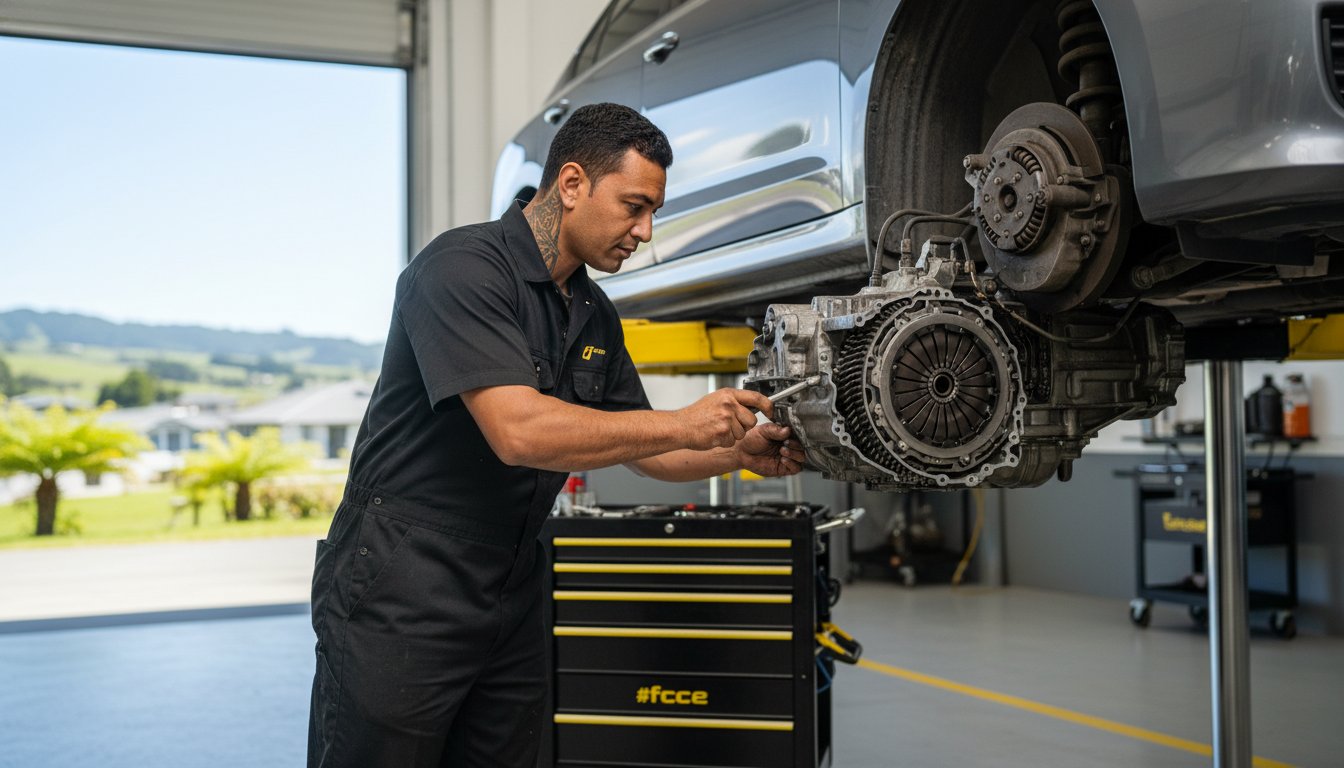
The time your car spends on a workshop hoist has more to do with its internal engineering than the speed of a mechanic’s wrench. If you’re stuck wondering how long to replace a car clutch, you’re likely balancing a busy Kiwi lifestyle against the logistical stress of being without your wheels. It’s a common frustration. No one likes the feeling of being overcharged for labour hours they don’t understand or being stranded without a ride for days on end.
We’re here to strip away that uncertainty and provide a clear, realistic timeline for your repair in 2026. You’ll learn why a front wheel drive vehicle is often more time-consuming than other layouts and how modern electronic components add complexity to the job. We’ll break down why most replacements take between 3 and 7 hours, giving you the facts you need to plan your week with total confidence. This guide ensures you move from a mechanical problem to a scheduled solution without the guesswork or the jargon.
Key Takeaways
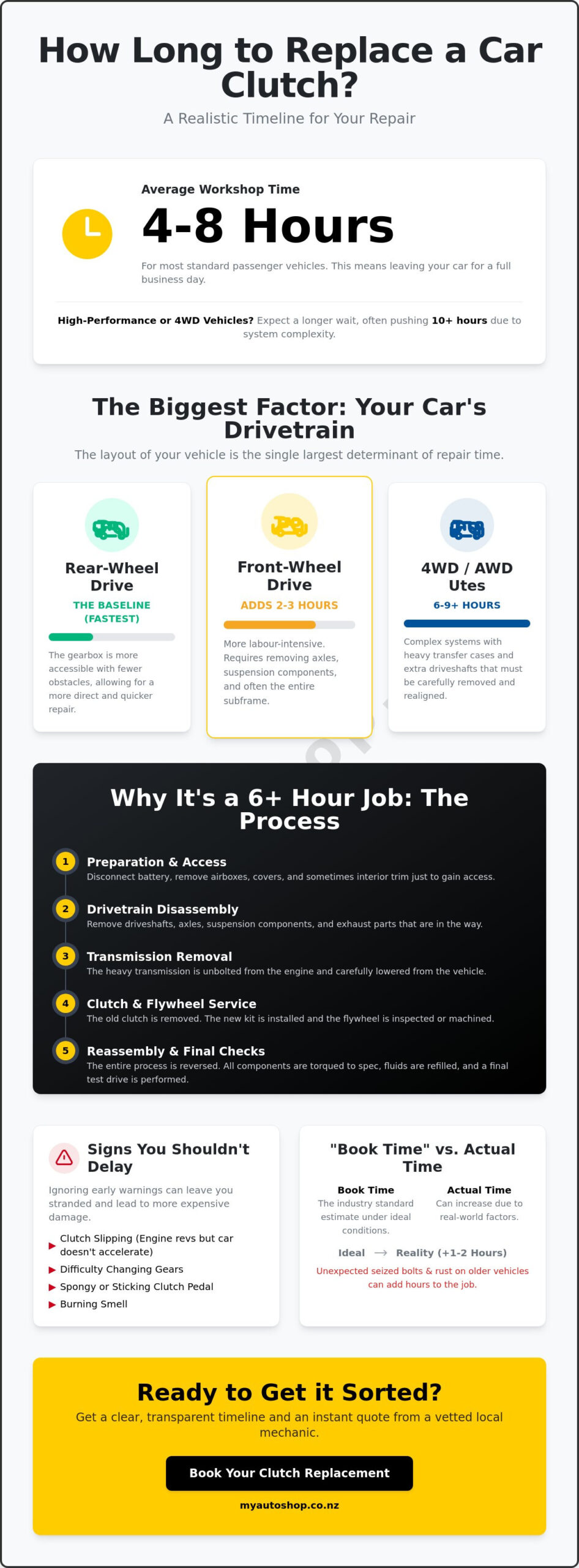
- Expect a professional clutch replacement to take between 4 and 8 hours for most passenger vehicles, depending on the specific make and model.
- Understand how long to replace a car clutch by evaluating your drivetrain; front-wheel drive and modern AWD systems typically require more labour than simpler rear-wheel drive setups.
- Learn why the process involves extensive disassembly, including removing airboxes and interior trim, which accounts for the majority of the workshop time.
- Identify early warning signs like clutch slipping to prevent being stranded on a busy New Zealand highway or facing more expensive engine damage.
- Get a clear, transparent timeline and an instant quote for your clutch replacement by using My Auto Shop to connect with vetted local mechanics.
The Short Answer: Average Time for a Clutch Replacement
If you’re asking how long to replace a car clutch, you’re likely trying to figure out if you need a rental car or just a ride home from the workshop. For most standard passenger vehicles in New Zealand, the professional estimate sits between 4 and 8 hours. This range covers the time a mechanic spends actively working on the vehicle, from the first bolt removed to the final torque check. Before diving into the schedule, it helps to understand What is a car clutch? and how its mechanical role dictates the complexity of the repair.
While 4 to 8 hours is the benchmark, the reality of “same-day service” usually means leaving your car at the shop for the full business day. Mechanics often juggle multiple jobs and need to account for parts arriving from local suppliers. If you own a high-performance vehicle or a modern 4WD, be prepared for a longer wait. These complex systems can easily push the labour time toward 10 hours or more due to the sheer number of components that must be cleared out of the way first. It’s about doing the job right, not just doing it fast.
What is “Book Time” vs. Actual Time?
When you receive a quote, the mechanic uses an industry labour guide to determine the “book time.” This is a standardized estimate of how long a specific task should take under ideal conditions. However, the actual time the car spends in the bay can vary. In New Zealand, we often deal with older vehicles or cars exposed to salt air. Seized bolts and stubborn rust can quickly add an hour or two to a job that looked simple on paper. A transparent workshop will always include time for a thorough post-repair test drive. This ensures the clutch replacement is functioning perfectly before you get back behind the wheel.
Can it be done in under 3 hours?
It’s rare, but some older rear-wheel-drive vehicles with plenty of engine bay space can be finished faster. However, you should be wary of any “express” promises. Rushing a clutch job is a recipe for disaster. If the flywheel isn’t inspected properly or the release bearing is installed in haste, you’ll be back in the shop within months. Precision matters far more than speed in transmission work. A correctly installed clutch provides years of reliable gear changes; a rushed job often leads to premature failure and double the labour costs in the long run.
Key Factors That Determine How Long Your Mechanic Needs
Understanding how long to replace a car clutch requires looking beyond the mechanic’s skill and into the actual architecture of your vehicle. Not all cars are built the same; some allow for easy access, while others require a significant amount of “surgery” just to reach the transmission. The layout of your drivetrain is the single biggest factor in determining whether your car is back on the road by lunchtime or stuck in the bay until tomorrow afternoon.
While the mechanical components follow the basics of clutch operation across most brands, the physical space available to work in varies wildly. A compact car with a cramped engine bay often forces a mechanic to work in tight quarters, which slows down every step of the process. Conversely, a large SUV might have more room, but the sheer weight and size of its components require extra equipment and hands to manage safely.
FWD vs. RWD: The Labour Gap
Front-wheel drive (FWD) vehicles are common on New Zealand roads, but they are notoriously labour-intensive for clutch repairs. To get to the clutch, a mechanic must often remove the front axles, disconnect the suspension, and sometimes drop the entire subframe. This adds a solid 2 to 3 hours of labour compared to a rear-wheel drive (RWD) setup. In a RWD car, the gearbox usually sits directly behind the engine with fewer obstacles in the way, making it much more accessible. Simply put, RWD cars offer a straight path to the repair, while FWD cars require a detour through the car’s steering and suspension systems.
The 4WD Factor: Utes and Off-roaders
If you drive one of NZ’s top-selling manual utes, like a Toyota Hilux or a Ford Ranger, your timeline looks a bit different. These 4WD vehicles include transfer cases and additional driveshafts that must be carefully removed and set aside. Because these parts are heavy and complex, these jobs typically fall into the 6 to 9 hour bracket. Mechanics must also ensure that the four-wheel-drive system is perfectly realigned during reassembly to avoid future vibrations or drivetrain wear.
Finally, don’t forget the “while you’re in there” tasks. Most professionals recommend machining the flywheel when replacing a clutch to ensure a smooth mating surface. If a workshop doesn’t have an on-site lathe, they may need to send the flywheel to a specialist, which can add a few hours to the total turnaround time. If you want to see how these factors impact your specific vehicle, you can get a transparent quote that accounts for your car’s unique layout and requirements.
The Step-by-Step Process: Why It Takes 6+ Hours
Replacing a clutch isn’t a simple “unbolt and swap” job. It’s a systematic teardown that requires patience and precision. When you look at how long to replace a car clutch, you have to account for the hours spent just reaching the parts that actually need replacing. A professional mechanic follows a strict sequence to ensure your car remains safe and the new components don’t fail prematurely. Each stage of the process adds to the clock, but skipping any of them is a shortcut no Kiwi driver should want.
The work begins with gaining access. This often involves removing the battery, the airbox, and several layers of interior trim or gear stick surrounds. Once the path is clear, the mechanic must support the engine from above using a specialized brace. Only then can they disconnect the transmission from the engine block. This is heavy, delicate work. After the gearbox is lowered, the old clutch, pressure plate, and throw-out bearing are removed. The technician then cleans the housing and inspects every surrounding component for leaks or wear before the new kit is even unboxed.
The Critical Flywheel Inspection
The flywheel is the foundation of your clutch system. If it’s glazed or heat-damaged, your new clutch will “chatter” or vibrate from the moment you leave the shop. Resurfacing the flywheel is the standard solution, but it’s a major time factor. If the workshop doesn’t have an on-site lathe, they must send the flywheel to a specialist. This can add 2 to 4 hours of wait time to your repair. For many modern cars, you might face a Dual Mass Flywheel (DMF) replacement instead. While a new DMF is more expensive, it’s often faster than machining, as it’s a direct swap that gets the car back on the hoist sooner.
Bleeding the Hydraulic System
Modern clutches rely on hydraulic fluid to operate. Once the new parts are in and the gearbox is bolted back up, the system must be bled to remove every trace of air. This is a delicate process. If your car uses a concentric slave cylinder, which sits inside the gearbox housing, the setup takes even more care to get right. A “soft pedal” means the job isn’t finished yet. The mechanic will pump the pedal and bleed the lines until the pressure is perfect. Finally, a comprehensive road test ensures the bite point is correct and the gears shift smoothly under real-world NZ driving conditions.
Signs You Should Not Delay Your Clutch Replacement
While you’re calculating how long to replace a car clutch, don’t let the fear of a day in the shop keep you on the road with a failing system. Ignoring the early warning signs doesn’t just put your safety at risk; it actively makes the eventual repair more complex and expensive. A clutch that is already slipping generates immense friction and heat. This heat doesn’t stay contained. It travels directly into the flywheel and the surrounding transmission seals, turning a standard component swap into a major mechanical overhaul.
Delaying the repair often extends how long to replace a car clutch because it allows heat to warp the flywheel beyond the point of simple machining. If you’re lucky, a mechanic can resurface the flywheel to save it. If you wait until the car is barely moving, you’ll likely need a complete flywheel replacement, which adds more time for parts sourcing and assembly. For a detailed look at the symptoms, check out our guide on Clutch Slipping? Signs You Need a Clutch Replacement.
Early Warning Signs to Watch For
Your car will usually tell you it’s struggling long before it leaves you stranded. Pay close attention to how the pedal feels and how the car reacts under load. Look out for these specific red flags:
- A High Biting Point: If the clutch only engages when the pedal is nearly all the way out, the friction material is likely worn thin.
- The “Burning Toast” Smell: This distinct, acrid odour is the smell of your clutch plate overheating due to excessive slipping.
- Difficulty Shifting: If you find yourself fighting to get the car into first gear or reverse, the clutch isn’t fully disengaging.
- Noises and Vibrations: Listen for chirping, growling, or squealing sounds when you depress the pedal; these often point to a failing release bearing.
The Risk of Total Failure
Total clutch failure is rarely convenient. It often happens when the system is under the most stress, such as accelerating onto a busy New Zealand state highway or climbing a steep hill. In extreme cases, the friction material can actually “weld” itself to the flywheel, or the clutch cable can snap entirely. Once this happens, you lose the ability to shift gears or deliver power to the wheels, leaving you stuck in a dangerous spot.
A towed car is always more difficult to service. Logistically, it’s harder for a workshop to fit a non-running vehicle into a busy schedule, and you’ll face the added cost of the tow truck itself. Catching the problem early is the best way to ensure a fast turnaround. If you notice any of these signs, book your clutch replacement now to keep your repair timeline predictable and your costs under control.
Booking Your Clutch Replacement with My Auto Shop
The traditional way of getting a car repair often feels like a guessing game. You spend hours on the phone, wait for callbacks, and still end up with a vague “ballpark” figure. We’ve changed that. When you need to know how long to replace a car clutch and exactly what it will cost, our platform provides instant, transparent quotes based on your vehicle’s registration. It’s the modern way to handle maintenance, designed for busy Kiwis who value their time as much as their safety.
Our national network consists of vetted New Zealand mechanics who understand the local landscape. Whether you’re in Auckland or Invercargill, we connect you with professionals who are highly competent and reliable. For smaller, clutch-related repairs like hydraulic checks or component inspections, we even offer Mobile Mechanic options. This allows you to manage your day without the logistical stress of a workshop visit. We are committed to a “no hidden costs” policy; the price you see on your screen is the final price you pay.
Transparency in Every Quote
Every quote we provide breaks down the parts and labour hours clearly. You’ll see the 4 to 8 hour window reflected in the labour charge, so you know exactly why the car needs to be in the shop. This level of detail provides an extra layer of accountability that the “old way” of booking simply can’t match. You can choose a workshop that fits your specific schedule and location, giving you total control over the process from start to finish. It strips away the jargon and puts the power back in your hands.
What to Expect on Repair Day
On the day of your Clutch Replacement, the process is streamlined and logical. Simply drop your car off at your chosen workshop at the scheduled time. We’ll keep you updated through our app or site, so you aren’t left wondering when you’ll be back on the road. Once the work is complete, your mechanic performs a professional road test to verify that the bite point and gear transitions are perfect. Every job booked through us comes with the peace of mind of a warranty, ensuring your car is safe for the long haul. Don’t let transmission trouble slow you down. Get an instant quote for your clutch replacement today and experience a service that respects your time and your wallet.
Get Back on the Road with Confidence
Understanding how long to replace a car clutch helps you plan your week without the stress of the unknown. Most professional jobs fall into the 4 to 8 hour window, but your specific vehicle layout and the condition of your flywheel will dictate the final timeline. By acting on early warning signs like a high bite point or a slipping pedal, you ensure the repair stays efficient and avoid the logistical nightmare of a roadside breakdown.
We’ve removed the guesswork from car maintenance to help you stay mobile. Our platform connects you with a vetted network of professional NZ mechanics and MTA assured workshops nationwide. You can generate instant online quotes using just your number plate, ensuring complete financial clarity before the work even begins. Book your clutch replacement with a transparent, upfront quote today and let our experts handle the heavy lifting. You’ll be back behind the wheel with a smooth, reliable gear change in no time.
Frequently Asked Questions
Is it okay to drive with a slipping clutch for a few days?
Driving with a slipping clutch is not recommended because it generates extreme friction and heat that can warp the flywheel. While the car might still move, you risk a total breakdown on a busy road or highway. This delay often increases the complexity of the repair and can lengthen how long to replace a car clutch once you finally get it to a workshop.
Can a mobile mechanic replace a clutch at my house?
Most clutch replacements require a workshop hoist and specialized heavy lifting equipment to safely remove the transmission. While a Mobile Mechanic is excellent for diagnostics or smaller repairs like cable adjustments, a full replacement is typically a workshop based job. This environment ensures the engine is properly supported and the new components are aligned with total precision.
Why is clutch replacement so much more expensive than a brake job?
The price difference is a direct result of labour hours and accessibility. Brake pads are reached quickly once the wheels are off, but a clutch is buried deep between the engine and the transmission. A mechanic must dismantle significant portions of the drivetrain and support the engine just to reach the parts. This complexity requires much more time than a standard brake pad replacement.
Do I always need to replace the flywheel when getting a new clutch?
You don’t always need a brand new flywheel, but it must be inspected and usually resurfaced to ensure the new clutch plate can grip properly. If your car uses a Dual Mass Flywheel, most professionals recommend a full replacement rather than machining. Skipping this vital step often leads to annoying vibrations or premature wear on your brand new clutch kit.
What is the average cost of a clutch replacement in New Zealand?
Costs vary significantly based on your vehicle’s make, model, and drivetrain layout. European cars and modern 4WDs generally require more labour and specialized parts, which increases the total investment. To get an accurate figure for your specific vehicle without the guesswork, use our online platform to generate a quote tailored to your number plate and location.
How long does a new clutch typically last after replacement?
A professionally installed clutch typically lasts between 80,000 and 150,000 kilometres. Your driving habits play a massive role in this lifespan. Frequent towing, riding the clutch in heavy traffic, or aggressive shifting will wear the friction material down much faster. Regular servicing and smooth driving habits help you get the maximum value out of your new components.
Does a 4WD clutch take longer to replace than a 2WD one?
Yes, 4WD and AWD vehicles are more time consuming because they have extra components like transfer cases and front driveshafts. These parts must be carefully disconnected and removed before the mechanic can access the clutch itself. This extra work is why how long to replace a car clutch is usually longer for utes and off roaders compared to standard 2WD models.
Will a clutch replacement fix my difficulty in shifting gears?
It often fixes the issue if the old clutch was not fully disengaging from the engine. However, difficulty shifting can also be caused by old transmission fluid, worn synchronizers, or air in the hydraulic lines. A professional diagnosis ensures you aren’t paying for a full replacement when a simpler hydraulic bleed or fluid change might solve the problem effectively.
Disclaimer
This article provides general information only and should not be relied on as professional mechanical, safety or legal advice. Vehicle requirements and circumstances vary. If you are unsure about your vehicle, have it inspected by a qualified automotive professional.