

Could a clunk over bumps mean your control arm bushings are worn, or could another suspension fault be to blame? The symptoms of worn control arm bushings can include knocking noises, vague steering and uneven tyre wear, but those signs don’t confirm the cause on their own.
If you’ve noticed a change in how your car steers or rides, it’s understandable to wonder whether it’s safe to keep driving. Control arm bushings help locate the suspension as it moves, so wear can affect handling and comfort. However, other worn suspension parts or steering components can create similar sounds and sensations.
This guide covers common warning signs, other possible causes and when to arrange a professional inspection. You’ll also learn what a mechanic may check and what to ask about the findings. In New Zealand, steering and suspension safety is assessed during a WoF inspection, but a noise or steering change alone doesn’t determine whether a vehicle will pass. Treat these signs as a prompt to get the car checked, not as a diagnosis.
Key Takeaways
- The symptoms of worn control arm bushings may include clunks, steering changes, vibration or uneven tyre wear, but these signs can have other causes.
- Control arm bushings help locate the wheel and can affect ride comfort and handling as they wear.
- Clues from bushing wear, ball joint problems and other suspension faults can overlap, so symptoms alone can’t identify the cause.
- Note what you’re experiencing and arrange an inspection if concerns persist, especially if steering or handling feels significantly affected.
- Ask the mechanic what needs replacing, why, and whether related suspension components were checked.
What are the symptoms of worn control arm bushings?
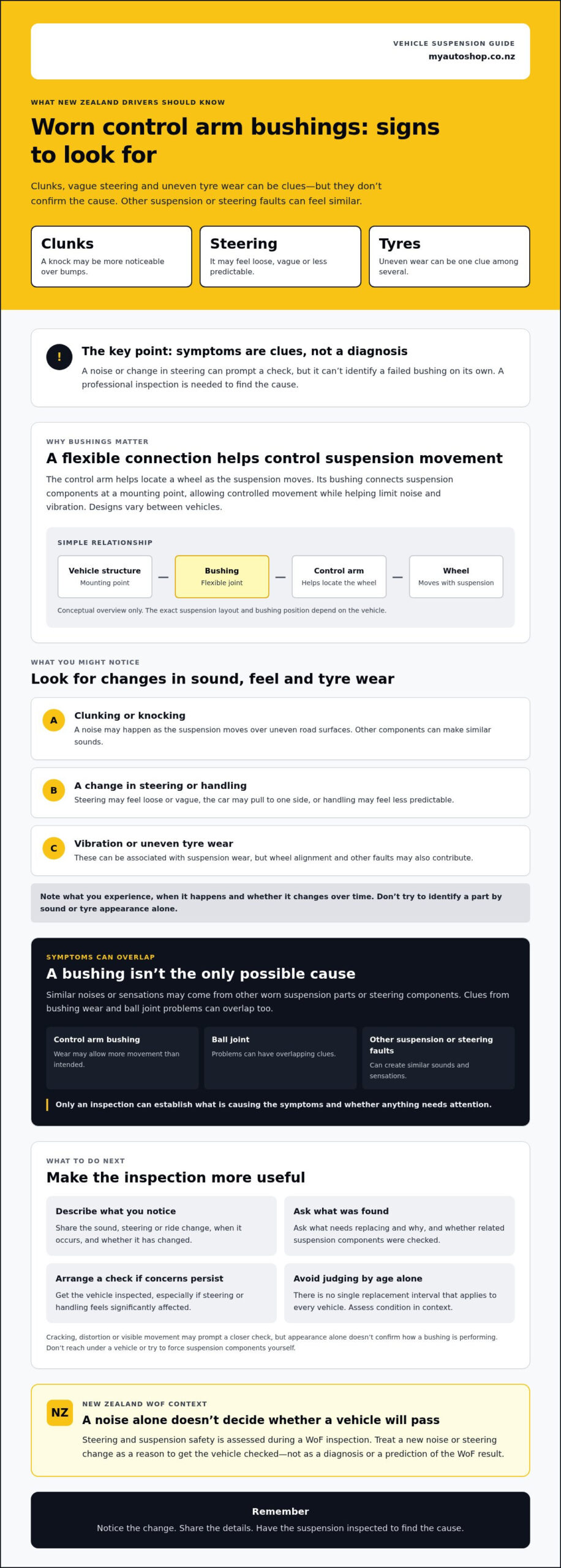
The symptoms of worn control arm bushings can include clunking or knocking, changes in steering feel, vibration and uneven tyre wear. You might hear a noise as you drive over a bump or feel the car respond less steadily than usual. These are signs to investigate, not proof that a bushing has failed.
A control arm helps locate a wheel as the suspension moves. Bushings are flexible joints, often made with rubber, that connect suspension components and help absorb movement. The control arm overview explains the component’s role in a vehicle’s suspension. The exact layout varies between vehicles.
For a visual overview of possible signs, watch this video. It provides general information, but your vehicle’s symptoms need to be assessed in context.
Symptoms are clues, not a diagnosis. An inspection is needed to establish whether a control arm bushing is worn or another component is causing the problem.
How can worn bushings affect steering and handling?
If a bushing deteriorates, it may allow more movement than intended between connected suspension parts. Depending on the vehicle and the extent of wear, you might notice loose or vague steering, the car pulling to one side, or handling that feels less predictable. These are observations, not confirmed findings. A mechanic needs to inspect the suspension to identify the source.
What noises or tyre changes might you notice?
A clunk or knock may be more noticeable as the suspension moves over uneven road surfaces, but other suspension components can make similar noises. Vibration can also have more than one cause. Uneven tyre wear may be linked to worn suspension parts, but wheel alignment or other faults can contribute too. Notice whether these signs change over time rather than trying to identify a component by sound or tyre appearance alone.
If you hear a knock from the front, note when it happens and where it seems to come from. For more on suspension noises over bumps, see our guide to common car symptoms. Share what you’ve noticed with a mechanic so they can check the relevant parts and confirm what, if anything, needs attention.
How control arm bushings wear and why symptoms can develop
A control arm bushing is a flexible joint that connects a control arm to the vehicle structure or a suspension mounting point. Its flexible material allows controlled movement as the suspension responds to the road, while helping limit noise and vibration reaching the cabin. The design and layout vary between vehicles.
As a bushing deteriorates, it may no longer manage movement as intended. Extra movement can affect how the suspension holds the wheel, potentially changing steering feel or tyre contact with the road. It can also contribute to noises as the suspension moves. This is how a bushing’s function can relate to symptoms a driver notices. J.D. Power describes control arms and bushings as core components of a suspension system that help manage movement and vibration.
What does a control arm bushing do?
The control arm helps locate the wheel in relation to the vehicle as the suspension moves. A bushing connects the arm at a mounting point, using flexible material to allow movement without a completely rigid joint. This can help reduce vibration and harshness while keeping suspension movement controlled. Some vehicles use different suspension arrangements or bushing designs, so the precise function and position depend on the vehicle.
What can contribute to bushing wear?
Bushings flex repeatedly during ordinary driving, and age and use can contribute to deterioration. Road impacts and exposure to environmental conditions may also play a part. New Zealand motorists encounter a range of road surfaces that keep the suspension moving, but there’s no single replacement interval that applies to every vehicle. Assess the condition rather than judging it by age alone.
Cracking, distortion or visible movement may prompt a closer check, but appearance alone doesn’t confirm how a bushing is performing. A mechanic can assess its condition in context, including how it moves and whether related suspension parts show wear. Don’t reach under a vehicle or try to force suspension components yourself.
If you’re ready to arrange an inspection, My Auto Shop’s marketplace connects motorists with automotive service and repair providers. Find out more about available service options. Marketplace providers are independent and aren’t necessarily employed by My Auto Shop or Turners Service & Repairs.
Worn control arm bushings or another suspension fault?
A clunk, change in steering feel or uneven tyre wear can point to a suspension concern, but none identifies the faulty part by itself. Control arm bushings, ball joints, tyres, alignment and other components can produce overlapping clues. This comparison can help you describe what you’ve noticed, but an inspection is needed to find the cause.
| Possible cause | Clues you might notice | Why it needs checking |
|---|---|---|
| Control arm bushing wear | A knock over bumps, vague steering, or a change in handling. | Other suspension parts can cause similar noises and steering changes. |
| Ball joint wear | A knock or looseness, or a change in how the vehicle steers or handles. | Ball joints and bushings are separate parts, but their symptoms can overlap. |
| Wheel alignment or tyre issue | The vehicle may pull, or tyres may wear unevenly. | These signs can have several causes, including suspension wear. |
| Another suspension fault | Noise, vibration or changes in ride and handling. | The sound alone rarely confirms which component is involved. |
How do bushing symptoms differ from worn ball joints?
Bushings are flexible mounts; ball joints are pivots that connect suspension parts while allowing movement. Wear in either can be associated with knocks or altered steering feel, but there’s no reliable sound or steering sensation that distinguishes them in every vehicle. The symptoms of worn control arm bushings are useful clues, not a test. A mechanic needs to inspect the relevant components to confirm what’s loose or worn.
Could wheel alignment or another suspension part be responsible?
Yes. Alignment or tyre issues can contribute to pulling and uneven wear, while other suspension faults may affect ride or steering, or produce knocks. A wheel bearing can sometimes cause a hum that changes with road speed, but noises vary and shouldn’t be used alone to identify a fault. Steering components such as tie rod ends can also produce knocking or cause loose steering — if those signs of a bad tie rod end sound familiar, it’s worth mentioning them during an inspection. Note when a sound happens and describe it during an inspection.
If you hear a clunk from the front, note whether it occurs over bumps, while turning or in another driving situation. That detail can help guide a check, but avoid risky self-tests. For a broader look at possible vehicle problems, see this guide to common car symptoms. An inspection can distinguish between lookalike faults and identify what needs attention.
When should you get control arm bushings inspected?
Note what you’ve noticed and arrange an inspection if a noise, vibration or steering change persists or keeps returning. Write down when it happens, such as over uneven surfaces, while turning or during braking. Don’t crawl under the car, lift it without the right equipment, or try to force suspension parts to check for movement.
If the steering or handling feels significantly affected, seek professional advice promptly. Avoid unnecessary driving until you’ve been advised what to do. Because the symptoms of worn control arm bushings can have other causes, an inspection is needed before deciding whether a bushing is at fault.
What should you tell the mechanic?
Describe the noise or handling change, when it occurs, and whether it seems to be getting worse. Mention any uneven tyre wear and recent wheel alignment work, if applicable. Neither detail proves bushing wear, but both can provide useful context. Ask which component was inspected and what evidence supports the diagnosis, such as visible damage or unwanted movement found during the check.
Is it safe to keep driving with suspected bushing wear?
There isn’t a blanket yes-or-no answer. The risk depends on what’s causing the symptoms and the condition and severity of the fault. If the vehicle feels difficult to control, the steering changes suddenly, or handling is substantially affected, don’t assume it’s safe to continue driving. Contact a mechanic for advice on the next step.
A driver’s observation is a reason to investigate. It isn’t, by itself, a confirmed finding about safety or roadworthiness.
A WoF inspection checks whether steering and suspension components meet New Zealand requirements. Waka Kotahi’s Vehicle Inspection Requirements Manual says these components must be safe and secure; excessive play beyond the manufacturer’s specifications or damage can affect the result. A symptom alone doesn’t determine whether a vehicle will pass, and a WoF check isn’t a diagnosis of a new noise or handling change. Arrange an assessment if you’re concerned.
To explore service options, visit My Auto Shop’s service information. Its marketplace connects motorists with service and repair providers, who aren’t necessarily employed by My Auto Shop or Turners Service & Repairs.
What happens after a control arm bushing problem is confirmed?
The repair depends on what the inspection finds and how the suspension is designed for your vehicle. A mechanic may recommend replacing the worn bushing, or replacing the control arm if that’s appropriate for its condition and design. There isn’t one repair that suits every car. Ask about the findings and the reason for the proposed work before deciding how to proceed.
The symptoms of worn control arm bushings can overlap with other suspension problems, so a clear diagnosis matters. Confirm which part has failed, whether related components were checked, and what work the quote covers. This helps you understand the recommendation instead of having to guess from a noise or steering change alone.
What questions should you ask before approving a repair?
Ask the provider to explain the inspection findings in plain language. Useful questions include:
- Which component is worn or damaged, and what did you find during the inspection?
- Does the repair involve replacing a bushing, the control arm or another part, and why?
- Were related suspension components checked for wear or movement?
- Should wheel alignment be assessed after the repair?
- What work is included in the proposed job, and will you contact me if the scope needs to change?
Alignment isn’t automatically required in every case, so ask whether it applies to your vehicle and the proposed work. Request a written explanation of the recommended work and any costs before authorising repairs. If something isn’t clear, ask for it to be explained again.
How can you find a suitable repair option?
Choose a service provider who can explain the diagnosis, proposed repair and any follow-up checks. The My Auto Shop marketplace connects motorists with service and repair providers. Marketplace mechanics are independent providers and aren’t necessarily employed by My Auto Shop or Turners Service & Repairs.
To explore available service options, visit My Auto Shop’s service information. Check with the provider that they can assess the issue and carry out the work your vehicle needs. For mobile servicing or repairs, Turners Service & Repairs operates only in selected regions, so confirm availability and suitability for the specific job.
Take the next step with confidence
Clunks, steering changes, vibration and uneven tyre wear can be symptoms of worn control arm bushings, but other faults can cause similar signs. Treat them as a reason to get the vehicle checked, not as a diagnosis. If steering or handling feels significantly affected, seek professional advice promptly.
An inspection can identify the cause and clarify what repair, if any, is needed. Ask the provider what they found, why they recommend the work, and whether related components need checking. Clear answers make it easier to decide what to do next.
My Auto Shop connects motorists with service and repair providers through its marketplace. Providers are independent and aren’t necessarily My Auto Shop employees. You don’t have to diagnose the fault yourself: note what you’ve noticed and arrange an inspection through My Auto Shop’s service information.
Frequently Asked Questions
What are the most common symptoms of worn control arm bushings?
Common symptoms can include a clunk or knock over bumps, vague steering, vibration or uneven tyre wear. You may also notice a change in how the car responds or feels on the road. These signs can have other causes, so don’t assume a bushing is at fault based on one symptom. Note what you’ve noticed and arrange an inspection if it persists.
Can worn control arm bushings cause a clunking noise?
Yes, a worn bushing may contribute to a clunk or knock as the suspension moves, such as over an uneven road surface. But that sound isn’t exclusive to bushings. Ball joints and other suspension components can also make noises. Note when the clunk occurs and tell the mechanic. An inspection can help identify the source instead of relying on sound alone.
Can worn control arm bushings cause uneven tyre wear?
They can contribute to changes in how the suspension holds the wheel, which may be associated with uneven tyre wear. However, tyre wear can also result from alignment issues, tyre condition or other suspension faults. Look for wear that appears uneven across a tyre or between tyres, but don’t use the pattern to diagnose a bushing. Ask a mechanic to check the tyres and suspension together.
Is it safe to drive with worn control arm bushings?
It depends on the component’s condition and how much the vehicle’s steering or handling is affected. If the car feels difficult to control or its handling has changed significantly, seek professional advice promptly and avoid unnecessary driving until you know what’s wrong. A clunk alone doesn’t establish the level of risk. Describe the symptoms to a mechanic and ask whether it’s safe to drive the vehicle for assessment.
How can I tell if the noise is from a bushing or a ball joint?
You usually can’t reliably distinguish a bushing from a ball joint by sound alone. Either may be associated with a knock or a change in steering feel, and other suspension parts can create similar clues. A mechanic can inspect both components and check for wear or unwanted movement. Note when the noise happens, such as over bumps or while turning, and share those details during the inspection.
Do worn control arm bushings need to be replaced?
If an inspection confirms that a bushing is worn enough to need repair, the appropriate fix depends on the vehicle’s design and the mechanic’s findings. The recommendation may be to replace the bushing or, where appropriate, the control arm assembly. Ask what has failed, why that repair is recommended and whether related suspension components were checked. Symptoms alone can’t determine which repair is needed.
Can a WoF check confirm whether control arm bushings are worn?
A WoF inspection checks whether steering and suspension components meet New Zealand safety requirements, but it isn’t a substitute for investigating every noise or handling change. Under Waka Kotahi’s Vehicle Inspection Requirements Manual, excessive play beyond the manufacturer’s specifications or damage to a component can affect the WoF result. A symptom alone doesn’t determine whether a vehicle will pass. Arrange a separate assessment if you’re concerned about a change.
Disclaimer
This article provides general information only and should not be relied on as professional mechanical, safety or legal advice. Vehicle requirements and circumstances vary. If you are unsure about your vehicle, have it inspected by a qualified automotive professional.