
Your car’s ignition coils don’t just die of old age; they are usually pushed to the brink by heat, vibration, or a set of neglected spark plugs. If you have noticed your engine shuddering at a red light or your fuel needle dropping faster than usual, you are likely asking what are ignition coils and how do they fail? These small but mighty components are the heart of your engine’s combustion process. They transform a standard battery charge into the massive voltage needed to ignite fuel and keep you moving on the road.
It’s frustrating when your vehicle loses its smooth rhythm, especially when you’re worried about an unexpected bill or a confusing talk with a mechanic. We believe in being a transparent partner, stripping away the jargon so you feel empowered rather than intimidated. This guide explains how these coils function and why they often struggle in New Zealand conditions. You will learn to spot the symptoms early, from rough idling to power loss. By the end, you will know exactly how to identify the problem and where to find a reliable repair that respects your time and your budget.
Key Takeaways
- Learn how ignition coils act as mini-transformers, turning 12-volt battery power into the high-voltage spark your engine needs to run.
- Gain clarity on what are ignition coils and how do they fail by identifying how engine heat and neglected spark plugs are the most common causes of breakdown.
- Identify warning signs like engine stuttering, rough idling, or a “Check Engine” light before they lead to a roadside breakdown or an expensive repair.
- Understand the importance of regular spark plug maintenance in extending the life of your coils and maintaining better fuel economy on New Zealand roads.
- Avoid a potential $2,000 catalytic converter repair by using professional mobile diagnostics from Turners Service & Repairs as soon as you notice a misfire.
Understanding Your Car’s Ignition Coils: The Heart of the Spark
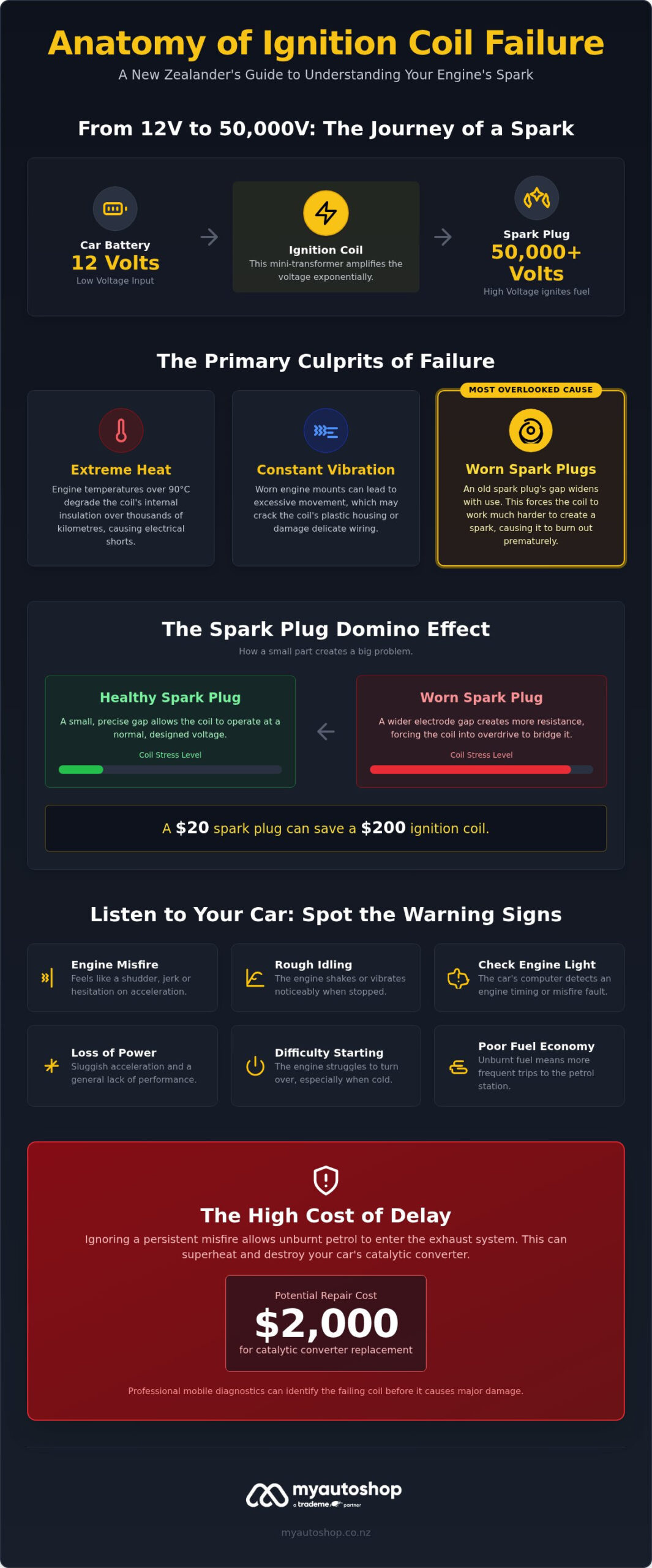
To truly grasp what are ignition coils and how do they fail, you first need to see them as the heart of your engine’s electrical system. Every petrol vehicle relies on a precise explosion to generate power. However, the 12-volt current from your car battery isn’t nearly strong enough to jump the gap of a spark plug. That is where the Ignition coil comes in. It acts as a compact, high-powered transformer, taking that small battery charge and ramping it up to as much as 50,000 volts in a fraction of a second.
Without this massive surge of energy, the fuel-air mixture in your engine cylinders simply won’t ignite. In older vehicles, a single coil sent power through a distributor to each spark plug. Most cars on New Zealand roads today use a more efficient “Coil-on-Plug” (COP) system. This setup gives each cylinder its own dedicated coil, sitting directly atop the spark plug. Understanding what are ignition coils and how do they fail becomes much easier once you see how they have evolved into these individual, highly stressed components.
How High Voltage Creates Combustion
The magic happens through a process called electromagnetic induction. Inside the coil’s casing, there are two sets of copper wire windings: the primary and the secondary. The primary winding has relatively few turns of thick wire, while the secondary winding consists of thousands of turns of very thin wire. When the engine’s computer cuts the power to the primary winding, the magnetic field collapses, inducing a massive voltage in the secondary winding that heads straight to the spark plug. Dwell time is the specific period the coil spends charging up its magnetic field before releasing the spark. The Engine Control Unit (ECU) manages this timing with microsecond precision to ensure your car runs smoothly under different driving conditions; for those interested in how these electronic parameters can be professionally optimized for performance, check out Dynogen Remapping Solutions.
How High Voltage Creates Combustion
The New Zealand vehicle fleet is a diverse mix of Japanese imports and European models, meaning you might find several different coil configurations under the bonnet:
- Coil-on-Plug (COP): The modern standard where each spark plug has an individual coil. This eliminates the need for high-voltage spark plug wires, which are prone to leaking energy.
- Waste Spark Systems: Common in many 90s and early 2000s Japanese cars; one coil provides a spark to two cylinders simultaneously. One spark ignites the fuel, while the other is “wasted” on the exhaust stroke.
- Ignition Cassettes: Frequently found on European brands like SAAB or Peugeot. This is a single unit that houses all the coils for the engine, meaning if one fails, the entire cassette usually needs replacing.
The Science of Failure: Why Ignition Coils Give Up
Ignition coils are built to be tough, but they aren’t invincible. They live in one of the most hostile parts of your car: right on top of the engine. When you’re trying to understand what are ignition coils and how do they fail, you have to look at the constant cycle of extreme heat and vibration. Every time you drive, the engine reaches temperatures well over 90 degrees Celsius. Over thousands of kilometres, this heat breaks down the thin layer of epoxy insulation that separates the internal copper windings. Once that insulation fails, the electrical current shorts out before it can ever reach the spark plug.
Physical stress also plays a significant role. If your engine mounts are worn, the engine will rock excessively during acceleration or gear changes. This movement can pull on the wiring harnesses or even cause the plastic coil housing to crack. Regular maintenance, such as routine vehicle servicing, ensures these minor mechanical issues don’t turn into expensive electrical failures.
The Domino Effect of Worn Spark Plugs
The most overlooked cause of failure is actually the spark plug. As a spark plug ages, the metal tip wears down, making the gap between the electrodes wider. This wider gap creates more electrical resistance. To bridge this gap, the ignition coil must generate a much higher voltage than it was designed for. This extra strain leads to internal arc-over, where the electricity punches through the coil’s own internal insulation. A $20 spark plug can save a $200 ignition coil. Neglecting this simple maintenance item is the fastest way to burn through your coils. Understanding how often to replace spark plugs NZ motorists need to follow is one of the most effective ways to protect your ignition coils from premature failure.
Environmental Factors in New Zealand
Our unique local conditions add extra pressure. Most New Zealanders live near the coast, which means the air is often laden with salt. This salt air accelerates corrosion on the electrical connectors, increasing resistance and heat. Additionally, heavy rain or driving through deep puddles can splash water into the spark plug wells. If the rubber boot on the coil is old or cracked, moisture gets inside and creates a short circuit. Even heavy stop-start traffic contributes; the lack of airflow through the engine bay causes “heat soak,” where temperatures spike and slowly bake your ignition components until they eventually fail.
7 Common Symptoms of a Failing Ignition Coil
Identifying a failing coil early can save you from being stranded on the side of the State Highway. When these components begin to degrade, the symptoms usually start small and gradually worsen. If you are noticing any of the following signs, you are likely asking what are ignition coils and how do they fail to keep your engine running smoothly. Recognizing these red flags is the first step toward a quick, reliable fix.
- Engine Misfiring: This is the most common sign. You will feel a distinct jerk or stutter, especially when you are accelerating hard or sitting at an idle. It feels like the engine has “missed a beat.”
- The “Check Engine” Light: Your car’s computer is highly sensitive to ignition issues. It will often trigger a warning light and store a specific OBD-II code. Look for codes ranging from P0300 (random misfire) through to P0308, which identifies exactly which cylinder is failing.
- Poor Fuel Economy: When a coil fails, the fuel in that cylinder isn’t burnt properly. This wasted energy means your engine has to work harder, leading to more frequent and expensive trips to the Z or BP station.
- Hard Starting: If your car struggles to fire up on a cold Kiwi morning, a weak ignition coil might be the culprit. A failing coil often has trouble producing enough voltage when the engine is cold.
- Sudden Stalling: A complete coil failure can cause the engine to die unexpectedly when you come to a stop at traffic lights. This happens because the engine cannot maintain a steady idle on fewer than all its cylinders.
Physical Signs You Can See and Smell
You don’t always need a computer to diagnose a problem. A failing ignition system often leaves physical clues. You might notice a strong smell of unburnt petrol coming from the exhaust pipe. This occurs because the fuel is being pumped into the cylinder but never ignited. In some cases, this unburnt fuel can ignite inside the hot exhaust system, causing a loud backfire or visible black smoke. If you remove the coil, look for visible cracks in the plastic housing, discolouration, or “carbon tracking,” which looks like small burnt lines where electricity has leaked out.
Modern Car Safety Features: Limp Mode
Modern vehicles are designed to protect themselves from further damage. If the ECU detects a severe misfire, it may put the car into “Limp Mode.” This safety feature suddenly cuts your engine power by up to 70% and may prevent the car from shifting into higher gears. While it feels alarming, the computer is actually trying to protect your expensive catalytic converter from being destroyed by raw fuel. If your car feels like it has lost its “get up and go,” check out the Turners Symptoms Guide for a deeper look at what your vehicle is trying to tell you.
Diagnosing and Preventing Coil Issues in NZ
When your car starts stuttering, the first step is to confirm the source of the trouble. Modern vehicle diagnostics have made this much simpler. Most New Zealand motorists who ask what are ignition coils and how do they fail are looking for a way to avoid a huge bill. A professional technician uses a scan tool to communicate with your car’s Engine Control Unit (ECU). This tool reads the specific misfire code, telling the mechanic exactly which cylinder is struggling. Instead of guessing, you get a clear answer and a focused repair plan.
If one coil has failed, you should strongly consider replacing the entire set. Because all the coils in your engine have likely travelled the same number of kilometres and been exposed to the same heat cycles, the others are often not far behind. Replacing them all at once saves you the logistical headache of multiple workshop visits. Regarding your Warrant of Fitness (WoF), a failing ignition coil isn’t a direct inspection item. However, the NZTA Waka Kotahi guidelines state that excessive smoke from the exhaust can lead to a fail. If a dead coil causes raw fuel to burn in your exhaust, you might find yourself walking home from the testing station.
The DIY ‘Swap Test’ for Diagnosis
If you’re handy with a socket set, you can perform a “swap test” to verify a faulty coil. This involves moving the suspected coil to a different cylinder and seeing if the misfire follows it. For example, if cylinder one is misfiring, swap its coil with cylinder two. If the misfire code changes to cylinder two, the coil is definitely the culprit. Always exercise extreme caution; ignition systems carry high voltage that can deliver a painful shock. Ensure the engine is cool to the touch before you begin. If you aren’t comfortable working around electrical components, it is time to call a professional.
Maintenance Intervals for New Zealand Drivers
The New Zealand used car fleet is dominated by Japanese imports, many of which use high-performance Iridium spark plugs. These plugs can last up to 100,000 kilometres, but standard copper plugs need replacing every 30,000 kilometres. Neglecting these intervals is the primary reason coils fail. We often see owners buying “cheap” coils from overseas auction sites to save money, only to have them fail within months due to poor internal insulation. Stick to reputable brands to ensure your car stays reliable. For more tips on keeping your vehicle in top shape, check out The Ultimate Basic Car Maintenance Checklist.
Don’t let a small misfire turn into a major breakdown. If your car is shaking at idle, you can book a mobile diagnostic through Turners Service & Repairs to get an expert to your driveway.
Getting Your Ignition System Sorted with Turners Service & Repairs
Driving with a misfire is a gamble that rarely pays off. If you continue to use your vehicle while asking what are ignition coils and how do they fail, you risk more than just a bumpy ride. When a coil fails, unburnt fuel travels straight into your exhaust system and enters the catalytic converter. This raw fuel ignites against the precious metals inside the converter, melting the internal structure and leading to a repair bill that can easily exceed $2,000. Addressing the problem early is the only way to avoid these massive secondary costs.
We believe in stripping away the mystery of car repairs. Turners Service & Repairs provides a transparent partnership, offering mobile diagnostics and repairs that fit into your busy life. You get the confidence of an expert technician without the typical workshop markups or hidden fees. By choosing a scheduled solution, you protect your engine and your bank account from the consequences of a total ignition failure.
Mobile Mechanics: The Stress-Free Way to Fix a Misfire
If your car is stuttering or has entered “Limp Mode,” the last thing you want to do is drive it across town to a garage. Turners Service & Repairs technicians bring the workshop to you, diagnosing and fixing issues at your home or workplace. This service is available in selected New Zealand regions, providing the logistical convenience modern drivers expect. Our technicians use professional-grade scan tools to identify exactly what are ignition coils and how do they fail in your specific vehicle. For a deeper look at how on-site care can save you time, read our Mobile Mechanic NZ Guide.
Peace of Mind for Used Car Buyers
Buying a used car in New Zealand often means inheriting someone else’s maintenance gaps. A Pre-Purchase Inspection from My Auto Shop is your best defence against hidden electrical faults. Our independent inspectors look for “stored” fault codes that a seller might have cleared just before you arrived. We also check for the presence of low-quality aftermarket coils, which are a common red flag for “cheap” maintenance. Getting an independent assessment before you sign the papers ensures you aren’t buying a car that is one cold morning away from a breakdown. Trust our experts to value your safety as much as your time.
Keeping Your Engine Smooth and Reliable
Ignition coils are the silent workers that keep your car moving. By keeping an eye on your spark plugs and acting quickly when you feel a misfire, you protect your engine from expensive catalytic converter damage. Understanding what are ignition coils and how do they fail is the best way to prevent a small stutter from becoming a major engine repair. Whether you need a quick fix at home or a thorough check before buying a used car, we have you covered with practical solutions that respect your time.
You can book a mobile diagnostic check with Turners Service & Repairs to get an expert technician to your driveway with fair, transparent pricing and no workshop surprises. If you are looking at a new-to-you vehicle, My Auto Shop provides access to a trusted marketplace of mechanics for comprehensive pre-purchase inspections. Taking these simple steps keeps your vehicle healthy and ensures you stay in control of your maintenance costs. Stay proactive with your servicing, and your car will stay reliable for many more kilometres on the road.
Frequently Asked Questions
Can I drive with a bad ignition coil?
You shouldn’t drive with a bad ignition coil. While the car might still move, you will experience a significant loss of power and severe engine shaking. Continuing to drive pushes raw fuel into your exhaust system. This can overheat and melt your catalytic converter, turning a simple coil replacement into a repair costing thousands of dollars. It is much safer to pull over and arrange a professional diagnostic check to protect your engine.
How much does it cost to replace an ignition coil in New Zealand?
How much does it cost to replace an ignition coil in New Zealand?
When looking at what are ignition coils and how do they fail, the cost of replacement is a common concern for Kiwi motorists. The price varies depending on several factors, primarily your vehicle’s make and model. Parts for European cars are often more expensive than those for common Japanese imports. The total also depends on whether you choose genuine manufacturer parts or high-quality aftermarket alternatives and the labour required to access the coils. For owners of European makes, specialized centers like Euro Performance Auto Shop LLC highlight the importance of expert care when dealing with these more intricate and costly ignition systems.
Replacing all coils at once is often the smartest move for long-term reliability. Because ignition coils are usually installed as a set, they have all endured the same heat cycles and kilometres on New Zealand roads. If one has failed, the others are likely reaching the end of their lifespan. Swapping the full set prevents you from returning to the mechanic a few weeks later when the next one inevitably gives up, saving you on repeat labour costs.
Will a bad ignition coil damage my engine?
Yes, a faulty coil can cause serious engine issues if left unaddressed. Constant misfiring leads to excessive vibration that can damage engine mounts and other sensitive components. More importantly, unburnt fuel washes away the protective oil film on your cylinder walls, causing premature wear to the piston rings. Over time, this leads to reduced compression and a shorter engine life. Understanding what are ignition coils and how do they fail helps you avoid these cascading mechanical problems.
How do I know if it’s the spark plug or the ignition coil?
It is difficult to tell the difference without a proper diagnostic tool or a “swap test.” Both a worn spark plug and a failing coil produce similar symptoms like stuttering or a “Check Engine” light. A technician will usually check the spark plug first since they are cheaper to replace. If the plug looks healthy but the misfire remains, the coil is the likely culprit. Using a professional scan tool is the fastest way to get a definitive answer. Knowing how often to replace spark plugs in NZ can help you rule out plug wear as the cause before suspecting the coil.
Does a faulty ignition coil affect the fuel pump?
A faulty ignition coil does not directly damage your fuel pump. However, the two systems are linked by the car’s computer. When a coil fails to ignite the fuel, the oxygen sensor detects a rich exhaust mixture. The computer might then try to adjust the fuel delivery to compensate for the perceived problem. While your fuel pump won’t break, the overall efficiency of your fuel system will drop significantly until the ignition issue is resolved.
What are the OBD-II codes for a faulty ignition coil?
The most common codes for ignition issues are P0300 through P0308. A P0300 code indicates a random or multiple cylinder misfire, meaning the problem isn’t isolated to one spot. Codes P0301 to P0308 are more specific, with the last digit identifying exactly which cylinder is misfiring. For example, P0304 means cylinder number four has a problem. These codes are essential for technicians at Turners Service & Repairs to pinpoint the fault quickly during a mobile diagnostic visit.
Can a bad battery cause ignition coil failure?
A weak or dying battery can contribute to coil failure over time. Ignition coils rely on a steady 12-volt supply to function correctly. If your battery or alternator is struggling, the coil has to work harder to produce the necessary high-voltage spark. This increased electrical stress generates internal heat, which eventually breaks down the coil’s insulation. Ensuring your battery is in good health is a simple way to extend the life of your entire ignition system.
Disclaimer
This article provides general information only and should not be relied on as professional mechanical, safety or legal advice. Vehicle requirements and circumstances vary. If you are unsure about your vehicle, have it inspected by a qualified automotive professional.